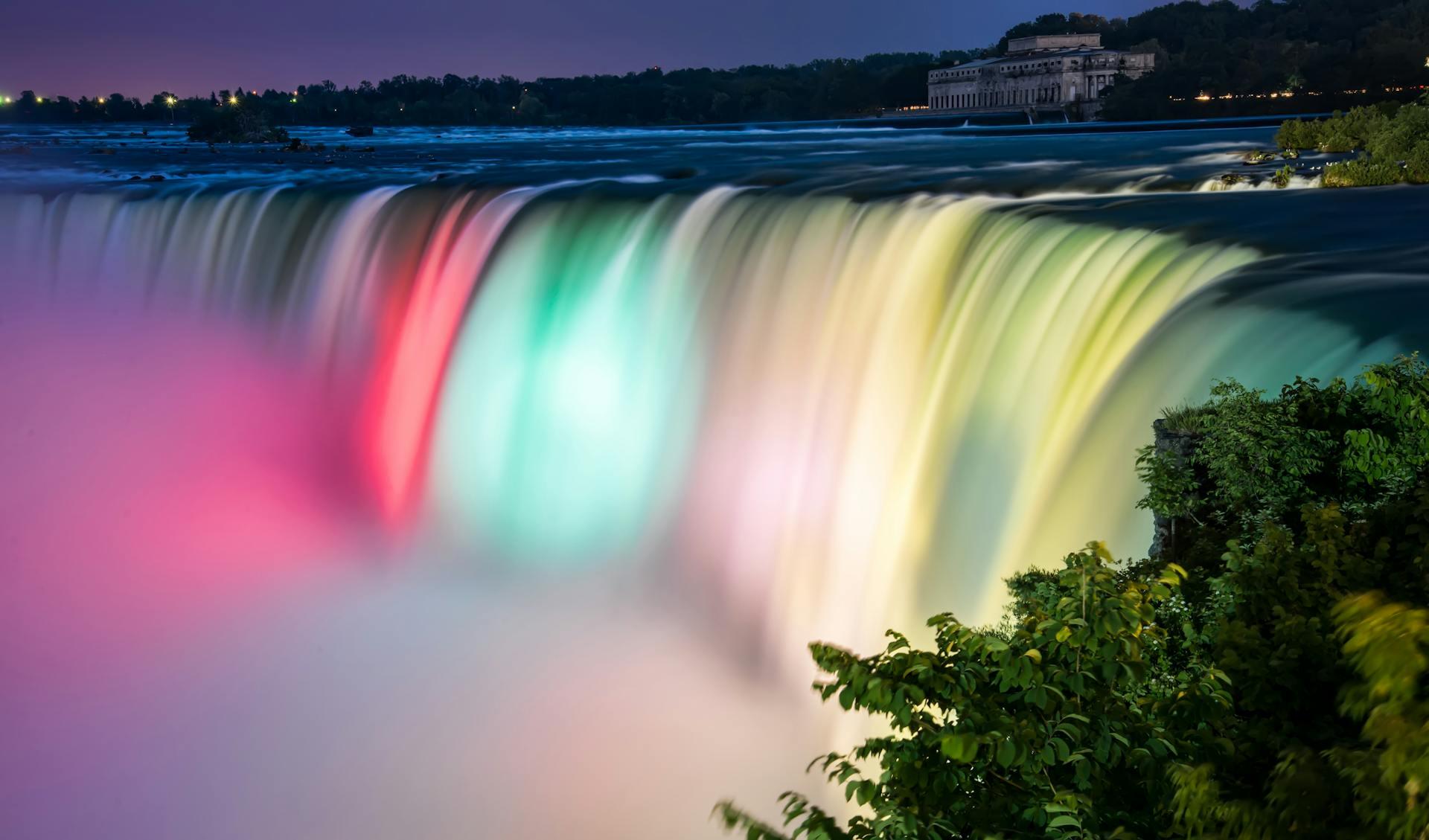

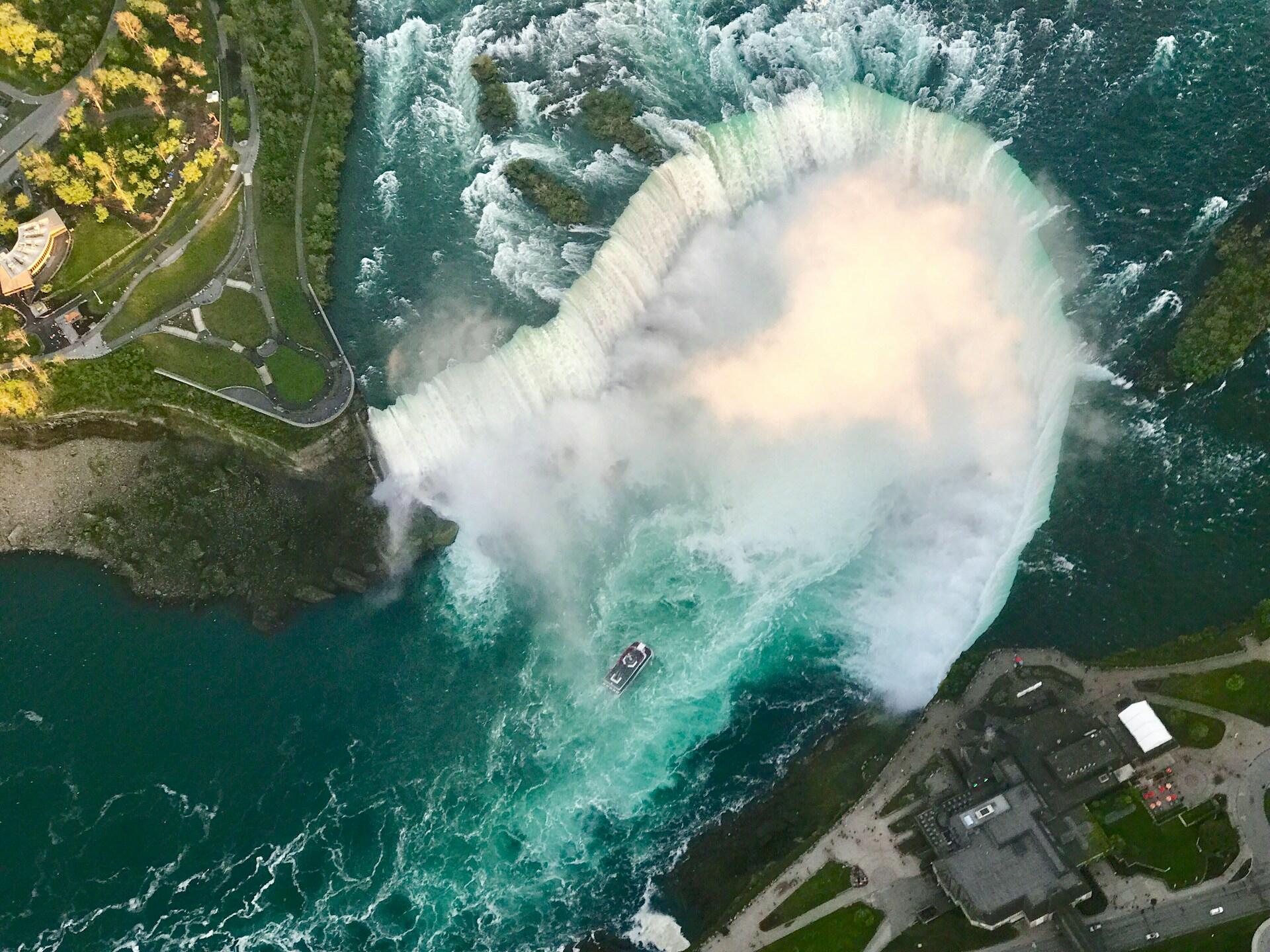
Niagara Falls is recognized as one of the most impressive Canadian natural wonders in the world. Located on the border between the United States and Canada, along its 56 kilometers, the Niagara River carves magnificent waterfalls and rapids. Discover some of the fun facts about Niagara Falls, Canada's most popular natural wonder.





How were the Niagara Falls formed, the origin story:
Are you ready to travel few years back in time? Eighteen thousand years ago, the Niagara region was covered in thick ice that will one day be the origin of the Great Lakes. But what are the Great Lakes, anyway? The Great Lakes are the five large fresh water lakes formed thousands of years ago when the glaciers of the last Ice Age melted. These are: Superior, Michigan, Huron, Erie, & Ontario. Over the past 12,000 years, once the glaciers had melted, water from these Great Lakes filled the Atlantic Ocean, and eventually formed the Niagara Gorge which led to the natural creation of the famous Niagara Falls.
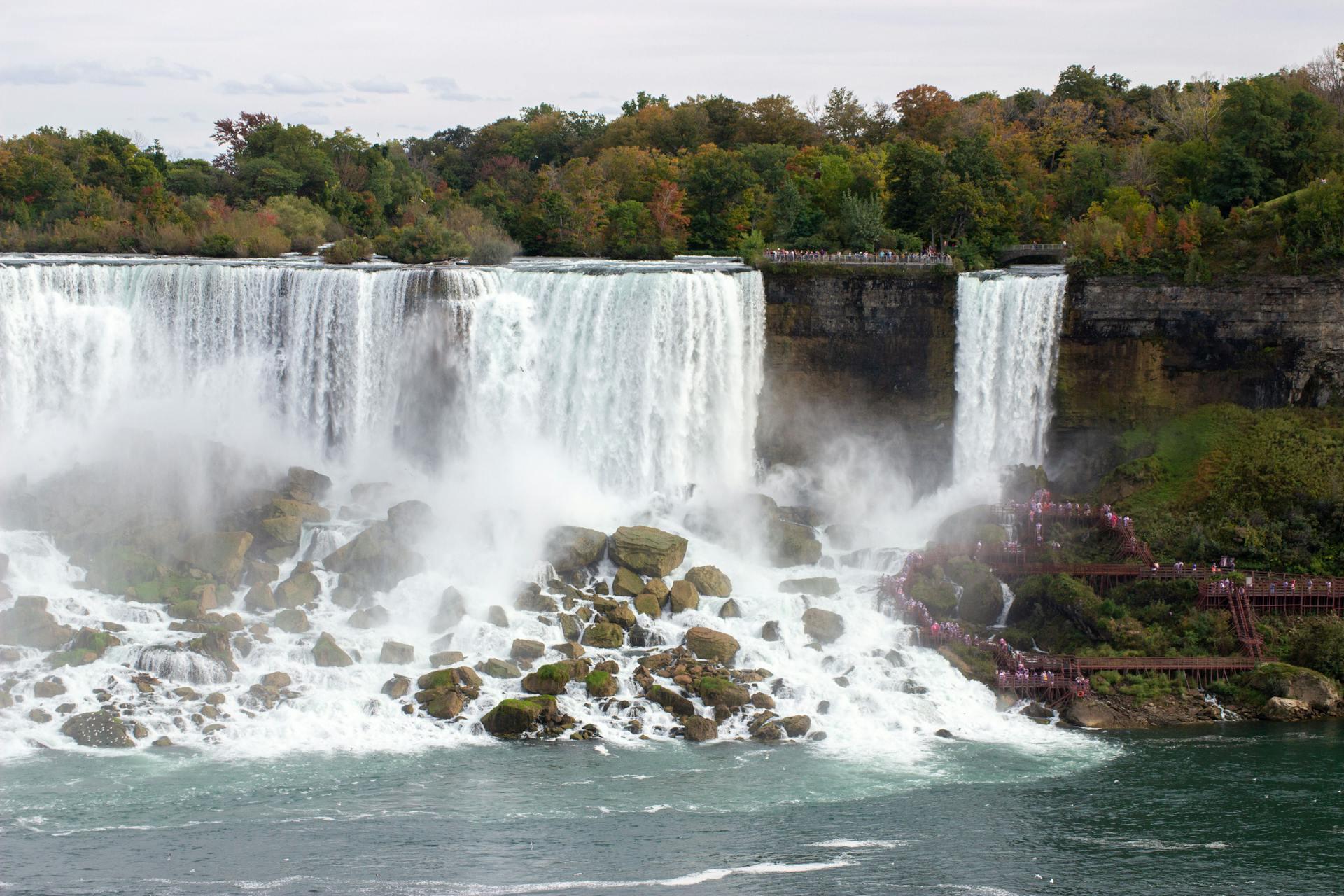
It is believed that the word "Niagara" comes from an Iroquois word that means "thunder of water," which is not far from describing the impressive force of these waterfalls. However, the exact etymology of the word "Niagara" is still being debated among experts.
The Horseshoe, The American and lastly, The Bridal Veil
On the Canadian side lies the Horseshoe Falls, named this way to describe how the water falls over the crest and down the sides to create the classic horseshoe shape. The other two falls are on the American side: the American Falls and the Bridal Veil, and this last one is the smallest of the Niagara waterfalls.
When the Niagara River began to cascade over the 51-meter cliff (in the case of the Horseshoe Falls), the impact of the water was eroding the less resistant limestone rock layer. This erosion has caused the waterfalls to migrate some 11 kilometers upstream. Today, it is estimated that Niagara Falls migrates upstream approximately 30 centimeters per year. Indeed, scientists speculate the falls could be replaced by a series of rapids 50,000 years from now due to the erosion rate.
Learn more about the famous Rocky Mountains!
First Documentation in History of Niagara Falls
Louis Hennepin was the first to document the Niagara Falls. He was a Belgian Catholic priest known for his missions in North America. Impressed by the Niagara Falls size and force, Hennepin was the first to document them during an expedition in the year 1678. When he returned home, he published his work, A New Discovery of the Great Waterfall of Niagara, detailing the magnitude of this natural beauty. A New Discovery of the Great Waterfall of Niagara is one of the first documents that contributed to planning new explorations in the area in the future.
Niagara Falls Timeline
12,000 years ago
Niagara Falls was formed at the end of the last Ice Age when the melting glaciers created the Great Lakes.
Indigenous peoples
Long before the arrival of European settlers, the region was home to indigenous peoples, such as the Neutral Nation.
1678
The French explorer Father Louis Hennepin, was the first European to discover Niagara Falls, publishing "A New Discovery of the Great Waterfall of Niagara."
1885
New York established the Niagara Reservation, considered the first state park in the USA. Canada created the Niagara Parks Commission to safeguard the falls.
1893
The first hydroelectric power station was built on the Canadian side in 1893, and today, between 50 and 75% of the Niagara River's flow supplies energy to Canada and the United States.
1901
On October 24, Annie Taylor became the first person to survive a trip over the falls in a barrel. This was part of a long tradition of people attempting to cross the falls, which often ended in tragedy.
1950
Canada and the United States signed the Niagara River Treaty to maintain the flow and integrity of the natural phenomenon.
1969
The US Army Corps of Engineers interrupted the water flow at American Falls for several months to study erosion. This allowed scientists to examine the falls' geological structure.
2014
On January 21, 2014, unusual ice formations were recorded at the falls due to extremely low temperatures (around -30 °C).
A Wonder of the World
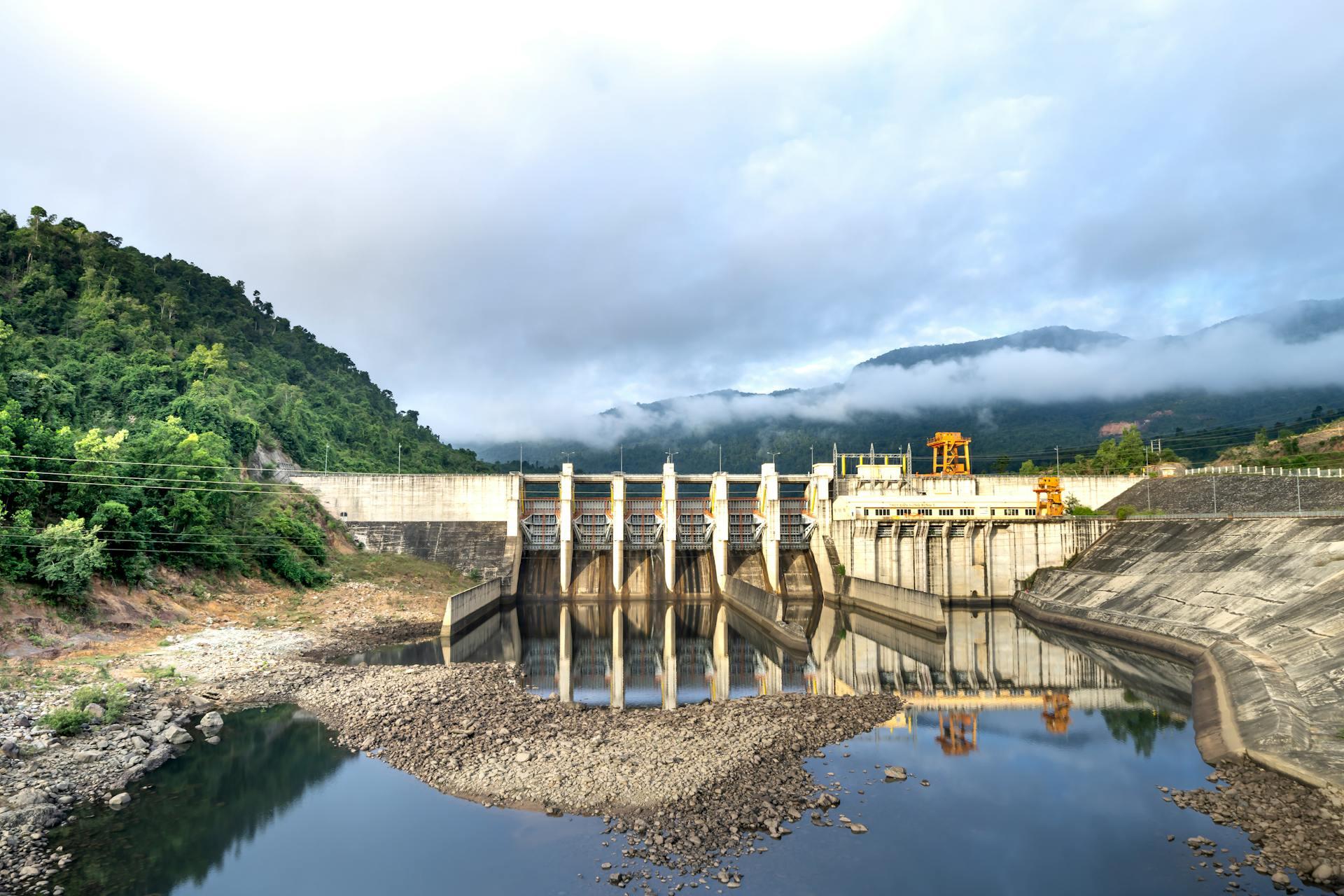
Although Niagara Falls is not the highest waterfall in the world, it is commonly listed amongst the world wonders due to its enormous size. Every minute, 168,000 m³ of water passes over the edge. And, of course, this massive amount of water and force had to be made the most of to create electricity. In 1893, the first hydroelectric power station was built on the Canadian side, and today, between 50 - 75% of the flow of the Niagara River supplies energy to Canada and the United States. But how do you get energy from the water of the falls?
The indigenous cultures that considered the falls a sacred place of mysticism were the Neutral Nation (also called Attawandaron) indigenous communities who inhabited the Great Lakes well before the arrival of the European colonizers. Certain other Iroquoian nations, such as the Seneca and the Onondaga, also gave the falls a spiritual and mystical significance. They also developed traditions and rituals that explained their deep mysticism and respect for this natural wonder.
Conservation in Niagara Falls
New York, in 1885, established the Niagara Reservation, the USA's first state park, designed to save the American side of the falls. During approximately the same period, Canada founded the Niagara Parks Commission to save the falls on its side. These efforts laid the foundation for environmental preservation at the site, ending industrialization and promoting sustainable tourism.
In 1950, the United States and Canada signed the Niagara River Treaty. It established a regime to regulate the flow of water to be at least 50% during the day and up to 75% by night, thus guaranteeing the protection of the flow and integrity of the Niagara and the surroundings.
How Niagara Falls Produce Electricity
Did you know you can produce electricity with water movement and force? Electricity is produced by the movement of falling water and its force. Canal systems direct the water of the Niagara towards turbines. The force of the falling water turns these turbines on, transforming kinetic energy into mechanical energy! This movement is then converted into electricity through generators, which are distributed to the electricity grid, providing an efficient energy source to Canada and the United States.
The Frozen Niagara Falls
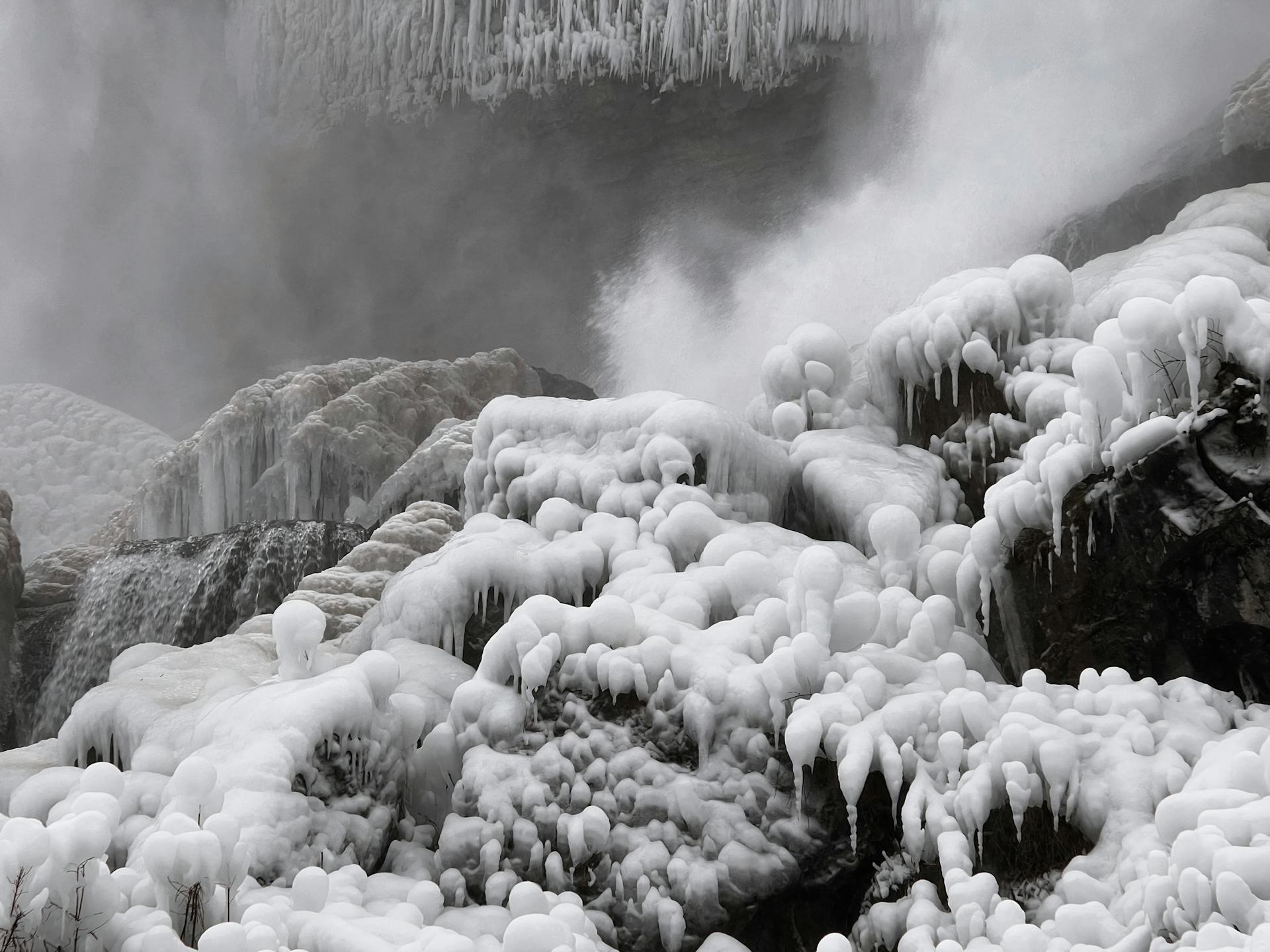
Although the last known freezing of Niagara Falls was in 1848, there are some reports that on January 21, 2014, unusual ice formations were recorded at the falls due to extremely low temperatures (temperatures of -30 °C). The polar vortex had transformed the region into a winter wonderland as the record temperatures had iced over parts of the famous Niagara Falls on the United States-Canada border. Although the water never did freeze solid, a fairly decent layer of ice formed over the area, generating a lot of hype in the media.
Getting used to the cold? Travel to explore the fascinating Northern Lights in Canada.
The Niagara's Biodiversity
Niagara Falls is also home to a diverse variety of wildlife. The Niagara River provides an essential habitat for numerous species of flora and fauna. Additionally, the falls and the nearby rivers are home to a varied group of water birds, including gulls, cormorants, herons, and ducks, and the Niagara River and its tributaries are home to a varied group of fish, including trout, salmon, catfish, and pike.
The city parks and woodlands within the Niagara Falls area accommodate mammals such as deer, rabbits, raccoons, and possums. Maples, willow, birch, and oaks appear along the rivers draining into Niagara Falls. Some rock layers below Niagara Falls' cap contain many marine fossils, such as brachiopods, trilobites, corals, and crinoids.
Conservation efforts focus on protecting these aquatic ecosystems through initiatives such as habitat restoration, pollution control, and fisheries management. By maintaining the river's health, the authorities not only preserve the biodiversity of the falls but also support the livelihoods of local communities that depend on the river's resources.
Would you like to discover the frozen biodiversity? Travel to explore the Iceberg Alley in Canada.
The First Successful Plummit from Niagara Falls
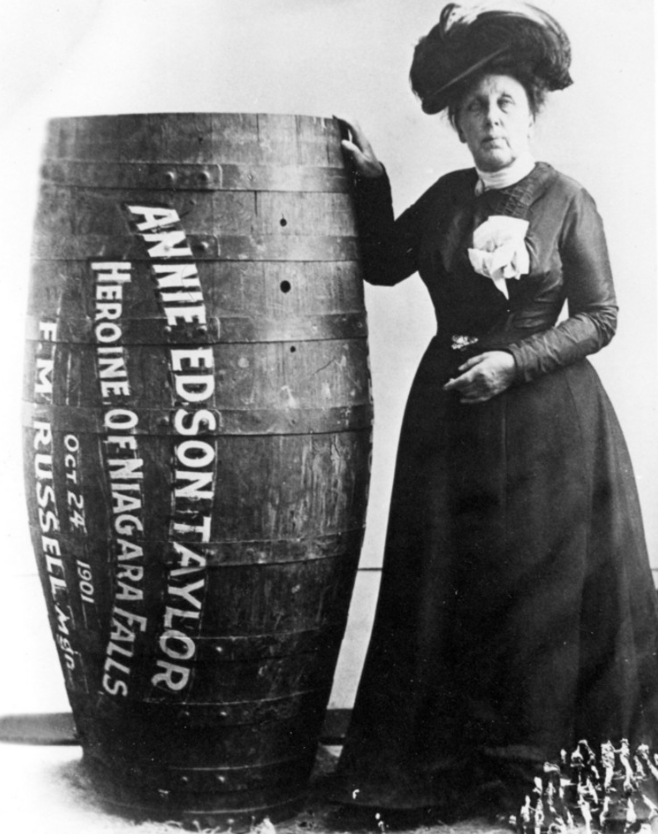
In 1901, 63-year-old Annie Taylor became the first to cross the falls in a barrel and survived impressively unharmed, earning the nickname "human cannonball." This surprising and dangerous event was part of a long tradition of people trying to cross the falls in barrels, often ending in death. In addition, throughout history, survivors have faced charges and fines, as attempting to cross the falls is illegal.
Discover Niagara Falls with a Geography private tutor
Want to learn more about the history of Niagara Falls? Learn more about our natural wonders with geography classes designed especially for you. Learn more about the fascinating study of the Earth and the environment, and discover the most interesting facts about Canada's most beautiful places.
But what is geography? This extraordinary science covers many topics, from studying the planet's physical characteristics, population, culture, and urban development to interactions with the natural world. If you want to find the best geography lessons in Canada—visit the official Superprof website!
Superprof is an excellent private tutoring platform for finding the best private teachers specialized in all subjects and for all types of students, from the youngest to the most experienced professionals!
But where to start?
🌍 Go to Superprof!
Go to the official Superprof website and enter if you want to learn "Geography."
💻 Choose your subject to study
Choose the type of classes you are interested in, whether "Online Classes" or enter your location to find Geography teachers near you.
📍 Find the best teachers near you
Discover the best Geography teachers available across Canada!
👩🏫 Read the tutors' profile
Each tutor's profile provides information about their professional experience, academic background, price per lesson, and reviews from former students.
🎯 Book a lesson!
And finally, book a lesson with the private Geography teacher you like the most.
⭐ Start learning Geography
Take your first lesson for free to get to know your teacher better.
Are you ready to get started? Discover Superprof!
Summarize with AI:
Did you like this article? Leave a rating!

 Loading...