
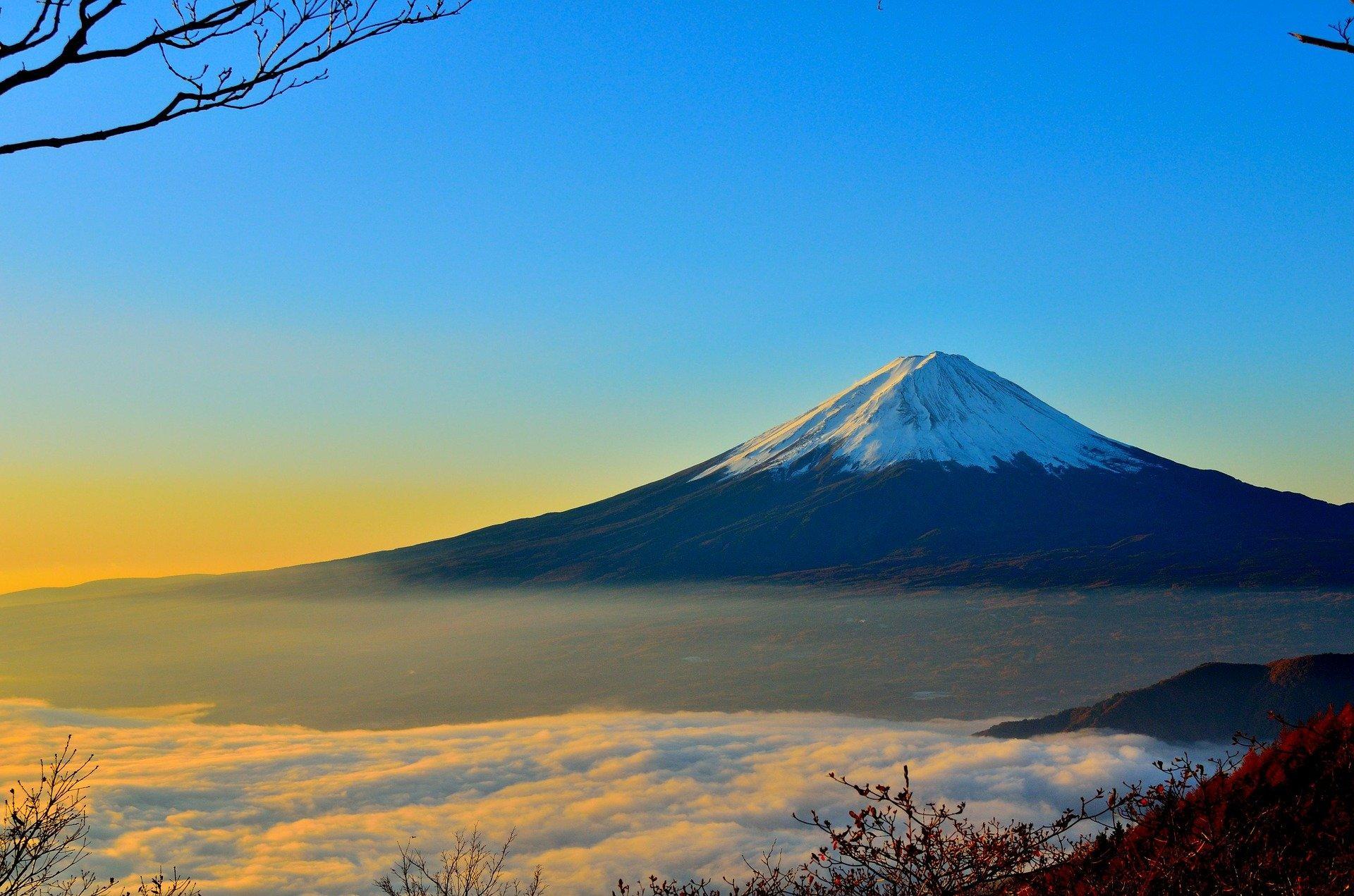

There are a few things that will make almost anyone think of Japan. In addition to samurai, geishas, manga, and sushi, there’s one geographical feature that makes everyone think of "The Land of the Rising Sun."
Rising to 3,776 meters, Mount Fuji is the tallest mountain in Japan and one of the most recognizable volcanic peaks in the world. This iconic volcano has shaped Japan’s geological, spiritual, and artistic identity for thousands of years. It is a symbol of national pride, resilience, and natural beauty.
Located on Honshu island, southwest of Tokyo, the near-perfect conical shape of this stratovolcano has made it a global landmark. Its history stretches back over 100,000 years, encompassing dramatic eruptions, spiritual pilgrimages, artistic masterpieces, and modern environmental challenges. Today, Mount Fuji is recognized as a UNESCO heritage site, celebrated not only for its geological importance but also for its profound cultural legacy.

In this article, we’ll look at Mount Fuji's history. From its geological origins as well as its historical and cultural origins, here’s what makes Mount Fuji capture the Japanese imagination. If you travel to Japan, Mount Fuji is a must-see.
100,000+ years ago
Early volcanic formation begins
Mount Fuji began forming through repeated eruptions caused by tectonic plate convergence, building layers of lava and ash over earlier volcanoes.
10,000 years ago
Shin-Fuji phase shapes modern cone
The Shin-Fuji phase produced smooth basaltic lava flows that created the mountain’s iconic, symmetrical cone seen today.
1707
Hoei eruption impacts Edo region
The Hoei eruption sent ash as far as Edo (Tokyo), formed a new crater on Fuji’s flank, and remains its most recent major eruption.
19th century
Fuji appears in Hokusai’s artworks
Katsushika Hokusai featured Mount Fuji in his famous woodblock print series, helping cement it as a national and artistic symbol.
2013
Designated UNESCO World Heritage Site
Mount Fuji was recognized as a UNESCO World Heritage Site for its cultural, spiritual, and artistic significance worldwide.









Geological Formation and Age
The geological story of Mount Fuji begins deep beneath the Earth’s surface. The mountain formed at the convergence of three tectonic plates: the Eurasian Plate, the North American Plate, and the Philippine Sea Plate. This tectonic interaction created intense pressure and magma movement, leading to repeated volcanic activity over thousands of years.
The beauty of the solitary, often snow-capped, stratovolcano, known around the world as Mount Fuji, rising above villages and tree-fringed sea and lakes has long been the object of pilgrimages and inspired artists and poets.
UNESCO
Mount Fuji is estimated to be over 100,000 years old. However, the current cone that defines the volcano today is much younger. Scientists divide "Fujisan" history into three main phases:
- Komitake Fuji (the oldest volcano base)
- Ko-Fuji (Old Fuji)
- Shin-Fuji (New Fuji)
The present-day symmetrical cone developed during the Shin-Fuji period, which began around 10,000 years ago. Its near-perfect cone is the result of repeated eruptions and carefully layered lava flows.
Surrounding the mountain are the famous Fuji Five Lakes, including Lake Kawaguchi, which offer breathtaking views Mount Fuji across changing seasons. These lakes were formed by lava flows that dammed rivers during earlier eruptions, further illustrating how volcanic activity shaped the region.
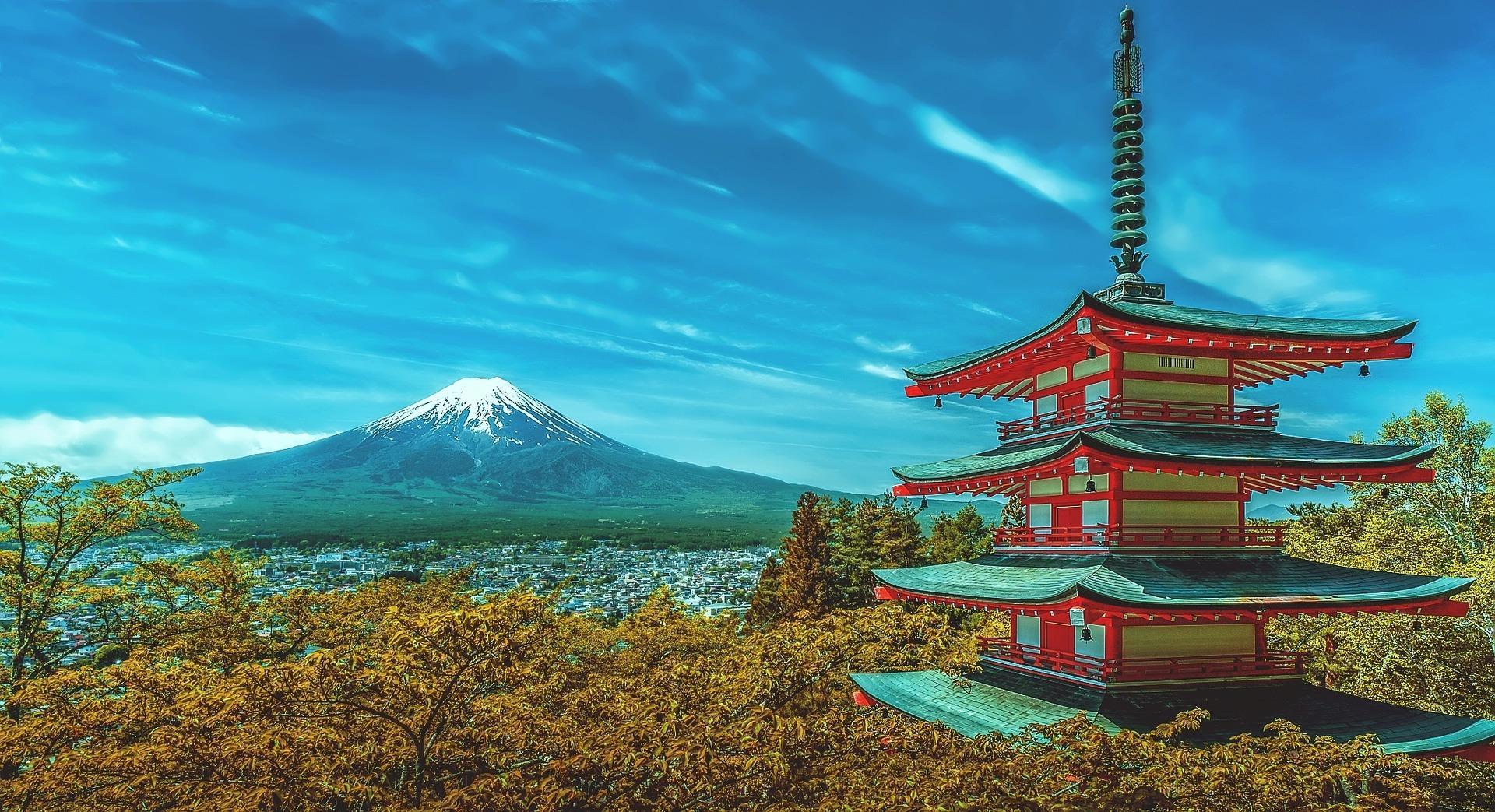
Mount Fuji remains an active volcano, although it is currently dormant. Seismic monitoring tracks any signs of volcanic activity beneath this towering Japanese symbol.
Find out more about the cost of visiting Mount Fuji.
Historical Eruptions
Throughout its long history, Mount Fuji has experienced numerous eruptions. There have been several major eruptions at Mount Fuji. The first of these major eruptions took place in the Jogan era in 864. This eruption covered the northeast of the volcano with huge lava flows separating the Lake Senoumi into the Saiko and Shojiko lakes.
There were sixteen recorded eruptions between 800 and 1083 during the Heian era. Periods of inactivity at Mount Fuji can last for centuries like between 1083 and 1511.
The most famous occurred in 1707, known as the Hoei eruption. Beginning on December 16, 1707, this powerful eruption lasted about two weeks. It also took place 49 years after the Great Hoei earthquake, one of the biggest earthquakes to have ever hit Japan.
Find out what else there is to do at Mount Fuji.
Unlike earlier eruptions that produced flowing lava, the Hoei event released massive amounts of volcanic ash. Ash fell as far away as Edo (modern-day Tokyo), disrupting agriculture, burying villages, and darkening skies. Crops failed, and local communities suffered long-term economic hardship.
This created three new volcanic vents. This eruption caused lava flows and spread volcanic ash across the Edo region (now Tokyo) sixty miles from the volcano. This was a 4 on the Volcanic Explosivity Index.
The Hoei eruption did not produce lava flows from the summit crater but instead opened a new vent on the mountain’s southeastern flank. The Hoei crater remains visible today and serves as a reminder of the Fuji volcano’s unpredictable power.
While Mount Fuji has remained quiet since 1707, scientists classify it as an active volcano. Advanced monitoring systems track seismic tremors, gas emissions, and ground movement to prepare for potential future eruptions.
Cultural and Religious Significance
Mount Fuji holds immense cultural and spiritual meaning in Japanese society. In Shinto belief, mountains are sacred spaces inhabited by kami (spirits). Fujisan is associated with the goddess Konohanasakuya-hime, who symbolizes life and volcanic rebirth. During the Edo period, Fuji-ko religious groups organized pilgrimages, emphasizing purification and devotion. Shrines were established at the mountain’s base and summit, many of which still stand today.
Find out how to plan a trip to Mount Fuji.
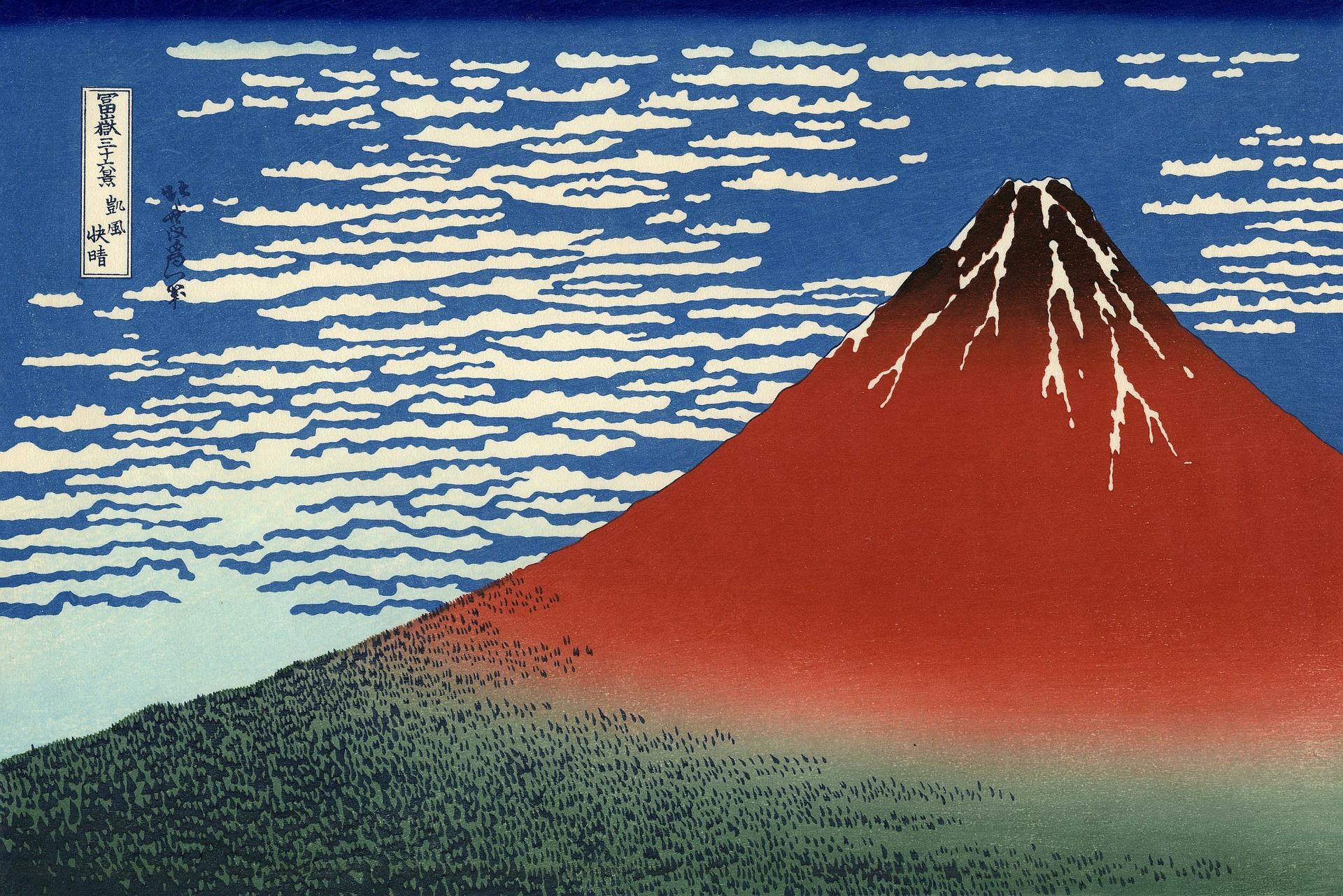
Mount Fuji’s influence extends deeply into Japanese art and literature. The mountain appears in countless paintings, poems, and woodblock prints. Perhaps the most famous artistic representation is Katsushika Hokusai’s series Thirty-Six Views of Mount Fuji, including The Great Wave off Kanagawa.
| Title | Creator | Year | Type |
|---|---|---|---|
| Thirty-Six Views of Mount Fuji | Katsushika Hokusai | 1830s | Woodblock prints |
| The Great Wave off Kanagawa | Hokusai | 1831 | Ukiyo-e print |
| The Tale of the Bamboo Cutter | Anonymous | 10th century | Literature |
| Mount Fuji Poems (Various) | Matsuo Bashō | 17th century | Haiku |
Mount Fuji in Modern Times
In 2013, Mount Fuji was designated a UNESCO World Heritage Site. Importantly, it was recognized not only for its natural beauty but as a cultural heritage site due to its artistic and spiritual significance.
Each year, hundreds of thousands of visitors climb Mount Fuji during the official climbing season, typically from early July to early September. Outside this window, weather conditions can be extremely dangerous.
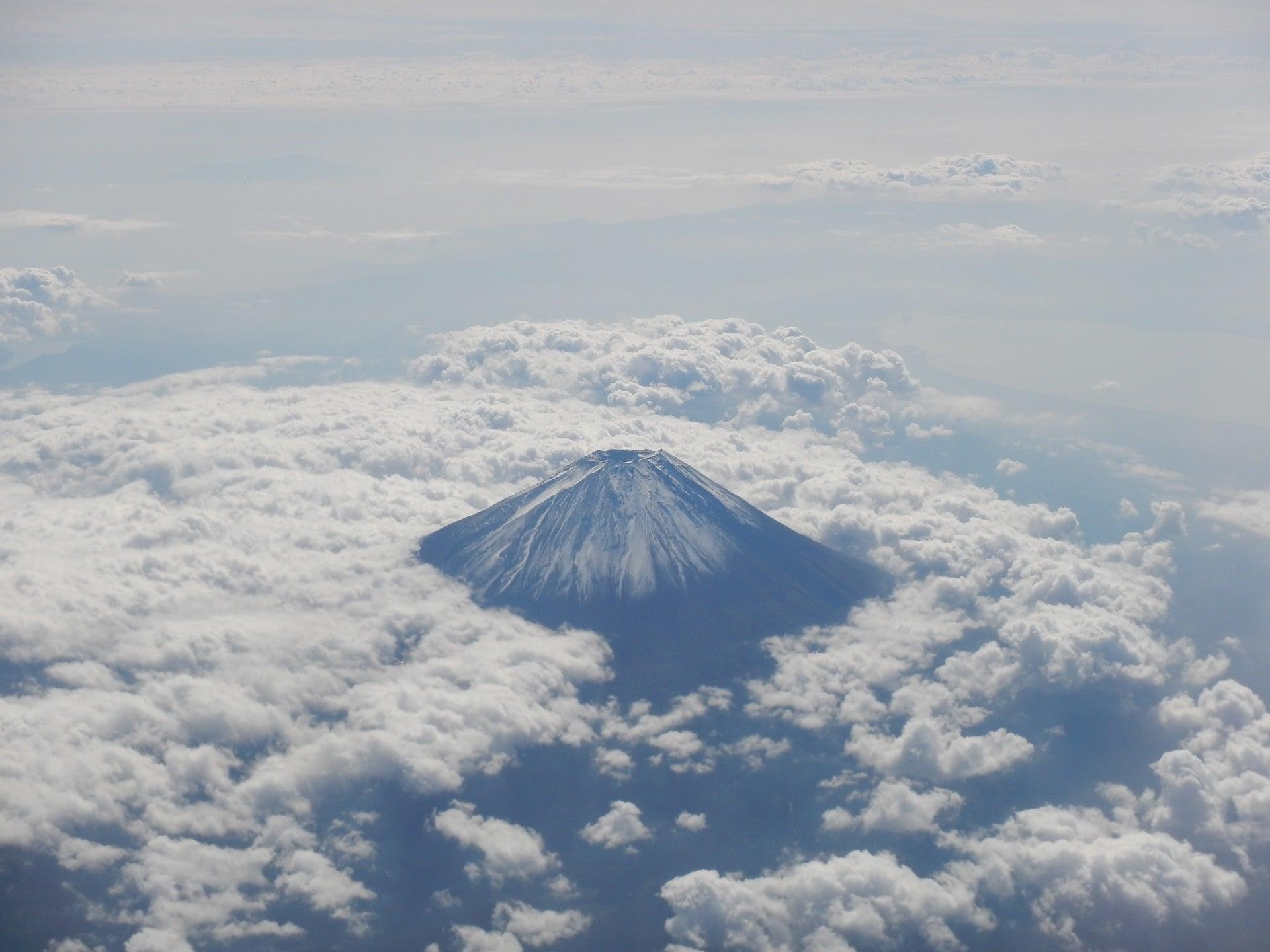
In recent years, overtourism has become a growing concern. Large crowds, litter, and trail erosion prompted local authorities to introduce climbing fees and visitor limits. These measures aim to preserve the environment of Fuji’s surrounding national park and protect its fragile ecosystem.
Many people head up the mountain at night so they can enjoy the sunrise. However, you need to be careful when heading up Mount Fuji. As the proverb goes:
“He who climbs Mt. Fuji is a wise man; he who climbs twice is a fool.”
Mount Fuji is also sadly known for Aokigahara, the suicide forest. Nowadays, there are measures to discourage those considering taking their own lives.
Aokigahara, located at the base of Mount Fuji, is a dense forest formed on ancient lava flows. It became widely known due to its association with suicide, though today authorities emphasize prevention efforts and mental health awareness. Beyond its reputation, it is also recognized for its unique geology and hiking trails.
Modern monitoring systems track volcanic activity continuously. Emergency preparedness plans are in place should another eruption occur. Although no eruption has happened since 1707, experts continue to study Fuji’s seismic patterns carefully.
Climbing Mount Fuji
Climbing Mount Fuji is a popular pilgrimage and adventure experience that attracts hundreds of thousands of hikers each year. The official climbing season typically runs from early July to early September, when trails are open, mountain huts operate, and weather conditions are safer.
There are four main trails: Yoshida, Subashiri, Gotemba, and Fujinomiya. The Yoshida Trail is the most commonly used due to its accessibility from Tokyo and well-developed facilities. Many climbers begin in the afternoon, stay overnight in a mountain hut, and wake before dawn to reach the summit for goraikō, the breathtaking sunrise above the clouds.
Moderate difficulty level. Most popular route; many mountain huts; separate ascent/descent paths; easy access from Tokyo. 5–7 hours up / 3–5 hours down.
Moderate difficulty level. Forested lower section; joins Yoshida Trail higher up; fewer crowds at start. 6–8 hours up / 3–5 hours down.
Challenging difficulty level. Longest route; fewer facilities; famous for volcanic sand descent (“sunabashiri”). 7–10 hours up / 3–6 hours down.
Moderate to challenging difficulty level. Shortest ascent distance; steep and rocky; closest route to the summit. 4–6 hours up / 2–4 hours down.
Although often described as a “non-technical” climb, the ascent is physically demanding due to steep, rocky terrain and high altitude. Preparation, warm clothing, and awareness of altitude sickness are essential.
Japan's Iconic Mountain
Mount Fuji endures as far more than Japan’s tallest mountain. It stands at the intersection of geology, spirituality, art, and national identity: shaped by volcanic forces, revered in religious tradition, and captured artistically in centuries of creative expression.
Mount Fuji remains both a natural wonder and a carefully managed heritage site, balancing tourism with environmental preservation.
References
- “Fujisan, Sacred Place and Source of Artistic Inspiration.” UNESCO World Heritage Centre, https://whc.unesco.org/en/list/1418/. Accessed 3 Mar. 2026.
- “Hōei Eruption.” Wikipedia, Wikimedia Foundation, https://en.wikipedia.org/wiki/H%C5%8Dei_eruption. Accessed 3 Mar. 2026.
- “Mount Fuji.” Wikipedia, Wikimedia Foundation, https://en.wikipedia.org/wiki/Mount_Fuji. Accessed 3 Mar. 2026.
Summarize with AI:
Did you like this article? Leave a rating!


 Loading...
