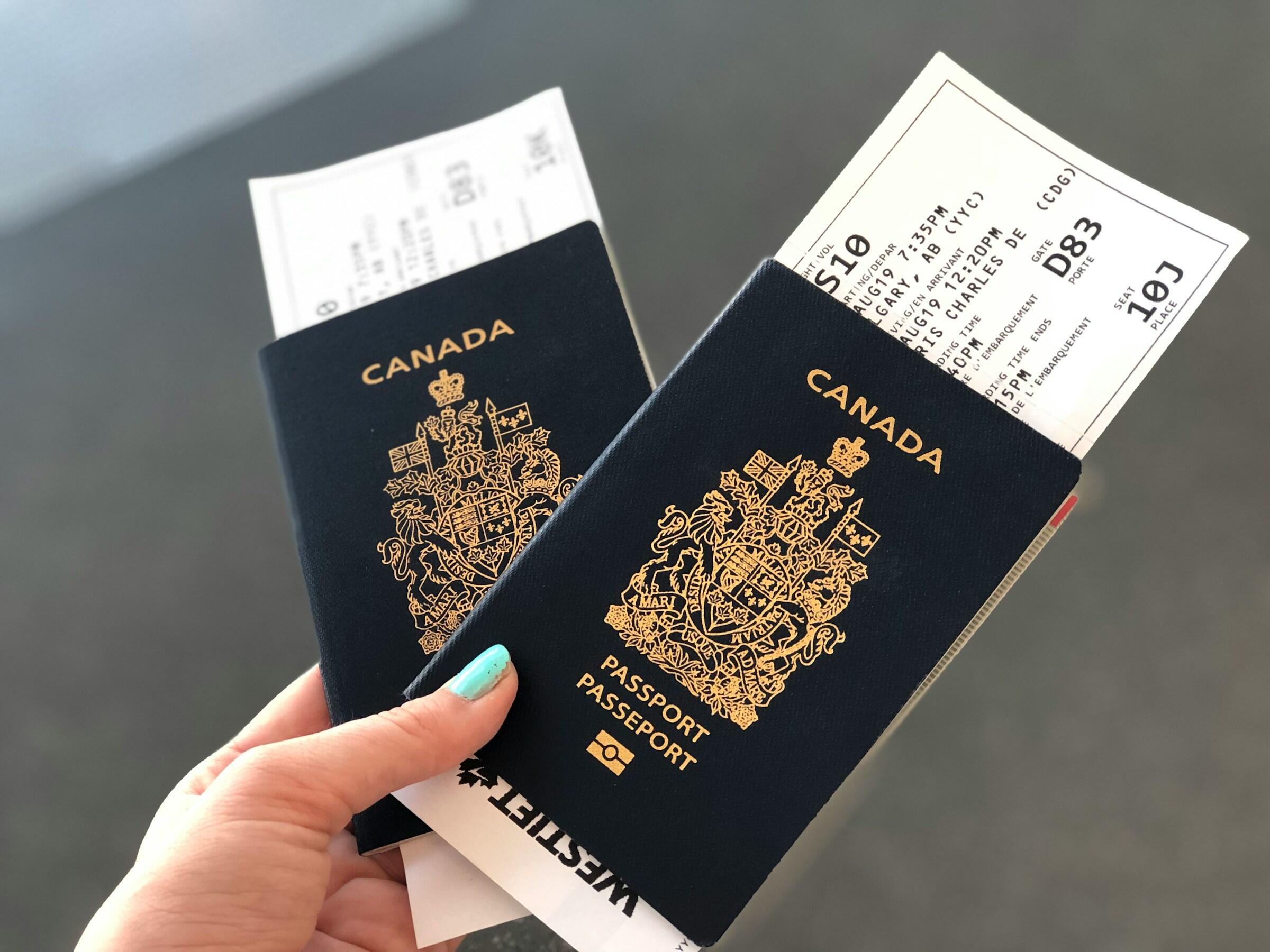

Are you a Canadian student dreaming of studying abroad? You're not alone. International mobility is a rite of passage. It's a well-known practice, yet surprisingly few students will do it, especially in Canada. While 33 percent of French students and 19 percent of Australians study abroad, only 11 percent of Canadian undergraduates do so 1. Why embark on the adventure of studying abroad as a Canadian?




Choosing the Right Study Abroad Program
Making a decision when having too many choices can be overwhelming. If it is your first time planning to study abroad and you're not sure what to choose, we'll leave you with the best advice. Here are a few practical steps to help you choose the proper study abroad program if you're Canadian.
Identifying Your Academic and Career Goals
Before anything else, and like in all domains of life, preparation is crucial. When you are asking the right questions, you'll feel aligned, and everything will fall into place. Start with "What are your favourite subjects?" Answering these questions carefully and intentionally will help you see more clearly, and the next steps will become easier:
- What are your long-term goals?
- How do you want to feel while working?
- What skills do you want to develop?
- With your international experience, do you want to learn something new or become an expert in what you're already studying?
- What about soft skills?
- Do you want to learn a new language?
- Are you drawn to a particular culture?
While 86% of Canadian students want to study abroad, 80% would require financial assistance to do so. The Canadian government launched, in recent years, a pilot project offering $5,000- $10,000 annually to support up to 11,000 undergraduate students studying or working abroad. 2
Researching Destinations and Institutions to Study Abroad
Having clear goals helps narrow down the right destination and institution. Whether you want to study overseas in Europe, Asia, or elsewhere, Canadian universities have exchange agreements with hundreds of partner institutions worldwide. From Europe to Asia, international universities welcome Canadian students abroad.
For some Canadian students looking to study abroad, the U.S., the UK, and Australia remain extremely popular due to their cultural and linguistic proximity, but why not explore beyond the obvious? Before choosing an institution, consider its academic reputation, the languages taught, and the support available to international students.
📍 School's Reputation
- Is the institution accredited?
- How many Canadian students are admitted to a specific program or country?
👯♀️ Influence on your career path
- Will your home university recognize the credits?
- Is a semester or a summer course more convenient?
⏰ Personal interests
- What country would you like to discover?
- Does it have a language requirement?
Understanding Program Types
After setting a clear intention list, it's time to choose your program type. With exchange programs, you pay tuition to your Canadian university while studying abroad. Direct enrollment means you register directly with your target institution and pay its fees.
If you want to gain experience, internships are another option. In general, the length of your stay abroad can vary. You can think long-term, with programs lasting 4 to 6 months, or short-term, with programs lasting 4 to 8 weeks in the summer. Consider what works best for your timeline and finances. 3
Studying abroad: Navigating Visa and Entry Requirements
The length and complexity of visa processes are often underestimated. First, find out which visa you need for your target country, then apply as soon as possible. Our advice is to triple-check the required documents list to avoid delays.
Understanding Visa Categories
When studying abroad from Canada, the first two steps are choosing a destination and determining the duration.
Each country has its own system, so check the requirements as soon as you can; visas can take months, as you have to match the requirements with the acceptance from the institution you want to apply to, insurance, accommodation, and other significant parts of the trip are important factors to take into account for granting you the visa.
For the U.S., you'll need to apply for an F-1 student visa, which is designed specifically for students. In Europe, it depends on how long you're staying: Canadians can visit the Schengen area for up to 90 days without a visa, but staying longer than that requires a student visa.
| Country | Visa Type | Processing Time | Work Permitted |
|---|---|---|---|
| United States | F-1 Student Status | Varies | Up to 20 hours/week on-campus |
| United Kingdom | Student Visa (Tier 4) | ~3 weeks | Up to 20 hours/week during term |
| Australia | Subclass 500 | 35-61 days | 48 hours/fortnight during term |
| France | Long-stay Student Visa | 2-4 weeks | Limited part-time work allowed |
| Germany | Student Visa (D) | 6-8 weeks | 120 full days or 240 half days/year |
| Spain | Student Stay Visa | varies | Under certain conditions |
Application Process
Timing is important in the visa application process 4. Treatment times vary by country and season, ranging from weeks to months. Here are some tips to keep everything under control:
Country-Specific Regulations

The devil is in the details; every document counts when you want to study abroad from Canada. What's required for one country may not apply to another. Every destination has its specificities. For the UK, you'll need a Confirmation of Acceptance of Studies (CAS) letter from your university along with your acceptance letter.
Europe is expected to launch an entry/exit system in the near future. Always check the latest information from official EU sources before you travel. Don't rely on AI for entry requirements and required documents. Verify with your university or embassy in Canada or abroad.
Financial Planning and Scholarships
"Money, money, money, must be funny…" Or not. Budgeting can be a headache for some, but it's essential when preparing to study abroad. Having a global view of costs and exploring available funding options can help you avoid significant financial stress while you're away.
Estimating Costs for Canadian Students
The first consideration is tuition. Is it paid in Canada or abroad? That makes a difference because, depending on whether you choose the U.S., UK, or Australia, fees will be higher than in other regions. Beyond tuition, there's accommodation. Are there affordable residences for students? Cheap shared flats?

Other costs to consider in your monthly budget while studying abroad from Canada are groceries, transportation, internet plans, gym memberships, and leisure activities; all must be on your list.
There are also fees for airfare, visas, vaccinations, and insurance. It's important to consider all these costs early on so you can begin seeking available funding.
| Country | Tuition (Average) | Accommodation | Living Expenses | Health Insurance | Total Estimated |
|---|---|---|---|---|---|
| United States | $25,000 - $55,000 | $10,000 - $18,000 | $12,000 - $15,000 | $1,500 - $3,000 | $48,500 - $91,000 |
| United Kingdom | $18,000 - $35,000 | $12,000 - $20,000 | $10,000 - $14,000 | Included in visa fee | $40,000 - $69,000 |
| Australia | $20,000 - $45,000 | $10,000 - $18,000 | $15,000 - $20,000 | $600 - $800 | $45,600 - $83,800 |
| France | $200 - $4,000 | $8,000 - $15,000 | $10,000 - $13,000 | $300 - $500 | $18,500 - $32,500 |
| Germany | $0 - $3,000 | $7,000 - $12,000 | $9,000 - $12,000 | $1,200 - $1,500 | $17,200 - $28,500 |
| Spain | $1,000 - $8,000 | $6,000 - $12,000 | $8,000 - $11,000 | $600 - $900 | $15,600 - $31,900 |
Exploring Funding Options
Many Canadian universities offer mobility grants for students participating in exchange programs. Does your institution have funding opportunities available? You can also explore Canadian government scholarships on sites like EduCanada; they offer tons of helpful resources for Canadian students studying abroad.
Your host university may also offer scholarships for incoming international students. You can also look into professional associations and foundations. As with other procedures, apply early to multiple sources to increase your chances.
Budgeting Tips
If you haven't done it so far, tracking your daily expenses can make a real difference! Many tools can help: budgeting apps, a basic spreadsheet, or a simple notebook.
The good news is that with your student card, you can get discounts: transportation, museums, cinema, you name it. Look up information and see what local benefits there are.
If needed, you can also work part-time. Triple-check how work articulates with your visa status, so you avoid fines and irregular situations.
Preparing for Cultural Adaptation

When you study and go abroad, even for a short period, there's more to adapt to than just a new institution. You'll be entering a life full of novelty: different culture, social norms, and sometimes even a new language. The more you learn in advance about the new culture you'll be exposed to, the more time you'll have to enjoy your experience abroad.
Understanding Cultural Differences
Basic etiquette can vary drastically from one country to another. If you're used to having dinner at 6 p.m., you might be shocked to discover that restaurants in Spain rarely serve it before 8 p.m. Some important questions to investigate before studying abroad as a Canadian are:
- 🧐 What are the main holidays or Historic dates?
- ⏰Are people punctual?
- 🫱🏽🫲🏻 What's considered polite or rude while greeting or introducing yourself?
- 🍴 How to politely order at a restaurant?
- 🙋🏻♀️ Learning a few basic phrases in the local language helps you integrate more quickly and navigate daily life more smoothly.
To avoid surprises, do your research before leaving and, most importantly, try to adapt to local habits. Listen to this Canadian student's adventure in Japan in 2025; Abby studies creative writing, and her exchange experience in Asia could help you understand how culture shapes your expectations, development, and academic results.
Health and Safety Considerations
Safety and health are priorities on your travel checklist when studying abroad. As a general requirement, most institutions require Canadian students studying abroad to have travel insurance that covers emergency medical care, as their provincial health insurance may provide only limited coverage.
Staying Connected
Being alone abroad can be both exciting and scary. Keep your support system close as you explore your new surroundings. Regular check-ins via messaging apps, video calls, or social media can make all the difference.


At the same time, don't forget to make the most of the experience through new local relationships. It's part of what makes studying abroad life-changing. Join events related to your interests, and don't hesitate to reach out to your university's international student services department when you need help. The friendships you make abroad can last a lifetime and become some of your most meaningful connections.
Returning to Canada
You've had a once-in-a-lifetime experience abroad. What now? It's important to research how life will be once you're back in Canada.
Credit Transfer and Academic Recognition
Don't wait until you get back to see which credits will transfer to your home university. Before leaving, check the list of the courses you'll take abroad with your advisor. Once you're back, ensure everything is registered and will transform correctly. Always keep all documents and confirm any information in writing.
Reintegrating into Canadian Society
Coming home can be surprisingly challenging. Life is the same. You are not. After adapting to a new culture, Canada may feel different from how you remember it, or you may feel you've changed in ways that make readjusting awkward. Give yourself time to settle back in, stay connected with friends you made abroad, and seek out returned-study-abroad student groups on campus.
Leveraging International Experience
Having international experience is a significant asset for employers. The skills you developed abroad are highly valued. Don't list it as just another experience and emphasize what you've learned.
It can be a new language, problem-solving, or independence, mentioning everything that made you grow and the differences you've noticed while away. Bringing cultural awareness to the workplace is highly recommended.
References
- Government of Canada. Building on Success: International Education Strategy (2019). Available at: https://www.international.gc.ca/education/assets/pdfs/ies-sei/Building-on-Success-International-Education-Strategy-2019-2024.pdf (Accessed: February 2026).
- Canadian Bureau for International Education. Creating global citizens through global education and work-integrated learning: The Government of Canada invests in Canada’s youth. (August 2019) Available at: https://cbie.ca/global-citizens-through-education-work-integrated-learning-government-canada-invests-youth/ (Accessed: February 2026).
- University of Alberta. International Education + Enrolment. (No date) Available at: https://www.ualberta.ca/en/international/global-learning/go-abroad/programs/index.html (Accessed: February 2026).
- International Education Specialists. UK Student Visa: Requirements, Cost, and Application Process for International Students and Canadians (2025/2026). (3 December 2025). Available at: https://www.idp.com/canada/blog/uk-student-visa/#uk-student-visa-requirements-for-international-and-canadian-students (Accessed: February 2026).
- PTE Magic, Australia. Student Visa Working Hours: Rules, Limits & Updates for International Students. (March 3, 2026). Available at: https://ptemagic.com.au/student-visa-working-hours-rules-limits-updates-for-international-students/ (Accessed: February 2026).
Summarize with AI:
Did you like this article? Leave a rating!

 Loading...