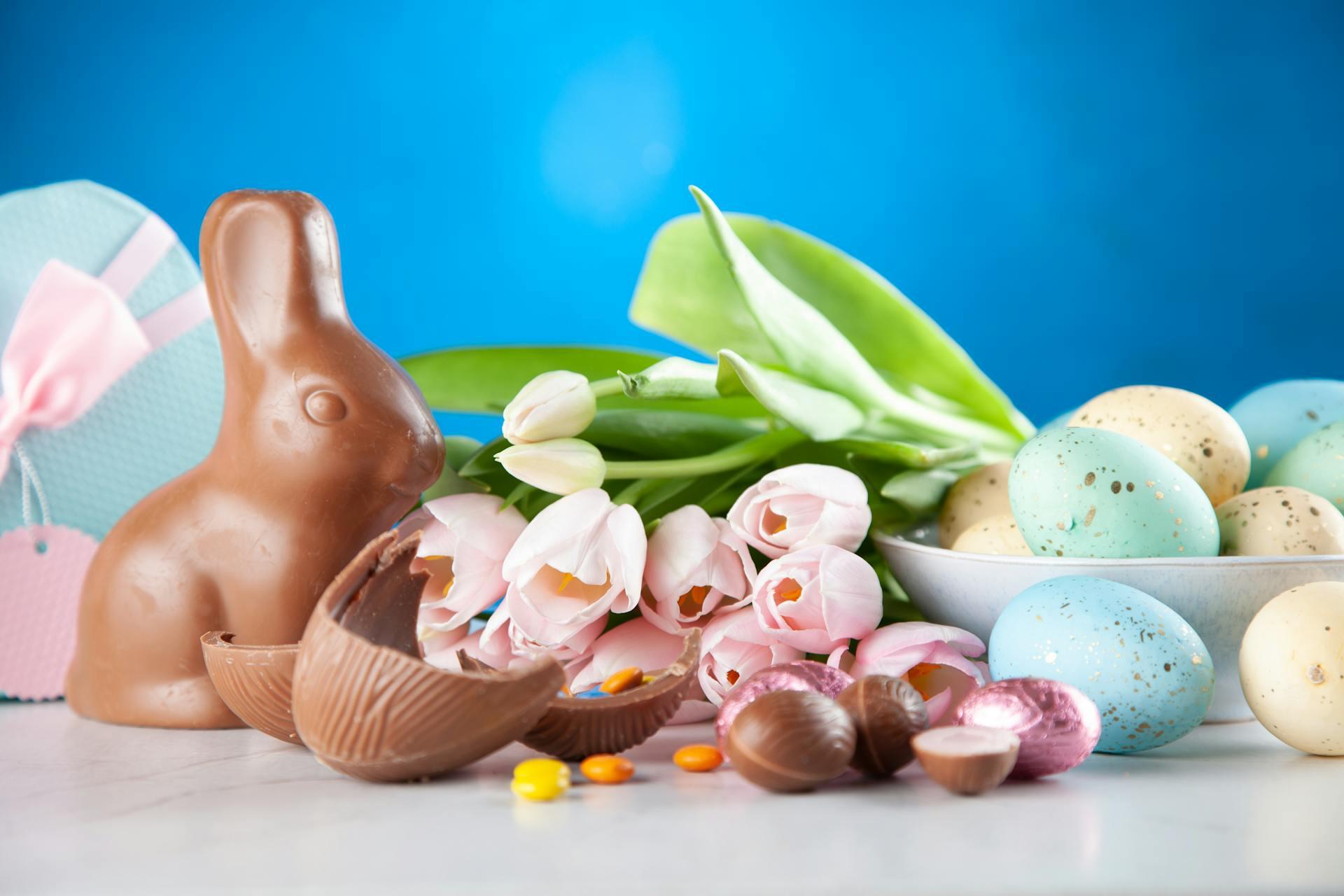

Easter is generally the most important holiday in the Christian calendar. Its importance and popularity have even spread to the secular world through fun symbolic traditions like dyed eggs, chocolate bunnies, and the Easter bunny. Since Easter occurs in springtime, when the weather usually begins to improve, it’s a convenient way for everyone to celebrate the coming of spring. Find out more about the many Easter symbols, their deeper meanings and what they represent for people today.
| Symbol | Meaning |
|---|---|
| Easter Eggs | Renewal, ressurection |
| Easter Bunny | Revival, resurrection, empty tomb |
| Easter Lilies | Purity, virtue, announcing Jesus's resurrection |
| Paschal Candle | Light of Christ, blessings |
| Pysanky | Rebirth, overcoming oppression |
| Easter Bonnets | Celebration, joy |
| Chocolate Bunnies | Celebration, playfulness |
| The Cross | Resurrection, sacrifice, Jesus dying for sins |
| Lambs | Jesus as a "Sacrificial Lamb" |
| Palm Branches | Glory of Jesus, revering Jesus |


Easter Eggs – Emblems of New Life
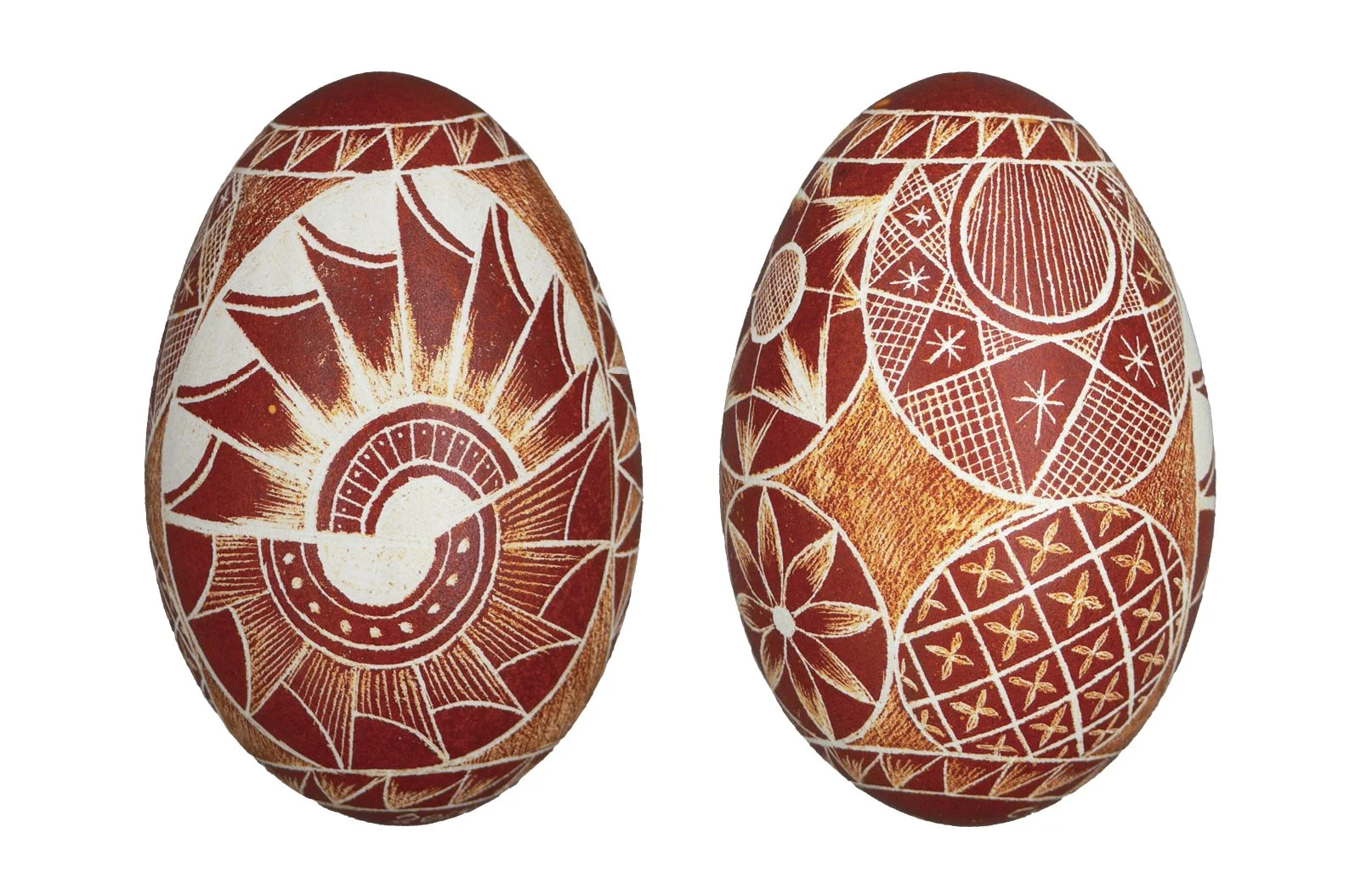
Eggs have been a symbol of new life, fertility, birth, and renewal in cultures all over the world, long before Christianity. Their smooth surfaces and two-part interior were a source of fascination and reverence as a source of nourishment. Chicks hatching from the egg have always been a spiritual symbol, representing life and even the origins of the universe.
In the pagan times of Europe, eggs were frequently part of spring feasts, since the hens would start laying their eggs again with the coming of the season. Eggs and their discarded shells were also buried in the ground to fertilize the soil, bidding in a plentiful summer growing season.
Christian Adaptation
When Christianity spread through Europe, it absorbed local customs and changed them to become activities of devotion to the Christian god instead of the pagan deities. Eggs fit perfectly with the practical and spiritual aspects of Easter.
In the practical sense, eggs were often boiled as a way to preserve them. Traditional Christians observe Lent, a period of fasting that includes not eating things like meat, eggs or milk in the 40 days leading up to Easter Sunday. Preserving eggs for the fast-breaking feast was a perfect use for the eggs.
Spiritually, the shell of the egg represents the sealed tomb Jesus was placed in after his crucifixion. Breaking the shells represents the opening of the tomb, and the egg escaping the shell represents the resurrection. That’s why Easter eggs are sometimes called “resurrection eggs.”
Eggs: Pagan Symbolism
- Fertility (for animals and plants)
- Birth
- Renewal
- Life
- Origins of the Universe
- Nourishment
Eggs: Christian Symbolism
- Renewal
- Revival
- Life
- Resurrection
- Cracking the shell is Jesus “breaking out” of the tomb
Modern Practices
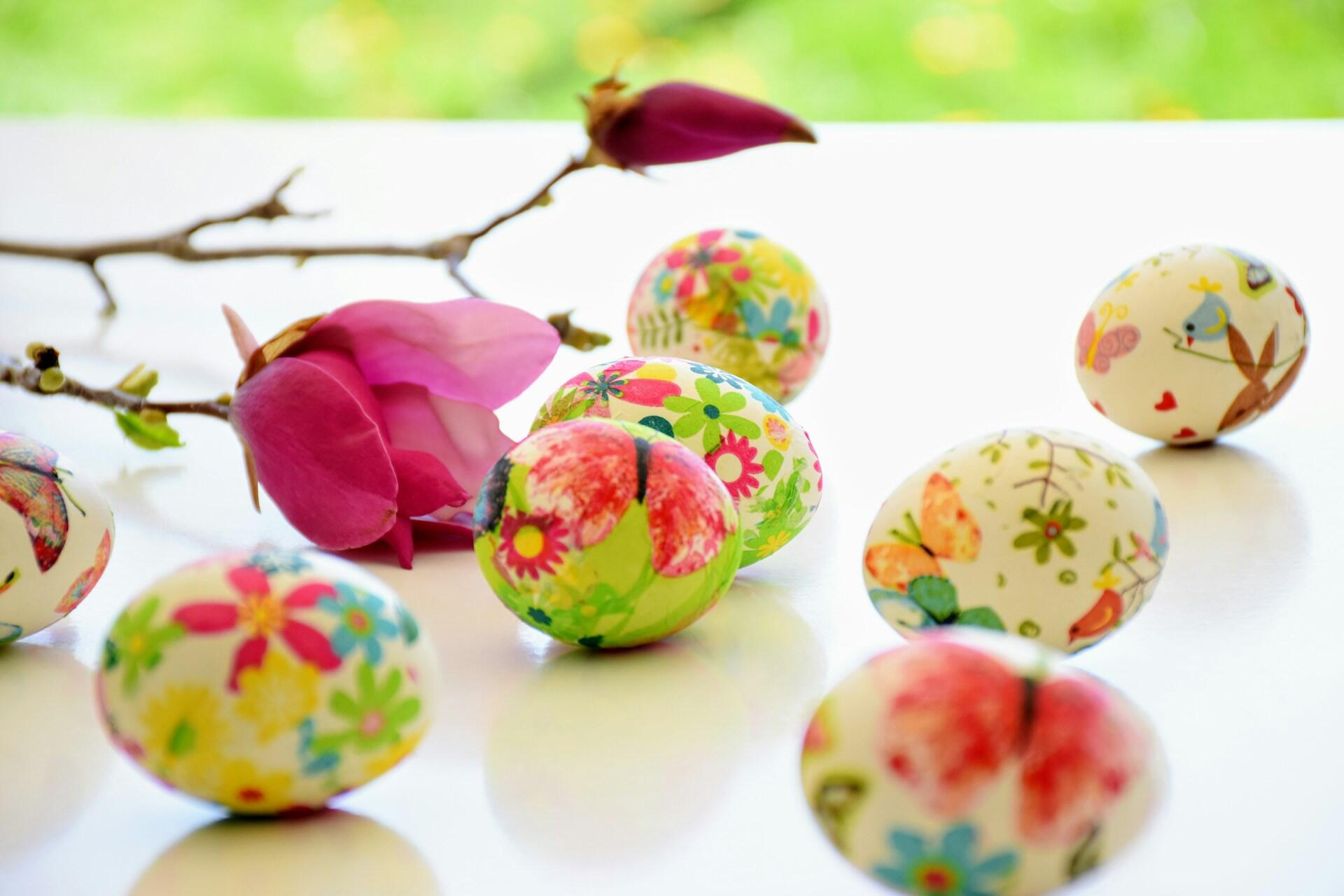
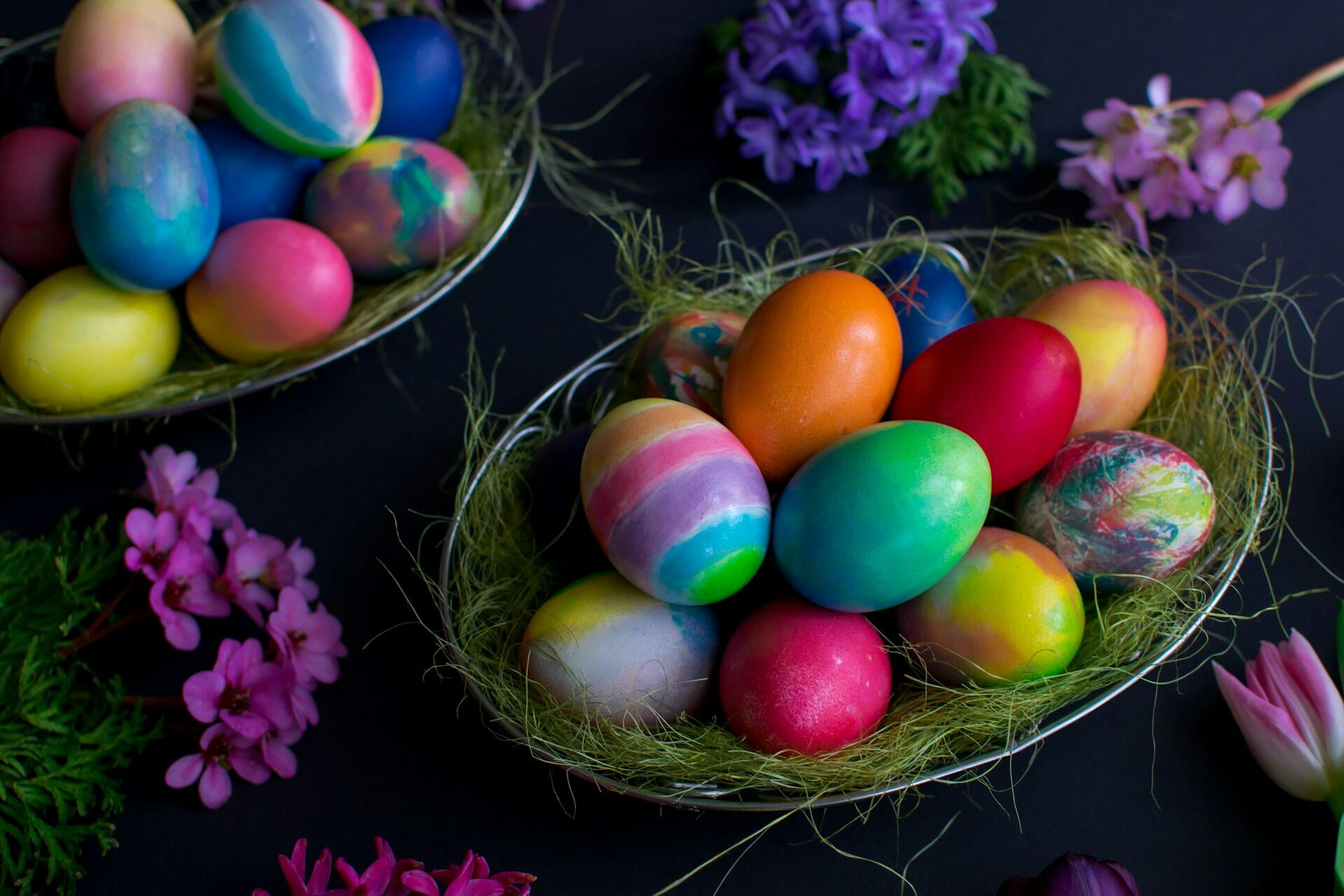
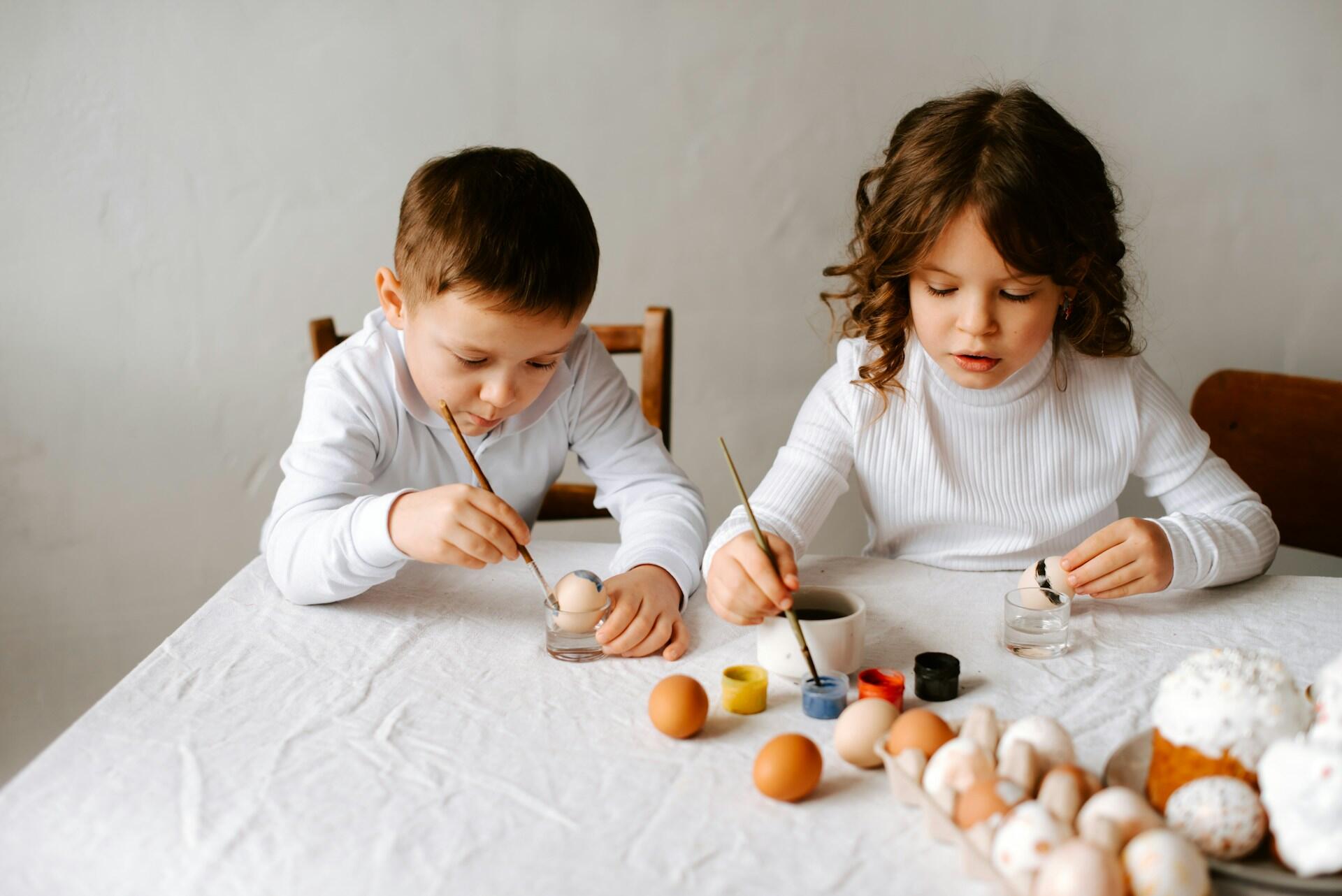
Dyed eggs likely began in medieval times as a way to create a practical and beautiful gift. The practice became naturally associated with Easter since eggs were also present.
In some Christian sects, it’s believed that Mary Magdalene was carrying a basket of eggs when she discovered the empty tomb, and that the eggs turned red to symbolize the blood of Christ. This belief would certainly invite egg-dying into the tradition!
Today, real eggs are dyed and decorated in different styles all over the world. They are often used to make feast foods afterward, but sometimes they are only used as decoration.
Plastic eggs are usually used in egg hunts, but some communities hide real eggs as well.
In Alberta, you can find the Vegreville Pysanka, a sculpture of a beautifully decorated traditional Ukrainian Easter egg. It is 31 ft (9 m) tall (including the base), 25.7 ft (7.8 m) long, and 18 ft (5.5 m) wide. It’s made of anodized aluminum and weighs over 5,000 lbs (2,270 kg).
The Easter Bunny – A Symbol of Fertility and Renewal
Hares and rabbits, like eggs, have been symbols of fertility and renewal in many cultures for thousands of years. They come out of hiding and hibernation in the spring to eat and mate, and they’re notorious for reproducing very quickly.
Why Easter bunny? Some accounts say that rabbits and Easter are associated with a pagan holiday dedicated to Eostre, supposedly a goddess of spring and fertility. However, not much evidence exists for these claims.
Learn more about the origins and history of Easter.
Christian Integration
A more plausible story for the Easter Bunny comes from German Christian culture and folklore. In a German text from 1682, mention is made of the Osterhase, a hare that lays eggs for well-behaved children to find. Like the idea of Santa Claus, this seems to be a fun tradition to pacify children and encourage them to behave.
The tradition is thought to have been brought to America in the 1700s when German immigrants settled in Pennsylvania (an area still known for traditional German customs, especially around Easter). The idea of a rabbit that leaves eggs, candy and small gifts for good children spread across North America as a fun family activity.
Global Variations
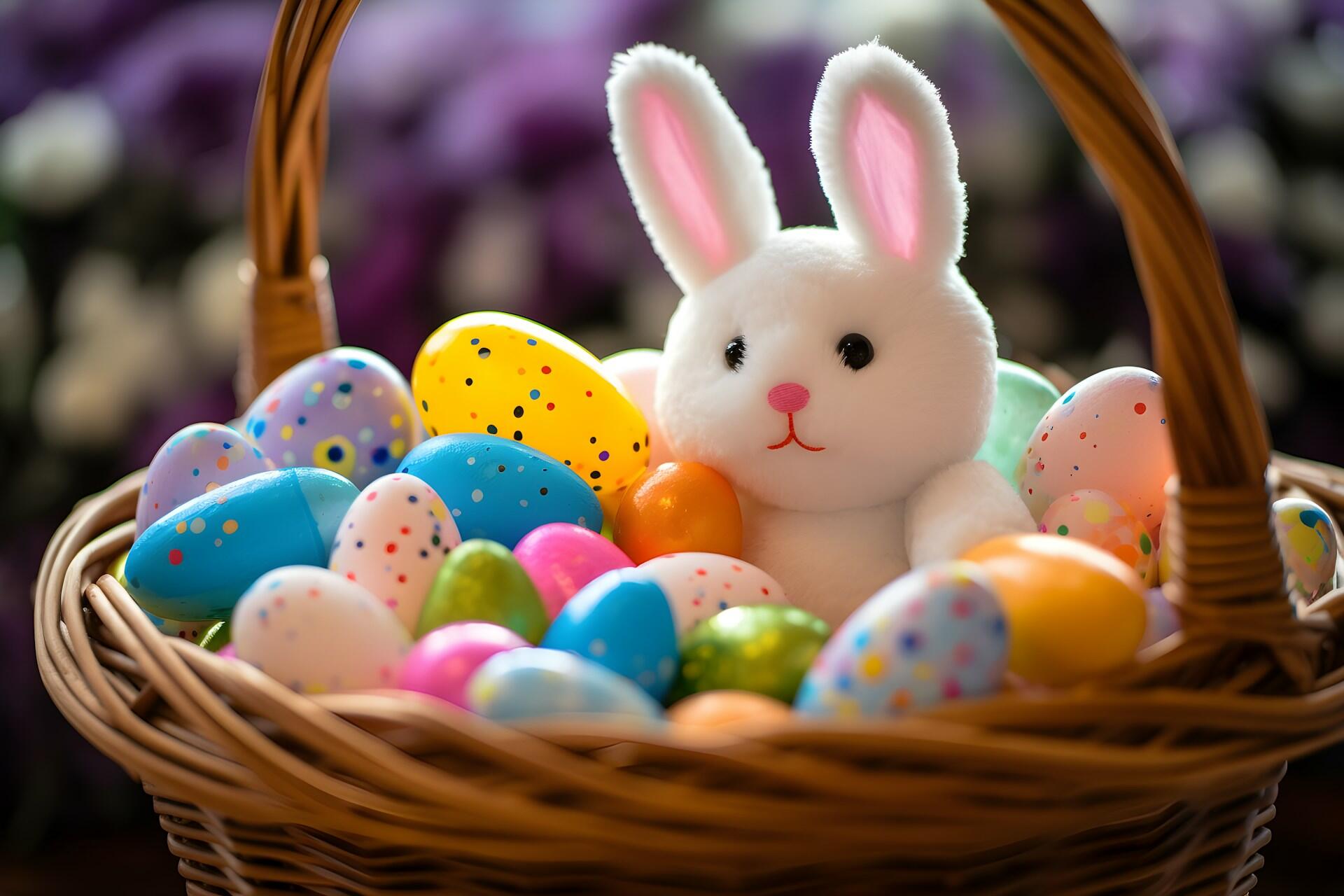
In North America, Oceania, and much of Europe, the Easter Bunny usually visits overnight, leaving behind Easter basket full of gifts, chocolates and candy; it’s essentially the springtime Santa. Many families and communities also hold egg hunts, which are often framed as being staged by the Easter bunny as well.
Belgium and France have combined the Easter Bunny lore with the “Bells of Rome,” which are said to fly from their home country to Rome, bringing eggs and chocolates with them when they return.
Chocolate bunnies first appeared in the 19th century. They were most popular in Germany until 1890, when an American candy shop owner in Pennsylvania displayed a 5-ft-tall chocolate bunny in the window to attract customers. The bunny-shaped chocolates gained popularity, and the tradition spread.
Easter Lilies – Symbols of Purity and Resurrection
Easter lilies have pure white petals in a trumpet-shaped pattern. Their elegant design and calculated springtime blooming season make them a perfect symbol of spring and life after death (the dead of winter, in this case).
To achieve a springtime bloom, botanists and greenhouses plant and tend to their Easter lilies to ensure they bloom exactly on Easter weekend. Naturally, the lily is a late spring bloomer.
Find out when Easter happens and why it changes each year.
Religious Symbolism
The lily’s pure white petals symbolize the purity and virtue of Jesus, and the trumpet-shaped blossom announces the news of Jesus’s resurrection. The flowers are visual reminders to hold faith and evoke virtue in one’s religious devotion. They are popular decorations for churches and homes around Easter time.
Just be careful, because all parts of a lily are deadly for cats!
Easter lilies (Lilium longiflorum) are native to Japan. Their popularity rose, and they were exported in the 18th century. By the 1880s, they were regularly grown in Bermuda. By the 1900s, production for American consumers had been moved to the United States. Today, almost all of the plants are grown in a handful of greenhouses on the West coast of the United States, and the bulbs are exported to other greenhouses around North America.
Paschal Candle – The Light of Christ
The Paschal candle represents the resurrection of Jesus and is used in Easter church services. It originates from a practice in early Christianity where church leaders would light candles and lamps for evening service while offering praise and thanks to God for providing the light.
The largest candles were lit on Saturday evening, in preparation for Easter services. Records show St. Augustine explained the candle and flame were blessed, and the lighting represented the holy transformation that took place in the night, which led to the empty tomb in the morning.
Liturgical Role and Ceremonial Practices
The practice was not widespread in the first few centuries, and today, it’s usually only found in Roman Catholic, Anglican/Episcopal, and Lutheran churches.
Typically, the candle is lit outside, perhaps by a blessed fire.
Then the minister solemnly carries the lit candle into the darkened church, representing the illumination of the sacred building by Christ.
In the Middle Ages, the candle was often broken into pieces and distributed to the churchgoers.
It was a kind of relic they could place in their homes to invoke God within the household.
Eventually, the practice changed, and now the candle is typically placed in a special holder where it remains for the rest of the year, only being lit or used for special ceremonies. The candle’s flame, representing God’s love and blessings and Christ’s light in the world, imbues the candle as a symbol of these things without being lit.
Design Elements
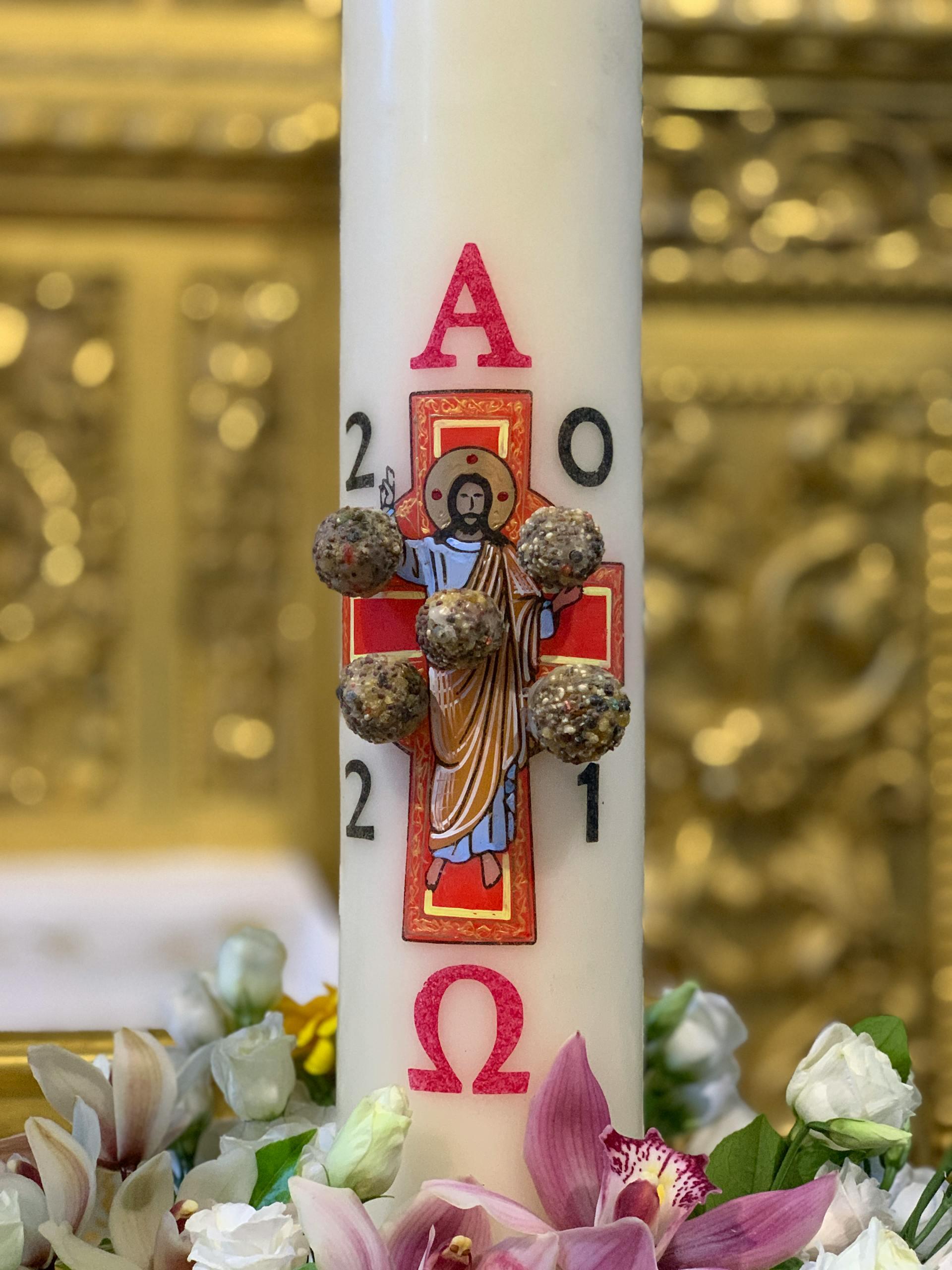
Paschal candles are intricately ornamented. The exact design details can change between churches and branches of Christianity. In general, they bear a cross, the Greek lettersalpha and omega to represent Christ as the beginning and end of all things, and the current year.
Many traditions also insert five grains of incense into the candle in the shape of a cross to symbolize Christ’s wounds during the crucifixion.
History of the Paschal Candle
The exact timeline of the Paschal candle is not known, but general knowledge and historical references tell us it’s been a practice in some churches since the dawn of Christianity.
? BCE
Ancient Jewish Sabbath Tradition
An ancient Jewish tradition of lighting a candle at the end of the Sabbath likely inspired the original Paschal candle ritual.
Before 4th century
Lucernarium Rites
Early Christians would perform this candlelighting ceremony each week, with more reverence for Easter.
Middle Ages (c. 4th century to c. 14th century)
Various Lucernarium Customs Develop
Different congregations and branches of Christianity developed their own specific candlelighting rites. Some would break the candle into pieces after the Easter Vigil for churchgoers to take home.
c. 12th century
More Adornments
Some started inscribing the year and even the dates of other immovable feasts onto the candle, along with the cross and the alpha and omega symbols. The candle was made much bigger to allow for all the inscriptions. Some candles even got as large as 300lbs. Grains of incense began to be inserted into the wax.
Modern Day
Sustainable Practices
Candles are generally much smaller, but larger than average candles. They are adorned with carvings and incense. They may be lit during the entire 50-day Easter season. The candle remains in the church and may be used for certain ceremonies, like baptisms and funerals, throughout the year.
Pysanky – Ukrainian Easter Eggs
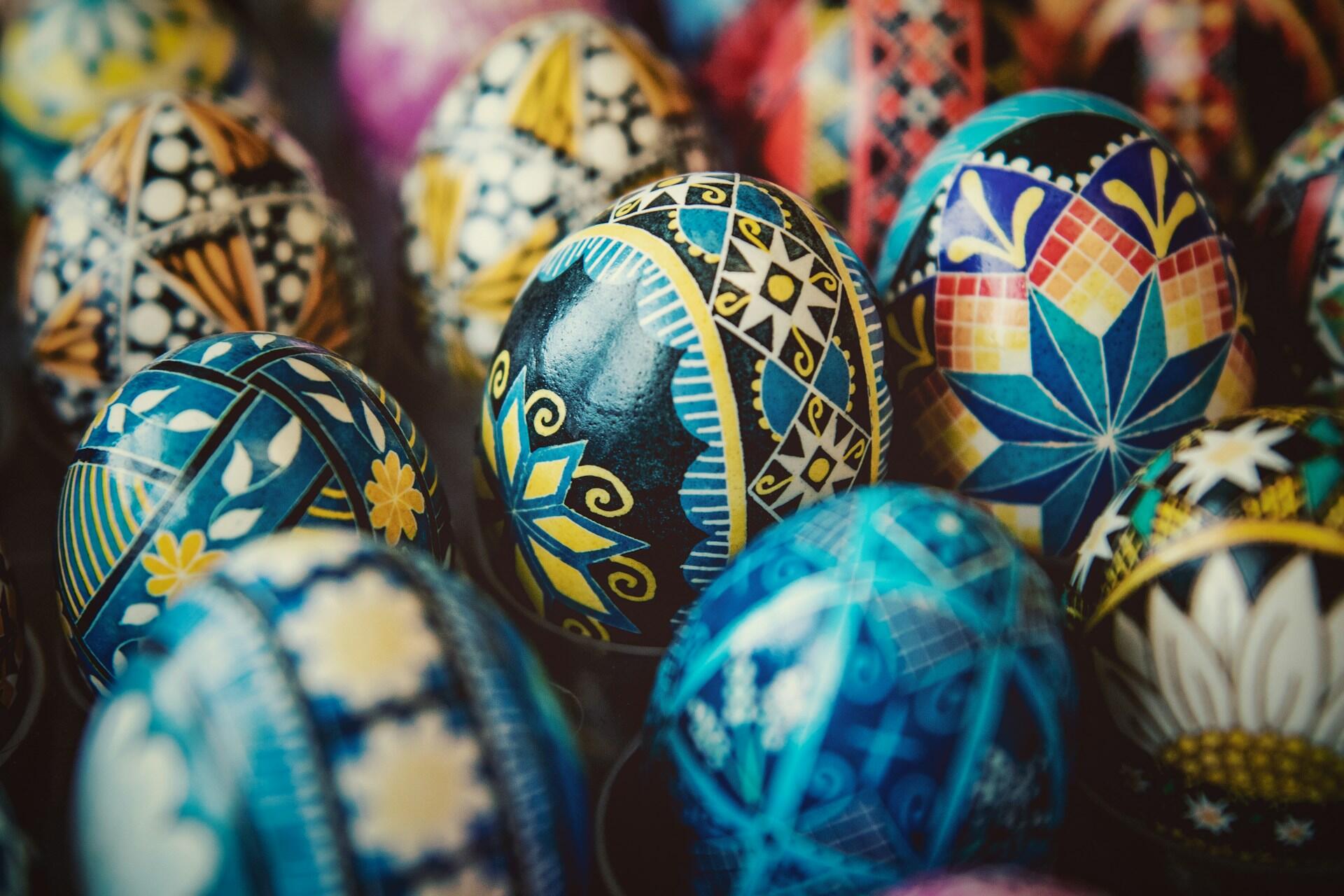
Since eggs and egg art predates Christianity, it makes sense that pysanky is an ancient, traditional Trypillian practice in the region now known as Ukraine. Archaeological discoveries have found decorated egg-shaped objects dating back to the 5th millennium BCE. Back then, the local people worshipped the sun as the source of all life. Eggs were central to spring rituals, used as talismans representing life, rebirth, fertility, protection and special powers.
The name comes from the word meaning “to write.” The designs are written onto the shell with wax rather than painted.
Discover more Easter customs from around the world!
Symbolic Designs
The intricate designs on each pysanka represent specific ideas. Common motifs include stars and sun shapes, plants, animals, and geometric designs.
| Pysanka Symbol | Meaning |
|---|---|
| Lighter colours, white spaces | Young life yet to be filled |
| Darker colours, less blank space | Older person with a full life |
| Unadorned top or bottom | Unlucky for men: baldness |
| Spirals | Trap or confuse evil, defense, protection |
| Ladders | Propserity |
| Pine needles | Health, staminia, youth |
| Crosses | Christ, Four Corners of the World |
| Wheat | Good health and harvest |
| Sun, Stars | Life, fortune, growth |
| Deer, horses, rams | Propserity |
| Fish | Christianity |
| Roses | Love |
| Poppies | Joy, beauty |
| Triangles | Trinities including the Holy Trinity |
| Saw (zig-zag) | Fire, loyalty, wisdom |
| Birds | Fertility, fulfiling wishes |
| Nets (grids) | "Fishers of people" according to Christ's reference |
| Ribbons | Everlasting life, water |
| Red | Happiness |
| Orange | Strength |
| Yellow | Hospitality |
| Green | Hope |
| Blue | Wishes |
| Purple | Faith |
| White | Purity |
| Black | Eternity |
The exact meaning within each village or family is passed down from mothers to daughters. Methods of creating the wax and dye are usually kept secret, also passed down within families.
Designs are chosen with certain people in mind, as the eggs are distributed to important people on Easter Sunday, such as the priest, family members, and specific members of the community. Each egg would be handcrafted with symbols and colours representing their life and the egg-maker’s hopes for them in the coming year.
Cultural Resurgence
In Stalin’s Soviet Union era, the practice of pysanky was almost lost. Russia banned the practice since Stalin wanted to eliminate religion and symbols of faith, and to rid Ukrainians of their traditional folk culture. Some families continued the craft in secret, even though the penalty of being discovered could include death.
The Ukrainian diaspora kept the practice alive, and it has experienced a resurgence in the last few decades.
In light of the fighting between Russia and Ukraine, artists and communities have used pysanky as an artistic protest for peace. They decorate eggs with doves, wheat, and national colours as a symbol of support and hope. They are sold to raise funds for humanitarian aid.
Easter Bonnets – A Fashionable Tradition
Wearing new clothes at Easter time is a long-standing tradition going back centuries. New clothes, in many cultures, represent good fortune, renewal, and fresh starts. In the Christian tradition, new clothes are especially apt after a long period of fasting as a symbol of completing an important form of worship and coming out on the other side rejuvenated in faith.
Cultural Significance
In America, after the Civil War, bonnets morphed into a way for wealthy New Yorkers to show off new fashion trends after church. Bonnets were an important part of everyday fashion for ladies at the time. The period of socialization in the streets after Easter services was perfect for women to participate in fun competition and creative idea-sharing with one another, using their bonnets as art pieces. Overall, the extravagant bonnets were a display of joy, extending the celebration of Easter into another activity.
As fashion trends and priorities changed, the Easter bonnet has become a lot less popular. Today, there are some people and parades that still celebrate with bonnets, especially in New York City and New Orleans.
Chocolate Bunnies – Sweet Symbols of Easter
Chocolate as an Easter treat is relatively new, compared to the essential symbols and objects involved in Easter. However, it also fits right in as a fast-breaking treat after the Lenten season.
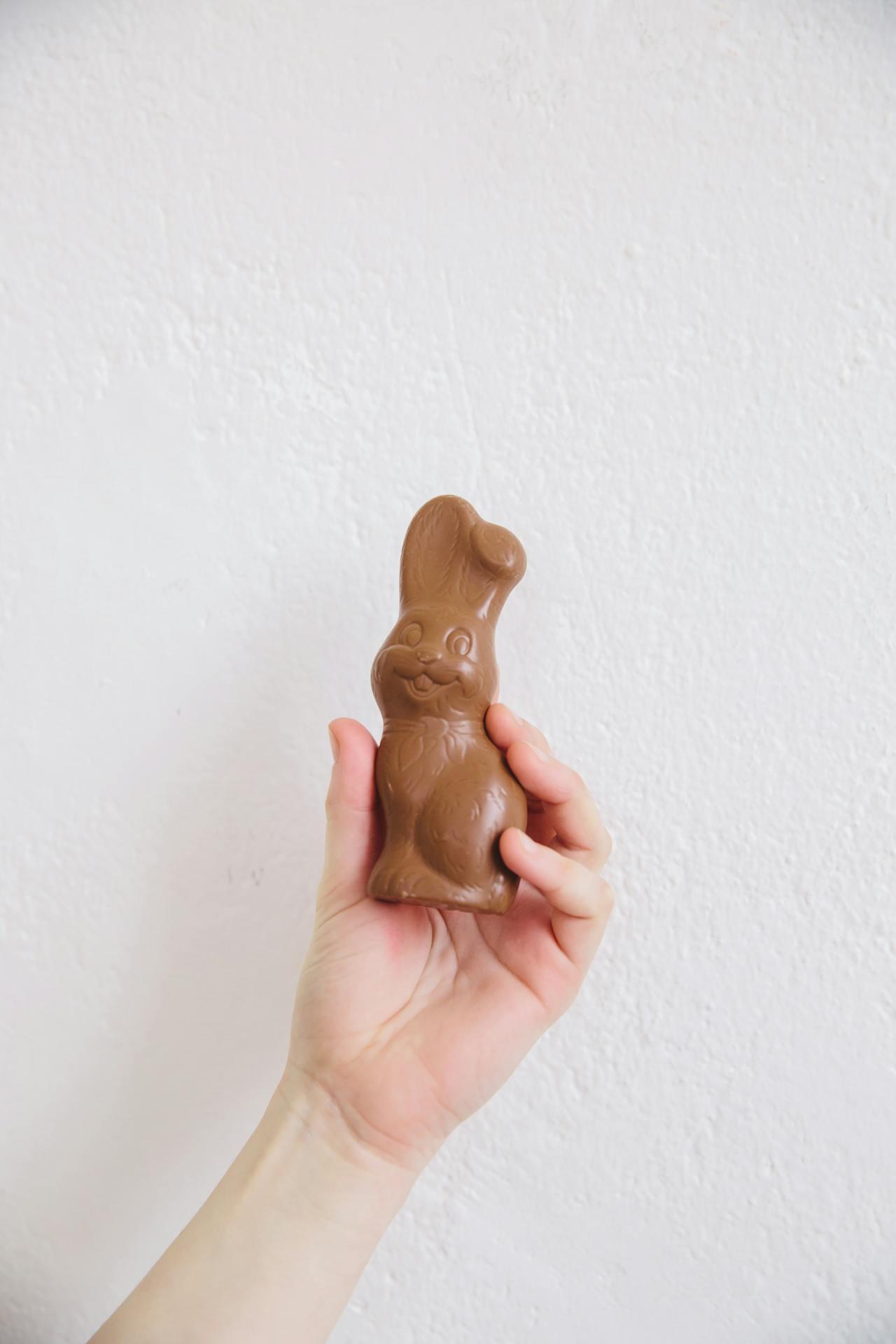
In the early 19th century, German and French chocolatiers started making festive Easter chocolate in the shape of eggs.
Soon, they also started making bunny-shaped chocolates with moulds.
By the mid-19th century, German chocolate shops were regularly making chocolate bunnies for Easter.
The idea spread, especially as German immigrants went to America.
There, in a drugstore in Pennsylvania, a 5-foot-tall chocolate bunny was made and displayed in the shop window to attract customers.
It was a hit, and the tradition of the chocolate bunny spread even more.
Why chocolate bunnies? The traditional symbols of eggs and bunnies reimagined as chocolate treats are a way to combine religious symbolism, secular symbolism, and fun for the whole family. Rabbits as symbols of spring and representatives of revival are the perfect fun, cute shape to be made into a tasty treat for the Easter bunny to leave for good children.
According to the Guinness Book of World Records, the largest chocolate rabbit was made in 2017 by Equipe da Casa do Chocolate in Brazil. The sculpture stood at 4.52 m high, 2.11 m wide, and 1.76 m long, and weighed 4,245.5 kgs.
Lesser-Known Easter Symbols and Their Meanings
There are many other symbols to be found associated with Easter, too. Each region, country, town, and congregation can have their own traditions.
The Cross – Central Symbol of Christianity
The cross is the central symbol of Christianity. But many do not realize that the cross comes from the events of Good Friday, the Friday before Resurrection Sunday (Easter), when Jesus was crucified.
The crucifix, which depicts Jesus nailed to the cross, reminds Christians of his suffering and sacrifice. The empty cross is a symbol of the empty tomb and Jesus’s resurrection, which is the central theme of Easter as a holy day.
Lambs – Representations of Innocence and Sacrifice
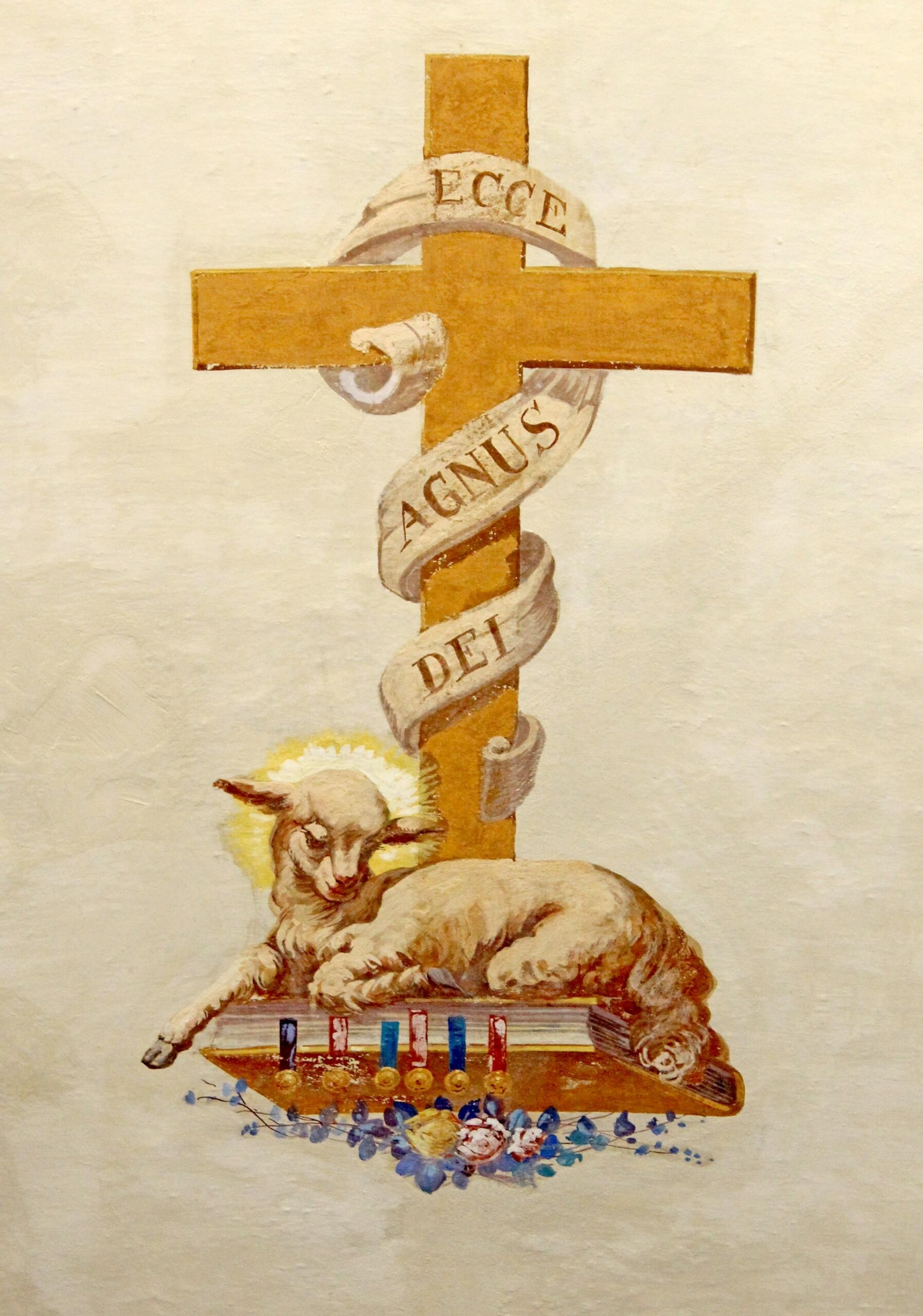
Jesus is called the “Lamb of God” in the New Testament.
The idea connects with the idea of the sacrificial lamb in the story of Passover.
The blood of a sacrificed lamb painted on the Israelite’s homes saved them from the tenth deadly plague in Egypt.
In the same way, Jesus is seen as the lamb whose blood saved all Christians (or perhaps all people everywhere, depending on the denomination you talk to) from sin.
His sacrifice on the cross and subsequent resurrection is what is celebrated at Easter.
Lambs are also a symbol of birth and renewal, a common springtime sight, just like eggs and rabbits. Lambs are often featured in Easter art, like paintings of Jesus, as well as part of the Easter feast, either as a dish or as a cake shaped like a lamb.
Palm Branches – Symbols of Victory and Peace
One week before Easter, on Palm Sunday, worshippers often receive palm fronds at church. They may be woven into crosses or burned so the ashes may be used on Ash Wednesday.
The origin of palms as part of Easter comes from the story in the Gospels that, as Jesus triumphantly entered Jerusalem, the crowds lovingly waved palms at him. They also placed the fronds on the ground like a red carpet, treating Jesus like a king.
Today, the palms represent peace and a vision of peaceful, humble kingship.
Easter is full of symbols that are deeply meaningful to Christians and are also enjoyed by secularists. Next time you enjoy a chocolate bunny or Easter egg hunt, remember the centuries of tradition and meaning behind the holiday!
🐇 What's your favourite Easter tradition?
References
- Author, G. (2011). The traditions of Easter. In Canadian Immigrant. https://canadianimmigrant.ca/settlement/living-in-canada/the-traditions-of-easter
- Easter, Ishtar and Eostre. (2017). In History for Atheists. https://historyforatheists.com/2017/04/easter-ishtar-eostre-and-eggs
- HISTORY com Editors. (2009). Easter Symbols and Traditions - Easter Bunny, Easter Eggs & Christianity. In HISTORY. https://www.history.com/articles/easter-symbols
- Origin and Use of the Paschal Candle. (n.d.). In EWTN. https://www.ewtn.com/catholicism/library/origin-and-use-of-the-paschal-candle-4365
- Paschal Candle: History and Restoration. (n.d.). In romanitas-press. https://www.romanitaspress.com/paschal-candle-restoration
- Pysanka Symbols and Motifs Pysanka Symbolism. (n.d.). In www.pysanky.info. https://www.pysanky.info/Symbols_NEW/Symbols.html
- The Ancient Story of Pysanky. (n.d.). In Archaeology Now. https://www.archaeologynow.org/blog/the-ancient-story-of-pysanky
- Vegreville Pysanka (Easter Egg). (n.d.). In Canada’s Alberta. https://www.travelalberta.com/listings/vegreville-pysanka-easter-egg-5217
- Waxman, O. B. (n.d.). What’s the origin of Easter eggs? In TIME. https://time.com/4732984/easter-eggs-history-origins
Summarize with AI:
Did you like this article? Leave a rating!

 Loading...