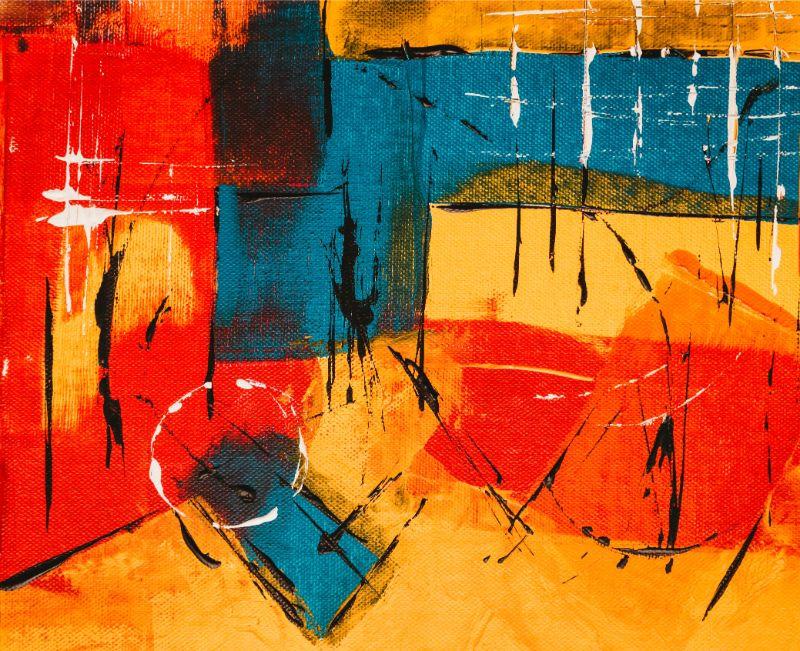

Unlike some other artistic movements, expressionism wasn't a group of artists who all followed a set of rules and produced work from within those guidelines. Expressionism is an artistic style in which artists seek to depict emotions and subjective reactions, rather than objective reality, often through distortion, exaggeration and vivid colors.
Vincent van Gogh, the Symbolist Paul Gauguin and Maurice de Vlaminck are clear examples of the Expressionist movement.
| Artist | Lifespan | Art Style | Famous Works | Key Contribution |
|---|---|---|---|---|
| Edvard Munch | 1863–1944 | Expressionism; Symbolism | The Scream; Madonna; Puberty | Explored emotion, death, and psychological themes. |
| Vincent van Gogh | 1853–1890 | Post-Impressionism; Early Expressionism | The Starry Night; Sunflowers; The Bedroom | Inspired Expressionism with bold color and expressive brushwork. |
| Egon Schiele | 1890–1918 | Expressionism | Self-Portraits; Seated Woman with Bent Knee | Known for distorted figures and raw emotion. |
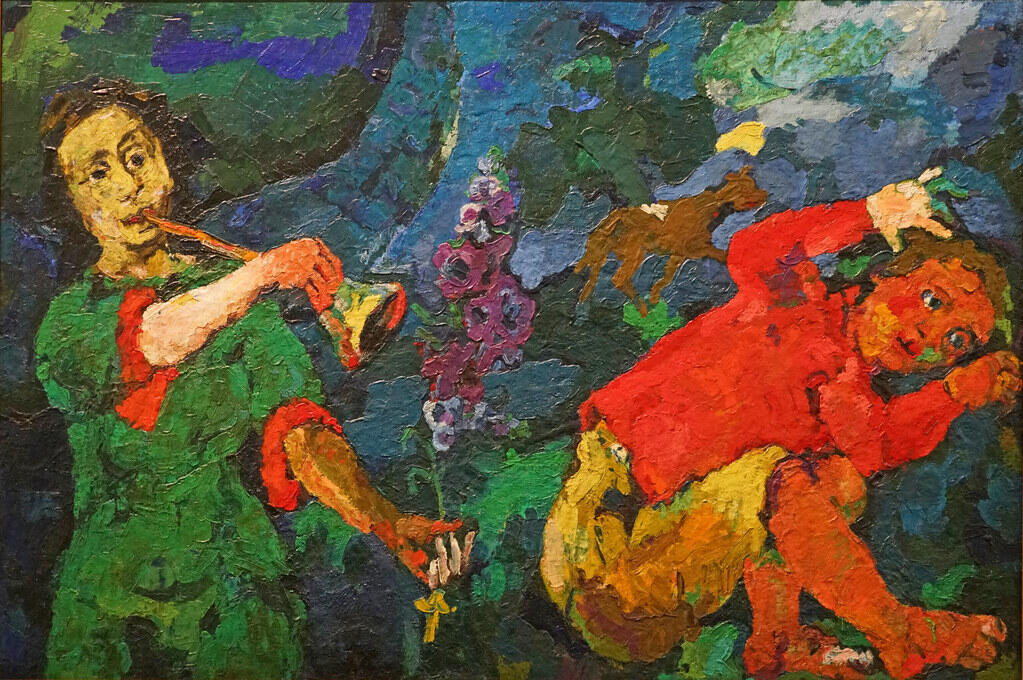
| Oskar Kokoschka | 1886–1980 | Expressionism | The Power of Music; The Bride of the Wind | Captured psychological intensity and dramatic compositions. |
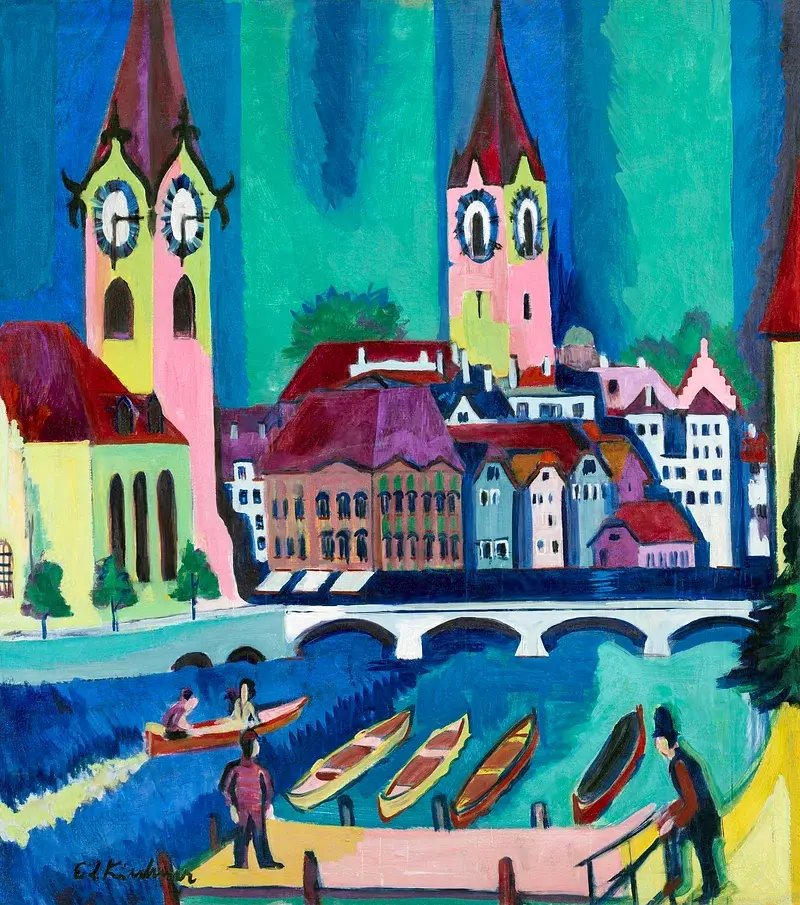
| Ernst Ludwig Kirchner | 1880–1938 | German Expressionism | Street, Dresden; Self-Portrait as a Soldier | Co-founded Die Brücke and shaped German Expressionism. |
Learn more about these influential Expressionist artists, their artistic styles, their most relevant works and their valuable contributions to the movement.


Origins and Historical Context
The most influential art movements have always evolved through change and self-expression, often communicating how people perceive the world around them. Expressionist artists challenged traditional art by focusing on complexity and emotional intensity rather than realistic representation. The cornerstones of this art movement in the early 20th century were:
- Color
- Expression
- Symbolism
Early Influences
The origins of German Expressionism can be traced back to the works of the Dutch artist Vincent van Gogh and the Norwegian artist Edvard Munch, who developed the movement between 1885 and 1900. These artists moved away from literal representation to express perspectives or moods. Their works are distinguished by dramatic and emotional themes through color intensity.
Vincent van Gogh is known for using vibrant colors and compositions charged with emotion and depth, rather than realism. A great example is The Starry Night, which embraces mood, symbolism and sentiment. Similarly, Edvard Munch explored complex themes such as anxiety and loneliness. The Scream conveys great emotional intensity and even horror through distortion and symbolism.
I dream my painting, and then I paint my dream.
Vincent van Gogh
Development in Germany and Austria
The second and main wave of Expressionism began in 1905, led by Ernst Ludwig Kirchner, a German artist who founded the association Die Brücke, a group of Expressionist artists that included Erich Heckel, Karl Schmidt-Rottluff and Fritz Bleyl.
The German Expressionist style was characterized by its rawness, visual intensity, distortion and clashing colors to depict contemporary themes of modern life, such as instability, frustration, anxiety, discontent and violence. 1
Are you interested in learning how the Cubist art movement challenges the concept of space and perception? Read about its characteristics, techniques and its most prominent artists.
Characteristics of Expressionist Art
Expressionism rejected the idea of depicting reality objectively. Instead, it represented the artist’s psychological experience and subjective interpretation of the world. This movement established new criteria for evaluating art. Some pretty cool characteristics of expressionism are:
Emotional Expression
- Subjective interpretation of reality: Expressionism projects a distorted view of reality. This distorted view is a blend of the artist's inner feelings, internal conflicts and psychological states.
- Shaped by psychoanalysis: Influenced by the emergence of psychoanalysis in the late 1800s. The unconscious mind, the meaning of dreams, and a person's internal struggles encouraged artists to explore psychology through art.
- Transformed personal suffering: After World War I, many Expressionists painted their emotional suffering into their works. Many Expressionist artists were veterans of the war, and the internal struggles were evident in their canvases.
- Confronted controversial subjects: Expressionist artists also addressed topics such as sexuality, religion and social criticism in their works, controversial themes that were not widely accepted in society.
Techniques and Styles
- Emotionality prioritized over accuracy: Expressionist painters were particularly noted for their use of intense color and dramatic, exaggerated, misshapen bodies that expressed emotions through distortions of anxiety, shock and pain.
- Broad style open to personal interpretation: Expressionist works are characterized by imprecise, swirling and exaggerated brushstrokes. This style was the artists' reaction to the world around them.
- Influence on subsequent movements: Although the original Expressionist movement lasted from approximately 1905 to 1933, its ideas continued to influence later movements, such as Abstract Expressionism (1943-1965) and Neo-Expressionism (the 1970s-1990s).
Expressionism at a Glance
Expressionism is known for its emotional intensity and distinctive visual style. The following characteristics highlight what makes this artistic movement unique.
Bold colors and distorted forms 🎨
Used to emphasize emotion over realism.
Expressive brushstrokes 🧑🎨
Conveyed personal feelings and psychological intensity.
Lasting influence 🌎
Inspired later movements like Abstract Expressionism and Neo-Expressionism.
Let's take a step back in time to the 1600s, when religious tensions were in the air, and discover the Baroque art movement, led by the Catholic Church, monarchs and aristocrats.
Notable Expressionist Artists
Edvard Munch and Van Gogh were among the artists who played a crucial role in shaping Expressionism, and whose innovative techniques and emotionally charged works helped define Expressionist art.
Edvard Munch
Edvard Munch (1863-1944) was born in Ådalsbruk, Norway. He had a big family that sadly had a history of illness, weakness, mental instability, and sickness. His personal experiences fuelled Munch’s artwork, and he often explored themes of death, personal loss and illness.
The Scream (1893), Love and Pain (Vampire) (1893-1894), Ashes (1894), Madonna (1894-1895), Puberty (1894-1895).
Expressionism and symbolism
Painting
Edvard Munch's style differed from that of many other artists, and the brooding tone didn't immediately win over critics, who found many of his images to appear unfinished. His work, however, remained melancholy, grounded in the subject of death in one way or another.
He found acclaim with his Frieze of Life series, his first-ever autobiographical exhibition, capturing how pain and healing were part of his life.
Vincent van Gogh
Vincent van Gogh (1853-1890) was born in Zundert, Netherlands. It took van Gogh many years to follow his passion for art. He began at an art gallery, had the chance to travel and was later supported by his brother Theo in pursuing painting as a career. He continued his study of drawing, different painting mediums, and other artists' work for many years.
The Potato Eaters (1885), Self-Portrait with Grey Felt Hat (1887), Portrait of Père Tanguy (1887), The Café Terrace at Night (1888), Sunflowers (1888), The Bedroom (1888), and The Starry Night (1889).
Post - Impressionist and early expressionist
Painting
Van Gogh is considered one of the greatest artists of our time, who pioneered 20th-century expressionism. However, he really began to develop his artistic style after moving to Paris in 1886. He became fascinated with color, Japanese art, the work of Rubens, the painting style of the Impressionists, and the Post-Impressionist Paul Gauguin.
Van Gogh experienced struggles with mental illness throughout his life, including a crisis in 1888, when he cut off part of his left ear. He is remembered for his emotionally expressive paintings and autobiographical pieces, characterized by their broad brushstrokes and bold colors.
Other Key Figures
In addition to Edvard Munch and Vincent van Gogh, other important artists who also influenced Expressionism were:
- Egon Schiele (1890–1918), known for his distorted and controversial portraits and self-portraits.
- Oskar Kokoschka (1886–1980), who captured psychological intensity and dramatic landscapes.
- Ernst Ludwig Kirchner (1880–1938), the founder of Die Brücke and German Expressionism.
Ready to put these ideas into practice? Develop your artistic skills with the help of personalized fine art classes in Calgary and experienced instructors.
Iconic Expressionist Artworks
The movement gave rise to some of the most famous Expressionism art examples in history, including, of course, Vincent van Gogh’s Starry Night and Edvard Munch’s The Scream. Their vivid colors, distorted forms and emotional intensity continue to captivate audiences and inspire artists around the world.
The Scream by Edvard Munch
The Scream is a painting that has been reproduced in different mediums by the artist. He created four painted versions of the piece between 1893 and 1910, using oil, tempera and pastel (1893), as well as a lithograph that enabled the image to be widely reproduced.
Since Munch was a Norwegian painter, the painting's original title was Skrik (The Scream) in Norwegian. However, the phrase Der Schrei der Natur (The Scream of Nature) became an alternative title associated with the work, since Munch also wrote in German in his diary.
Edvard Munch
1893
Oil, tempera and pastel on cardboard
91 x 73.5 cm
The Scream is made up of three main parts separated by lines: the line of the railing, the line of the horizon, and the line of the land. The dimension is indicated by the three groups of images in the picture: the screamer, the boats on the sea and the two figures walking together in the background.
One of Munch's pastel versions was sold at a Sotheby's auction for almost US$120 million to an art collector in 2012 and remains one of the highest-selling paintings to date. 2
The artist was inspired to paint the image while walking one evening and feeling ill. He said he looked at the sky turning "blood red" and feeling an infinite scream passing through nature." The colors and lines make the image seem energized. It is emotional and reflective of the artist's experience in that moment of his life.
The Starry Night by Vincent van Gogh
The Starry Night is one of Vincent van Gogh’s most famous Post-Impressionist paintings. The work was painted in 1889, while the artist was at the Saint-Paul-de-Mausole asylum in Saint-Rémy-de-Provence, France.
The painting is organized into three main areas: the swirling night sky, the tranquil village, and the cypress tree in the foreground. The dynamic sky dominates the composition, with curved lines and circular shapes surrounding the stars and the moon, creating a sense of movement. The village appears peaceful, and the cypress tree serves as a visual bridge between the two elements.
Vincent van Gogh
1889
Oil on canvas
73.7 × 92.1 cm
Van Gogh painted The Starry Night during a difficult period in his life; however, the work reflects an emotional response to his fascination with the night sky, leading many viewers to interpret it as a symbol of hope and connection. And, as in some of his other works, the brushstrokes are thick, and the blues, yellows, and greens are vibrant.
Astrophysicists have studied the painting The Starry Night and found that the positions of the moon and stars in Van Gogh’s sky closely match published astronomical observations from Saint-Rémy-de-Provence on May 25th, 1889. 3
Are you ready to put the principles of Expressionism into practice and start creating art with confidence with inspiring art classes in Toronto? You're just one click away from unleashing your creativity.
Other Significant Works
Expressionism gave artists the freedom to communicate complex emotions difficult to express in words and to exhibit them on the canvas. The following Expressionism art examples exemplify how Expressionism transformed personal emotion into powerful visual art.
- Railroad at Murnau by Wassily Kandinsky
- The Old King by Georges Rouault
- The Blue Rider by Wassily Kandinsky
- Little Blue Horse by Franz Marc
- Anxiety by Edvard Munch
- Street, Berlin by Ernst Ludwig Kirchner
- Woman in a Green Jacket by August Macke
Expressionism created a confrontation between the self and reality, blurring the lines of how art was seen up until then and since. As Expressionists, Pop artists also rejected traditional subjects of academic fine art. Discover how the innovative Pop Art movement paved the way for much of today's modern art.
Expressionism Beyond Painting
Expressionism extended far beyond painting, influencing the fragmented narratives of literature, exaggerated theatrical performances, the unsettling visual world of cinema, and even unconventional architectural structures.
Literature and Theatre
Expressionist theater was often characterized by exaggerated acting and unconventional sets designed to create a deeply emotional atmosphere. Playwrights sought to reveal their characters’ anxieties by addressing issues such as war and other problems of modern society. From Morn to Midnight is an Expressionist play written by the German playwright Georg Kaiser.
Expressionist writers used fragmented narratives, symbolic characters, and dramatic language to explore fear, identity and social critique. Rather than focusing on realistic plots, many works emphasized emotional conflicts.
Georg Trakl, Gottfried Benn and Alfred Döblin are among the most important figures in the literature of German Expressionism.
Characterized by the expression of the unconscious, immerse yourself in the beauty of surrealism and its more impressive artworks.
Film and Architecture
Expressionism also influenced early 20th-century cinema, especially in Germany. Expressionist films used distorted sets and dramatic lighting to reflect the psychological states of their characters. This visual style influenced the horror, film noir and psychological thriller genres. The Cabinet of Dr. Caligari, Nosferatu and Metropolis all bear a strong Expressionist influence.
Expressionist architecture also favored sculptural designs, the innovative use of materials, and unconventional structures without neglecting functionality. The Einstein Tower is one of the best-known examples of German Expressionist architecture.
Legacy and Influence
Although the original Expressionist movement lasted only a few decades, it transformed the course of modern art. Expressionism's influence can still be seen in literature, painting, sculpture, film and theater.
Impact on Modern Art
Expressionism challenged the traditional goal of accurately representing reality, encouraging artists to embrace the complexities of human emotion and subjective experience. Its approach inspired Abstract Expressionism in the mid-20th century, whose artists also employed abstract forms and spontaneous techniques. Furthermore, it also influenced Neo-Expressionism, contemporary figurative painting, and experimental art.
Contemporary Relevance
Contemporary artists continue to use vivid colors, expressive brushstrokes, distortion, and symbolism to explore identity, mental health and social issues. Beyond traditional painting, Expressionism is still evident in photography, animation, video games and digital art.
Although Expressionism emerged in the early 20th century, its influence remains evident in today's graphic novels, video games, and animated films, which use exaggerated colors and shapes to convey emotions.
For example, Tim Burton's Edward Scissorhands (1990) features exaggerated architecture and stylized sets reminiscent of German Expressionism.
Do these extraordinary artists inspire you? With the right guidance and practice, you can start developing your own artistic style and creative skills. Get the best art classes in Canada and get started.
References
- Britannica Editors (Ed.). (n.d.). Expressionism. Britannica. https://www.britannica.com/art/Expressionism. Accessed 22 July 2026.
- BBC News. (2012, May 3). Edvard Munch’s iconic artwork The Scream sold for $120m. https://www.bbc.com/news/entertainment-arts-17926519. Accessed 22 July 2026.
- Witek, D. Artwork analysis: Starry Night by Van Gogh. Artsper Magazine. https://blog.artsper.com/en/a-closer-look/artwork-analysis-starry-night-by-van-gogh/. Accessed 22 July 2026.
Summarize with AI:
Did you like this article? Leave a rating!


 Loading...