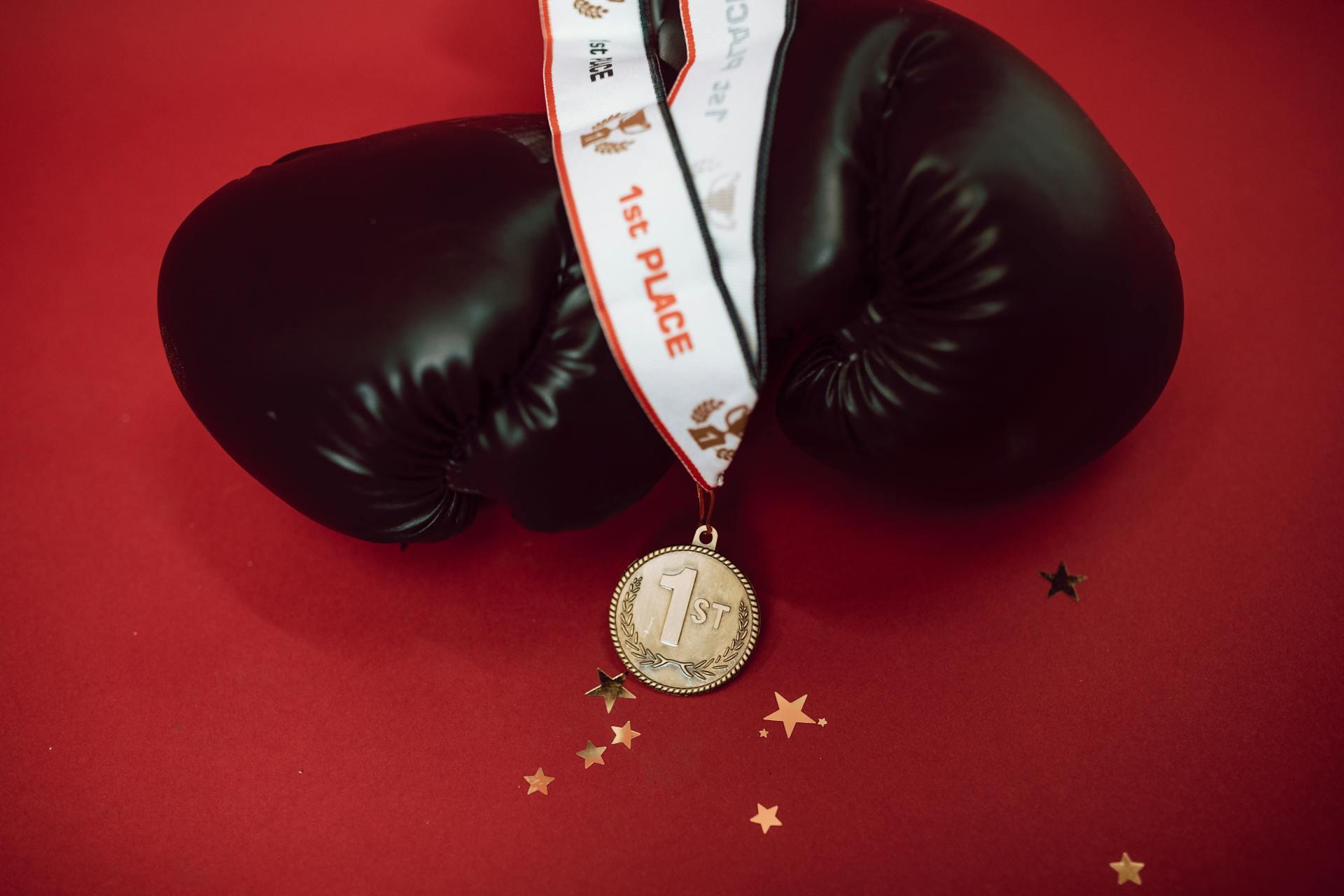

Do you know that Lennox Lewis is the only boxer to represent Canada at the Summer Olympics and subsequently win a professional world title?
In this article, we will explore the achievements and legacy of Lewis and how he has become a symbol of Canadian boxing success.
1965
Born in London, England
1977
Moves to Canada
Early 1980s
Begins amateur boxing in Canada and started competing internationally
1984
Represented Canada for the first time in the Los Angeles Olympics
1986
Won gold in the Commonwealth Games
1988
Won the gold medal in the Seoul Olympics
1988
Moved back to England and turned professional a year later
1992
Won the European Heavyweight title
1993
Became the WBC Heavyweight champion
1999
Became the undisputed Heavyweight Champion of the world
2002
Defeated Mike Tyson by an eight-round knockout
2003
Final match and retirement the following year
2008
Inducted into Canada's Sports Hall of Fame


✈️Early Life and Move to Canada
Lennow Lewis was born on 2 September 1965 in London to Jamaican immigrant parents. Before moving to Kitchener, Ontario, Canada at the age of 12 with his mother, he had not learn boxing.
He often credits Canada with providing him with better educational and athletic opportunities, particularly after he began pursuing sports such as boxing. 1
👊Amateur Boxing Career in Canada
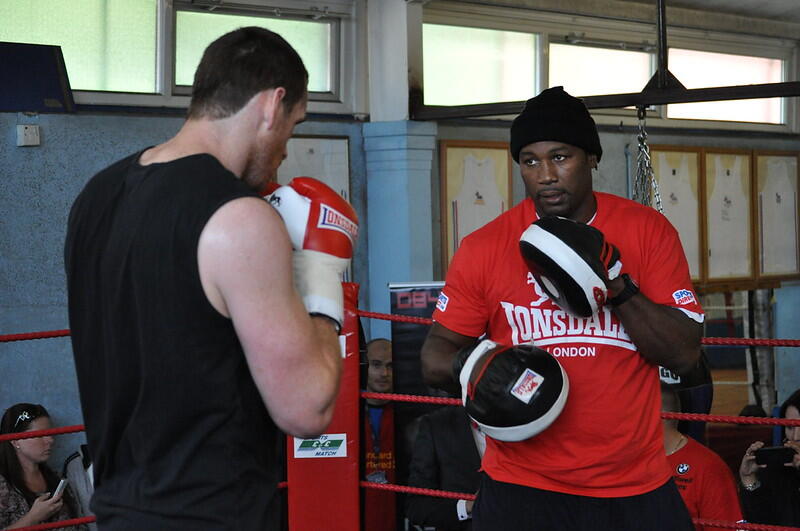
Lewis’s move to Canada was significant because he developed much of his amateur career here. His skills were evident when he won his first major amateur title at the Junior World Championships in 1983. 2
That same year marked a breakthrough for Lewis, as he also won the Canadian National Super Heavyweight Championship.
He soon set his sights on more internationally prestigious tournaments and represented Canada for the first time at the 1984 Summer Olympics in Los Angeles. Unfortunately, he was defeated in the super heavyweight quarterfinals by Tyrell Biggs of the United States.
After the 1984 Olympics, Lewis continued to compete internationally and achieved strong results, winning gold in the super‑heavyweight division at the 1986 Commonwealth Games and silver in the same division at the 1987 Pan American Games.
Interested to learn more about Canadian boxers? Discover the life and legacy of Arturo Gatti.
🥇Olympic Triumph
Then came the historic 1988 Seoul Olympics that made Lewis a Canadian sports hero. Here's an overview of his road to gold.
| Stage/Modern Term | Opponent | Country | Result | Round | Notes |
|---|---|---|---|---|---|
| First Round | — | — | Bye | — | Did not fight; automatically advanced to the second round |
| Second Round | Chris Odera | Kenya | Win | 2 | RSC-O (Referee Stopped Contest – outclassed) |
| Quarterfinal | Ulli Kaden | East Germany | Win | 1 | RSC-O – Lewis dominated immediately |
| Semifinal | Janusz Zarenkiewicz | Poland | Win (Walkover) | — | Opponent withdrew; Lewis advanced automatically |
| Final | Riddick Bowe | USA | Win (Gold) | 2 | RSC-O – Referee stopped contest after Lewis clearly dominated |
This Olympic gold was historic for Canada as it was Canada’s first Olympic boxing gold medal since 1932. Additionally, it was also Lewis's last Olympic appearance as he soon made the decision to turn professional.
🥊Transition to Professional Boxing
In 1989, Lewis turned professional and also moved back to the United Kingdom. Back then, the UK had a stronger professional boxing market and many professional boxers who were competing at high levels.
Additionally, there was national TV exposure, stronger promoters and major stadium venues like Wembley, which hosted boxing crowds, solidifying Lewis's decision to return. 3
When I turned pro, I had to go to the United Kingdom in order to pursue my career. The infrastructure to develop boxers wasn’t in Canada then - it will be now.
Lennox Lewis, in an interview in 2015
On June 28, 1989, Lennox won his first professional debut against Al Malcolm with a 2nd Round Knockout at the Royal Albert Hall, England. In the next few years, he continued to win fights against established British fighters, often by knockout.
🏆Notable Professional Achievements
Lewis was widely regarded as one of the most successful heavyweight boxers of his era, winning multiple world titles and becoming the undisputed heavyweight champion in 1999.
In 1992, he became world champion for the first time when the World Boxing Council (WBC) awarded him the heavyweight title after Riddick Bowe refused to defend the belt against him.
Lewis defended his title three times before losing it to Oliver McCall in Wembley Stadium in 1994.
In professional boxing, an undisputed champion holds all the major world championship belts in a division simultaneously.
For the heavyweight division during the late 1990s, the main titles were from the World Boxing Council (WBC), World Boxing Association (WBA), and International Boxing Federation (IBF).
So how did Lewis become the undisputed champion? In 1999, he faced Evander Holyfield (nicknamed The Real Deal) in two highly anticipated bouts.
At the time, Lewis held the WBC heavyweight title, while Holyfield held the WBA and IBF titles.
Their first fight, held on March 13, 1999, ended in a controversial split draw, as the judges were unable to agree on a winner.
However, when they met again on November 13, 1999, Lewis secured a unanimous decision victory after 12 rounds.
With this win, he captured the WBA and IBF titles to add to his WBC belt, becoming the undisputed heavyweight champion by holding all three titles simultaneously.
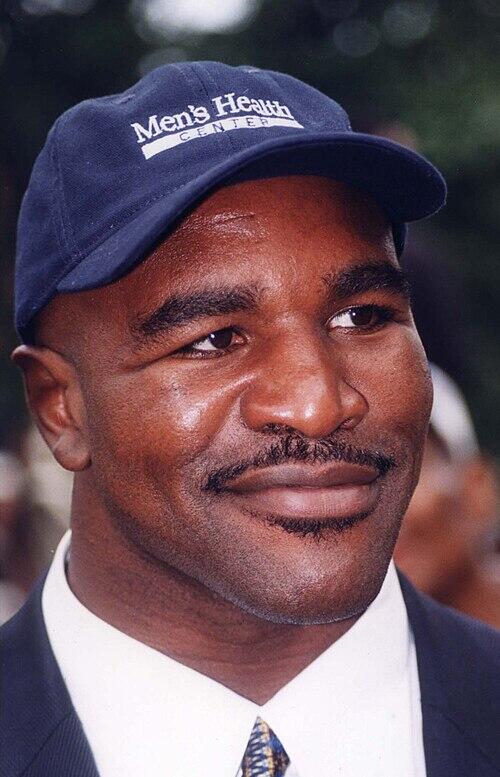
What stands out in Lennox Lewis’s boxing career is that he lost only twice in his entire professional career, which is a remarkable feat considering his active years from 1989 to 2003.
Lewis's full professional boxing record stands at 41 wins (32 by knockouts/technical knockouts), 2 losses, and 1 draw across 44 bouts from 1989 to 2003. His final game was against Vitali Klitschko in 2003, and he announced his retirement in 2004.
| Year | Fights | Win | Loss | Draw | Cumulative | Notes |
|---|---|---|---|---|---|---|
| 1989 | 4 | 4 | 0 | 0 | 4-0-0 | Pro debut; all TKOs/KOs |
| 1990 | 6 | 6 | 0 | 0 | 10-0-0 | Won early titles |
| 1991 | 4 | 4 | 0 | 0 | 14-0-0 | British heavyweight title |
| 1992 | 4 | 4 | 0 | 0 | 18-0-0 | Commonwealth title |
| 1993 | 2 | 2 | 0 | 0 | 20-0-0 | WBC title defenses |
| 1994 | 3 | 2 | 1 | 0 | 22-1-0 | Loss to McCall (TKO 2) |
| 1995 | 2 | 2 | 0 | 0 | 24-1-0 | IBC title |
| 1996 | 1 | 1 | 0 | 0 | 25-1-0 | vs. Ray Mercer (Majority Decision) |
| 1997 | 3 | 3 | 0 | 0 | 28-1-0 | Regained WBC title |
| 1998 | 2 | 2 | 0 | 0 | 30-1-0 | Title defenses |
| 1999 | 2 | 1 | 0 | 1 | 31-1-1 | Draw vs. Holyfield; later won unification |
| 2000 | 1 | 1 | 0 | 0 | 32-1-1 | vs. Holyfield (Unanimous Decision) |
| 2001 | 2 | 1 | 1 | 0 | 33-2-1 | Loss to Rahman (KO 5); avenged |
| 2002 | 2 | 2 | 0 | 0 | 35-2-1 | vs. Tyson (KO 8) |
| 2003 | 1 | 1 | 0 | 0 | 41-2-1 | Final vs. Klitschko (TKO 6); retired |
Learn more about the journey of other Canadian world boxing champions.
🦁Lennox Lewis vs Mike Tyson
While Lewis had many wins against great fighters, the most unforgettable victory was certainly against Mike Tyson, aka The Baddest Man on the Planet.
Lewis also had the nickname “The Lion,” which highlighted his strength in the ring and served as a cultural nod to his Jamaican and British heritage, where the lion is a symbol of strength and pride. 4
This anticipated match took place on 8 June 2002 at the MGM Grand Garden Arena, and was scheduled for 12 rounds. With both fighters at the peak of their careers, this was also the first and only fight between Lewis and Tyson.
Lennox Lewis
- Made professional debut in 1989
- Became the undisputed champion in 1999
- Fighting strength: Size, reach and strategy
Mike Tyson
- Made professional debut in 1985
- Became the undisputed champion in 1987
- Fighting strength: Power and aggression
Result: While Tyson was known for his powerful punches to land knockouts, it was Lewis who seized the final victory by using his height (6’5”) as an advantage to take the lead, keeping Tyson at a distance and counterjabbing, eventually knocking Tyson down in Round 8.
Explore the boxing journey of Trevor Berbick, who also fought Mike Tyson during his professional career.
🔥Who Did Lennos Lewis Lose To?
Lewis dominated the heavyweight division, with his only defeats coming against Oliver McCall in 1994 and Hasim Rahman in 2001. However, he avenged these two losses in subsequent rematches.
First loss: Oliver McCall
- Title fight: WBC Heavyweight Title Fight
- Match date: September 24, 1994
- Result: Lewis lost by knockout in Round 2
- Rematch date: September 24, 1997
- Rematch result: Lewis won with a technical knockout in Round 5, regaining the WBC title
Second loss: Hasim Rahman
- Title fight: WBC & IBF Heavyweight Title Fight
- Match date: April 21, 2001
- Result: Lewis lost by knockout in Round 5, in a major upset.
- Rematch date: November 17, 2001
- Rematch result: Lewis knocked Rahman out in Round 4
Meanwhile, check out the boxing journey of the Russian-Canadian light-heavyweight boxer, Artur Beterbiev.
⭐Legacy and Impact in Canada
Today, Lennox Lewis is widely recognized in Canada as a sports icon.
Beyond his amazing results in the ring, Lewis is also known for his contributions to Canadian sports and communities as well as his charity work.
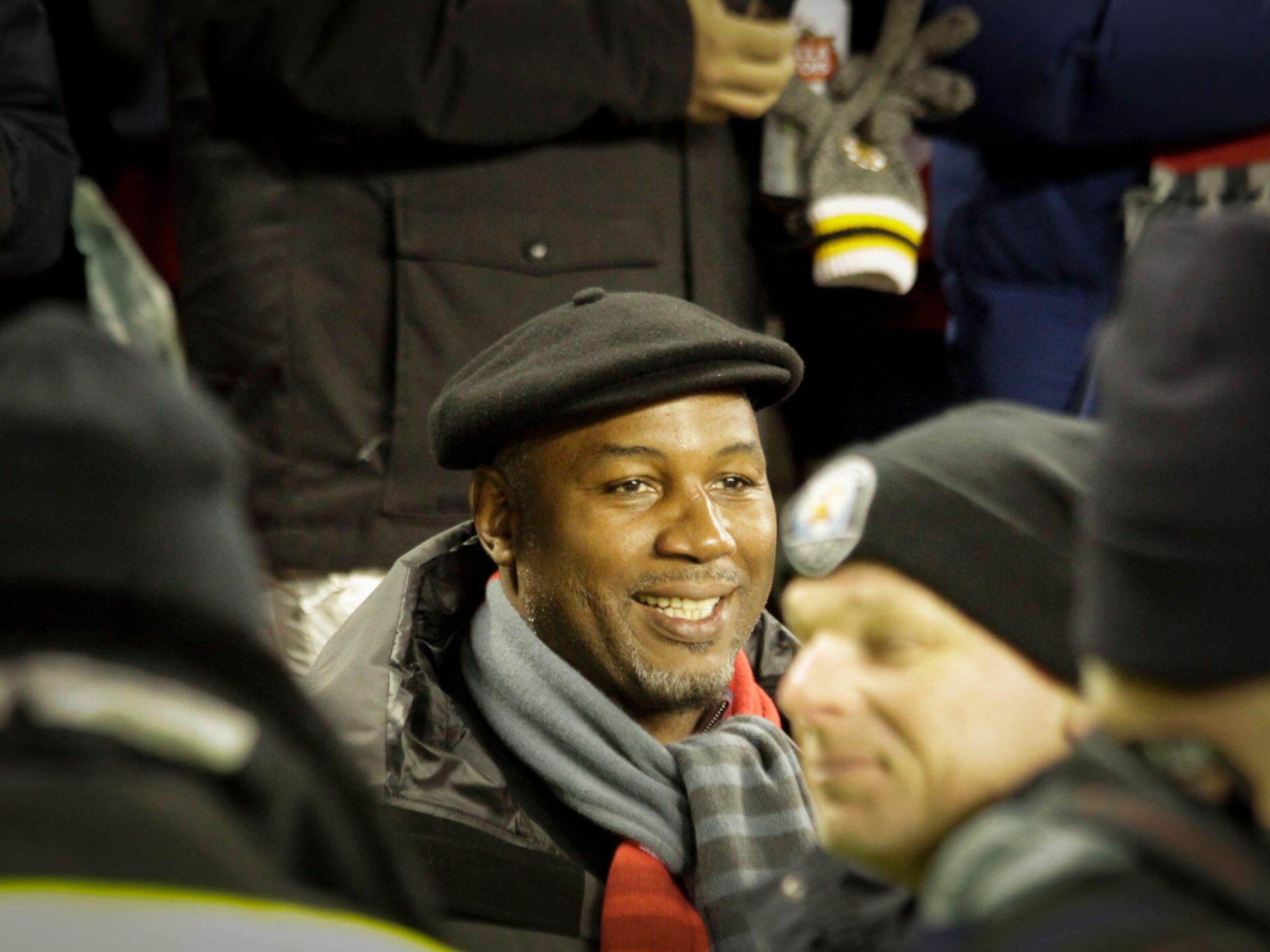
Even though Lewis's professional career took place in the UK, he was inducted into Canada's Sports Hall of Fame in 2008 for his boxing achievements, particularly the 1988 Olympic gold medal in super heavyweight boxing. 5
While there have been mixed feelings on public perception towards Lewis's return to the UK for his professional career, many still regard him as a national hero, as he represented Canada twice in the Olympics and put Canadian boxing on the world map.
To be put in the Hall of Fame is an accomplishment that seals my legacy. It will always be there in history. People can read about it. It gives me great pride.
Lennox Lewis
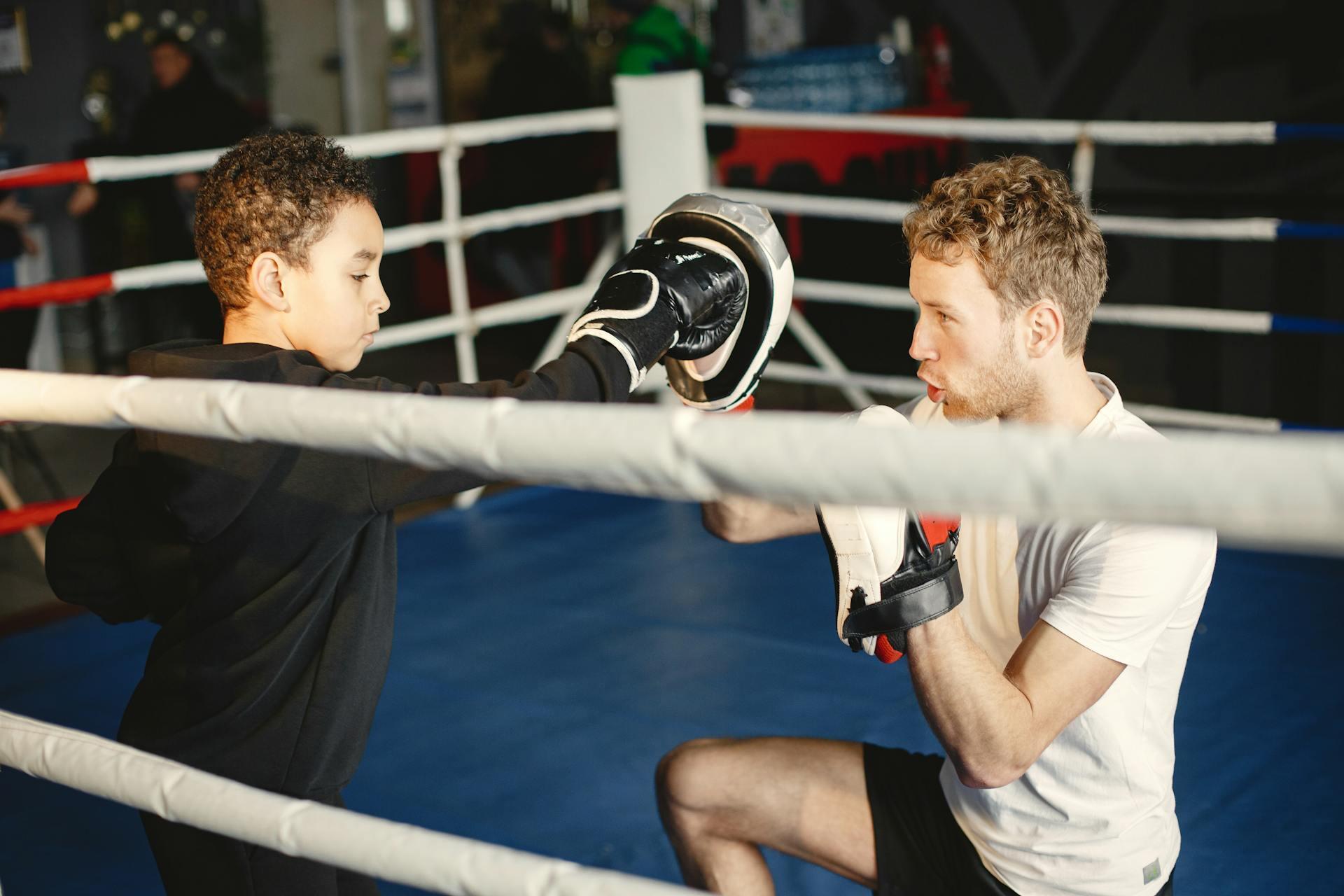
In 2013, he founded the Lennox Lewis League of Champions Foundation together with his wife to nurture the young generation in Canada and other countries to enhance their confidence and self-esteem through sports and physical education.
Some of the programs under the foundation include:
- Knights in the Ring Initiative’s career exploration program
- Boxing camps and summer camps
- Character and life skills development programs
We hope this article has offered you some insights into the achievements and legacy of Lennox Lewis. May you be inspired to learn more about the world of boxing!
References
- Lennox Lewis Wants to Set the Record Straight with Heavyweight Revelations in LENNOX LEWIS: THE UNTOLD STORY - Bell Media. (n.d.). Lennox Lewis Wants to Set the Record Straight With Heavyweight Revelations in LENNOX LEWIS: THE UNTOLD STORY - Bell Media. https://www.bellmedia.ca/the-lede/press/lennox-lewis-wants-to-set-the-record-straight-with-heavyweight-revelations-in-lennox-lewis-the-untold-story/
- Lennox Lewis. (n.d.). Team Canada - Official Olympic Team Website. https://olympic.ca/team-canada/lennox-lewis/
- Lankhof, B. (2015, July 15). Lennox Lewis wants to make Toronto “Boxing City.” Torontosun; Toronto Sun. https://torontosun.com/2015/07/14/lennox-lewis-wants-to-make-toronto-boxing-city
- Who is Lennox Lewis? Meet the British boxing great who knocked out Mike Tyson. (2025, July 12). Boxing Retro. https://www.boxingretro.com/who-is-lennox-lewis-meet-the-british-boxing-great-who-knocked-out-mike-tyson/
- CBC. (2008, December 9). Lennox Lewis named to Boxing Hall of Fame. CBC. https://www.cbc.ca/sports/lennox-lewis-named-to-boxing-hall-of-fame-1.729293
Summarize with AI:
Did you like this article? Leave a rating!

 Loading...