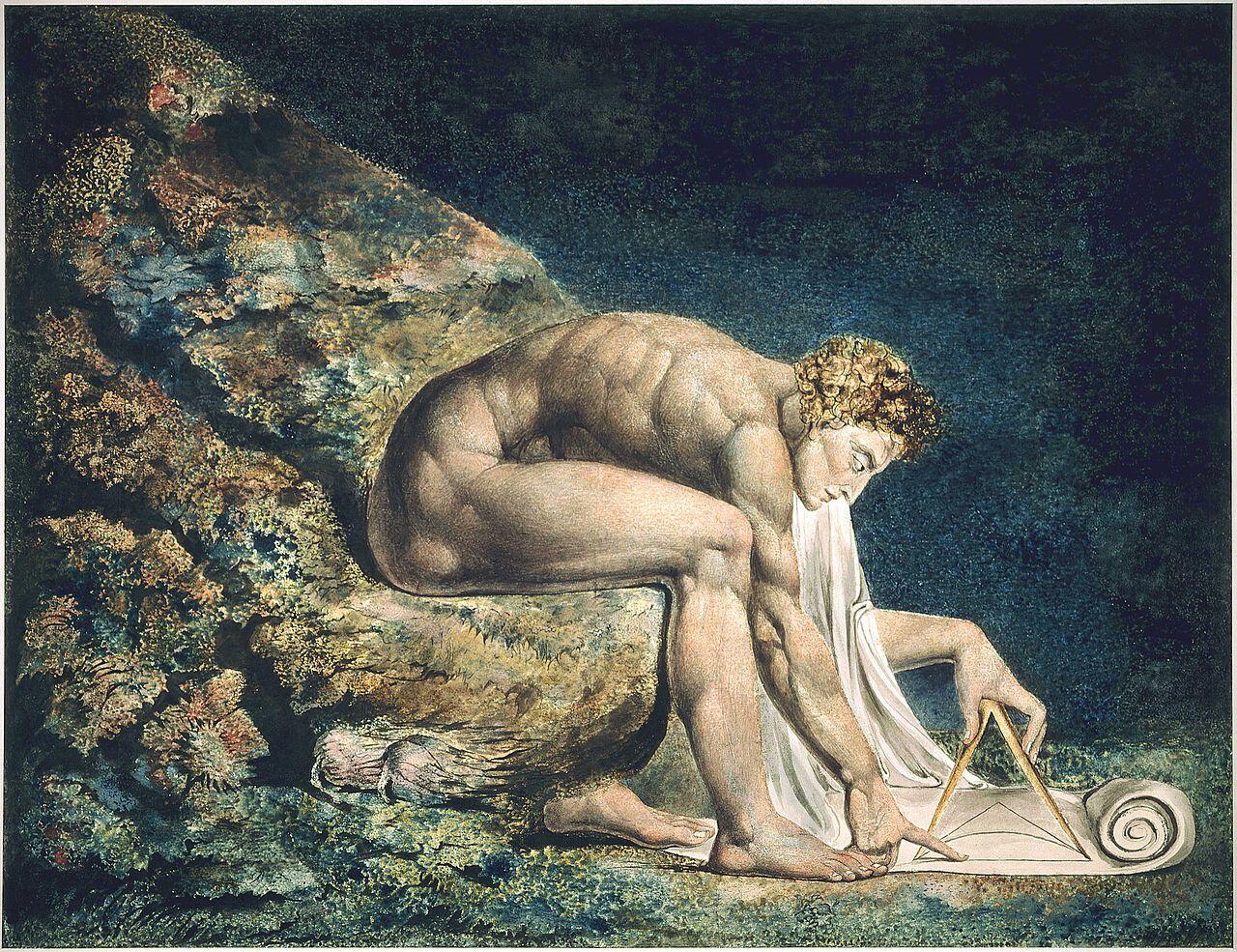

Art history is marked by several highly recognizable movements throughout history, and Romanticism is one of the top. It’s one of the most important movements, having changed the way artists thought about the sublime beauty of nature, emotion, imagination and the role of the individual. Emerging in the late 18th century as a departure from the rationalism of the Enlightenment, it affected not only painting, but literature and the wider culture as a whole. Its influence on art can still be felt today.
The Romanticism period was at its height from 1800 to 1850. It encompassed painting, sculpture, music, literature and poetry. Artists moved away from demure, orderly art toward deeper explorations of human emotion.
The Enlightenment was a cultural movement that valued reason, order and logic. The Romanticism movement was a response to the Enlightenment in the wake of the French Revolution, formed by artists who wanted to explore feeling, intuition and inner life. These rebelling artists (Romantics) created paintings with greater dramatic scenes and emotional depth.
The movement began in northern Europe (Germany, France and Britain) before spreading across the continent. The art movement is closely linked to the Romantic literary movement, in which writers explored emotion, nature, history, and imagination. In art, literature and the wider cultural ripples, the Romantic spirit valued individuality over the rigidity and tidy order emphasized in the preceding Classicism, Neoclassicism, and the Enlightenment periods.


Characteristics of Romanticism Art
Romanticism is easy to recognize when you know what to look for. Romantic painters often wanted viewers to feel awe, fear, sadness or wonder; any deep, meaningful human emotion beyond contentment or a sense of satisfaction with order. They emphasized intensity over calm harmony by featuring a few recurring themes:
Nature is a common theme. Romantic artists often portrayed mountains, storms, seas, ruins, forests and animals as main figures, not backgrounds. Nature could suggest freedom and mystery, or danger. Emphasis on the unpredictability and unforgiving power of nature was often explored. Edmund Burke’s idea of the sublime, which was linked with awe and terror, strongly influenced the artists.
Mysterious and supernatural subjects often appear. Artists took inspiration from dreams, folklore, ghosts, religion and the unknown.
Romantic works also focused on national history and identity, turning medieval scenes and legends into lively tapestries expressing feeling and belonging.
Many Romantic paintings include loose brush strokes, reminiscent of Impressionism in some instances. They also often used dramatic and dark lighting. This is in contrast to the often pleasant, precise and highly-detailed works found in Classicism, Neoclassicism, and Enlightenment works.
Unlike other art movements, like Rococo, Romanticism was open to a wide variety of interpretations and personal styles. Painters were free to explore differing levels of intensity and light as well as subjects and themes.
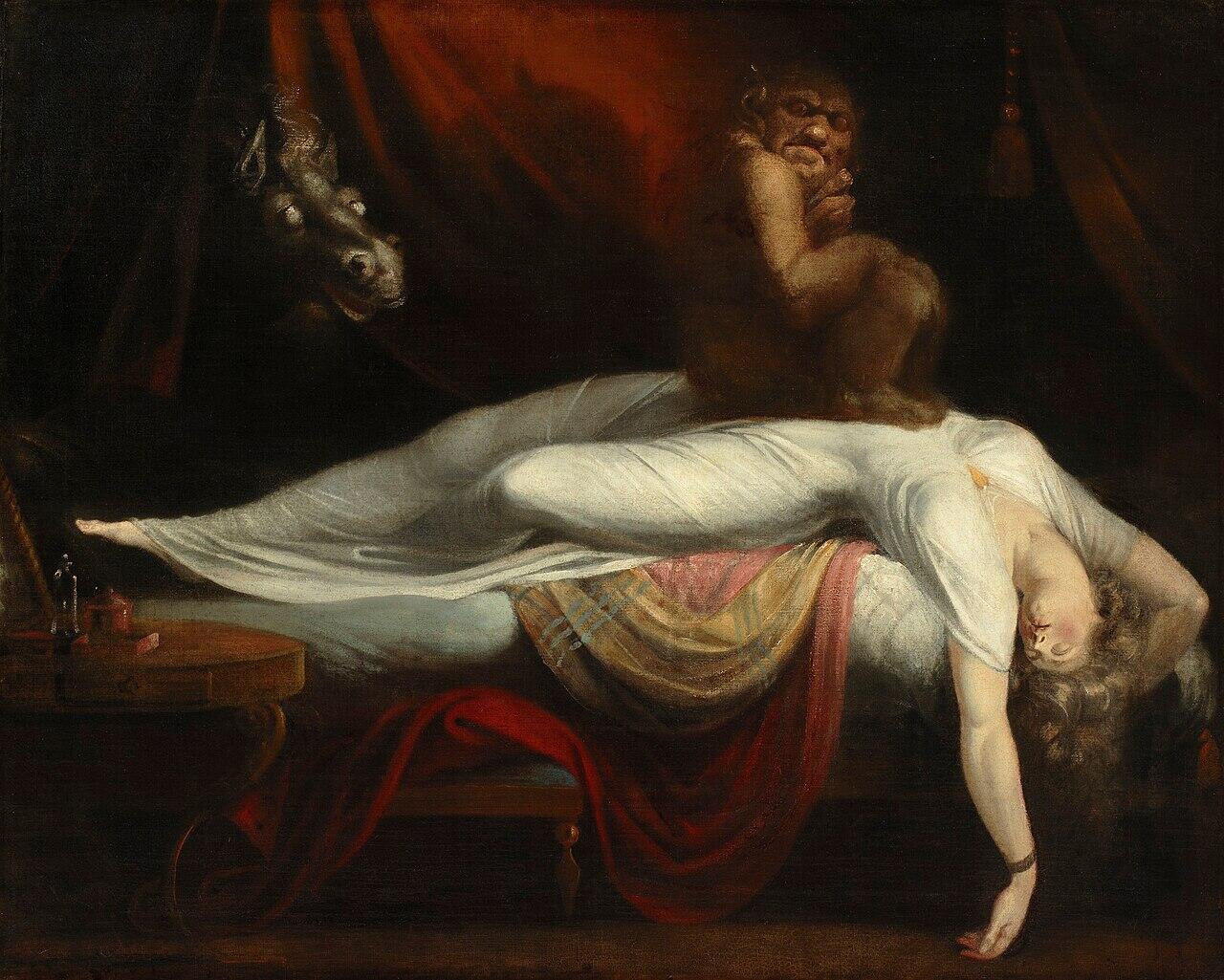
Evolution and Regional Variations
Unlike certain artistic movements that remained mostly homogenous across artists, regardless of their location and background, Romanticism became tinted by different cultures. Since Romanticism was an exploration of history, social culture, and the artists’ personal experiences and emotions, it only makes sense that it would become personalized by region and individual.
In the art movement, ‘Romanticism’ does not refer to the soft, idyllic connotation we know today. It meant a sense of ‘glorification’, in this case, glorifying abstract ideas and emotions rather than physical objects.
It’s hard to pinpoint the beginning of a movement, but it’s believed that the origins are German. There, artists had begun creating dark and terrifying scenes in the 1760s. After the Romantic movement caught on and artists from elsewhere began contributing, Germanic Romantic art took on a slightly different tone.
It often examined spirituality and introspection. Caspar David Friedrich is one of the best-known German Romantic painters. His works were often landscapes with small human figures against vast natural scenes, evoking a sense of great and terrible, overwhelming natural beauty.
In Britain, J.M.W. Turner, John Constable and William Blake were notable painters of Romantic landscapes. Turner portrayed violent energies, like storms and fire, light and motion. Constable examined ordinary rural scenes with intense care and feeling. Blake explored faith with emphasis on the place of humanity and the individual in the universe.
The artist should paint not only what he has in front of him, but what he sees inside himself.
Caspar David Friedrich
Romanticism in France quickly became connected to dramatic historical paintings and politics, since the French Revolution had just occurred. Artists like Eugène Delacroix and Théodore Géricault utilized bold colour and intense scenes to explore conflict and suffering. French Romantic art often feels more theatrical than German and British counterparts, since it’s often making a statement rather than simply exploring a feeling.
The movement also made its way to North America. American landscape painters at the time incorporated Romantic ideas about nature, treating the wilderness as grand and majestic with a deep spiritual meaning.
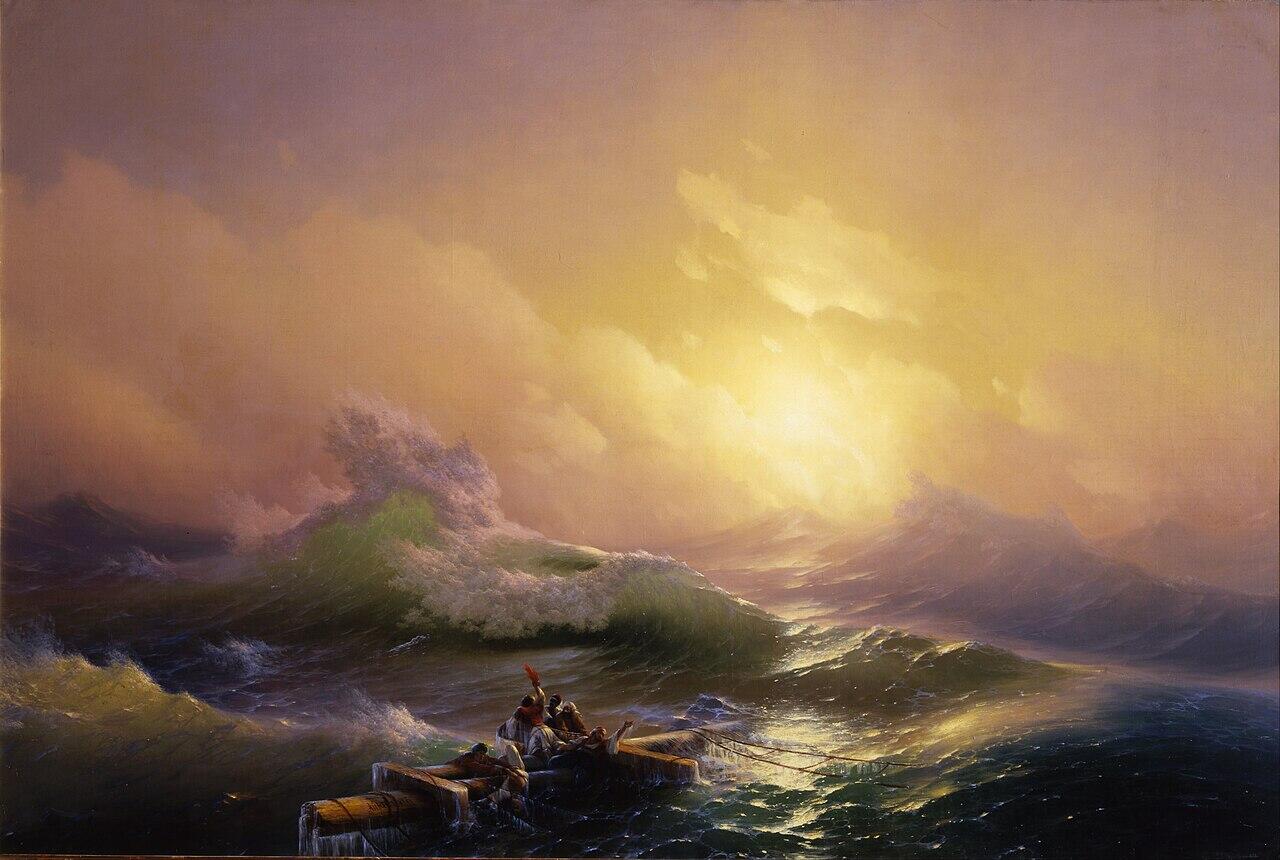
History of Romanticism
Characteristics of Romanticism extended into abstract expressionism in the 20th century, with imagination and intense feelings leading the way.
1760s - 1780s
German "Sturm und Drang" movement
Artists (primarily literary) bucked against the rigid order of the Enlightenment and the First Industrial Revolution and explored raw emotionalism and individuality.
1770s
“The Sorrows of Young Werther” by Johann Wolfgang von Goethe
This novel depicted the dramatic tragedy of a young man in love with a woman who was engaged to his friend. When they married, he ended his life. The story became so popular across Europe that many youths (especially young men) were inspired to dress and act like the main character. This dramatic attitude influenced culture and literature and, by extension, art.
1770s to 1800s
Romanticism ideas spread
Artists across Europe begin the first generation of Romanticism. They include: James Barry, Henry Fuseli, John Hamilton Mortimer, John Flaxman, William Blake, J.M.W. Turner, John Constable, Antoine-Jean Gros, Théodore Géricault, Eugène Delacroix, Paul Delaroche, Théodore Chassériau, Philipp Otto Runge, and Caspar David Friedrich.
1850s
Shift to Realism and other movements
The art movement faded as the greats died and the natural progression of art and culture took place. New artists began shifting their style to Realism in response to industrialization.
Notable Romantic Artists and Their Masterpieces
Several artists and individual pieces of work stand out as hallmarks of Romanticism. These important masterpieces highlight the themes and styles that the movement is known for.
The Third of May 1808 (1814) by Francisco Goya
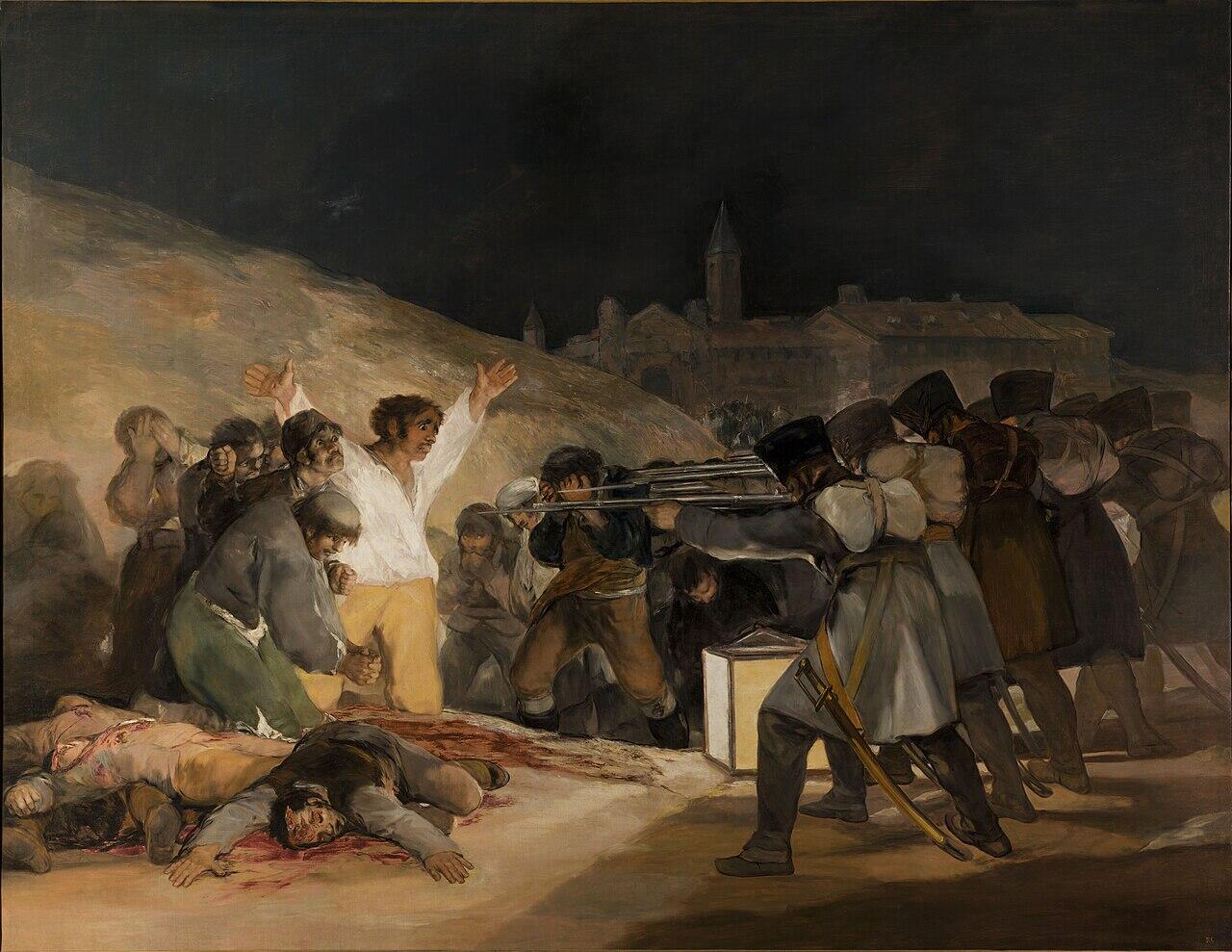
Goya is one of the most recognizable names in the Romanticism movement. His style greatly influenced later artists, like Picasso and Dalí.
He often portrayed the tumultuous events happening in the world around him, including the Spanish Inquisition and Napoleonic invasions.
The Third of May 1808 depicts Napoleonic soldiers methodically executing Spaniards by firing squad. The central figure in white evokes a Christ-like connotation. It’s clearly a politically charged anti-war criticism and public mourning for the violence inflicted during the war.
The Raft of the Medusa (c. 1818) by Théodore Géricault
Géricault’s life was short, but his few Romantic paintings greatly contributed to the entire sense of the movement. He had a keen eye for detail and execution. His most famous painting, The Raft of the Medusa, depicts men after a shipwreck, confined to a small raft adrift on the ocean. One sailor tries to wave down a passing ship with a shirt on a pole, while another holds his dead son in his arms.
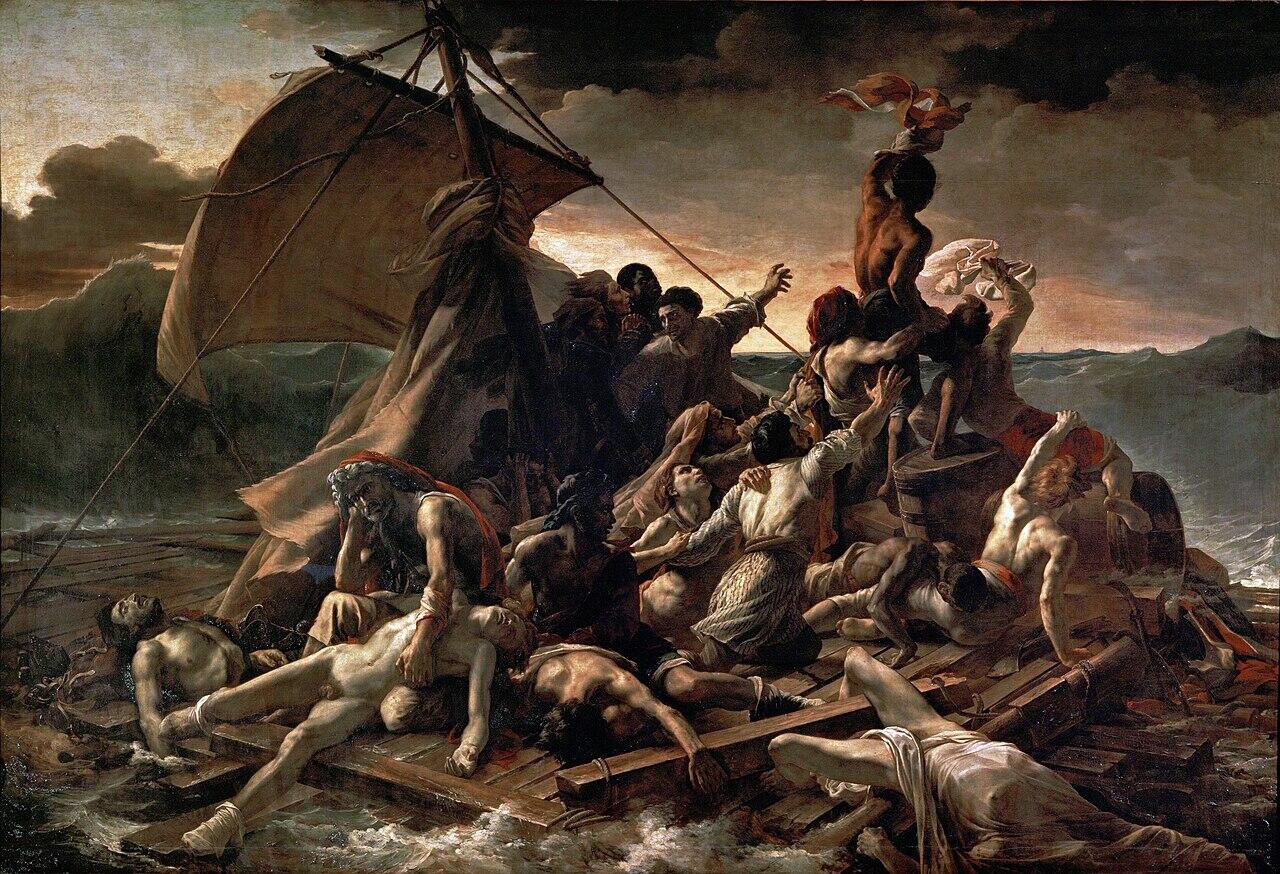
The painting was based on real, current events. In 1816, a French Royal Navy frigate sent to colonize Senegal wrecked, and many sailors died, even the ones who made rafts. The work was a form of protest art, pointing out the suffering of society as a result of the demands of those in charge.
Romanticism was more than merely an alternative to a sterile classicism; romanticism made possible, especially in art, a great expansion of the human consciousness.
Edward Abbey
Wanderer Above the Sea of Fog (c. 1818) by Caspar David Friedrich
Friedrich believed in using awe-inspiring portrayals of nature and landscapes as odes to and meditations on God as a presence in the world.
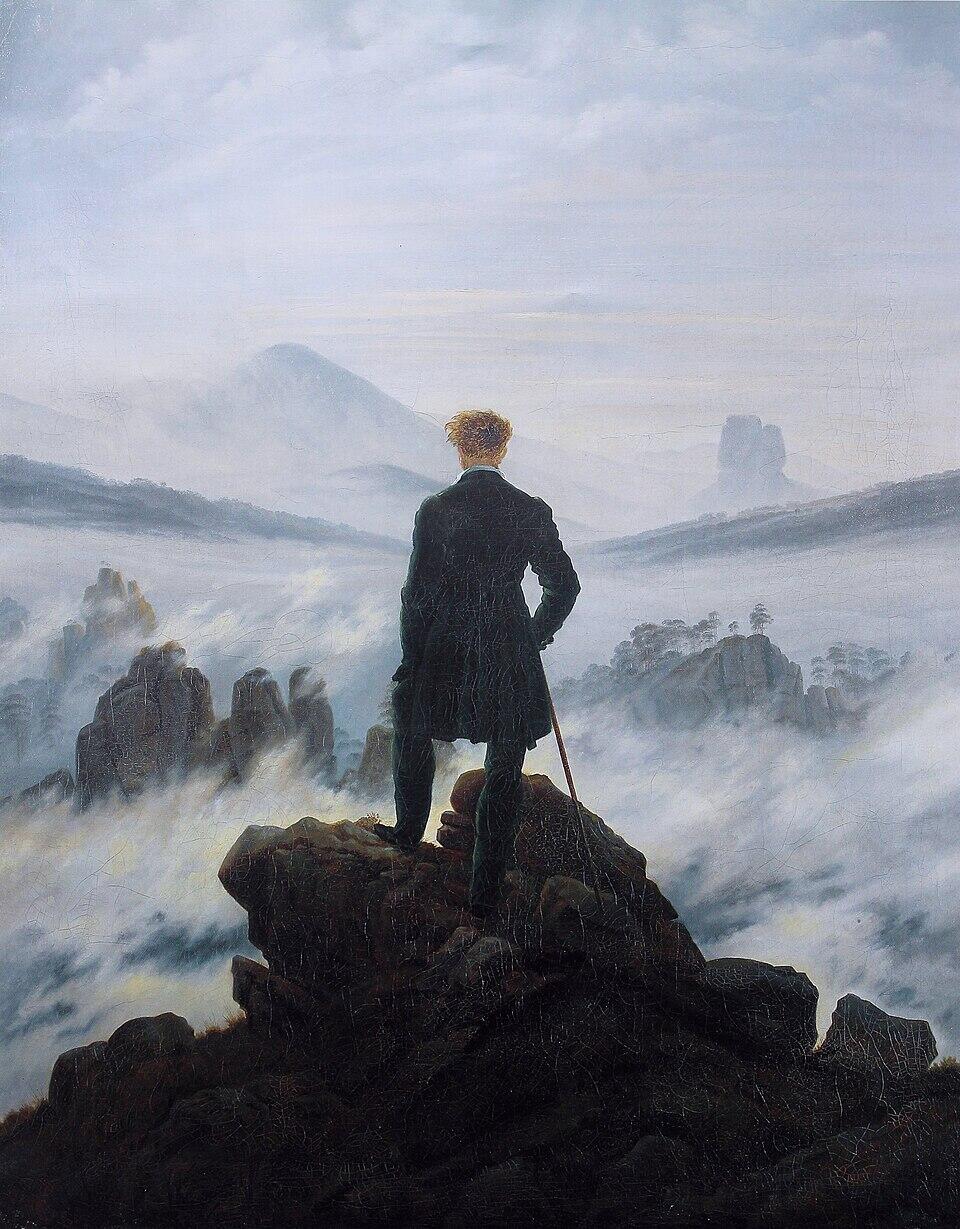
Wanderer depicts an aristocratic man surveying or admiring fog-covered valleys among mountain peaks. The scene is an imaginary composite of real places Friedrich studied in various places across Germany.
The figure appears both authoritative and diminutive at the same time, looking across the land as though he commands it, but his smallness is also very apparent.
Liberty Leading the People (July 28, 1830) (1830) by Eugène Delacroix
This famous allegorical painting references the uprising in Paris in 1830 during the French Revolution.
Delacroix, who had witnessed the revolt first-hand as a civilian, sought to honour France through art in lieu of fighting in the resistance. Each figure in the composition represents a specific demographic at the time.
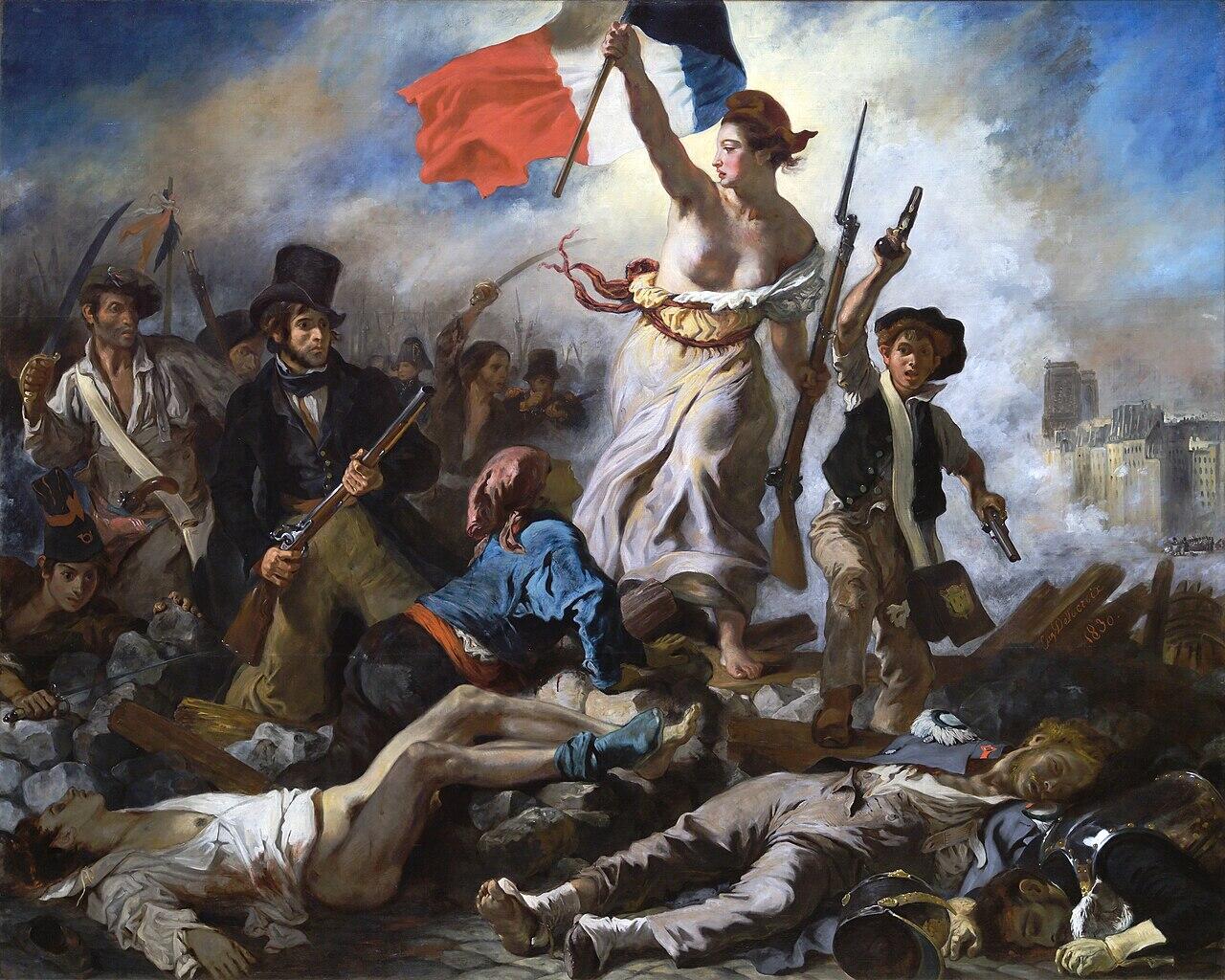
Delacroix was known for portraying bloody and violent scenes to draw attention to human suffering.
The Slave Ship (1840) by J.M.W. Turner
Turner created this painting in hopes of persuading Prince Albert to actively combat slavery around the world.
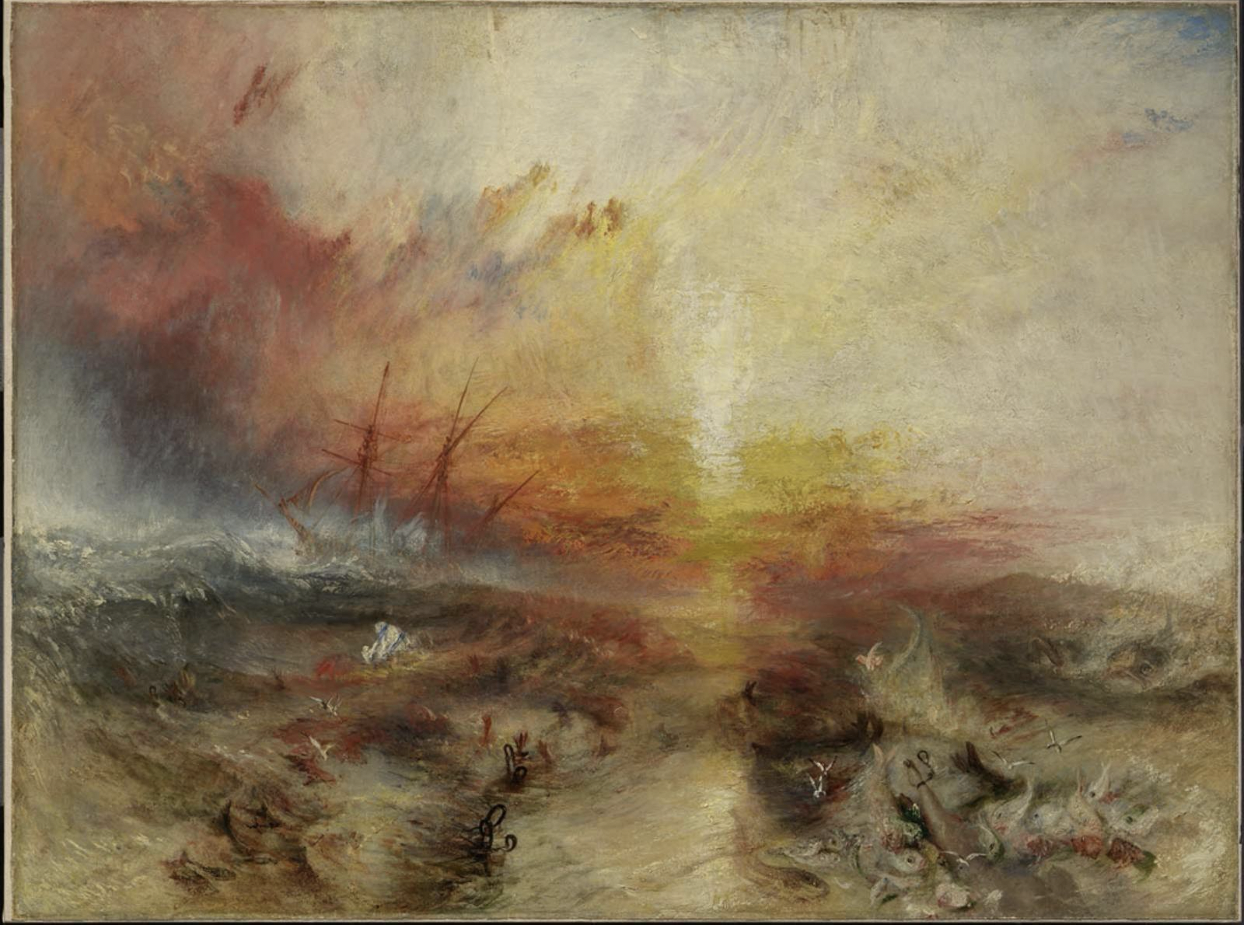
The Slave Ship depicts a troubled sea against a harsh, red sky. Dozens of shackled people struggle in the water as they drown and are encircled by sharks. The scene was inspired by true events.
It specifically references a poem about the instance when the captain of a slave ship ordered 133 enslaved people to be thrown overboard. He did this so he could collect insurance payments on them.
Romanticism's Legacy in Modern Art
Romanticism was a bridge between two periods of invention: the Enlightenment and the first Industrial Revolution, and the second Industrial Revolution. This was a period of rebellion against order and the overarching need to explain the world that society had chased while making abundant discoveries.
In 1860, Impressionism began to gain popularity. Romanticism’s focus on light and atmosphere, focus on nature and use of undefined strokes set the stage for Impressionism to bloom.
Later, Symbolism arose as a reaction to Realism and naturalism. Naturalism in art around this time was actually a rejection of nature the land, and instead focused on the “natural” order of things in a deterministic sense; it was a rejection of Romanticism. In a full-circle way, Realism then rejected these ideas and returned to a focus on nature, emotions and ideas through explicit depictions and implicit symbolism.
Romanticism is precisely situated neither in choice of subject nor in exact truth, but in a way of feeling.
Charles Baudelaire
Today, artists often return to Romantic themes and styles. Nature is self-evidently a major subject, highlighted by artists like Alfred Sisley, Anthony Vandyke Copley Fielding, Antoine-Louis Barye, Camille Pissarro, Claude Monet, Edgar Degas, William Collingwood Smith, Edward Moran, George Inness, Jervis McEntee, and many, many others.
Also enduring is the idea that art can express private feelings rather than just public rules or norms. Expressionism, Abstraction, Surrealism, Gothic Romanticism, and even Cubism and Avant-Garde movements are all examples of this. Many modern and contemporary artists today seek to portray deep emotions on the canvas. Varied brush strokes, vivid colours, dramatic shadows and unflinching scenes about evocative events all point to inspiration from Romanticism.
Further Learning and Appreciation
Want to learn more about Romanticism? One of the best places to start is with museum collections, both in person and online. Canadian and American museums with exhibits on Romanticism include the National Gallery of Canada in Ottawa, the Art Gallery of Ontario in Toronto and the Metropolitan Museum of Art in New York City. Abroad, museums like the Louvre in Paris, the State Hermitage Museum in St. Petersburg, and the Tate Gallery and National Gallery in London feature some of the most famous works from the time.
To begin studying on your own, start with these main ideas:
- The sublime (philosophy)
- The Enlightenment and the first Industrial Revolution, and how they influenced art, literature, and society
- “The Sorrows of Young Werther” by Johann Wolfgang von Goethe
- Romantic literature and poetry
- Chivalry and heroism of the Middle Ages, which inspired many Romantic artists
- Romantic nationalism
- How Romanticism shifted to Realism with the Second Industrial Revolution
Britannica, Romantic Circles, and Romantic Textualities are great resources for diving deeper into the various aspects of Romanticism. Simply exposing yourself to more information about art history will lead you to a better understanding of art over time, as well as society and the world as a whole.
References
- Calley Galitz, Kathryn. “Timeline of Art History : Romanticism.” metmuseum.org, 1 Oct. 2004, www.metmuseum.org/essays/romanticism. Accessed 30 July 2026.
- Esaak, Shelley. “Romanticism in Art History From 1800-1880.” ThoughtCo.com, 28 July 2019, www.thoughtco.com/romanticism-art-history-183442. Accessed 30 July 2026.
- “Romanticism.” Britannica.com, 23 July 2026, www.britannica.com/art/Romanticism. Accessed 30 July 2026.
- “Romanticism Movement Overview.” The Art Story, www.theartstory.org/movement/romanticism. Accessed 30 July 2026.
- Tate. “Romanticism | Tate.” Tate, www.tate.org.uk/art/art-terms/romanticism. Accessed 30 July 2026.
Summarize with AI:
Did you like this article? Leave a rating!


 Loading...