
Key Takeaways
- Greek epic myths were relevant to education, religion, and society, since they taught collective values and moral lessons, reinforcing the collective integration at the time.
- Plato and Aristotle established concepts that remain relevant in philosophy, science, ethics, and politics.
- Greek legal codes, such as the Gortyn Code, reflect legal principles that shaped European law, such as inheritance, adoption, marriage, divorce, property, and slavery.
- The Delphic Hymns, symbolic compositions dedicated to the Greek gods, integrated civic practices, music, poetry, and religion.
- The Delphic Maxims were a guiding and educational Greek religious text relevant for maintaining ethics and morality in ancient Greece.
- Ancient Greek texts were preserved through oral tradition and manuscript copies, such as the Derveni Papyrus, ensuring their survival.
Ancient Greek literature includes epics, hymns, tragedies, speeches and philosophical works that served as role models for education, politics, and the arts. These classics were greatly fundamental at the time, also influencing Western cultural philosophy throughout history. The Greek philosophical works of Homer, Sophocles, Plato and Aristotle, and other great ancient authors remain quite relevant for literature today. Discover everything about enduring Greek texts, the main ancient authors, and the stories behind these classics.


Epic Poetry: Foundations of Western Literature
The founding literary genre of ancient Greece. Greek epic poetry was transmitted orally for centuries before being written down on paper. Classical Greek writings were not only about tales of the iconic Greek heroes and gods, but also pedagogical and cultural instruments that taught the importance of collective values, role models and mythical explanations of history. Homeric epic became huge for Greek education (known as paideia), and its influence extended to Roman and later to modern European literature. 1
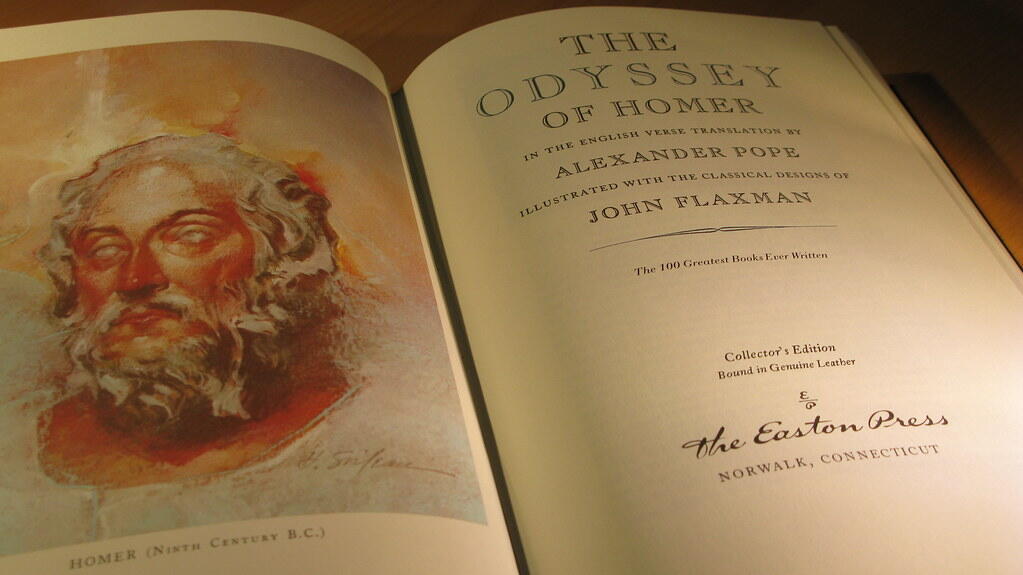
Homer's "Iliad" and "Odyssey"
Themes and narratives
The Iliad narrates an episode of the Trojan War, centered on the wrath of Achilles, and explores mortality, glory and divine intervention. It does not recount the entire war, but rather a crucial fragment, illustrating how the heroes' decisions affect both the armies and their personal destinies. 2
The Odyssey tells the story of Odysseus' return to Ithaca after the war. The adventures include his encounters with mythical beings and the struggles he faces all along his journey. Explores the importance of resourcefulness, hospitality, fidelity and family. 3
Cultural significance
Both works became "school texts" in ancient Greece and remain so today. Plato criticizes them in the Republic for their influence, but acknowledges that Homer was considered an educator of Greece. Moreover, Classical Greek writings provided narrative models that later inspired Greek tragedy, Roman epic and modern novels exploring war, death, and travel. 4
Later influence
The narrative structure of the Iliad and the Odyssey inspired Greek philosophical works, such as Virgil's Aeneid, Dante's Divine Comedy and even James Joyce's Ulysses, which reinterprets the Odyssey in a modern context.
Philosophical Texts: Shaping Western Thought
Ancient Greek philosophy is pretty much the foundation of the Western intellectual tradition and literature. Plato and Aristotle greatly marked the path from the mythical to rational thinking, establishing concepts that remain relevant in philosophy, science, ethics and politics. Their works are the subject of analysis in universities to this day.
Works of Plato and Aristotle
Plato - 427-347 BC
Disciple of Socrates and teacher of Aristotle. His most influential Greek philosophical works are the philosophical dialogues
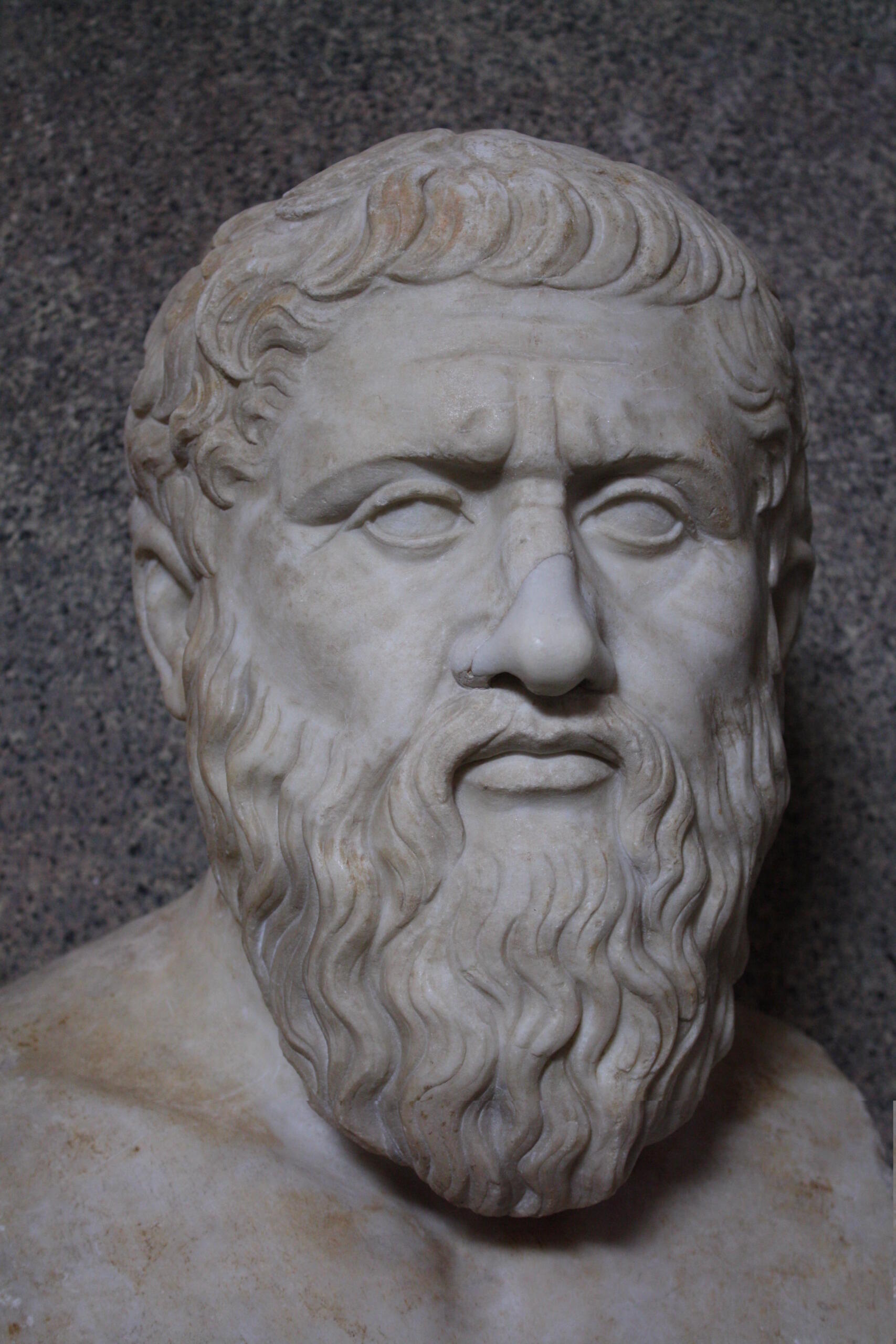
He explores the nature of knowledge, justice, the soul and the organization of the polis (or city-state). In The Republic, he introduces the theory of Forms and reflects on the state, justice and education as fundamental pillars. In The Banquet, he develops a philosophical conception of love, and in Phaedo, he explores the immortality of the soul and Socrates' death. 5 6
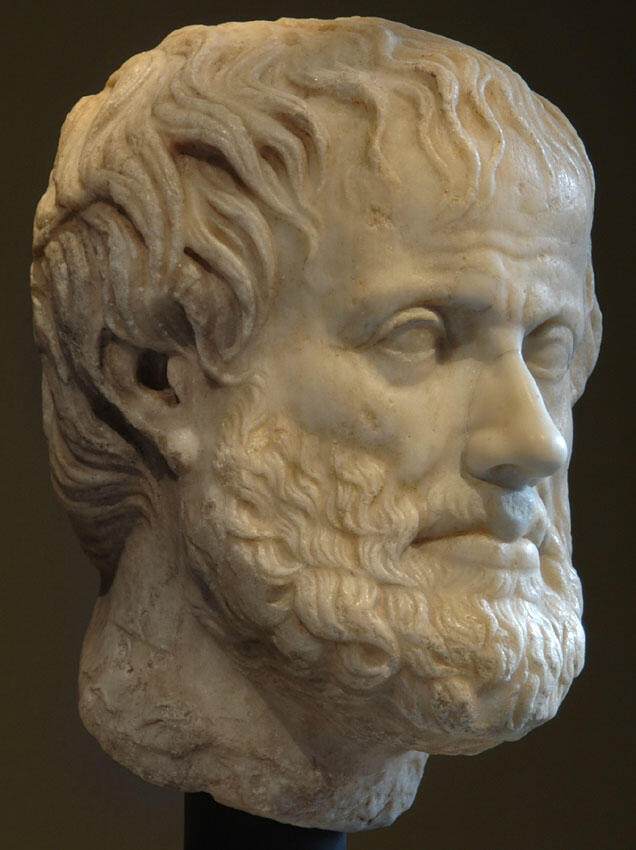
Aristotle - 384-322 BC
Disciple of Plato and tutor of Alexander the Great. His works explore more about the logic (Organon), ethics (Nicomachean Ethics), politics (Politics), biology and metaphysics. He was the first philosopher to systematize knowledge in separate fields of study.
For example, in ethics, he proposed the doctrine of the mean as a guide to virtue; in politics, he defended that human beings are "political animals" and studied various forms of government; in logical reasoning, he founded the theory of the syllogism, or deductive reasoning. Usually known as the Father of Western Science!
Plato's ideas widely influenced Christian philosophy, including modern idealist currents. Aristotle, on the other hand, marked the beginning of medieval philosophy, scholasticism, and contemporary political philosophy. In ethics and politics, both established the frameworks that still structure philosophical reflection. 7 8
Legal Codes: Foundations of Jurisprudence
Greek law, although it did not reach the level of systematization of Roman law, left traces in legal codification, judicial practice and the notion of citizenship. Inscriptions of laws, such as the Code of Gortina, show how the poleis attempted to regulate civil life and ensure the resolution of conflicts. Today these Greek legal codes are considered to reflect both concrete legal practices and principles that inspired the later development of law in Rome and contemporary Europe. 9
The Greek notion of isonomia (equality of rights) appears already in the literature of the 5th century BC. According to studies of comparative legal history, about 20-25% of the principles of Greek law (such as inheritance, property and marriage) were adopted by the Romans, who then transmitted this inheritance to medieval European law.
The Gortyn Code
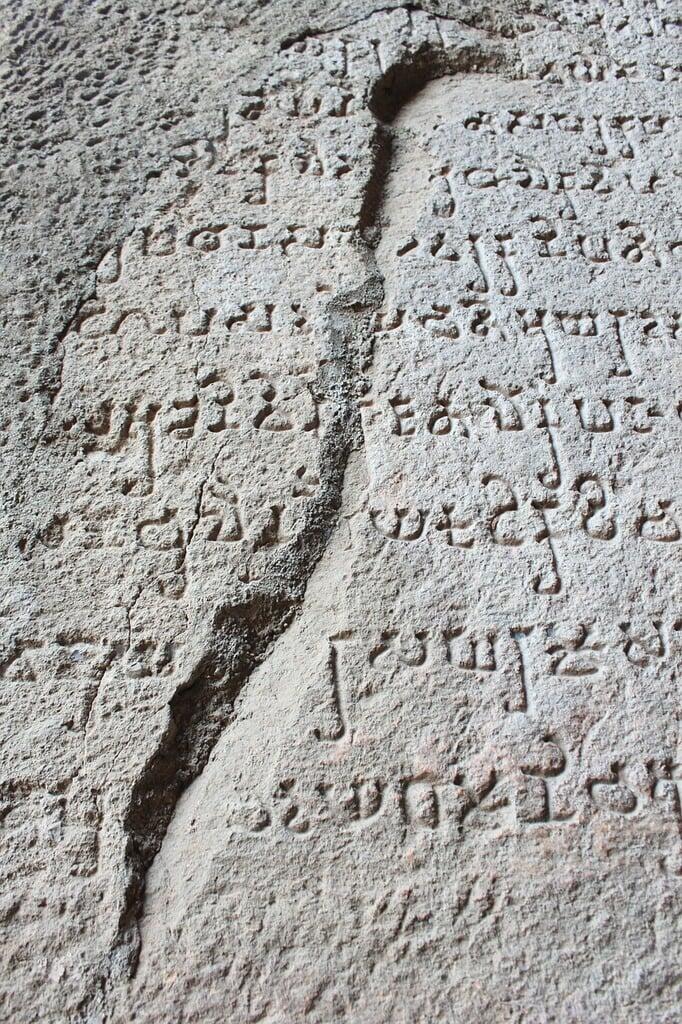
The Code of Gortina (5th century BC) is the most extensive surviving legal inscription from ancient Greece, engraved on a wall of the city of Gortina in Crete. It consists of 12 columns of boustrophédon script (lines alternating reading direction) and regulates fundamental civil matters: inheritance, adoption, marriage, divorce, property and slavery. 9
Its importance lies in the fact that:
- It shows a practical, civic legal system, separate from myth or religion.
- It reflects principles of legal equity, for example, in cases of divorce and female inheritance.
- It was a reference for comparative studies, evidencing the evolution of law from local practices to universal codifications.
The influence of the Gortyn Code and other Greek legal codes extended to Roman legal codes, indirectly shaping European legal traditions. Greek law did not survive as a complete code as Roman law. Still, the Greek principles of justice and equality provided a foundation for later legal developments.
Religious Hymns: Expressions of Devotion
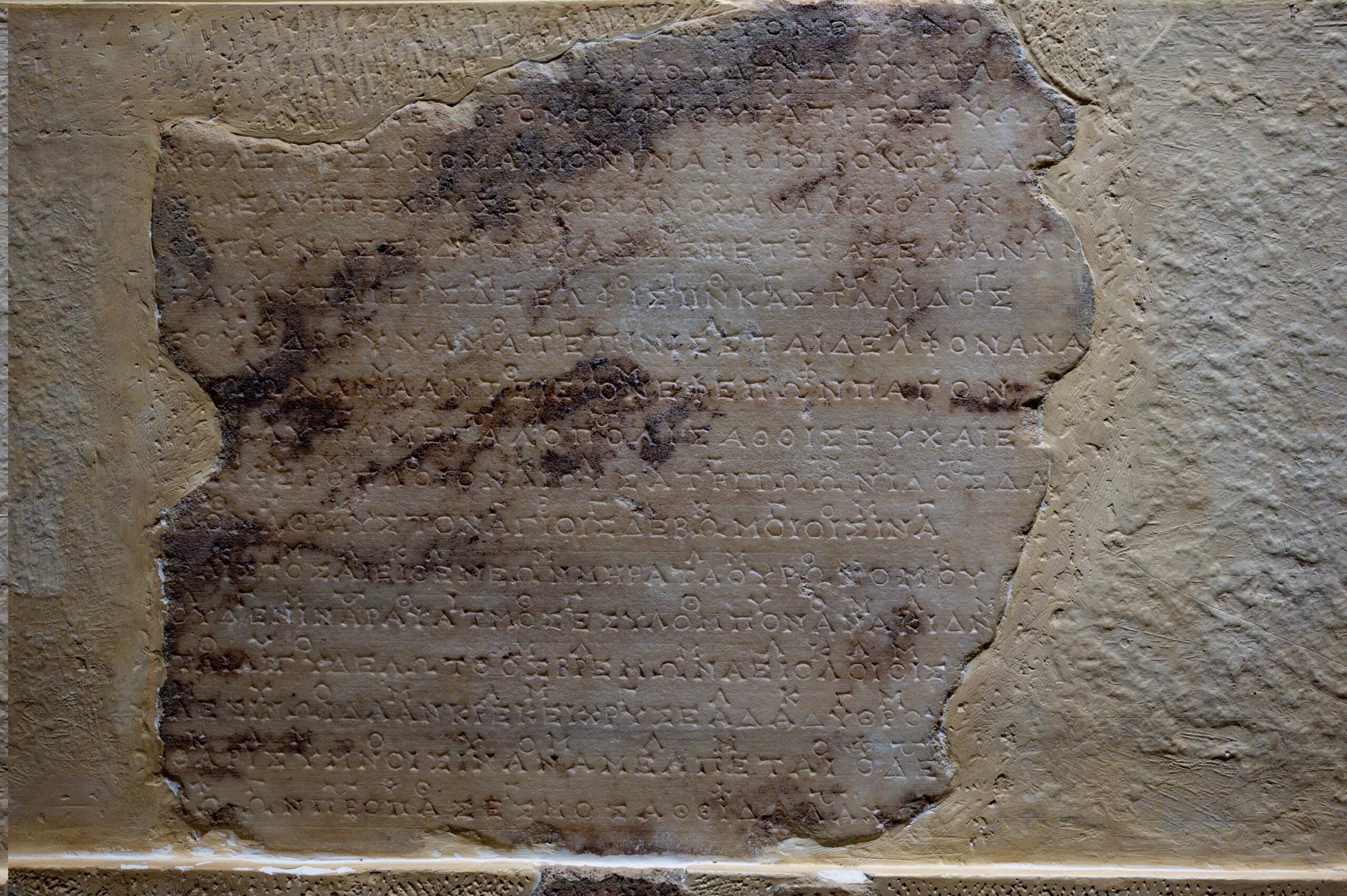
Greek hymns were poetic and musical compositions dedicated to the gods, part of the famous ancient Greek mythology, recited or sung during rituals. They were acts of devotion and symbolic offerings to reinforce the collective memory in festivals and public ceremonies. Some of the most important surviving ones are the Delphic hymns, dedicated to Apollo, which demonstrate how poetry, music and religion were integrated into the civic practices. 10
The Delphic Hymns
- Historical purpose - The Delphic hymns, inscribed in stone at the sanctuary of Delphi in the 2nd century BC, were performed by choirs during the Pythian festivals (also known as Pythian games). Their function was to honor the god Apollo as patron of Delphi, to celebrate his victory over the serpent Python and to reaffirm the importance of the sanctuary as a pan-Hellenic religious center (sanctuary of Ancient Greece).
- Musical composition - They are especially valuable because they include ancient musical notation, which allows us to know how some of the Greek music sounded. These fragments show a use of modal scales, choral accompaniment and repetitive formulas that sought to generate solemnity and reinforce the ritual character.
- Role in religious practices - The Greek hymns fulfilled the double function of invoking and pleasing the god, while unifying the community in the public celebration. At the sanctuary of Delphi, their performance reinforced the authority of the oracle and the prestige of the sanctuary throughout Greece. 10
Moral Teachings: Guiding Principles
Greek moral teachings were brief formulas of practical wisdom that guided the conduct of Greek citizens. Many of them were associated with the Seven Sages of Greece and were inscribed in public spaces, especially at Delphi, which gave them an educational and normative character. 11 They were transmitted as guiding principles of community life, easy to remember and apply in everyday life, over the years.
The Delphic Maxims
Content and meaning: Among the best known are:
- Gnōthi seautón (Know thyself).
- Mēden agan (Nothing in excess).
- Eggýē, para d'átē (Bail leads to ruin).
These Greek religious texts reflected values, such as better self-control, prudence and moderation, considered essential to civic and spiritual life in the polis.
- Application in Greek society: These were used as practical guidelines for behavior, transmitted over the years in the sanctuary of Apollo at Delphi and used in children's education. They were not religious ideologies, but ethical guidelines to harmonize individual life with social stability.
- Current relevance: Their relevance lies in the fact that they continue to formulate universal principles: to know oneself as a basis for critical reflection, to avoid excesses as a guide to better personal balance and to recognize the risks of imprudent commitments as a legal and economic principle. These teachings allow us to see the continuity between ancient Greek morality and contemporary ethical concerns. 12
Preservation and Influence of Ancient Greek Scriptures
Manuscript Traditions and Transmission
The preservation of ancient Greek texts involved a combination of oral tradition, manuscript copies and transmission through libraries. Homeric poems were recited in public before being fixed in writing on papyrus scrolls. In the Hellenistic period, the Library of Alexandria was essential for collecting, editing and preserving these historical treasures and ancient works.
During the Middle Ages, ancient Greek manuscripts were copied during writing workshops, which allowed the transmission of much of the classical tradition to the European Renaissance. Years later, the printing press multiplied copies and translations, ensuring the survival of Greek literature through history.12
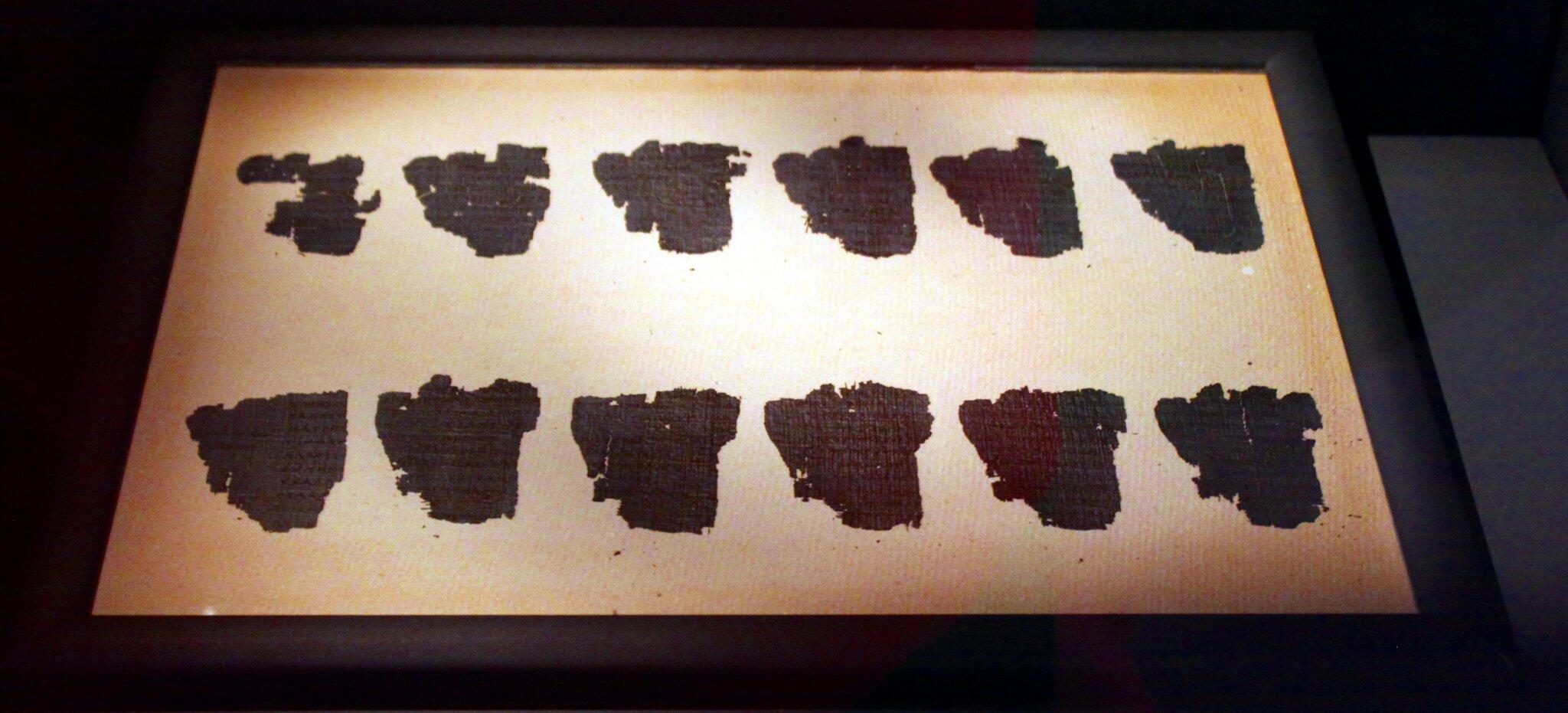
A pretty huge discovery was the Derveni Papyrus (4th century BC), found in 1962 near Thessaloniki, Greece. It is considered the oldest surviving philosophical text in Europe. It contains texts where Greek myth is combined with religious, philosophical and ritual elements, showing how the ancient Greeks integrated magical and rational reflection in their thinking.13
Impact on Modern Culture
Ancient Greek literature left its mark on modern literature, art and philosophy. These works have been reinterpreted throughout history, demonstrating how they transcend diverse cultural contexts and periods of time. For example, in literature, James Joyce rewrote the Odyssey with a more contemporary focus in Ulysses. And, Margaret Atwood reinterpreted the myth of Penelope in The Penelopiad.14

When it comes to arts, the famous Spanish painter Pablo Picasso represented the Minotaur in his Minotauromachie (1935), exploring the ambiguity between the human and one of the most famous Greek monsters, taking himself as a reference. In theater and cinema, the French writer Jean Anouilh rewrote Antigone in 1944, adapting Sophocles' ancient tragedy as a metaphor for Nazi occupation and the French Resistance. Films such as O Brother, Where Art Thou? (2000) is a comedy from the Coen brothers based on the Odyssey in more modern contexts. 15, 16
All these superb examples demonstrate how Greek literature has been preserved throughout history and how it continues to inspire new artistic works over the years. Before reading William Shakespeare's romance classics, let yourself be wrapped first by the fascinations of Greek literature and the rich history behind its more relevant works.
| Ancient Text | Modern Counterpart | Notes | |
|---|---|---|---|
| Iliad | Divine Comedy | Reimagines epic journeys and moral struggles with allegory | |
| Odyssey | Ulysses | Modern retelling set in Dublin over one day | |
| Odyssey | The Penelopiad | Penelope’s perspective retelling the myth | |
| Antigone (Greek Tragedy) | Antigone (1944) | Reinterpreted as a metaphor for Nazi occupation | |
| Myth of the Minotaur | Minotauromachie (1935) | Picasso’s artwork exploring myth and symbolism | |
| Greek Hymns (Delphic Hymns) | Modern reconstructions | Studied as earliest notated European music | |
| Epic Tradition (Greek Epics) | O Brother, Where Art Thou? | Film loosely based on the Odyssey |
References
- Browning, Robert, Lucas, William, D., Mackridge, & A, P. (1998, July 20). Greek literature | History, Authors, Books, Examples, Characteristics, & Facts. Encyclopedia Britannica. https://www.britannica.com/art/Greek-literature
- The Editors of Encyclopaedia Britannica. (2025c, September 22). Iliad | Description & Facts. Encyclopedia Britannica. https://www.britannica.com/topic/Iliad-epic-poem-by-Homer
- Blumberg, & Naomi. (2025, September 22). Odyssey | Summary, Characters, Meaning, & Facts. Encyclopedia Britannica. https://www.britannica.com/topic/Odyssey-epic-by-Homer/English-translations-and-legacy
- Lucas, William, D., Browning, Robert, Mackridge, & A, P. (1998, July 20). Greek literature | History, Authors, Books, Examples, Characteristics, & Facts. Encyclopedia Britannica. https://www.britannica.com/art/Greek-literature
- Plato (Stanford Encyclopedia of Philosophy). (2022, February 12). https://plato.stanford.edu/entries/plato/
- Meinwald, & C, C. (2025, September 29). Plato | Life, Philosophy, & Works. Encyclopedia Britannica. https://www.britannica.com/biography/Plato
- Aristotle (Stanford Encyclopedia of Philosophy). (2020, August 25). https://plato.stanford.edu/entries/aristotle/
- Kenny, JP, A., Amadio, & H, A. (2025, October 2). Aristotle | Biography, Works, Quotes, Philosophy, Ethics, & Facts. Encyclopedia Britannica. https://www.britannica.com/biography/Aristotle
- Code of Gortyn | ancient Greece | Britannica. (n.d.). Encyclopedia Britannica. https://www.britannica.com/topic/code-of-Gortyn
- The Editors of Encyclopaedia Britannica. (1998a, July 20). HYMN | Definition, History, & Facts. Encyclopedia Britannica. https://www.britannica.com/topic/hymn
- Seven Wise Men | Greek sages | Britannica. (n.d.). Encyclopedia Britannica. https://www.britannica.com/topic/Seven-Wise-Men
- Wasson, D. L., & Cartwright, M. (2025). Ancient Greek literature. World History Encyclopedia. https://www.worldhistory.org/Greek_Literature/
- Orestis Kourakis. UNESCO; The Derveni Papyrus: The oldest book of Europe https://www.unesco.org/en/memory-world/derveni-papyrus-oldest-book-europe
- Mode, D. (2024, June 11). "THE INFLUENCE OF GREEK MYTHOLOGY ON MODERN LITERATURE": DE MODE OF LITERATURE. DE MODE. https://www.demodemagazine.com/the-influence-of-greek-mythology-on-modern-literature-de-mode-of-literature
- Lesso, R. (n.d.). Picasso and the Minotaur: Why was he so obsessed? | TheCollector. TheCollector. https://www.thecollector.com/picasso-and-the-minotaur-obsessed/
- O Brother, Where Art Thou? | film by Joel and Ethan Coen [2000] | Britannica. (n.d.). Encyclopedia Britannica. https://www.britannica.com/topic/O-Brother-Where-Art-Thou
Summarize with AI:
Did you like this article? Leave a rating!

 Loading...