


If your child is approaching an Alberta PAT, you may be wondering how important the test is, what subjects will be covered, and whether weeks of extra studying are necessary.
Provincial Achievement Tests, commonly called PATs, are standardized assessments administered to Alberta students in Grades 6 and 9. They assess important learning from the Alberta curriculum in subjects such as language arts, mathematics, science, and social studies. But a PAT should not be viewed as a label on a student.
Instead, think of the provincial achievement test as a checkpoint. It provides another source of information about what a student knows and can do at an important stage of schooling. Classroom assignments, projects, observations, discussions, quizzes, and teacher assessments provide a much broader picture of learning across the year.
Alberta PATs are administered annually to students in Grades 6 and 9. Alberta's Ministry of Education uses the assessments to examine whether students are achieving provincial learning expectations and to help schools, school authorities, and the province monitor and improve student learning.
For families, the best PAT preparation is therefore rarely frantic last-minute cramming. Understanding the format, reviewing important learning, practising a few representative questions, and establishing a calm test-day routine are usually much more productive.


What Alberta PATs Measure and What They Do Not
An Alberta PAT measures student achievement against provincial expectations at particular points in schooling.
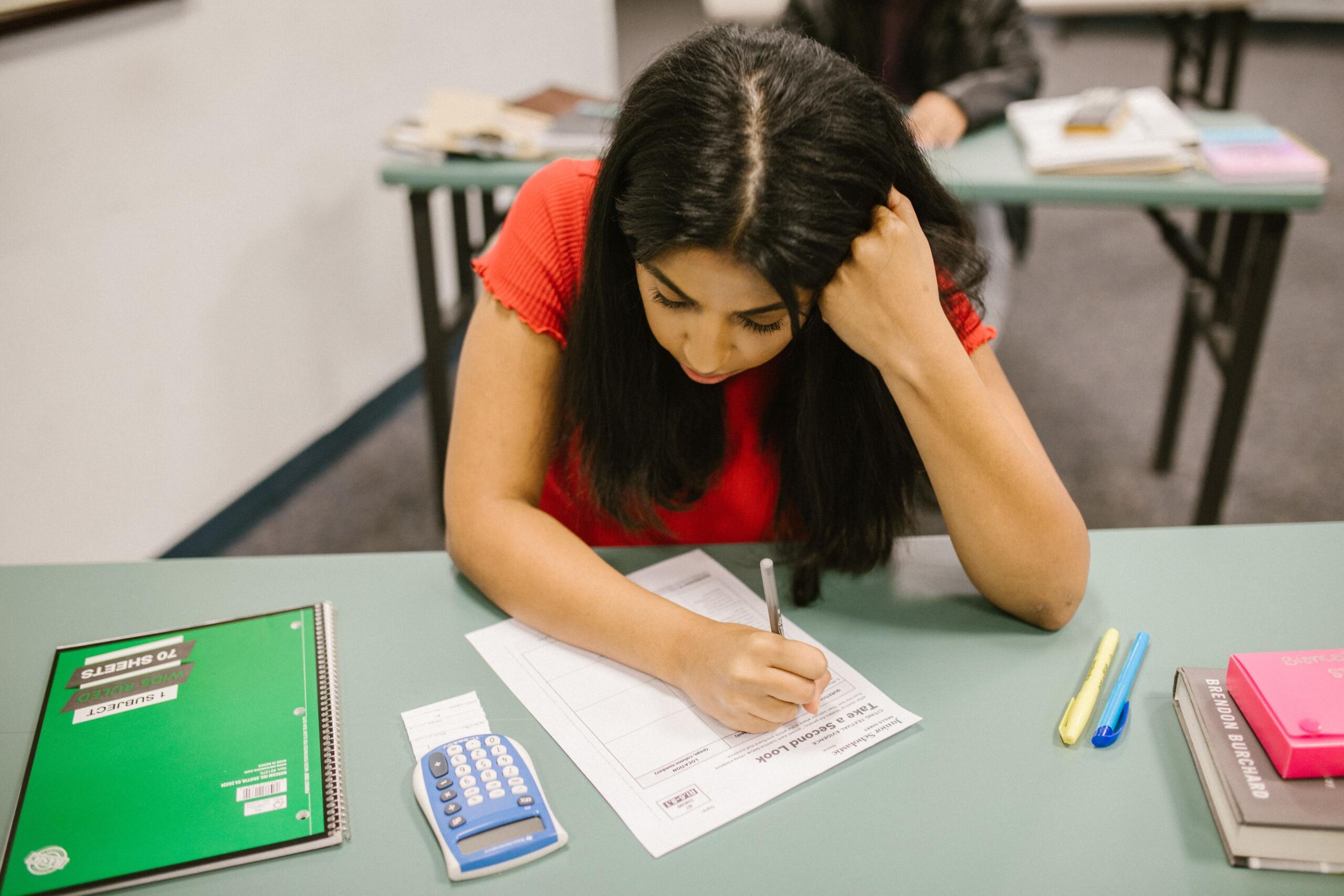
Because students across Alberta attend different schools and learn with different teachers, provincial assessments provide a common source of information. They help the education system examine how students are doing relative to provincial standards.
Alberta PATs are one part of a broader assessment system. They provide a common provincial measure of Grade 6 and 9 achievement, while classroom assessments provide ongoing evidence of learning. Together, these results help identify strengths, learning needs, and areas for improvement.
That does not mean a PAT measures everything important about a learner. Creativity, curiosity, persistence, collaboration, improvement over time, oral communication, and many other aspects of learning cannot be reduced to one standardized test score.
Strong diploma exam preparation can also support your post-secondary goals, especially when you understand how your final marks contribute to your Alberta university admission average.
Why Alberta Uses Provincial Tests
One advantage of provincial testing is consistency. Classroom assessment naturally differs from one school to another. Teachers design learning experiences for their students and gather evidence in different ways. A provincial assessment introduces a common measure.

Alberta Education uses PAT results to help determine whether students are learning what they are expected to learn, report achievement relative to provincial standards, and support monitoring and improvement across the education system.
That makes PAT data useful at several levels. A teacher can identify an area students found challenging. A school can examine patterns across several years. A school authority can identify areas requiring additional support. Alberta Education can examine provincial patterns.
The important distinction is that this information should support learning and improvement rather than become a simplistic ranking of individual children.
How PAT Results Fit with Classroom Marks
A student learns for an entire school year. During that time, teachers see considerably more than a standardized assessment can capture.
They observe how students solve problems, explain ideas, respond to feedback, write, read, investigate, collaborate, and apply new knowledge.
PAT results provide another piece of evidence.
A student might perform differently on a PAT than expected based on regular classroom achievement. That difference can become useful information rather than an immediate reason for alarm.
Ask:
What does this result tell us that we did not already know?
That question is much more productive than asking whether one test score proves that a student is “good” or “bad” at a subject.
Feeling overwhelmed by everything you could review? Learn what matters most when studying for the English 30-1 diploma exam and how to build a more focused preparation plan.
PAT Grade 6 Alberta: Subjects, Format and Expectations
For students completing PAT Grade 6 Alberta assessments, the experience may feel unfamiliar simply because provincial testing is different from an ordinary classroom assignment.
The content itself should be much more familiar.
Grade 6 PATs are connected to curriculum expectations students have been learning throughout the year. Preparation should therefore concentrate on retrieving and applying that learning rather than attempting to learn an entirely new body of material immediately before testing.
What Grade 6 Students Are Tested On
Alberta's PAT program includes assessments connected with English or French language arts, mathematics, science, and social studies, depending on the student's program and applicable curriculum.
The exact assessment structure can change as Alberta introduces new curriculum and corresponding provincial assessments. Families should therefore use the current subject bulletins and information supplied by their school rather than relying on an old practice booklet.
This table provides a description of recent assessment formats.
| Grade 6 Subject | Format & Component Type | Questions / Tasks | Standard Time (Double Time Allowed) | Key Rules & Tools |
|---|---|---|---|---|
| Writing | Digital Written Response | 2 Writing Assignments (1 Narrative / 1 Informational) | 120 mins (Up to 240 mins) | Includes a 10-minute discussion period |
| Reading | Digital Machine-Scored | 50 Multiple Choice / Interactive Questions | 60 mins (Up to 120 mins) | Texts cover fiction, non-fiction, poetry, and visuals |
| Mathematics | Digital Machine-Scored | 15 Questions (Number concepts: integers, fractions, decimals, ratios) plus 40 Questions (All curriculum organizing ideas) | Part A: 30 mins (Up to 60 mins); Part B: 75 mins (Up to 150 mins) | No calculator allowed (12x12 grid allowed as an accommodation) |
| Science | Digital Machine-Scored | 50 Multiple Choice / Interactive Questions | 60 mins (Up to 120 mins) | Covers matter, energy, space, climate, and scientific methods |
Students should always confirm the tests applicable to their program through their school.
Preparing From What Students Already Know
Random worksheets are not automatically good PAT preparation.
Suppose a student struggles with fractions but performs strongly with geometry. Completing 50 random mathematics questions may produce less improvement than spending a shorter period identifying exactly what the student misunderstands about fractions.
Preparation should follow a simple cycle:
Retrieve → Check → Identify a gap → Review → Try again
This makes studying targeted. It also teaches students an important academic skill that extends well beyond PAT testing: learning how to recognize what they know and what they still need to practise.
Not sure which concepts deserve the most attention? Our Math 30-1 Diploma study guide breaks down key areas to review and ways to practise them.
How Grade 6 Results Are Used
The most productive use of Grade 6 PAT information is to identify patterns in learning. If a student's results suggest strong reading comprehension but difficulty with a particular mathematical concept, the question should not be:
“Is this student ready for junior high?”
A better question is:
“What support or practice would strengthen this area before the next stage of learning?”

Students continue developing academically long after Grade 6. A PAT result captures performance at a particular point; it does not establish a permanent academic identity.
PAT Grade 9 Alberta: What Changes in Junior High
The PAT Grade 9 Alberta experience comes at another important transition. By Grade 9, students are expected to take greater responsibility for planning, reviewing, monitoring time, and interpreting different types of questions.
That means successful preparation is not simply about adding more study hours. Students benefit from developing better test strategy and independence.
Comparison Table: Grade 6 vs. Grade 9 PATs
Grade 6
Evaluates school-wide achievement; does not count toward the student's personal report card grade.
Administered exclusively in the Spring (May/June).
Reading comprehension focuses on extracting main ideas, identifying basic figurative language, and tracking straightforward plots or text structures.
Emphasizes mental math, arithmetic accuracy (decimals, fractions), and basic geometric formulas. No calculators allowed on either part.
Tests knowledge of observable phenomena (e.g., weather patterns, animal ecosystems, basic properties of matter, simple forces).
Grade 9
Often serves as the official final exam mark (weight varies by school authority).
Administered in January (semestered courses) and May/June.
Reading comprehension focuses on Evaluates author intent, subtle tone, irony, and rhetorical devices.
Shifts heavily to linear equations, polynomials, powers, data modeling, and probability. Calculators are required to solve complex, multi-step word problems.
Focuses on the scientific method, identifying independent/dependent variables, analyzing raw lab data, and applying abstract concepts like genetic inheritance, chemical reactions, and electrical circuits.
The goal is not to make Grade 9 testing frightening. It is to help students become increasingly independent learners.
Grade 9 Subjects and Written Components
Grade 9 PATs include language arts, mathematics, science, and social studies assessments applicable to the student's program. Knowledge and Employability PATs are also administered in Grade 9.
Different assessments require different approaches.
A multiple-choice question asks students to recognize or determine the strongest answer among available options. A written response requires students to generate, organize, support, and communicate their own ideas.
Those skills should not be prepared for in exactly the same way.

For English Language Arts, students can practise planning and developing written responses as well as reading closely.
For mathematics, students should retrieve procedures and concepts while also practising reasoning and problem solving.
For science, students should move beyond memorizing vocabulary and practise applying concepts to unfamiliar situations.
For social studies, students benefit from interpreting sources, considering perspectives, and connecting evidence with important concepts.
The best preparation therefore mirrors the thinking demanded by the subject, not merely the number of pages in a review package.
Why Grade 9 PAT Marks Matter More
Families sometimes hear that Grade 9 PATs “count” and immediately assume the provincial test determines the student's entire final mark. That exaggerates the role of a single assessment.
Where PAT results contribute to a course mark, families should confirm the current weighting and local implementation with their school, because provincial policies and exceptional arrangements can change.
More importantly, students should keep the weighting in perspective. A PAT is one component of assessment. It does not erase the learning and evidence accumulated throughout the school year. The practical response is straightforward: prepare appropriately, understand how the result will be used, and avoid treating the assessment as an all-or-nothing event.
Provincial Achievement Test Dates, Registration and Test-Day Rules
Knowing the logistics of provincial achievement test administration can eliminate a surprising amount of stress.
Alberta schedules PAT administrations during January, May, and June, although not every student writes during every administration. Some Grade 9 students normally write PATs in January, while the main spring administration takes place in May and June.
Families should always verify the schedule for the current year.
Typical Spring PAT Planning Timeline
April
Confirm the Plan
Schools prepare for upcoming provincial assessments. Families should check school communication, note relevant dates, and identify any questions about accommodations or scheduling.
Early May
Organize
Students gather review materials and identify the curriculum areas that deserve the most attention.
Mid-to-Late May
Written Language Assessments Begin
Language arts written components may be scheduled during May. Students should arrive prepared to plan, write, and review their work.
Early June
Additional Language Arts Assessments
Reading components and other scheduled assessments begin according to the provincial timetable.
Mid-June
Mathematics and Other Subjects
Mathematics, science, and social studies PATs are typically scheduled across the June assessment period according to the official schedule.
After Testing
Results and Reflection
Schools and Alberta Education process results, which can later be used alongside other assessment evidence to understand student achievement.
When PATs Are Written
Families should not assume that a date remembered from an older sibling's PAT year still applies. Schedules can change. For example, special circumstances affected Alberta's 2025–26 assessment year, including cancellation of the January 2026 Grade 9 PAT administration, while the spring PAT administration continued.
The safest approach is simple:
Check the current Alberta Education schedule and then confirm your student's specific schedule with the school.
School communication is especially important because students may be enrolled in different programs or require particular assessment arrangements.
What Students Need on Test Day
The morning of a PAT is not the ideal time for a two-hour emergency study session. Predictability is more useful. Students should know when the test begins, where they need to be, and what materials their school has instructed them to bring.
A practical test-day routine includes getting normal rest, eating normally, arriving with enough time to settle in, following school instructions about permitted materials, and approaching the assessment one question at a time.
If a difficult question appears, students should not interpret it as evidence that the entire test is going badly. One challenging question is just one question.
How to Prepare for Alberta PATs Without Teaching to the Test
There is a major difference between preparing for an assessment and attempting to memorize answers to a test. Good preparation strengthens learning that has already occurred.
A Low-Pressure Two-Week PAT Routine
Students should retrieve information from memory, explain concepts, solve representative problems, practise writing, examine mistakes, and revisit weaker curriculum areas.
Complete a small number of representative questions or review recent classroom work. Identify two or three areas that require attention.
Return to classroom notes, examples, teacher feedback, and relevant learning resources.
Close the notes. Explain concepts from memory, answer questions, or solve problems without immediately checking the solution.
Try a short set of representative PAT-style questions.
Study mistakes. Ask why an answer was incorrect rather than simply memorizing the correct response.
Prepare necessary materials, follow a regular evening routine, and approach the assessment as an opportunity to demonstrate learning.
Practice Tests: Useful but Easy to Misuse
Released questions and practice assessments can be valuable. They help students become familiar with question styles, instructions, pacing, and assessment formats. Alberta Education provides released materials, scoring guides, subject bulletins, and examples of student work for several PAT subjects.
But practice tests become less useful when students repeatedly complete them simply to chase a higher score. A practice result of 65% followed by 80% may look encouraging, but the important question is: what did the student learn between attempts?
Every incorrect response provides information. Was the problem missing knowledge? Misreading? Weak vocabulary? Calculation error? Poor time management? Difficulty explaining an idea? Once the cause is identified, preparation becomes much more efficient.
Not sure about exam weighting, registration, schedules, or results? Our Alberta Diploma Exam guide breaks down the process into manageable steps.
Supporting a Student Who Feels Test Anxiety
Parents sometimes unintentionally increase pressure while trying to provide reassurance. Statements such as, “Don't worry, but this is really important,” send two competing messages. Instead, keep the language consistent: “This test is one opportunity to show what you have learned.”
Remind students that they have been learning the material throughout the year. Avoid repeatedly discussing scores or comparing results with siblings, classmates, or friends. Families can help most by making the routine predictable.
Know the schedule. Prepare materials. Keep bedtime and breakfast routines normal. Allow the student to ask questions. Calm preparation communicates something valuable: this assessment matters, but it does not define you.
Understanding Results, Accommodations and Next Steps
The PAT process should not end when a score arrives.
The real value comes from interpreting what the assessment suggests about learning. Alberta makes Grade 6 and Grade 9 PAT results available through myPass, and schools receive information that can help them examine achievement patterns.
Alberta PAT results measure student performance against provincial benchmarks using three distinct achievement levels: Below Acceptable, Acceptable Standard, and Standard of Excellence. Individual reports break down a student's raw score into specific subject sub-categories alongside school and provincial averages to pinpoint personal strengths and weaknesses.
Look beyond the overall number. Ask what the assessment indicates about strengths, areas for improvement, and appropriate next learning steps. PAT results are most useful when considered alongside classroom evidence.
School-wide reports evaluate multiyear institutional trends and calculate success rates based on total student enrollment (including absent or exempt students), making the student participation rate a critical metric for accurately assessing overall school performance.
Accommodations, Exemptions and Absences
Fair assessment does not always mean every student completes an assessment in exactly the same way. Alberta's provincial assessment system provides processes for accommodations and special-format materials. The PAT program includes resources and procedures intended to support eligible students.
An accommodation should not be viewed as giving someone an unfair advantage. Its purpose is to reduce a barrier so the assessment can more accurately measure the learning it is intended to assess.
Families who believe their child may require an accommodation should speak with the school well before the assessment period. Schools can explain what is permitted under current Alberta Education policy and what documentation or planning may be required.

Likewise, exemptions and absences should be handled through the school rather than based on assumptions from previous years.
What to Do After Results Arrive
Avoid turning PAT results into a celebration-or-disappointment moment based entirely on whether a particular number was reached. Instead, have a learning conversation.
Ask:
- What went well?
- Was the result consistent with classroom learning?
- Was there a particular area that was unexpectedly difficult?
- What should the student continue practising next year?
Suppose a student performs strongly overall in mathematics but has difficulty with questions requiring multi-step reasoning. The useful conclusion is not that you are a bad problem solver. Rather, create a learning moment and self reflect on what you can do to strengthen your skills.
References
- Government of Alberta. “Provincial Achievement Tests.” Alberta.ca, Alberta Education and Childcare, 2026. https://www.alberta.ca/provincial-achievement-tests. Accessed 18 Sept. 2026.
- Alberta Education and Childcare. General Information Bulletin 2025–2026: Grades 6 and 9 Alberta Provincial Achievement Testing. Government of Alberta, 2025. https://www.alberta.ca/system/files/custom_downloaded_images/ed-pat-administration-schedules.pdf. Accessed 18 Sept. 2026.
- Government of Alberta. “K to 12 Provincial Assessment.” Alberta.ca, Alberta Education and Childcare, 2026. https://www.alberta.ca/k-12-provincial-assessment. Accessed 18 Sept. 2026.
Summarize with AI:
Did you like this article? Leave a rating!

 Loading...
