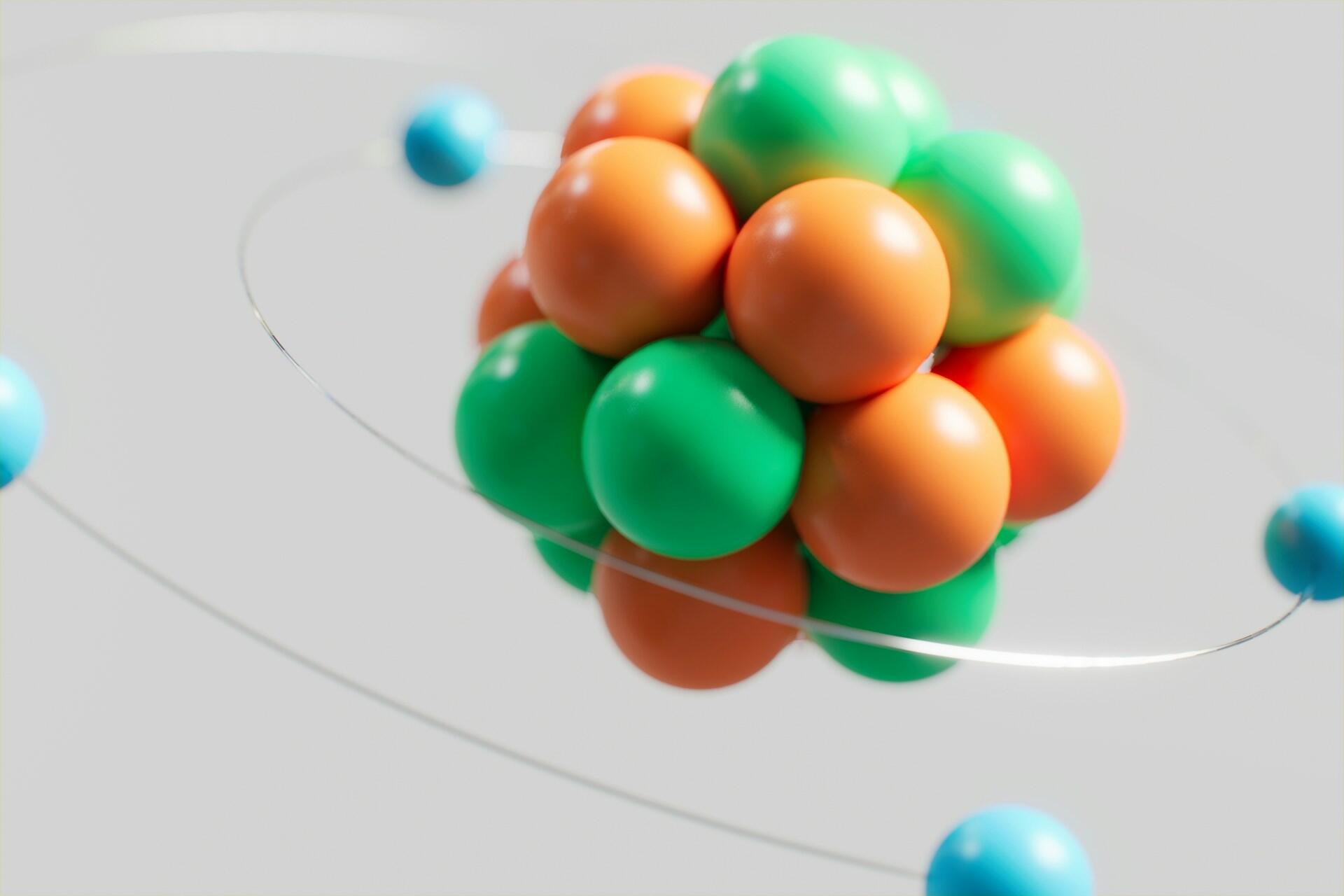

High school physics can be a difficult class for many. At the top of the list of complicated concepts to understand is atomic structure. Atomic structure explains what atoms are made of, how they are arranged and why different elements behave in different ways. Learn about these fundamentals so you can approach physics class with confidence.
This is the most basic concept of any physics class. Atomic structure is the arrangement and composition of atoms. Atoms are made of smaller components called particles. The number of each type of particle in an atom determines which element the atom is.
Definition Of An Atom
An atom is the smallest unit of an element that still has that element’s chemical properties. For example, a single carbon atom is still carbon. But, if the carbon atom is broken up into its smaller parts, it’s no longer a carbon atom.
Atoms are extremely small and cannot be seen with the naked eye. Surprisingly, they are made up mostly of empty space. The particles that make up the atom form two main sections: the nucleus and the electron cloud.
Subatomic Particles
Atoms contain three main subatomic particles: protons, neutrons and electrons. Protons have a positive charge, electrons have a negative charge, and neutrons have no charge (they are neutral). Protons and neutrons group together to form the nucleus, while electrons orbit the nucleus in a “shell” or “cloud-like” region surrounding the nucleus. Protons and neutrons have almost the same mass, but electrons are much smaller.
Every atom of a specific element contains the same number of protons, but the number of neutrons and electrons can differ. In a neutral atom, the number of protons and electrons are equal.
Particles quick reference: Protons are positively charged and determine the element. Neutrons are neutral (no charge) and affect an atom’s mass and stability. Electrons are negatively charged and control most chemical behaviour and determine an atom’s overall charge.
| Particle | Charge | Relative Mass | Location | Symbol |
|---|---|---|---|---|
| Proton | +1 | 1 | Nucleus | p⁺ |
| Neutron | 0 | 1 | Nucleus | n⁰ |
| Electron | -1 | About 1/1836 (essentially 0) | Electron cloud or shells | e⁻ |
Atomic Number, Mass Number, And Relative Atomic Mass
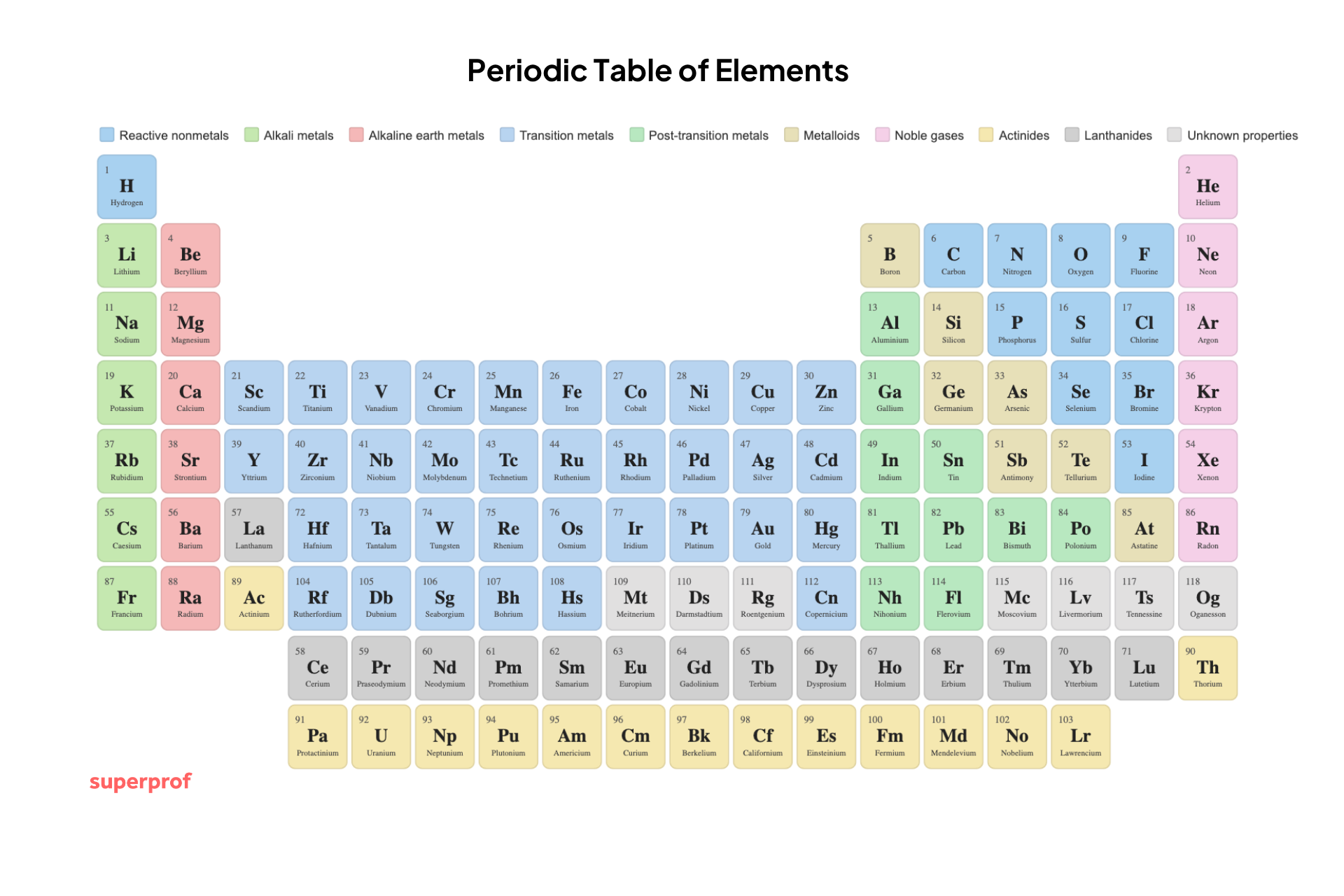
The atomic number is the number of protons in an atom’s nucleus, often denoted with Z. For example, every carbon atom has 6 protons, so the atomic number of carbon is 6. Changing the number of protons results in a different element.
The massnumber is the total number of protons and neutrons in one atom. It is a whole number (there can’t be a fraction of a particle). You can find the number of neutrons in a typical element atom by subtracting the atomic number from the mass number. For example, iron’s atomic number is 26, and the standard mass number is 56, which means there are 26 protons and 30 neutrons.
The relative atomic mass of an element is calculated as a ratio of all the different variations of the same element. These variations are called isotopes. The ‘standard’ version of an atom is also an isotope.
For example, we know the most common version of carbon has 6 protons (6C). But, it also has a handful of isotopes which contain a different number of neutrons (but still have the same number of protons). These include 13C, 14C (which have 7 and 8 neutrons, respectively, instead of the usual 6). All the isotopes are averaged, weighted by the ratio they have been observed to appear in nature. So, the relative atomic mass of carbon is 12.01.


Models Of The Atom
Scientists discovered different information about atoms at different periods throughout history, as the equipment and devices for observing them got more and more advanced and understanding of physics improved. Each model reflects the strongest evidence that was available at the time.
How The Atomic Model Changed Over Time
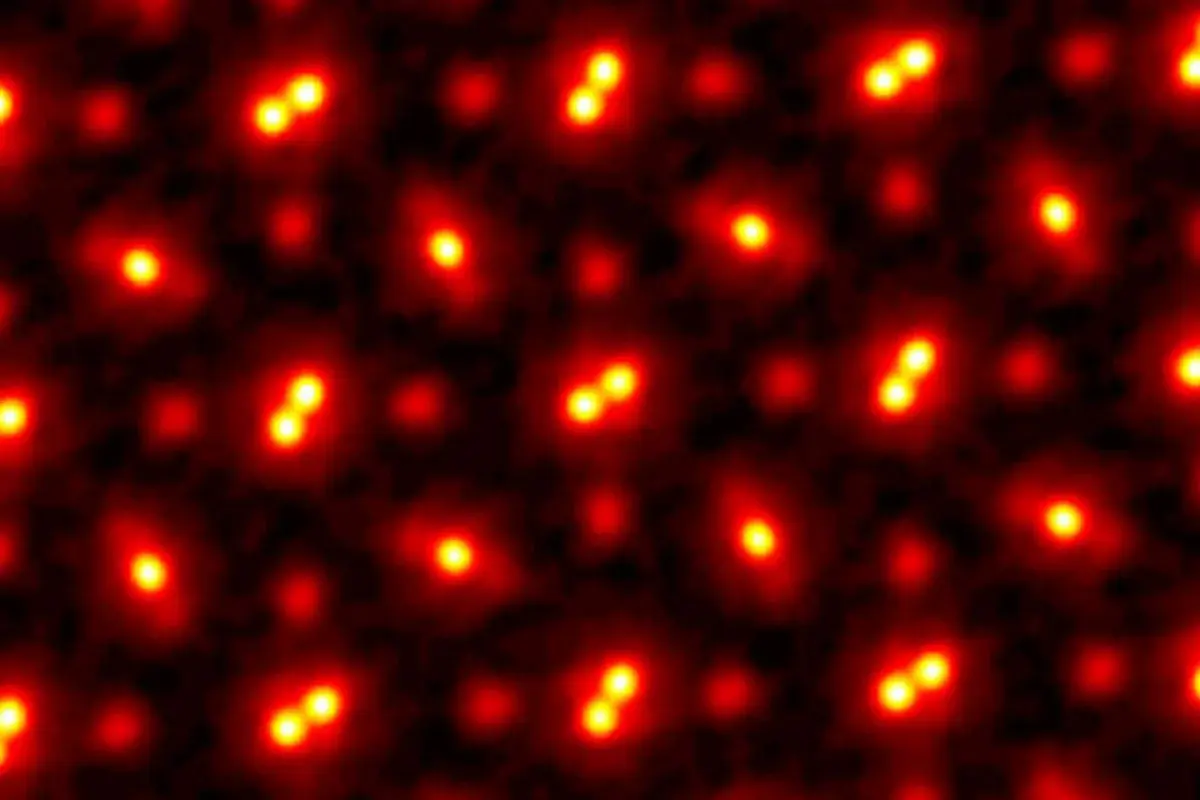
Each revision to the atomic model came about in response to new experimental evidence. It’s important to remember that, until 1955, nobody had ever seen an atom. Until then, their existence and qualities were all deduced with philosophy, math, and experimentation. Here’s an overview of the evolution of the atomic model.
5th century BCE
Ancient Greek Origins
Leucippus of Miletus and his disciple, Democritus of Abdera, conceptualize atoms for the first time. Democritus invents the term ‘atmos’ which means “indivisible.”
1803
Solid Sphere Model - John Dalton
Through observation and experimentation (along with data from Joseph-Louis Gay-Lussac of France and Amedeo Avogadro), Dalton suggested the basics of atoms. He proposed that they were indivisible, that all atoms of a certain element were identical, and that multiple types of atoms can join together to create molecules. Impressively, much of what he theorized was very accurate.
1904
Plum Pudding Model - J. J. Thompson
Through experiments with cathode rays, Thompson discovered electrons in 1897, proving that atoms are not indivisible, because they are actually made of smaller parts (particles). In 1904, he proposes that negatively-charged electrons float around in a cloud made of a positive charge.
1911
Nuclear Model - Ernest Rutherford
A student of Thompson’s, Rutherford performed an experiment with gold foil which suggested the existence of a concentrated positive charge in the nucleus, rather than a cloud of positive charge.
1913
Planetary Model - Niels Bohr
Working with Rutherford’s model, Bohr suggested that the reason electrons orbited the nucleus without crashing into it or flying away was because each electron had a fixed amount of energy. Radiation (heat and light) was given off when an electron gained or lost energy and shifted to a different orbit.
1926
Quantum Model - Erwin Schrödinger
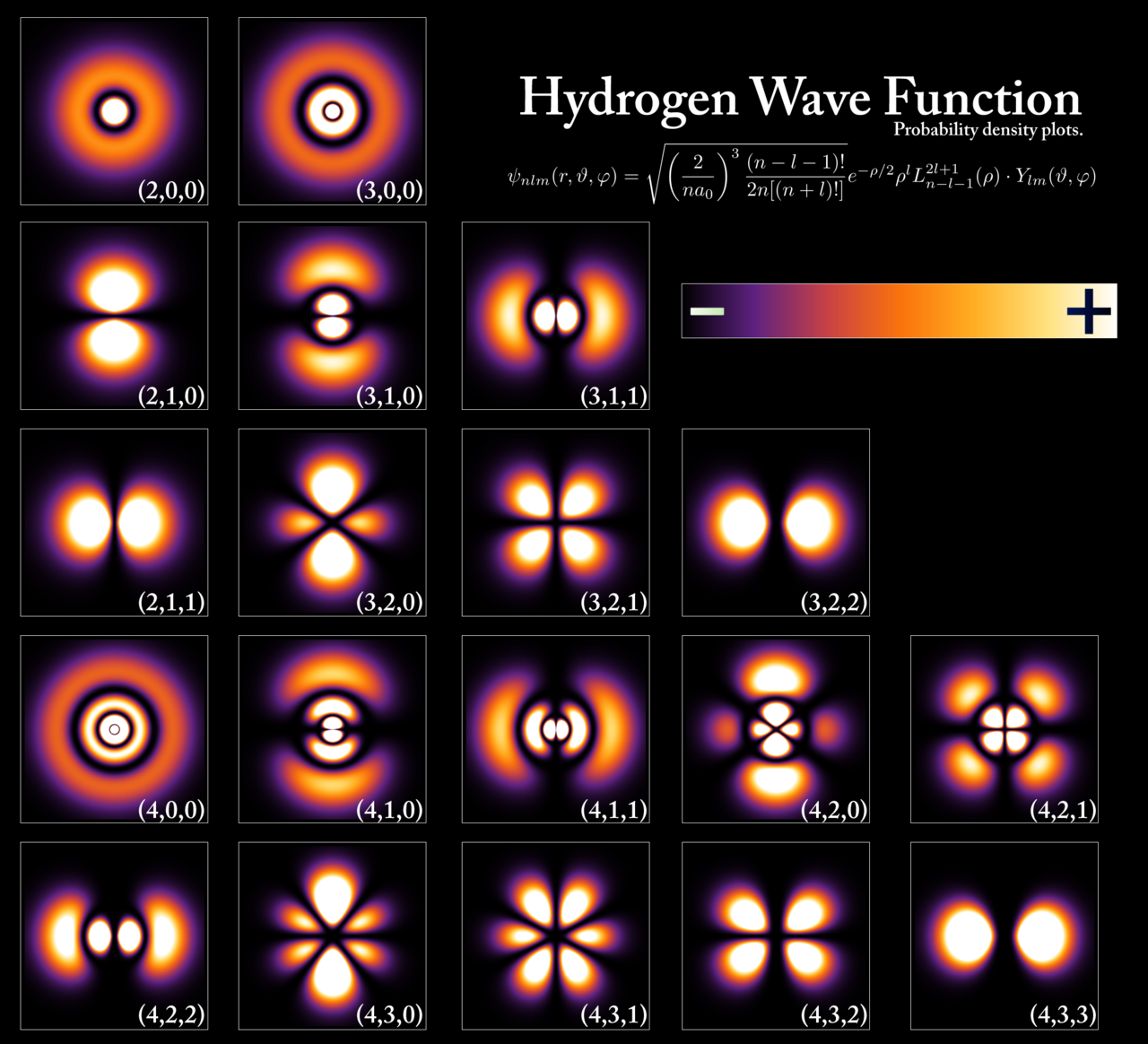
Using math, Schrödinger suggests electrons move in waves, rather than fixed orbits. Instead of strict circular paths around the nucleus, his model shows the general area, called ‘clouds of probability,’ where you could expect to find electrons, but the exact movement is not known.
1932
Neutrons Discovered - James Chadwick
Chadwick, who was a student of Rutherford’s, discovered neutrons, completing a level of the atomic puzzle. However, after, that other scientists found that neutrons and protons contain even smaller particles called quarks… but that’s a different topic of discussion.
The Modern Atomic Model
The modern model is often referred to as the quantum-mechanical model or electron-cloud model. It described electrons as existing in regions where they are likely to be found, rather than exclusively on fixed, circular paths like planets.
This model replaced Bohr’s simple shell model because electrons don’t actually have exact, predictable routes around the nucleus. Unfortunately, this concept is difficult to convey in textbook drawings. That’s why most pictures in schools today still depict electrons in shells or on orbit-paths. They are simplified models that make it easier to learn about atomic structure for beginners. They’re also more useful for understanding chemical bonds.
Structure Of The Atom
An atom is made of two main regions: the nucleus and the electron cloud. The nucleus contains almost all of an atom’s mass, though it occupies very little space. The electrons themselves are much smaller than neutrons or protons, but occupy a larger space around the nucleus and strongly affect how atoms interact.
The Nucleus
The nucleus is the centre of an atom that contains neutrons and protons. Together, they are known as nucleons. Protons repel one another because of their same positive charges, but they are held together due to neutrons and nuclear force. It is dense because it contains the largest particles in an atom and the most mass.
Electron Arrangement
Electrons are negatively-charged particles that zip around the nucleus in unpredictable movements, but stay within a ‘cloud’ or ‘shell.’ The smallest shell, closest to the nucleus, has the lowest energy. Electrons fill the lower-energy shells before starting to fill higher-energy ones.
Basic electron configuration can be described in an ‘arrangement.’ For example, in a neutral sodium atom (has the same number of electrons and protons), the electron number is 11. They are arranged in a 2,8,1 pattern, where 2 is the lowest-energy shell, 8 is the medium-energy shell, and 1 is the highest-energy shell. The single high-energy electron explains why sodium reacts easily and often forms a +1 ion.
Learn all about the parts of an atom and more with an online physics course on Superprof!
Nucleus
- Centre of atom
- Contains protons and neutrons
- Overall positive charge
- Almost all atomic mass
- Very small
Electron Cloud
- Surrounds nucleuis
- Contains electrons
- Negative overall charge
- Very little mass
- Occupies most atomic volume
Core Vocabulary For Atomic Structure
Learn these key terms to get a firm grasp on physics.
The smallest part of an element; a unit of an element.
A pure substance made entirely of atoms with the same number of protons.
Central region contains neutrons and protons.
Energy level around the nucleus.
Atom with the same number of protons as usual, but different number of neutrons.
Atom or group of atoms with an overall positive or negative charge because it has gained or lost electrons.
Atoms, Isotopes And Ions
Atoms can have variations, known as isotopes and ions. These variations don’t change which element that atom is, but they do impact the typical characteristics of the atom.
Atoms
A neutral atom has no overall charge. It has an equal number of electrons and neutrons that cancel each other out. An atom’s proton count is its atomic number, and it always remains the same, even if the number of neutrons or electrons changes.
Isotopes
Isotopes are atoms of an element that have a different number of neutrons than usual. They still have the same atomic number, but their mass changes because neutrons make up part of the atom’s mass. For example, carbon-12 and carbon-14 are both carbon, but carbon-12 has 6 neutrons and carbon-14 has 8.
Some isotopes are stable and even abundant. Others have unstable nuclei which makes them radioactive.
Ions
Ions form when atoms gain or lose electrons. The proton number still remains the same, but the atom’s charge is no longer neutral. Electrons also influence magnetic forces and electromagnetism.
Positive ions form when the atom loses electrons, and are called cations. Atoms that gain extra electrons become negative and are called anions.
Sodium commonly loses one electron and forms Na⁺, while chlorine commonly gains one electron and becomes Cl⁻.

Radioactivity And Atomic Stability
Atoms become radioactive due to their nucleus, not their electrons. Unstable atoms release (or ‘radiate’) particles or energy to try to reach a more stable form, which can cause them to become different elements in the process. This is known as radioactive decay. Note that chemical reactions are a completely separate phenomenon than radioactive decay.
Why Some Nuclei Are Unstable
A nucleus with a neutron-to-proton ratio unsuitable for its size can be unstable. Protons repel each other electrically, and neutrons help stabilize the nucleus and protons by contributing to the nuclear force without adding more positive charge.
Large nuclei usually require more neutrons than protons to remain stable. An unstable isotope releases energy and, at times, particles, as it moves towards a more stable state. Radioactive isotopes are also called radioisotopes or radionuclides.
Attaining Stable Nuclei
Radioactive decay occurs spontaneously, releasing either alpha particles, beta particles, or gamma rays, or a combination. The decay changes the nucleus, reducing excess energy or correcting the proton-to-neutron balance. This process can lead the atom to change into a different element.
Half-Life
A half-life is the time it takes for half the unstable nuclei to decay. It is a fixed property for specific radioisotopes.
For example, say a sample has 800 undecayed nuclei and a half-life of four days. After 4 days, 400 nuclei remain. After 8 days, 200 remain. And so on. The amount halves each time. The longer the half-life, the more slowly it decays.
Types Of Nuclear Radiation
Radiation is a phenomenon that occurs in nature, though it can also be stimulated with machines. All radiation has the potential to be harmful. Risk depends on factors like the type of radiation, the dose, and exposure time.
Time: Spend only the necessary time near a source
Distance: Stay farther away when possible
Shielding: Use a suitable barrier, such as lead, concrete, or aluminum
Containment: Prevent radioactive material from spreading or entering the body
Nuclear radiation can be used as an energy source, in medicine, in food processing, and in industry and research. Under carefully controlled conditions, it usually poses little risk.
| Radiation Type | Composition | Charge | Penetrating Power | Stopped By | Example |
|---|---|---|---|---|---|
| Alpha | Two protons and two neutrons | !ERROR! unexpected operator '+' | Low | Paper, skin, a few centimetres of air | Radon |
| Beta | Fast electron or positron | −1 or +1 | Medium | A few millimetres of aluminum | lutetium-177 or yttrium-90, used in Radionuclide therapy (RNT) cancer treatments |
| Gamma | High-energy electromagnetic radiation | 0 | High | Thick lead or concrete | Supernovae (exploding stars) emit gamma rays; targeted rays cen be used to treat cancer |
Irradiation Vs. Contamination
When something is irradiated, it has been exposed to radiation from an external source. The object itself is not necessarily radioactive. For example, when cosmic rays make their way from a supernova to Earth, you are exposed to radiation, but you don’t start emitting radiation as well.
Irradiation is often used for medical imaging, cancer treatment, sterilizing medical equipment and food, and industrial inspection. The key is to use it sparingly and not expose living beings directly to it too often, as the effects can accumulate over time.
Contamination is when radioactive material gets in or on a person or object. External contamination can happen on the skin or clothing, while internal contamination happens when radioactive material is ingested, inhaled, or enters through a wound.
The distinction is important because contamination can continuously expose someone to radiation. Until the material is removed or has thoroughly decayed, it emits the harmful energy.
Background radiation exists naturally and is always present in the environment. Cosmic rays, radioactive soil and rocks, and other naturally occurring radionuclides can enter the body through food, water and air. Normal amounts of exposure pose minimal risk as the body can create new cells, replacing damaged ones.
Nuclear Fission And Fusion
Both fission and fusion release nuclear energy, but in opposite ways. Fission is when a heavy nucleus splits, while fusion is when two lighter nuclei join together. In both cases, a small amount of mass is converted into a large amount of energy.
Fission releases energy, radiation, and usually extra neutrons. The loss of neutrons can cause a chain reaction of even more fission. Nuclear reactors use fission to produce heat, which makes steam, and turns turbines to generate electricity.
Fusion occurs when light nuclei combine. The Sun and other stars use nuclear fusion to combine hydrogen atoms into helium. The process releases massive amounts of energy as light and heat. It takes a lot of heat and pressure to get the nuclei to combine, since the protons repel each other. This makes the process largely unsustainable on Earth.
Common Exam Questions On Atomic Structure
High school physics classes usually ask the same types of questions to students. There are a few key concepts you should be able to answer easily, so make sure you study them and include them in your revision! Questions may be in multiple-choice or short-answer form.
- Atomic numbers, mass numbers (of typical atoms), electron counts, and relative mass for common elements.
- How to identify the charge of an atom.
- Definitions for isotopes, different particles, different radiation types, half-lives, fission and fusion.
- Explain or label atomic models.
Physics can be overwhelming at first, but watching a lot of explanations or working with a professional tutor in physics lessons can help you wrap your head around the science.
⚛️ Which atomic structure topic do you find hardest?
References
- “Atomic Structure.” ScienceDirect, www.sciencedirect.com/topics/earth-and-planetary-sciences/atomic-structure. Accessed 11 Sept. 2026.
- Canadian Nuclear Safety Commission. “Atoms – Nuclides, Isotopes and Radioactivity.” Government of Canada, 8 Sept. 2025, www.cnsc-ccsn.gc.ca/eng/nuclear-safety-security/educational-resources/radiation/atoms-nuclides-radioisotopes. Accessed 11 Sept. 2026.
- “The History of the Atom – Theories and Models.” Compound Interest, 13 Sept. 2023, www.compoundchem.com/2016/10/13/atomicmodels. Accessed 11 Sept. 2026.
- “How Do Both Fission and Fusion Generate Energy? - EUROfusion.” EUROfusion, 4 July 2024, euro-fusion.org/faq/how-do-both-fission-and-fusion-generate-energy. Accessed 11 Sept. 2026.
- Stewart, Ken. “atomic model.” Britannica, www.britannica.com/science/atomic-model. Accessed 11 Sept. 2026.
Summarize with AI:
Did you like this article? Leave a rating!


 Loading...