
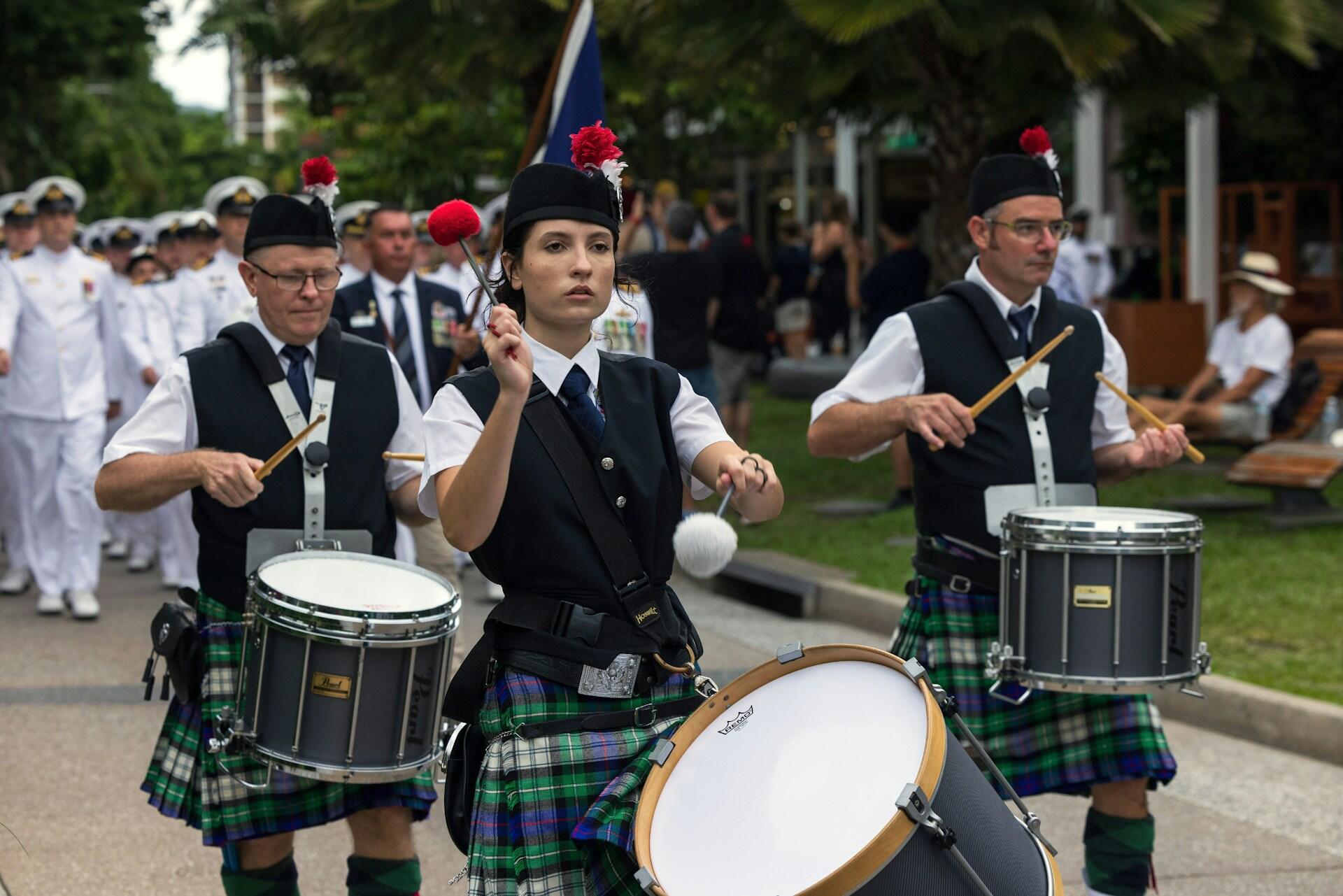

Percussion instruments are responsible for giving a marching band its pulse. They set the beat and help maintain the tempo, while adding moments of great impact. In a marching band, the percussion section is known as the drumline, or battery, during parade performances. In field shows, large drums and other percussive instruments (especially auxiliary ones) are usually located in the pit.


What Are Percussion Instruments?
By definition, percussion instruments make sound when a player strikes, shakes, scrapes or rubs them. This sets them apart from other instruments such as woodwinds, brass, and strings.
Percussive instruments are among the oldest types of instruments. Simple drums, rattles and struck objects have been used in music and cultural activities across the world for thousands of years. Today, percussion is a staple in concert bands, marching bands, orchestras, and pop and produced music of all genres.
The listening skills developed during marching activities––clarity, balance, rhythmic accuracy, timbre, blend––can then be applied and reinforced in a chamber ensemble, band, or orchestra setting.
Brian Blume, American game designer and writer
Types of Percussion Instruments
In marching band specifically, percussion instruments are usually classified into two groups:
Instruments are carried and played while marching. They make up the drumline. Includes snare drums, tenor drums, bass drums, marching cymbals.
Instruments stay in one place near the front of the field or performance area (known as the pit). Includes large instruments like marimbas, xylophones, vibraphones, timpani.
Additionally, instruments are also divided into tuned and untuned.
Tuned instruments play different notes. Glockenspiel, marimba, xylophone, and timpani produce pitches that create melodies and chords.
Untuned instruments keep rhythm, but don’t have different pitches. Snare drums, tambourines, and crash cymbals are common examples.
List of Percussion Instruments
Each percussion instrument in a marching band has a clear job. In addition to adding to the musicality of the piece, each instrument section usually has another task, like creating a rhythmic foundation, or adding pops of musical colour.
| Percussion instrument | Type | Tuned or untuned | How it is played | Main role in a marching band |
|---|---|---|---|---|
| Snare drum | Drum | Untuned | Struck with drumsticks | Provides crisp rhythms, rudiments and accents |
| Tenor drums | Drum | Untuned | Struck with drumsticks | Adds moving patterns and different drum tones |
| Bass drum | Drum | Usually untuned | Struck with a large felt beater | Supports the main beat and low-end impact |
| Marching cymbals aka Clash cymbals | Metal percussion | Untuned | Crashed, tapped or rubbed together | Adds visual and musical accents |
| Suspended cymbal | Metal percussion | Untuned | Struck or rolled with sticks or mallets | Creates swells, crashes and sustained sound |
| Hi-hat cymbals | Metal percussion | Untuned | Closed or opened with a pedal, then struck | Adds a tight rhythmic pulse |
| Triangle | Metal percussion | Untuned | Struck with a metal beater | Produces a high, clear ringing sound |
| Cowbell | Metal percussion | Untuned | Struck with a stick | Adds a dry, cutting rhythmic pattern |
| Tambourine | Hand percussion | Untuned | Shaken, struck or tapped | Adds jingles and rhythmic colour |
| Wood block | Hand percussion | Untuned | Struck with a stick | Produces a short wooden click |
| Claves | Hand percussion | Untuned | Struck together | Creates a sharp, wooden beat |
| Shaker | Hand percussion | Untuned | Shaken | Adds a soft, continuous rhythmic texture |
| Cabasa | Hand percussion | Untuned | Twisted or shaken | Produces a textured rattling sound |
| Glockenspiel | Mallet percussion | Tuned | Struck with hard mallets | Plays bright, high melodies |
| Xylophone | Mallet percussion | Tuned | Struck with mallets | Adds clear, wooden melodic lines |
| Marimba | Mallet percussion | Tuned | Struck with yarn or rubber mallets | Provides warm melody, harmony and bass notes |
| Vibraphone | Mallet percussion | Tuned | Struck with mallets; often uses a pedal | Creates sustained, metallic melodic sounds |
| Timpani | Drum | Tuned | Struck with timpani mallets | Adds dramatic low notes and pitch-based rhythm |
Snare drums, tenor drums, bass drums, timpani
Create and keep rhythm; timekeeping; setting cadence
Provide auditory cues for changes in tune, cadence, movement, etc.
Drums are the foundation of marching percussion. They create the beat that players march to and help the whole ensemble stay together. They can be heard over all the other instruments at the same time, so marchers can easily stay in lock-step and on track with their music.
Snare Drum
The snare drum is one of the most recognisable percussion instruments in a marching band. It has wires (snares) stretched across the bottom drumhead which vibrate when the top head is struck. This creates the drum’s sharp, buzzing sound.
A snare drummer often plays detailed rhythmic patterns, called rudiments. A rudiment is a basic sticking pattern (meaning, a pattern between the left and right drumsticks). The sharpness of the snare cuts provides more detailed auditory guidance and cues than other percussion instruments.
Tenor Drums
Tenor drums are often grouped together in formations of four (quads), five (quads), or six (squints or hexes). They can be tuned and pitched and come in many different sizes, making it possible for drummers to create flowing, melodic patterns.
These drums are usually used to add flair, and may or may not provide a steady rhythm at different points through the song.
Bass Drum
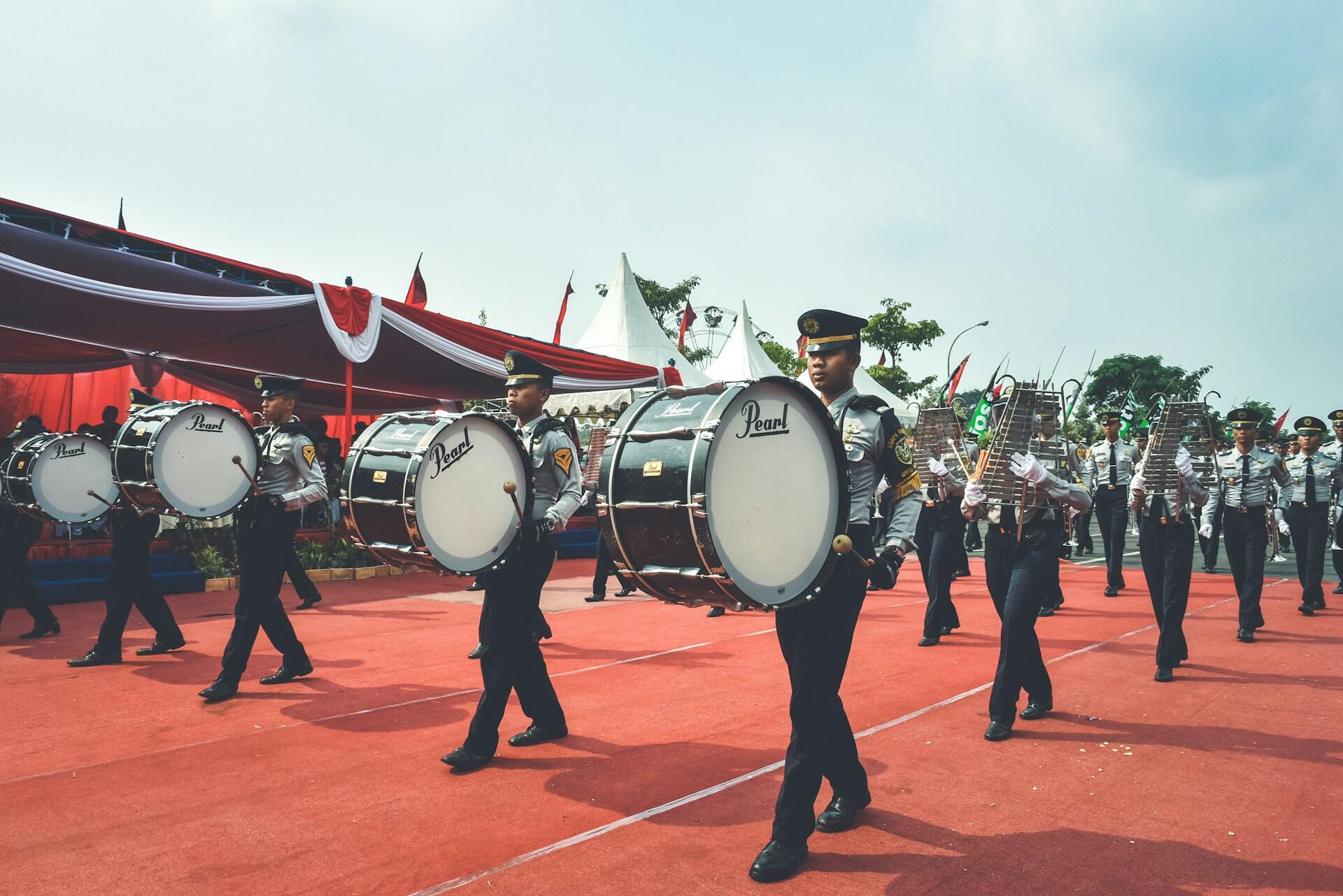
Marching bass drums are iconic. They are the large, deep drums carried vertically in front of the player. Rather than hard drumsticks, the beaters have large, soft tips. The sound is low, round and powerful.
There are usually many bass drums used at once, and they can be different sizes to play different tones. Players can achieve a toned rhythm across the line, with each person striking one part of the pattern. This is known as a split bass drum part.
Timpani
Usually located in the pit or stationary on the field as an auxiliary instrument, timpani are very large, bowl-shaped drums. They have clear pitches that can be changed with a foot pedal. They create low, dramatic notes and can support harmony as well as rhythm.
Marching cymbals, crash cymbals, triangle, cowbell
Provide sharp accentuation and dynamic sound
Create sub-rhythms; cymbals give visual spectacle
Metal percussion instruments provide bright, ringing sounds. They can be struck in different ways to produce short attacks or sustained notes. They often highlight transitions in movement or song and create dramatic climaxes and strong beats.
Suspended Cymbals
A suspended cymbal hangs from a strap on a stand rather than being held in the hands. It can be played with sticks, drumsticks, brushes or mallets. This makes it possible for the cymbal to create long, sustained notes.
Using a hard stick creates a clear attack, while a soft mallet roll produces a gradual swell.
Marching Cymbals or Clash Cymbals
The most recognisable cymbals in marching band, clash cymbals are played in pairs. The musician holds one in each hand using straps. They can be crashed together for dramatic, loud sounds, tapped together for softer effects, or scraped together for a sustained hiss.
They are often used to create visual interest, like the color guard. When they are raised, rotated, tilted, or flipped, they add flash to the look of the band.
Hi-Hat Cymbals
This configuration is made of two cymbals mounted on a stand that can be brought together by foot pedal. The player can strike the cymbals with a stick when they are closed to create a “chick” sound, or can open them and strike for a looser sound.
Triangle
Though small, triangles can create clear sounds that carry over large ensembles. They often provide delicate rhythmic detail. The player can control how hard and where they strike it to create tones of varying quality.
Cowbell
The hollowness of the bell produces a dry, strong tone when struck with a stick. It has no clear pitch and is often used for steady, repeating rhythms.
Tambourine, wood block, claves, shaker, cabasa
Adds colour and depth to the rhythm
Accent climaxes and changes in tune or movement
Handheld percussion instruments are generally small and easy to carry. They may be held directly, placed on a stand or played with a simple beater. They can be valuable additions to a marching band's instrument list.
These instruments are useful because they create distinctive sounds without taking up much space. They are often auxiliary and may not appear in every marching band setup.
Tambourine
A tambourine is a circular frame with small metal jingles around the edges, called zills. It may have a drumhead, although some tambourines are headless. Players can shake it, strike the head, tap the frame or use their thumb to create rolls.
Claves
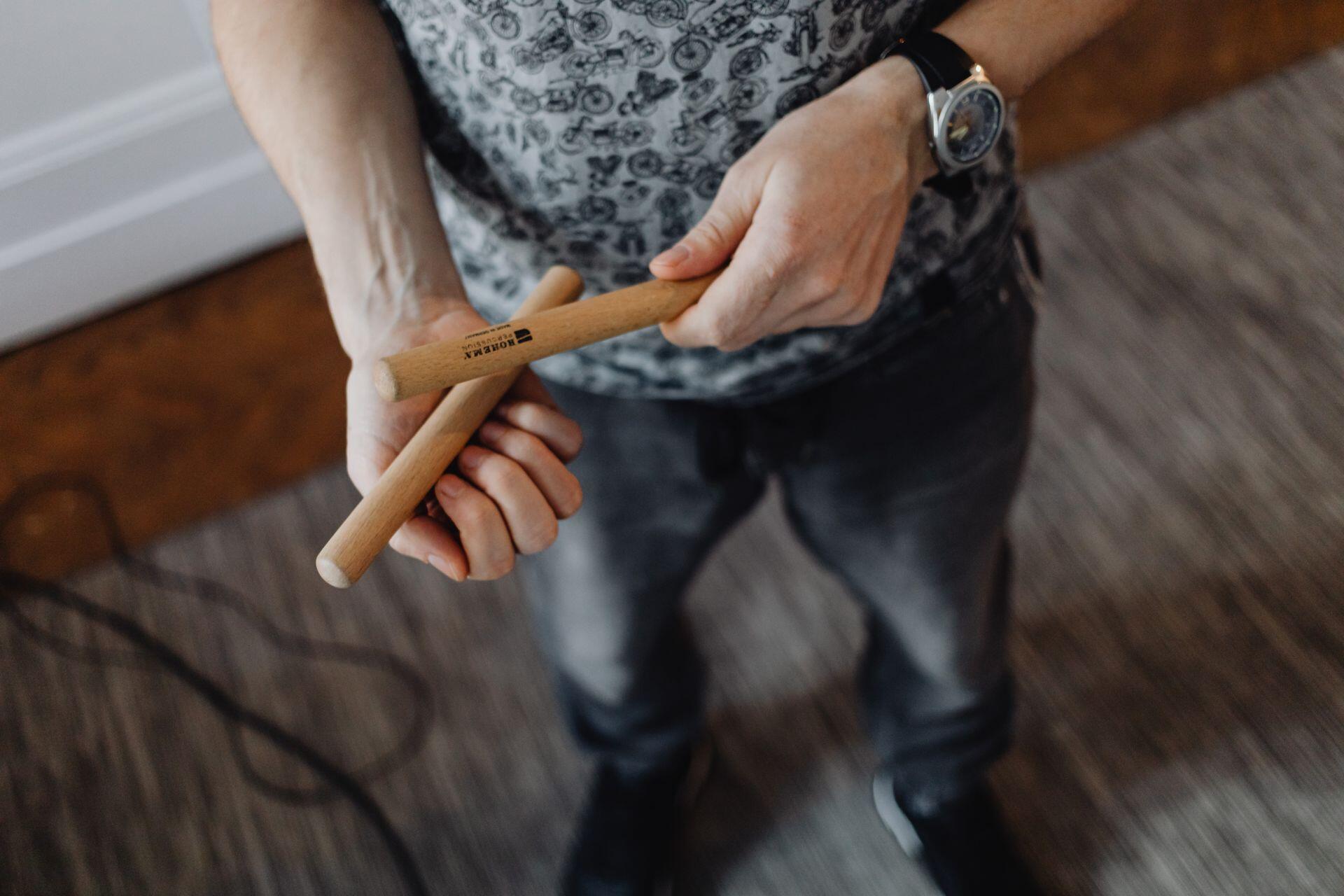
Claves are two short wooden sticks struck together. One is usually held loosely in the hand to allow it to resonate. The other is used to strike it. In a marching-band setting, claves can provide a clean and steady rhythmic pattern.
Wood Block
A wood block is a hollow wooden instrument struck with a stick. It produces a short, dry click. Different sizes create different pitches. They work well in precise rhythms and their sound is simple and easy to hear.
Shaker
A shaker is a container filled with small beads, seeds or pellets. The player moves it back and forth to create sound. It may be made from plastic, wood, metal or natural materials. The exterior and interior materials can create different tones and sound textures. They are useful when the music needs motion without a heavy beat.
Cabasa
A cabasa is a cylinder with a handle, covered in metal bead chains. The player twists or shakes it to create a dry, rattling sound. The cabasa can add subtle rhythmic detail. It works best when the arrangement leaves enough space for its quieter sound to be heard.
Glockenspiel, xylophone, marimba, vibraphone
Adds colour and depth to the rhythm
Accent climaxes and changes in tune or movement
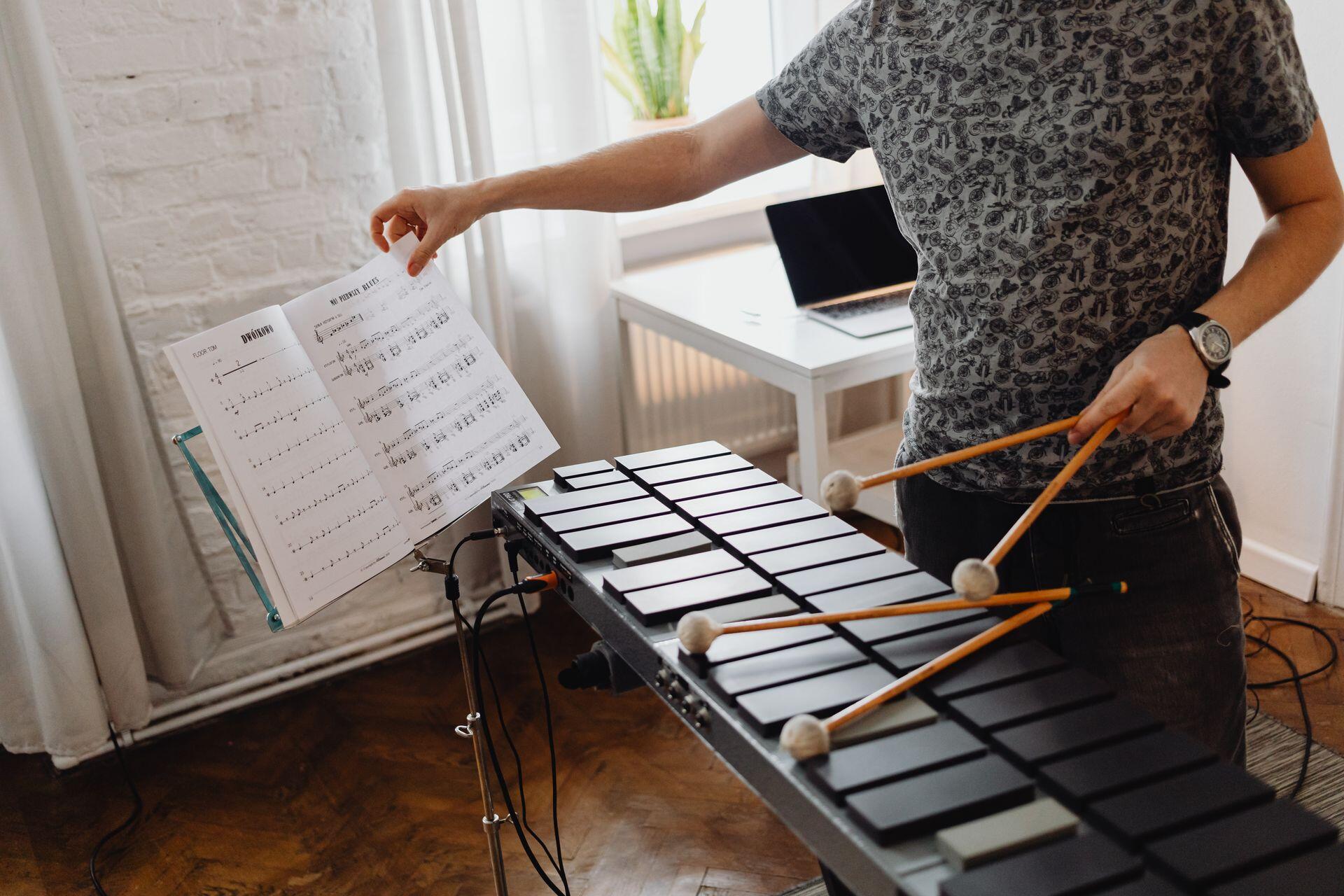
Mallet percussion instruments have bars or tines arranged like a keyboard. The bars may be wooden, metal or synthetic. A player uses mallets (hard or soft-tipped) to strike them and produce pitched notes. They can carry melodies and play chords, as well as bass lines and rhythms, just like brass instruments.
They are usually placed in the front ensemble because they are too large to carry while marching.
Glockenspiel
The glockenspiel produces high, bright sounds. It’s played with hard mallets, usually made of plastic or metal. It can carry a melody that shines above the rest of the ensemble due to its high, clear pitch. It’s often called “bells” as a shorthand alternative.
Marimba
The marimba has wider wooden bars than a xylophone which creates a lower, warmer sound. It also has resonator tubes beneath the bars that help project the sound. Marimba players often use two or four mallets. Four-mallet technique allows one player to perform chords and more complex musical parts. The marimba often provides melody, harmony and low-register support.
Xylophone
A xylophone has wooden bars arranged in a keyboard pattern. Its sound is bright, dry and clear. Players usually use hard mallets to bring out its sharp attack sound. It can be used for quick, melodic patterns and often backs up melodies led by other instruments.
Vibraphone
The vibraphone has metal bars and resonator tubes. Unlike the other mallet instruments, it has a sustain pedal, which allows notes to ring after they are struck. Some vibraphones have rotating discs inside the resonators, creating a gentle vibrating effect.
Why Percussion Instruments Matter in Music
In any type of music, percussion is used for giving music shape. Though certain types of music may use minimal or no percussion, in marching band, it’s absolutely necessary.
Percussive notes are distinct, easy to hear, and able to keep rhythm much better than other types of instruments. They give a framework to the players so the whole group can stay synchronised.
In marching band, percussion instruments usually signal commands like changes in movement, tempo, or tune. Their steady beat keeps the band together through the entire performance while providing an emotional hype for the audience. They work in tandem with drum majors, who also keep the beat and signal changes.
Band percussion instruments are excellent teachers for anyone learning music. They help musicians develop skills like:
- Timing and pulse
- Listening and ensemble awareness
- Hand, arm and foot coordination
- Reading rhythm notation
- Control of volume and tone
- Teamwork under pressure
The exact lineup of a marching band depends heavily on the size of the band, the budget, and the specific performance’s purpose and venue. A small school drumline may use a few drums and cymbals. Large, competitive ensembles usually have a full battery section, plus several mallet instruments and auxiliary sound effects.
References
- Anton Art Center. “Drumline is considered the heart of the marching band.” Facebook, 4 Mar. 2023, www.facebook.com/AntonArtCenter/videos/drumline-is-considered-the-heart-of-the-marching-band-it-sets-the-tempo-for-the-/3041695562800698. Accessed 1 Oct. 2026.
- Blume, Brian. “How Marching Arts Can Help Shape Better Percussionists.” Brian Blume Music, 2 Oct. 2016, www.brianblumemusic.com/post/2016/10/01/how-marching-percussion-can-help-shape-better-percussionists. Accessed 1 Oct. 2026.
- Mitchell, Peter. “What Are the Drums in a Marching Band?” Sound Adventurer, 30 Apr. 2020, soundadventurer.com/what-are-the-drums-in-a-marching-band. Accessed 1 Oct. 2026.
- Wiggins, Tracy. “Marching Percussion Arranging Tips.” The Instrumentalist, 14 Apr. 2021, theinstrumentalist.com/april-may-2021/marching-percussion-arranging-tips. Accessed 1 Oct. 2026.
Summarize with AI:
Did you like this article? Leave a rating!

 Loading...
