

Physics is a cornerstone of our understanding of the universe, setting the course for technological innovation and scientific progress. In this exploration, the benefits of studying physics go beyond acquiring sound logical reasoning.
Physics has contributed enormously to humanity and our understanding of the universe today. From unraveling the fundamental laws that govern the cosmos to driving technological advances, fostering breakthroughs in medicine, addressing energy sustainability, and laying the foundations for new sciences, physics emerges as an indispensable force shaping our world.
Let's discover the multifaceted impact of physics on our understanding of the universe, its fundamental role in scientific and technological evolution, and why studying physics is always a good idea! Discover the best physics courses near you, but first, let's dive into the most interesting contributions of this marvelous science.





Five Contributions of Physics to Humankind
Physics is a discipline that plays a crucial role in our understanding of the world around us and the advancement of technology and science. It is so broad that its contributions have impacted everything you can imagine. Here are five contributions of physics:
- Understanding the Fundamental Laws of the Universe: Physics provides a conceptual framework for understanding the fundamental laws that govern the universe. From Newton's laws describing motion to understanding how the universe expands, what black holes are, and how subatomic particles interact, these discoveries and lines of study can be understood through physics.
- Technological Development: Physics has contributed enormously to the development of technology. For example, the study of electromechanics led to the creation of motors and, later, robotics. For instance, the study of electrostatic science enabled electricity use and, after the Internet. Many of the technologies we use in everyday life are the direct result of advances in physics. From electricity and electronics to optics and quantum mechanics, physics will continue to drive technological systems.
- Advances in Medicine: Did you know physics plays a crucial role in medicine? From the creation of diagnostic equipment, such as MRI and CT scans, to the development of radiotherapy and nuclear medicine, physics has extreme relevance in the evolution of medicine impacted by technological advances.
- Energy and Sustainability: Physics research also plays a vital role in creating technological and sustainable solutions, e.g., renewable energy, carbon capture, and nanotechnologies for environmental solutions.
- Development of New Sciences and Disciplines: As you can see, the study of physics encompasses many research fields and has been the basis for developing many other sciences and disciplines, such as astrophysics, geophysics, biophysics, and medical physics.
In short, physics is essential to our understanding of the universe and plays a central role in the advancement of knowledge and the technological and scientific development of humankind. Do you want to learn more? Choose the best private tutor!
What Do Physicists Do?
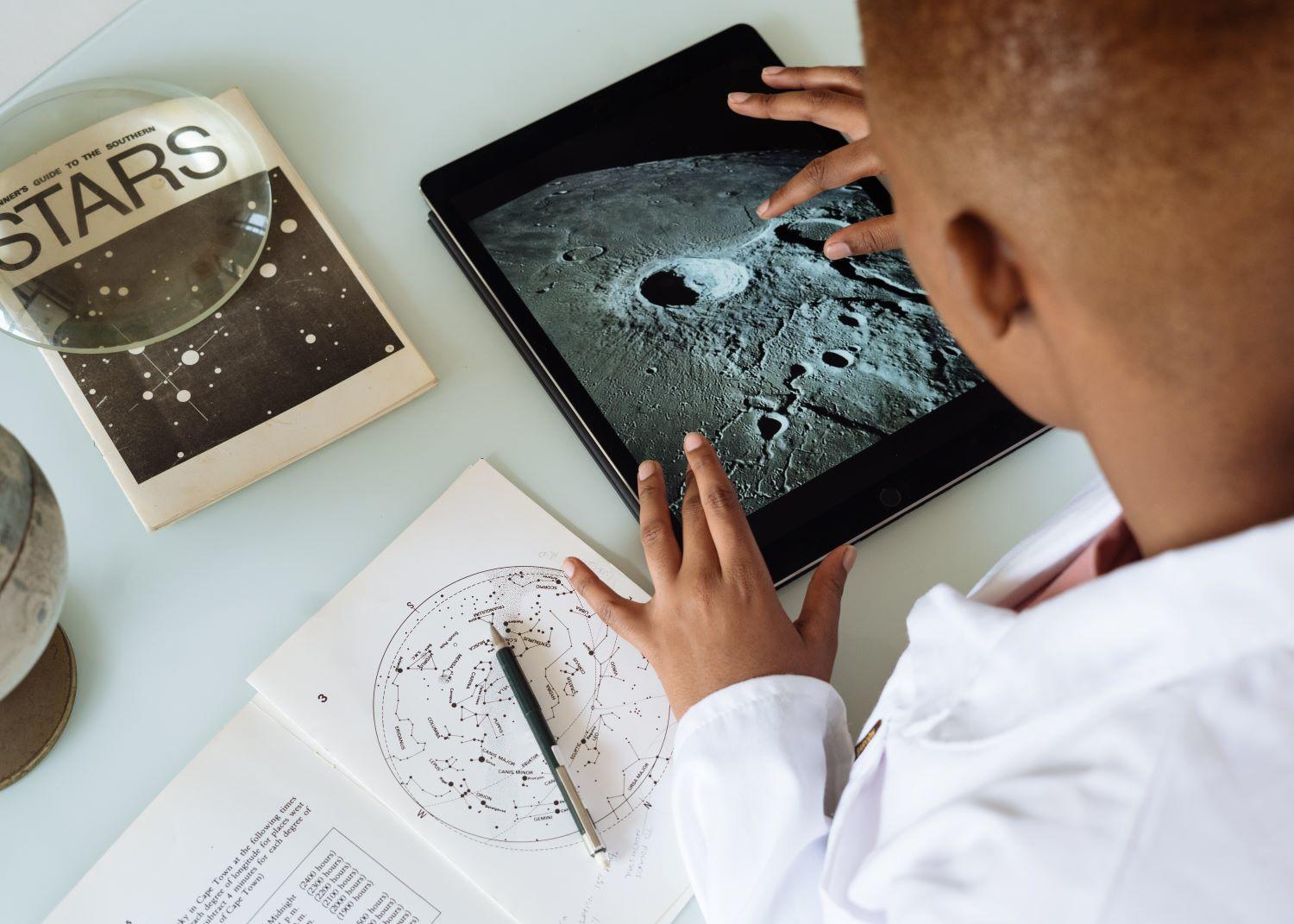
Physics is a branch of science that deals with the structure and behavior of matter as it moves through time and space. It is an expansive topic that touches on almost all observable things. Admittedly, because of the broadness of the topic, it can be difficult to imagine what physicists do on a day-to-day basis. Depending on their specializations, these scientists analyze data, develop theories or models, implement experiments, write papers on their findings, and work as engineers. Discover why studying physics is a great idea in Canada!
What is the best career for physics?
Graduating with a degree in physics is an advantage in Canada. Depending on your field of study, the average physics salary in Canada is $68,000 per year or $35.06 per hour, while more experienced workers can make up to $132,000 per year. It is a good option if you are looking to turn your degree into a lucrative career. Discover some of the best-paid job positions for physicists in Canada:
Science Communicator
Truth be told, there are a lot of complicated concepts in physics. Even seasoned professionals within the field still come across theories that stump them. There is a learning curve when it comes to understanding physics papers. With that said, a degree in physics equips a person with the skills to condense information into a digestible form. Science communicators are widely in demand at present. These professionals are often sought out by media companies to provide on-screen explanations of concepts that are otherwise difficult to understand in physics.
Data Scientist
A physicist in data science's primary responsibilities are analyzing data and designing and developing models to predict how something will behave based on that data. Data scientists often plan, develop, and maintain machine learning and other data models, perform statistical and data analyses, conduct research, and work on data visualization, database management and data quality monitoring, and data infrastructure systems.
Aerospace Engineer
Aerospace engineers are professionals in charge of developing technologies for use in aviation, defense systems, and spacecraft. They may focus on aerodynamic fluid flow, structural design, navigation and control, robotics, propulsion, and combustion. To become an aerospace engineer, you can study for a degree in aerospace engineering, avionics, or a related subject like physics. As you can expect, becoming an aerospace engineer takes more than a physics degree.
Geophysicist
Geophysicists study the physical structure and behavior of the earth. These professionals study rocks, oceans, gravity, and magnetic, seismic, and electrical fields to understand the earth's origins and better understand its behavior. Other related positions for Geophysicists are operations geophysicist, processing geophysicist, quantitative geophysicist, and geophysical interpreter.
Nuclear Engineer
Nuclear engineers are professionals in developing and designing nuclear products and processes. They also supervise the progress of engineering projects, monitor the production and disposal of nuclear waste, research, and test nuclear processes and methods, and oversee operation activities in power plants. Some areas of nuclear technology include isotope separation, fuel reprocessing, waste management, feed material preparation, fuel chemistry, and effluent control.

Electrical Engineer
Electrical engineers are the professionals in charge of designing, developing, testing, and supervising the manufacture of electrical equipment, such as electric motors, radar and navigation systems, or power generation equipment. Electrical engineers also design automobiles and aircraft electrical systems, earning good salaries above the national average.
Health Physicist
Radiation is still a finicky emission that needs constant supervision, especially in the context of a medical facility. As such, most hospitals need health physicists to protect their premises and keep radiation levels at an optimum rate.
Health Physicists evaluate radiation levels through various scientific techniques. They are a resource often found in hospitals, nuclear power plants, and institutions providing armed services.
Physics Teacher
If you have a passion for physics and sharing your knowledge, a degree in physics allows you to become a physics teacher at any grade level. More than a career, becoming a teacher is a vocation. Not everyone is cut out for the job especially since it deals with young people. Your degree can determine the subject that you will be teaching. However, some institutions require specific teaching units to become an educator.
Science Writer
Documenting and cataloging scientific products and processes takes skill and expertise. It takes more than just a copywriter to be able to put complex concepts on paper. A degree in physics is a good foundation for people interested in technical writing. This type of writer allows technology creators to communicate with the people they create the technology for. It is invaluable, especially in the world of science.
Nuclear Scientist
More often than not, when people hear that a person graduated with a degree in physics, nuclear physicists are where their mind goes. While there are other careers that a physics student can pursue following graduation, nuclear physicist yields one of the highest average incomes. Being a nuclear scientist can look many different ways. It can entail conducting laboratory research, improving safety protocols, or developing new technologies for medical use.
Find where to learn physics online and go to Superprof! Discover where a degree in physics can take you, getting opinions from the experts in physics.
What skills does physics teach you?
The study of physics not only provides knowledge about the fundamental principles of the universe but also develops a variety of valuable skills that are transferable and applicable in a variety of personal, academic, and professional contexts. Some skills that you will be able to develop by studying physics are:
- Critical Thinking: Critical thinking is the ability to analyze and evaluate the consistency of reasoning, especially those statements that society accepts as accurate in everyday life. Critical thinking helps us distinguish valuable information from expendable information and find well-founded conclusions applicable to our day-to-day lives and necessary to solve any physics problem.
- Mathematical Skills: The related skills in Mathematics are developed from problem-solving in learning, configuring logical connections, and expressing processes of description, understanding, and expression by finding the solution to various problems. In addition, memory, concentration, and problem-solving are involved here.
- Problem-Solving Skills: Problem-solving skills are all those skills involved in identifying the problem, describing it, looking at all possible solutions, assessing both the positive and negative consequences of the possible solutions, choosing the most appropriate and suitable solution, and figuring out how to implement it.
- Modeling and Simulation: Modelling and simulation go far beyond complex physical and mathematical formulas. Gaining skills in modeling and simulation is very beneficial to accurately represent a specific phenomenon or process to predict its behavior in reality and study possible solutions, transferable skills both in a physics laboratory and in real-world problem-solving.
- Abstract Thinking: This skill is used to understand the interrelationship between various ideas or elements and allows us to imagine and develop new ideas and pose situations that help us anticipate possible scenarios.
- Research Skills: A person's ability to create new concepts and understandings through data collection. They involve skills of perception, thinking, conceptual construction, methodological construction, and cognitive skills.
As you can see, studying physics can bring you many advantages in all areas of life! Discover various physics tuition on Superprof.

Tips to Excel in Physics
Physics is a difficult subject. However, aside from a thriving career, studying physics has many benefits. There is joy in learning how the world works and seeing concepts unfold in front of your very eyes. There is no denying that studying physics has many advantages, especially when crafting a successful professional career. However, given the lucrative nature of physics, competition for slots in university programs can be cut-throat. Many institutions offer physics as a degree. Likewise, the slots within the classes are also limited.
Thankfully, brushing up on your physics as early as secondary school can do wonders for your chances of getting into your desired program. If you want to be accepted for the physics program of your dreams, mastering physics involves more than memorizing formulas - it's about developing a solid understanding by establishing a good study plan and effective study methods. Here are some strategies that can improve your performance in physics:
- Brush up on your maths: Physics is challenging for many students because understanding it entails logical thinking and problem-solving and requires a solid base on mathematics. While the arithmetic involved in the subject isn't complex, you must know how to perform algebra, trigonometry, or calculus equations. We suggest practicing all the topics you have seen in class to sharpen your math skills.
- Start by building a solid foundation: Building a solid foundation in fundamental physics concepts will be crucial for you to understand further complex topics. Start with simple problems and practice as much as possible until you truly understand that concept. Move to more complicated problems and keep practicing until you feel confident going further. The fundamentals of physics may include the study of matter, energy, space, and time.
- Learn to develop good study habits: Good study habits early on can benefit you at school and outside the classroom. After all, creating a system that keeps you focused and achieves your goals is best even if you don't feel motivated.
- Diversify your study methods: As much as the topic is interesting, it is always a good idea to diversify your study methods to accomplish a more effective study. You can study physics with YouTube, enroll in courses like Coursera or Udemy, or practice physics problems online. Also, get inspired and fall in love with physics by watching movies and series like Interstellar, The Martian, Oppenheimer, The Big Bang Theory, Gravity, The Theory of Everything, and Chernobyl.
- Go for private tutoring: Private tutoring is the best method to excel in physics since it provides personalized attention, a deeper understanding of the subject matter, and an environment to ask questions and make mistakes. The personalized support offered by private tutoring can substantially impact a student's educational journey.
Whether you are a high school physics student or a college student tackling advanced topics, these tips are designed to help you master the fascinating world of physics. Find the best tutors with Superprof!
Master Physics in Canada with Superprof!
Embark on a journey to master physics in Canada with Superprof! Whether navigating the complexities of undergraduate courses or delving into advanced research, Superprof offers you the best private physics tutoring to become an expert in whatever subject interests you.
100% personalized tuition, flexible learning options, and a vast network of experienced tutors can take your understanding of physics to another level. Whether you're ready to master the intricacies of classical mechanics, delve into quantum physics, or whatever topic is on your mind, find the best personalized support and excellent physics tutors at Superprof! Where to start?
- Visit Superprof Canada.
- Type in that you want to learn "Physics."
- Choose whether you prefer "face-to-face tutoring," introducing the city where you are located, or click on "online tutoring" for remote learning.
- Discover all the physics tutors and experts near you and choose the one that best suits your goals.
- And book a lesson!
Welcome to the international Superprof family! Fall in love with science and share your passion with Superprof!

Wrap up!
Physics enriches our understanding of the universe and imparts diverse skills applicable in personal, academic, and professional settings. From cultivating critical thinking and mathematical prowess to honing problem-solving skills, studying physics offers a transformative journey. Moreover, as we explore the rewarding career paths of physics graduates in Canada, it becomes clear that physics is also a gateway to lucrative and high-impact professions.
To excel in this fascinating field, one must solidify mathematical foundations, build a thorough understanding, adopt effective study habits, diversify study methods, and, most importantly, seek personalized guidance through private tutoring. Master physics in Canada with Superprof!
Summarize with AI:
Did you like this article? Leave a rating!

 Loading...