

Anthony Zubrzycki was a Polish-Canadian engineer known for his significant contribution to the development of the Canadarm, one of the most successful robotic technologies in the history of space exploration. During the 1970s, Zubrzycki worked as a design engineer at the Canadian engineering and robotics firm DSMA ATCON.
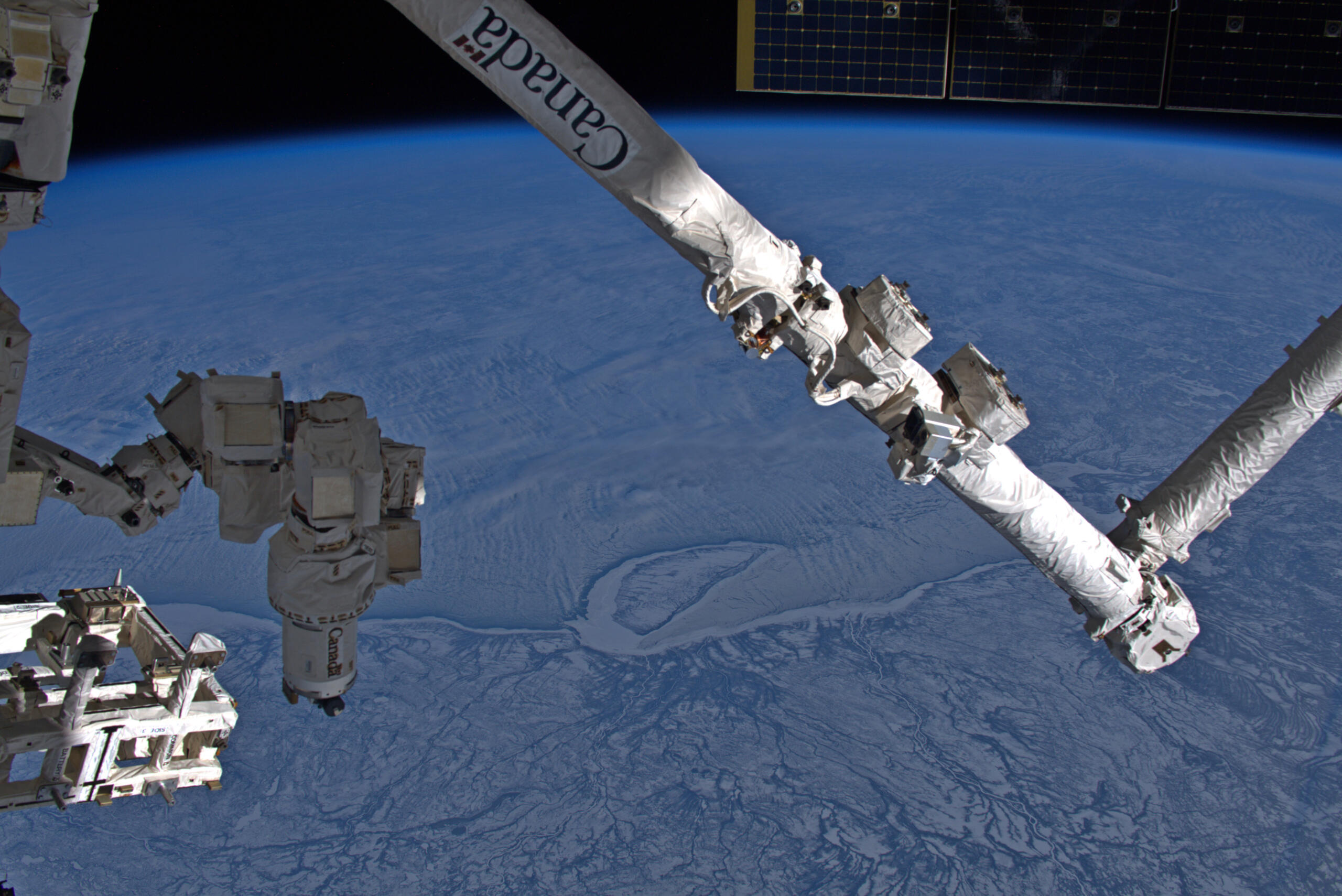
As part of the project, Zubrzycki was temporarily assigned to SPAR Aerospace, which led the design and construction of the robotic system, with the goal of developing a tool that would function perfectly in space with the dexterity of a human arm.
Zubrzycki designed a lightweight robotic arm capable of moving satellites and performing delicate repairs. He created the concept for the Canadarm End-Effector after finding inspiration in an elastic band around his fingers. He presented the concept ot NASA officials, and the end effector was built based on Zubrzycki's concept.
"The challenge: build a tool to function flawlessly in space with the dexterity of a human arm."
Canadian Space Agency, describing the engineering objective behind the Canadarm.
Like Anthony Zubrzycki,famous Canadian scientists have been making scientific discoveries shaping medicine, technology and modern life throughout the country's history. Be inspired by the most relevant figures behind the work.


The Genesis of the Canadarm
Developed through a collaboration between NASA and the Canadian government, the Canadarm combined innovative engineering and revolutionary robotics to create a system capable of operating under the extreme conditions of space. From its early development stages through its final design, the Canadarm set new standards in robotics technology and laid the groundwork for further innovations.
Inception and Development
During the 1970s, NASA developed its Space Shuttle program to revolutionize space travel. As part of the Space Transportation System (STS) program, a need arose for a robotic device capable of performing different operations in space while meeting strict requirements for weight, precision, reliability, safety and versatility, and both manual and automatic operation.
The Canadian government took up the challenge, seeing the project as an opportunity to showcase the country's technological expertise. Several Canadian companies collaborated on the project, including DSMA Atcon, Spar, CAE Electronics and RCA. 1
Technical Specifications
Its construction required a meticulous selection of materials capable of withstanding the harsh conditions of space. Materials such as titanium, stainless steel and graphite epoxy were chosen for the arm’s structure. In addition, a thermal insulation blanket equipped with controlled heaters was added to the structure to allow the robotic arm to function despite extreme temperature fluctuations.
Furthermore, since the robotic arm was designed to operate in the weightless environment of space, it could not undergo comprehensive testing under Earth’s normal gravity.

Therefore, the engineers built a specialized test chamber and a computer simulation facility to evaluate the arm’s controllability and function in the zero-gravity environment prior to space missions.
The robotic arm featured rotary joints at the shoulder, elbow, and wrist, allowing it to perform a wide range of movements. At its tip was the end effector, the wire-loop device designed by Zubrzycki to attach to the special mounting fixtures installed on the space shuttle. 1
Did you know that the Canadarm’s energy consumption was relatively low? It used less electricity than a household electric kettle while being capable of lifting more than 30,000 kilograms, or up to 266,000 kilograms in the microgravity of space.
The Canadarm could be operated manually by an astronaut using onboard controls or programmed to operate automatically, making it a versatile robotic system for a wide variety of mission tasks.
The Canadarm's Legacy in Space Exploration
The Canadarm's impact on space exploration extended far beyond its first mission. Over the course of three decades, it provided indispensable support for satellite launches, astronaut spacewalks and the assembly of the International Space Station (ISS). It also inspired a new generation of Canadian robotic systems, including Canadarm2 and Canadarm3.
Operational History
The first Canadarm was provided to NASA by the Government of Canada as a contribution to the Space Shuttle program. This collaboration also enabled Marc Garneau to become the first Canadian astronaut to travel into space.
Marc Garneau was a Canadian Navy officer, astronaut and politician who became the first Canadian to travel to space (1984) when he flew aboard the U.S. space shuttle as a payload specialist. Several Canadian experiments were also conducted on that flight. 2
The Canadarm was deployed in space for the first time on November 13, 1981, during the STS-2 mission of the space shuttle Columbia, during which it successfully completed its first operations. But what does the Canadarm do? Over the course of its service life, the Canadarm was used to:
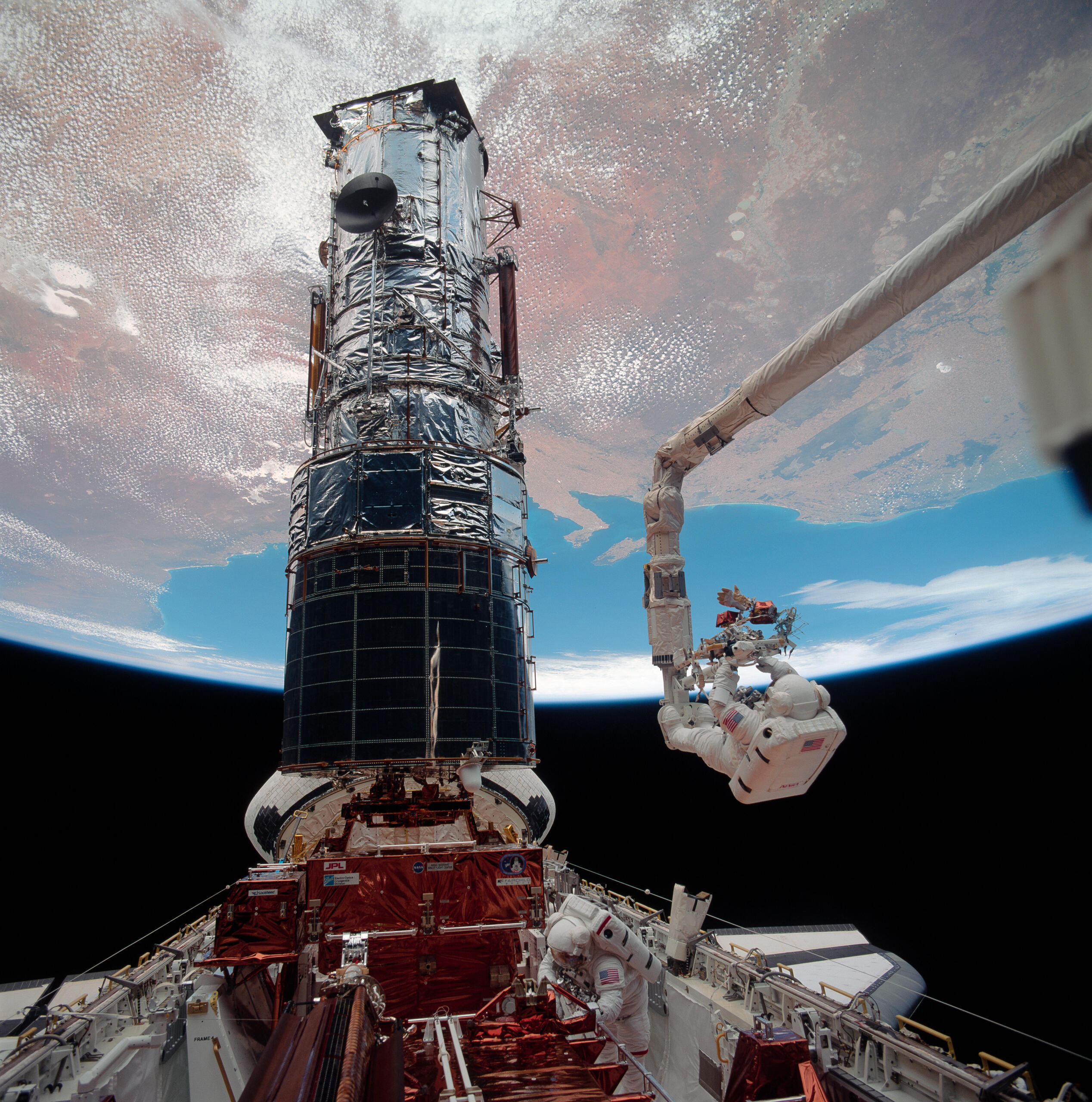
- Place satellites into orbit
- Capture satellites for repair
- Assist astronauts during spacewalks
- Help assemble the ISS
- Film missions with IMAX cameras
- Inspect the shuttle’s thermal protection system using the Orbiter Boom Sensor System. 1
Over its 30 years of service, the Canadarm became an essential part of space shuttle missions and retired after STS-135 in 2011. However, following the success of the original robotic arm, NASA acquired four additional Canadarms, such as the Canadarm2 and Canadarm3.
Evolution into Canadarm2 and Canadarm3
After the original Canadarm was decommissioned, the Canadarm2 was created to continue ongoing work on the ISS. But who built the Canadarm2? Inspired by the Canadarm1, Canadarm2 was built by Macdonald, Dettweiler, and Associates in Brampton, Ontario and was launched in 2001.
The Canadarm2 can be instructed to move to any required location on the ISS. Each of its ends is equipped with a gripping end-effector, that is, a gripper to attach to the Station or hold heavy objects. Indeed, it is capable of handling loads of up to 116,000 kg, which is equivalent to the weight of eight school buses. In addition, this robotic arm can be reconditioned in orbit; that is, its components can be replaced while it is in space if they wear out or fail.
The Canadarm2 is a robotic arm 17 meters long that was used to:
- Perform station maintenance
- Transport supplies, equipment and astronauts
- Grapple vehicles and bring them to the ISS
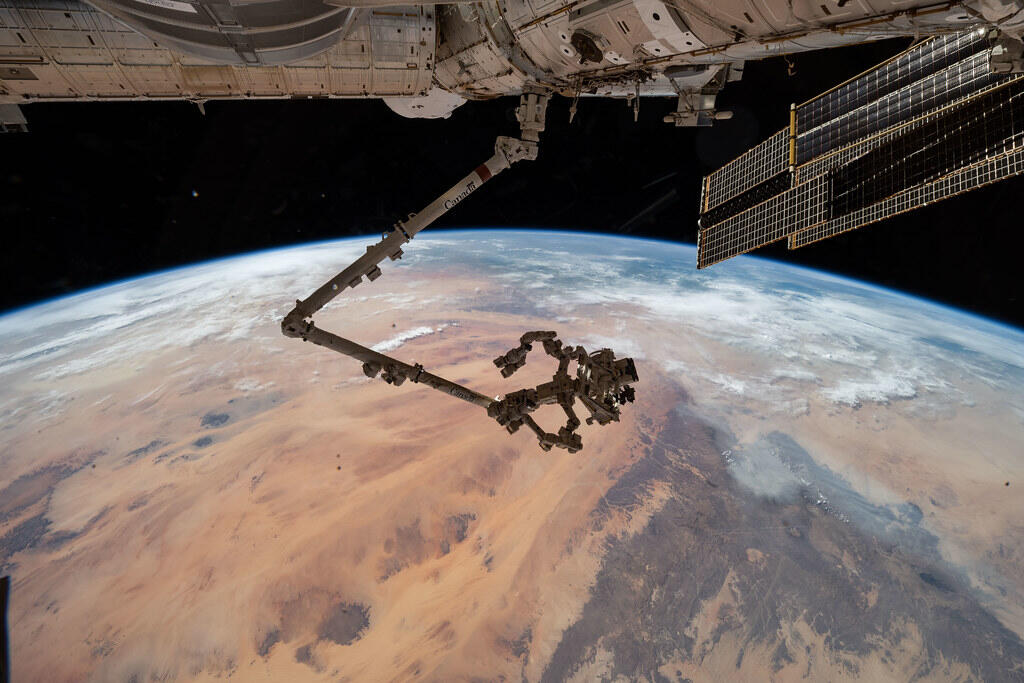
Furthermore, it has driven the development of numerous technologies applicable both in space and on Earth. For example, the neuroArm is the first robot to perform brain surgery inside an MRI scanner; the IGAR is a technology that accelerates the diagnosis and treatment of breast cancer; and the Modus V is a robotic digital microscope that performs surgical procedures. 3
The Canadarm revolutionized Space Shuttle missions, and each new generation has brought significant technological advances. The Canadarm2 and Canadarm3 have expanded upon the original design with greater mobility, advanced automation and the ability to support long-term missions in orbit and beyond.
| Canadarm (1981–2011) | Canadarm2 & Canadarm3 |
|---|---|
| Operated on the Space Shuttle. | Built for the International Space Station and the Lunar Gateway. |
| Fixed at one end. | Can move end-over-end using two interchangeable "hands". |
| Controlled by astronauts. | Supports remote operation and, in Canadarm3, autonomous AI-assisted tasks. |
| Six degrees of freedom. | Seven degrees of freedom for greater flexibility. |
| Basic cameras and sensors. | High-resolution cameras, force sensors, and advanced obstacle detection. |
| Serviced on Earth. | Designed for maintenance and repairs in space. |
The Canadarm3 was intended to perform maintenance or repairs and to inspect the Lunar Gateway. However, the project was canceled during Donald Trump’s second administration.
Pursuing a Career in Robotics and Engineering
The Canadarm is a perfect example of innovation in engineering and robotics. Behind every space mission are teams of qualified engineers, programmers and researchers who work together to design technologies that push the boundaries of space exploration. Pursuing a career in robotics or engineering can provide you with the knowledge and skills needed to contribute to the future of space technology.
Educational Pathways
If you are interested in robotics and designing technological innovations to solve problems, you should consider a career in robotics and engineering, since both academic paths could open the door to exciting opportunities in the aerospace, automation, healthcare, manufacturing and artificial intelligence sectors.
To pursue a career in robotics and engineering, you will need to determine what kind of engineering discipline you want to focus on:
- Mechanical engineering
- Electrical or Electronic Engineering
- Mechatronics Engineering
- Robotics Engineering
- Computer Engineering
- Computer Science (with a specialization in robotics or AI)
Also, since Robotics combines multiple disciplines, you’ll take courses in programming, mathematics, physics, electronics, mechanics, control systems and artificial intelligence. Furthermore, if you’re interested in the aerospace industry, graduate studies in aerospace engineering or autonomous systems can provide specialized knowledge, training and open doors to advanced research and development positions.
Academic Resources
Canada is home to several universities renowned for their engineering and robotics programs, including:
- University of Toronto - Bachelor of Applied Science (BASc) in Engineering Science
- University of Waterloo - Bachelor of Applied Science (BASc) in Mechatronics Engineering
- McGill University - Bachelor of Engineering (BEng)
- University of British Columbia (UBC) - Bachelor of Applied Science (BASc)
- Toronto Metropolitan University - Bachelor of Engineering (BEng)
- Polytechnique Montréal - Bachelor of Engineering (BEng)
Whether your goal is to design robotic arms for space missions or develop the next generation of intelligent machines, pursuing specialized undergraduate engineering studies with hands-on experience is the best way to launch a successful career in robotics. You'll find the details of each program below.
| University | Best undergraduate option for robotics | Degree awarded |
|---|---|---|
| University of Toronto | Engineering Science (Robotics Engineering Major) – Students specialize in Robotics Engineering after the first two years. | Bachelor of Applied Science (BASc) in Engineering Science |
| University of Waterloo | Mechatronics Engineering – Combines mechanical, electrical, computer, and software engineering. | Bachelor of Applied Science (BASc) in Mechatronics Engineering |
| McGill University | Mechanical, Electrical, or Computer Engineering – Robotics through electives, projects, and research. | Bachelor of Engineering (BEng) |
| University of British Columbia (UBC) | Mechanical, Electrical, or Integrated Engineering – Robotics-related coursework and research after a common first year. | Bachelor of Applied Science (BASc) |
| Toronto Metropolitan University (TMU) | Mechatronics Engineering or Mechanical Engineering – Focus on robotics, automation, and embedded systems. | Bachelor of Engineering (BEng) |
| Polytechnique Montréal | Mechanical, Electrical, Computer, or Software Engineering – Robotics through specialized courses and research. | Bachelor of Engineering (BEng) |
Aspiring engineers can also expand their knowledge through online learning platforms that offer introductory or advanced courses in robotics, programming, electronics and artificial intelligence. Websites such as Coursera, edX and MIT OpenCourseWare offer courses from leading universities and valuable hands-on experience for both beginners and advanced students.

Did you know that Canada’s contributions to science go far beyond space exploration? Another notable example is Frederick Tisdall, whose work revolutionized child nutrition, improving children’s health and leaving a lasting legacy in pediatric medicine worldwide.
References
- Canadian Space Agency. (2021, March 31). About Canadarm. https://www.asc-csa.gc.ca/eng/canadarm/about.asp
- Written by John M. Logsdon. (n.d.). Marc Garneau (Britannica Editors, Ed.). Britannica. https://www.britannica.com/biography/Marc-Garneau
- Canadian Space Agency. (2024, July 16). About Canadarm2. https://www.asc-csa.gc.ca/eng/iss/canadarm2/about.asp
Summarize with AI:
Did you like this article? Leave a rating!


 Loading...