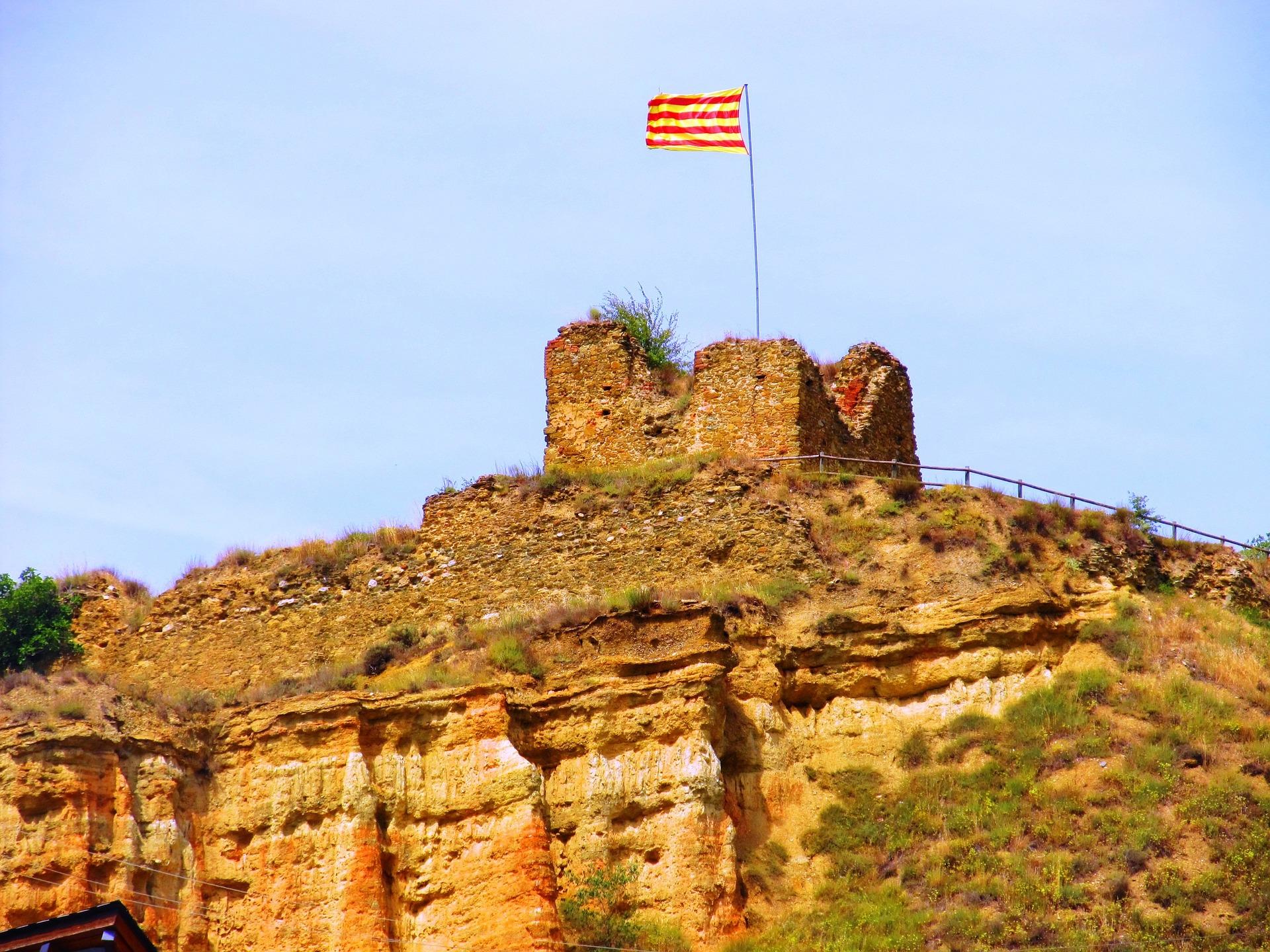

The Catalan language emerged between the 8th and 10th centuries from Vulgar Latin in the eastern region of the Pyrenees, under the influence of the Carolingian Empire's establishment of the Spanish March. It expanded significantly during the Middle Ages, becoming a prominent language in the Mediterranean. Despite periods of repression, especially during Franco’s Spain, Catalan remains a fundamental part of cultural identity in regions such as Catalonia, the Balearic Islands and the Valencian Community.
218 BC
Roman conquest of the Iberian Peninsula
Latin becomes the dominant language, laying the foundation for Catalan.
476 AD
Fall of the Western Roman Empire
Regional forms of Vulgar Latin begin evolving independently.
8th–10th centuries
Emergence of Catalan
Catalan develops from Vulgar Latin in the Eastern Pyrenees.
795 AD
Creation of the Spanish March
Carolingian rule helps shape Catalan's early linguistic identity.
End of 10th century
Catalan becomes a distinct language
Separates from neighboring Romance dialects, including Occitan.
12th–14th centuries
Expansion of the Crown of Aragon
Catalan spreads across the western Mediterranean through trade and conquest.
13th–15th centuries
Golden Age of Catalan literature
Writers such as Ramon Llull, Ausiàs March, and Joanot Martorell elevate Catalan as a literary language.
1348
Black Death
Population decline weakens Catalonia, though Catalan remains widely spoken.
19th century
The Renaixença
Cultural movement revives Catalan language and literature.
1900s
Pompeu Fabra standardizes Catalan
Modern spelling and grammar are established.
1939–1975
Franco dictatorship
Public use of Catalan is heavily restricted throughout Spain.
1978
Spanish Constitution
Catalan regains co-official status in Catalonia after Spain's transition to democracy.
Today
Modern Catalan
Spoken by around 9 million people and co-official in Catalonia, Valencia, and the Balearic Islands, while serving as the sole official language of Andorra.


Early Development and Influences
Catalan did not emerge overnight. Like all Romance languages, it evolved gradually over the centuries. Shaped by historical events, changes in political borders and contact with neighboring cultures, Catalan developed its own unique identity.
Formation from Vulgar Latin
Catalan has its origins in Vulgar Latin, which was the everyday form of Latin spoken by ordinary people during the Roman Empire. Following the Roman conquest of the Iberian Peninsula in 218 B.C., Latin became the dominant language in the region.
Vulgar Latin refers to the non-classical spoken Latin throughout the Roman Empire. Also known as Late Latin or Proto-Romance, Vulgar Latin evolved naturally through daily speech, and it is the common ancestor of all the Romance languages. Vulgar Latin preferred simpler and more expressive vocabulary than Classical Latin. 1
However, over time, the Latin spoken on the northeastern Mediterranean coast evolved from the varieties spoken in the rest of Hispania, laying the foundation for Catalan. After the fall of the Western Roman Empire in 476 AD, the lack of a centralized government allowed the regional forms of Latin to evolve independently.
Between the 8th and 10th centuries, the Vulgar Latin spoken in the Eastern Pyrenees gradually evolved, setting it apart from the Romance dialects.
Although the Visigoths ruled much of the Iberian Peninsula, they adopted the local Latin spoken by the population rather than imposing their own Germanic language. Their influence, along with elements of Frankish and Gothic, also helped shape the vocabulary and pronunciation of early Catalan.
Also, around the start of the 9th century, Catalan remained closely related to Occitan, as both languages shared linguistic characteristics. Indeed, Catalan was closer to Occitan than it was to Castilian.
Carolingian Empire and the Spanish March
The expansion of the Carolingian Empire also played a crucial role in the development of Catalan. The Franks defeated the Moors at Poitiers in 732, leading to incursions south of the Pyrenees. During the reign of Charlemagne, they conquered Girona in 785 and Barcelona in 801, as well as all of Ancient Catalonia, from the Pyrenees to the Llobregat River, bringing what is now Catalonia under Carolingian control.
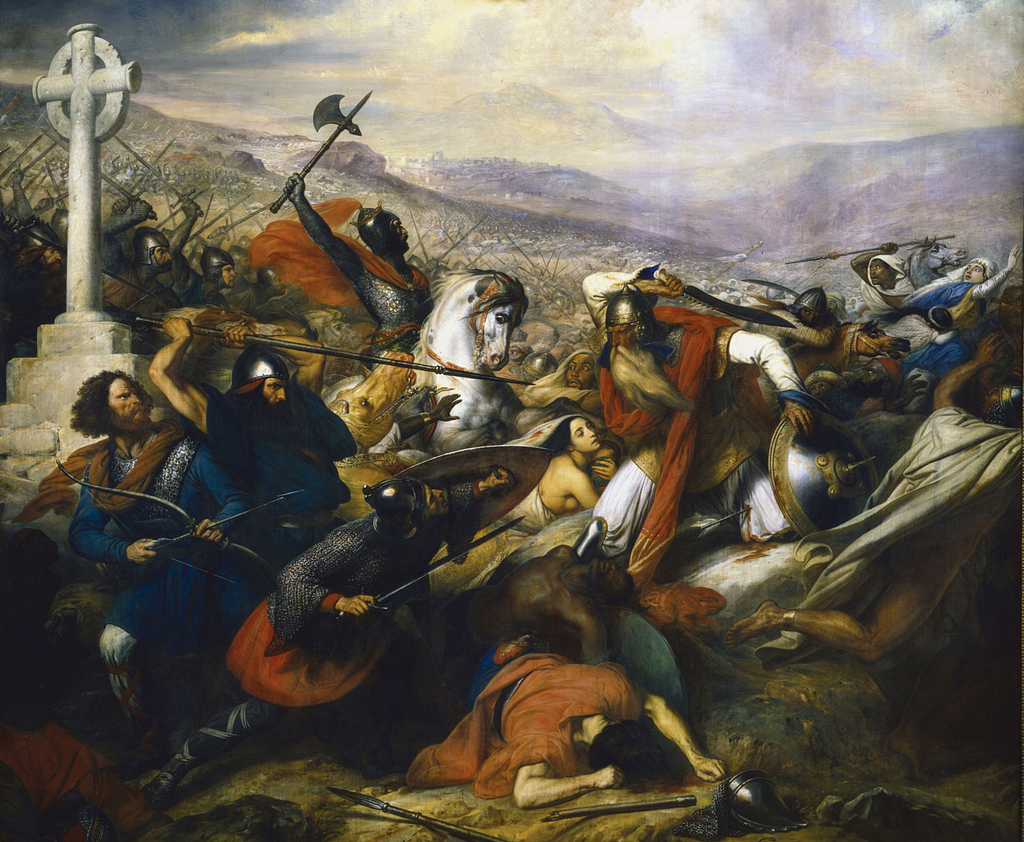
To protect its southern border from Al-Andalus, Charlemagne established the Hispanic March, a defensive buffer zone consisting of several counties south of the Pyrenees. These counties enjoyed a certain degree of autonomy while remaining part of the Carolingian Empire, fostering stability and the development of local languages.
The Spanish March was a military buffer zone established in 795 by the Frankish king Charlemagne in the Pyrenees to protect the territories of the Christian Carolingian Empire from the Muslim Umayyad Emirate of Córdoba in al-Andalus. These included the duchies of Gascony and Aquitaine, as well as Septimania. The Spanish March was defended by a group of feudal lords, or counts, under Frankish rule. 2
Within this Spanish March, the Romance dialect derived from Vulgar Latin continued to evolve independently of both Castilian and Occitan.
However, after Charlemagne’s death, the Catalan counties became part of Western France, and their growing independence fostered the development of a distinct linguistic identity. By the end of the 10th century, Catalan had established itself as a distinct Romance language, and it would undergo a literary and cultural expansion during the Middle Ages.
Castilian, Catalan and Aragonese are Romance languages that were influenced by Arabic during the Middle Ages. However, Arabic had a much greater impact on Castilian than on Catalan, largely because much of the Castilian-speaking territory was under Muslim rule for a longer period.
Today, there are hundreds of words in Spanish that come from Arabic, such as arroz (rice), from the Arabic al-ruzz; aceituna (olive), from zaytūnah and naranja (orange), from naranj.
In 985, Barcelona was sacked by the Muslim military leader Al-Mansur, and the Count of Barcelona, Borell II, did not receive the help he expected from the Frankish kings. As a result, Borell II did not renew his pledge of loyalty to the new King of France, Hugh Capet, marking the beginning of Barcelona's independence. However, there is no single agreed-upon date for the birth of the Catalan nation.
Would you like to learn the Catalan language right away? Find out more about learning to speak Catalan.
Expansion and Standardization
The Middle Ages marked a golden age for the Catalan language. Catalan spread far beyond its region of origin, becoming a language of commerce, administration and culture. Furthermore, renowned artists helped establish Catalan as a respected literary language, leading to its subsequent standardization.
Medieval Spread Across the Mediterranean
Beginning in the 12th century, Catalan spread rapidly due to the political and territorial growth of the Crown of Aragon. As the counts of Barcelona and the kings of Aragon conquered new territories, Catalan gradually became the language of the government and daily life in the western Mediterranean.
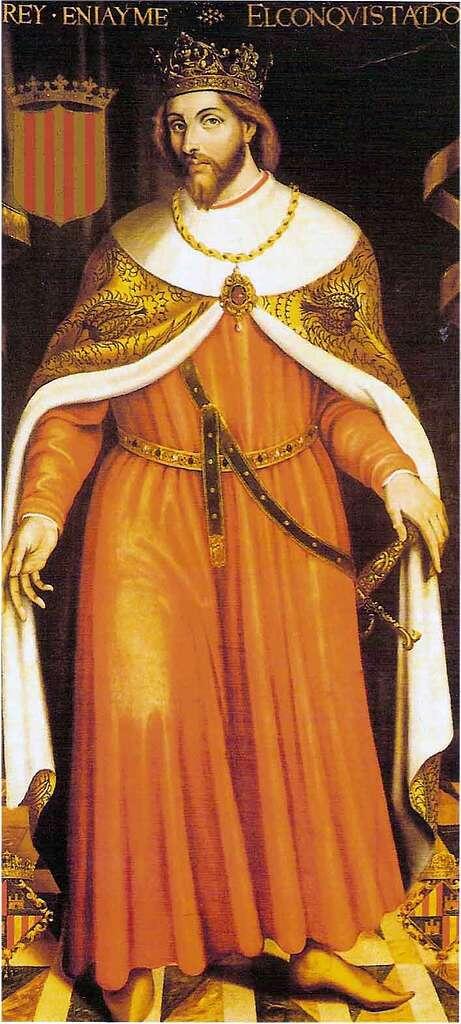
The reign of James I of Aragon, who conquered the Balearic Islands between 1229 and 1235 and the Kingdom of Valencia in 1238, was another key moment. Settlers from Catalonia moved into these new territories, bringing Catalan with them.
Over time, new varieties emerged, such as Valencian and Balearic Catalan
The expansion continued throughout the 14th century, and the Crown of Aragon exerted its influence throughout the Mediterranean by incorporating new territories such as the city of Alghero on the island of Sardinia.
Following its conquest in 1354, the Catalans repopulated the city, which allowed Catalan to become even more widespread.
Due to its presence in these territories and the maritime trade of the Crown of Aragon, Catalan established itself as one of the major languages of the western Mediterranean during the Middle Ages.
Literary Flourishing and Standardization Efforts
Between the 13th and 15th centuries, Catalan evolved from being spoken only to being used in literature, administration, law, and science. In fact, one of the most influential authors was Ramón Llull (1232–1316), one of the first great writers to use Catalan to produce his works.
In the 14th and 15th centuries, writers such as Ausiàs March also revolutionized Catalan poetry, and Joanot Martorell made a name for himself with Tirant lo Blanc, one of the most important novels of medieval literature.
This period is known as the Golden Age of Catalan literature.
These advances laid the groundwork for modernizing the rules of the Catalan language, which culminated centuries later in the work of the philologist Pompeu Fabra, who was responsible for establishing the spelling and grammar of modern Catalan in the early 20th century.
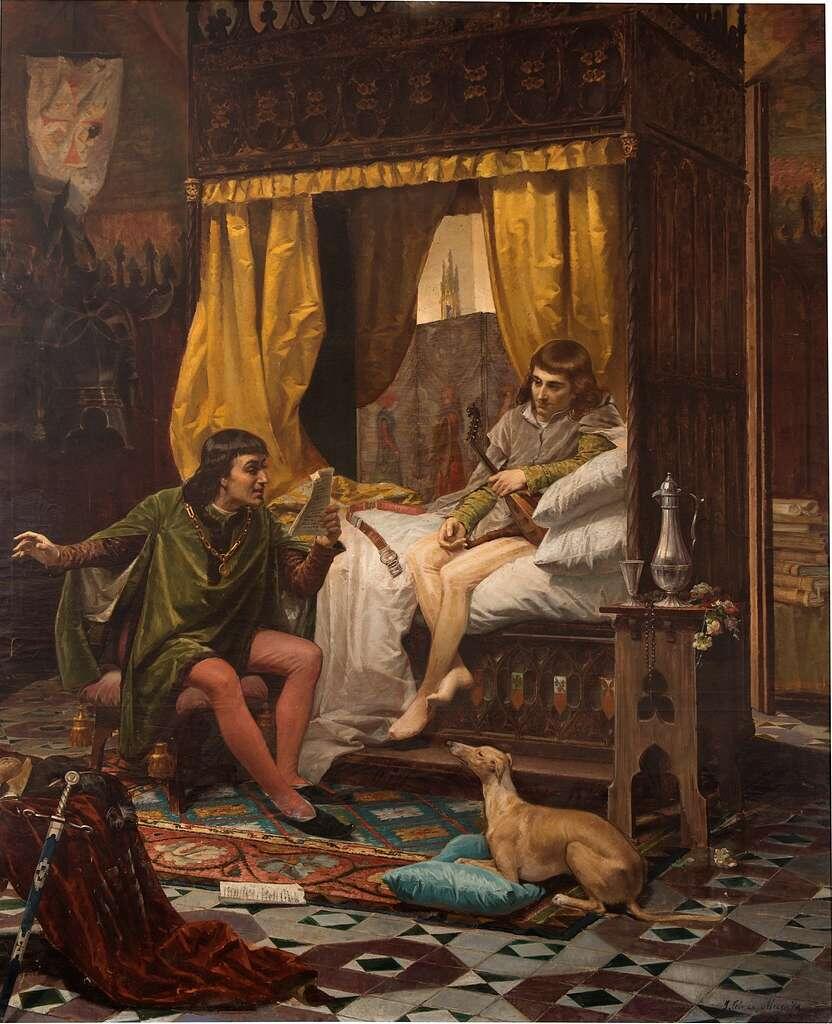
By going somewhere Catalan is spoken, you’ll have an opportunity to immerse yourself in the language and the culture. Find out where else Catalan is spoken.
Periods of Decline and Revival
Despite its heyday during the Middle Ages, the language subsequently went through periods of decline caused by wars, political unrest and official repression. However, Catalan survived and became one of Europe’s most successful examples of language preservation and revitalization.
Suppression Under Francoist Spain
The Black Death reached Catalonia in 1348, leading to demographic and economic decline. Plagues, wars, and political instability weakened the Catalan region and significantly reduced its population. Although the language suffered heavy losses, it remained widely spoken and present in literature and administration for centuries.
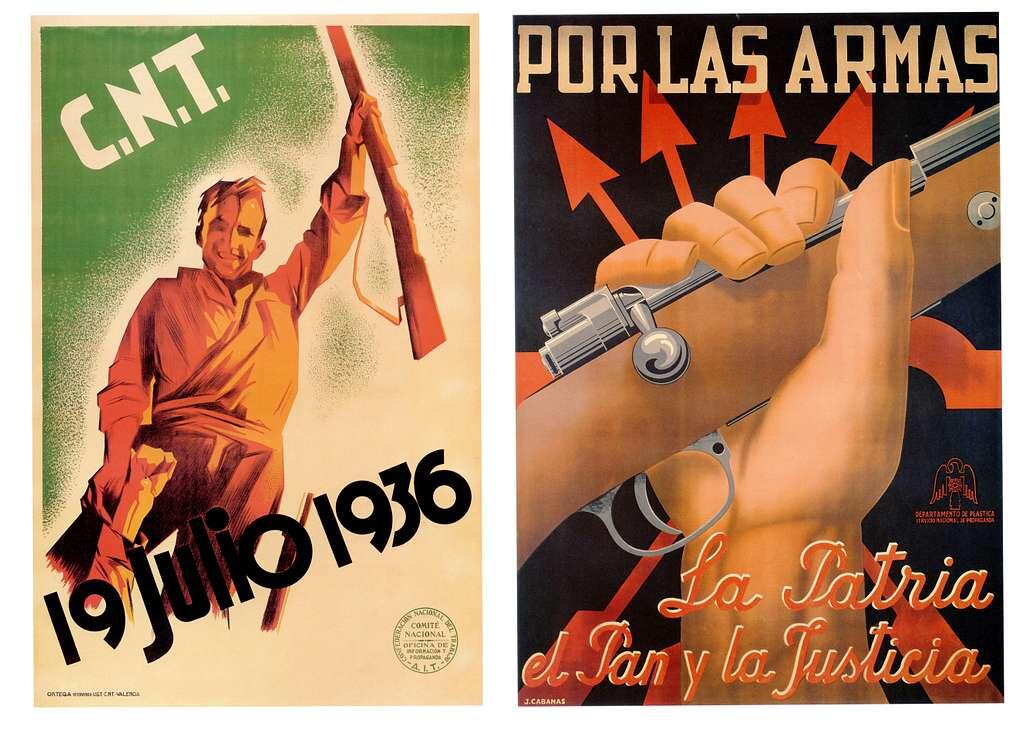
Following the Spanish Civil War (1936–1939), General Francisco Franco came to power, marking the beginning of one of the most difficult periods for the Catalan language.
During Franco’s dictatorship (1939–1975), the regime promoted Spanish as the state’s sole official language and restricted the public use of other regional languages. Indeed, Catalan was restricted in the administration, education, the courts, and the media.
However, Catalan continued to be passed down within cultural and religious circles. Writers, intellectuals and associations kept the language alive through underground publications and cultural activities.
The Renaixença and Modern Revival
Long before the Franco regime, Catalan had already begun a revival process thanks to the Renaixença, a cultural and literary movement that emerged in the 19th century. Inspired by European Romanticism, this movement sought to revitalize the Catalan language and restore its prestige.
The Renaixença spurred the creation of poetry, novels, and newspapers in Catalan, and revived traditions such as the Jocs Florals, literary contests that promoted the use of the language.
Following Franco’s death in 1975 and the restoration of democracy, Catalan regained its recognition.
In fact, the 1978 Spanish Constitution and the Statute of Autonomy of Catalonia recognized Catalan as a co-official language alongside Spanish in Catalonia.
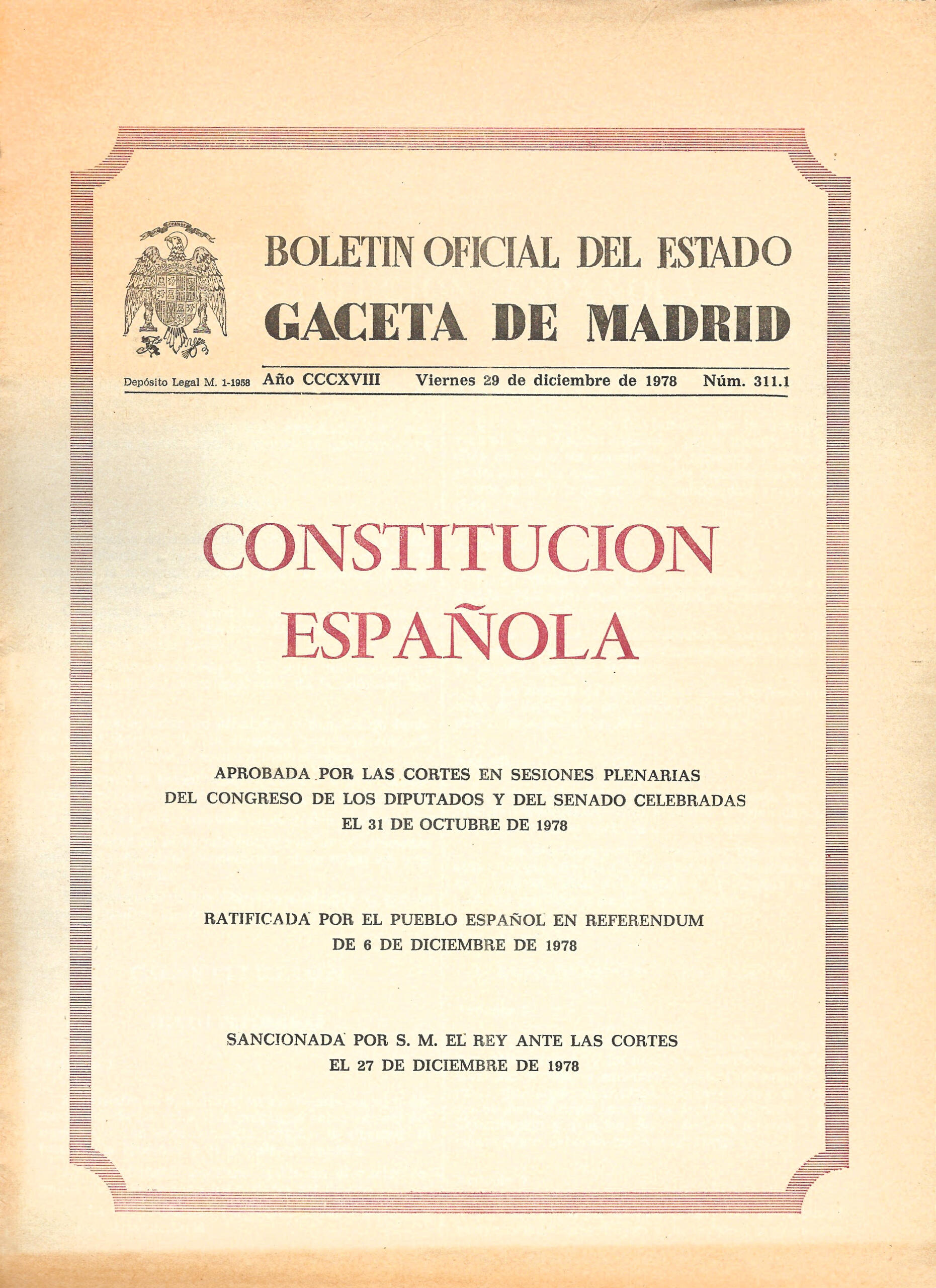
Catalan is widely used in education, public administration, and the media, constituting one of the most significant language revitalization processes in Europe.
Current Status and Sociolinguistic Aspects
Today, Catalan is a modern and dynamic language spoken by millions of people in various regions of Europe, and it plays an important role in everyday life. Although the language faces new challenges stemming from globalization, ongoing efforts to promote and preserve it are more important than ever.
Geographic Distribution and Number of Speakers
Catalan is one of the Romance languages with the largest number of speakers. Currently, it is estimated that more than 10 million people can understand it and around 9 million speak it, while approximately 4.5 million speak it as their native language.
Furthermore, although it is usually associated primarily with Catalonia, did you know that Catalan is spoken in several regions? It is a co-official language in Catalonia, the Valencian Community (where it is officially known as Valencian), and the Balearic Islands.
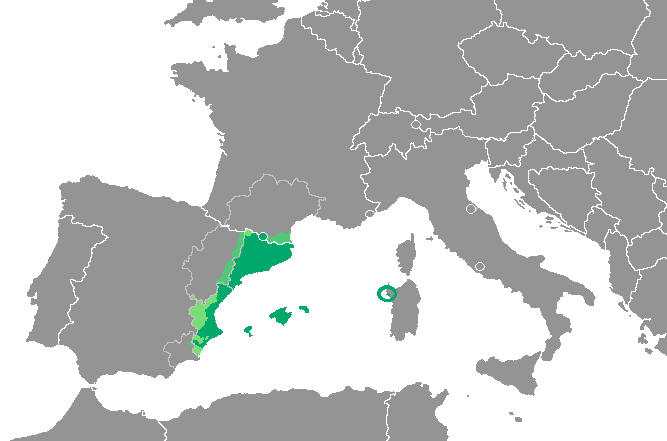
It is also spoken in eastern Aragon, known as the Franja; in the Principality of Andorra, where it is the sole official language; in the French department of the Pyrénées-Orientales (Northern Catalonia); and in the city of Alguer on the Italian island of Sardinia.
Due to its distribution, Catalan maintains a strong presence in education, the media, public administration, and culture. Find out different ways to learn Catalan.
Sociolinguistic Dynamics and Challenges
Catalan enjoys a high degree of institutional recognition, especially in Catalonia, the Balearic Islands, the Valencian Community, and Andorra. It is used as the language of instruction, public administration, the media, and cultural production, which helps ensure its preservation and transmission.
However, it faces several challenges, such as coexisting with Spanish, the most widely spoken language in Spain and the most prevalent in various digital and commercial spheres. In addition, immigration, population mobility and the growing use of English have shaped the way younger generations use the language.
Although the language is increasingly present on social media and streaming platforms, it remains less available than other languages with a similar number of speakers. As a result, public institutions and cultural organizations are promoting initiatives to increase the availability of Catalan-language content and services.
Despite these challenges, Catalan has become one of the most notable examples of the preservation and revitalization of a regional language in Europe.
References
- Rebecca Posner. (n.d.). Vulgar Latin (Britannica Editors, Ed.). Britannica. https://www.britannica.com/topic/Vulgar-Latin
- What is the Spanish March. (2024, June 23). Barcelona Yellow. https://www.barcelonayellow.com/history/1302-what-is-the-spanish-march-la-marca-hispanica
Summarize with AI:
Did you like this article? Leave a rating!


 Loading...