
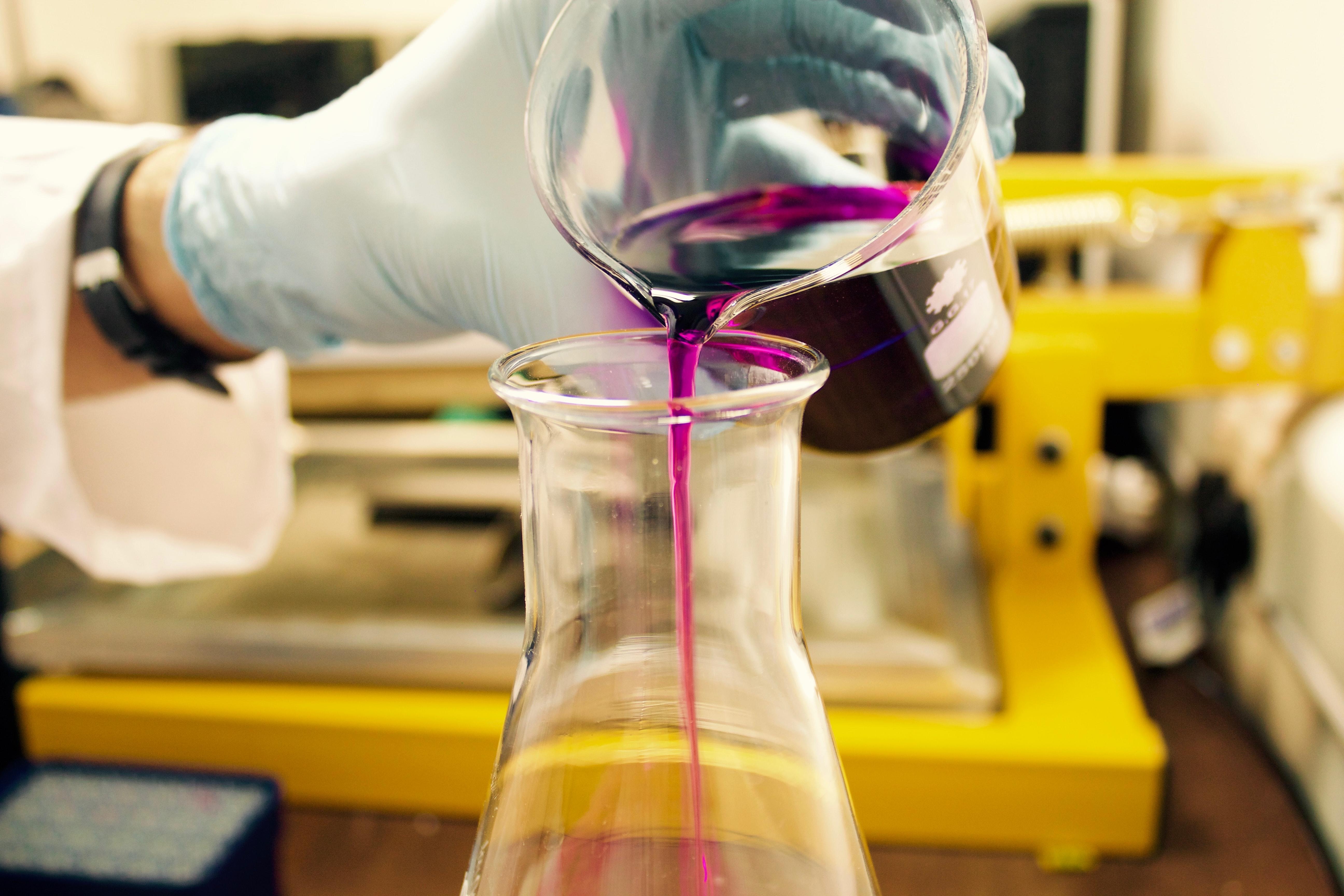

One of the biggest reasons kids love science is the joy of experimenting and inquiry. How many times have you seen a child mix mud, swirl paints, play with slime, or watch with wonder as they push play dough through an extruder? Science is one of the most fun subjects to study in school, and chemistry has the unique quality of being grounded in experimentation and observation.
Kids of all ages will find no shortage of experiments to try with a quick search on the internet. In fact, nearly everyone will have their own ‘lab’ in their home - the kitchen - where you can easily find most of the materials you need to conduct the most basic of experiments. What happens when you combine sugar with boiling water? What happens when you emulsify liquids in a blender? How long does it take to freeze different liquids into solids?
The truth is, we can find plenty of chemistry in the world around us - and plenty of ways to explore the composition of different gases, liquids and solids in our home. When we get to grade 9 science courses, there will definitely be a need to identify opportunities to explore chemistry to complete assignments and projects. If you’re looking for some ideas for fun chemistry experiments to do at home for your courses, or just want some fun experiments to do at home, you’ve come to the right place. This article will explore some great chemistry experiments to try, and some reasons you should explore a study of chemistry in high school.
Do you know what topics you will cover in chemistry in grade 9 science? Learn all about the exciting coursework you’ll do in secondary school.


Why Should I Learn Basic Chemistry?
There are so many great reasons to pursue a study of chemistry in high school. Let’s take a quick look at some of the top reasons.
1. Pursue the Career of Your Dreams.
Quite possibly the most important and popular reason students choose to study chemistry in grade 9 and beyond is that it is fundamental to pursuing your career aspirations. Knowledge of chemistry is required for careers in medicine, laboratory research, the food and beverage industry, and even jobs in industrial design and manufacturing.
Perhaps you have dreamed of developing a life-saving vaccine, feel your calling is in healing others, or simply want to turn your love for cooking into a career that takes you beyond the kitchen. The study of chemistry can enable you to do all of these things and more!
2. Take a Hands-on Approach to Learning.
A lot of school tends to involve reading and writing, and while these skills are important, it can be refreshing to learn a subject where you get to interact in a hands-on way with what you are learning.
Experiential education is one of the most powerful and effective ways to learn, and chemistry requires students not only to read about different processes and substances but to manipulate and experiment with them. It can be incredibly engaging and engrossing to do the work of organizing and orchestrating a lab experiment, and seeing what happens when you mix different substances, check how they react with heat, or witness how they change over time.
Of course, you will have to do the work of writing out the observations and findings of your labs - but writing about what you have seen and done in a lab can be a nice change of pace from teasing out the nuances of a Shakespearean play or novel.
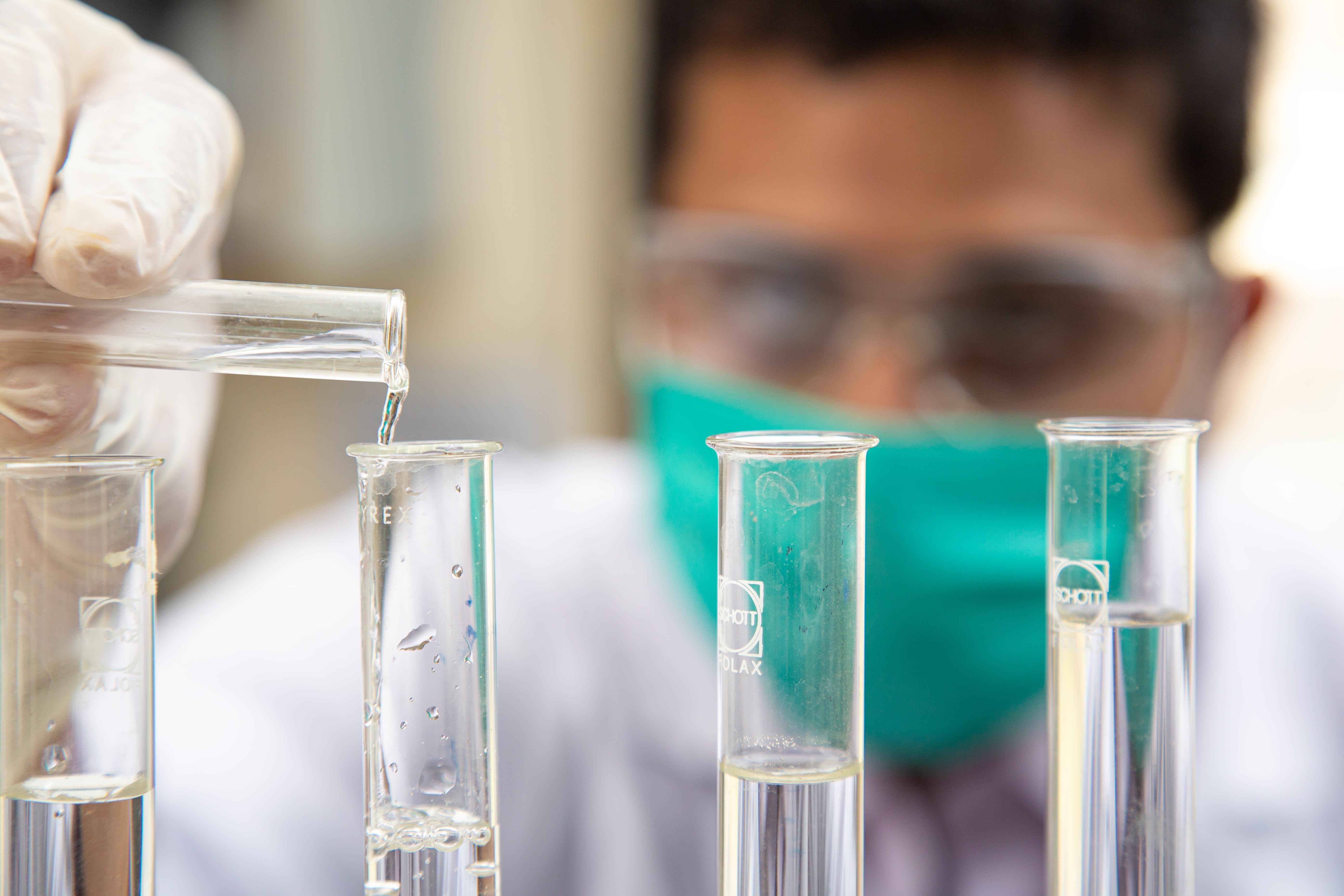
3. Get the Prerequisites for Different University Programs
Chemistry courses in high school are often prerequisites to a science related university program you want to enter. When you don’t have those courses at the time of application, it is highly improbable you will be accepted. You may end up delaying the start of your postsecondary program, as you will have to take your chemistry courses in night school or summer school.
This is why it is important to pursue academic chemistry courses in high school - so you can have access to science related postsecondary programs. The best thing you can do early on in high school is to figure out what programs you may want to have access to after graduation so you can plan your secondary course pathway effectively.
Find some organic chemistry classes here on Superprof.
Which Chemistry Course Should I Take in Secondary School?
The last reason takes us to the next big question you may have - what course should you take? In many provinces, the first chemistry course you will take is grade 9 applied or academic science. In a grade 9 science course, chemistry is usually one strand or section of it. You will choose chemistry specific courses in grades 11 or 12, but you will need these science credits to enrol.
The other decision you will make is whether to take applied or academic chemistry when it becomes an option in the senior grades. If you plan to take your studies to university, academic courses will be the option you’ll need to pick to enter those programs. Applied courses are great if you have a general interest in the subject, and may also be accepted in college programs.
Do the research, determine what courses you will need, and choose the appropriate course.
Whatever chemistry course you take, keep in mind that you can support and enhance your chemistry learning with a private tutor. Tutors are an amazing resource for students who want to be successful and competitive in their courses so they can get the grades they need to get into the postsecondary programs they want. Sites like Superprof offer listings for thousands of science tutors across Canada that can help you with your chemistry course.
Superprof has easy to use navigation and search tools that enable students and their families to find tutors in their community, read their backgrounds and profiles, and compare pricing. It’s easy to contact prospective tutors through Superprof, and to arrange a time you can meet and start studying together. Many Superprof tutors offer the first hour for free so you can see if they will be a good fit for your needs.
Tutors are a convenient and cost efficient way for students to ensure they are prepared for their exams and are getting the right feedback to improve their work. Check out Superprof today.
Taking grade 9 chemistry is a great way to prepare for higher learning. Explore the best ways to study and be successful in the sciences.
Are There Experiments in Chemistry Class?
There will definitely be experiments in chemistry class, which is great for those of us who love learning through hands-on activities. Chemistry classes will usually take place in a lab classroom, where students are seated at stations that have sinks, a working surface, compartments for different tools, an overhead mirror, and a gas hookup. Some of the equipment you will get to use in a lab include:
- Test tubes
- Bunsen Burner
- Erlenmeyer Flasks
- Tongs
- Gas Bottle
- Pippet
- Utility Clamp
- Evaporating Dish
- Goggles
- Beaker
- Test Tube Holder
- Mortar and Pestle
- Test Tube Rack
- Rubber Stoppers
Your chemistry course will also teach you safety processes and protocols in the lab, which are important to ensure no injuries happen.
Find some organic chemistry courses offered online here on Superprof.

Are Online Chemistry Courses Better than General Chemistry Courses In Person?
Online chemistry courses are being offered increasingly in public and private schools, and can be a great way to get a chemistry credit to satisfy requirements for your secondary school diploma. However, it’s hard to get the same kind of lab experience in an online course as you would in an in-person chemistry class.
In person chemistry classes provide opportunities for you to experiment, practice the scientific method, and learn your way around a lab environment. While an online class will certainly give you a sense of these things virtually, there is nothing quite like the real thing.
Take note that online classes can still be an effective way to learn chemistry, particularly if you need the credit upgrade or can’t get a chemistry course into your timetable. Consider your needs as a learner and your future goals, and choose the course that will work best for you.
Chemistry courses in high school can have a positive impact in your life, with many benefits that last long into your career.
What are the Best Chemistry Experiments At Home?
There are so many chemistry experiments you can do at home to complement your high school coursework. Maybe you need an experiment for a science fair, are simply curious to learn, or want some enrichment in science. Many experiments may require you to get a kit with the appropriate tools - sites like Amazon can be an easy way to find the materials. Of course, many materials can easily be found in our kitchen or home! Here are some ideas to get you started.
- Measure calories in food
- Explore reaction rate with Alka-Seltzer
- Extract bismuth from stomach medicine
- Cook candy to learn about molecules
- Make soap
- Create polymer bouncy balls
- Dehydrate sugar
- Test the quality of water
- Make your own Root Beer
- Launch a weather balloon
- Make ice cream
- Make Mozzarella
- Extract DNA from a Banana or Strawberry

What are Good Topics for a Science Project?
If you have been given the assignment of doing your own research inquiry for class or a science fair, it can be tough to determine a topic. Start by looking at the assignment requirements or rubric, so you understand exactly what your teacher wants. Then think about what will interest you most and what you can do with the resources you have access to.
Being interested in your science project is important. Beyond the planning and experimentation, you will have to report on your inquiry and present it creatively, so make sure it’s not a topic you will get frustrated with fast. You will also want your interest and passion to show in the presentation, which is unlikely if you have chosen a topic you are uninterested in.
Consider what resources you have, and what you can reasonably do independently at home or in a school lab. You’ll find plenty of science kits that will cost money, but remember that it isn’t necessary to spend a lot of money to have an effective experiment.
Of course, don’t forget to brainstorm your ideas with others. This can happen with a sibling who also loves science, a parent, a science teacher or perhaps even your tutor. People that love science usually enjoy talking about different ideas for experimentation and research, so get their feedback to see if you are on the right track.
Do you love science and want to continue learning chemistry in high school? Here’s everything you need to know about basic chemistry classes.
Summarize with AI:
Did you like this article? Leave a rating!

 Loading...
