
With a population of 47 million, Spain is home to many world-famous figures. From art and literature to sports and cinema, the country has made contributions to a wide range of fields. If you’re learning about Spain or studying Spanish, exploring the lives of its most influential people is great to better understand Spain's rich history and culture.
| Category | Person | Known For |
|---|---|---|
| Explorer | Christopher Columbus | Voyages to the Americas |
| Conquistador | Hernán Cortés | Conquest of the Aztec Empire |
| Monarch | Ferdinand II | Helped unify Spain |
| Monarch | Isabella I | Sponsored Columbus's voyage |
| Painter | Pablo Picasso | Co-founder of Cubism |
| Painter | Salvador Dalí | Leading Surrealist artist |
| Writer | Miguel de Cervantes | Don Quixote |
| Poet | Federico García Lorca | Poetry and drama |
| Singer | Rocío Jurado | Flamenco and copla icon |
| Singer | Enrique Iglesias | Best-selling Latin artist |
| Actor | Antonio Banderas | International film star |
| Actress | Penélope Cruz | First Spanish Oscar winner |
| Footballer | Andrés Iniesta | World Cup champion |
| Tennis Player | Rafael Nadal | King of Clay |
From Christopher Columbus and Pablo Picasso to Miguel de Cervantes, Penélope Cruz and Rafael Nadal, discover how the most famous Spaniards have shaped Spain's cultural heritage and international recognition.


Influential Figures in Spanish History
Over the centuries, Spanish explorers, monarchs, and leaders have influenced not only the history of their country but also the rest of the world. They contributed to the expansion of Spain’s territories, the strengthening of its monarchy, and the consolidation of its position as one of the most powerful kingdoms in Europe.
Have no fear of perfection - you'll never reach it.
Salvador Dali
Explorers and Conquerors
Figures such as Christopher Columbus and Hernán Cortés played a pivotal role in shaping the course of world history by opening new trade routes, establishing overseas territories and leaving a legacy that continues to be studied and debated to this day.
Christopher Columbus
Christopher Columbus was an Italian master navigator whose transatlantic voyages paved the way for the exploration, exploitation and colonization of the Americas by Europeans. Columbus is generally known as the “discoverer of the New World.”
1451–1506
Italian
Leading the voyages that opened the way for European exploration and colonization of the Americas.
Known as the "discoverer of the New World," and associated with the beginning of European colonization.
Columbus undertook his transatlantic voyages under the patronage of Ferdinand II and Isabel I, the Catholic Monarchs of Spain. He was granted the title “Admiral of the Ocean Sea” in 1492.
Although the so-called “discovery” of the Americas was a great triumph at the time, with Columbus as the hero, historians today have a much greater appreciation for all the destructive aspects of the European conquest, the slave trade, and the devastation caused by diseases imported from Europe. 1
Hernán Cortés
Another notable conquistador is Hernán Cortés. Hernán Cortés was a Spanish conquistador who overthrew the Aztec Empire and conquered Mexico, bringing it under Spanish rule. In 1519, Cortés sailed to the Yucatán Peninsula and landed in Tabasco, in southern Mexico, where he gained the trust of the local indigenous peoples.
1485–1547
Spanish
He led the conquest of the Aztec Empire and brought Mexico under Spanish rule.
He expanded Spanish influence in the Americas, and his conquest also marked the beginning of Spanish colonial rule and had profound consequences for indigenous civilizations.
As he advanced inland, he formed alliances with the local indigenous peoples who opposed the Aztec Empire, strengthened his forces and helped expand Spanish influence.
Did you know that it wasn’t all conquest and glory for the Spaniards? In fact, the night of June 30 to July 1, 1520, is known as La Noche Triste, when Hernán Cortés and his troops were forced to make a nighttime retreat from the Aztec capital, Tenochtitlán, following a bloody battle.
After numerous battles, Cortés and his Indigenous allies re-entered Tenochtitlán, the Aztec capital, in December 1520. Cortés captured the city on August 13, 1521, marking the fall of the Aztec Empire and the beginning of Spanish colonial rule in Mexico. 2
Monarchs and Leaders
The Spanish monarchy played a crucial role in the formation of national identity and in Spain’s rise as a world power. Ferdinand II of Aragon and Isabella I of Castile laid the foundations for a unified Spain and marked the beginning of a new era that would transform both the country and the rest of the world.
Ferdinand II of Aragon
Ferdinand II of Aragon was the son of John II of Aragon and Juana Enríquez, both of Castilian origin. He reigned alongside Queen Isabella I and helped strengthen the Spanish monarchy through political reforms and military campaigns.
1452–1516
Spanish
He unified Spain alongside Queen Isabella I and consolidated the Spanish monarchy.
He helped Spain establish itself as one of Europe's leading powers and initiated its overseas expansion into the Americas.
Together, Ferdinand II of Aragon and Queen Isabella I completed the Reconquista with the capture of Granada in 1492 and oversaw the beginning of Spain’s overseas expansion, consolidating the country’s position as one of Europe’s leading powers.
Isabella I of Castile
Another leader we need to mention is Isabella I of Castile. She was the daughter of John II of Castile and Isabella of Portugal. She shaped modern Spain by establishing the court as a center of influence. Together with King Ferdinand II, she unified the kingdoms of Castile and Aragon through their marriage, thereby laying the foundation for a unified Spain.
1451–1504
Spanish
Unified Spain during the reign of Ferdinand II and consolidated the Spanish monarchy.
Helped consolidate Spain as a unified kingdom and laid the foundations for its overseas empire in the Americas.
Her reign marked the permanent union of Spain and the beginning of the New World, led by Christopher Columbus.
Want to improve your Spanish while enjoying some great entertainment? Watching TV shows and movies in Spanish is one of the most effective ways to expand your vocabulary, improve your listening comprehension, and get familiar with authentic accents and everyday expressions. Check out our guide to the best Spanish series!
Pioneers in Arts and Literature
Spain has produced some of the most influential artists and writers of recent times, such as Picasso, Dali, Cervantes, and García Lorca. For centuries, in painting, literature and poetry, these artists have left their mark on Spanish culture and the international art scene.
Painters
From Pablo Picasso’s revolutionary Cubism to Salvador Dalí’s imaginative Surrealism, these artists challenged traditional artistic conventions and continue to inspire generations through their innovative works.
Pablo Picasso
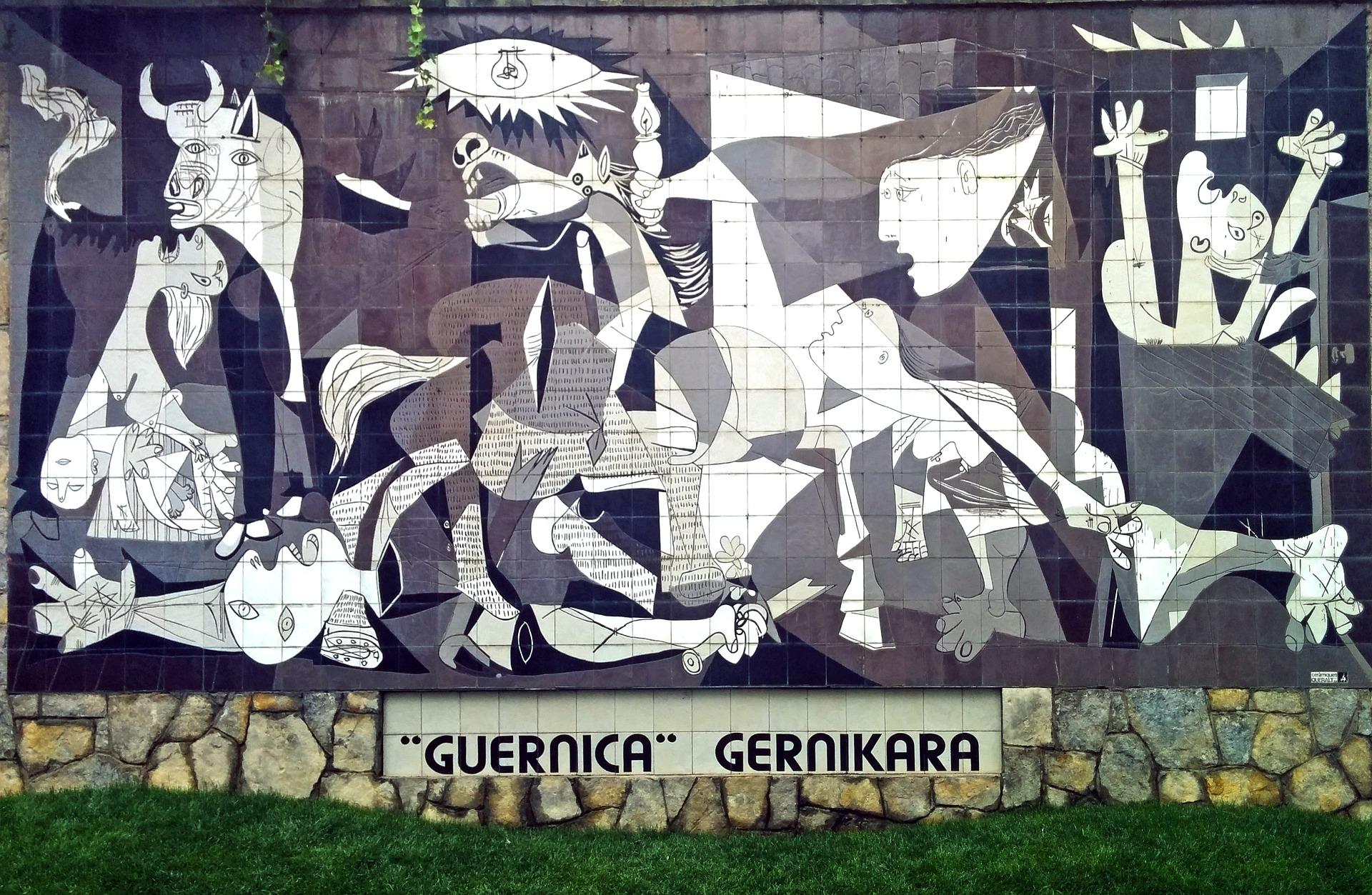
Pablo Picasso was a painter, sculptor, and printmaker, and one of the most influential artists of the 20th century. Picasso was one of the founders of Cubism, a movement that broke with the laws of classical perspective and reduced objects to geometric forms.
1881–1973
Spanish
Co-founder of Cubism and a revolutionary figure in modern art.
Widely recognized as one of the most influential artists of the 20th century, he has inspired generations of modern and contemporary artists.
Picasso’s artistic output contributed significantly to the overall development of modern art in the 20th century.
Did you know that Picasso was the first living artist to exhibit a work at the Louvre in the city of Paris? The 1971 exhibition was organized in honor of his 90th birthday.
At the time of his death, he owned some 50,000 works spanning all periods of his career, including paintings, drawings, prints, sculptures, and ceramics, which were bequeathed to the French government and his heirs. Among his extensive body of work are many famous pieces, such as Les Demoiselles d’Avignon (1907). 3
Salvador Dali
Another famous Spanish painter, Salvador Dali, was a painter, sculptor, and writer, and one of the leading figures of Surrealism. Known for his imaginative paintings, Dalí explored themes such as time, memory and the subconscious. In fact, to evoke images from his subconscious, he began inducing hallucinatory states through a process he described as “paranoiac-critical.”
1904–1989
Spanish
A leading figure in Surrealism known for his dreamlike paintings.
He revolutionized Surrealism by exploring dreams, the subconscious, and the imagination through highly imaginative and symbolic works of art.
The most famous of his paintings is The Persistence of Memory (1931), in which limp, melting clocks rest in an eerily tranquil landscape; one of the most recognizable paintings in modern art.
He spent the Spanish Civil War (1936–1939) in exile in Paris and moved to New York during World War II. He made his fortune in the United States and, upon his return to Spain, devoted himself to Renaissance-style painting.
Writers
Writers such as Miguel de Cervantes and Federico García Lorca explored themes such as imagination, identity, love and social justice, creating masterpieces that continue to inspire readers.
Miguel de Cervantes
Miguel de Cervantes was a Spanish novelist, playwright, and poet, and is likely one of the most celebrated figures in literature. Cervantes is the author of the famous Don Quixote (1605, 1615), a novel that has been translated into more than 60 languages. In addition, his work has been adapted for the theater, the visual arts and film.
1547–1616
Spanish
Author of Don Quixote, considered one of the greatest novels ever written.
Considered the greatest Spanish writer and one of the most influential literary figures in history.
Cervantes distinguished himself by creating works in nearly every literary genre. For example, he was a prominent author of short stories, and some of the stories in his collection Novelas ejemplares (1613; Exemplary Novels) rival Don Quixote in quality. 4
Federico García Lorca
Another notable poet was Federico García Lorca, a prominent 20th-century Spanish poet, playwright, and theater director. He published numerous volumes of poetry throughout his life, beginning with Impresiones y paisajes (1918; Impressions and Landscapes).
1898–1936
Spanish
Poet, playwright, and one of Spain's most prominent literary figures.
His innovative writing and his exploration of love, tragedy and social injustice made him an enduring icon of Spanish literature.
His poetry incorporates elements representative of Spanish folklore, Andalusian flamenco, and Romani culture, and explores romantic love and tragedy.
"The most terrible of all feelings is the feeling of having lost hope."
Federico García Lorca
García Lorca was part of an avant-garde group of artists known as the “Generation of 27,” which also included Salvador Dalí, filmmaker Luis Buñuel, and poets Juan Ramón Jiménez, Rafael Alberti, Jorge Guillén and Pedro Salinas. During that time, the poet also came into contact with surrealism, which profoundly influenced his work. 5
Icons in Music and Performing Arts
Spain also has a major influence on the entertainment industry thanks to its musicians, actors, and actresses. Spanish talent has helped introduce Spanish culture to audiences around the world across several generations.
Musicians
Spain has left an indelible mark on the global music scene thanks to artists such as Rocío Jurado and Enrique Iglesias, introducing Spanish music and culture to audiences around the world.
Rocío Jurado
Rocío Jurado was one of Spain’s most acclaimed singers and is, in fact, known as “La Más Grande” in Spain. Jurado is known for her powerful voice and emotive performances; she excelled in genres such as flamenco, copla, and pop. Jurado became a cultural icon whose influence is still felt in Spanish music today.
1944–2006
Spanish
A legendary flamenco, copla, and pop singer known as “La Más Grande.”
Remembered as one of Spain’s greatest musical icons, she is renowned for her powerful voice and her enduring influence on Spanish music.
She is internationally famous for having performed at the White House in 1985 for Ronald Reagan. Also, some of his most famous songs, best remembered by her Spanish-speaking audience, are “Como una Ola,”“Se Nos Rompió el Amor” and “Ese Hombre.”
Enrique Iglesias
Another world-renowned Spanish singer, Enrique Iglesias, is one of Spain’s most famous artists. Born in Madrid, Spain, he is the son of Spanish singer Julio Iglesias and Spanish-Filipino socialite Isabel Preysler. He is one of the best-selling Latin music artists of all time, with some of the best Spanish songs, such as Bailamos, Hero, and Bailando.
1975
Spanish
One of the best-selling Latin music artists of all time.
He helped popularize Latin pop around the world, becoming one of the most successful Hispanic artists on the international music scene.
Enrique Iglesias has sold more than 137 million albums worldwide, making him one of the best-selling Latin artists in history. Over the course of a career spanning three decades, he has had numerous hits that have topped international charts and has won multiple Grammy and Latin Grammy Awards.
Actors and Actresses
From Antonio Banderas's successful transition to Hollywood to Penélope Cruz's Oscar-winning performances, these stars have helped raise the profile of Spanish cinema and culture on the international stage.
Antonio Banderas
Antonio Banderas is a Spanish actor, film director, singer, producer and screenwriter, and undoubtedly one of the most successful Spanish figures in international cinema. After beginning his career in Spanish films directed by Pedro Almodóvar, he later made a successful transition to Hollywood, starring in numerous blockbusters and acclaimed dramas.
1960
Spanish
Internationally renowned actor, director, and producer.
One of the most internationally successful Spanish actors, who has helped bring Spanish talent and cinema to audiences around the world.
Some of his films that are most beloved by the public are The Mask of Zorro in 1998 (one of his most memorable roles), as well as Desperado and Shrek, in which he voiced Puss in Boots.
His performances have earned him several prestigious awards and nominations, including an Academy Award nomination, cementing his status as one of the most influential Spanish actors.
Penélope Cruz
Another actress we definitely have to mention is Penélope Cruz, who is one of Spain’s most internationally recognized actresses and was the first Spaniard to win an Oscar for Vicky Cristina Barcelona. She is one of the most important figures in Spanish cinema and a favorite among Hispanic talent in Hollywood.
1974
Spanish
An award-winning actress and the first Spanish actress to win an Oscar.
One of the most internationally renowned Spanish actresses, acclaimed for her successful career in both Spanish and Hollywood cinema.
Penélope has built a successful career in both Spanish and international cinema, starring in critically acclaimed films.
She has collaborated on numerous occasions with the renowned Spanish director Pedro Almodóvar and has also worked with renowned filmmakers such as Woody Allen.
Sporting Legends
Spain has also produced some of the greatest athletes in history, particularly in tennis and soccer. With their extraordinary achievements, Nadal and Iniesta have inspired millions of fans and helped establish Spain as one of the world’s leading sporting powers.
Football
Spain has given the world some of the best soccer players in history, admired for their talent, leadership and international achievements, such as Andrés Iniesta.
Andrés Iniesta
Iniesta is a famous Spanish footballer. At age 12, he was scouted by Barcelona FC and later became a midfielder for the club. With the club, he won four Champions Leagues, nine La Liga titles, two Supercopas, and two Club World Cups. Moreover, he was captain of Barça between 2015 and 2018. In 2012, he won the UEFA Best Player in Europe Award.
1984
Spanish
Legendary soccer midfielder and World Cup champion.
Widely regarded as one of the best midfielders in soccer history, famous for his passing and leadership.
Andrés Iniesta also came in second place for the Balón de Oro in 2010 and third in 2012. With 34 official titles, he's Spain’s most decorated player.
Tennis
Spain has a rich tennis tradition and has produced some of the sport's greatest champions, including Rafael Nadal.
Rafael Nadal
Rafael Nadal is arguably the most famous Spanish tennis player of all time. Since going professional in 2001, he’s won 17 Grand Slam titles and is also the only player to have won 11 Roland Garros titles between 2005 and 2018, setting the record for 86 victories and just two defeats.
1986
Spanish
One of the greatest tennis players of all time, nicknamed the “King of Clay.”
Famous for his dominance on clay courts, his exceptional sportsmanship, and his relentless determination, he has inspired generations of athletes around the world.
Nicknamed the “King of Clay,” he is also the 7th player in tennis history to complete the Grand Slam (four major tournament victories in the same year), and the only player to have won at least one Grand Slam tournament in 10 consecutive seasons.
References
- Written by Valerie I.J. Flint. (2026, July 21). Christopher Columbus (Britannica Editors, Ed.). Britannica. https://www.britannica.com/biography/Christopher-Columbus
- Written by Ralph Hammond Innes. (2026, May 5). Hernán Cortés (Britannica Editors, Ed.). Britannica. https://www.britannica.com/biography/Hernan-Cortes
- Written by Marilyn McCully. (2026, June 27). Pablo Picasso (Britannica Editors, Ed.). Britannica. https://www.britannica.com/biography/Pablo-Picasso/Blue-Period
- Written by Anne J. Cruz. (n.d.). Miguel de Cervantes (Britannica Editors, Ed.). Britannica. https://www.britannica.com/biography/Miguel-de-Cervantes
- Federico García Lorca. (n.d.). Poetry Foundation. https://www.poetryfoundation.org/poets/federico-garcia-lorca
Summarize with AI:
Did you like this article? Leave a rating!


 Loading...