

Did you know that Spanish is currently the third most used language on the Internet, after English and Mandarin? 1
It is no surprise that there has been an increasing demand for Spanish teachers across the globe. To become a Spanish teacher, it’s essential to be truly bilingual. However, that isn’t the only requirement. In countries like the US and Canada, you’ll generally need a bachelor's, a master's, and a teacher certification exam to teach in public schools (from elementary to secondary) and adult education.


🇪🇸 Understanding Spanish Teaching Certifications
Now, let's go through the different types of certifications to become a Spanish teacher.
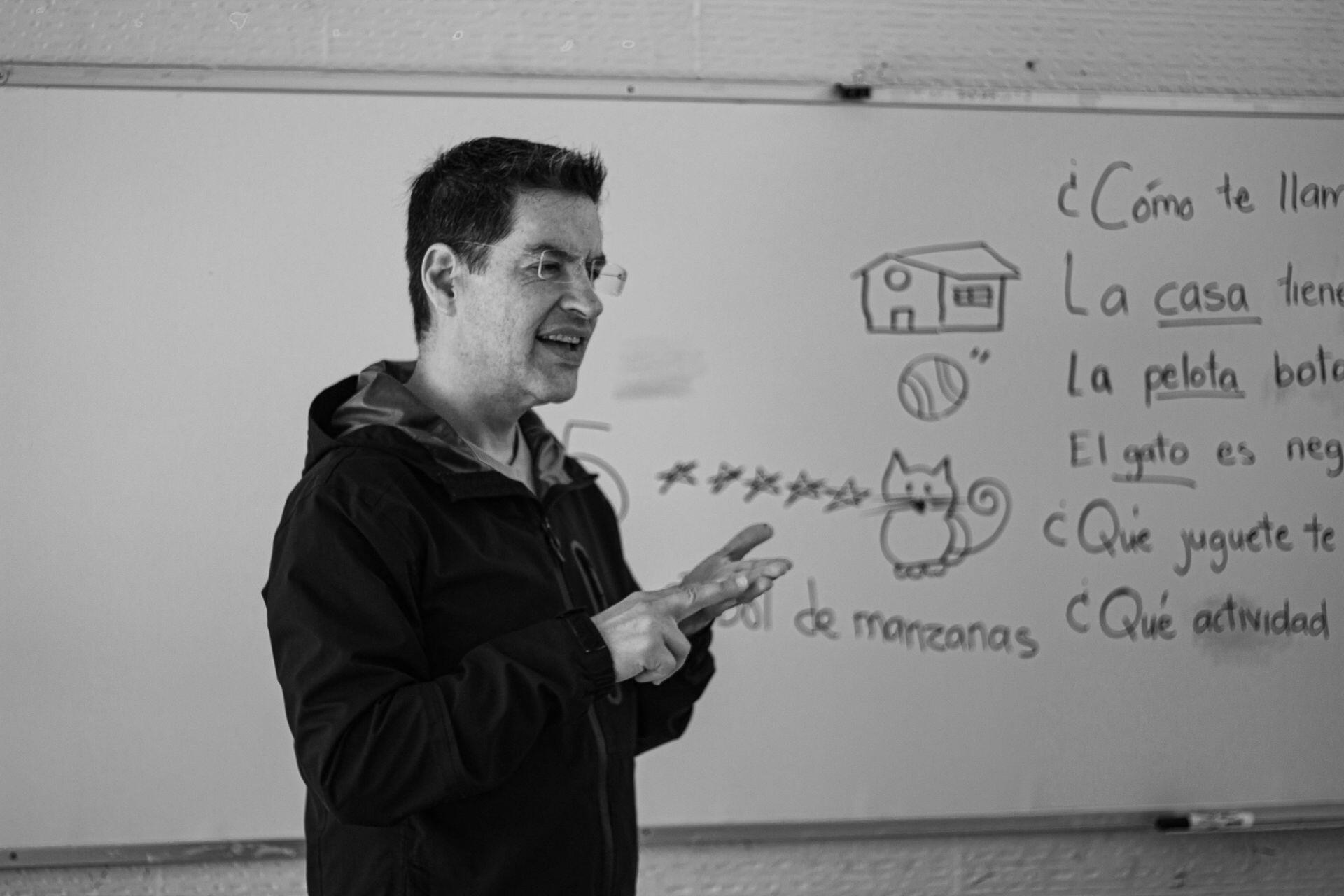
📋What is a Spanish Teaching Certification?
A Spanish teaching certification is a subject-specific qualification that verifies the learner's language proficiency as well as their teaching ability in these areas in terms of teaching methodology, classroom management and overall lesson planning.
Teaching certificates are designed to help future teachers teach Spanish, whereas language proficiency certificates show how well someone speaks Spanish.
In Canada, public school Spanish teachers typically need a provincial teaching certificate and Spanish-language qualifications. University instructors generally do not require a teaching licence.
📌Examples of Popular Spanish Certifications
Aspiring Spanish teachers usually opt for these three certifications depending on where and how they want to teach in Canada.
| Credential | Full name | Main purpose | What it proves | Validity | Best fit |
|---|---|---|---|---|---|
| DADIC | Diploma de Acreditación Docente del Instituto Cervantes | Teaching accreditation for Spanish teachers | Professional teaching competence in ELE | Typically treated as a teaching accreditation rather than a simple language test | Spanish teaching roles, especially private schools, language schools, and adult education |
| DELE | Diploma de Español como Lengua Extranjera | Spanish proficiency diploma | Spanish language proficiency from A1 to C2 | Indefinite / no expiration | Proving Spanish level for work, study, or career development |
| SIELE | Servicio Internacional de Evaluación de la Lengua Española | Digital Spanish proficiency exam | Spanish proficiency through four language skills | 5 years | Fast, flexible proof of Spanish level for jobs, study, or applications |
- If you want a direct teaching-oriented credential as a proof of your teaching skills, choose DADIC2
- If you want a permanent Spanish proficiency diploma to strengthen your profile (beyond public schools), choose DELE3
- If you want a more flexible and digital proficiency that could help with other job applications, choose SIELE
Check out how qualified you are to teach Spanish here.
🎓Pathways to Becoming a Certified Spanish Teacher
After reviewing various Spanish language certificates, let's review the steps to become a certified Spanish teacher in Canada for public schools.
Step 1
Get a university degree, preferably a Spanish-related course and complete a teacher education program (B.Ed. or equivalent)
Step 2
Enroll for additional Spanish language certifications (physical or online)
Step 3
Gain practical teaching experience (required practicum/student teaching placements)
Step 4
Apply for a provincial teaching licence
Step 5
Apply to school boards for Spanish teaching positions
You can also learn how to teach Spanish without any formal education here.
🧑🏫Educational Requirements
Once you graduate from high school and move on to tertiary education, you’ll have to decide on your first Spanish-related undergraduate degree major. The three most common degree options offered are:
BA in Spanish / Spanish Studies
- Strong focus on the Spanish language, literature and linguistics
- Well-suited for those who want to be a secondary school Spanish teacher
BA in Hispanic Studies
- Diverse focus on Spain & Latin America, the country's history, language and culture
- Well-suited for those who want to teach or pursue an overseas career
BA in Modern Languages
- Specialised focus on language acquisition
(Spanish is offered) - Well-suited for those who want to pursue a multilingual education path
Majoring in a language is often an excellent basis for becoming a foreign language teacher. It is a great way to really deepen your knowledge of the language and of Hispanic culture and history, too.
Here's a table showcasing examples of Spanish-related degrees offered by various Canadian universities.
| University | Degree Program | Duration | Focus | Best For | Notes |
|---|---|---|---|---|---|
| University of British Columbia (UBC) | BA in Spanish Studies | 4 years | Spanish language, literature, culture | Secondary school teaching pathway | Strong research and study-abroad options |
| McGill University | BA in Hispanic Studies | 3–4 years | Spanish and Latin American literature/culture | High school teaching and graduate studies | Highly academic, competitive |
| Concordia University | BA in Spanish, Hispanic Cultures and Literatures | 3–4 years | Language, culture, communication | Teaching and applied language careers | Includes practical language training |
| Dalhousie University | BA in Spanish and Latin American Studies | 4 years | Spanish language and regional studies | Teaching and international careers | Includes cultural and political context |
| University of Victoria (UVic) | BA in Hispanic Studies | 4 years | Spanish language, culture, literature | Education pathway and bilingual careers | Strong language immersion focus |
| Bishop’s University | BA in Hispanic Studies | 3–4 years | Spanish language and Hispanic cultures | Teaching and secondary/college preparation | Smaller classes, more personalized learning |
| Mount Allison University | BA in Hispanic Studies | 4 years | Spanish language and Latin American culture | Teaching and general arts careers | Liberal arts-focused learning |
| Concordia University | BA in Modern Languages | 3–4 years | Spanish plus other languages | Flexible teaching pathway | Good if combining multiple languages |
After completing your first degree, you should earn a Bachelor of Education (B.Ed.) and then obtain provincial certification.
Meanwhile, learn more about becoming a Spanish tutor.
🔤Certification Programs and Training
As mentioned earlier, the Instituto Cervantes DADIC (Diploma de Acreditación Docente del Instituto Cervantes) is one of the most recognized professional credentials for teachers who want to teach Spanish as a foreign language.
We highly recommend learners to take the DADIC Autónomo (Autonomous Level) if they have already completed their first degree and education training.
Eligibility
- Candidates aged 18 and above
- Native and non-native Spanish speakers
- Non-native speakers must demonstrate at least B2 Spanish proficiency through DELE or SIELE (C1 is recommended)
Best for candidates who already
- Hold a university degree
- Have basic teacher training
- Have some initial teaching experience
Let's learn more about the DADIC's tested components:
| Assessment Component | Duration | Description | Purpose |
|---|---|---|---|
| Teaching Performance | 60 minutes | Candidates deliver a live Spanish lesson to students based on assigned teaching objectives. A lesson plan is submitted on the day of assessment. | Evaluate practical teaching skills, lesson delivery, classroom management, and instructional decision-making. |
| Interview with Two Examiners | 30 minutes | Candidates discuss and reflect on their teaching decisions, lesson execution, and professional reasoning with examiners. | Assess pedagogical understanding, reflective practice, and ability to justify teaching choices. |
👔Gaining Teaching Experience
The classroom experience from student teaching is really key for your teacher training, and an important time for you personally to consider whether you really want to become a teacher, and what age group and teaching styles are right for you.

This is your chance to try it all out and ask for help and advice from experienced teachers.
You can gain teaching experiences through these avenues:
🌐Online Spanish Teaching Certification Programs
If you are interested in teaching Spanish outside public schools, you can also consider enrolling in an online teacher-training course.
Online courses offer three great benefits:
✅Flexibility
- Study at your own pace and schedule
- Works well for both working adults and students
✅ Accessibility
- No geographical barrier to Spanish teaching training without the need to travel
- Equal access for learners outside Spain or Latin America
✅Affordability
- More cost-effective than a full university program
- Ideal for career changers or part-time learners
👩💻 Notable Online Programs
Two common online programs that many aspiring Spanish teachers take are:
Both programs act as a strong practical online route to prepare candidates for teaching Spanish as a foreign language with different lesson focuses, whether it's for theory and practicum 4 or teaching methodology. 5
| Program | Format | Main Focus | Support Included | Best For | Notes |
|---|---|---|---|---|---|
| LAE Formación Online Tutored Course | Online and semi-presential | ELE teacher training, theory, and practicum | Tutor-guided learning throughout the course | Learners who want a flexible route with supervised practice | Theory is 100% online; practicum may be online, in Madrid, or mixed. |
| Tía Tula Online Teacher Training Courses | Distance learning / online | Teaching techniques, lesson planning, classroom methodology | Weekly tutoring sessions and provided materials | Teachers who want practical methodology and course design skills | Useful for both native and non-native speakers; can be tailored to student needs. |
🌍Certification Requirements by Region
Some of the most common misconceptions that aspiring Spanish teachers have about their certifications include:
- An online Spanish certificate automatically qualifies them to teach everywhere
- A credential like DADIC replaces government teacher licensing
That's usually not the case as requirements depend on where someone intends to teach. Here's an overview of what it takes to become a certified Spanish teacher in different countries.
🗽United States
In the United States, Spanish teachers are typically required to obtain state-issued teaching certification (licensure) in addition to subject knowledge in Spanish.
For example, an aspiring Spanish teacher in America would need to sit for the Praxis Spanish (5195): World Language, answering 81 questions ( test duration is 3 hours). 6
🍁 Canada
In Canada, teaching certification is regulated at the provincial level. The teachers are certified to teach secondary education, with Spanish as an additional subject.
✈️ Europe
The requirements vary significantly across Europe, but one thing remains: getting a teaching licence for public schools. Here's a comparison between Spain and the United Kingdom.
| Requirement | Spain | United Kingdom |
|---|---|---|
| Who regulates teacher certification? | National and regional education authorities | Education authorities by nation: England, Scotland, Wales, and Northern Ireland |
| Typical degree requirement | Bachelor’s degree related to education or the teaching subject | Bachelor’s degree in Spanish, languages, education, or a related field |
| Teacher education required? | Yes | Yes |
| Teaching qualification pathway | Primary: Degree in Education; Secondary: Degree plus a teacher-training master’s | Degree plus a teacher-training route, commonly PGCE, leading toward QTS |
| Teaching licence/certification needed for public schools? | Yes | Usually yes, especially QTS in England for maintained schools |
| Spanish-language test required? | Usually no separate Spanish test for native speakers; qualifications normally demonstrate competency | Usually no separate Spanish exam if subject knowledge is demonstrated through degree/training |
| Practical teaching experience required? | Yes, teaching practice is built into teacher preparation | Yes, school placements form part of teacher training |
| Extra exams / selection | Public school roles may require competitive recruitment examinations (oposiciones) | No national competitive teacher exam equivalent |
| Private language school requirements | More flexible; ELE credentials may be accepted | More flexible; schools may accept language teaching experience and qualifications |
| University teaching | Teaching licence generally not required; advanced academic qualifications expected | Teaching licence generally not required; master’s or doctorate commonly expected |
Learn more about how to teach Spanish without a teaching certificate.
🚀Advancing Your Career as a Certified Spanish Teacher
The journey as a Spanish teacher doesn't stop once you start teaching in a public school or a private school, as language teaching methods will continue to evolve.
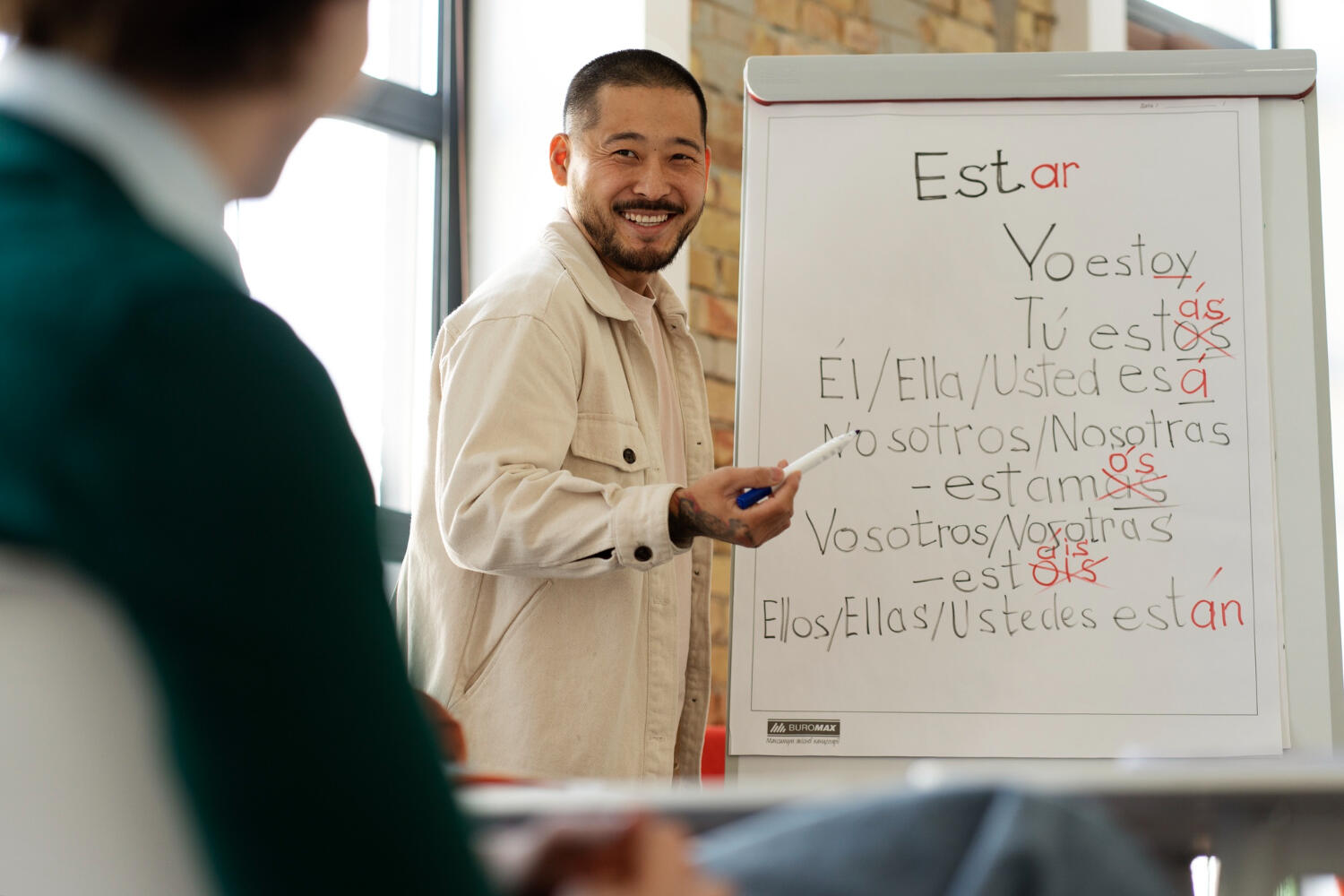
📈Continuing Education and Professional Development
Many Spanish educators often take professional development programs such as advanced degrees (Master’s or even a PhD in Education, Linguistics, or Spanish) or attend physical /online workshops and conferences on language teaching.
For example, aspiring Spanish educators can access courses from Instituto Cervantes, which regularly offers modules that focus on modern teaching approaches and classroom innovation.
🌟Job Opportunities and Career Paths
With the growing global demand for the Spanish language, certified Spanish teachers can work in a wide variety of educational and professional environments.
- Teach Spanish in elementary or secondary schools
- Teach children or adults in language academies
- Work on tutoring platforms like Superprof
- Teach Spanish at colleges or universities
- Teach Spanish to professionals in business settings
We hope you have found this article insightful. Turn your passion for the Spanish language into a meaningful career!
References
- Mantilla, J. R. (2016, January 26). Spanish now second-most-spoken language on the social networks. EL PAÍS English. https://english.elpais.com/elpais/2016/01/25/inenglish/1453724936_013495.html
- Cervantes, I. (2025). Instituto Cervantes Teaching Accreditation Diploma (DADIC). Instituto Cervantes in Sydeny. Cervantes.es. https://sidney.cervantes.es/en/teacher_training/diplomas_DADIC.htm
- SLLLC Programs Resources Instituto Cervantes and the Aula Cervantes. (2023, February 16). Faculty of Arts. https://arts.ucalgary.ca/languages-linguistics-literatures-cultures/spanish/home/programs-and-resources/resources/instituto-cervantes-and-aula-cervantes
- Cursos de LAE Formación - LAE Formacion. (2018, September 13). LAE Formacion. https://laeformacion.com/cursos-de-laeformacion/
- Courses for the Formation of ELE Professors / Teachers of Spanish. (2017). Tiatula.com. https://www.tiatula.com/courses/teachers/spanish.php
- Praxis Spanish: World Language (5195) Practice Test (Example Questions). (2018, December 7). Test Prep Review. https://www.testprepreview.com/praxis-ii/spanish-world-language.htm
Summarize with AI:
Did you like this article? Leave a rating!


 Loading...