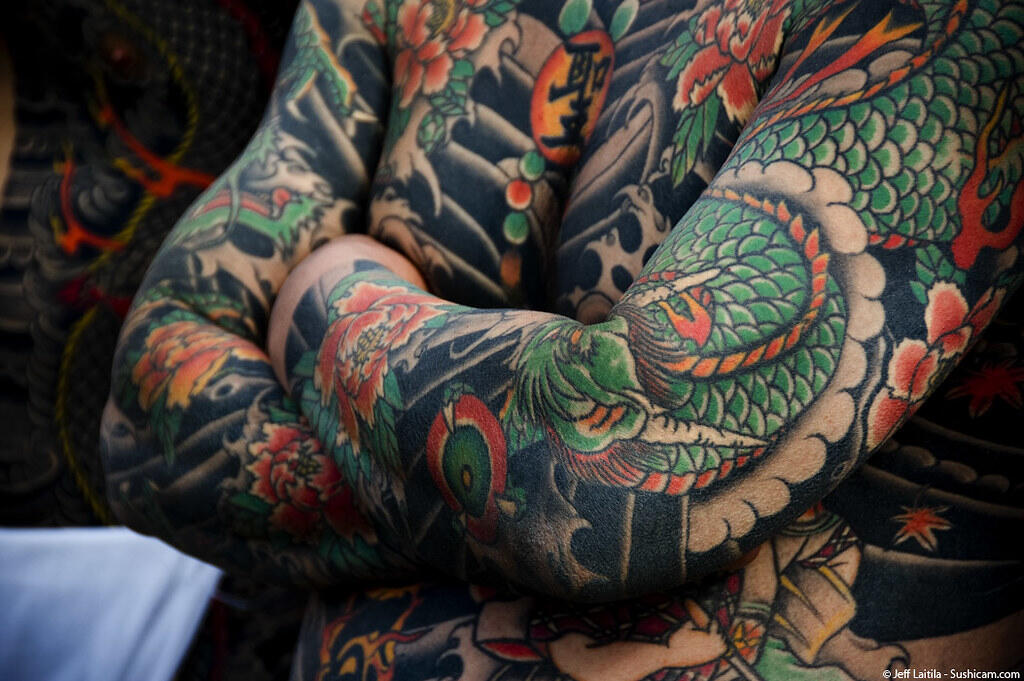

In Japan, tattooing is more than just a form of body art. From ancient traditions and their symbolic role in the yakuza to contemporary art, tattoos have played a complex role in Japanese culture. Although traditional techniques like tebori still exist, attitudes and stigma are gradually changing, and the legal framework has become more flexible.








The Historical Evolution of Japanese Tattoos
The art of tattooing in Japan has a long history and has taken on different meanings over time. The tradition of tattooing in Japan can be traced back to 10,000 BCE. In fact, some of the oldest evidence dates back to the Jomon period, when tattoos are believed to have had spiritual or decorative significance.
This spiritual dimension is also reflected in the traditions of the Ainu, the indigenous people of Hokkaido's northernmost island, who used tattoos as part of their religious and social customs. For example, they would receive their first tattoo as early as age 12 and would continue to get additional tattoos that symbolized maturity and readiness for marriage.
However, tattoos began to be used as a form of punishment around the 5th century, as authorities used them to mark criminals. From then on, tattoos became taboo and a sign of social outcasts, marking the beginning of the enduring stigma surrounding tattoos in Japan.
Various tattoo trends emerged throughout Japan’s history, notably during the Edo Period (1603–1868), when they underwent another transformation and resurfaced as an artistic expression, particularly among the working class and urban populations.
During this time, irezumi, the traditional tattoo style whose designs covered the entire body, became strongly associated with figures such as firefighters, who were seen as symbols of bravery and protection, turning tattoos into marks of pride rather than shame.
However, after the Meiji Restoration, tattoos were completely banned. As Japan opened up to the West, the government sought to protect the country's image.
Despite these restrictions, the art of tattooing did not disappear.
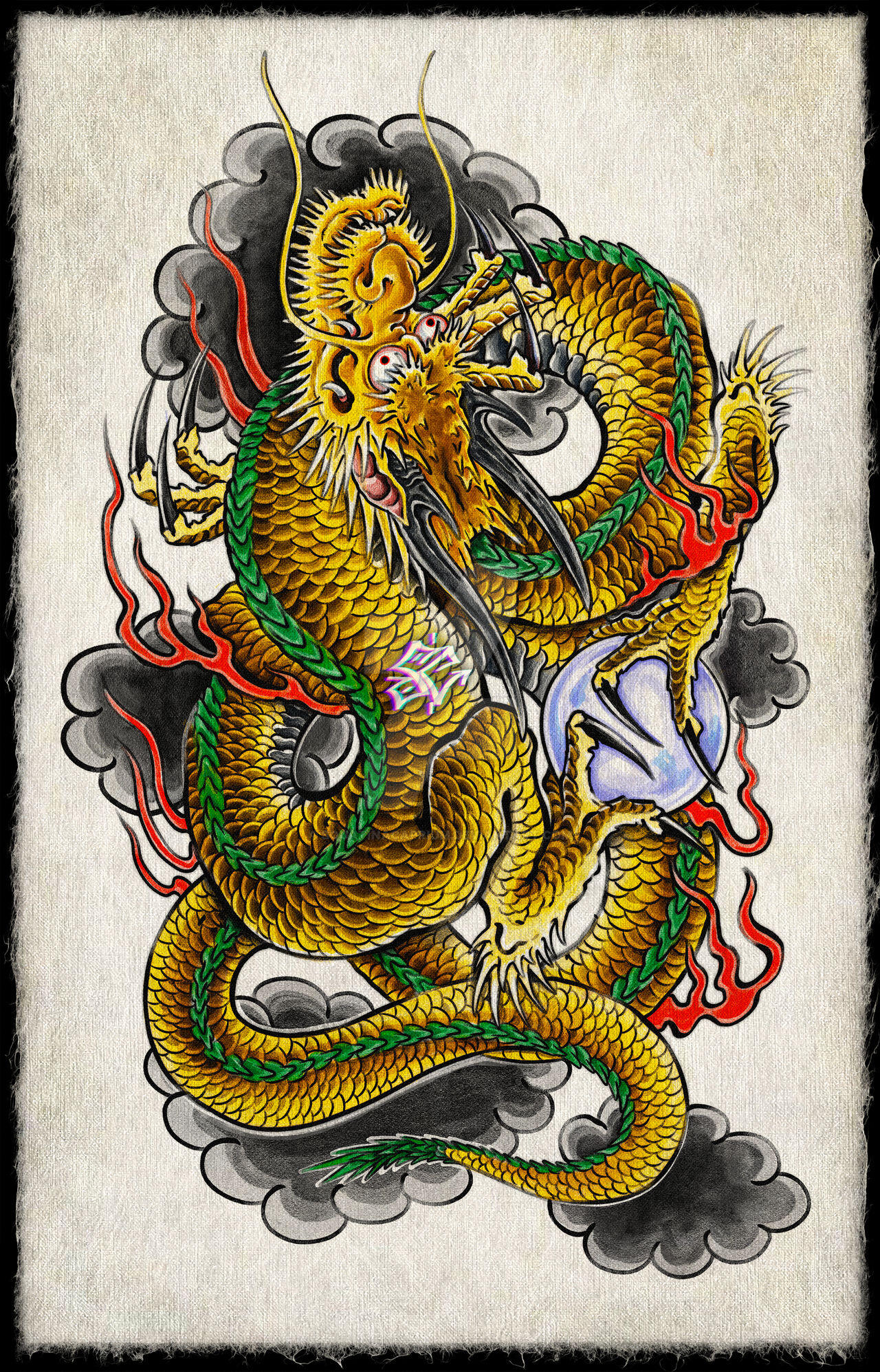
The fact that the names of tattoo artists such as Hori Chiyo (the royal tattooer) reached Europe meant that Japanese tattooing remained admired beyond the country’s borders despite legal and social pressures.
Timeline: The Evolution of Tattooing in Japan
10,000 BCE
Jōmon Period
Early evidence suggests that tattooing existed in prehistoric Japan, likely serving spiritual or decorative purposes.
Before 1868
Indigenous Traditions (Ainu)
Among the Ainu people of Hokkaido, tattoos held deep cultural meaning. They were used in rites of passage, symbolizing maturity, identity, and readiness for marriage.
5th Century
Tattoos as Punishment
Tattoos began to be used by authorities to mark criminals. This shift marked the beginning of the stigma and social taboo surrounding tattoos in Japan.
Edo Period (1603–1868)
Artistic Revival
Tattooing re-emerged as a form of artistic expression, especially among the working class. Irezumi designs became popular. Firefighters and laborers wore them as symbols of bravery, protection, and pride.
Meiji Era (Late 19th Century)
Official Ban
Following the Meiji Restoration, tattoos were banned as Japan sought to modernize and present a more “civilized” image to the West.
Late 19th – Early 20th Century
Global Fascination
Despite the ban, Japanese tattooing gained international attention. Artists like Hori Chiyo became known abroad, helping preserve and spread the art form beyond Japan.
Modern Era
Gradual Change
Today, tattoos in Japan exist in a complex space with growing acceptance, evolving laws, and continued respect.
Would you like to learn more about Japan or get started with your Japanese classes? Find exceptional Japanese lessons near you.
Traditional Techniques: Tebori and Modern Methods
One of the most distinctive aspects of Japanese tattooing is the technique known as Tebori (手彫り), which means “hand-carving.” Unlike modern tattooing, which uses electric tattoo machines, Tebori is performed by hand with a wooden or metal rod bearing needles that deposit ink into the skin.
In contrast to modern tattoo machines, which allow for faster execution and more precise lines, freehand designs result in highly personalized pieces. Beyond the technique itself, Tebori holds cultural significance closely tied to irezumi.
Want to immerse yourself in Japanese culture? Discover authentic Japanese cuisine and its signature dishes.
Cultural Perceptions and Social Implications
Despite their artistic value, tattoos in Japan have long been stigmatized. Even today, modern tattoos are linked to crime and the Japanese mafia due to their historical connection to the yakuza, contributing to their perception as criminal.
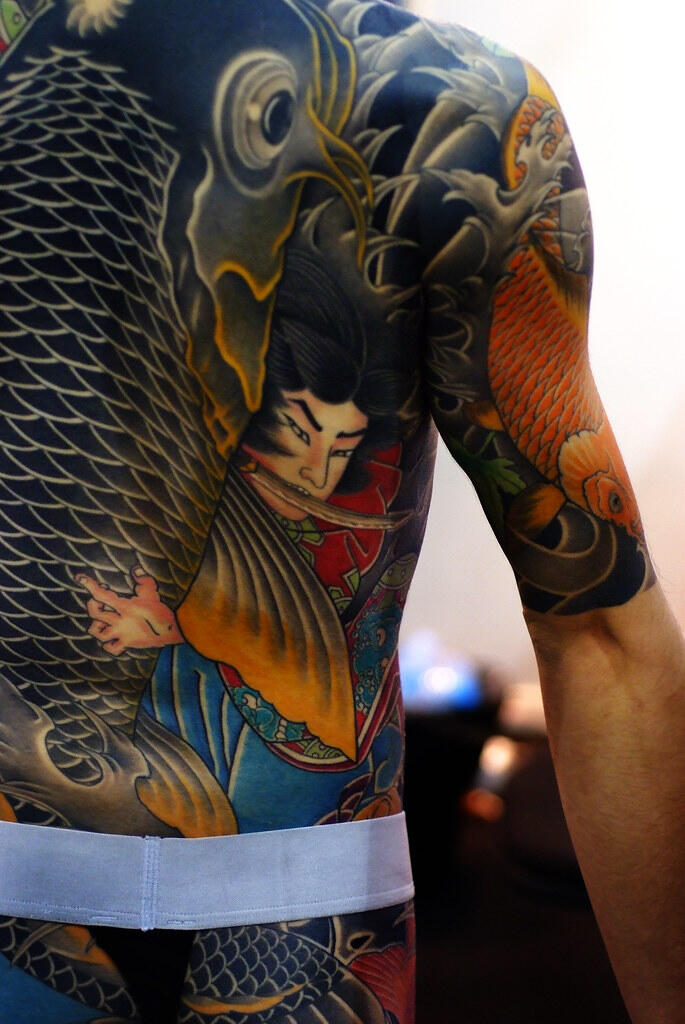
As a result, tattoos have been viewed negatively in professional and shared spaces. Many people choose to conceal their tattoos to avoid discrimination, especially in professional settings.
This stigma also extends to common areas, where visible tattoos can still attract attention or cause discomfort. Some public places, such as onsens (hot springs), reserve the right to refuse entry if you have a large tattoo.
However, the country’s younger generations are breaking away from the stereotype of tattoos as a marker of criminality by popularizing temporary tattoos.
Due to their association with the Yakuza, full-body tattoos in Japan were designed to stay hidden. This led to a distinctive style of tattooing that covers most of the body: arms, chest, back and thighs, while leaving areas like the neck, wrists, ankles and even a strip across the chest intentionally exposed. 1
Interested in learning more about the Japanese mindset? Explore Japan's culture and traditions: history, customs, arts, festivals and the modern influences shaping the country today.
Legal Landscape and Tattooing Practices
The legal status of tattooing in Japan has also been the subject of much debate. For many years, authorities interpreted it as a medical procedure requiring a licensed professional, creating challenges and resulting in heavy fines for tattoo artists.
A significant turning point came with the 2020 ruling by the Japanese Supreme Court on tattoos, which clarified that tattooing is an artistic practice, not a medical one. This allowed tattoo artists to operate legally without needing a medical license.
The Court stated that “Tattoos require artistic skills distinct from medicine, and it cannot be assumed that doctors are the only ones who perform the procedure.”
While this ruling has improved conditions for artists, social perceptions continue to influence how openly is practiced.
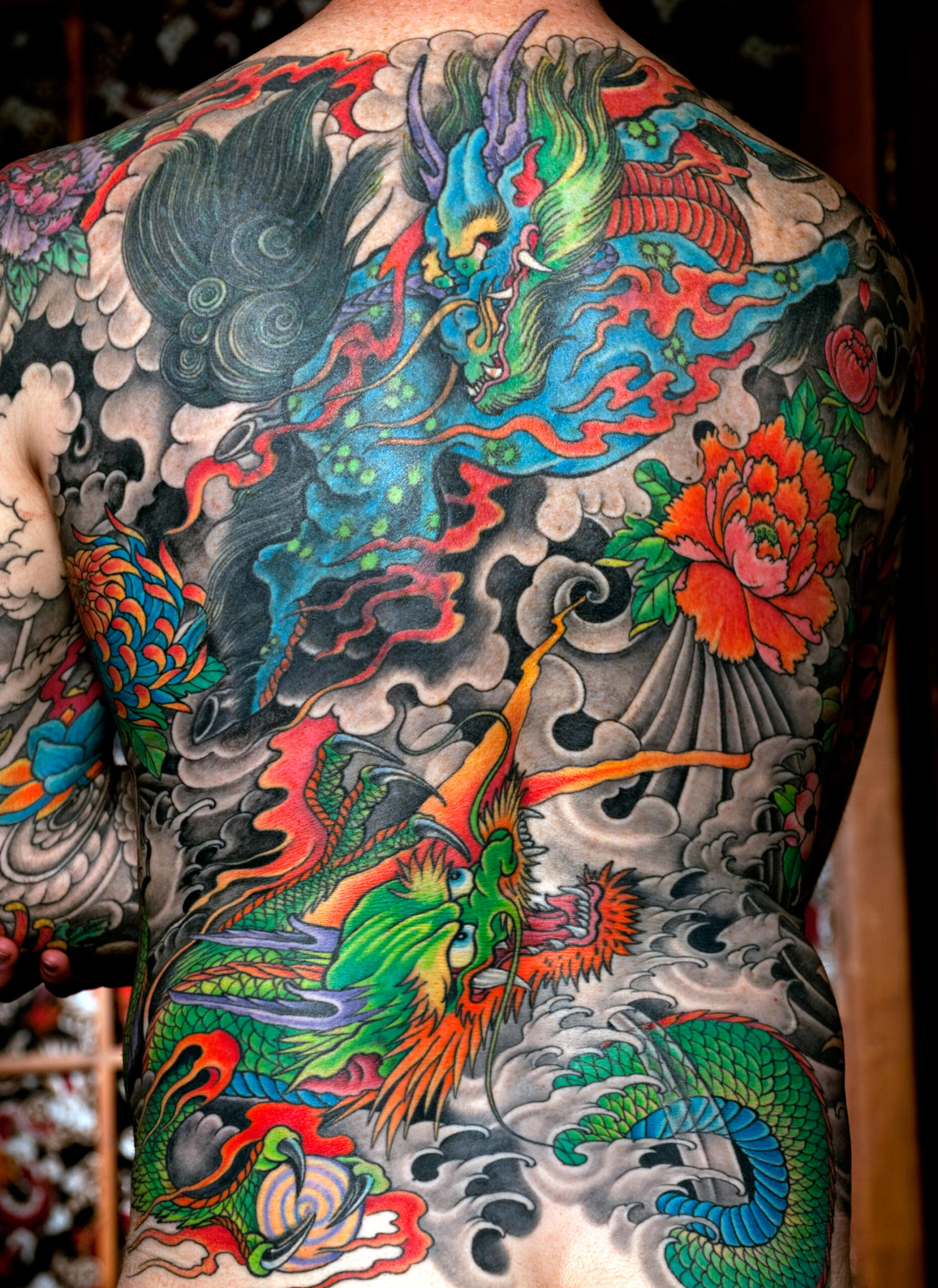
And although people's attitudes are gradually evolving, events such as the Asakusa Sanja Matsuri are among the rare festivals where you will see full-body tattoos.
Despite the social stigma, Japanese tattoo artists are widely respected internationally for the precision and aesthetic of their art. If you want to learn more about Japanese visual arts, discover Japanese anime movies every anime fan should see.
Considerations for Visitors with Tattoos
For visitors to Japan, visible tattoos can still pose challenges in certain spaces. Places such as onsen, gyms, and swimming pools often have policies restricting entry to people with tattoos, largely due to their association with organized crime. Some establishments, such as tattoo-friendly onsen and private baths (kashikiri-buro or kazoku-buro), are more flexible, especially those located in tourist areas.
Although tattoos are legal in Japan, some establishments maintain policies that restrict or prohibit visible tattoos. This is particularly common in:
Onsen and public baths: Traditional onsen prohibit visible tattoos. Policies vary by establishment.
Gyms and fitness centers: Large chains often enforce similar restrictions.
Public swimming pools and water parks: Visitors may be required to cover their tattoos, and in some cases, may even be prohibited from entry.
Beaches and resort complexes: They have occasional restrictions. However, open beaches generally do not enforce them. 2
It is also recommended that people with tattoos traveling to Japan wear long-sleeved clothing, light scarves, or compression sleeves, as covering up is usually the simplest solution. Additionally, it is recommended to use skin-colored, waterproof adhesive patches for smaller tattoos, which are readily available at pharmacies. Staying well-informed is important to avoid unexpected issues, and be sure to mention your tattoos when making reservations.
Begin to explore Japanese Literature through excellent novels and fantastic stories.
Getting a Tattoo in Japan: What to Expect
Even though tattooing without a medical license is now legal in Japan, the industry remains low-profile. Tattoo studios remain discreet due to the profession's negative connotations. Artists often connect with clients through online portfolios or social media, meaning that finding a studio may require some research. Cities like Tokyo, Osaka and Kyoto offer more options, including artists experienced in working with international clients.
Cost Implications
Tattoo prices in Japan vary depending on size, level of detail and technique. But are tattoos in Japan expensive? On average, in major cities like Tokyo or Osaka, sessions cost 15,000-30,000 yen per hour (approximately 135–280 CAD per hour), and many artists set a minimum fee.
Larger tattoos, especially designs that cover the entire back or the entire body, require a significant investment of both time and money. These projects can take dozens of hours spread over several sessions, and total costs can reach hundreds of thousands of yen.
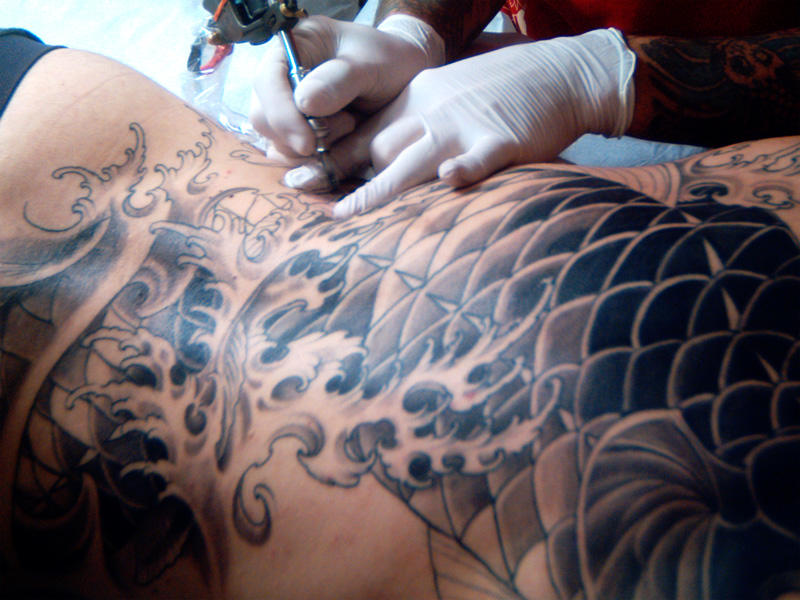
In more traditional cases, such as hand-drawn tebori tattoos within the irezumi tradition, the process could take even longer. Since this method does not involve mechanical equipment and is performed entirely by hand, full-body designs can cost tens of thousands of yen and take years to complete.
Communication and Language Barriers
Language can be a key factor to consider when getting a tattoo in Japan. While some artists speak English, this isn’t always the case, especially in more traditional studios.
To overcome potential barriers, it may be helpful to:
- Prepare visual references of the design you want
- Use simple, clear language or translation apps
- Confirm key details (size, location, price) in advance
Beyond price and technique, the experience of getting a tattoo in Japan is also shaped by cultural expectations. Politeness is essential everywhere in the world, but even more so in Japan. When talking to a Japanese tattoo artist, foreigners should remember to be very polite and humble; that will go a long way, especially if you’re looking for a large tattoo, since you’ll have to spend a lot of time with the artist.
Quick Quiz: What is one reason tattoos can still be restricted in places like onsens? 🏯
References
- Irezumi’s Connection to Crime · Irezumi: Tradition and Criminality · Japanese Visual Culture. (n.d.). https://japanesevisualculture.ace.fordham.edu/exhibits/show/irezumi_tradition_and_criminal/irezumi_criminality#:~:text=The%20Yakuza%20have%20used%20tattoos,with%20ink%20to%20identify%20them.
- A guide to visiting Japan with tattoos. (n.d.). JRPass.com. https://www.jrpass.com/blog/a-guide-to-visiting-japan-with-tattoos
Summarize with AI:
Did you like this article? Leave a rating!


 Loading...