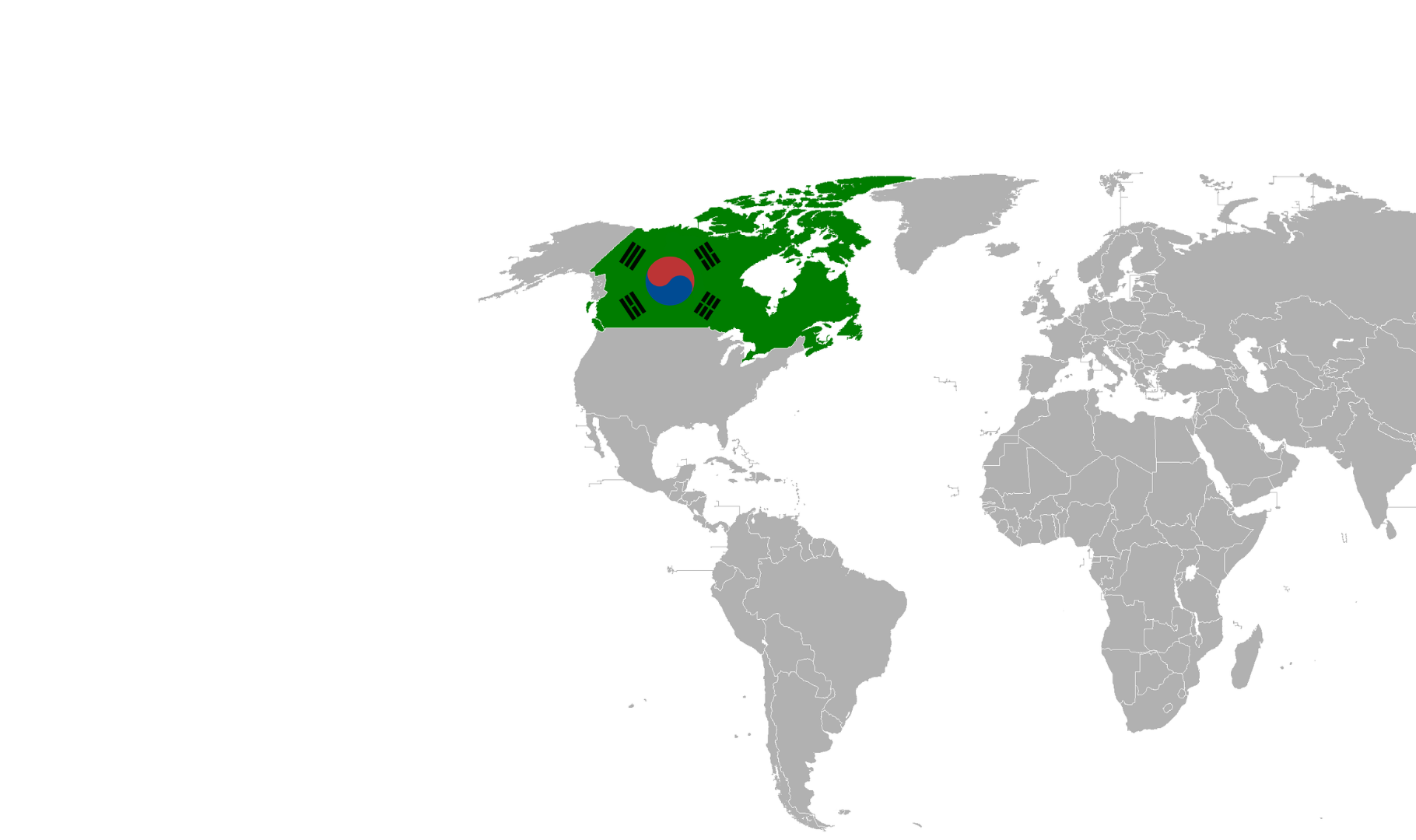

Learning a new language is always fun. It is fascinating to get to know the Korean language and the kind of experiences you will encounter. Immersing yourself in Korean can sometimes be difficult for Canadians, but it is worth it.
As more people worldwide pay attention to Korean pop music, drama, and everything Korean, more Canadians desire to learn the Korean language.
This guide will give you the basics of starting Korean and the direction to take if you want to master the language.



What is the first thing you should learn in Korean?
If you are beginning your training in Korean, the first thing to look at is the Korean alphabet, called Hangul.
Hangul writing is logical and scientific, hence making it easy to learn.
The essential elements are 14 consonants and 10 vowels used to read and make syllables.
Learning Hangul will provide a strong foundation, allowing you to read and write in Korean, making further learning much more manageable.
Another critical point is that it is crucial to understand the basic structure of Korean sentences, which typically follow a Subject-Object-Verb (SOV) order.
Korean sentences can be far more different from English; English uses the Subject-Verb-Object presentation format.
It is recommended that students start learning from these basics to avoid confusion and to have proper guidelines for improving their learning.
Hangul's Consonants and Vowel Systems
Hangul, the Korean alphabet, is considered one of the most progressive alphabet systems in the contemporary world. It was developed in the 15th century by King Sejong the Great, the fourth king of the Chosun dynasty. This alphabet was designed for simplicity and proficiency.
This alphabet contains four groups of letters:
- The basic consonants (14 items)
- The basic vowels (10 items)
- The complex consonants
- The complex vowels
The modern Korean alphabet of Hangul is also phonetic precisely because each elective character in the system stands for a sound.
The korean writing system is based on combining consonants and vowels to form syllables. For instance, when writing the syllable "한," illustrates a combination of the consonant ㅎ (h), then the vowel ㅏ(a) then the consonant ㄴ (n).
Understanding these building blocks is essential for effectively reading and writing Korean. Explore advanced Korean writing techniques for a deeper look at the Hangul writing system and tips on mastering it.
The sentence structure in Korean also plays a significant role in learning the language. Unlike English, Korean sentences often end with verbs, and the word order can be flexible due to the use of particles that indicate the grammatical roles of words. This flexibility allows for a more nuanced expression of ideas.
Superprof offers personalized Korean language lessons with experienced tutors for Canadians who want to start learning Korean. These tailored lessons can help you grasp the fundamentals quickly and effectively.
What is the fundamental structure of Korean Grammar?
Korean Grammar is known for its logical and systematic nature. One fundamental aspect is using particles attached to words to indicate their grammatical function in a sentence.
These particles are crucial for understanding the relationship between different sentence parts. Our guide on essential Korean grammar tips provides practical tips on mastering Korean Grammar and making your learning experience more efficient.
Another vital feature is the use of honorifics, which reflect the level of respect and social order between speakers.
It poses some difficulty in Korean Grammar, as verbs and sometimes nouns transform depending on the level of politeness demanded in a particular situation.
The syntactic structure applied for Korean is Subject-Object-Verb (SOV). In this case, the verb arrives at the end of the sentence, which tends to confuse English-speaking people in the initial stages.
After all that has been said, it is easy to do once familiar with this structure.

What are the grammar rules in Korean?
Korean grammar rules are systematic and consistent, which makes them relatively easy to learn once you understand the basics.
The language uses various tenses to indicate time, with specific verb endings for past, present, and future tenses.
- Past Tense: To form the past tense, you typically add "-았어요" (for verbs with an "ㅏ" or "ㅗ" vowel) or "-었어요" (for all other vowels) to the verb stem.
- Present Tense: The present tense is formed by adding "-아요" or "-어요" to the verb stem.
- Future Tense: The future tense is indicated by adding "-겠어요" to the verb stem.
In addition to tense, Koreans also use particles to mark subjects, objects, and other grammatical elements. The subject marker "-이/가/" and the object marker "-을/를/" are fundamental to understanding sentence structure.
Politeness Levels and Special Forms
Korean verbs change based on the level of politeness and the context of the conversation.
There are three main politeness levels:
- Informal polite (반말),
- Formal polite (존댓말),
- Honorific polite (높임말).
Informal polite endings are used with friends or younger people, typically adding "-아" (a) or "-어" (eo). Formal polite endings, used in most everyday interactions, add "-아요" (a-yo) or "-어요" (eo-yo). Honorific polite endings, used to show great respect, add "-십니다" (sib-ni-da) or "-으십니다" (eu-sib-ni-da).
Additionally, Korean verbs have specific forms such as negation ("-지 않다" for "not doing something"), imperative forms for commands ("-세요" for formal commands), and prohibitive forms for prohibitions ("-지 마세요" for formal bans).
Is Learning Korean Easy for English Speakers?
Learning the Korean language can be challenging, especially for those from an English-speaking background, as there are differences in Grammar, sentence structures, and intonation.
Several aspects can facilitate the learning process. For instance, Hangul's logical structure makes reading and writing straightforward once you understand the basics.
Some helpful advice that people, especially English speakers, are fond of giving is to try to become a 'Korean' in every sense. It must be noted that experiencing the Korean language through watching Korean dramas, listening to K-pop, and even talking to native Koreans can be very helpful in one's learning process.
Language learning apps related to vocabulary and grammar can be helpful.
This encouraging article on language learning success stories brings more information and advice from English-speaking people who managed to learn Korean.
Enrolling in Korean language lessons through Superprof is in your best interest. There, you can find professionals with adequate experience who can offer lessons based on your learning progress.
What is the key to learning Korean?
The key to learning Korean is a combination of dedication, consistency, and intelligent study techniques. Here are some detailed strategies to help you on your journey:
Daily Practice
Consistency is key. As was written earlier, try to use Korean daily, even for only fifteen minutes. This serves as a revision because it keeps you in touch with the language you have learned in case you did not attend class.
Engage with Native Content
surround yourself in Korean through various media. You must spend a lot of time listening to Korean through multiple sources. It would help if you watched Korean dramas, listened to Korean music (K-pop), followed Korean YouTube, and read the news in Korean.
It will assist you in developing good listening skills and expose you to the common language and culture.

Use Language Learning Apps
Only use applications meant for language learning, such as Duolingo, Memrise, or Anki. These provide scripted lessons, use the spacing method, and have practice activities that help build vocabulary and grammar proficiency.
Speak Regularly
Try to talk more and more, as sometimes it helps build confidence. Scan the groups, look for language exchanges, join the Korean conversation groups, or find a tutor. Speaking thus assists in breaking the barriers of fluency and confidence.
Study Grammar Systematically
Korean Grammar can be different from English. Invest time in understanding sentence structures, verb conjugations, and honorifics.
To establish an excellent grammatical background, try using grammar books or, better yet, online grammar courses.
Expand Your Vocabulary
When learning new words daily, use your new word for the day in a sentence. Highlight the words and phrases that are most frequently used before proceeding to more complex terms. Completing the flashcards and using vocabulary applications is beneficial as well.
Write Regularly
You can use Korean in any form, such as writinga diary, essays, or even a message to a friend.
Doing this will sharpen your grammar, vocabulary, and, most importantly, sentence construction.
Cultural Immersion
Learning the Korean language can be easier if you are interested in Korean culture or have some background information about its history. Attend some Korean cultural shows, taste Korean food, and learn more about Korea.
For personalized guidance and structured learning, consider using services like Superprof, where you can find experienced Korean language tutors in Canada. They can tailor lessons to your needs and help you stay motivated and on track.
멈추지 말고 계속 해나가기만 한다면 늦어도 상관없다.
It does not matter how slowly you go as long as you do not stop.
Korean and Japanese: Comparing the Differences
Although Korean and Japanese are somewhat related in how they form their sentences and use particles, they are two different languages that use different writing systems, and most of the words are different.
Koreans use Hangul, an alphabetic script, while Japanese use combinations of Kanji, which are said to be logographic characters, and Hiragana and Katakana, which are said to be syllabic scripts.
It becomes a question of similarities and differences between the two languages and how understanding one language can be helpful when learning the other of the two languages; is Korean and Japanese different or not?
One similarity that can be helpful for learners is the SOV sentence structure, which both languages share.
There is a relationship between the two languages; each can be understood better if you know the other. However, the pronunciation and vocabulary are quite different, so mastering one language doesn't guarantee proficiency in the other.
Wrap up
Learning Korean in Canada can be a fulfilling and enriching experience.
You can make considerable progress by starting with the basics of Hangul, understanding fundamental grammar structures, and immersing yourself in Korean culture.
Remember that consistency and practice are essential, and don't hesitate to use resources and communities to support your learning journey.
Whether you're motivated by a love of Korean dramas, music, or culture, mastering Korean can open up opportunities. Reading vocabulary and basic words will have a great impact on your learning journey. Learn and study regularly.
To further enhance your learning experience, consider leveraging the services offered by Superprof. With their wide range of experienced Korean language tutors in Canada, you can find the perfect match to guide you through your language learning journey.
Summarize with AI:
Did you like this article? Leave a rating!


 Loading...