
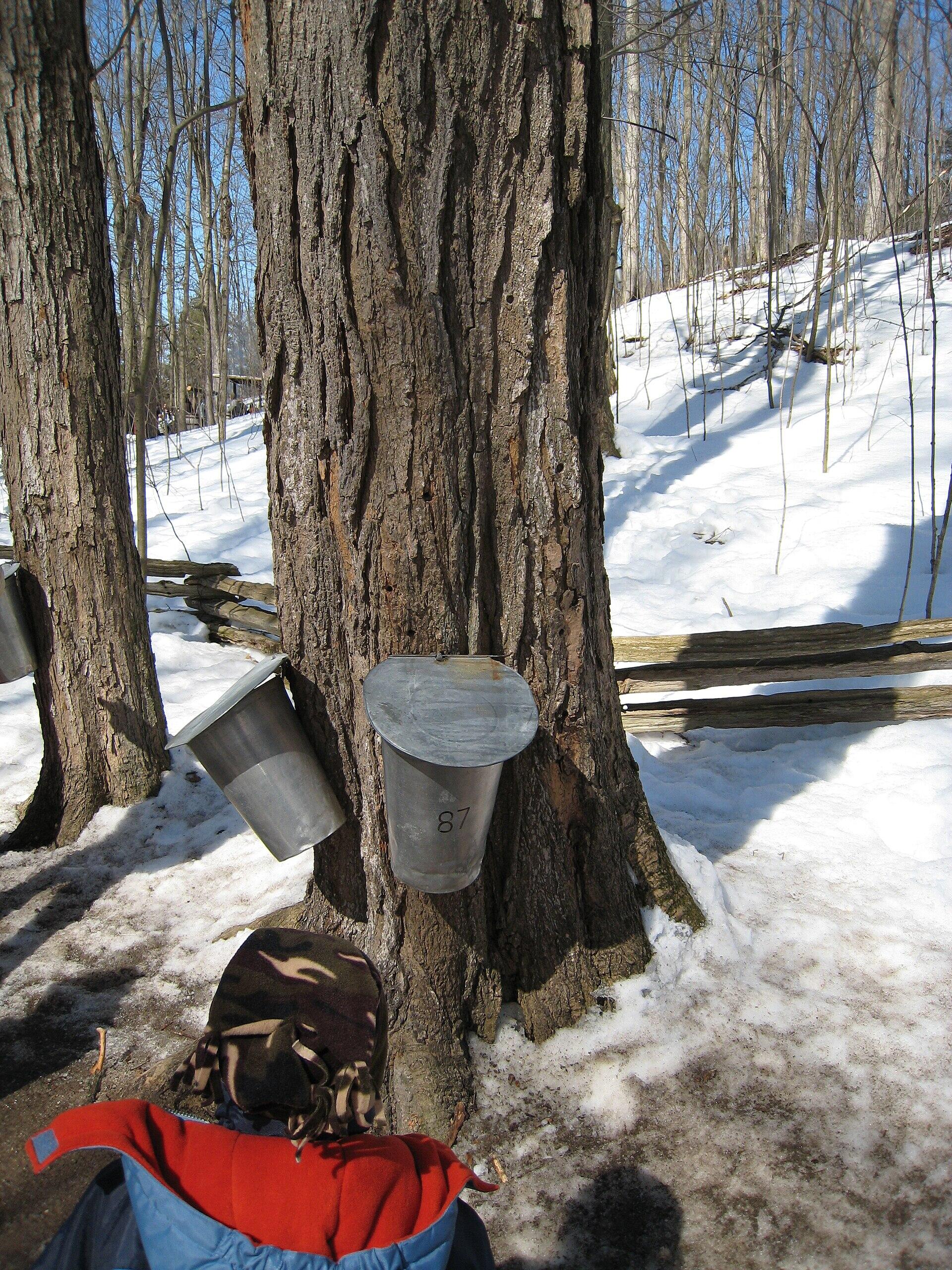

Maple syrup starts with something that looks nothing like the thick, sweet product on a breakfast table. Fresh maple sap is a clear, watery liquid containing only a small amount of naturally occurring sugar. Producers collect that sap during a short period when winter temperatures give way to spring, then concentrate it by removing water. The result is pure maple syrup with its distinctive sweetness, colour and flavour.
| Stage | What happens | What changes |
|---|---|---|
| 🌳 1. Sap develops | Maple trees respond to spring freeze-thaw conditions and sap begins flowing | Stored tree energy becomes accessible in the sap |
| 🪣 2. Sap is collected | Producers tap suitable trees and capture the flowing sap | Sap moves from the tree into a controlled collection system |
| 🚚 3. Sap is transported | Fresh sap is moved from the trees to the processing area | Cleanliness and freshness become priorities |
| 🔥 4. Water is removed | Sap is heated in an evaporator and water leaves as steam | Dilute sap becomes increasingly concentrated |
| 🧪 5. Syrup is finished | Producers check sugar concentration and stop evaporation at the correct point | The liquid reaches the density required for maple syrup |
| 🧺 6. Syrup is filtered | Hot syrup passes through filters to remove sugar sand and other particles | The syrup becomes clear and free of sediment |
| 🍁 7. Syrup is graded | Colour, flavour and other characteristics are assessed | The finished syrup is classified according to its characteristics |
| 🫙 8. Syrup is bottled | Finished syrup is packaged in suitable containers | Concentrated maple sap becomes the bottled product consumers buy |
Understanding how maple syrup is made means following that transformation from the living tree through tapping, collection, evaporation, filtration, grading and bottling. Each stage matters because the quality of the finished syrup depends on what happens long before it reaches a bottle.


🍁 Why Maple Trees Produce Sap Worth Collecting
Maple trees store energy in their roots and wood over winter, including carbohydrates that will support new growth in spring. When temperatures fluctuate around freezing, pressure changes inside the tree help move sap through the trunk and branches. This creates the brief flow that maple producers depend on.
Fresh maple sap:
- Approximately 98% water
- Approximately 2% sugar and other dissolved compounds
Finished maple syrup:
- Approximately 33% water
- Approximately 67% sugar
Fresh sap is mostly water. Sugar maple sap is commonly around 98% water with roughly 2% sugar, although the exact concentration varies between trees, species and conditions. That means the syrup is created primarily by concentrating what is already in the sap, rather than by adding sugar or another sweetener.
The enormous difference between those two liquids explains why maple syrup production requires so much evaporation. A producer has to remove most of the original water while retaining the characteristic maple flavour.
The Short Spring Window for Sap Flow
The timing of sap flow is one of the most important factors in production. Cold nights followed by warmer daytime temperatures create conditions that encourage sap to move. When temperatures remain consistently below freezing, useful sap flow stops. When spring becomes too warm and the tree progresses towards bud break, the desirable production period also comes to an end.
Winter dormancy
The tree remains dormant and useful sap flow is limited.
Freeze-thaw conditions
Cold nights and warmer days create pressure changes that encourage sap movement.
Active sap flow
Producers collect sap while the weather continues to produce suitable conditions.
Spring growth begins
As buds develop, the character of the sap changes and the production window closes.
This is why the maple syrup season cannot be reduced to one universal date. Producers need to respond to local weather and the condition of their trees rather than simply following a calendar.
Which Maple Trees Can Be Tapped
Sugar maple is particularly valued for syrup production because its sap tends to contain a relatively high concentration of sugar. Other maple species, including red maple, black maple and silver maple, can also be used under suitable conditions, although their sap characteristics and seasonal behaviour can differ.
| Maple species | Syrup potential | Important consideration |
|---|---|---|
| Sugar maple | Excellent | High average sap sugar concentration |
| Black maple | Excellent | Closely related to sugar maple |
| Red maple | Good | Different seasonal characteristics |
| Silver maple | Possible | Often produces lower-sugar sap |
Tree health and size are just as important as species. Producers generally select healthy trees of an appropriate diameter and avoid tapping trees that are stressed, damaged or otherwise unsuitable.
Tapping is intended to be a carefully managed intervention, not a large wound through the trunk. When appropriate tapping practices are followed, a healthy tree can recover from the small tap hole while continuing to grow.
🪣 How Is Maple Syrup Made Step by Step? Tapping and Collecting Sap
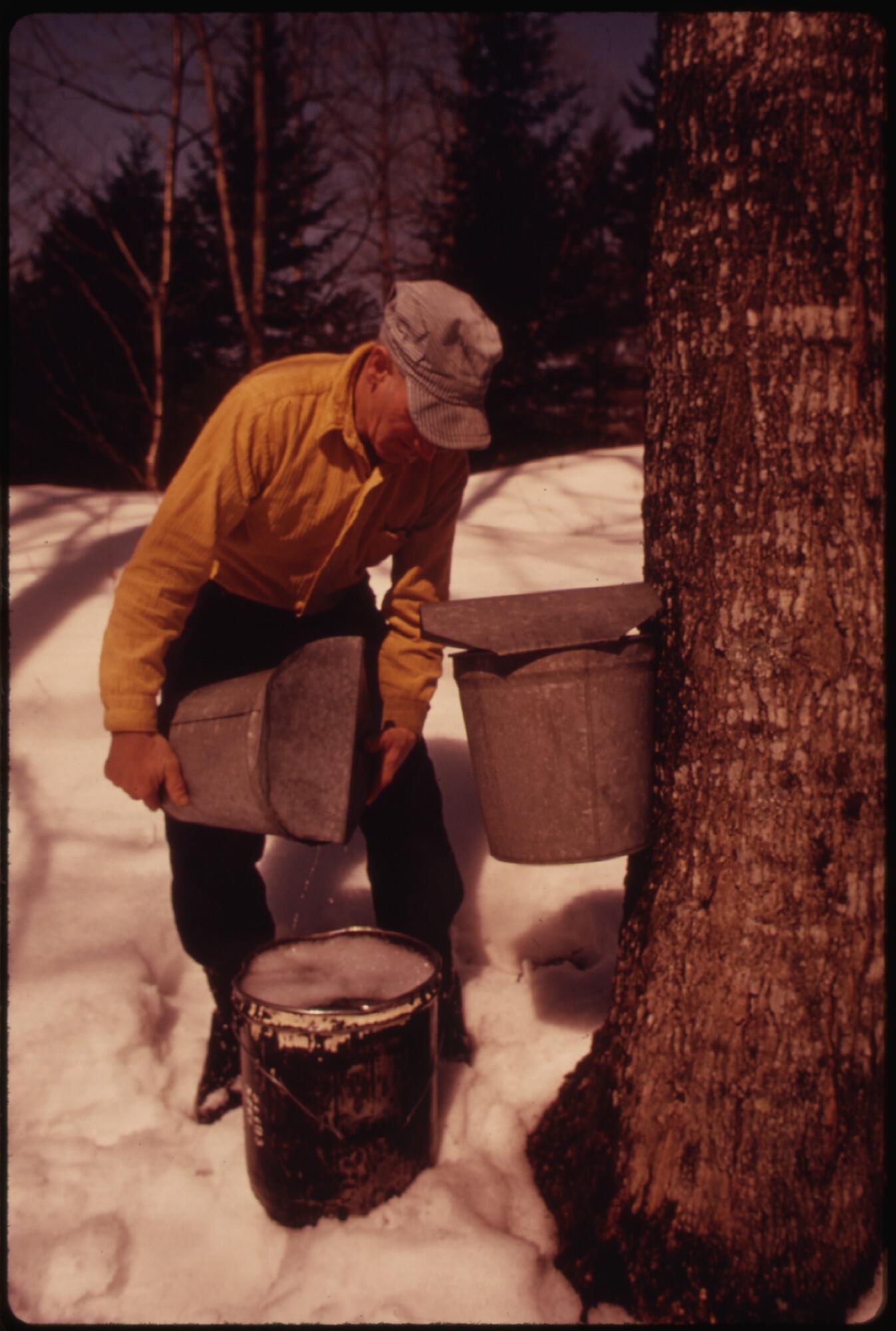
The first physical step in how is maple syrup made step by step is creating a small opening into the tree's sapwood. A producer inserts a spile, also called a spout, which provides a controlled route for sap to leave the tree.
Syrup Collection Process
- Select a suitable tree
- Drill the tap hole
- Insert the spile
- Collect flowing sap
- Transfer sap to storage
- Move sap to the sugarhouse
- Begin processing
The collection system can be remarkably simple or highly sophisticated, but the underlying process remains the same. Sap has to move from the tree into a clean container and then towards processing without becoming contaminated or excessively warm.
The technology used for collection has changed considerably over time. Modern systems can move sap over substantial distances and reduce the amount of manual collection required, but they do not change the basic ingredient or the fundamental production process.
Drilling the Tap Hole and Setting the Spout
A tap hole is deliberately small and carefully positioned. Producers use appropriate drill bits and depths for their equipment rather than drilling deeply into the trunk. The spile is then fitted securely so that sap can flow into the collection system.
Responsible tapping involves:
- Choosing a healthy, suitably sized tree
- Using clean, appropriate equipment
- Keeping the tap hole small and controlled
- Avoiding previous tap holes
- Removing the spile after the production season
The location of future tap holes is managed as well. Producers avoid simply returning to exactly the same place year after year, giving the tree time to compartmentalise and recover from previous tapping.
Buckets, Bags and Modern Tubing
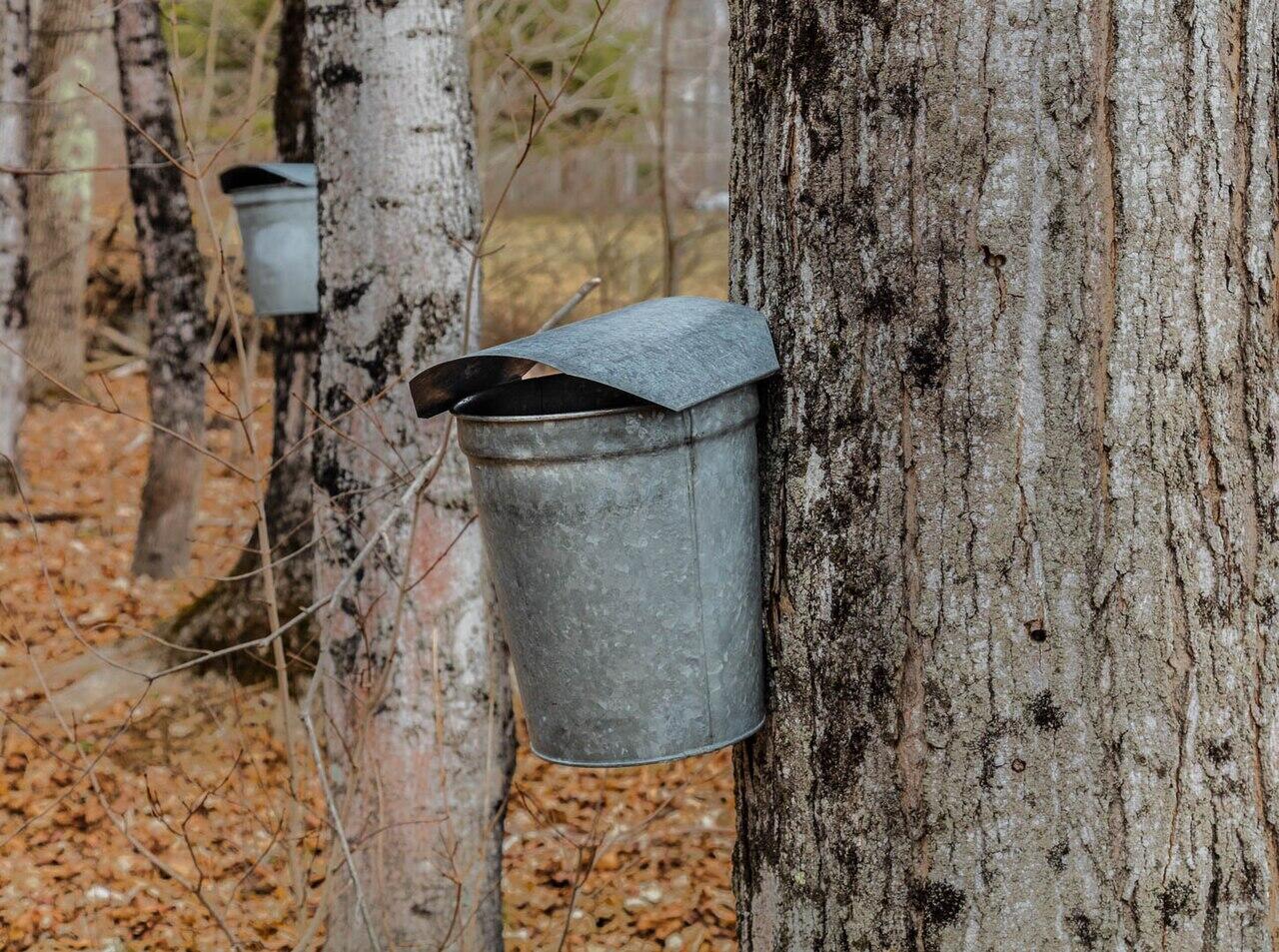
Traditional bucket collection is easy to understand: sap flows through the spile and into a container attached to the tree. Bags can perform a similar function while providing a lightweight collection option.
| System | How it works | Main advantage |
|---|---|---|
| Bucket | Sap flows directly into a container | Simple and traditional |
| Bag | Sap collects in a flexible container | Lightweight collection |
| Tubing | Lines connect multiple trees | Efficient transport |
| Vacuum tubing | Vacuum assists sap movement | Can increase collection efficiency |
Tubing is particularly valuable in larger sugar bushes because producers do not have to empty hundreds or thousands of individual containers. Vacuum-assisted systems can further increase sap collection under appropriate conditions.
💧 Moving and Protecting Fresh Sap
Fresh sap is a food product, so collection is followed by another important stage: keeping the raw material clean and in good condition until it can be processed. Bark, insects, leaves and other field debris need to be kept out of the collection system as much as possible.
Clean collection
Food-safe containers and clean equipment reduce contamination.
Cool storage
Lower temperatures help slow unwanted microbial activity.
Prompt processing
Moving sap towards the evaporator quickly helps protect freshness and flavour.
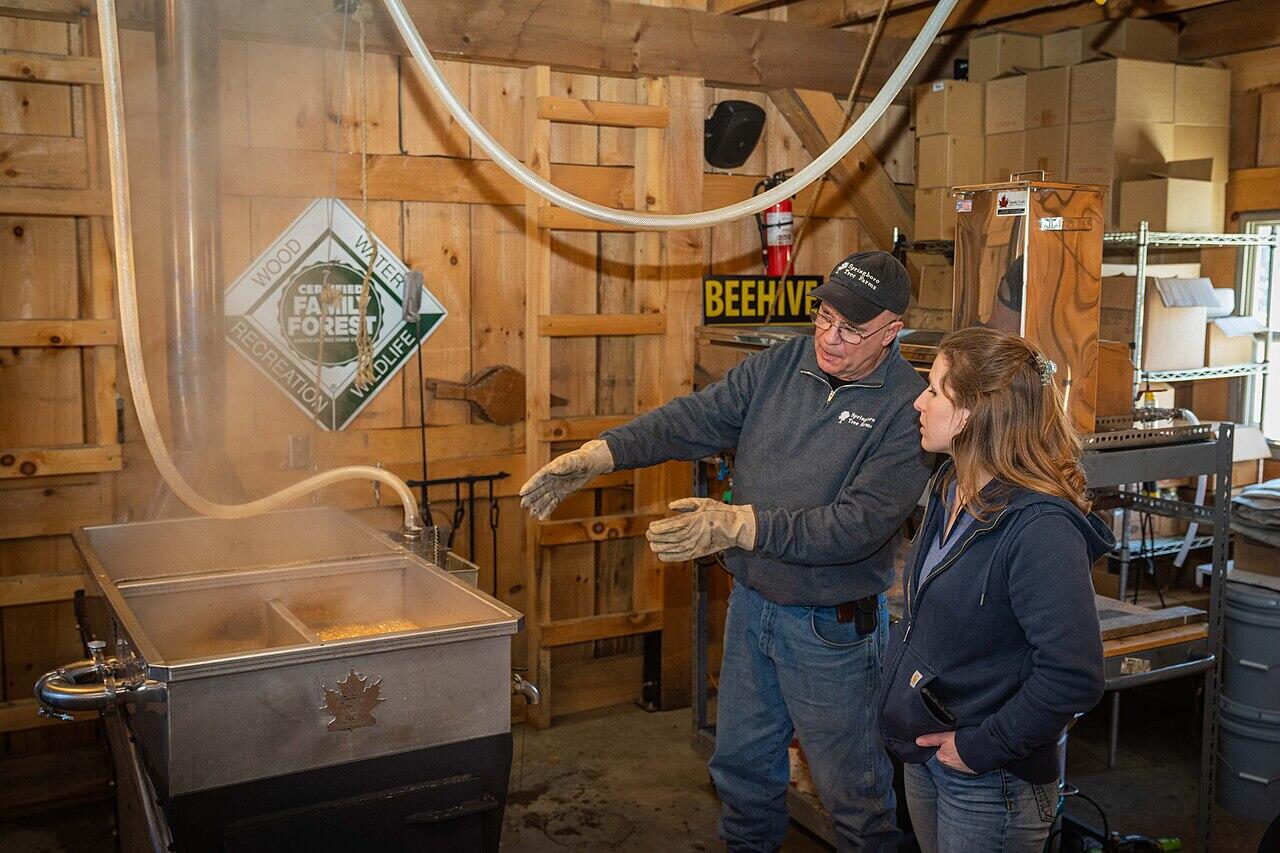
This stage is easy to overlook because the sap still looks like ordinary water. However, fresh sap can deteriorate, particularly when temperatures rise. Good production therefore treats sap handling as part of food-quality control rather than simply transport.
The goal before boiling is to keep sap clean, cool and fresh from the moment it leaves the tree until it reaches the processing equipment. That is especially important during a strong sap run, when large volumes may arrive at the sugarhouse in a short period. Storage and processing capacity need to be sufficient to handle that influx.
Learn more about the technical terms for these equipment pieces and other language used at a sugar shack .
Filtering Out Bark and Field Debris
Sap is filtered before boiling to remove obvious material that entered during collection. This preliminary filtration protects the processing system and gives the producer cleaner raw material to work with.
Before boiling:
Remove bark, insects, leaves and other field debris.
After boiling:
Remove sugar sand and other particles created or concentrated during evaporation.
These are separate jobs. Filtering dirty field sap does not replace the final filtration needed after evaporation. Keeping the two stages distinct helps produce a cleaner finished syrup.
Why Sap Must Be Processed Quickly
Fresh sap does not remain stable indefinitely. Microbial activity can begin during storage and can eventually affect both flavour and processing quality. Warm conditions make careful handling particularly important.
Gutenberg Block: Warning Box
Sap stored in warmer conditions can deteriorate more rapidly. Producers therefore monitor storage conditions and avoid treating fresh sap as something that can simply sit around until convenient.
Prompt processing preserves the characteristics that producers want from the original sap. The objective is to have the evaporator concentrating fresh, clean material rather than trying to rescue sap that has already developed undesirable characteristics.
🔥 How Is Maple Syrup Made? Boiling Sap Into Syrup
The evaporator is where the greatest physical change occurs. Heat causes water in the sap to evaporate as steam, progressively increasing the concentration of sugar and other dissolved compounds.
Gutenberg Block: Count Up
Approximately 40 litres of sap = 1 litre of maple syrup
The exact ratio of sap to syrup varies because sap does not always contain the same amount of sugar. Higher-sugar sap requires less water to be removed than lower-sugar sap.
Evaporation therefore needs to be controlled. The producer is trying to remove enough water to reach the correct syrup concentration without scorching the increasingly concentrated liquid.
Removing Water in the Evaporator
The evaporator uses heat and a large surface area to turn water into steam efficiently. As the sap moves through the equipment, it becomes progressively more concentrated.
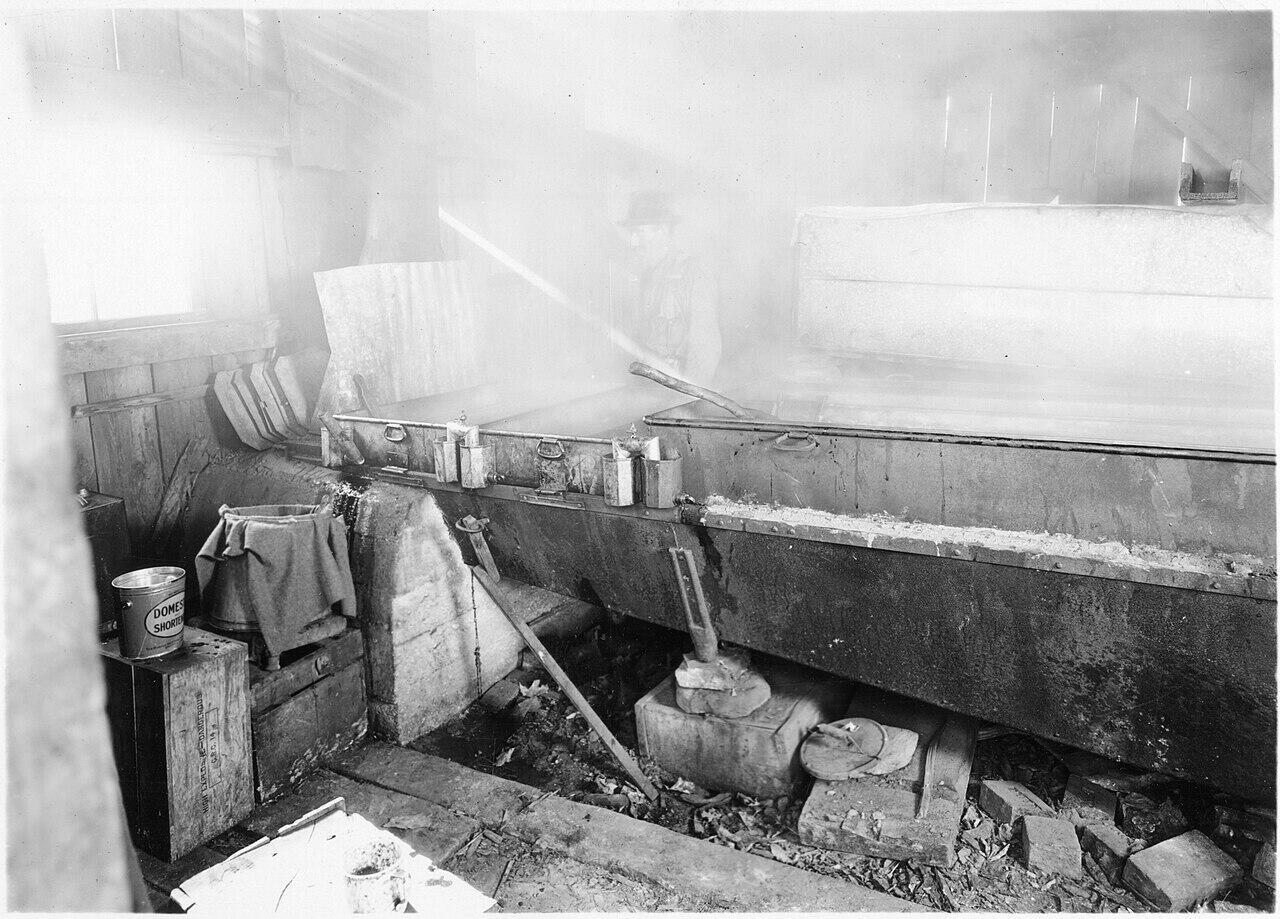
Some modern commercial operations use technologies such as reverse osmosis before boiling. This can remove a significant proportion of water from the sap before it reaches the evaporator, reducing the amount of energy needed for the final concentration.
The principle remains unchanged: water is removed while the maple compounds become increasingly concentrated.
Knowing When the Syrup Is Finished
A producer cannot simply stop boiling when the liquid looks thick enough. The finished syrup needs to reach the correct sugar concentration, so professional producers use instruments such as hydrometers or refractometers.
Canada Grade A maple syrup:
Minimum soluble solids: 66%
Maximum soluble solids: 68.9%
Measurement is made at the specified reference temperature using appropriate equipment.
If syrup is under-concentrated, it contains too much water. If it is concentrated excessively, it can become too thick and may be more prone to crystallisation. Colour alone cannot tell a producer whether the syrup has reached the correct density.
🧺 Filtering, Grading and Bottling the Finished Syrup
Once the syrup reaches the appropriate concentration, it still contains naturally occurring particles that need to be removed. Heating concentrates mineral compounds and can create particles commonly called sugar sand.
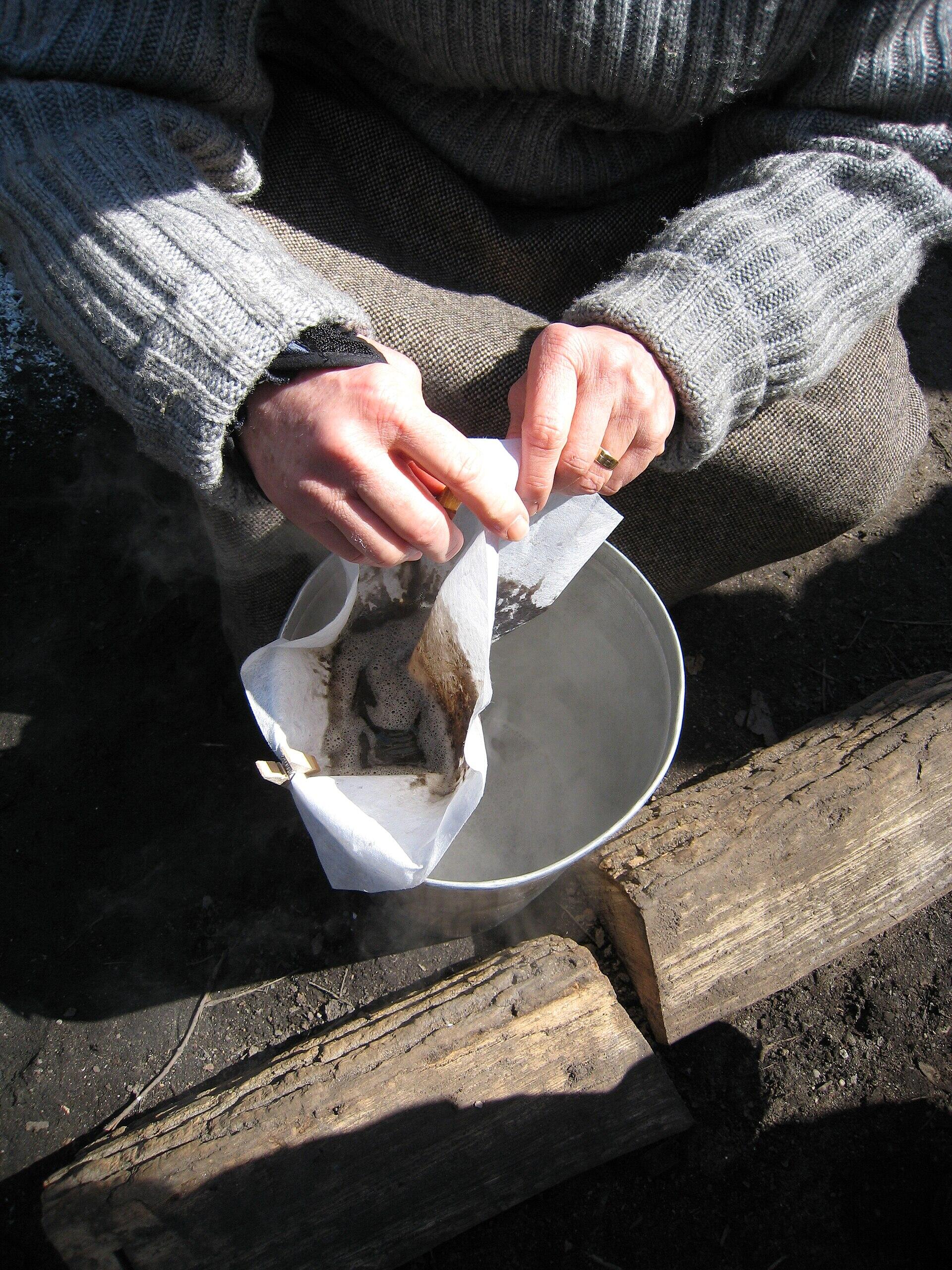
Syrup Finishing Process:
- Correct concentration
- Hot filtration
- Colour and flavour assessment
- Grade determination
- Hot bottling and sealing
The final stages turn the concentrated liquid into a consistent commercial food product. Filtration improves clarity while grading communicates the syrup's colour and flavour characteristics.
Removing Sugar Sand
Sugar sand is made up of naturally occurring mineral compounds that become concentrated during evaporation. It is not an indication that the sap was dirty.
Water is removed during boiling, concentrating minerals that were naturally dissolved in the sap.
Some of those compounds precipitate and form particles that can be removed through filtration.
The hot syrup is filtered using appropriate materials and equipment. Removing these particles prevents the finished syrup from being gritty, cloudy or visibly sediment-filled.
What Maple Syrup Grades Really Mean
Canadian Grade A maple syrup has four colour classes: Golden, Delicate Taste; Amber, Rich Taste; Dark, Robust Taste; and Very Dark, Strong Taste.
| Canada Grade A colour class | Taste description | Typical use |
|---|---|---|
| Golden | Delicate Taste | Table use and lighter flavours |
| Amber | Rich Taste | General-purpose use |
| Dark | Robust Taste | Cooking and baking |
| Very Dark | Strong Taste | Recipes needing pronounced maple flavour |
The colour classes are not a ranking from best to worst. They describe the syrup's colour and characteristic flavour. A darker syrup can therefore be exactly what a cook wants when a strong maple flavour is needed.
🇨🇦 How Is Maple Syrup Made in Canada?
The basic process of how is maple syrup made in Canada is the same fundamental process used elsewhere: collect maple sap, concentrate it, filter it and package the finished syrup. What makes Canadian production distinctive is the enormous scale of the industry, particularly in Québec.
Canada produced approximately 113.4 million kilograms of maple syrup in 2025. Québec accounted for approximately 90% of Canadian production, making its maple industry by far the country's largest.
The scale means producers need sophisticated systems for collection, storage and evaporation, particularly when weather creates a heavy sap run.
Quebec’s Large-Scale Maple Production System
Québec's producers operate across extensive maple forests containing vast networks of taps and tubing. Sap can be transported through tubing towards collection points, where it is stored and processed.
million kg
million kg
Large-scale production does not mean the syrup needs to contain additional ingredients.
The Québec share of Canadian production is approximately 90%.
Modern pumps, vacuum systems, storage tanks and efficient evaporators primarily allow producers to handle much larger quantities of the same raw material.
Canadian Standards for Pure Maple Syrup
Canada maintains specific standards for maple products, which helps distinguish pure maple syrup from products that merely use maple flavour or maple imagery.
Pure maple syrup
Made from maple sap that has been concentrated into syrup and sold as a single-ingredient maple product.
Maple-flavoured syrup
May contain other sweeteners, flavourings or ingredients and is a different product.
This distinction is particularly useful when shopping because a bottle can look strongly associated with maple without actually containing pure maple syrup. Canadian standards also specify requirements for characteristics such as soluble solids, colour, flavour and freedom from fermentation and objectionable sediment.
🏡 Maple Syrup How Is It Made at Home Versus in a Sugarhouse?
Maple syrup how is it made on a small scale? The basic recipe is surprisingly simple, but the quantities involved make production more demanding than tapping a tree might suggest.
| Backyard producer | Commercial sugarhouse |
|---|---|
| Few suitable trees | Large maple forest |
| Buckets or small tubing | Extensive tubing networks |
| Small collection tanks | Large storage systems |
| Small evaporator | High-capacity evaporator |
| Manual filtration | Dedicated filtration equipment |
| Small batches | Large seasonal production |
The biggest challenge is usually evaporation. Because fresh sap contains so much water, even a relatively small amount of finished syrup requires a substantial volume of sap to be collected, transported, heated and filtered.
The sugar shack season, or cabane à sucre is particularly important in Canada.
What a Backyard Producer Actually Needs
A home producer needs suitable maple trees, appropriate tapping equipment, clean collection containers, a safe way to evaporate the sap and equipment for checking the concentration of the finished syrup.
Essential equipment
- Suitable maple trees
- Spiles and tapping equipment
- Food-safe collection containers or tubing
- A suitable evaporating setup
- Thermometer
- Hydrometer or refractometer
- Appropriate filtration equipment
- Clean bottles or containers
Boiling large quantities of sap creates substantial heat and steam, so an improvised indoor kitchen setup can be impractical and unsafe. A well-ventilated outdoor or purpose-built arrangement is much more appropriate for serious home production.
When Buying Local Syrup Makes More Sense
Making syrup yourself can be an enjoyable seasonal project, particularly if you have access to suitable maple trees. However, buying from a local producer avoids the considerable work involved in concentrating and finishing the sap.
Make your own if:
you have suitable trees, enjoy hands-on seasonal projects and want to experience the production process.
Buy local if:
you mainly want excellent syrup without collecting, storing, boiling and filtering large quantities of sap.
This production story is also what gives a cabane a sucre Montreal or sugar shack Montreal its connection to maple syrup. Behind the finished bottle is a tightly timed agricultural process that begins with a living tree and ends only after most of the sap's water has been removed. From the first tap hole to the final filtration, how maple syrup is made is essentially a carefully managed process of collecting, concentrating and protecting the natural character of maple sap.
Learn when to visit for the best cabane à sucre experience.
References
- Agriculture and Agri-Food Canada (2026) Statistical overview of the Canadian maple industry, 2025. Available at: https://agriculture.canada.ca/en/sector/horticulture/reports/statistical-overview-canadian-maple-industry-2025 (Accessed: 13 September 2026).
- Canadian Food Inspection Agency (2026) Labelling requirements for maple products. Available at: https://inspection.canada.ca/en/food-labels/labelling/industry/maple-products (Accessed: 13 September 2026).
- Canadian Food Inspection Agency (2021) Canadian Grade Compendium: Volume 7: Maple Syrup. Available at: https://inspection.canada.ca/en/about-cfia/acts-and-regulations/list-acts-and-regulations/documents-incorporated-reference/canadian-grade-compendium-volume-7 (Accessed: 13 September 2026).
- Penn State Extension (n.d.) Maple Syrup Production. Available at: https://extension.psu.edu/maple-syrup-production (Accessed: 13 September 2026).
Summarize with AI:
Did you like this article? Leave a rating!

 Loading...