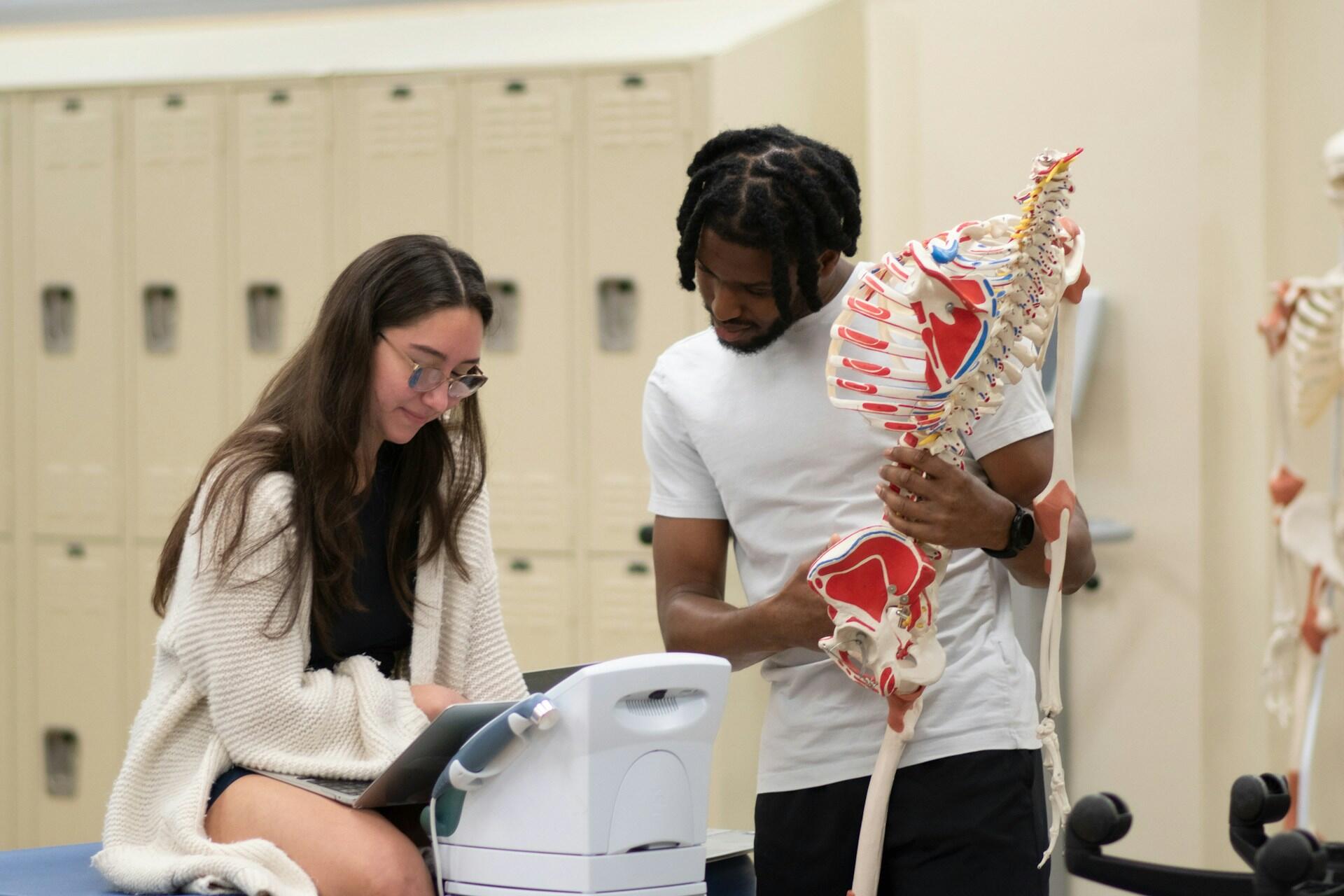

The program most Canadians pursue to practice as a physiotherapist is the Master of Physical Therapy (MPT); in most cases, this program (including the clinical placement, which takes up to 30 weeks), can be completed in just over two years. Immediately after graduation, candidates can apply to take the Canadian Physiotherapy Examination (CPTE), an exam endorsed by the CAPR; passing this exam grants the license to practice as a physiotherapist in Canada.
MPT Degree
CAPR exam
Provincial Registration
Licence
Most institutions in Canada offering a Master of Physical Therapy program require a four-year bachelor's degree (or equivalent); the degree may be in any discipline, if the prerequisites are met. Upon successful completion of the program, graduates are fully prepared to meet provincial registration and national licensure requirements. The prerequisites for top MPT in Canada include:
- Coursework in anatomy, physiology, psychology, and even statistics and research
- Clinical experience
- References
- Personal statement
- Interview
- CASPer situational judgment test (in some cases)
There are only 15 schools with MPT programs in the country; to be eligible for the physiotherapist's license, the school's program has to be recognized by the Physiotherapy Education Accreditation Canada (PEAC).
Regulation and the path to practice
Like most healthcare-related professions, Physiotherapy is regulated; the provincial or territorial regulator must give a license before they can practice. When studying the master's degree in physiotherapy at one of the institutions accredited by the PEAC, the graduates are eligible to apply for the CPTE licensing and provincial registration. Some provinces also require jurisprudence examinations on provincial laws and professional standards. For international students, the path to obtain the licence tends to require them to:
Completing this process is mandatory to work in Canada as a physiotherapist; completing CAPR credentialing, language requirements and the national examination is the fastest route to Canadian licensure.
Accreditation and quality assurance
As mentioned, in Canada, to take the CPTE and obtain licensure, the student must have completed the MPT at institutions whose programs are endorsed by the Physiotherapy Education Accreditation Canada (PEAC). This accreditation is one of the first things to look at when looking for a top school in Canada for physiotherapists, as it confirms that an MPT program meets the country's education standards.
The CAPR (Canadian Alliance of Physiotherapy Regulators) brings together all the provincial physiotherapy regulatory colleges and administers the national entry-to-practice examination, which also varies by province.
Physiotherapists in Canada must maintain professional liability insurance to remain licensed in most jurisdictions, while their continuing Professional Development is mandatory for license renewal across the country.


Admissions Requirements (What You’ll Need)
Academic prerequisites and GPA
Almost every program asks for a half-course (or equivalent) in human anatomy and human physiology, plus statistics and psychology; several also want biomechanics or exercise science. Most Master of Physical Therapy programs in Canada calculate the GPA from the most recent courses rather than a full transcript; Queen's University, for example, requires a minimum B- (70%) in each prerequisite, while the University of Alberta calculates GPA from the most recent 60 credits acquired. It is, in definitive terms, a competitive environment for physiotherapists, given the few places and schools accredited for this profession.
is best considered by top universities.
Experiences and exposure
One of the most important prerequisites before MPT, and most valued in the search for licensing for physiotherapy, is volunteer or paid experience in a clinical or rehabilitation setting, which strengthens the profile for admission. Queen's University, for example, explicitly asks applicants to document volunteer work or community service that shows genuine interest in the profession.
The median wage for physiotherapists in Canada, according to the Government of Canada's Job Bank, is 46.15 CAD
Assessments and interviews
This is where programs diverge the most, as they use different tools and methods (they clarify this pretty clearly on their admissions pages). Dalhousie, Queen's, the University of Alberta, and the University of Manitoba all require the CASPer situational-judgment test as part of admissions.

At the same time, the University of Toronto uses its own Computer Administered Profile instead. Université d'Ottawa, being bilingual, adds a language-proficiency test in whichever official language wasn't the language of instruction.
Application materials
Physiotherapist aspirants are expected to submit academic or professional references, a personal statement or letter of intent, and (for Ontario schools) confidential assessment forms through their application portal.
International applicants
The admission process for International students applying to an MPT in Canada is different, as they must accredit their degree equivalency and prove English language proficiency to start the process. Along the way, they also have to consider study permits, which include proof of funds, for example.

If the student is already trained as a physiotherapist abroad, there is a different track from applying to a Canadian MPT or MScPT program as a first-time student. The route for experienced physiotherapists runs through CAPR's credential assessment first.
If CAPR identifies gaps between the training and Canadian standards, internationally educated physiotherapists have the option of bridging programs to help them achieve the standard before attempting to pass the CPTE.
Application Process and Timelines
Ontario (via ORPAS)
Five schools in Ontario, McMaster, Western, Queen's, the University of Toronto, and University of Ottawa, share a single application portal, the Ontario Rehabilitation Sciences Programs Application Service (ORPAS), where the student can apply once and can be considered by multiple schools; they can submit official documents through this system. As expected, they ask for the same prerequisites as other provinces, such as:
🎓 Bachelor's degree - Completed before the MPT program begins
🧠 Minimum GPA - Often around 3.6–3.9/4.0
📚 Prerequisite courses - Top common: anatomy, physiology, statistics, and social or behavioural sciences
✍🏻 Official transcripts - Applicants must submit official transcripts from all post-secondary institutions attended through ORPAS)
👨🏻🏫 Academic references
📖 Personal statements - Autobiographical essays, or supplemental questionnaires
🏥 Clinical or volunteer experience - Observation, volunteer, employment in healthcare
The complete list of requirements for Ontario applicants for physiotherapy can include supplementary applications, such as the CASPer assessment required by McMaster University, where a situational judgement test is completed as part of its admissions process (in Ontario, it is the only MPT program that requires it). A complete timeline to not miss any stage of the process is detailed below:
September
Applications opening
October - January
Applications deadline (depending on the program)
March - April
Admission offers
May
First-round offers expire if not accepted
June
Provisional acceptances become firm
September
Start of the Program
Outside Ontario (apply directly)
Everywhere else, you apply straight to the university: UBC and the University of Alberta each run direct online applications, as do the University of Saskatchewan, University of Manitoba, Dalhousie, and Quebec's French-language programs (McGill also participates in ORPAS-style direct admission through its own portal).
Quebec is structurally different, too. For example, Université Laval, Université de Montréal, Université de Sherbrooke, and UQTR run a combined bachelor's-to-master's continuum rather than a standalone master's entry point. Hence, the timeline and prerequisites work differently than in the rest of the country.
Choosing target schools strategically
Beyond prerequisites and deadlines, the learning model (if it's problem-based learning, for example) and practical hours (how far are clinical placements) are some of the main points to take into account when choosing an MPT; as it is completed successfully, the candidate is immediately eligible for provincial registration and licensure across Canada.
| University | Main differences in their program |
|---|---|
| UBC | Longest program (26 months), distributed campuses, 5 clinical placements, strong case-based curriculum. |
| Saskatchewan | Modular curriculum with 9 competency modules and 6 placements. |
| McMaster | Strongest emphasis on Problem-Based Learning (PBL) and self-directed learning. |
| Western | Competency-based curriculum with structured progression through 4 placements. |
| Toronto | Greater emphasis on research literacy and evidence-based practice. |
| Alberta | Strong musculoskeletal/manual therapy component. |
| Queen's | Extensive simulation and interprofessional education. |
| Dalhousie | Greater exposure to rural and Atlantic Canadian healthcare settings. |
| Manitoba | Strong rehabilitation and rural clinical partnerships. |
Accredited Physiotherapy Schools in Canada (By Province)
Physical therapy programs in Canada typically last between 24 and 26 months. As mentioned in this text, it's important to remember that the Canadian Association of Physiotherapists (CAPR) recognizes only 15 programs nationally.
In addition to the required modules, it's crucial to select a program that aligns with the prerequisites for licensure, especially regarding clinical placements, as the practical component is extremely important.
| University | Curriculum Structure | Distinctive Features | Clinical Placements | Entry-to-Practice Competencies |
|---|---|---|---|---|
| University of Toronto | 24-month integrated MScPT with systems-based courses in MSK, neuro, cardiorespiratory, evidence-based practice, ethics and professional practice. | Strong research emphasis and evidence-based practice integrated throughout the curriculum. | ~30 weeks across hospitals, rehabilitation, community and private practice. | Clinical reasoning, patient assessment, diagnosis, treatment planning, communication, professionalism. |
| University of British Columbia (UBC) | 26-month case-based curriculum using a lifespan approach. Courses include anatomy, movement science, rehabilitation research, MSK, neuro, cardiopulmonary, clinical decision-making and professionalism. (Department of Physical Therapy) | Distributed education model with campuses in Vancouver, Victoria, Fraser Valley and Northern BC. | Five placements (5–6 weeks each) in acute care, rehabilitation, community and private practice across British Columbia. | Focuses on collaborative practice, clinical reasoning, evidence-based care and leadership. |
| McMaster University | Problem-Based Learning (PBL) curriculum integrating anatomy, physiology, pathology, rehabilitation, research methods and professional practice. | Pioneer of problem-based learning in health professions education. | Approximately 30 weeks of clinical education in diverse practice settings. | Strong emphasis on evidence-based practice, lifelong learning and self-directed clinical reasoning. |
| Queen's University | Two-year integrated curriculum covering MSK, neurological, cardiorespiratory, paediatrics, geriatrics, pain sciences and research. | Early integration of simulation and clinical skills laboratories. | Clinical placements in hospitals, rehabilitation centres and community settings across Ontario. | Patient-centred care, ethical practice, communication and interprofessional collaboration. |
| University of Alberta | Integrated MScPT with foundational sciences followed by systems-based rehabilitation, therapeutic exercise, manual therapy and research. | Strong musculoskeletal and manual therapy training. | Approximately 30 weeks of supervised clinical education. | Competency-based learning emphasizing assessment, intervention and clinical decision-making. |
| Western University | 2-year competency-based curriculum integrating classroom, laboratory and simulation learning. (uwo.ca) | Strong competency-based model with extensive clinical exposure across the lifespan. | Four placements (30 weeks total) covering acute care, rehabilitation, outpatient clinics and community practice; students gain experience in MSK, neuro, cardiorespiratory and multisystem conditions across all age groups. | Develops graduates able to practice safely across all major physiotherapy settings in Canada. |
| Dalhousie University | Integrated curriculum combining biomedical sciences, clinical reasoning, rehabilitation sciences, professional issues and research. | Strong rural and community rehabilitation experiences. | Multiple placements throughout Atlantic Canada. | Evidence-informed practice, patient safety and collaborative healthcare. |
| University of Saskatchewan | 27-month curriculum organized into nine scaffolded modules aligned with the National Physiotherapy Advisory Group Competencies. (rehabscience) | New modular curriculum with competency-based progression and six clinical practicums. | Six clinical placements (30 weeks total). (rehabscience) | Curriculum explicitly built around Canadian entry-level physiotherapy competencies and progressive skill development. |
| University of Manitoba | MSc Rehabilitation Sciences (Physical Therapy) integrating anatomy, physiology, biomechanics, rehabilitation sciences, ethics, research and clinical practice. | Strong integration with rehabilitation hospitals and rural clinical education. | Approximately 30 weeks of supervised placements in Manitoba health facilities. | Focus on evidence-based practice, patient-centred care, clinical reasoning and professionalism. |
If the MPT is completed successfully, the candidate is immediately eligible for provincial registration and licensure across Canada.
Costs and Funding
Tuition varies significantly by province and residency status, and, unlike accreditation dates, the official fee schedules change annually.


In Canada, for local students, tuition is generally lower in Quebec than in Ontario or Western Canada. In contrast, international tuition runs substantially higher everywhere, and nearly every program adds compulsory ancillary and clinical or lab fees on top of tuition. Each university's Student Accounts or Registrar's Office page is the top reliable source, since even government tuition-framework reports get revised mid-cycle.
Curriculum and Clinical Education
Core courses and competencies
Expect coursework across musculoskeletal, neurological, and cardiorespiratory physiotherapy, plus pain science, pediatrics, geriatrics, and evidence-based practice. Most curricula are split across 24 months with practical/clinical courses. All PEAC-accredited MPT programs cover the same core competencies; some of the ones physiotherapists have to master at the end of their MPT, aside from the already mentioned above, are:
- Biomechanics and kinesiology
- Neuroscience
- Therapeutic exercise and prescription
- Manual therapy fundamentals
- Electrotherapy and physical agents
- Clinical assessment and differential diagnosis
- Clinical reasoning and evidence-based practice
- Research methods and critical appraisal
- Professional ethics and jurisprudence
- Health promotion and disease prevention
- Cultural safety and patient-centred care
Clinical placements
Clinical placements are the internship component of the MPT. They are full-time, supervised rotations in real healthcare settings where students apply what they learned in class while being mentored and evaluated by licensed physiotherapists.
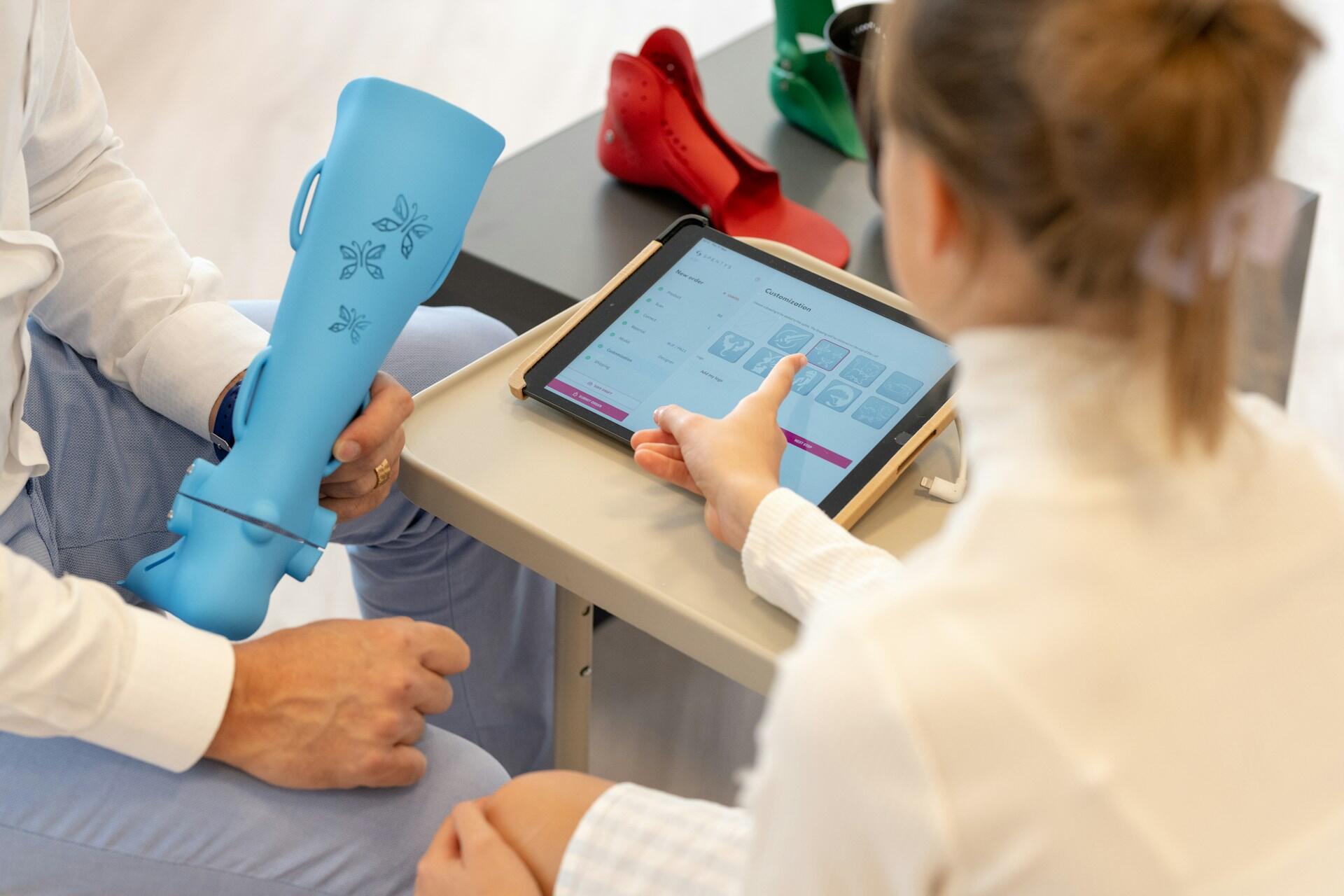
They account for roughly 30 weeks (about 1,000–1,200 clinical hours) in most Canadian programs; these are designed to increase students' responsibility and independence progressively with a structure similar to the one that follows:
Placements are non-negotiable and substantial; some of these placements include settings from hospitals to community and pediatric care. Expect similar structures elsewhere, with settings that can include rural, remote, or Indigenous community health placements depending on the school.
Research and electives
Most programs include a research or evidence-based practice project, but in other cases, as is the case with McMaster, students begin a systematic or scoping review and choose an elective in later terms.
Learning models
Some schools lean heavily on problem-based learning (small-group, case-driven), while others use a more traditional lecture-plus-lab structure.
References
- Affiliated Canadian Physiotherapy Programs (2026). Physiotherapy Education Accreditation Canada (PEAC). Available at: https://peac-aepc.ca/about-accreditation/affiliated-pt-programs/ (Accessed: July 2026).
- Canadian Alliance of Physiotherapy Regulators (2026). Canadian Alliance of Physiotherapy Regulators (CAPR). Available at: https://www.alliancept.org (Accessed: July 2026).
- ORPAS Key Dates & Offers (2026). Author: Ontario Universities' Application Centre (OUAC). Available at: https://www.ouac.on.ca/guide/orpas-offers/ (Accessed: July 2026).
- CASPer Requirement (2026). Dalhousie University, School of Physiotherapy. Available at: https://www.dal.ca/faculty/health/school-of-physiotherapy/Admissions/admissions/CASPer.html (Accessed: July 2026).
- Admission Requirements – Master of Science in Physiotherapy (MScPT) (2026). Queen's University, School of Rehabilitation Therapy. Available at: https://rehab.queensu.ca/academic-programs/mscpt/admission (Accessed: July 2026).
- Application Requirements – MSc in Physical Therapy (2026). University of Alberta, Department of Physical Therapy. Available at: https://www.ualberta.ca/en/physical-therapy/programs/msc-in-physical-therapy/admissions/application-requirements/index.html (Accessed: July 2026).
- Master of Physical Therapy (MPT) Program (2026). Western University, School of Physical Therapy. Available at: https://www.uwo.ca/fhs/pt/programs/mpt/index.html (Accessed: July 2026).
Summarize with AI:
Did you like this article? Leave a rating!

 Loading...