

“Nature and man are opposed in Spain.”
Gertrude Stein
The history of Spain is full of interesting events that have made the country one of the richest in history. The Iberian Peninsula has gone through some turbulent times to get to where it is today. And, as you probably know, the history of Europe would not be what it is today without the role played by Spain, especially during the time of the Holy Roman Empire.
In this blog, we're summarising the entire history of Spain, from the Phoenician colonization to Franco's dictatorship during the modern era and all the crucial events in between.


Timeline of Spanish History
19 BC
Full Integration into the Roman Empire
Hispania becomes a vital part of the Roman dominion, shaping its infrastructure, governance, and culture.
415
Visigothic Invasion
Marks the end of Roman dominance and the beginning of a new phase in Spain’s medieval history.
711
Muslim Occupation Begins
This pivotal moment introduced Islamic influence in Spain, setting the stage for centuries of cultural and political interaction.
929
Establishment of the Caliphate of Cordoba
Represents the peak of Islamic rule in Spain, a golden age of learning, culture, and economic prosperity.
1085
Conquest of Toledo
A significant milestone in the Christian Reconquest of the Iberian Peninsula.
1492
Conquest of Granada and Columbus's Voyage
It completes the Reconquista and marks the start of Spain's global empire.
1521
Hernán Cortés Conquers Tenochtitlán
A defining moment in Spain’s colonial expansion was consolidating its power in the Americas.
1588
Defeat of the Spanish Armada
Signals the decline of Spain's maritime dominance and global supremacy.
1808-1814
War of Independence Against Napoleon
Ends French occupation and catalyzes the formation of modern Spain.
1978
Approval of the Spanish Constitution
Establishes the democratic government framework of contemporary Spain.
Spain During the Antiquity: Roman Hispania
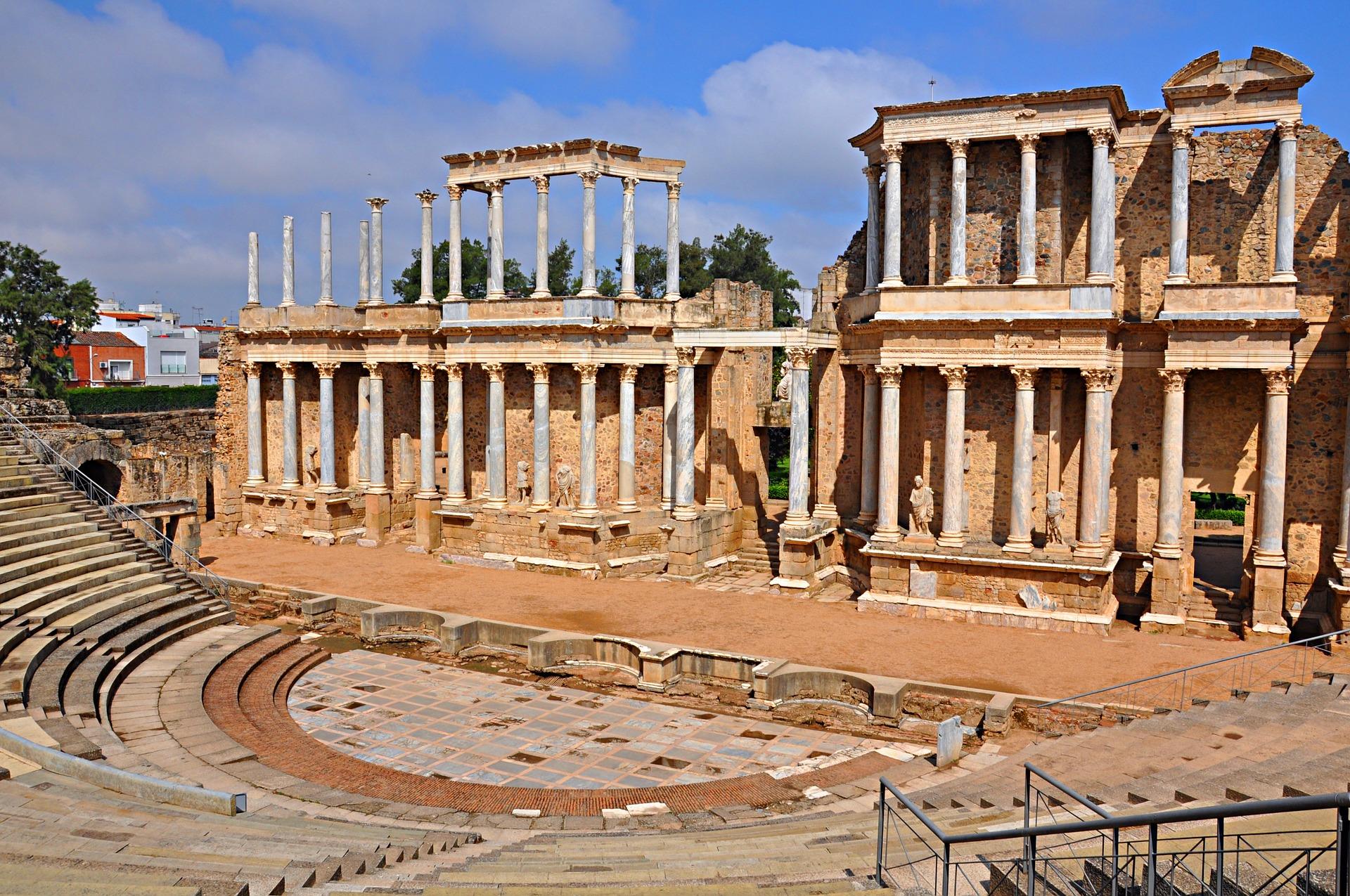
Neanderthals populated Spain during the Lower Paleolithic. In the 2nd millennium BC, the Iberian Peninsula witnessed the arrival of the Phoenicians, who founded settlements such as Gadir (present-day Cadiz), the Greeks, and the Tartessians. During this time, the Celts populated northern Spain, mixing with the Indigenous Iberian cultures to create Celtiberian societies.
Let's move to the 3rd century BCE when the Carthaginians, weakened by the Punic War, started to expand their territories. Hamilcar Barca, a Carthaginian general and statesman, did not find Barcelona, as its origins date back to Barcino, the Roman colony. Although the Romans defeated him, his son Hannibal took the helm and captured Saguntum in 219 BC, triggering the Second Punic War.
Rome would win this war and the associated territories. Publius Cornelius Scipio, a Roman general, founded Italica in Spain in 206 BCE. Spain, called Hispania at the time, was partially under Roman control, apart from several indigenous peoples who resisted the conquest. In 77 BC, Pompey Magnus was put in charge before Caesar Augustus was named governor, but he did not take over the entire peninsula.
It wasn't until 19 BC, during the rule of Caesar Augustus, that Hispania was integrated and became entirely part of the Roman Empire. This large territory was administered without many problems, and historians studied and mapped Hispania.
By the 5th century, barbarian people like the Visigoths threatened the empire and were the first to penetrate Spain in 415. In 475, the Visigoth king Euric consolidated control over Hispania and part of Gaul, taking advantage of the Empire's weakness. This led to the fall of the Roman Empire and Ravenna's fall in 476. Thus, Spain was under Visigoth rule by the end of Antiquity and gained control of the Iberian territory.
Are you traveling soon? Check out our quick guide to Spain and enjoy the trip to Europe!
The Medieval Period: Muslims vs. Christians
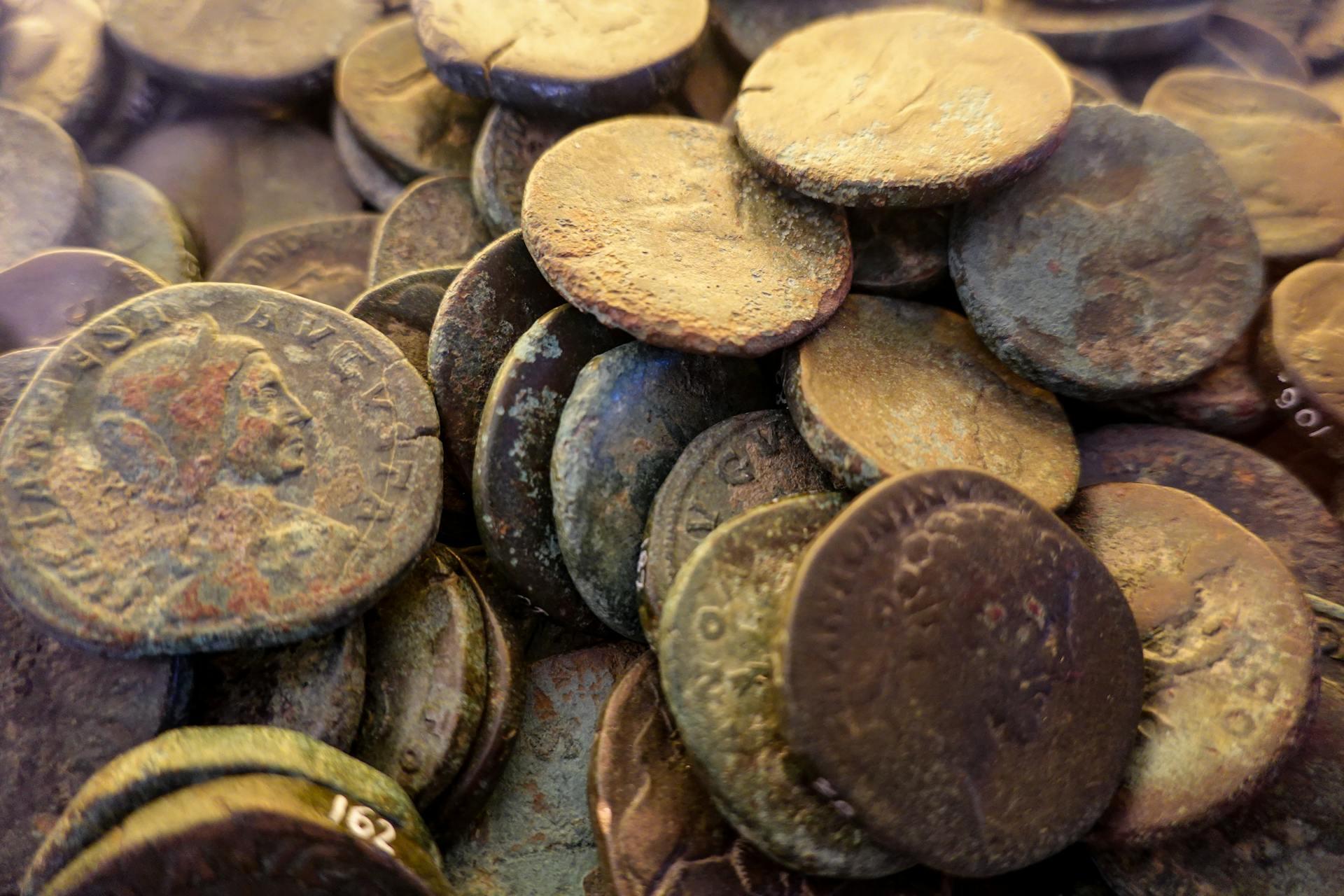
In 477, the Visigoths took control of Spain and provided a certain level of security when they occupied the territory. However, at the start of the 6th century, the Visigoths were expelled from Southern Gaul after Clovis defeated them at the Battle of Vouillé. The Byzantine Empire conquered the South of Spain in 554.
The Visigoth Empire descended into decadence in 711 after a defeat to the Saracens, marking the beginning of the Muslim occupation. This is when a gradual emergence of Christian kingdoms would carry out the Reconquest.
Charles Martel stopped the Arab conquest in Poitiers in 732. Subsequently, one of the first Muslim states was created in Cordoba in 756, the Emirate of Cordoba, ruled by Abd Al-Rahman I. The Kingdom of Pamplona, initially occupied by Visigoths in 476, came under the Muslims in the 8th century until 778, when Charlemagne's forces temporarily pushed them out.
By conquering Porto in 868 and Coimbra in 878, Alfonso III launched the Reconquista in Spain, which was carried on by his descendants, such as the Count of Castile Diego Rodríguez Porcelos. Nevertheless, Arab victories led to the creation of a caliphate in Cordoba in 929 led by Abd Al-Rahman III. Salamanca was then retaken by the Arabs in 941, ransacked Barcelona in 985, and attacked Santiago de la Compostela in 997. The latter was partially destroyed in 1022 by Al-Mansur.
In 1031, the Christian kingdoms intensified the Reconquest. Ferdinand I of Leon and Castile unified the kingdoms of Leon and Castile (1072) and later conquered Toledo (1085). He later became the king of Toledo and Galicia, and the Christian power slowly strengthened.
Alfonso VI counted on Rodrigo Díaz de Vivar, El Cid, who ruled Valencia from 1094 until he died in 1099. The Almoravids retook the city in 1102 and temporarily consolidated Muslim Spain. Among the Christian victories of the 12th century was Alfonso I of Aragon's conquest of Zaragoza in 1118, marking a significant advance.
Portugal gained its independence from Leon in 1128, but it wouldn't have its first king, Alphonse I, until 1139. The Muslim and Christian kingdoms battled during the 13th century.
The Medieval Era in Spain ended with a final victory for the Catholics. Their heads of state were Isabella I of Castile and Ferdinand of Aragon, essential figures in Spanish territorial unification under Christian power.
Did you know you can also improve your Spanish by watching the most popular Spanish and European series? Immersing yourself in the language will be key to making some progress.
Modern Spanish History: Colonialism and Decadence
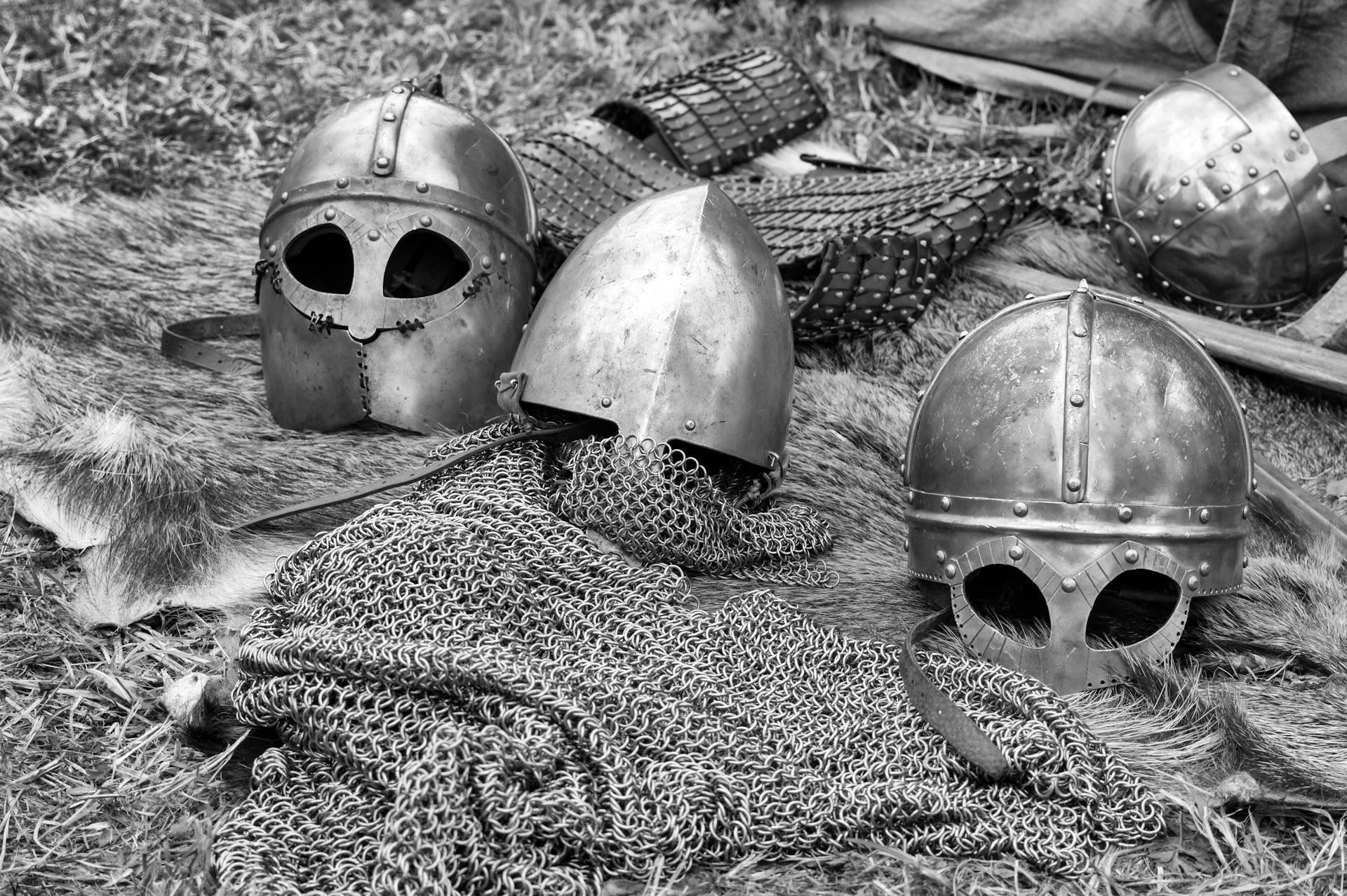
1492 wasn't just the year the Reconquista ended. It was also the year the monarchs of Castile and Aragon financed Christopher Columbus' expedition. At the end of the year, Columbus landed on the island of Hispaniola, marking the beginning of Spanish colonial expansion.
In 1494, Spain & Portugal signed the Treaty of Tordesillas, splitting the New World. During the same year, Pope Alexander VI gave Isabella of Castile and Ferdinand of Aragon the titles of Catholic Queen and King, respectively.
Isabella died in 1504 after a fruitful reign. She left behind her daughter, Joanna of Castile, also known as Joanna the Mad, whose incapability to rule led Ferdinand to take control of the kingdom. When he died in 1516, Charles I of the Habsburgs assumed the throne.
In 1519, as Hernan Cortes was landing in Mexican territory, the Emperor of the Holy Roman Empire passed away, leaving Charles I to become Charles V. The following year, the Spanish abandoned the Aztec Capital, Tenochtitlan, following a revolt from the natives known as La Noche Triste. However, in 1521, Cortes took Tenochtitlan and consolidated it as Spanish territory.
Until 1561, Madrid was the capital of Spain. Conflicts with France, Spain, & the Dutch Republic, and the Ottoman Empire marked the Modern Age. The Invincible Armada was also sunk by the English in 1589. The 17th century was a period of decline for Spain after the death of Phillip II; however, the arts (including Cervantes' Don Quixote) continued to thrive.
It wouldn't be until the end of the War of the Spanish Succession (1701-1713) that Spain found its feet with Phillip V. However, Spanish monarchs could no longer claim crowns from other countries. The 18th century was marked by economic growth and international trade.
Find out more about other famous Spanish celebrities who have influenced Spanish culture.
Contemporary Spanish History: From Franco to Democracy
This era started with a counterrevolutionary war between Spain and France after the Napoleonic invasion of 1808. However, the Spanish were quickly overrun by Napoleon, who occupied the peninsula from 1808 to 1814.
The 19th century was rife with political instability in Spain. The First Spanish Republic was unsuccessful, lasting only two years between 1873 and 1875. The result was a parliamentary democracy, which lasted until 1923, when Primo de Rivera led a coup d’état. This was also the same year General Francisco Franco was named commander of the Spanish Legion.
Primo de Rivera's dictatorship lasted from 1923 to 1930. Censorship, institutions under the army's control, and the suppression of parliament were all authoritarian tactics. However, the regime lost support after the 1929 recession. Primo de Rivera stepped down in 1930 and died a few weeks later in exile.
The Second Republic was established in 1931, and it seemed full of promise following several necessary social reforms. However, political and ideological division and a disastrous economy led to violence in 1936. Franco led a group of nationalists, and on 1 October, after declaring himself "Caudillo," he began the Spanish Civil War.
In 1937, he unified the nationalist political parties under his banner. Franco secured victory in the war in 1939 with the aid of extensive nationalist messaging, support from the Catholic Church, and assistance from Nazi Germany and Fascist Italy.
Franco's regime was an authoritarian autocracy characterized by political repression and international isolation in its early years, although it later sought strategic alliances during the Cold War. After he died in 1975, King Juan Carlos I led, together with Prime Minister Adolfo Suárez, the transition to democracy between 1976 and 1982. The democratic Spain we know today is the result of these historical events!
If you love Spain's history and would like to learn Spanish, check out our other articles on learning Spanish, listen to Spanish music, and get ready to travel to Europe or any Spanish-speaking country after improving your language proficiency with Superprof!
Summarize with AI:
Did you like this article? Leave a rating!


 Loading...
