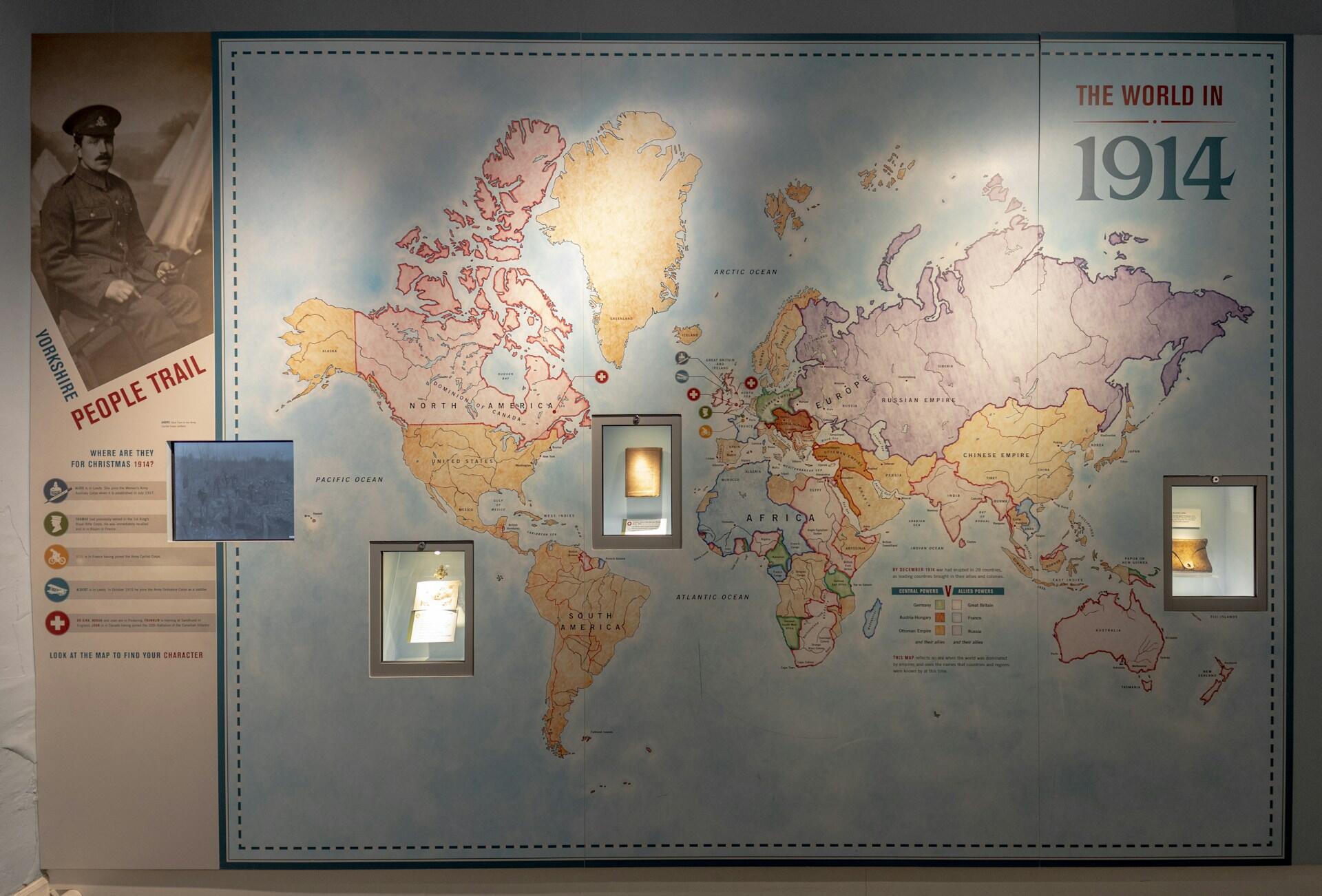

What comes to your mind whenever the word history is mentioned? Exhibition at history museums, school libraries, or several film festivals about Canadian history? From its Indigenous roots to its experiences in the world wars and its evolution into a modern nation, important events in Canadian history continue to have an impact to this day.


Indigenous Peoples and Early Settlements
Before Canada became the country we know today, it was home to thriving Indigenous civilizations. These early societies and the first encounters with European explorers laid the foundation for Canada’s history.
Pre-Contact Indigenous Civilizations
What we now know as Canada was already home to well-established indigenous civilizations long before Europeans arrived. These include three main groups: the First Nations, the Inuit and the Métis, each with its own histories, languages, cultural practices and spiritual beliefs. 1
Indigenous societies were, in fact, incredibly diverse and connected to their environments. Communities along the Pacific coast were sedentary and depended heavily on fishing.
The nations of the Plains were nomadic, following bison herds throughout the year. Meanwhile, in the Arctic, Inuit populations adapted to the extreme cold and were primarily hunters. 2
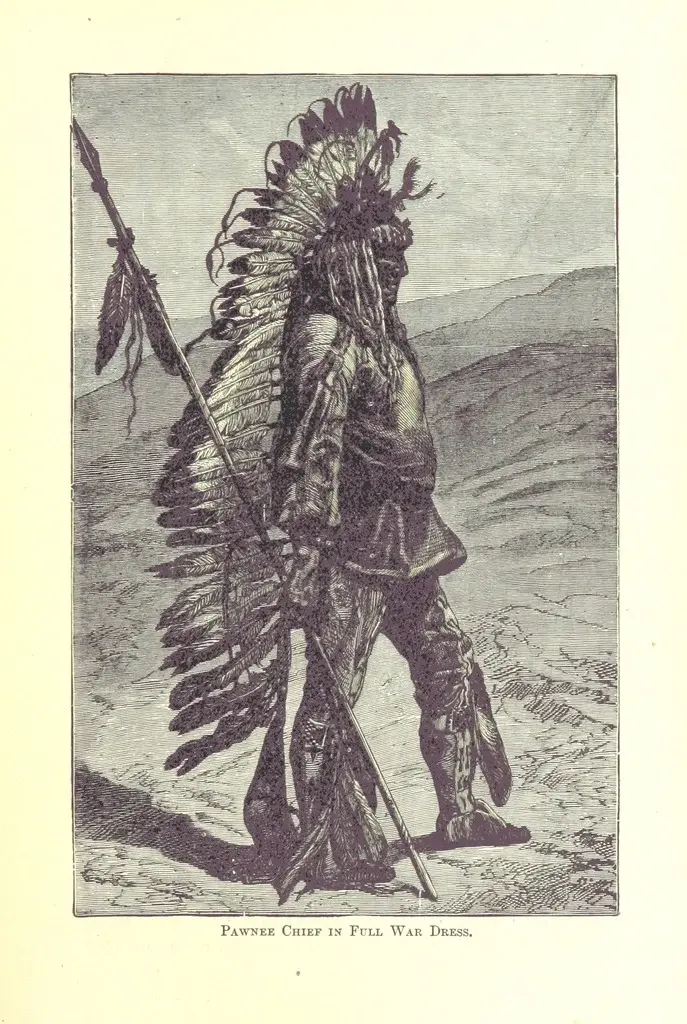
Together, these diverse ways of life highlight the deep knowledge, adaptability and resilience of Indigenous peoples across the territory now known as Canada.
European Exploration and First Contacts
The first European explorers reached the eastern coasts of the continent in the 11th century. These newcomers were Viking explorers who traveled from Scandinavia to Iceland and Greenland, and eventually made their way to Newfoundland, but their presence did not last long.
However, in the 16th century, Europeans returned to the eastern coasts of North America, drawn by the rich cod fisheries, and developed an informal trading system exchanging goods with the First Nations communities. 2
For Canada’s First Nations and Inuit communities, first contact was pretty devastating. When Europeans arrived, they also introduced diseases such as smallpox, measles, influenza and tuberculosis. With no prior exposure or immunity, historians estimate that up to 93% of Indigenous people died as a result of these outbreaks. Beyond the human loss, important cultural knowledge and traditions were lost as well. 3
French and British explorers, traders and soldiers followed these commercial trade routes, establishing a mutually beneficial exchange of iron, firearms and furs.
Colonial Era and Path to Confederation
Before Canada officially became a country, it went through a long period marked by European colonization, conflicts and political changes. From the rivalry between France and Great Britain to internal rebellions, these events gradually laid the groundwork for Confederation and the creation of modern Canada.
French and British Colonization
European colonization in Canada was primarily shaped by France and Great Britain. The first European settlement was established in northern Florida by the French explorers Pierre de Monts and Samuel de Champlain. Their early efforts began on St. Croix Island (now Maine) and Port-Royal in Acadia (nowadays Nova Scotia).
In the 17th century, the French established a colony known as New France, and Quebec was founded in 1608. From the start, the French built solid relationships and alliances with Indigenous peoples through the fur trade. 4
The name “Canada” likely comes from the Huron-Iroquois word kanata, which means “village” or “settlement.” In 1535, two young Indigenous people guided the French explorer Jacques Cartier to Kanata, the village of Stadacona (now Québec City). Cartier misunderstood the term and began using “Canada” to describe not just the village, but the entire surrounding region. 5
Meanwhile, the British were developing their own colonies along the Atlantic coast, growing more rapidly in population and economic power.
The Seven Years' War and Its Impact
For decades, France and Great Britain competed for control of the land, trade routes and influence in North America. In the 1700s, tensions escalated, leading to the Seven Years' War (1756–1763). In 1759, the British forces defeated the French at the Battle of the Plains of Abraham in Québec City, marking the beginning of the end for New France. 4
The Treaty of Paris of 1763 officially ended the Seven Years' War (1756–1763) between France and Great Britain. As part of the agreement, France gave up control of New France to Great Britain. France held only the islands of Saint Pierre and Miquelon, south of Newfoundland, as well as its fishing rights. From there, Britain became the dominant power in the region. 6
From this point on, Canada became a British colony, and Francophone communities found themselves under British rule. Indigenous nations also had to adapt as they lost allies and faced new political realities.
The Rebellions of 1837–1838
In the early 19th century, many people in British North America were frustrated with the political system and felt that real democracy was moving too slowly.
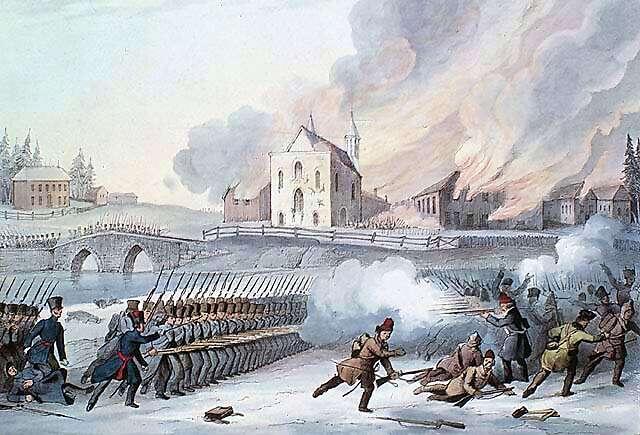
This frustration led to the Rebellions of 1837–1838 around Montreal and Toronto; however, the rebels were defeated by British forces.
Even though they failed, they exposed deep political problems and pushed Britain to rethink how the colonies were governed.
In 1840, the Act of Union merged Upper and Lower Canada to form the Province of Canada. The first British colony to achieve a responsible government was Nova Scotia in 1847–1848. 4
Steps Toward Confederation
In the 1860s, recognizing the importance of a strong federal system for the provinces and the need to gain greater independence from the British government, leaders such as John A. Macdonald, George-Étienne Cartier, and George Brown formed the Grand Coalition in 1864 and embarked on a series of negotiations with other provinces.
The Great Coalition met with delegates at the Charlottetown Conference and the Québec Conference in 1864 to discuss the distribution of power among the provinces. These led to the 72 Resolutions to ensure a new federal system and to share power among the provinces.
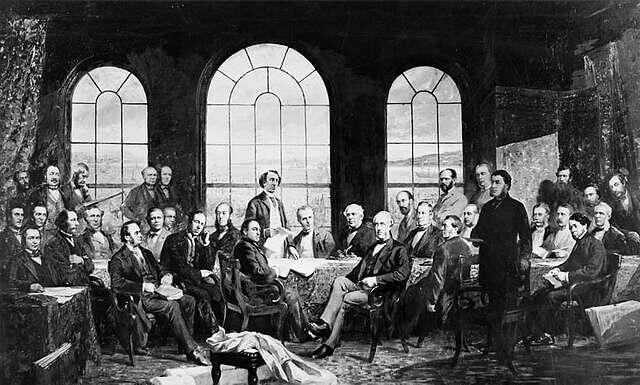
The British North America Act, which created the Canadian Confederation, received Royal Assent on March 29, 1867. On July 1, 1867, the union of the Province of Canada (divided into Ontario and Quebec), Nova Scotia, and New Brunswick was later known as the Dominion of Canada. 7 Eventually, the Canadian Federation expanded to include new provinces and territories. The most recent one was Nunavut, in 1999.
Nation-Building and Expansion
As Canada took shape following Confederation in 1867, the country faced the challenge of uniting all its regions to expand its borders and strengthen its national identity.
The Completion of the Canadian Pacific Railway
One of the most important nation-building projects in Canadian history was the Canadian Pacific Railway (CPR), completed in 1885. Its goal was to build a transcontinental railroad connecting eastern Canada to British Columbia, undoubtedly one of the country’s most important achievements.
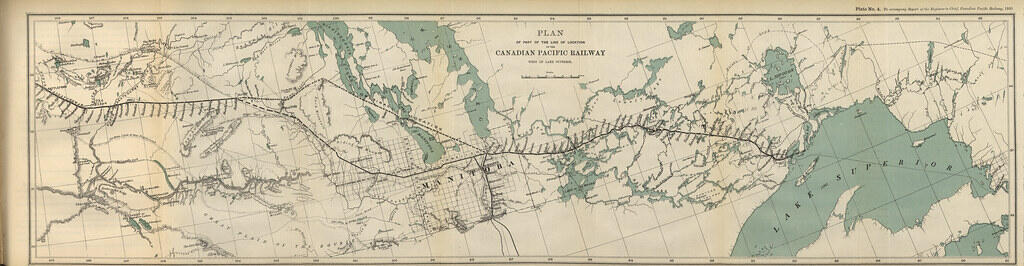
The railway made travel and trade easier and developed new industries, such as mining and businesses like hotels, shipping lines, and airlines. 8
The Red River and Northwest Rebellions
The Red River Rebellion took place between 1869 and 1870 in the Red River Colony against the Canadian government.
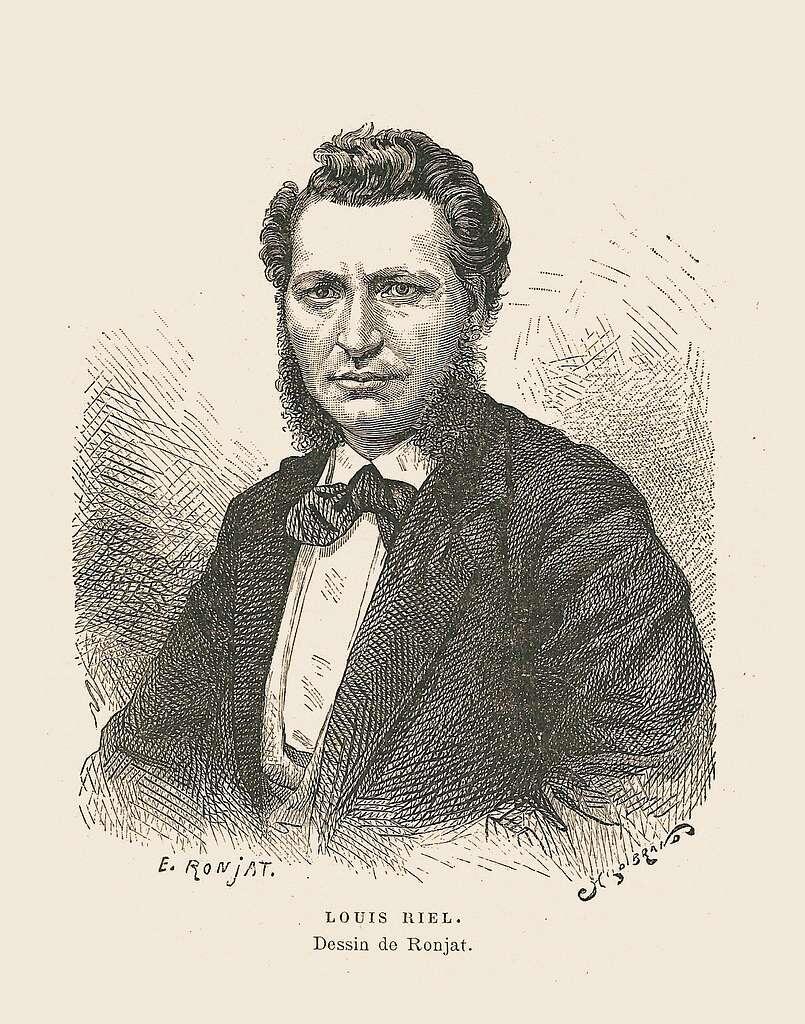
The Métis, who were people of mixed First Nations descent, were concerned that their culture and land rights would be compromised.
In response, they organized a rebellion and established a provisional government, led by Louis Riel, the political and religious leader of the Métis, to negotiate terms for joining the Confederation.
This led to the creation of the province of Manitoba in 1870. 9 Years later, similar tensions led to the Northwest Rebellion in 1885.
Entry of New Provinces and Territories
Following Confederation, Canada continued to grow as new provinces and territories entered the federation. Manitoba joined in 1870, followed by British Columbia in 1871 and Prince Edward Island in 1873. Alberta and Saskatchewan were created in 1905, and the Yukon and Northwest Territories were established in 1898. The most recent change occurred in 1999 with the creation of Nunavut.
Canada in the World Wars
Canada's role in the world wars marked a turning point in its history. Having been closely tied to Great Britain, the country emerged from those wars with a greater sense of identity, independence and international presence.
Canada's Role in World War I
Under the Canadian Expeditionary Force (CEF), many Canadian men joined the battlefield during the First World War. When Britain declared war on Germany on August 4, 1914, Canada was automatically drawn into the conflict.
The government introduced the War Measures Act (1914), the Military Service Act (1917) and the Income War Tax Act (1917) to support order, political and economic security back home while supporting war efforts overseas.
Canadian forces took part in several major battles, including the Second Battle of the Ypres (1915), which saw the Canadian forces braving the chlorine gas attack by the Germans, the Battle of the Somme (1916) and the Battle of Vimy Ridge (1917), which defined Canada's national identity.
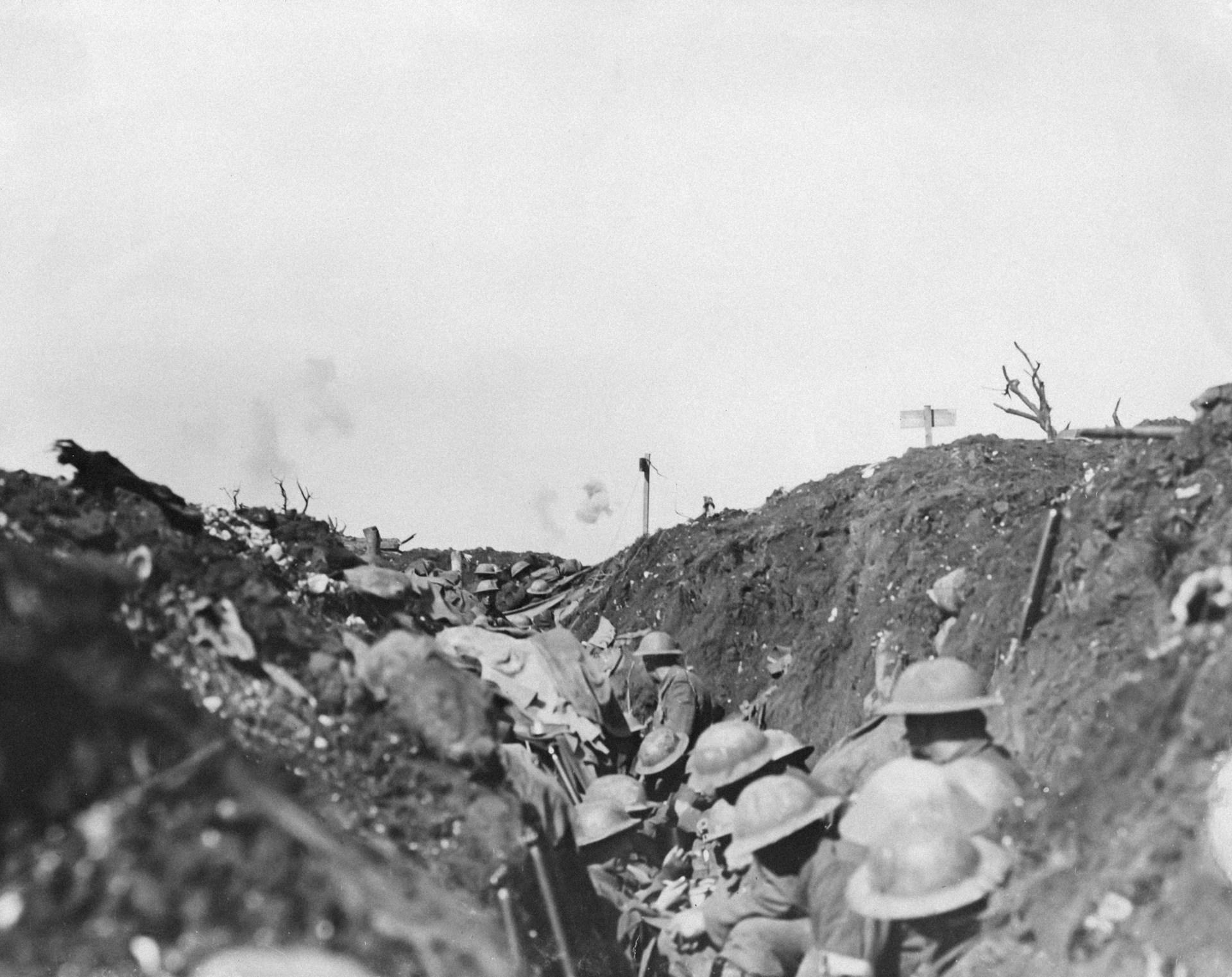
On the home front, the war transformed daily life. Both men and women entered the workforce, playing a huge role in gradually advancing women's rights in Canada.
On November 11, 1918, the First World War came to an end. To remember and commemorate the sacrifices of the Canadian army during the war, Remembrance Day is celebrated every 11th of November in Canada.
Beyond the battlefield, Canada also gained greater international recognition and greater independence from the British government due to its contributions during the war.
Canada's Role in World War II
Canada once again participated in the Second World War independently in September 1939, declaring war on Germany.
With an increased Canadian military force, the Canadian forces played a key role in the most important battles of the war, such as the Battle of Britain in 1940, the defense of Hong Kong in 1941, and the Invasion of Normandy (also known as D-Day) on June 6, 1944. This helped Canada become a respected military power.
At home, Canada was also experiencing major economic, social, and political changes. Firstly, war production was at full force, especially in weapons and aircraft manufacturing. This helped transform Canada into a more industrialized economy.
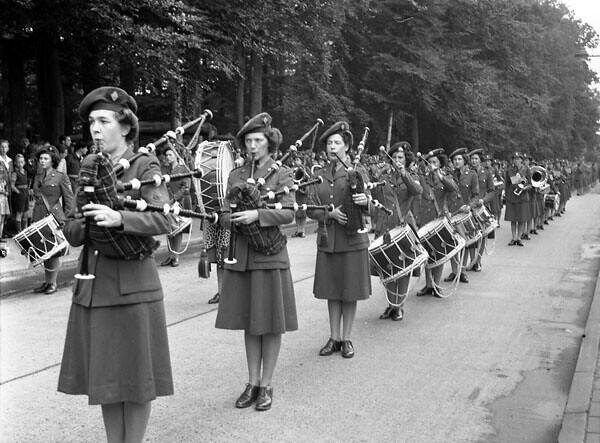
The rapid growth of the country's economy was a major reason to encourage women's participation in the workforce. In addition to working in factories to support their families financially in the absence of male family members, many women also entered the armed forces to contribute to the country's war effort.
However, there was also increased discrimination and racism towards the Japanese Canadian people in the country. Influenced by the invasion of Japan on Pearl Harbor and the Battle of Hong Kong, over 20,000 Japanese Canadians were forced to relocate and underwent internment on February 22, 1942. This historic event is undeniably one of the darkest moments in Canadian history.
After the Second World War ended in 1945, Canada also became a founding member of the United Nations, increasing its diplomatic presence and influence as a nation.
Social Movements and Cultural Shifts
Social movements have played a key role in shaping Canada into the country it is today. From the fight for women’s suffrage to Quebec’s Quiet Revolution, these moments reflect the journey toward greater equality, identity and social change.
The Women's Suffrage Movement
We can't really talk about Canadian history without mentioning the women's rights movement, which shaped many important milestones in the country's history. The early focus of the women's rights movement in Canada centered around religious and educational rights, laying the groundwork for broader rights in the following years.
The women’s suffrage movement focused on securing the right to vote and greater participation in public life. In the late 19th and early 20th centuries, women began to form organizations such as the Women's Christian Temperance Union in Canada (WCTU) and the National Council of Women of Canada (NCWC) to advocate for social and political rights.
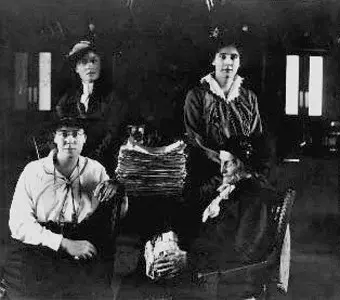
Suffrage rights made up a big part of the women's rights movement in Canada, with the awareness spreading to different provinces and regions such as Manitoba, Ontario and British Columbia by key activists such as Nellie McClung and Margret Benedictsson. Their work paid off when Manitoba became the first province in Canada to grant women voting rights on January 28, 1916, followed by other provinces. 9
The Quiet Revolution in Quebec
The Quiet Revolution was a major event in Quebec during the 1960s, shifting the community from traditional structures to modern society. Previously, the Catholic Church had a significant influence on the people of Quebec in terms of education and social life.

However, when Jean Lesage and the Quebec Liberal Party won the 1960 election, it marked a political and social shift in the province.
Lesage established a Ministry of Education and lowered the voting age from 21 to 18.
At the same time, Québec took greater control of its economy. Private electronic companies were nationalized under Hydro-Québec in 1962, ensuring economic stability and equality for the Quebec community, where the local economy was dominated by American companies.
Last but not least, the Quiet Revolution also pushed for the protection and recognition of the French language and heritage in Quebec. After the Quiet Revolution, the Canadian government introduced the Official Languages Act in 1969, which made Canada an officially bilingual country. 10
Indigenous Rights Movements
After generations of discrimination and harmful policies such as the residential school system, Indigenous communities across the country have continued to fight for recognition and justice.
In 1982, Indigenous rights were formally recognized in the Canadian Constitution. Since then, Indigenous activism has led to greater awareness. For example, the Truth and Reconciliation Commission (2008–2015) addressed the problems between Indigenous and non-Indigenous communities. And the Idle No More movement of 2012 continues to raise awareness about Indigenous rights and environmental protection.
Modern Milestones
As Canada moved toward the end of the 20th century, it continued to redefine its identity, not only domestically but also on the international stage. Political decisions, debates over unity and international engagement helped shape modern Canada.
The Patriation of the Constitution and the Charter of Rights and Freedoms
In 1982, Canada gained full control over its Constitution, ending the need for British approval. And at the same time, the Canadian Charter of Rights and Freedoms was introduced. This document guarantees fundamental rights like freedom of expression, equal rights and legal protections.
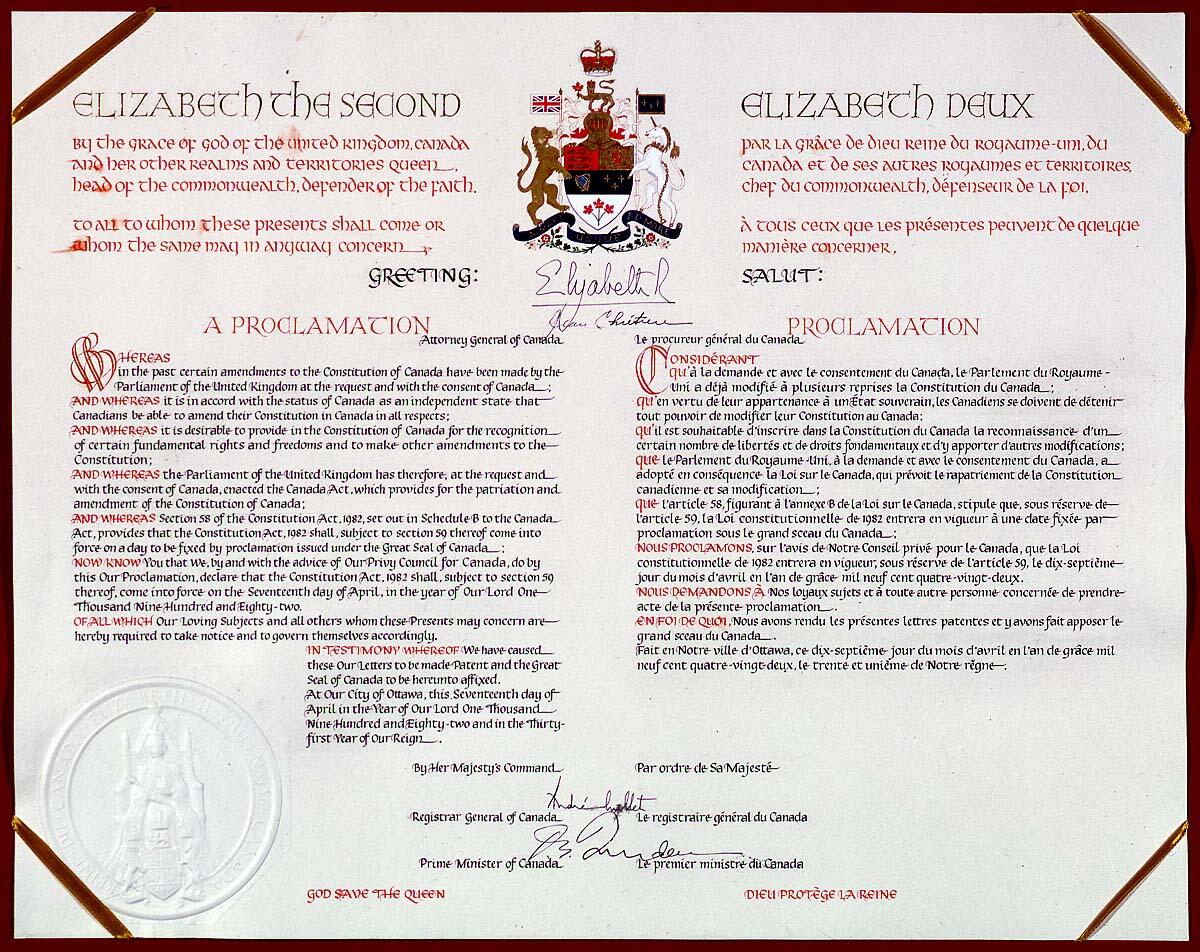
Furthermore, it reinforces the language rights of Canadians, and the possibility of using the two official languages in Parliament and in federal courts, as well as multiculturalism and the rights of Indigenous peoples. 11
The 1995 Quebec Referendum
In 1995, Quebec held a referendum to decide whether it should become independent from Canada. The 1995 Quebec Referendum proposed the province's sovereignty while seeking a new economic and political partnership with Canada. However, the referendum was rejected, sparking an ongoing debate and divided opinions about Quebec’s identity. 12
Canada's Role in Global Affairs
The Canadian Armed Forces have participated in United Nations missions around the world, helping to maintain peace in conflict zones and providing humanitarian aid. Indeed, Canada was a founding member of the United Nations in 1945, a founding member of NATO in 1949, and a member of the G7 in 1976.
Recent Developments
Canada has continued to evolve over the decades, addressing past injustices while responding to new global and social challenges.
Truth and Reconciliation Commission
The Truth and Reconciliation Commission was established in 2008 with the aim of documenting the history and harm caused by the residential schools. It collected thousands of testimonies, organized national events, examined millions of federal documents, and created a permanent archive housed at the National Center for Truth and Reconciliation. In 2015, the TRC published its final report, and since then, Canada has promoted Indigenous peoples' rights. 13
Legalization of Same-Sex Marriage
In 2003, Ontario and British Columbia were the first two provinces to legalize same-sex marriage. However, it was not until July 20, 2005, that the federal Civil Marriage Act came into force, legalizing same-sex marriage across Canada. Canada became the third country to allow same-sex marriage, after the Netherlands and Belgium. 14
The legalization of same-sex marriage not only granted legal recognition and protection to LGBTQ+ couples across the country but also reflected society’s shifting attitudes toward inclusion and diversity.
Canada's Response to Global Challenges
Both in Canada and around the world, the effects of climate change are evident and pose a risk to human health, safety and biodiversity. Canada’s 2030 Emissions Reduction Plan is a federal government strategy to reduce greenhouse gas emissions, combat climate change, and strengthen the economy by creating sustainable jobs and clean industrial growth. The goal is to reduce emissions by 40 to 45 percent by 2030, on the path to net-zero emissions by 2050.
References
- Government of Canada; Crown-Indigenous Relations and Northern Affairs Canada. (2024, June 13). Indigenous peoples and communities. https://www.rcaanc-cirnac.gc.ca/eng/1100100013785/1529102490303
- Government of Canada; Crown-Indigenous Relations and Northern Affairs Canada. (2017, May 2). First Nations in Canada. https://www.rcaanc-cirnac.gc.ca/eng/1307460755710/1536862806124
- Storer, T., Widenor, R., & Center for Canadian-American Studies – W.W.U. (n.d.). Connecting History Classrooms to Canada: Early exploration and Aboriginal connections. In Center for Canadian-American Studies – W.W.U. [Journal-article]. https://www.socialstudies.org/sites/default/files/early_exploration_and_aboriginal_connections.pdf
- Discover Canada - Canada’s History. (2025, April 11). Government of Canada. https://www.canada.ca/en/immigration-refugees-citizenship/corporate/publications-manuals/discover-canada/read-online/canadas-history.html
- Origin of the name “Canada.” (2020, June 8). Government of Canada. https://www.canada.ca/en/canadian-heritage/services/origin-name-canada.html
- Treaty of Paris (1763). (n.d.). About Us. https://www.uottawa.ca/about-us/official-languages-bilingualism-institute/clmc/linguistic-history/historic-documents/treaty-paris-1763#:~:text=Through%20this%20treaty%2C%20France%20ceded,well%20as%20its%20fishing%20rights
- Dominion of Canada. The Canadian Encyclopedia. (2006, February 7). https://www.thecanadianencyclopedia.ca/en/article/dominion
- Omer Lavallée. (2025, November 28). Canadian Pacific Railway. The Canadian Encyclopedia. https://thecanadianencyclopedia.ca/en/article/canadian-pacific-railway
- Women's Suffrage in Manitoba. The Canadian Encyclopedia. (2016, May 6). https://www.thecanadianencyclopedia.ca/en/article/womens-suffrage-in-manitoba
- Official Languages Act (1969). The Canadian Encyclopedia (2006, February 7). https://www.thecanadianencyclopedia.ca/en/article/official-languages-act-1969
- The Constitution. (n.d.). The Office of the Commissioner of Official Languages. https://www.clo-ocol.gc.ca/en/constitution-repatriated-canadian-charter-rights-freedoms-adopted-making-linguistic-duality-constitutionally-recognized-principle
- Dominique Millette, & Britannica Editors. (n.d.). Quebec referendum of 1995. Britannica. https://www.britannica.com/topic/Quebec-referendum-of-1995
- Government of Canada; Crown-Indigenous Relations and Northern Affairs Canada. (2025, December 12). Delivering on Truth and Reconciliation Commission calls to action. https://www.rcaanc-cirnac.gc.ca/eng/1524494530110/1557511412801
- The Canadian Encyclopedia. (2024, March 11). Same-Sex Marriage in Canada. https://thecanadianencyclopedia.ca/en/article/same-sex-marriage-in-canada
Summarize with AI:
Did you like this article? Leave a rating!


 Loading...