Ever wonder why some singers can hit some high notes so effortlessly, while some just cruise through the low register with a rich-sounding tone? The fact is, a good singer cannot sing anything and everything. He or she must know the right songs to sing to accentuate their natural voice range with maximum strength and control. This is where a vocal range test comes into the picture.
Let's dive in and see how much you really know about vocal range!
Quiz
Quiz :


What Is a Vocal Range Test?
A vocal range test identifies your lowest usable note and your highest usable note, in a specific octave or semitone distance, usually written as two note names (for example, G2 to E4). 1
Vocal range refers to all the notes you can produce from bottom to top, including light head voice or falsetto if you can sing them clearly.
Comfortable range refers to notes you can sustain with steady tone, pitch, and volume without strain.
Identifying and understanding your vocal range is extremely useful for useful for singers, singing students, speakers, and anyone curious about their voice. For singing students and singers, a comprehensive vocal range test can help them in these three areas:
- Choose the right songs that fit their voice
- Have a consistent and safe singing practice session
- Have a guideline to measure range improvement
How to Find Your Vocal Range
Finding your vocal range can be straightforward. You can even do the test at home as long as you follow these few steps.
What You Need Before Starting
Here are a few things to prepare before the vocal range test.
- A piano, keyboard, or piano app
- A quiet place where you can hear your voice clearly
- 5–10 minutes when your voice feels rested (avoid testing immediately after shouting or heavy talking)
- An optional voice recorder or phone
Step-by-Step Vocal Range Test
Here's a simple guideline for your vocal range test.
| Step | What to do | What to avoid |
|---|---|---|
| 1. Warm up lightly | Hum gently, do 4–6 lip trills, and slide up/down like a siren through your middle range. | Jumping straight into very high/low notes; pushing volume. |
| 2. Start on a comfortable middle note | Speak or hum “ahh” in your normal speaking voice, then find the matching key on the piano/app. Many start near C4 (middle C) for women or C3 for men, but use whatever feels central. | Choosing a note that already feels high, low, or tight. |
| 3. Sing down to your lowest clear note | From your middle note, go down one semitone at a time (every key, black and white), matching each with your voice. Stop at the last note you can sing with a full, steady tone. | Dropping into vocal fry, breathy croak, or notes you can’t hold for ~2 seconds. |
| 4. Return to the starting note | Glide or step back up to your comfortable middle note to reset. | Rushing or skipping the reset, which can blur your sense of “comfortable.” |
| 5. Sing up to your highest clear note | From the middle note, go up one semitone at a time. It’s fine if your tone gets lighter (head voice/falsetto); stop when the note becomes unstable, inaudible, or clearly strained. | Forcing chest voice too high, squeezing the throat, or chasing a “scream” note. |
| 6. Record your endpoints | Write the lowest and highest note names (e.g., G2 and C5). That pair is your vocal range. | Counting notes you can only squeak out once or that hurt. |
Tips for Accurate Results
Here are some reminders as you take the test.
Forcing the notes can lead to coarseness; stop at the last notes where you can sing without strain
A rested voice gives a more reliable picture of your true capabilities
Keep the test condition similar and compare your lowest and highest notes across days
Focus on stable voice projection instead of high voice power
Ensures your vocal cords are well hydrated to vibrate more efficiently for a more accurate range

What Is My Vocal Range? How to Read Your Results
After completing the test, it's time to make sense of your vocal range results.
Write Down Your Lowest and Highest Notes
The musical notes are commonly written with a letter and a number. For example, the letter is the note name and the number tells you which octave that note is in.
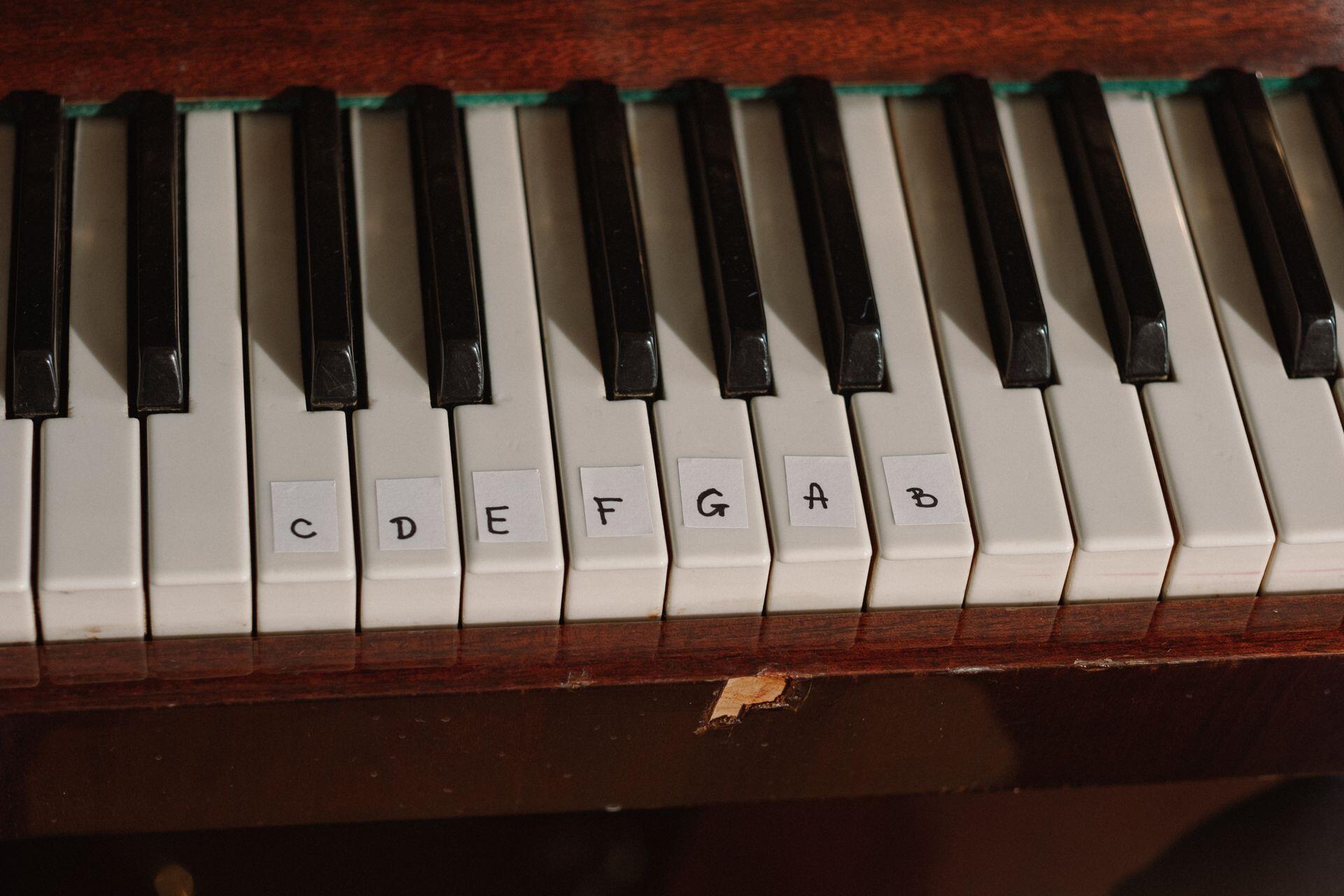
On a piano, the pattern C–D–E–F–G–A–B repeats many times, so the standard measurement is based on C4 = “middle C” (the C near the centre of a standard 88‑key piano).
- Numbers go down as you move left (lower pitches): C3, C2, C1…
- Numbers go up as you move right (higher pitches): C5, C6, C7…
The G below the low C (C3), near the left side of the keyboard
The C above middle C (C4), two white keys to the right of B4
So, G2-C5 means your tested range extends from E3 at the low end to G5 at the high end.
What the Result Does and Does Not Mean
Here's what to take note of based on your test results:
This helps you to train your vocal range within safe octaves and repertoires (not going beyond the highs and lows)
Your range can shift with training, warm‑up level, fatigue, health, and age
Vocal Range and Voice Type Classification
One of the most common misconceptions revolving around voice range tests is that your voice range will determine your voice type (soprano, alto, tenor or bass). Your voice type is determined by two important factors: tessitura and your overall tone quality.
Tessitura is where your voice is most comfortable, where it feels natural, sounds good, and is easier to use for longer periods. 2
For example, your vocal range could span from E3–G5, but your voice actually sounds best between G3–D5.
Here's an overview of common voice types and their approximate range. 3
| Voice type | Typical range (approx.) | Common tessitura (comfort zone) | Famous singer examples |
|---|---|---|---|
| Soprano (female) | C4 – C6 (sometimes higher) | Roughly G4 – C6 | Mariah Carey, Ariana Grande, Maria Callas, Whitney Houston, Sarah Brightman |
| Mezzo‑soprano (female) | A3 – A5 | Roughly E4 – G5 | Beyoncé, Adele, Lady Gaga, Cher, Cecilia Bartoli |
| Contralto / Alto (female) | F3 – F5 (some go lower) | Roughly D4 – E5 | Nina Simone, Annie Lennox, Tracy Chapman, Karen Carpenter |
| Countertenor (male) | E3 – E5 (often higher in falsetto/head) | Roughly G3 – D5 | Philippe Jaroussky, Andreas Scholl, Jakub Józef Orliński |
| Tenor (male) | C3 – C5 | Roughly E3 – B4 | Luciano Pavarotti, Bruno Mars, Ed Sheeran, Sam Cooke, Freddie Mercury |
| Baritone (male) | A2 – A4 (some G2 – G4) | Roughly C3 – G4 | Elvis Presley, Michael Bublé, John Legend, Chris Cornell, David Bowie |
| Bass (male) | E2 – E4 (some lower) | Roughly A2 – D4 | Barry White, Johnny Cash, Tim Storms, Leonard Cohen, Paul Robeson |
Common Vocal Range Mistakes to Avoid
Having said that, several mistakes can make the results misleading during the vocal range test.
Always use a short, gentle warm-up before testing
If you need to shout or squeak to reach a high note, that note shouldn't automatically count as part of your usable range
Falsetto is only counted as part of your usable range if you can sing it steadily, in tune, and without pain, whereas vocal fry (a low creaky sound that's unstable) is not your usable vocal range
We highly recommend that you repeat the test on different days and look for a consistent pattern
If there is persistent pain, hoarseness or a tingling sensation in your throat, stop the test immediately
How to Improve Your Vocal Range Safely
Improving your vocal range is a journey that anyone can embark on with dedication and the right approach. By understanding the basics of vocal technique, exploring different resources, and seeking help from experts, you can expand your vocal abilities and reach new heights.

There are countless ways to learn and improve, from online tutorials to vocal workshops and courses. The wealth of information available makes it easier than ever to find the guidance you need.
Once you know your current range, you can work on expanding it gradually. Here are some simple dos and don'ts:
🎤Dos
- Warm up daily with lip trills, humming, and gentle sirens
- Practice short scale patterns and arpeggios gradually
- Keep your volume moderate as you work through your range without forcing
- Hydrate well and rest your voice after heavier sessions
🎤Don'ts
- Force high notes and volume by shouting
- Practice through pain, or when you are sick, or very tired
- Jump octaves immediately
- Be too fixated on a single difficult note as your permanent limit
Experiment with different vocal exercises and singing styles to find what works best for your voice. Regular practice is key. Keep a journal to track your progress, note any challenges, and celebrate your achievements. Embrace the learning process and don't be afraid to push your vocal boundaries.
Learn with a Vocal Coach
Working with a vocal coach can significantly improve your singing abilities. A coach provides personalized guidance and feedback, helping you to expand your range and improve your technique.
Did you know that most untrained singers have a range of about 1.5 to 2 octaves while trained singers often reach 2 to 3 octaves? So, a vocal coach can certainly help you to reach a higher octave. 5
Whether your goal is to hit higher notes, strengthen your lower range, or sing with more confidence, a vocal coach can tailor lessons to your needs and help you achieve your singing goals.
Working with a skilled vocal coach, whether in person or through platforms like Superprof, offers personalized support and feedback tailored to your unique voice. This can make a significant difference in your progress, helping you to sing more confidently and effectively.
If you go to the gym every day, it's not really good. Your muscles get fatigued. Your vocal cords are muscles - they get burned out, they get tired, so you've got to give them the chance to recover and repair during the night.
Rob Halford, English heavy metal singer
Use Online Resources
The Internet is full of valuable information on vocal range. Websites, blogs, and YouTube channels offer tips on vocal exercises, techniques, and maintaining vocal health. Look for credible sources and systematic online tutorials to ensure you get accurate and helpful advice. 4
| Resource | Purpose | Best for |
|---|---|---|
| Piano or keyboard app | Play reference notes to match your voice | Finding exact lowest and highest pitches (e.g., G2, C5) |
| Tuner app | Show the pitch you’re producing in real time | Checking pitch accuracy and confirming note names |
| Vocal warm‑up videos | Guide gentle preparation before singing | Beginners who need safe, structured warm‑ups |
| Vocal‑range tester | Organize and record your lowest/highest notes | Getting quick range estimates and voice‑type hints |
| Metronome | Keep exercises at a steady tempo | Structured practice (scales, arpeggios, range work) |
Remember, your vocal range test result tells you how wide your currently usable range is. With consistent practice and a commitment to learning, anyone can improve their vocal range and unlock the full potential of their voice.
References
- Manuel, Josh. “How to Find Your Vocal Range: What a Range Test Actually Tells You.” Voice Science, Apr. 2026, https://www.voicescience.org/articles/how-to-test-your-vocal-range/#what-a-vocal-range-test-actually-measures. Accessed 8 Oct. 2026.
- Mayer, John. “What Is Tessitura? Meaning, Examples, and Why It Matters.” Voice Range Test, 17 Dec. 2025, https://voicerangetest.com/what-is-tessitura/. Accessed 8 Oct. 2026.
- Hagen, Eleni. “Understanding Different Voice Types.” The Kennedy Center, 2020, https://www.kennedy-center.org/education/resources-for-educators/classroom-resources/media-and-interactives/media/opera/understanding-different-voice-types/. Accessed 8 Oct. 2026.kennedy-center
- Leonhardt, S. “Great Vocal Exercises for Beginners.” 30 Day Singer Blog, 2024, https://www.30daysinger.com/blog/great-vocal-exercises-for-beginners. Accessed 8 Oct. 2026.
- “Human Vocal Range Guide: Average Ranges, Extremes, and How to Measure Yours.” Pitch Detector, 28 Dec. 2025, https://pitchdetector.com/human-vocal-range/. Accessed 8 Oct. 2026.
Summarize with AI:
Did you like this article? Leave a rating!


 Loading...