
Mathematics is one of humanity’s most powerful intellectual achievements. From measuring land in ancient civilizations to powering modern computers, mathematical ideas have shaped science, engineering, economics, and technology for thousands of years. 📐✨
| Era | Mathematicians | Lasting Contribution |
|---|---|---|
| Ancient (c. 624-212 BCE) | Thales, Pythagoras, Euclid, Archimedes | Established geometry, logical proof, and mathematical reasoning. |
| Renaissance (1596-1650) | René Descartes | United algebra and geometry through the Cartesian coordinate system. |
| Enlightenment (1642-1783) | Isaac Newton, Leonhard Euler | Revolutionised calculus, mathematical notation, and scientific mathematics. |
| Modern (1777-2015) | Gauss, Ramanujan, Nash | Advanced statistics, number theory, and game theory, laying foundations for modern science and economics. |
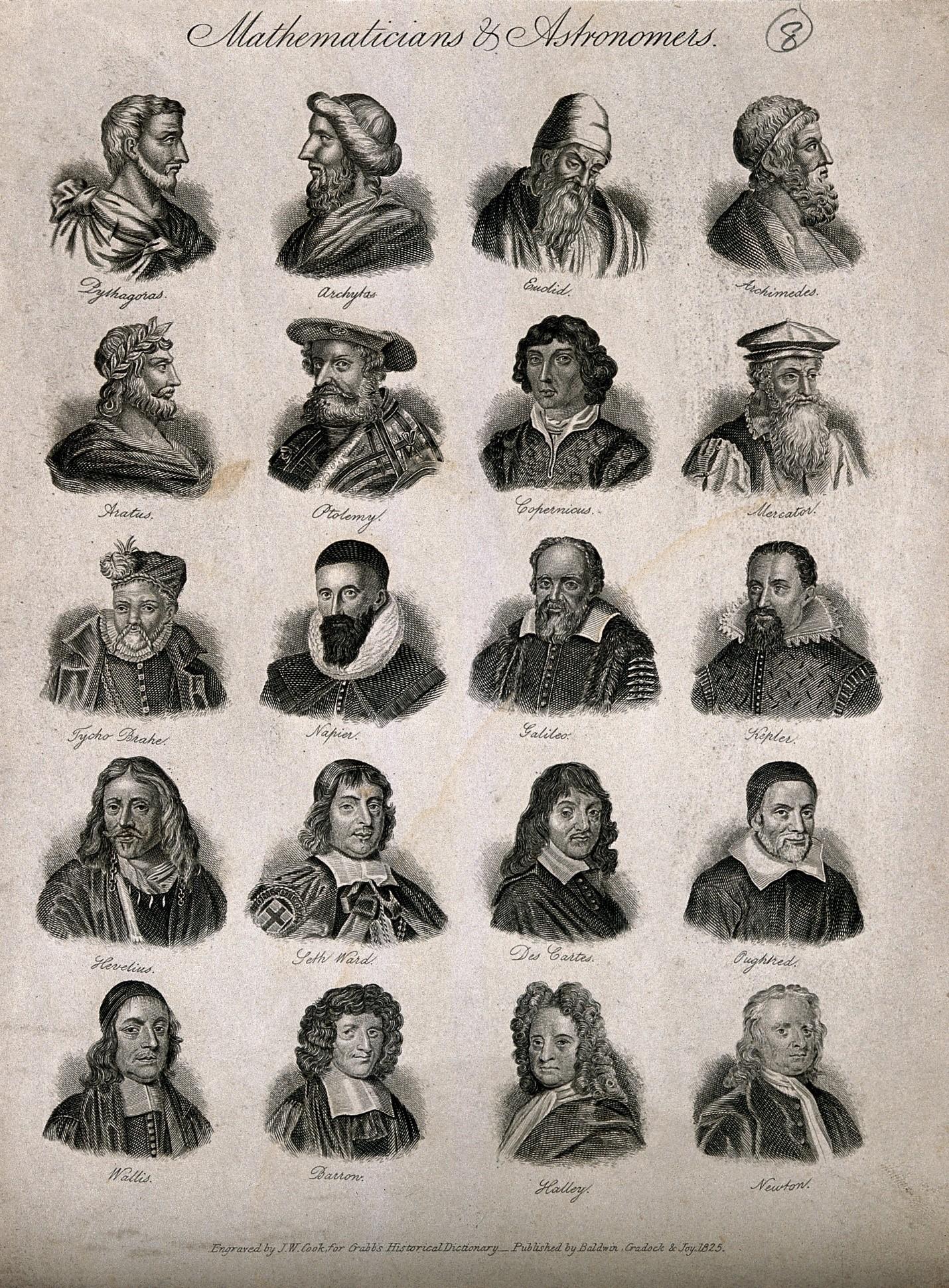
The story of mathematics is also the story of remarkable individuals whose discoveries transformed how we understand the world. Among the famous mathematicians who left a lasting mark on history are thinkers who developed geometry, calculus, number theory, and game theory. Their work continues to influence classrooms, research institutions, and industries across the globe.
This guide explores some of the most famous mathematicians, the greatest mathematicians of all time, and the most important mathematicians whose contributions still define modern mathematics.


Ancient Pioneers of Mathematics
Thales of Miletus
Thales of Miletus is widely regarded as the first known mathematician. Living during the 6th century BCE, he helped move mathematics away from observation and toward logical proof, laying the foundations for deductive reasoning. 🏛️
c. 624-546 BCE
Thales of Miletus
Often regarded as the first known mathematician, Thales introduced deductive reasoning and developed foundational geometric principles including Thales' theorem.
c. 570-495 BCE
Pythagoras of Samos
Founded the Pythagorean school and became famous for the Pythagorean theorem, helping establish the relationship between mathematics and the natural world.
c. 300 BCE
Euclid of Alexandria
Known as the "Father of Geometry," Euclid wrote Elements, the most influential mathematics textbook in history.
c. 287-212 BCE
Archimedes of Syracuse
Made groundbreaking advances in geometry, approximated π with remarkable accuracy, and developed principles of mechanics and hydrostatics.
Although often associated with philosophy, the spirit of rational inquiry reflected in sayings attributed to Thales influenced later mathematical thinking.
"The most difficult thing in life is to know yourself"
Thales of Miletus
His most famous contribution is Thales' theorem, a key principle in geometry involving angles within circles. More importantly, Thales demonstrated that mathematical statements could be proven through logic rather than accepted through tradition alone.
Thales introduced logical proof into mathematics, helping establish the discipline as a systematic field of knowledge rather than a collection of practical rules.
Beyond geometry, he studied astronomy and reportedly used celestial observations to assist navigation and predict seasonal events. His approach inspired generations of Greek scholars and marked the beginning of formal mathematical reasoning.
Pythagoras of Samos
Pythagoras remains one of the best-known figures in mathematics. His name is forever linked to the Pythagorean theorem, which describes the relationship between the sides of a right-angled triangle.
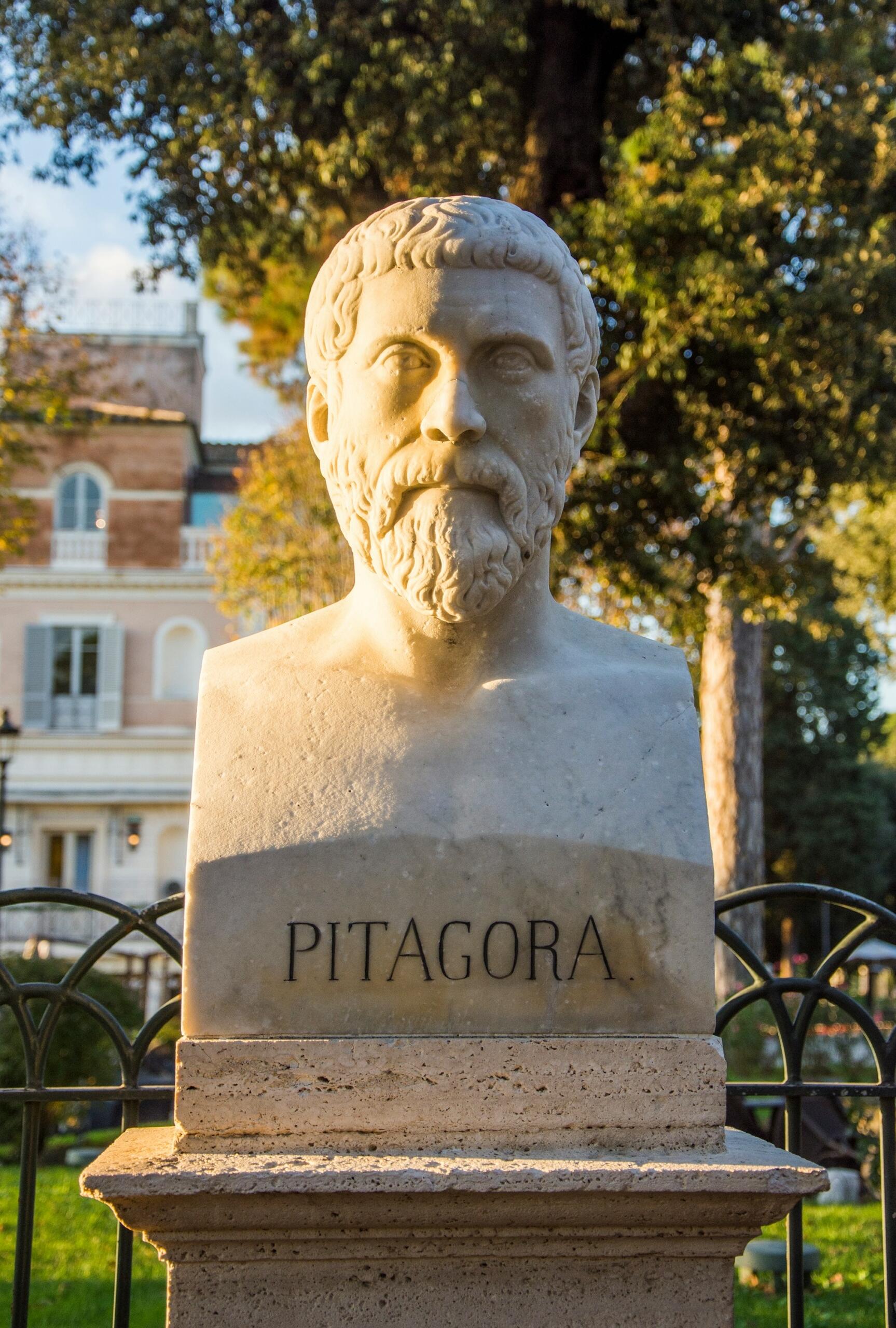
The theorem remains fundamental in geometry, engineering, architecture, and physics. Yet the influence of Pythagoras extended far beyond a single formula. He believed numbers governed the structure of reality and explored connections between mathematics, music, and nature. 🎵🔢
The school he founded, known as the Pythagorean brotherhood, combined mathematical study with philosophical teachings. Members investigated numerical relationships and helped establish number theory as an important field of inquiry.
The Pythagorean theorem is one of the most influential mathematical principles ever developed and remains a cornerstone of education worldwide.
Euclid of Alexandria
Euclid is often called the "Father of Geometry." His influence comes primarily from Elements, a mathematical text that shaped education for more than two millennia. 📚
Written around 300 BCE, Elements organized existing geometric knowledge into a logical system built from definitions, axioms, and proofs. This method became a model for mathematical reasoning and scientific thinking.
Euclid demonstrated how complex mathematical truths could be derived systematically from a small set of assumptions. This approach remains central to mathematics today.
Euclid's discoveries and work covered geometry, number theory, proportions, and mathematical logic. Students across generations learned geometry through principles first formalized in his writings.
Archimedes of Syracuse
Archimedes was among the most versatile mathematical minds in history. He made major advances and mathematical contributions in geometry while also contributing to engineering, physics, and mechanics. ⚙️
Archimedes investigated areas, volumes, and curved surfaces with extraordinary precision. His work on buoyancy led to the famous principle of hydrostatics, while his inventions included mechanical devices designed for lifting water and defending cities.
Archimedes combined mathematical theory with practical engineering, demonstrating how abstract ideas could solve real-world problems.
One of his greatest achievements was approximating the value of π with remarkable accuracy for his era. He also developed the method of exhaustion, a technique that anticipated ideas later used in calculus.
Renaissance and Enlightenment Mathematicians
Several new mathematicians continued to develop this field of study and continue to rise today.
1596-1650
René Descartes
Created the Cartesian coordinate system and analytical geometry, linking algebra and geometry for the first time.
1642-1727
Isaac Newton
Co-developed calculus, formulated the laws of motion and gravitation, and transformed mathematics into a key tool of modern science.
1707-1783
Leonhard Euler
One of the most prolific mathematicians ever, Euler revolutionised mathematical notation and made major contributions to number theory, calculus, and graph theory.
1777-1855
Carl Friedrich Gauss
The "Prince of Mathematicians" whose work shaped number theory, statistics, astronomy, electromagnetism, and geometry.
1887-1920
Srinivasa Ramanujan
A largely self-taught genius whose discoveries in number theory and infinite series continue to influence mathematical research today.
1928-2015
John Forbes Nash Jr.
Developed the Nash equilibrium in game theory, transforming economics, political science, and strategic decision-making.
These mathematicians are explored further below.
René Descartes
René Descartes transformed mathematics through the creation of the Cartesian coordinate system. By linking algebra and geometry, he made it possible to represent geometric shapes using equations. 📈
This innovation created analytical geometry, a field that forms the basis of modern graphing, computer graphics, and engineering design.
"Divide each difficulty into as many parts as is feasible and necessary to resolve it."
René Descartes
Descartes also produced many scientific works, influencing scientific methodology through his emphasis on systematic reasoning. His famous statement, "I think, therefore I am," reflected a broader commitment to logical inquiry that shaped both mathematics and philosophy.
The coordinate plane taught in schools today remains one of his most enduring legacies.
Isaac Newton
Isaac Newton is frequently listed among the greatest mathematicians of all time. His development of calculus revolutionized mathematics and provided powerful tools for understanding motion and change. 🍎
Newton's landmark work
Philosophiæ Naturalis Principia Mathematica
Achievements:
Established mathematical laws governing mechanics and planetary motion.
Effect of mathematical principles:
Transformed physics and influenced scientific research for centuries.
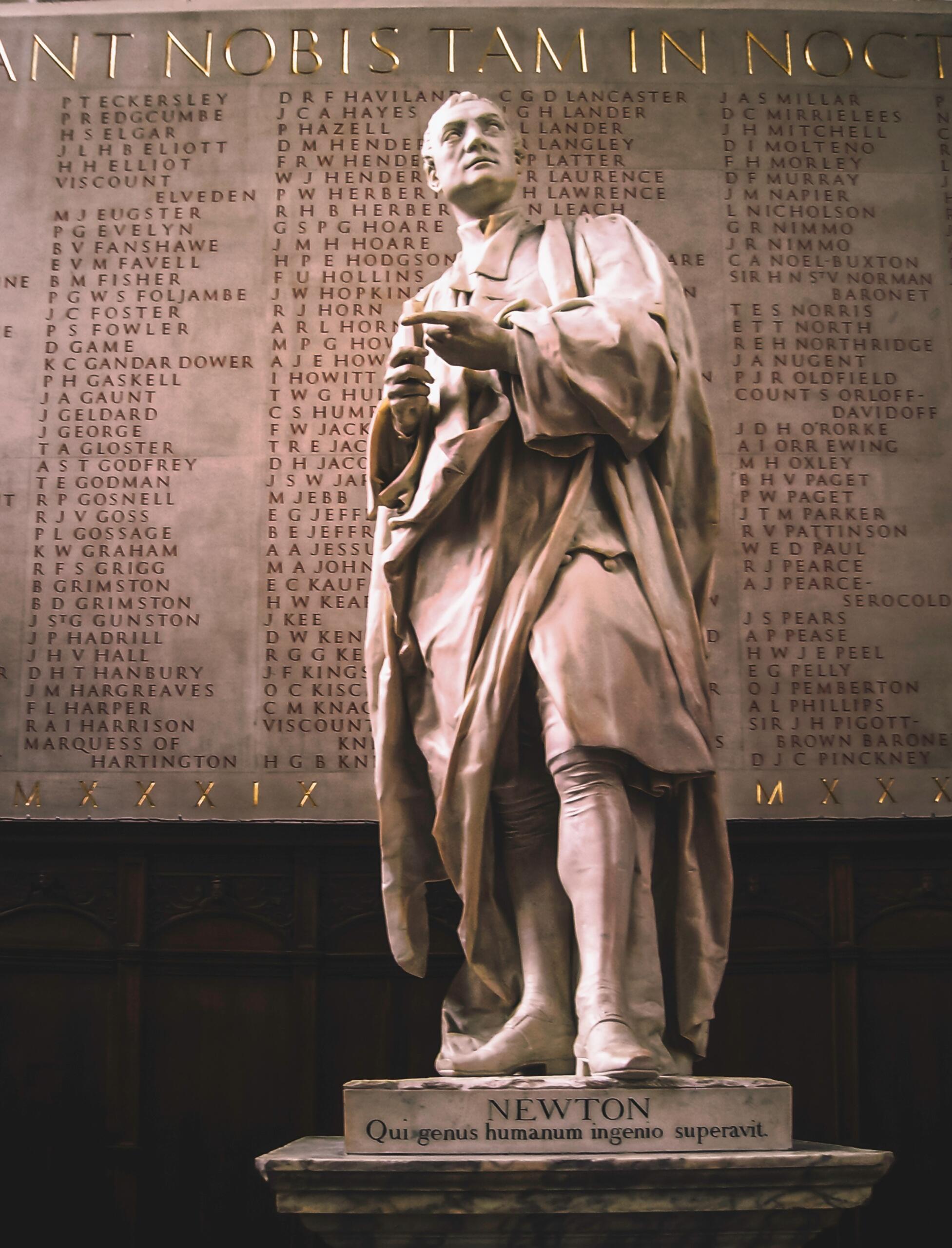
In addition to calculus, Newton contributed to optics, algebra, and the binomial theorem. His investigations and experiences with light revealed that white light contains a spectrum of colours, while his mathematical methods enabled more precise scientific analysis.
Newton's influence extends far beyond mathematics, but his mathematical innovations remain among the most significant in history.
Leonhard Euler
Leonhard Euler was one of the most prolific scholars ever to work in mathematics. His contributions spanned calculus, number theory, graph theory, mechanics, and mathematical notation. ✍️
Many symbols still used today, including f(x) and the famous constant e, became widely adopted through Euler's work.
His writings helped standardize mathematical communication across Europe.
Euler also laid foundations for graph theory, a field now essential in computer science, network analysis, and logistics. His research in number theory produced results that continue to inspire modern mathematicians.
Among the most important mathematicians in history, Euler stands out for both the quantity and quality of his discoveries.
Modern Era Mathematicians
Carl Friedrich Gauss
Carl Friedrich Gauss is often called the "Prince of Mathematicians." His achievements touched nearly every major branch of mathematics. 👑
Gauss made groundbreaking contributions to number theory through Disquisitiones Arithmeticae, a work that helped define the field. He also advanced statistics, giving rise to concepts such as the normal distribution that remain essential today.
| Euclid | Carl Friedrich Gauss | |
|---|---|---|
| Era: | c. 300 BCE | 1777-1855 |
| Major Works: | Elements | Research in differential geometry and curved surfaces. |
| Geometric View: | Geometry is built from axioms, definitions, and logical proofs. | Explored geometries that did not necessarily follow Euclid's assumptions. |
| Space: | Assumed flat space, now known as Euclidean geometry. | Investigated curved surfaces and helped lay foundations for non-Euclidean geometry. |
| Famous Concept: | The parallel postulate, which states that only one parallel line can pass through a point outside a given line. | Demonstrated that geometry could describe curved spaces as well as flat ones. |
| Impact: | Established geometry as a rigorous deductive system and dominated mathematical education for over 2,000 years. | Opened the door to modern geometry and influenced later developments in physics, including relativity. |
| Real World Examples: | Architecture, surveying, engineering, and school geometry. | Mapping the Earth, geodesy, navigation, and modern theoretical physics. |
His research extended into astronomy, geodesy, and electromagnetism. Gauss also explored non-Euclidean geometry, opening new pathways for mathematical thought.
Many historians rank him among the most famous mathematicians due to the breadth and depth of his influence.
Srinivasa Ramanujan
Srinivasa Ramanujan represents one of the most remarkable stories in mathematical history. Largely self-taught, he produced extraordinary discoveries despite limited formal training. 🌟
Ramanujan made important contributions to number theory, partitions, infinite series, and continued fractions. His notebooks contained thousands of formulas, many of which were verified decades later.
His collaboration with G. H. Hardy at the University of Cambridge brought international recognition to his work. Although his life was tragically short, his ideas continue to influence modern mathematical research.
His story remains a powerful example of creativity and intellectual brilliance.
John Forbes Nash Jr.
John Forbes Nash Jr. transformed economics and social science through his work in game theory. 🎯
His concept of the Nash equilibrium describes situations in which participants make optimal decisions while considering the choices of others. The theory has applications in economics, business strategy, political science, and artificial intelligence.
Who do you consider the greatest mathematician of all time?
Nash's achievements earned him the Nobel Prize in Economic Sciences and secured his place among the most important mathematicians of the modern era.
His work demonstrated how mathematical reasoning could explain complex human behaviour and decision-making.
The Evolution of Mathematical Thought
The Transition from Ancient to Modern Mathematics
Mathematics has evolved dramatically over the centuries. Ancient mathematicians focused heavily on geometry, measurement, and numerical relationships. As civilizations exchanged knowledge through trade, scholarship, and exploration, mathematical ideas expanded and became more sophisticated. 🌍
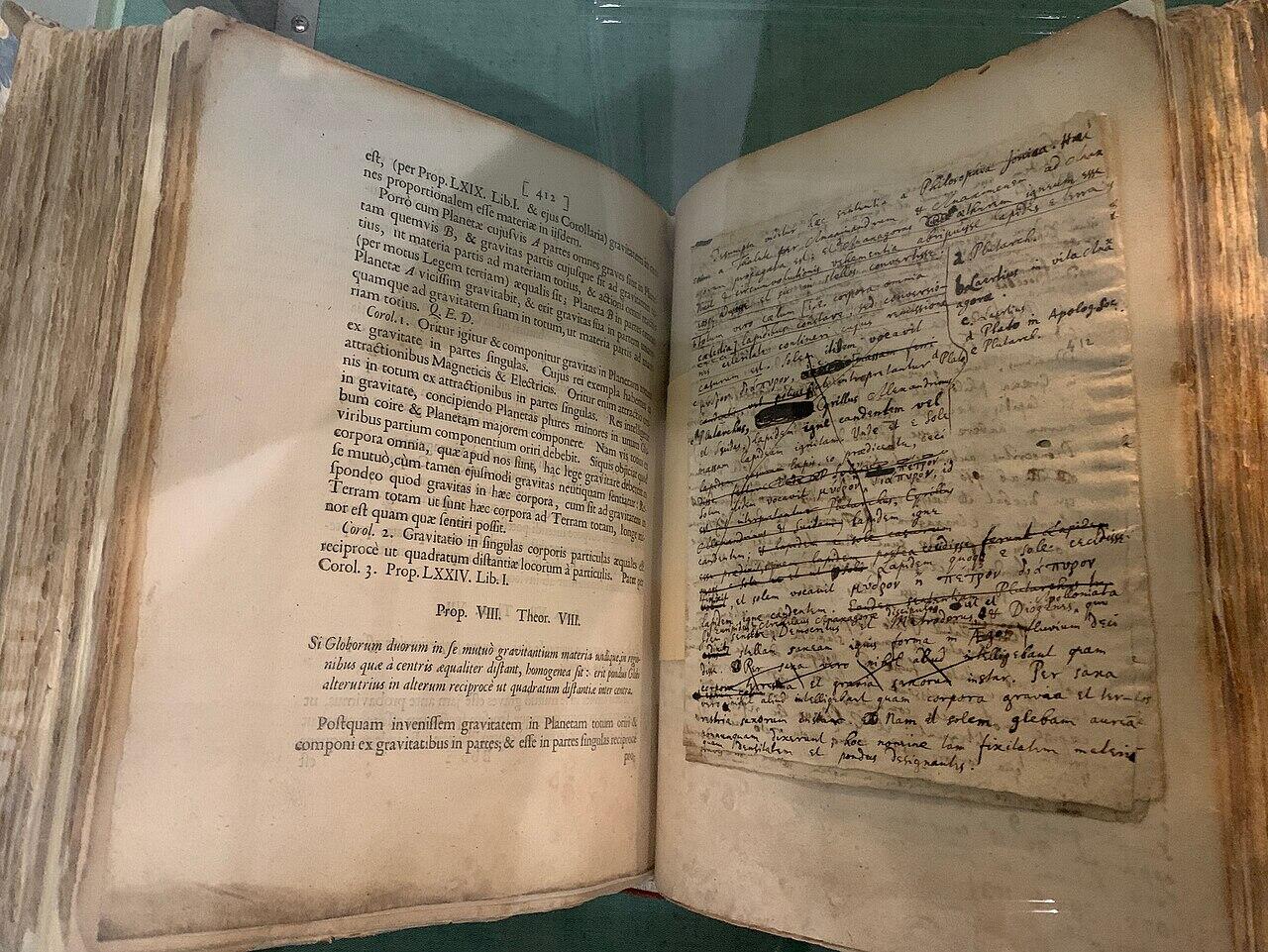
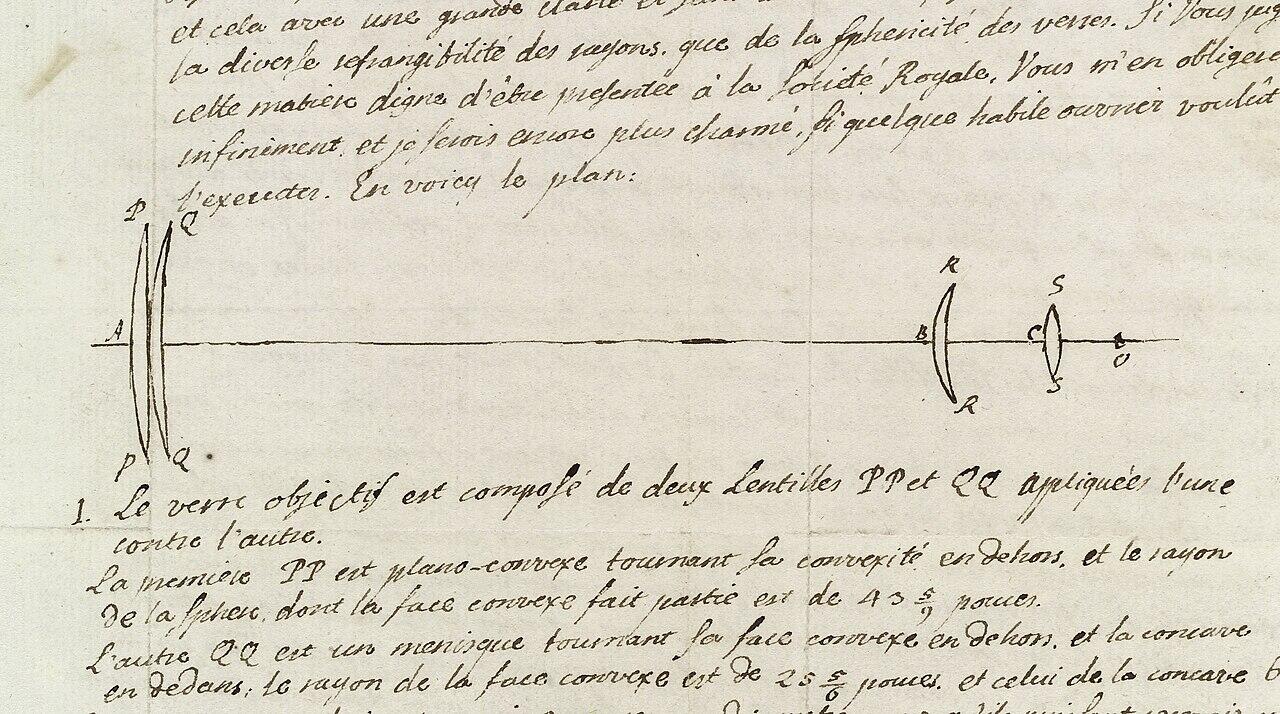
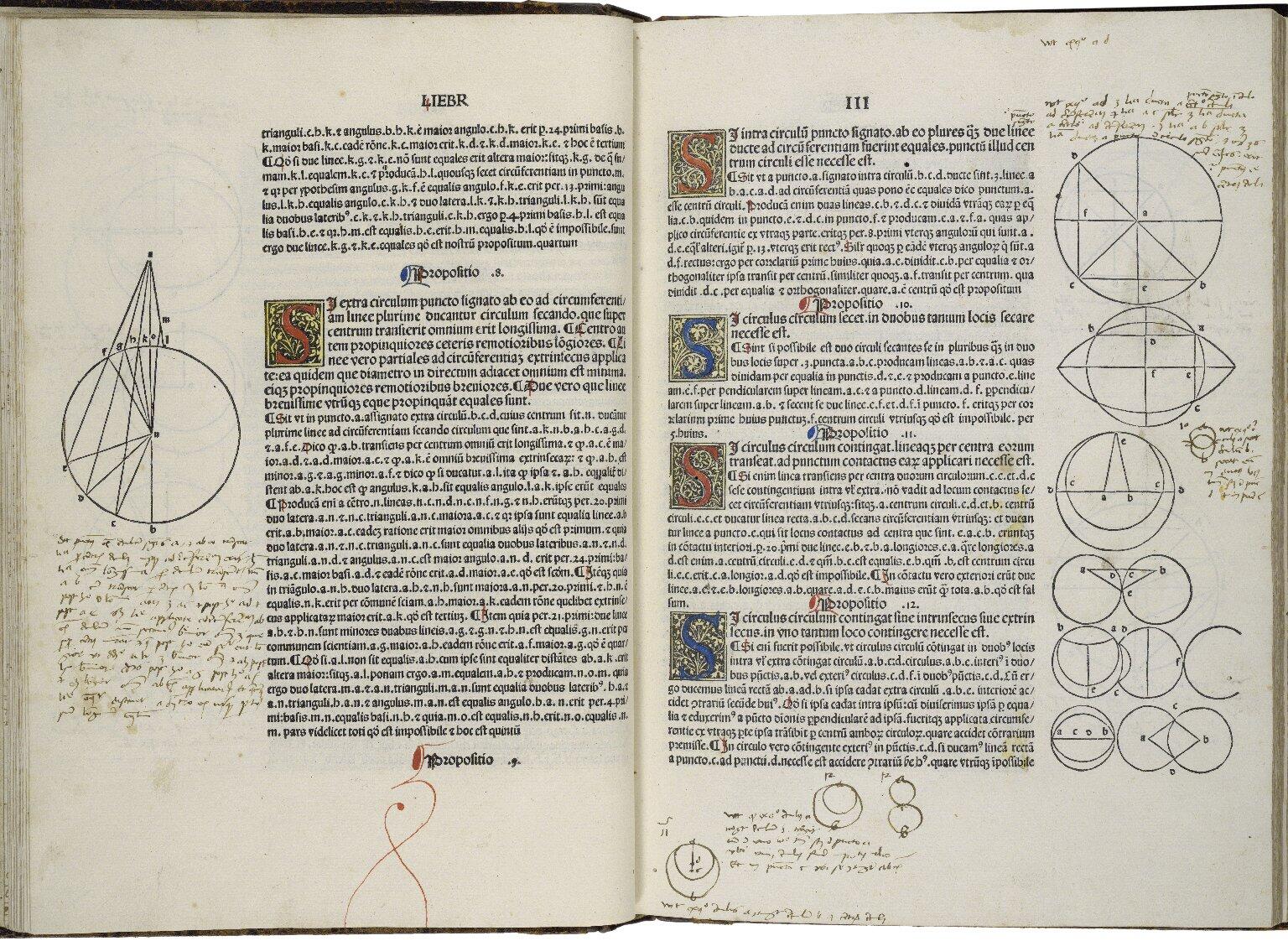
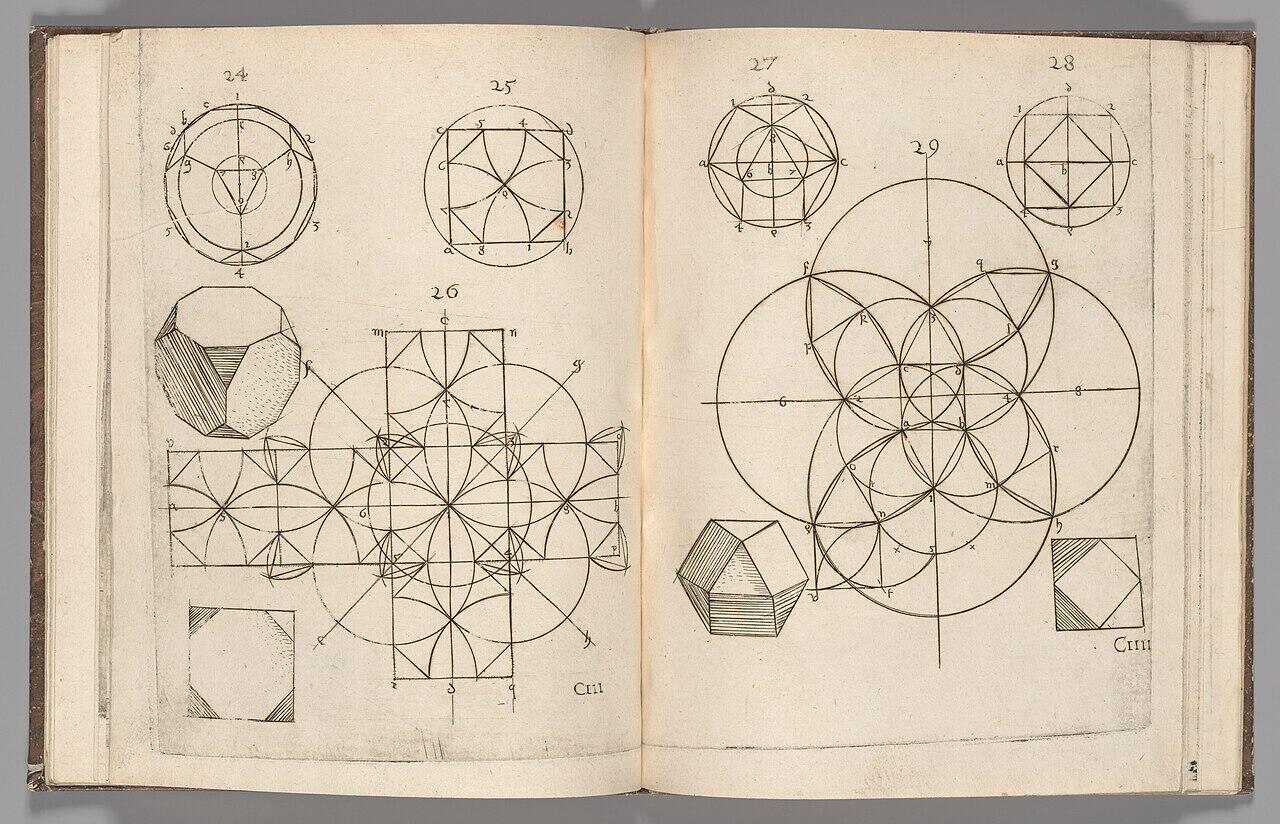
The development of algebra in the medieval world, analytical geometry during the Renaissance, and calculus in the Enlightenment transformed mathematical thinking. Printing technology also accelerated the spread of knowledge, allowing discoveries to reach wider audiences than ever before.
From geometric proofs to abstract structures, mathematics continually adapted to new challenges and intellectual developments.
The Role of Mathematicians in Advancing Science and Technology
The achievements of famous mathematicians have consistently driven scientific progress. Newton's calculus enabled modern physics, Euler's notation improved mathematical communication, and Nash's game theory reshaped economics.

Today, mathematical principles underpin technologies such as computer algorithms, cryptography, artificial intelligence, satellite navigation, and data science. 💻🚀
The work of these pioneers demonstrates that mathematics is not merely theoretical. It is a practical tool that continues to shape innovation and expand human understanding.
The journey from Thales' geometric observations to Nash's strategic models illustrates how mathematical thought has evolved while remaining central to scientific and technological advancement.
The legacy of these great thinkers continues to influence the modern world in ways both visible and profound. Learn more by finding online mathematics tutors with Superprof.
References
- Boyer, C.B. & Merzbach, U.C. (2011) A History of Mathematics. 3rd ed. Hoboken: Wiley. Available at: https://archive.org/details/historyofmathema00boye. Accessed 31 May 2026.
- Kline, M. (1990) Mathematical Thought from Ancient to Modern Times. New York: Oxford University Press. Available at: https://archive.org/details/mathematicalthou00klin. Accessed 31 May 2026.
- Stillwell, J. (2010) Mathematics and Its History. 3rd ed. New York: Springer. Available at: https://link.springer.com/book/10.1007/978-1-4419-6053-5. Accessed 31 May 2026.
Summarize with AI:
Did you like this article? Leave a rating!


 Loading...