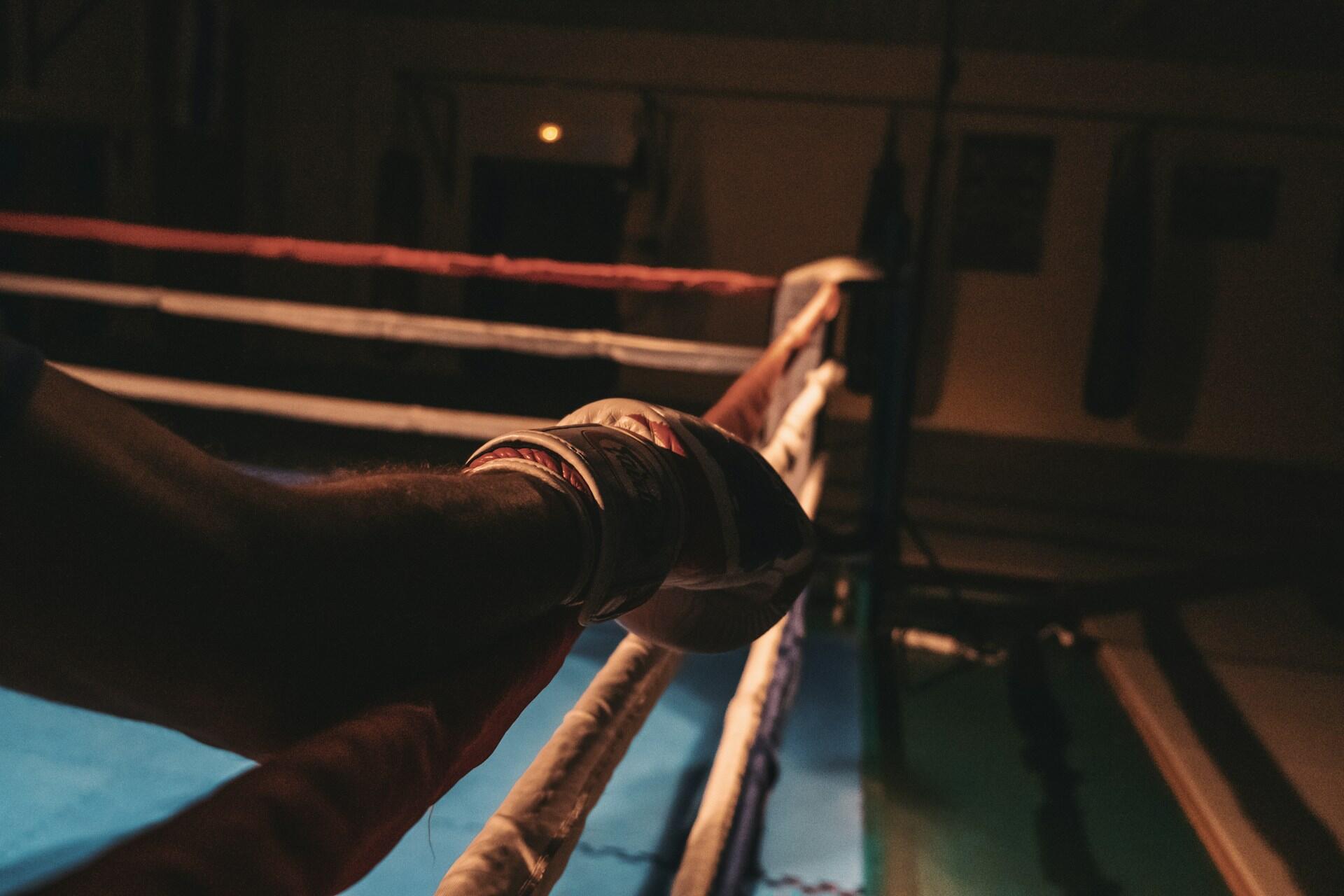

Kickboxing has grown from a niche martial art into one of the world's most popular combat sports. Practiced by millions of people for fitness, self-defense, and competition, it combines the precision of boxing with the power and versatility of martial arts kicking techniques.
Unlike mixed martial arts (MMA), kickboxing focuses almost entirely on stand-up striking. Fighters use combinations of punches, kicks, and, depending on the rule set, knee strikes to score points or finish the contest. Wrestling, submissions, and prolonged grappling are generally prohibited, making kickboxing a fast-paced sport that rewards timing, movement, conditioning, and precision.
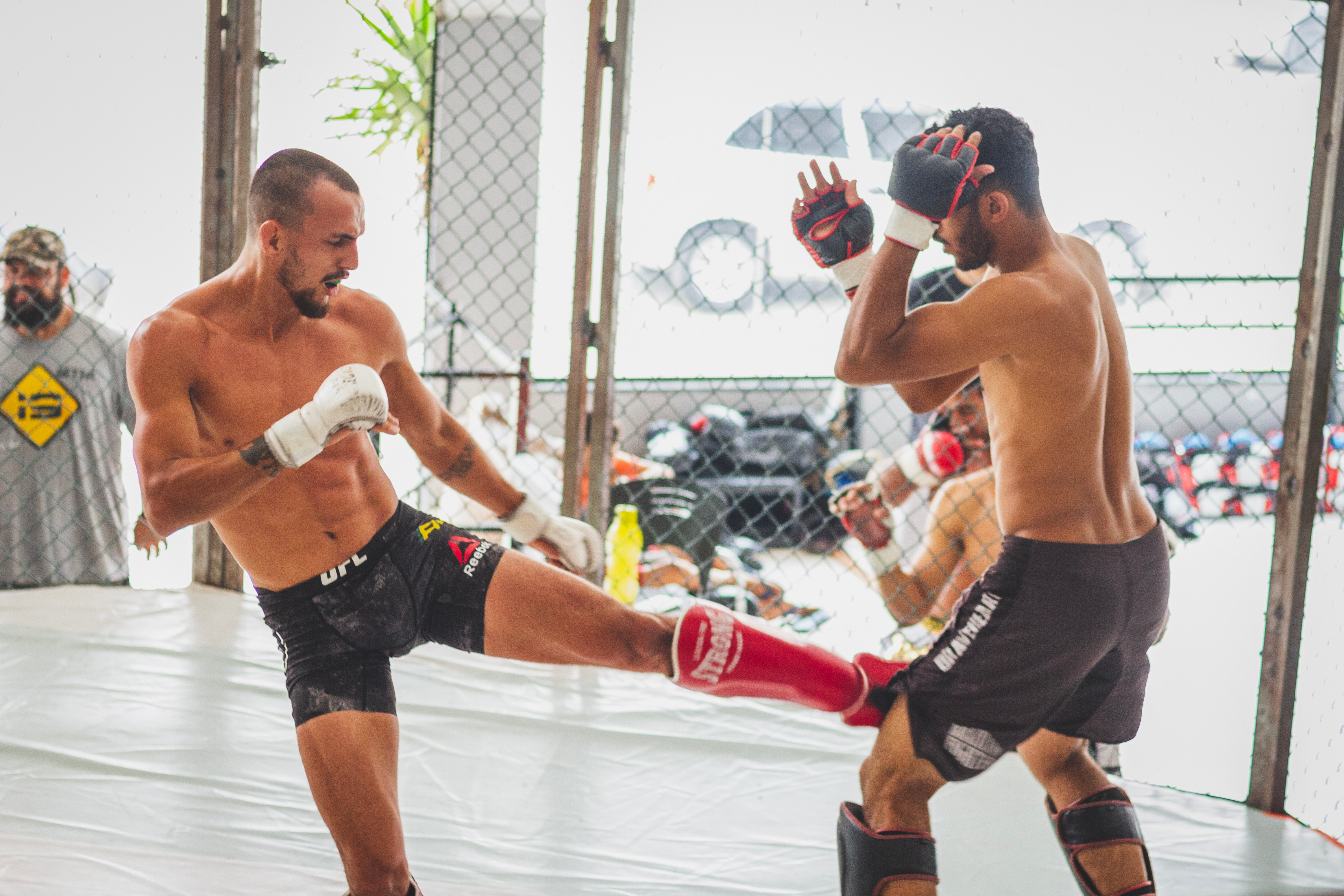
Although kickboxing appears straightforward to spectators, the sport is governed by detailed rules designed to create fair competition while protecting athlete safety. Understanding these rules helps athletes compete more effectively and allows fans to better understand why rounds are won or lost. You’ll also feel better prepared if you are thinking of starting the sport yourself!
Muay Thai boxing and savate are essentially different sports. Find out more about the different types of kickboxing here.


Overview of Kickboxing
Kickboxing is a striking martial art that combines techniques from boxing, karate, Muay Thai, taekwondo, and other traditional martial arts. Rather than focusing on one discipline, kickboxing blends the most effective standing strikes into a single competitive sport. The result is a dynamic contest in which speed, power, footwork, balance, and endurance are equally important.
History of Kickboxing
Modern kickboxing emerged during the 1960s and 1970s when martial artists sought opportunities to compete using full-contact striking. Traditional karate tournaments often emphasized point fighting, where competitors stopped after each successful technique. Many practitioners wanted competitions that rewarded continuous action and realistic combinations.
Japan became one of the first countries to formalize kickboxing by blending karate techniques with elements of Muay Thai. Around the same time, promoters in the United States developed American full-contact karate competitions that eventually evolved into modern kickboxing.
Over the following decades, international organizations established standardized rules, weight classes, judging systems, and safety equipment that allowed athletes from around the world to compete under consistent regulations.
Today, kickboxing is practiced professionally and recreationally on every continent. International tournaments attract elite competitors from Europe, Asia, North America, South America, Africa, and Oceania, making it one of the world's most globally recognized combat sports.
Here we go. These are the essential rules you need to know before embarking on your kickboxing training. And then check out the health benefits of kickboxing!
1960s
Modern kickboxing is created in Japan
Japanese promoter Osamu Noguchi combined elements of karate and Muay Thai, coining the term kickboxing and establishing the modern sport.
1974
Professional Karate Association (PKA) is founded
The PKA standardized American full-contact kickboxing and helped popularize the sport through televised competitions.
1993
K-1 launches in Japan
K-1 introduced an exciting international ruleset and showcased elite fighters, bringing professional kickboxing to a global audience.
2010s
Global professional promotions expand
Organizations such as Glory Kickboxing and WAKO increased international participation, professional opportunities, and worldwide recognition.
2021
WAKO receives full IOC recognition
Full recognition by the International Olympic Committee marked a significant milestone, strengthening kickboxing's status as an internationally governed sport and supporting its continued global growth.
Styles and Variations
Although people often use the term kickboxing to describe a single sport, several rule sets exist, each emphasizing different techniques and strategies.
| Rule Set | Legal Techniques | Clinch Rules | Primary Targets | Best Known For |
|---|---|---|---|---|
| Full Contact Kickboxing | Punches and kicks above the waist | Not permitted | Body and head | Fast-paced striking with an emphasis on boxing combinations and high kicks. |
| International Rules | Punches, kicks, and limited knee strikes | Brief clinch to deliver one knee | Legs, body, and head | A balance between traditional kickboxing and Muay Thai techniques. |
| Low Kick Rules | Punches, body kicks, head kicks, and leg kicks | Usually not permitted | Legs, body, and head | Incorporates powerful low kicks that add a tactical element to matches. |
| K-1 Rules | Punches, kicks, and knee strikes | Brief clinch with one knee strike before the referee separates fighters | Legs, body, and head | The most popular professional ruleset, emphasizing continuous action and exciting exchanges. |
| Muay Thai | Punches, kicks, knees, elbows, and sweeps | Extended clinching permitted | Legs, body, and head | Known as the "Art of Eight Limbs," allowing the widest range of striking techniques and prolonged clinch fighting. |
Full Contact Kickboxing is one of the earliest standardized forms. Competitors use punches and kicks above the waist while maintaining continuous movement. Knee strikes, elbow strikes, and extended clinching are generally prohibited, encouraging fast combinations and technical exchanges.
International Rules broaden the range of legal techniques by allowing low kicks and, in many organizations, limited knee strikes. Because fighters must defend attacks to both the legs and upper body, these contests often become more tactical and physically demanding.
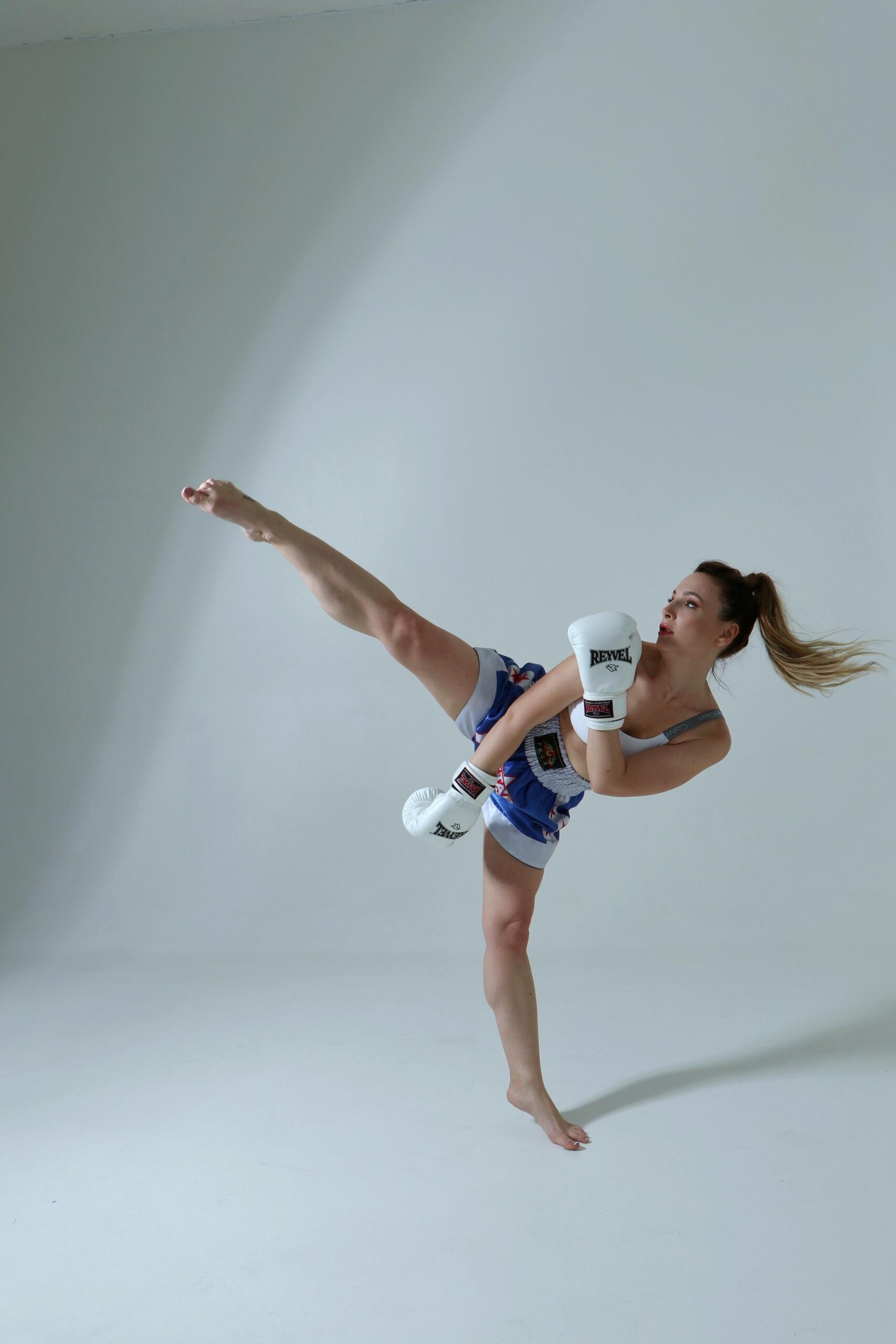
Low Kick Kickboxing places considerable emphasis on attacks to the thighs. Repeated leg kicks can significantly reduce an opponent's mobility over the course of a match, forcing competitors to develop stronger defensive skills and conditioning.
Professional organizations such as K-1 have developed their own internationally recognized rules that allow punches, body kicks, leg kicks, head kicks, and limited knee strikes while restricting prolonged clinching.
K-1 rules have become particularly popular because they produce exciting, fast-paced contests that reward aggressive striking. Although Muay Thai is technically its own martial art rather than a form of kickboxing, it shares many similarities. However, Muay Thai permits elbow strikes, extended clinching, and sweeps, making it considerably different from most kickboxing competitions.
Understanding which rule set governs a particular event is important because techniques that are perfectly legal in one organization may result in penalties or disqualification in another.
Fundamental Rules of Kickboxing
Despite differences between organizations, the fundamental structure of kickboxing remains remarkably consistent.
Match Structure
Most amateur contests consist of three rounds lasting two minutes each, while professional matches generally feature three to five rounds of three minutes each. Championship contests frequently include five rounds to allow competitors additional opportunities to demonstrate endurance and technical superiority. Between rounds, fighters receive one minute to recover while coaches provide tactical advice and ringside medical personnel assess each athlete's condition.
Most rounds last:
Each round is followed by a one-minute rest period.
During the break, coaches provide tactical advice while medical personnel monitor fighter safety
To ensure fairness, fighters compete within designated weight classes. Matching athletes of similar size reduces injury risk while allowing contests to be decided primarily by skill rather than physical advantages.
| Weight Class | Maximum Weight (kg) | Maximum Weight (lb) |
|---|---|---|
| Flyweight | 51 kg | 112 lb |
| Bantamweight | 54 kg | 119 lb |
| Featherweight | 57 kg | 126 lb |
| Lightweight | 60 kg | 132 lb |
| Welterweight | 67 kg | 147 lb |
| Middleweight | 75 kg | 165 lb |
| Light Heavyweight | 81 kg | 179 lb |
| Heavyweight | Over 91 kg | Over 201 lb |
Before every event, competitors participate in official weigh-ins to verify that they meet the required weight for their division.
Permitted Techniques
Kickboxing allows a wide variety of offensive techniques, but every strike must be delivered with legal surfaces of the body and to approved target areas.
Punching techniques are identical to those used in boxing. Competitors use jabs to establish distance and disrupt their opponent's rhythm, crosses to generate power through hip rotation, hooks to attack from the side, and uppercuts during close-range exchanges. Elite fighters rarely rely on individual punches, instead combining multiple strikes together to overwhelm defensive openings.
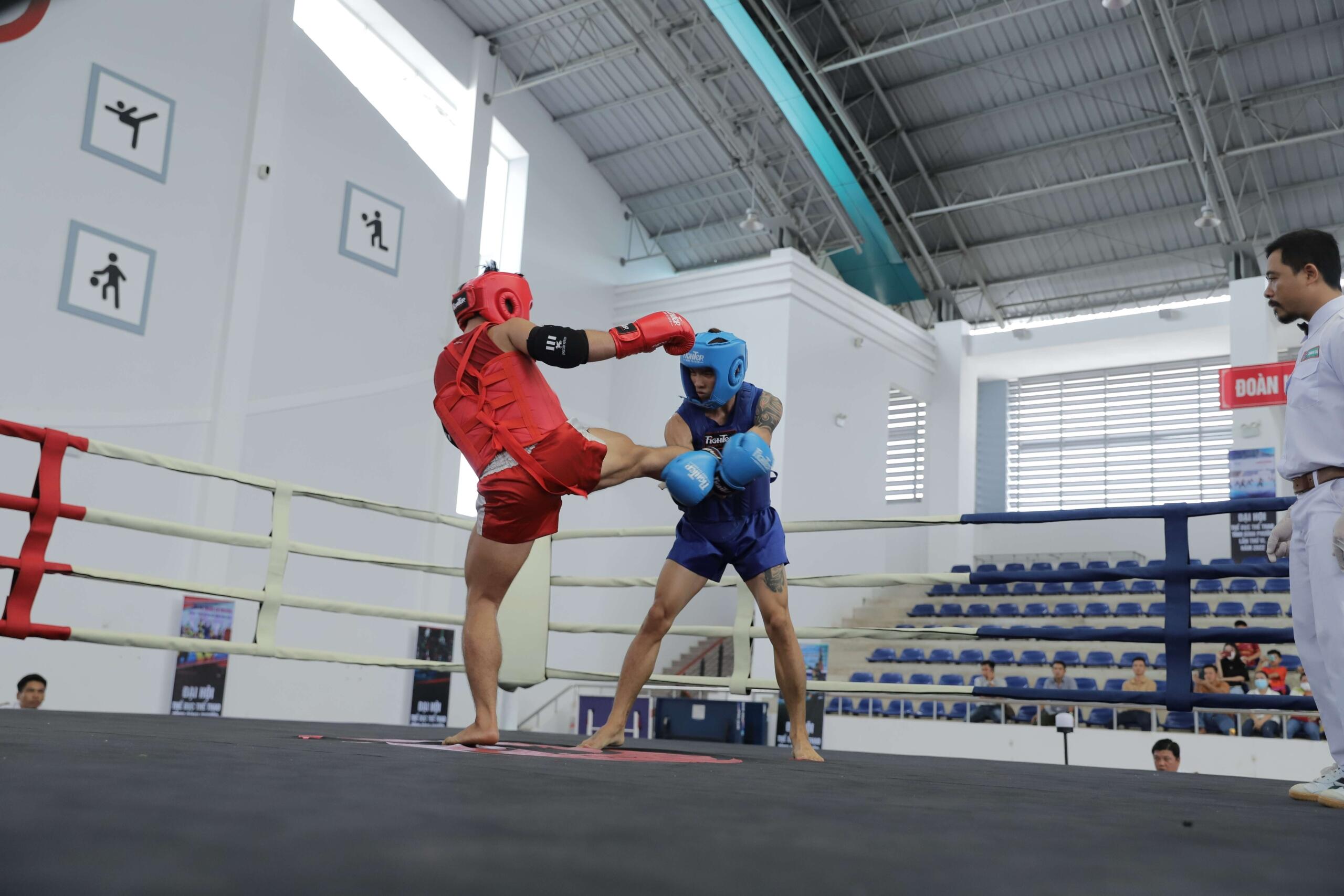
Kicking techniques distinguish kickboxing from traditional boxing and create much of the sport's excitement.
- The roundhouse kick remains the signature technique, capable of targeting the legs, ribs, or head with tremendous force.
- Front kicks help maintain distance while interrupting an opponent's forward movement
- Side kicks generate powerful linear force capable of stopping an attack.
- More advanced competitors often incorporate spinning back kicks and spinning hook kicks, although these techniques require excellent timing and balance to execute successfully.
Depending on the rule set, knee strikes may also be permitted. Under many International Rules and K-1 competitions, fighters may deliver knees to the body during brief clinches. However, prolonged clinching is not allowed, and referees separate competitors if they fail to continue striking. In traditional Full Contact kickboxing, knee strikes are generally prohibited altogether.
Clinching in kickboxing is when two fighters grab or tie up with each other at close range, typically using their arms to control their opponent's position. Clinching is often used to limit an opponent's movement, create opportunities for knee strikes (in rule sets that allow them), or briefly recover during a match.
Successful kickboxing emphasizes intelligent combinations rather than isolated techniques. Fighters constantly blend punches, kicks, footwork, defensive movement, and counterattacks to create scoring opportunities while minimizing their own exposure to incoming strikes.
Prohibited Actions
Knowing where competitors may strike is just as important as understanding how they may strike.
Most organizations permit attacks to the front and sides of the head, the face, the torso, ribs, abdomen, and, under low-kick rules, the thighs. These target areas provide opportunities for both offensive combinations and defensive strategy.
Certain areas remain strictly prohibited because of the increased risk of serious injury. (Bullet points) The back of the head, spine, throat, groin, and joints are protected in nearly every kickboxing organization. Even accidental strikes to these areas may result in temporary stoppages while referees determine whether penalties should be issued.
Because fighter safety remains the highest priority, referees immediately intervene whenever potentially dangerous situations develop.
Scoring System
While many spectators focus on knockouts, the majority of kickboxing matches are decided by the judges. Understanding how rounds are scored helps explain why one fighter may win despite landing fewer total strikes.
In most professional and amateur organizations, judges use the 10-point must system, which originated in boxing. Under this system:
- the winner of each round receives 10 points
- the losing fighter receives 9 points or fewer, depending on the degree of dominance.
- If a round is particularly one-sided or includes a knockdown, judges may score it 10–8.
- Point deductions for fouls can also affect the final score.
Judges evaluate far more than the number of punches or kicks thrown. They look for effective striking, meaning techniques that land cleanly with visible impact rather than strikes that are blocked or only partially connect. A fighter who throws many punches but lands very few is unlikely to win the round against an opponent who lands fewer but more effective techniques.
Other factors that influence scoring include:
Defense
Fighters earn recognition for slipping punches, blocking kicks, checking leg kicks, using head movement, and counterattacking effectively. Superior defensive skills demonstrate technical proficiency while limiting damage received.
Ring Control
Judges reward competitors who dictate the pace of the contest, control distance, apply intelligent pressure, and force opponents to fight on their terms. However, simply moving forward is not enough; aggression must be effective and produce successful scoring opportunities.
Ultimately, judges assess the overall effectiveness of each competitor throughout the round rather than relying on any single statistic. A technically sound fighter who lands clean combinations, defends intelligently, and controls the action will generally receive the higher score.
Equipment and Attire
Safety is a central principle of kickboxing, and all reputable organizations require protective equipment during competition. Although professional fighters wear less protective gear than amateurs, every piece of equipment serves an important purpose in reducing injuries.
Competition gloves protect both the fighter's hands and their opponent by distributing the force of each strike over a larger surface area. Amateur competitors often wear gloves weighing 10 or 12 ounces, while professionals may wear different glove sizes depending on their weight class and the organization's regulations.
A properly fitted mouthguard is mandatory in virtually every competition. Besides protecting the teeth, mouthguards reduce the risk of jaw injuries and may help lessen the severity of impacts during heavy exchanges. Male competitors are also required to wear groin protectors, while female athletes wear approved chest protectors when required by their governing body.
Amateur competitions typically require shin guards and, in many cases, foot protectors. These reduce injuries during training and competition while allowing athletes to develop proper kicking technique. Professional competitions generally eliminate shin guards, increasing both the challenge and realism of the sport.
Athletes wear lightweight shorts designed to permit unrestricted movement. Unlike traditional martial arts uniforms, kickboxing attire prioritizes comfort and mobility, allowing fighters to execute high kicks, rapid footwork, and explosive combinations without restriction.
Before entering the ring, referees inspect each competitor's equipment to ensure it complies with organizational standards. Any damaged or improperly fitted equipment must be replaced before the contest begins.
All clear? Good. Now you can learn everything else you need to know about kickboxing.
Common Fouls and Penalties
Although kickboxing encourages aggressive competition, athlete safety and sportsmanship remain paramount. Referees closely monitor every contest and penalize fighters who violate the rules.
Illegal techniques are among the most common fouls. In most kickboxing organizations the following moves are strictly prohibited:
- elbow strikes
- headbutts
- groin attacks
- strikes to the back of the head or spine
- biting
- eye gouging
Throws and wrestling-style takedowns are also illegal in most rule sets, as kickboxing is intended to remain a stand-up striking sport.
Excessive holding or prolonged clinching can also result in warnings. While some organizations allow brief clinches to deliver a knee strike, competitors may not use the clinch simply to stall the action or prevent their opponent from attacking. Referees will quickly separate fighters who fail to continue working offensively.
Check out some of the biggest names in kickboxing!
Unsportsmanlike conduct extends beyond physical techniques. Deliberately ignoring the referee's instructions, using abusive language, intentionally striking after the referee has called for a break, or displaying disrespect toward officials or opponents can all result in disciplinary action.
Penalties typically progress in stages.
- A referee may first issue a verbal warning for a minor infraction.
- Repeated violations often lead to point deductions, which can significantly influence the judges' scorecards.
- Serious or intentional fouls may result in immediate disqualification, particularly when they place an opponent at unnecessary risk.
Because kickboxing relies heavily on mutual respect, fighters are expected to demonstrate discipline both inside and outside the ring. Good sportsmanship remains one of the defining values of the sport.
Major Kickboxing Organizations and Competitions
Although kickboxing is practiced worldwide, several organizations have played particularly important roles in establishing standardized rules and promoting international competition.
World Association of Kickboxing Organizations (WAKO)
Widely recognized as the largest amateur governing body. WAKO sanctions national and international championships, establishes official competition rules, certifies referees and judges, and promotes athlete development across numerous disciplines, including Full Contact, Low Kick, K-1, and Kick Light.
International Sport Karate Association (ISKA)
Sanctions both amateur and professional events around the world. ISKA oversees championship titles across multiple striking disciplines and has helped standardize officiating and safety procedures for decades.
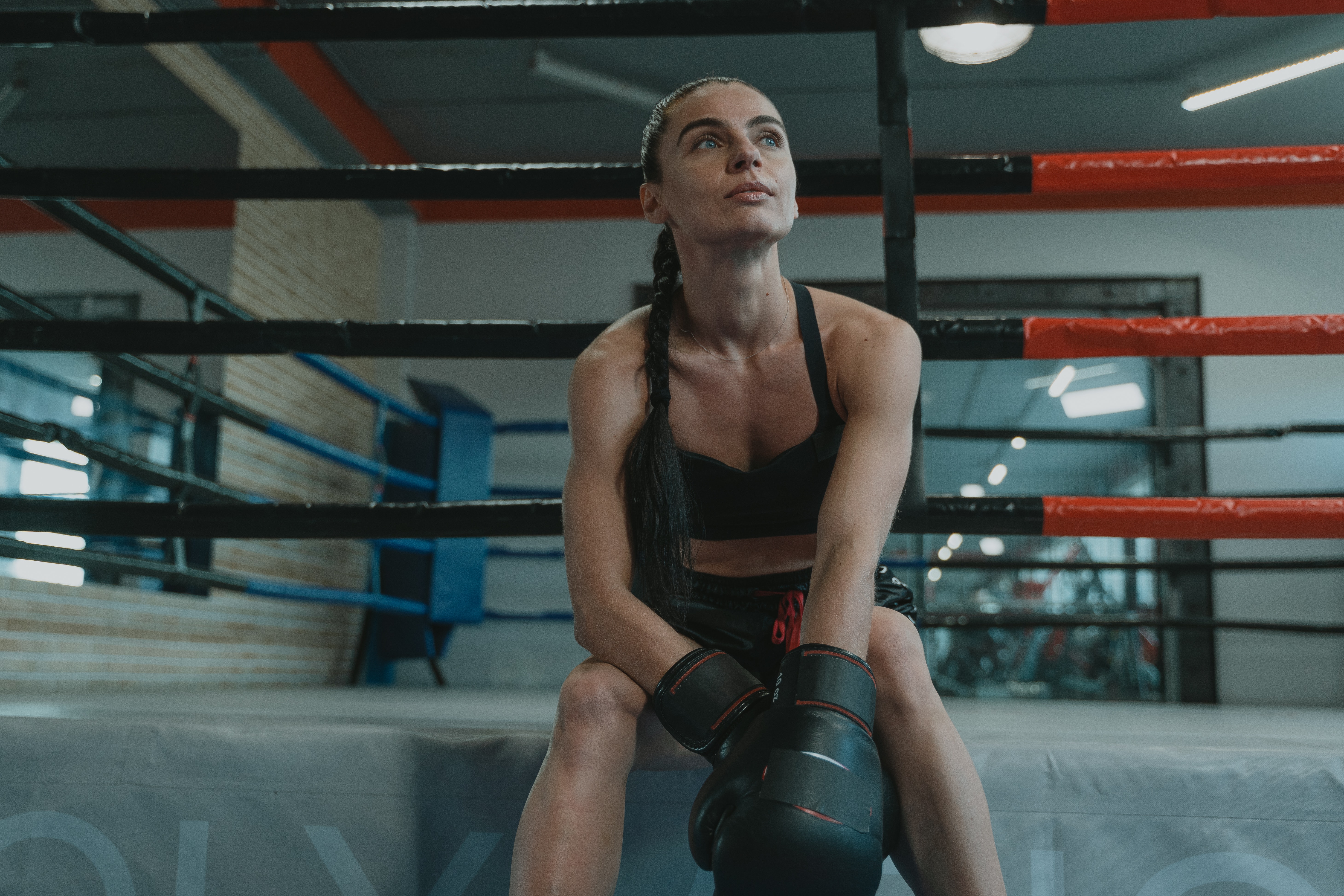
Glory Kickboxing and K-1
Organizations that have elevated the sport's international profile by showcasing many of the world's best athletes. Their events attract global audiences and feature elite competitors known for exceptional technical skill, athleticism, and sportsmanship.
Regional organizations also play an important role by developing young athletes and providing opportunities for amateurs to gain experience before progressing to national or international competition.
Find out what kickboxing equipment you will need!
Training and Preparation
Success in kickboxing requires far more than learning how to punch and kick. Elite athletes devote years to developing physical conditioning, technical precision, tactical awareness, and mental resilience.
- Cardiovascular fitness forms the foundation of successful performance. Because matches involve repeated bursts of explosive activity with minimal recovery, fighters spend considerable time improving endurance through running, skipping rope, interval training, and high-intensity conditioning exercises.
- Strength training helps athletes generate greater striking power while improving injury resistance. Modern kickboxing programs typically incorporate compound lifts, medicine ball exercises, bodyweight movements, and functional strength training designed to enhance explosive performance rather than simply increasing muscle size.
- Flexibility and mobility are equally important. High kicks, evasive movement, and rapid changes in direction require excellent hip mobility and balance.
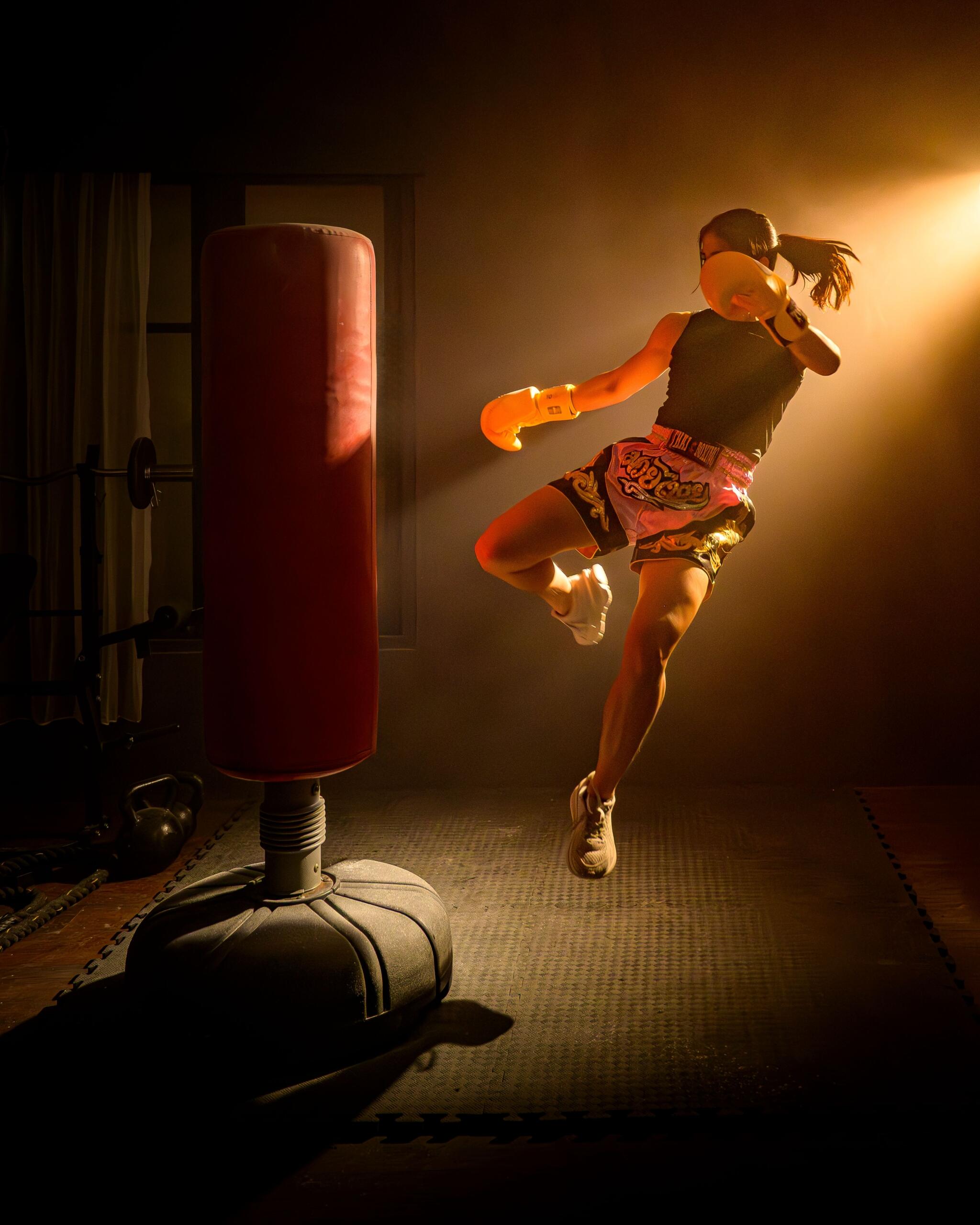
- Technical development remains the heart of every training session. Fighters spend countless hours refining footwork, defensive movement, punching combinations, kicking mechanics, and counterattacking skills. Pad work, heavy bag training, partner drills, and controlled sparring gradually develop the timing and confidence needed for competition.
- Mental preparation often separates evenly matched athletes. Successful competitors study opponents, develop tactical game plans, visualize success, and learn to remain calm under pressure. Confidence built through disciplined preparation enables fighters to make intelligent decisions even during physically demanding exchanges.
Kickboxing is a technically sophisticated combat sport governed by carefully designed rules that promote fairness, safety, and skill. From legal striking techniques and judging criteria to equipment requirements and penalties for fouls, every rule contributes to creating exciting yet controlled competition.
See boxing lessons here on Superprof.
Learn Kickboxing
Whether your goal is to improve fitness, compete at the amateur level, or simply understand professional bouts, learning the rules provides a deeper appreciation for the strategy behind every exchange. Clean technique, effective defense, intelligent movement, and respect for the rules consistently distinguish the sport's most successful athletes.
As kickboxing continues to grow around the world, its emphasis on discipline, athleticism, and sportsmanship ensures that it remains one of the most exciting and respected striking arts. By understanding the rules that govern the sport, both athletes and fans can enjoy kickboxing with greater confidence and appreciation for the remarkable skill displayed inside the ring.
References
- Kalso, Reed. "Kickboxing." EBSCO Research Starters, 2020, https://www.ebsco.com/research-starters/sports-and-leisure/kickboxing Accessed 29 June 2026
- World Association of Kickboxing Organizations. WAKO, https://www.wako.sport/. Accessed 29 June 2026.
- Burkhalter, Adam L. "The Unified Rules of Kickboxing." Association of Boxing Commissions, 9 Aug. 2017, https://www.abcboxing.com/news/abc-news/the-unified-rules-of-kickboxing/. Accessed 29 June 2026.
Summarize with AI:
Did you like this article? Leave a rating!


 Loading...