
A career in dentistry is a stable and often lucrative choice. Alberta offers several options for students looking to earn an education in the dental health field. With both public and private education options offering an array of opportunities, students can train to become doctors, assistants or hygienists. Find out what you need to know about dentistry programs in Alberta.


University of Alberta's School of Dentistry
The University of Alberta in Edmonton is home to the Mike Petryk School of Dentistry, one of Canada’s leading institutions for dental education. It offers undergraduate, graduate, and specialty programs in dentistry and oral health sciences. All programs are accredited by the Commission on Dental Accreditation of Canada (CDAC).6
Discover dentistry education in Ottawa.
Programs Offered
The University of Alberta provides several educational paths to suit many different career paths.
Doctor of Dental Surgery (DDS)
This 4-year program prepares students for a career as a Dentist. It combines classroom learning and clinical training so students graduate with comprehensive theoretical and practical knowledge. Students are prepared to take licensing exams and begin their practice right after graduation.
The university also offers options for learners who completed a dental program at an institution not accredited by the CDAC and foreign-trained dental professionals.
Bachelor of Science Dental Hygiene
Students in this 3-year program are fully prepared to pursue a career as dental hygienists. The program focuses on preventive care and clinical skills, along with patient education related to oral health. Pupils learn about anatomy, radiology, oral health science, behavioural science, and practicum, including cleanings, treating conditions, and administering local anesthesia through classroom lessons, labs and external practice settings.
Post Diploma BSc Dental Hygiene (for U of A alum)
Graduates from the University of Alberta can enhance their education with additional classes. Applicants can be recent graduates or have graduated prior to 1998, so long as they completed the Dental Hygiene Diploma program. Completing the program grants students a BSc in Dental Hygiene, which usually takes about 3 years of part-time classes.
Dental Assisting Certificate
A short course designed for those who want to enter the workforce quickly, the program is only 10 months long. In that time, students are still taught all they need to know to be competent healthcare providers. Classes teach oral facial science, materials, pathology, pharmacology, prosthodontics, and other specialized topics.
Since the program is accredited, students benefit from being able to skip the clinical exam post-graduation and go right to the theory exam to obtain their assisting license.6
Admission Requirements and Process
Admission to the University of Alberta Faculty of Medicine & Dentistry is a multi-step process. Depending on the program, the requirements can be more or less rigorous.
Find out how to apply to dentistry programs in Vancouver.
Doctor of Dental Surgery Admissions
Students must apply one year in advance of their intended Fall term admission. With only 32 seats available per year, the program is highly competitive.
Prerequisite requirements are:
- At least 2 years / 60 units of university-level coursework (incudes current courses)
- At least 30 units taken during 2 Fall/Winter academic years
- Courses: general chemistry, organic chemistry, cell biology, English, statistics, microbiology, biochemistry, human physiology
- Courses must have been passed with at least a C- (or equivalent) or a D if taken at U of A
- Minimum OGPA of 3.3
- Casper test
- Minimum score of 15 on the DAT in the SNS, PAT and RCT sections
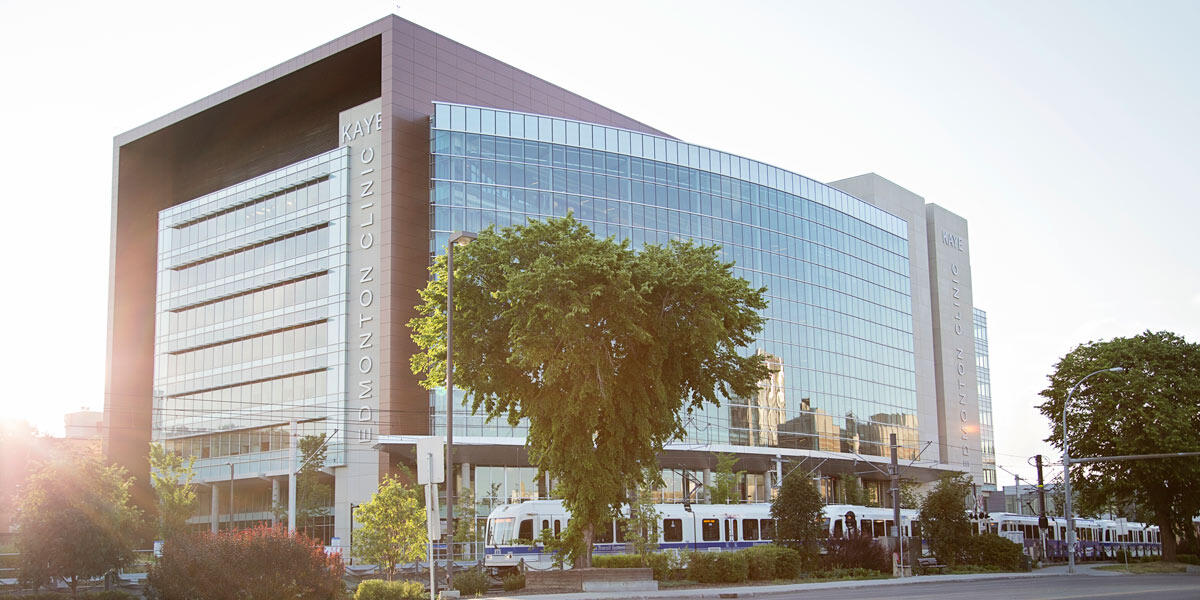
The Edmonton Clinic Health Academy... is equipped with state-of-the-art technologies and one of the best simulation labs in the country.
Mike Petryk School of Dentistry
Bachelor of Science Dental Hygiene
Only 46 learners per year are selected for this program, so it’s also very competitive.
Like the DDS process, applications must be submitted a year in advance. The prerequisites for the BSc course are:
- At least 1 year / 30 units of university-level coursework
- At least 27 transferable units within one Fall/Winter academic year
- Courses: general chemistry, organic chemistry, cell biology, English, statistics, sociology, psychology, 2 electives
- Courses must have been passed with at least a C- (or equivalent) or a D if taken at U of A
- Minimum OGPA of 2.7
- Casper test
Dental Assisting Certificate
With two intakes per year (Fall and Spring), this program is less competitive than some of the other options at the university. However, there are only 26 spaces available per intake.
Students must complete their applications several months before intake, with deadlines closing 5-6 months before the start date. This program is intended for applicants right after high school or those who want to transfer from an unrelated subject.
Course prerequisites:
- In their final year of high school or have completed high school OR began post-secondary studies OR completed a degree
- Earned a minimum of 65% in high school courses
- English Language Arts 30-1 or 30-2
- Two of: Biology 30, chemistry 30, science 30
- One of: Math 30-1, Math 30-2, pure math 30, applied math 30
- OR earned at least a C+ in post-secondary courses in English or writing, biology, chemistry, science, math or statistics
Shared Procedure for the DDS, BSc and Dental Assistant Applications
The required materials must be submitted through the professional program application along with personal experiences (such as employment history, leadership and volunteer experience, and personal accomplishments), official transcripts and proof of English fluency, if required.
Applicants chosen to go to the next stage of admissions will then need to complete a series of 10-minute interviews focused on responding to scenarios. Admitted students need to then complete their immunizations, police check, and CPR certification.2
Applications for the DDS and Bachelor programs are open from July 1 to November 1 for the following year. The Dental Assisting Certificate has two intakes: Spring intake deadline is November 1, Fall intake deadline is April 1.
Alternative Dental Education Opportunities in Alberta
Not all careers require a DDS or a bachelor's degree. There are several college-level programs available in Alberta that also prepare students for a career in oral hygiene as dental assistants and hygienists. These options are shorter and often have more flexible admission requirements.
Find out which dentist schools are in Montreal.
KDM Dental College
KDM Dental College specializes in training dental assistants. It’s a well-recognized institution for its commitment to providing top-notch education to its scholars. The college is accredited by the CDAC.6
The program focuses on creating a strong foundation in theory through classroom instruction before transitioning to clinical instruction in labs. The college has a professional dental clinic on-site, so students can practice with real patients in their community.
After 150 additional hours of practicum, learners learn how to assist dentists during procedures, manage instruments and support patient care. They graduate well-prepared to take the NDAEB National Board Exam and obtain their license.
The program is designed to be completed in 28 weeks (about 7 months), with 90% of graduates finding a job in the field after graduation.
With locations in Calgary and Edmonton, and four intakes per year, it’s one of the more accessible programs in Alberta. Students graduate with a College Diploma in Dental Assisting, setting them up to be able to work at private clinics, specialty practices or community health centres.
The college offers placement services both to current and former students and to dental offices to match graduates with employers, such as Academy Dental Edmonton.
Admission into the program usually requires a Canadian high school diploma or equivalent and English proficiency. Contact the college’s admissions department to learn more.5

Calgary College of Dental Health
For students looking to explore the foundations of working in a dental office, the short courses offered at Calgary College of Dental Health can help.
It’s important to note that the college’s offerings do not prepare learners for licensure. They are intended as supplementary education for other courses and to bolster CVs.
Some of the courses, especially Dental Foundations, are helpful for those who want to pursue further education in the medical side of dentistry. The administrative courses can be helpful for office workers as well as healthcare providers in dentistry.
Health Programs
- Dental Foundations (DNT FNDS)
- Dental Office Treatment Planner (TXPLN)
- Dental Office Sterilization Officer (DOSO)
Administrative Programs
- Dental Office Management (DO MGNT)
- Dental Office Administration (DOA/PP)
- Dental Administration Refresher (DOA RFH)
Each program has specific requirements, but in general, applicants must adhere to these prerequisites:
- English and Math grade 11 or 12
- High school diploma or post-secondary transcript OR mature student status
- Proficiency in written and verbal communication
The Dental Foundations course is the most helpful. It can serve as an introduction to dentistry for those looking to apply to a comprehensive program. Students learn the basics, like dental anatomy, teeth, numbering systems, and the roles of different team members in an office.
The class consists of one 10-hour lesson and is available once per month.
Applying for a course is simple: admission to courses is all but guaranteed as long as you fulfill the academic requirements. Find the registration forms on the college’s website and submit your application and payment at least 2 days before class. All classes are held online, with only a few requiring a self-directed practicum.4
Discover dental education in Ontario.

Tuition Fees and Expenses
Attending dentistry school is a significant investment in time and finances, so choosing the program that works for your career goals and situation is imperative. Compare these programs to make a more informed decision about which one to pursue:
| Institution | Program | Length | Tuition (Total, domestic) |
|---|---|---|---|
| University of Alberta | Doctor of Dental Surgery (DDS) | 4 years | $232,707 |
| University of Alberta | Bachelor of Science Dental Hygiene (BSc) | 3 years | $56,169 |
| University of Alberta | Dental Assisting Certificate | 10 months | $22,185 |
| KDM Dental College | Academic Program for Dental Assisting (College Diploma) | 28 weeks | $23,033 |
| Calgary College of Dental Health | Dental Foundations (DNT FNDS) | 10 hours | $300 |
Financial aid is available at each institution. Students can apply for government loans, scholarships and bursaries. The University of Alberta offers several awards based on academic performance and financial need. Each program also provides opportunities for financial assistance for Indigenous applicants.
Continuing Education and Professional Development
Licensed dental professionals in Canada are expected to continue learning throughout their careers. Some professionals also choose to pursue education in different specialties to further their careers.
Postgraduate Opportunities
In Alberta, professionals can consider these programs:
Master of Science Dental Hygiene at University of Alberta
This program focuses on research rather than licensure and practice. It can enhance certain careers, but applicants must already possess a four-year undergraduate degree to enroll.
Graduate Programs at University of Alberta
Dentistry students who want to pursue further education in a specialty can enroll in one of these U of A programs:
- Dentistry
- Dental Hygiene
- Oral Biology
- Oral Medicine
- Orthodontics
- Peridontology
Most specialties offer both a Master of Science (MS) and a Doctor of Philosophy (PhD) credential. Many courses are related to research and will not make a graduate eligible for licensure as a dentist; that eligibility must be obtained through a program such as a DDS.
Continuing Education Courses
Dentists, registered dental hygienists (RDH) and registered dental assistants (RDA) are required to complete continuing education programs to maintain their licenses. Each profession has a different requirement, such as 60 credits every two years, so be sure to check with your particular governing body according to your profession and license.1,3
Requirements typically guide professionals to refresh their knowledge and practice in vital areas like CPR and other emergencies, and advance their knowledge in new areas, such as dental lasers, local anesthetics and periodontology.
The most popular choice for continuing education courses in Alberta is the University of Alberta - Continuing Dental Education. It offers online and in-person courses and workshops for Dentists, RDH and RDA.
Learn more about becoming a dentist in Canada.
Students looking to pursue a career in dentistry must plan well ahead to meet application requirements and deadlines. Going through the effort to finish dental school is worth the trouble, since the demand for dentists all across Canada is typically stable, with a modest but steady increase each year. Professions in healthcare are usually some of the most secure jobs, so working hard to achieve a license in any part of dentistry is a worthwhile pursuit.
References
- “Home - College of Dental Surgeons of Alberta.” College of Dental Surgeons of Alberta, 4 Feb. 2026, Available at: https://cdsab.ca/. Accessed 4 May 2026.
- Faculty of Medicine and Dentistry, Mike Petryk School of Dentistry. University of Alberta, Available at: www.ualberta.ca/en/school-of-dentistry/index.html. Accessed 4 May 2026.
- “Home.” The Alberta College of Dental Hygienists(ACDH), Available at: www.acdh.ca. Accessed 4 May 2026.
- “Home | Calgary College of Dental Health.” Calgary College of Dental Health, Available at: www.ccdhcalgary.com. Accessed 4 May 2026.
- KDM Dental College. Available at: https://kdmdental.com. Accessed 4 May 2026.
- Smith, Kristy. “Accreditation - CDAC-CADC.” CDAC-CADC, 25 Mar. 2026, Available at: www.cdac-cadc.ca/accreditation/#_accreditation-guide. Accessed 4 May 2026.
Summarize with AI:
Did you like this article? Leave a rating!

 Loading...