
While mathematics has long been an integral part of our everyday lives, the subject has a reputation, especially among those who struggle with it, for being boring. But that really isn’t the case. By introducing fun elements into the way students are taught mathematical theories and concepts, far more pupils would excel in this area.
Most of us can't resist a good riddle, and solving difficult logic puzzles is a fantastic brain teaser. Making subjects such as algebra, fractions, and probability more entertaining isn't as hard as it sounds! If you don't believe us, then try out these gratifying math puzzles!


🧩 Challenging Math Puzzles to Solve
Mathematical puzzles and brainteasers combine reasoning with numbers, calculations and figures. So get ready to channel your inner mathematician with these challenging puzzles that may be encountered in your math lessons.
🎲 Probability Puzzle: The 100 Prisoners Problem
Here's the scenario: There are 100 prisoners, sentenced to death, in a prison. Out of the blue, the prison's director proposes a challenge.
First:
100 prisoners are each assigned a number (1-100)
Then:
100 drawers are placed with one number (randomly placed) in the office
From there:
Each prisoner can open up to 50 drawers, but no communication is allowed between them
Note:
Every drawer must be closed after each turn
The prison director gives two possible outcomes:
- All of the prisoners find their respective numbers, and all are pardoned.
- None find their numbers and they are all executed.
What is the chance that each prisoner finds the drawer corresponding to his number?
According to the law of mathematical probability, the chance that all would be pardoned is (1/2)100, or 0.0000000000000000000000000000008.
However, there is a clever loop strategy that offers the prisoners the chance to increase these odds and live.
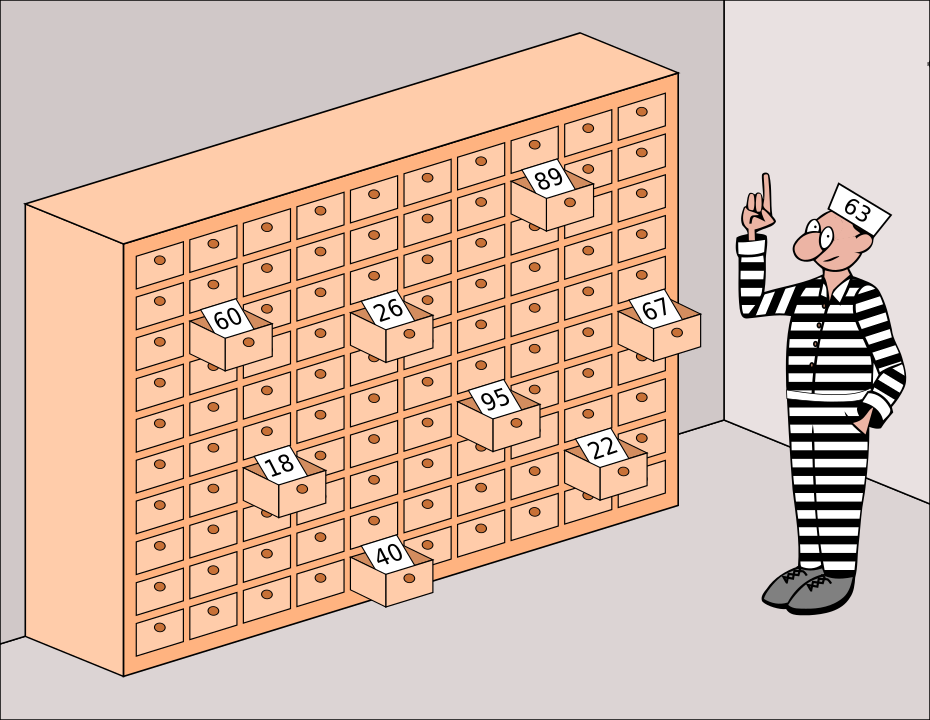
Solution: Each prisoner follows a chain of numbers starting from their own, and if that chain is short enough, they are guaranteed to find their number. When the chain returns to a number already seen, it means the loop is complete, and the prisoner stops once they find their own number.
| Step | Action | Example (Prisoner #17) | Outcome |
|---|---|---|---|
| 1 | Open drawer with your own number | Drawer 17 → finds 42 | Continue |
| 2 | Look at number inside | Finds 42 | Continue |
| 3 | Go to drawer matching that number | Drawer 42 → finds 8 | Continue |
| 4 | Repeat steps 2-3 | Drawer 8 → finds 17 | ✅ FOUND! STOP |
| OPTIMAL | Stop when you find your number | Cycle=3 ≤ 50: SUCCESS | ✅ Exit room |
| RISK | Long cycle (>50) | 17→42→...→(51st=17) | ❌ Stop at 50, fail |
🔁 Probability Marble Game: The Monty Hall Problem
Here's another math teaser that requires you to apply probability skills. This phenomenon is known as the Monte Hall Problem and relies on intuition and elimination. 1
Here's the setup for the marble game using 3 bags of marbles, where your goal is to find one blue marble out of these three bags.
🟢🟢 GG (2 green)
🟢🔵 GB (1 green, 1 blue)
🔵🔵 BB (2 blue)
There are two points to ponder:
- Where you pick one bag, the gamemaster reveals 1 green marble from another bag, then you decide: stay with your bag or switch with the unchosen bag?
- The gamemaster knows everything (what your bag is) and never reveals blue.
Here's how to stand a chance of winning the game.
| Step | Action | Example (You pick GG) | Probability | Outcome |
|---|---|---|---|---|
| 1 | Pick 1 bag (1/3 chance each) | Pick GG bag | 1/3 chance | Wrong bag |
| 2 | Host reveals green from another bag | Host picks GB, shows G | Always possible | Info revealed |
| 3 | 2 bags remain: Yours + 1 other | Yours (GG), Other (BB) | Yours: 1/3, Other: 2/3 | Key moment |
| STAY | Keep original bag | GG = 0 blue marbles | 1/3 win | ❌ Lose |
| SWITCH | Take remaining bag | BB = 2 blue marbles | 2/3 win | ✅ Win! |
🧠 Logic Brain Riddles That Require Strategy
Now, let's switch gears to logical and reasoning brain riddles, which could be a great help in solving mathematical problems.
❓The 3 Gods Riddle
Here are the basic rules and strategies to discover which is the true, false and random gods in the riddle.
| Rule | What It Means |
|---|---|
| 👤 3 characters (A, B, C) | Each hides a different god |
| 🟢 One tells truth | Always honest - answers YES/NO correctly |
| 🔴 One always lies | Always dishonest - flips YES to NO, NO to YES |
| 🎲 One is random | Unpredictable - truth OR lie randomly |
| ❓ 3 questions total | Yes/No only - ask any god (same god 3x OK) |
To start, follow these steps:
👉 Step 1: Ask a safe question
👉 Step 2: Find a non-random god (establish reliability)
👉 Step 3: Use them to solve the mystery
💡Penney's Game: The Cat and Mouse Problem
This game is adapted from Penney’s game. 2 A cat 🐱 and a mouse 🐭 play a coin-toss game (H for Head, T for Tail). Each chooses a sequence of 3 coin flips, such as:
- HHH
- HTH
- TTH
- TTT
Both of them toss the coin repeatedly, and the first to see one of his combinations appear in three consecutive coin tosses wins the game.
But here's the twist:
- The cat, feeling himself to be the stronger player, starts first. The mouse, the smarter of the two, decides to let him go ahead.
- The two players cannot choose the same combination.
How can the chance of winning be increased for each player?
📐 A Clever Geometry Challenge
🍰The Triangular Cake
This is a math puzzle that you can teach your kids or even have on a chill Saturday night with friends while having the cake as a dessert.
- A teacher decides to offer his students a cake in the form of a triangle with three unequal sides. He places an order with a cake shop, giving the measurements of the cake's three sides.
- The baker orders a box for the cake, giving the same measurements. When the cake is done, however, he finds that while the measurements have been respected, the shape is symmetrical, rather than identical, to that of its cake.
- He calls the maths teacher to ask how he should cut the cake so that it fits in the box. The teacher replies that two cuts will suffice.
Even though it looks like a “cake story,” it’s actually about geometry and transformation.
| Step | What to do | What happens | Why it matters |
|---|---|---|---|
| 1 | Start with the triangular cake 🔺 | One solid shape | This is the original form |
| 2 | Make Cut 1 from one corner to the opposite side | Shape splits into 2 pieces | Begins breaking the shape apart |
| 3 | Make Cut 2 on one piece (from a corner to an edge) | Now you have 3 pieces | Creates movable parts |
| 4 | Flip one small piece 🔄 | Piece is mirrored | Creates the reflection effect |
| 5 | Rearrange all pieces 🧩 | New triangle is formed | Matches the box shape |
The more you pay attention to your surroundings, the easier it is to see the imprint of maths in our daily lives!
🏆 Classic Math Puzzles with Gamification
When we talk about classic math puzzles that have stood the test of time, there's Rubik's Cube and Sudoku.
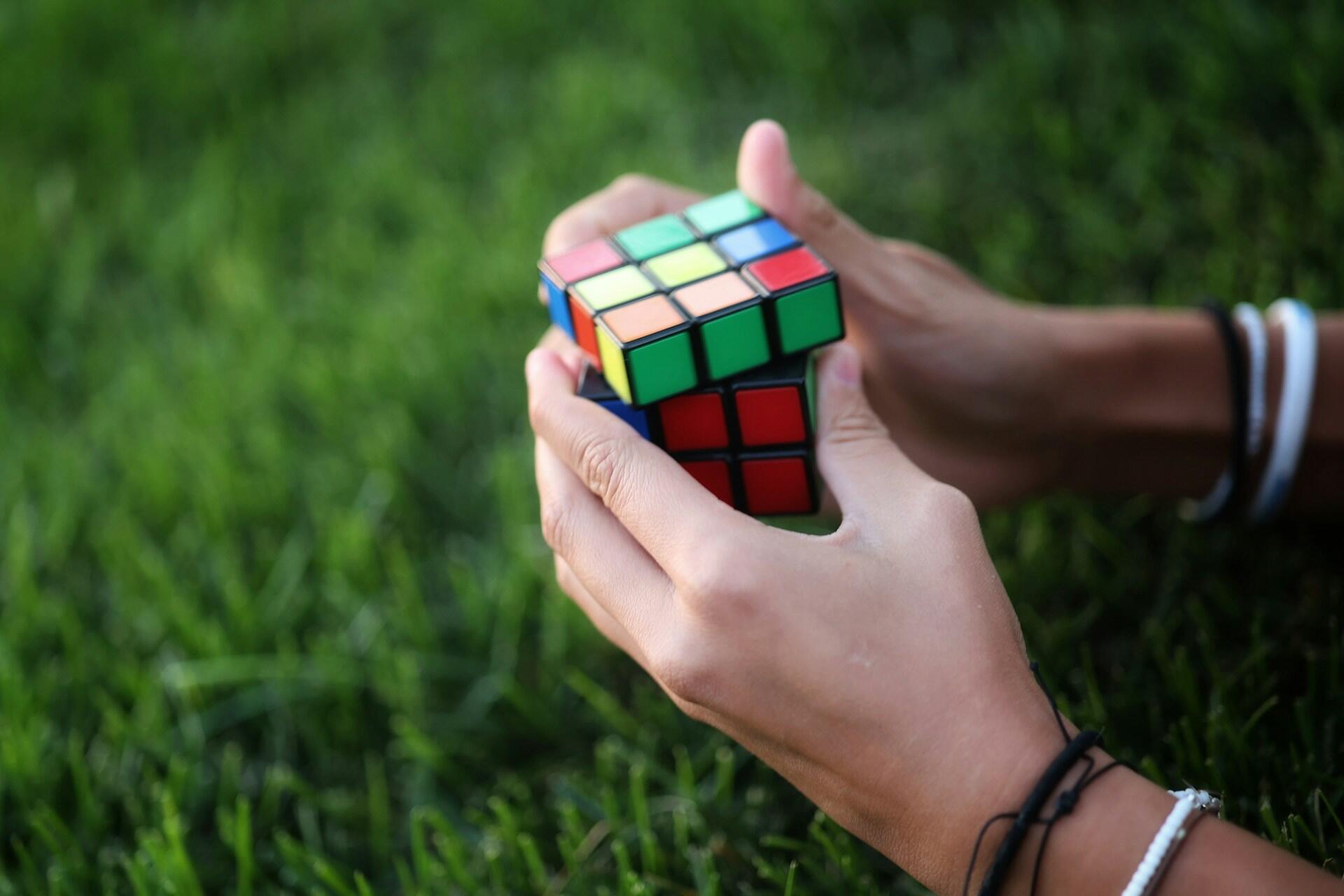
Rubik's Cube
- Invented in 1974 by Ernő Rubik (Hungary)3
- Puzzle type: 3D spatial manipulation puzzle
- Overview: Align all colors on each face from random arrangements
- Key skills: Movement + pattern recognition
- Math involved: Rearranging pieces in many possible ways (combinations + patterns) → every move changes the cube’s arrangement
- Gamification style: Timed speed solving
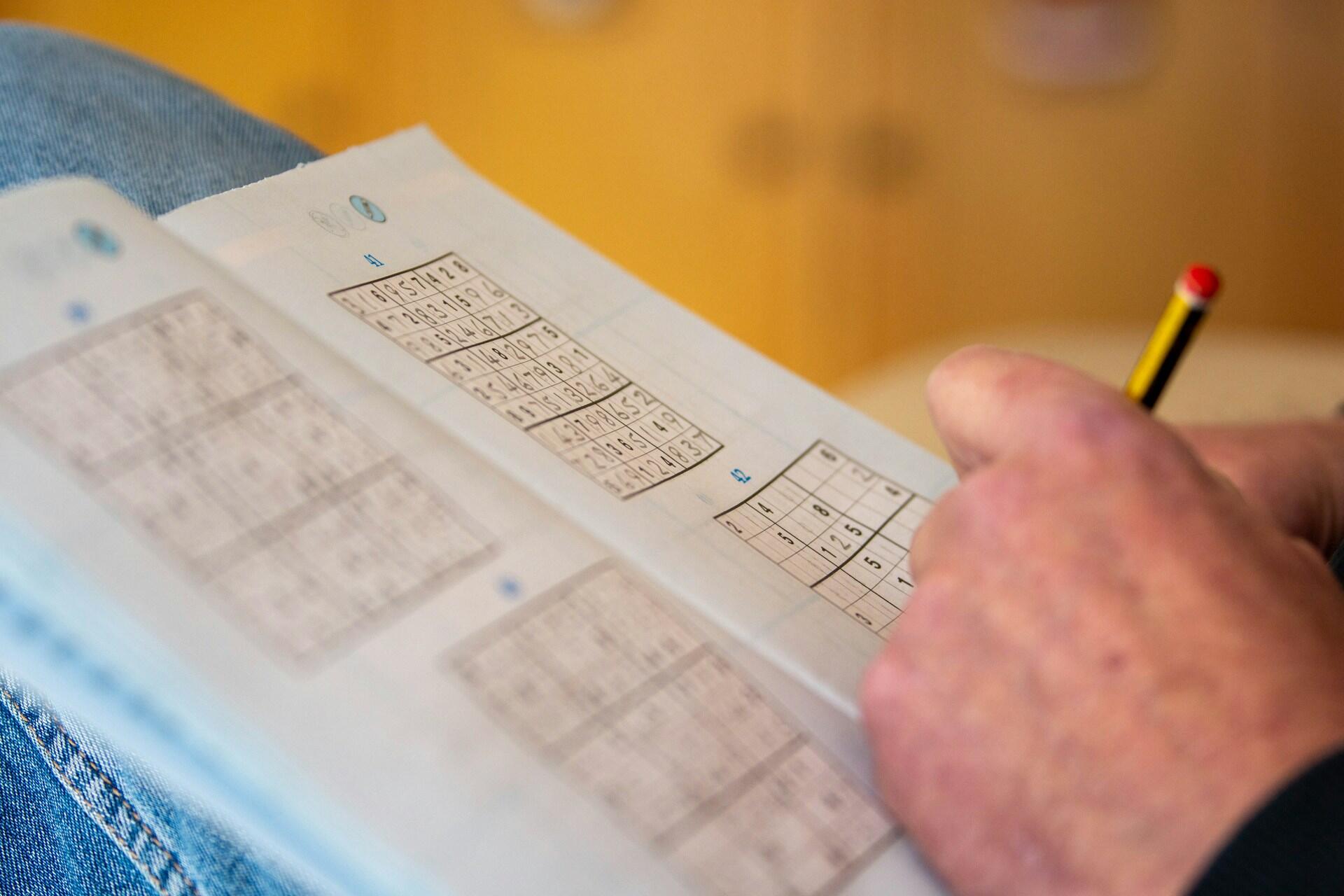
Sudoku
- Modern 9x9 version created by Howard Garns (USA) and current form developed in Japan by Nikoli 4
- Puzzle type: 2D logic grid puzzle
- Overview: Complete grid without repeats horizontally and vertically
- Key skills: Logical deduction + elimination
- Math involved: Filling numbers using fixed rules (logic + restrictions) → each choice must fit the overall structure
- Gamification style: Daily challenge progression
🔢 Numerical Brain Teasers for Younger Learners
Brain teasers should be level-appropriate; naturally, we would not want to torture any math students with puzzles that require some knowledge of higher algebraic functions when they’re not at that learning stage!
Whether you're an educator or a parent, here are some fun questions to ask your students or kids:
1. Using only 8 eighths, how can you add them together to equal 1000?
✅ Answer: 888+88+8+8+8 = 1000
2. I’m thinking of a three-digit number. The second digit is four times as big as the third and the first is three less than the second.
✅ Answer: 141
3. Which three numbers yield the same result whether they are added or multiplied together?
✅ Answer: 1, 2 and 3
4. Liam made four snowballs on Monday. On Tuesday, he made nine and on Wednesday, 14. How many did he make on Thursday and Friday?
✅ Answer: Increase the amount by five each day, Thursday: 14 + 5 = 19, Friday: 19 + 5 = 24, total =43 snowballs
🔍 More Advanced Brain Teasers
Here are some additional math brain teasers on mathematical equations to try out:
The highest temperature recorded at Heathrow on January 1st was -1 degree. On January 2nd, it was 4 degrees. What was the temperature on January 3rd if the average temperature for the first three days of January was 2 degrees?
☑️ Answer: 3 degrees
A hot dog vendor wants to buy equal amounts of sausages and buns, but the buns come in packs of 10 and sausages in packs of 8. How many packs of each would the vendor need to buy to achieve his goal?
☑️ Answer: 10 packs of sausages and eight packs of buns.
All of these statements are true: AxB=12; A+B+C=12; and B-A=1. What sequential numbers are represented by A, B and C?
☑️ Answer: A=3, B=4, C=5
🎯 Reasons to Enjoy Solving Math Problems
Now that you have explored different math puzzles, one thing should stand out: math is a powerful and important tool in our everyday lives, from counting, measuring, to telling the time.
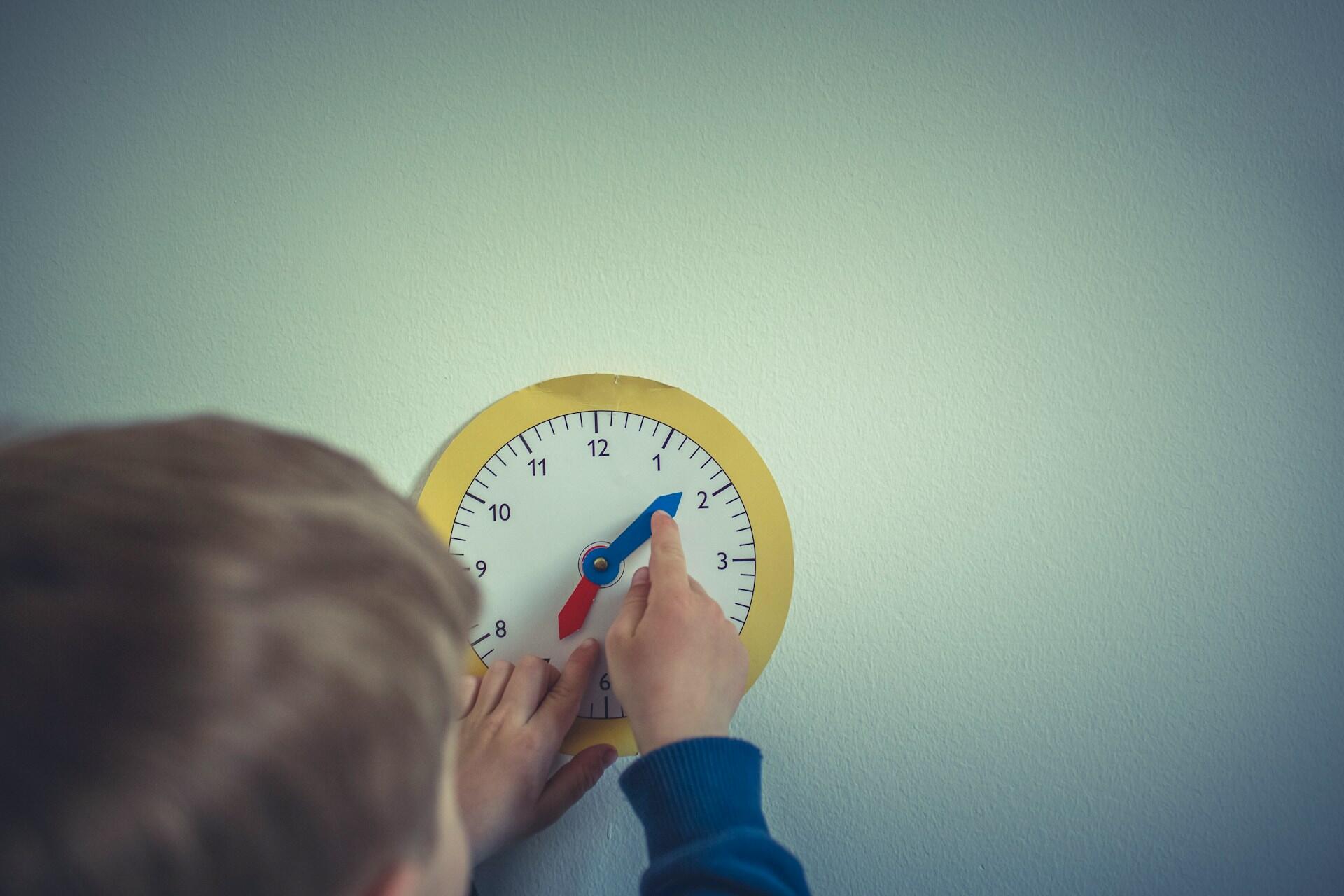
For instance, mathematical reasoning can help determine whether something is true or false, as seen in the earlier puzzle of the three gods.
- There is a certain elegance in mathematical theories. Because of their very conciseness and simplicity, you may find that you're able to gain new understanding with only a small amount of study.
- The important thing is to always seek to understand, rather than learning dozens of formulas and theorems without grasping their ins and outs.
- Thanks to math, you will not only gain a deeper understanding of the world around you, but be better able to approach other disciplines such as physics, chemistry and economics.
- Once you have grasped the main principles, maths becomes a kind of second nature that helps you understand and solve the problems around you.
- It can also unlock many job opportunities, especially in the financial sector, such as accountancy, actuarial work, investment management, investment banking and retail banking. 5
Learn how math can be useful when playing games like poker.
We hope you have found this article insightful. Let us know which math puzzle that you would love to try out!
Which math puzzle seems most interesting to you?
References
- Better Explained. (2019). Understanding the Monty Hall Problem – BetterExplained. Betterexplained.com. https://betterexplained.com/articles/understanding-the-monty-hall-problem/
- Probability - Penney’s Game. (2026). Stanford.edu. https://crypto.stanford.edu/~blynn/pr/penney.html
- The Official Rubik’s Cube | History. (n.d.). Www.rubiks.com. https://www.rubiks.com/history
- 247games LLC. (2025). Who Invented Sudoku? The History Behind This Popular Puzzle Game. 247sudoku.com. https://www.247sudoku.com/news/who-invented-sudoku-history-behind-popular-puzzle/
- Why Math Is Important in Everyday Life and Education | GCU Blog. (2025). Gcu.edu. https://www.gcu.edu/blog/teaching-school-administration/why-math-is-important
Summarize with AI:
Did you like this article? Leave a rating!


 Loading...