Math is important because it helps us understand, measure, predict and solve problems in everyday life, school, work and science. Excelling in mathematics can help quite a lot in your daily life! From budgeting money and managing time to building technology and making informed decisions, there are many reasons to learn mathematics. In short, math is not just a school subject. It is a core life skill that influences almost every part of modern society.
| Area Of Life | How Math Is Used | Math Concept Involved | Everyday Example |
|---|---|---|---|
| Shopping | Comparing prices | Percentages, ratios | Finding the best supermarket deal |
| Budgeting | Managing income and expenses | Addition, subtraction, percentages | Planning monthly spending |
| Cooking | Scaling recipes | Fractions, ratios, measurement | Doubling a recipe |
| Travel | Estimating journeys | Distance, speed, time | Calculating arrival time |
| Smartphones | Running digital systems | Algorithms, geometry | GPS navigation |
| Medicine | Analysing treatments | Statistics, probability | Interpreting clinical trial results |
Although many people associate mathematics with classrooms and exams, its real value becomes clear in daily life. Every time you compare prices at the supermarket, estimate travel time, follow a recipe or check your bank balance, you are using mathematical thinking. Businesses, hospitals, engineers, scientists and software developers all rely on mathematics to solve problems accurately and make informed decisions. Learn about mental mathematics class here
- It helps you make smarter financial decisions.
- It develops logical thinking and problem solving skills.
- It powers the technology and systems we rely on every day.
This guide explains the importance of mathematics, explores whether math is used in everything and shows how numerical skills support education, careers and everyday life. Are you interested in knowing more about the Big Bang Theory and the creation of the universe? Click here!


🧮 What Is The Importance Of Mathematics?
Mathematics is much more than numbers and equations. It provides a structured way of thinking that helps people understand patterns, measure change and solve problems across countless situations. Whether calculating a mortgage repayment or designing a bridge, mathematics provides the tools needed to reach accurate conclusions.
What Mathematics Actually Is
At its simplest, mathematics is the study of numbers, patterns, shapes and relationships. It means we can explain the world around us using logical rules rather than guesswork and allows us to:
Measure
Compare
Predict
Unlike many subjects that focus on remembering facts, mathematics teaches people how to think through problems step by step. Once these reasoning skills are developed, they can be applied well beyond maths lessons into science, business, technology and everyday decision-making.
Why Math Matters Beyond The Classroom
Many students wonder why they need algebra, geometry or percentages when they cannot immediately see how they apply outside school. The reality is that mathematics often works quietly behind the scenes. The calculations themselves may not always be visible, but they support almost everything we use.
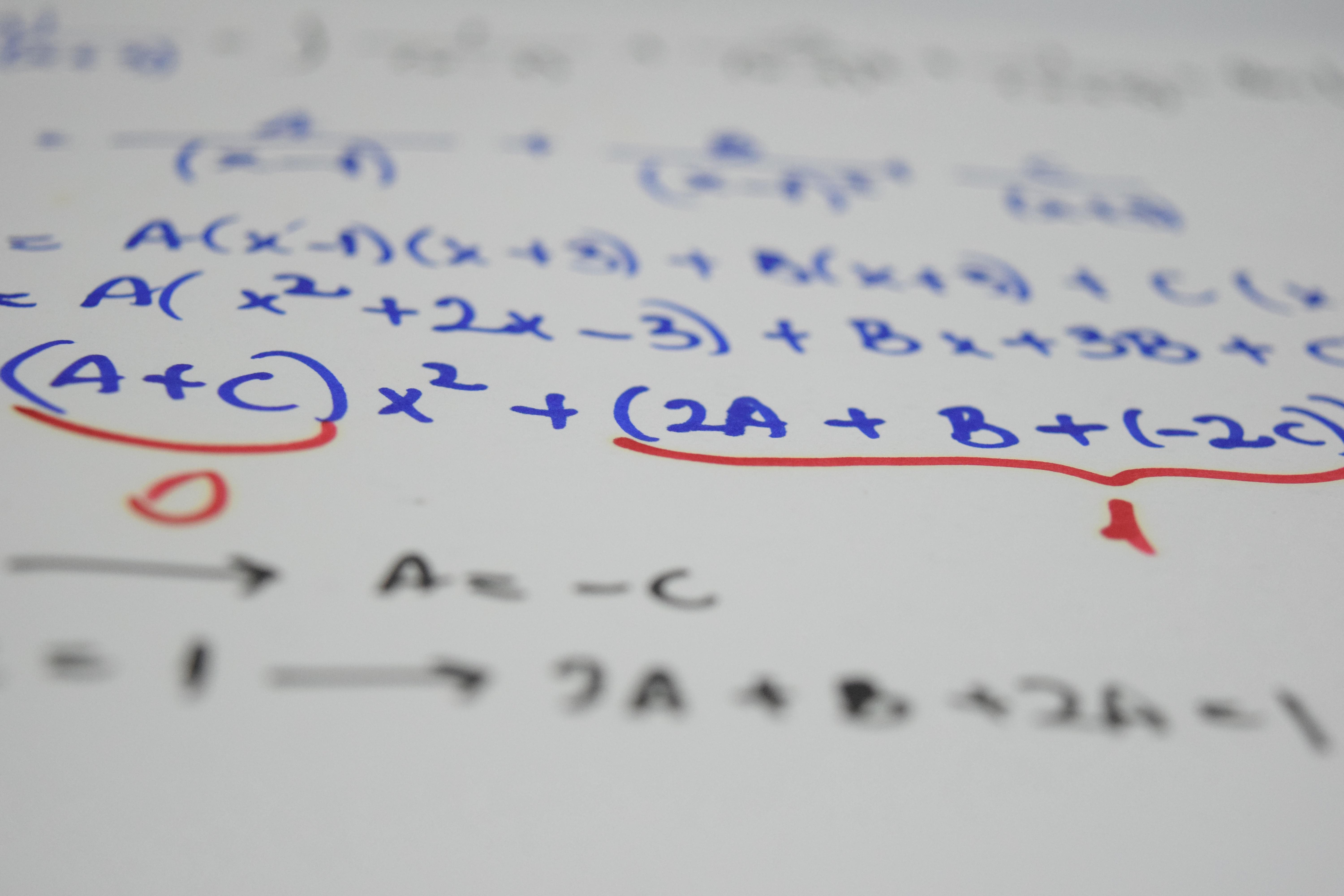
For example, navigation apps calculate the fastest route using mathematical algorithms. Banks use mathematics to calculate interest and assess financial risk. Supermarkets analyse customer purchasing patterns to manage stock levels, while streaming services recommend films and music using mathematical models.
Learning mathematics also builds confidence when dealing with unfamiliar situations. Rather than relying on instinct alone, people who understand numbers are better equipped to compare options, interpret information and make informed decisions.
🧩 Reasoning, Problem Solving, Accuracy And Logic
One of the greatest benefits of mathematics is the way it strengthens logical thinking. Every mathematical problem encourages students to analyse information, identify patterns and work through solutions systematically.
These problem solving skills transfer naturally into other areas of life. Planning a project, troubleshooting technology, organising finances or interpreting scientific information all require structured reasoning similar to that developed through mathematics.
Math also teaches accuracy. Small errors in calculations can produce very different results, encouraging careful checking and attention to detail. These habits are valuable in careers ranging from healthcare and engineering to accounting and software development.
🌍 How Math Supports Modern Society
Modern society would not function without mathematics. Roads, bridges, hospitals, communication networks and financial systems all depend on mathematical calculations to operate safely and efficiently.
"Pure mathematics is, in its way, the poetry of logical ideas."
Albert Einstein
📱 Why Math Is Essential For Everyday Life: Is Math Used In Everything?
The answer to this is almost yes. While you may not consciously solve equations every day, mathematics supports many of the decisions, technologies and services you rely on. Often, the calculations happen automatically through computers, phones or other digital systems, making maths almost invisible. Recognising these everyday examples helps explain why learning mathematics remains valuable long after leaving school.
Almost! Math is used in almost everything because it provides a reliable way to measure, compare and predict outcomes.
Whether planning your weekly budget, following a recipe or checking travel times, mathematics helps turn information into practical decisions.
Many people use mathematics dozens of times each day without realising it. Numerical skills help us manage money, organise our time and evaluate information more confidently. Understanding these practical applications makes the importance of mathematics much easier to appreciate.
🛒 Shopping And Budgeting
Creating a budget depends on addition, subtraction, percentages and sometimes compound interest. Tracking income against expenses helps people avoid overspending, while understanding interest rates allows borrowers and savers to compare financial products more effectively. Every shopping trip involves mathematics. Calculating discounts, comparing unit prices and deciding which product offers better value all depend on percentages, ratios and basic arithmetic.
Common Calculation
- Percentage discounts
- Unit pricing
- GST/tax
- Total cost
Why It Matters
- Find genuine savings
- Compare products fairly
- Avoid overspending
- Stick to a budget
Understanding numbers helps people avoid costly mistakes. Reading an electricity bill, checking a mobile phone plan or comparing discounts requires more than simply looking at the headline price.
For example, a product advertised as "25% off" is not always the cheapest option. Comparing the final price and the cost per kilogram or litre often provides a more accurate picture of value.
🍳 Cooking And Measuring
Cooking relies heavily on ratios, fractions and measurement. Adjusting a recipe to serve more people requires multiplying ingredients accurately, while baking often depends on precise measurements to achieve consistent results.
Maths Used
- Fractions
- Ratios
- Unit conversions
- Measurement
Everyday Example
- Halving a recipe
- Doubling ingredients
- Converting cups to grams
- Measuring cooking times
Converting between grams, millilitres, teaspoons and cups also uses mathematical thinking, particularly when following recipes from different countries.
🚗 Travel And Navigation
Good time management is built on estimation and planning. Whether scheduling meetings, organising study sessions or working out how long a journey will take, mathematics helps people allocate time realistically and avoid unnecessary stress.
Modern navigation systems continuously perform mathematical calculations to estimate arrival times, identify the quickest routes and avoid traffic congestion.
Maths Used
- Distance
- Speed
- Time
- Fuel consumption
Everyday Example
- GPS directions
- Arrival times
- Fuel budgeting
- Route planning
Distance, speed and time are closely linked mathematical concepts. Even planning fuel costs or deciding when to leave home involves estimating quantities using basic calculations.
📱 Phones, Apps, And Digital Tools
Smartphones use mathematics thousands of times every second. Encryption protects online banking, algorithms recommend videos and music and GPS systems calculate your exact location using satellites and complex geometry.
Technology
- GPS
- Streaming apps
- Online banking
- Search engines
Maths Behind It
- Geometry
- Algorithms
- Encryption
- Data analysis
Artificial intelligence, cybersecurity, satellite navigation and renewable energy technologies also depend heavily on mathematics. As technology continues to advance, strong numeracy skills are becoming even more valuable across almost every industry.
Even simple tasks such as facial recognition, internet searches and weather forecasts rely on advanced mathematical models working behind the scenes.
🏥 Medicine And Statistics
Healthcare depends on mathematics to calculate medication doses, interpret medical test results and evaluate new treatments through statistical analysis.
Maths Used
- Dosages
- Percentages
- Probability
- Statistics
Why It's Important
- Safe medication
- Accurate diagnoses
- Reliable research
- Better treatments
Medical researchers use probability and statistics to determine whether a treatment genuinely works or whether results occurred by chance. Without mathematics, evidence based medicine would not be possible.
Mathematics helps people compare options objectively rather than relying on instinct alone. Whether choosing between mortgage rates, comparing insurance policies or evaluating phone plans, using numbers allows better decisions based on evidence instead of assumptions.
🎓 Why Mathematics Matters In Education And Learning
Strong mathematical skills benefit far more than maths classes. They improve reasoning, strengthen analytical thinking and provide the foundation for many other subjects. As students progress through school and higher education, mathematical thinking becomes increasingly valuable across a wide range of disciplines. Look out for math tutor scarborough here.
Building Critical Thinking And Analytical Skills
Every mathematical problem requires students to identify relevant information, choose an appropriate strategy and evaluate whether the answer makes sense. This structured approach develops critical thinking skills that transfer naturally to subjects such as science, economics, geography and computer science.
Answer: It shows how the lengths of the sides of right-angled triangles are related.
Students who regularly practise mathematical reasoning often become more confident at analysing evidence, organising information and solving unfamiliar problems.
🔍 Understanding Patterns, Logic, And Structure
Mathematics trains the brain to recognise patterns and relationships. Identifying trends, predicting outcomes and understanding logical sequences are essential skills in both academic study and everyday life.
Pattern recognition also supports scientific thinking by helping students understand how small changes influence larger systems, whether studying ecosystems, engineering or economics. Test your understanding of challenging maths riddles and puzzles here.
💡 How Math Builds Confidence And Persistence
Mathematics teaches resilience as much as calculation. Working through difficult problems encourages students to persevere, learn from mistakes and develop confidence when tackling unfamiliar challenges.
Study fully worked examples before attempting similar questions on your own.
Cover the solution and solve problems from memory instead of rereading notes.
Revisit topics over several weeks to improve long term retention.
Keep a notebook of mistakes and review it regularly to avoid repeating the same errors.
Complete past exam questions under timed conditions to build speed and confidence.
Each successfully solved problem reinforces the idea that improvement comes through practice rather than natural talent alone. This mindset benefits learning across every subject.
📈 Why Understanding Math Improves Decision Making
Numbers influence many of the decisions we make every day. Understanding how to interpret data, compare options and assess risk helps people make more informed choices at home, at work and when managing their finances.
📉 Reading Data And Statistics
Charts, averages and percentages appear constantly in news articles, medical reports and financial updates. Understanding how these numbers are calculated helps people recognise misleading claims and interpret information more accurately.
Interpret work statistics for success.
Read financial reports to invest wisely.
Compare options to save money on small and large purchases.
For example, knowing the difference between an average and a median can completely change how income statistics or property prices are understood.
Comparing Options
Making good decisions often involves comparing value rather than simply choosing the lowest price. Cost per unit, long term running costs and overall quality all require mathematical thinking.
| Decision Type | Math Concept Involved | What Goes Wrong Without It | Real World Example |
|---|---|---|---|
| Choosing a loan | Interest rates | Paying more than expected | Comparing mortgage offers |
| Shopping | Unit pricing | Buying poorer value products | Comparing supermarket prices |
| Health decisions | Statistics | Misunderstanding treatment benefits | Reading medical reports |
| News and media | Percentages and averages | Misinterpreting headlines | Understanding survey results |
| Insurance | Probability | Underestimating risk | Choosing appropriate cover |
Whether buying groceries, choosing internet plans or comparing energy providers, simple calculations often reveal the most cost effective option.
Evaluating Risk And Probability
Probability helps explain uncertainty by estimating how likely an event is to occur. Although people often rely on intuition, mathematical probability provides a far more accurate way to understand risk.
This is particularly important when interpreting insurance policies, weather forecasts, sporting odds or medical information. It can even be used to help you excel in games!
⚠️ Avoiding Mistakes In Money, Health, And Information
Many common mistakes result from misunderstanding numbers rather than lacking information. Misinterpreting loan interest, misunderstanding health statistics or believing misleading graphs can lead to poor decisions.
Where do you use math most often?
Strong numeracy skills help people question claims, evaluate evidence and identify when statistics are being presented in a misleading way.
💼 Careers That Rely On Mathematics
Mathematics plays a central role in far more careers than many people realise. While engineers and accountants are obvious examples, numeracy is equally valuable in healthcare, logistics, education, programming and scientific research.
| Career | Type Of Math Used | Example Task | Typical Entry Requirement |
|---|---|---|---|
| Engineering | Calculus, geometry | Designing structures | Engineering degree |
| Data Analysis | Statistics | Analysing datasets | Degree in analytics or related field |
| Finance | Algebra, percentages | Investment modelling | Finance or commerce degree |
| Architecture | Geometry, measurement | Building design | Architecture degree |
| Medicine | Statistics, measurement | Calculating medication doses | Medical degree |
| Programming | Logic, algorithms | Developing software | Computing qualification |
| Logistics | Optimisation | Planning delivery routes | Business or logistics qualification |
| Teaching & Research | Broad mathematics | Teaching and conducting research | Relevant university degree |
Engineers use mathematics to design buildings that can withstand earthquakes and strong winds. Doctors rely on statistical analysis when evaluating treatments and medical research. Weather forecasts combine millions of calculations to predict changing conditions, while smartphones constantly perform mathematical operations behind the scenes whenever you send a message or open an app.
Even careers that focus on communication, business or management often require analysing data, interpreting trends and making evidence based decisions.
🏛️ A Very Brief History Of Mathematics
Mathematics has developed over thousands of years as humans searched for better ways to count, measure and understand the world. Check out here many maths equations that have changed the world.
c. 20,000 BC
Early counting systems
The Ishango Bone shows one of the earliest known examples of humans recording numbers.
c. 2000 BC
Egyptian mathematics
Egyptians developed practical geometry and arithmetic for building, farming and surveying.
c. 600-300 BC
Greek geometry
Greek mathematicians introduced logical proof and formal geometry, led by figures such as Euclid and Pythagoras.
c. AD 800-1200
Algebra
Scholars in the Islamic Golden Age advanced algebra and spread the Hindu-Arabic numeral system.
1684-1687
Calculus
Newton and Leibniz independently developed calculus, transforming science and engineering.
1940s-1950s
Computers
Electronic computers accelerated mathematical modelling and complex calculations.
1990s-2000s
Data science
Growing computing power and large datasets drove the rise of statistics and data science.
2010s-Present
Artificial intelligence
Modern AI relies on mathematics, statistics and optimisation algorithms to power machine learning.
Many of the concepts taught today began as practical solutions to everyday problems before evolving into the sophisticated mathematics used in science and technology.
From Counting To Measurement
Early humans used tally marks and simple counting systems to keep track of food, trade and livestock. One of the earliest known examples is the Ishango Bone, believed to be around 20,000 years old, which contains carved markings that may represent early numerical thinking.
years of recorded mathematical history
As civilisations developed, mathematics became essential for farming, construction, trade and astronomy. Accurate measurement allowed communities to build cities, manage resources and organise increasingly complex societies.
📐 The Rise Of Formal Mathematics
Ancient Egyptian and Babylonian civilisations developed practical methods for geometry and arithmetic, while Ancient Greek mathematicians transformed mathematics into a logical discipline built on proof and reasoning.
The symbols we use today, including 0 and the decimal number system, originated in India before spreading through the Middle East into Europe, completely transforming mathematics and science.
Later, algebra expanded mathematical thinking, making it possible to solve increasingly complex problems. During the seventeenth century, Isaac Newton and Gottfried Wilhelm Leibniz independently developed calculus, providing powerful tools that still underpin engineering, physics and economics today.
💻 Mathematics In The Age Of Computation
Modern mathematics increasingly focuses on statistics, computing and data science. Computers can now process enormous quantities of information, allowing mathematicians and scientists to model climate change, develop artificial intelligence, improve medical treatments and secure digital communications.
Although technology has changed dramatically, the underlying mathematical principles remain the foundation of these innovations. Mathematics continues to shape the modern world in ways that often go unnoticed. From managing money and interpreting information to supporting scientific discoveries and powering digital technology, its influence extends far beyond the classroom.
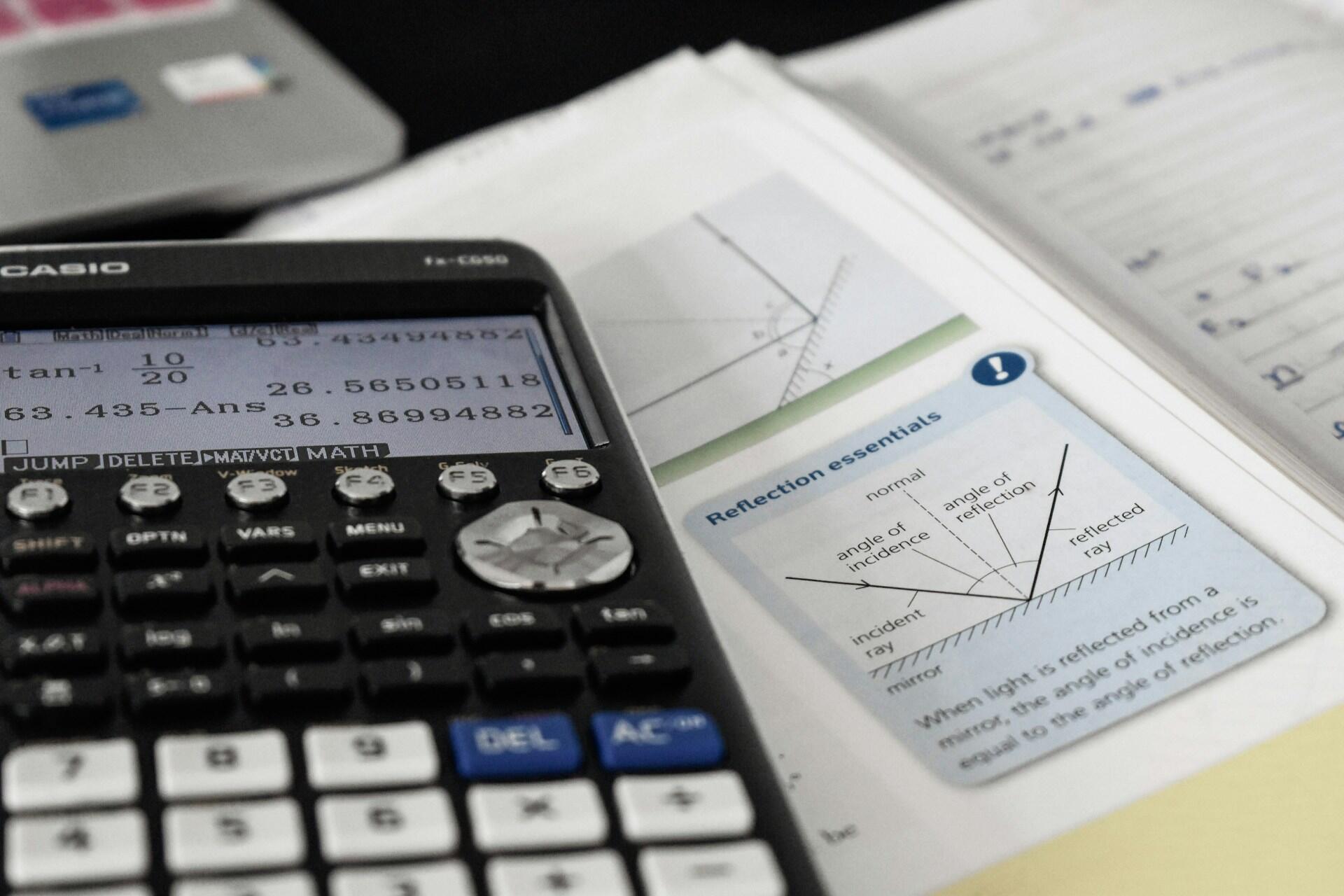
Developing strong numeracy skills builds confidence, improves decision making and opens doors to countless educational and career opportunities. Whether you are calculating a budget, analysing data or simply choosing the best supermarket deal, mathematics provides practical skills that make everyday life easier and more informed.
Search for an online math tutor and find the ideal private math tutoring with Superprof! Start today!
References
- National Council of Teachers of Mathematics (2026) Why Learn Mathematics? Available at: https://www.nctm.org (Accessed: 3 August 2026).
- Encyclopaedia Britannica (2026) Mathematics. Available at: https://www.britannica.com/science/mathematics (Accessed: 3 August 2026).
- Our World in Data (2026) Data and Statistics. Available at: https://ourworldindata.org (Accessed: 3 August 2026).
- The Royal Society (2026) Mathematics and Society. Available at: https://royalsociety.org (Accessed: 3 August 2026).
Summarize with AI:
Did you like this article? Leave a rating!


 Loading...