

An economic model seeks to explain our economic reality, for example why markets behave the way they do. What's more, an economic model seeks to test an assumption or theory about economic behaviour. However, how this is tested depends on the model used.
Sam Ouliaris, a senior economist at the IMF Institute, suggests that economists will use either a theoretical economic model or an empirical economic model to test their theories.
He argues that whilst a theoretical model will focus on providing qualitative answers and predictions of an individual's behaviour or market behaviour, an empirical model will seek to provide numerical substantiation to such theories. Further, how simple, or indeed complex, a model is, will depend on the economist creating the model, and what aims they are seeking to achieve.




There’s More Than One Economic Model
There are many different economic models in existence, each producing different results and conclusions about the economic reality around us. However, despite the variety of theories and models, there are a few core economists and economic schools of thought whose theories you should be familiar with, particularly if you are currently studying economics.
Classical Economics
Classical economics is a school of economic thought whose principles derive from pioneering thinkers such as Adam Smith and John Locke.
In essence, classical economists believe in a number of things, including:
- Adam Smith’s concept of the “invisible hand”;
- The division of labour;
- Free trade; and
- A laissez-faire economic system, including the belief that markets have a tendency to self-regulate.
It is interesting to note that Adam Smith was a most controversial figure in his time.
One reason for the derision his writings were often subjected to was the fact that the economic model he proposed was so contrary to the political machine of his day.
It just so happened that Adam Smith was alive in a time of great change in his country.
He was a mere babe when Scotland signed the Treaty of Union with England, releasing his country of onerous tariffs levied by England and opening lucrative trade routes with the American colonies.
Naturally, he was not aware of these events, young as he was but, in his later years, they surely must have played a role in his theorising of economic matters.
When he was in his teens – now, surely able to grasp the ramifications of events, the Bank of Scotland suffered accusations of being Jacobite sympathisers. In 1727, that bank’s rival received its Royal Charter.
The two institutions attempted to drive each other out of business. These ‘bank wars’ ended in 1751 – coincidentally, only a few years before our Mr Smith published his Theory of Moral Sentiments.
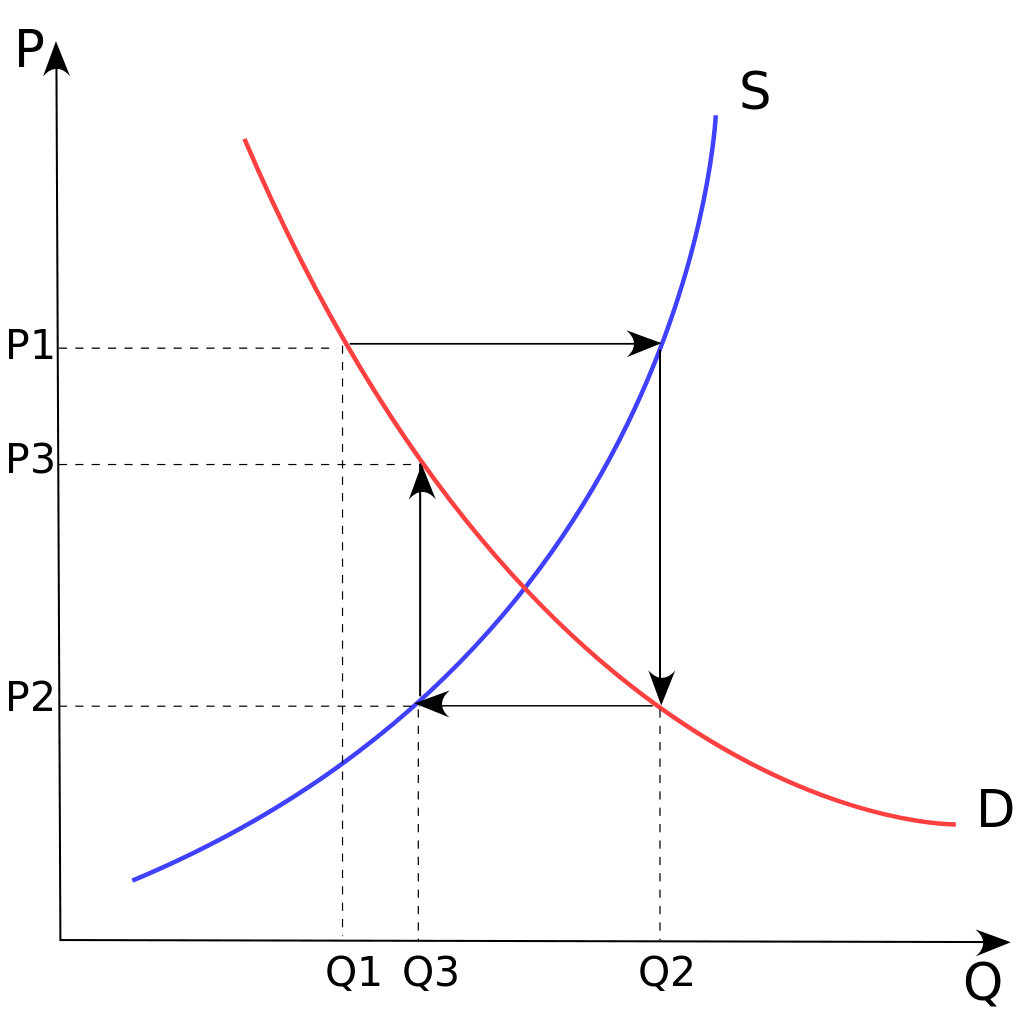
Essentially, the overarching belief of this school was that markets should always move to be in equilibrium. For example, over time, any change to supply should be equalled by a corresponding move in demand.
In this work, he alludes to ‘the invisible hand’ in his contemplation of the rich; namely that they are compelled, not by law but by a moral imperative to distribute onto the poor the necessities of life – presumably wages and/or goods.
Turns out that Mr Smith was an economist by default; his theories were formulated on morality rather than on any fiscal sense. Thus it comes as no surprise that he is considered an Enlightened thinker!
My economics teacher London is a classical economist!
Laissez-Faire Capitalism
The theory of Laissez-faire capitalism is closely linked to classical economics as well as thinkers such as Adam Smith.
Far from the lackadaisical impression this term suggests, this economic theory rests on five fundamentals:
- The basic unit of any society is the individual
- The natural right to freedom mustn’t be denied to any individual
- Nature herself is a harmonious and self-regulating system
- Individuals must closely watch corporations and other entities of the State because of their inclination to disrupt (the Smithian) spontaneous order.
Even today, we find evidence of this economic model. Shareholders have the right to review company balance sheets, for example. Governments also apply this theory by instituting oversight committees and submitting to external audits.
The fifth, most important tenet is that markets should always be competitive. Here is where the concept of Laisser Faire runs into trouble!
Governments routinely adjust interest rates to stimulate their economies, meet their target inflation rates or add value to their currency.
While these practices could be considered manipulation, they are generally accepted as a legitimate means of maintaining an economy.
Corporations, on the other hand, are not permitted such tactics.
When a company artificially inflates its stock, it shows as more valuable than it actually is on the stock markets, effectively forming an economic bubble with nothing to sustain it.
Such pump and dump schemes are illegal and the perpetrators are generally caught... not by individuals, as the Laisser Faire doctrine states but by government overseers.
Those that advocate such a system argue that markets are effectively self-regulating and that as a result government interference in economic policy, for example through imposing import or export tariffs, is harmful. As such, to obtain the most benefit for all, capitalism should be free to run its own course.
You can take an economics class online on Superprof.
Marxism
Karl Marx may be better remembered as a philosopher, but it’s equally true that he contributed much to the field of economics.
His two major works in economics and economic history were:
| Title (English) | Title (German) | First Published | Authors |
|---|---|---|---|
| The Communist Manifesto | Manifest der Kommunistischen Partei | 1848 | Karl Marx and Friedrich Engels |
| Capital | Das Kapital | 1867 | Karl Marx |
As many will be aware, Marx was not an advocate of capitalism and saw many faults with the system, including conflict and instability.
As divergent as their thinking was, Marx and Smith’s philosophies were grounded in the same plot: economic modelling must be driven by a moral code.
Karl Marx believed no one person was any better, more worthy or more deserving than anyone else.
That being the case, why should one have riches and the other not? Or, more specifically, why should anyone suffer any lack when there is enough for everyone to have at least basic necessities, education and health care?
His philosophies flew in the face of the day’s commonly-held beliefs.
Bear in mind that his pronouncements came at a time when everyone who was able was fighting to get rich.
After the Revolutions of 1848, when most European monarchies were overthrown, the transition from serfdom to an economic model where people bartered their labour proved far more difficult than anyone had foreseen.
Young Marx deplored the idea of people selling their time and abilities for just enough sustenance while those they laboured for essentially took the place of the so recently vacated nobility class.
It might seem contrary that Marx had no problem with capitalism as an economic model. Rather, he baulked at the concept of capital; the propensity of workers to become the tools of the business owners.
Contrary to thinkers such as Adam Smith, Marx believed that at the heart of capitalism was the history of class struggle itself. In an almost Hegelian-vein, Marx argued that ultimately it would be this struggle that would destroy capitalism and that it would drive society towards a new age of communism.
Efficient Market Hypothesis
The Efficient Market Hypothesis (EMH) is a theory within the field of financial economics and is often referenced in relation to investments and the stock market.
Essentially, EMH proposes that an investor can never “beat the market” because the stock market reflects all possible available information. Although this theory is commonly referenced and used, it has been the subject of fierce debate and criticism, with detractors arguing, for example, that figures such as Warren Buffett have been able to consistently beat the market for decades.
The Efficient Market Hypothesis supposes that all checks and balances are in place and working, that every entity is absolutely honest and that market fluctuations are always predictable.
Essentially, it is an effective way of embracing Laisser Faire economics and the ‘Invisible Hand’ postulate; a combination which would naturally foster fair trade.
Because these economic fundamentals are in place and working well, no entity – investor or business would be able to play the market to their advantage.
Were it not for the human factor, this would be a lovely, compact economic theory.
Let’s examine the effects of international policy in America on world financial markets, just for illustration purposes.
Information bias, the propensity to seek more information about a situation even though it has no direct impact on any action, is an example of cognitive bias that affects the economy.
Will my earnings be safe? Will other countries want to buy my products?
Will investors continue to support my venture in good faith even though it seems that this government intends to disturb the equilibrium we’ve so far enjoyed?
Even after absorbing all the possible information about the situation, these entities resort to their own, perhaps irrational thinking about it. Past practice shows they would likely shed more volatile stocks in favour of buying growth stocks, often at a higher rate.
This trend has a dual effect on the economy.
For one, it reduces the value of the riskier stocks and compels investors to bypass them.
On the other hand, others would profit by buying those neglected stocks at a reduced rate as well as from the over-reaction of those selling growth stocks.
That would be the Buffett formula, in case you were wondering.
Each Great Economist Has Their Own Economic Theory
As we mentioned above, there is a wide range of economic theories in existence. However, if you want to study the most influential or widely-supported economic theories, try reading the key theories of major economists.
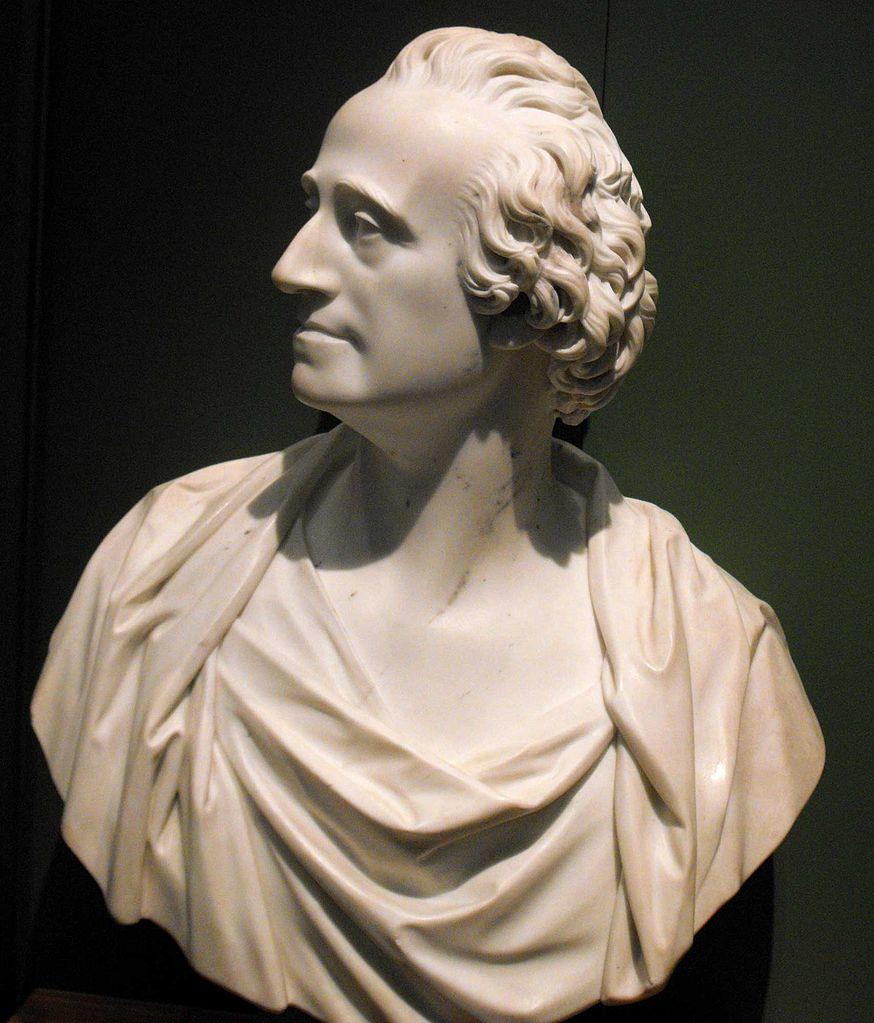
The Invisible Hand
Adam Smith, an 18th-century philosopher, is a pivotal figure in economics and has been associated with the classical school of economics.
One of Smith’s most famous concepts was that of the “invisible hand,” which he describes in his work The Wealth of Nations. Illustrative of a free market economy, Smith argued that there was an invisible hand that guided the economy towards balance and equilibrium, despite the self-interest of individuals.
Keynesian Economics
John Maynard Keynes is one of the most famous figures in economics, largely due to the wide influence that his theories had on global markets in the 20th century.
The key tenet of Keynesian economics was the idea that the government should involve itself in the running of a capitalist economy.
Specifically, Keynes argued that governments should spend more during times of economic downturn in order to stabilise the economy and raise demand for goods and services. This, in turn, should help the economy to grow.
As with all of these economic philosophies, we have to look at what was happening in the world and with various economies, to get a real sense of what, exactly, the economist intended by his model.
There is little argument among economists today that America’s Great Depression was caused by that country’s central bank, The Fed, not taking action in the face of the banking crisis.
Actions that might have averted the monumental economic collapse include lowering interest rates and regulating banks.
Prior to the Great Depression, banks in the US were largely unregulated; they had the power to print money to meet all of their fiscal obligations. The Fed made no corresponding moves, leading to a disparity of worth between the two systems.
The ensuing monetary contraction led to panic, causing people to rush to banks and withdraw all of their funds.
That is if funds were available for withdrawal.
The Keynesian model revolves around the idea that, if the central bank had oversight and control of local banks, the depression could have been avoided.
In times of slowing economy, the government must run deficits in order to keep people employed because private sector businesses cannot be counted on to invest enough in production to keep the economy afloat.
Such deficits may include lowering taxes and increasing government spending (which would represent a deficit in their budget).
Although he is not without his critics, as his ideas marked a step away from Laissez Faire policies espoused by the likes of Adam Smith, there is no denying the influence Keynes’ theories have had.
Friedman Monetarism
Milton Friedman, a U.S. economist, was, in contrast to Keynes, an advocate for the free market, and has been closely associated with the theory of monetarism.
The Keynesian model advocated for the government manipulating the economy through fluctuating tax rates and varying government spending to suit the times.
Monetarism, on the other hand, advocates for the government controlling how much money is in circulation but taking no action.
In other words: the government should focus solely on maintaining sustainable rates of economic ability.
Believing that manipulation of money’s growth rate or, indeed, the supply of money itself would destabilise the economy, Friedman proposed a fixed money rule, whereby the supply of money would be increased by a set percentage each year.
Friedman believed in keeping wages and prices flexible as part of a Laissez Faire economy. In particular, the theory of monetarism argues that the amount of money in supply within an economy should be kept constant, with just enough room to grow naturally.
As such, in contrast to Keynes, the concept of monetarism goes against proposals or suggestions for excessive government intervention or regulation.

Other Examples Of Economic Models
New economic theories and models are developing all the time, and there have been major contributions to new economic fields, such as behavioural economics, over the past fifty years or so. We outline some of the more recent economic theories that any economics student or university graduate should know about below.
Asymmetric Information
The concept of asymmetric information was brought to prominence by three economists:
- George Akerlof;
- Michael Spence; and
- Joseph Stiglitz.
The argument is that, in a transaction, often one party (usually the seller) has access to more information and knowledge than the other party (usually the purchaser).
Information asymmetry is not solely an economic problem: military leaders constantly miscalculate their prospects of victory – a classic case of information asymmetry.
We see examples of unequal equations everywhere today: we don’t really know if North Korea is continuing to operate their nuclear facilities, whether the forces of ISIS really are decimated or how the European Union will trade with us post-Brexit – no matter what they say.
In a perfect world, such negotiations would function like a chess game: all the pieces on the board and all of the possible moves obvious to anyone who studies the pieces.
The implication of this theory is that, contrary to some economic models that assume perfect information symmetry, markets do not, in fact, operate in this manner, and that the existence of asymmetric information can lead to “adverse selection.”
Prospect Theory
Daniel Kahneman and Amos Tversky were the minds behind prospect theory. The theory posits that individuals, contrary to the assumptions in most economic models, are not always fully rational decision makers.
Kahneman and Tversky used their research to argue that individuals value gains and losses differently, with greater emphasis placed on possible gains than possible losses. For this reason, this theory has also been described as the “loss aversion” theory.
As a result, Kahneman and Tversky argue that some of our decisions are based more on emotion and our memories than logic. This theory falls within the field of behavioural economics and can be used to illustrate why people sometimes follow less than logical behaviours in financial markets.
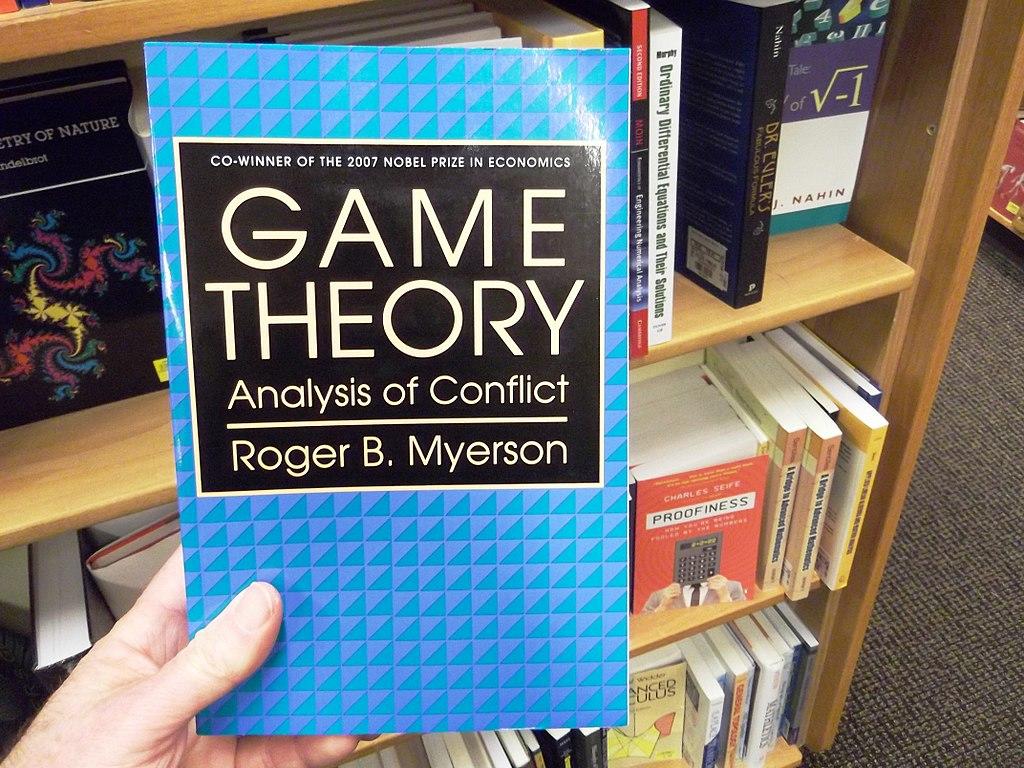
Game Theory
Game theory has wide-reaching applications, from psychology to politics and biology to business.
Naturally, it has also been welcomed within the area of economics. Essentially, the theory studies human conflict and co-operation in times of competition, and the strategies that individuals adopt as a result.
You could say that Game Theory as applied to economics underscores the principles of classical economics:
- Division of labour: ‘players’ help each other out
- Free trade: participants assign their own values for bartering.
- Laisser-Faire: the game’s outcome would be self-regulating
The Invisible Hand component refers to every game participant’s common sense of fair play and equanimity.
Game theory has helped to address some issues that could not be explained by other schools of economic thought. For example, game theory helps to explain the concept of imperfect competition, which not all economic models allow for.
One of the first pioneers of the field was John von Neumann, although there have been many other contributors, such as John Nash, who developed the Nash Equilibrium.
Check out for more engineering economics online course here on Superprof.
Find Out More About Your Favourite Economic Theory
Although there are a number of economic theories and models out there, it’s worthwhile spending some time familiarising yourself with the most famous economic models. You can do so by reading books on the subject. This is for a variety of reasons, not least because:
- You can learn more about a particular school of economic thought;
- You can develop your understanding of a major economic thinker – from Keynes to Friedman; and
- You can help improve your knowledge of your course or university curriculum.
The best way to learn about particular economic models is to read the relevant works by their proponents, for example, The Wealth of Nations or Das Kapital, but if you need any extra help understanding key economic theories you could also turn to a tutor for help, especially if you don't have the time to read every major economic text in detail.
If you decide that an Economics tutor would be the best way to help you learn more about these important economic theories, then you could look for your A Level Economics tutor on an online tutoring site. Sites such as Superprof have a range of economics tutors who are very familiar with all the major economic theories listed above, and they would be happy to help you deepen your knowledge of these models.
Superprof has economic tutors online!
If you'd like to read up on the financial crisis of 2008, click here.
Summarize with AI:
Did you like this article? Leave a rating!


 Loading...
A very informative and step by step guide about economics.