
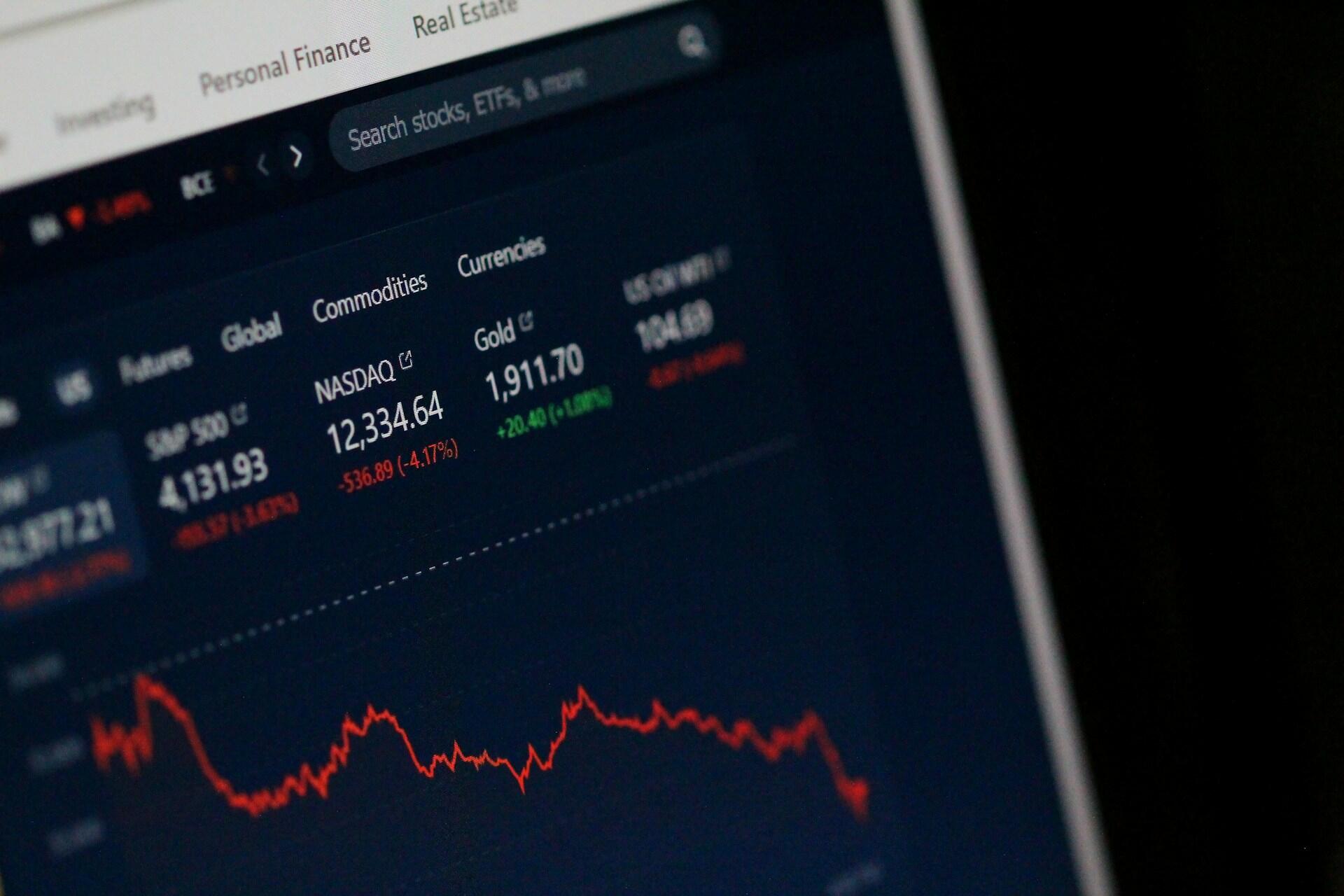

Economic collapse describes a widespread and sustained breakdown of a country’s economic system. It includes falling production, rising unemployment, failing businesses, and a strain on any social programs. It often results in lost confidence in banks and the government, including the national currency.
A severe and rapid downturn in an economy, usually resulting in disruptions to employment, production and consumption.
Economic Collapse vs. Financial Crisis vs. Recession
Most countries experience some form of economic hardship multiple times through their histories. Only a handful of those events compound and cause a true collapse.
The difference is mainly scale:
Crisis is usually centred on institutions like banks and markets, which can cause credit freezing and lead to a recession.
Recessions usually shrink the economy and mildly affect the average person for a few years before recovery begins.
Collapse includes partial or total failure of systems that causes widespread financial devastation for families and institutions.
| Term | Severity | Scope | Typical signs | Usual outcome |
|---|---|---|---|---|
| Recession | Moderate to severe | Broad economic slowdown | Falling output, weaker hiring, reduced spending | Recovery often begins within months or a few years |
| Financial crisis | Can be severe | Banks, credit markets, asset prices | Bank losses, lending freeze, market panic | May lead to a recession or, if contained, remain mainly financial |
| Economic collapse | Extreme and prolonged | Economy, institutions, currency, and daily life | Bank failure, mass unemployment, shortages, currency breakdown, debt default | Recovery may require deep reform, external support, or political change |
A recession can be serious without becoming a collapse. For example, Canada’s 2008-09 recession affected employment and output, but the financial system remained mostly resilient. A financial crisis can also be contained if governments and central banks act quickly.


What Causes an Economic Collapse?
Economic collapse results from identifiable and recurring indicators. Usually, a country slowly becomes vulnerable over several years or decades, and a sudden shock to the economic system exposes the weaknesses.
Think of it like a sinkhole in the road: the earth underneath is slowly washed away without anyone noticing until one day when a car drives over it and causes the roadway to fall in.
There is no definitive rule to determine if a country is in collapse. Economists look at the overall status and several indexes to ascertain an economy’s status. Usually, a collapse isn’t recognized until several months or even years after it has begun.
| Main driver | How it can lead to collapse |
|---|---|
| Financial system failure | Bank runs, failed lenders, and frozen credit prevent people and businesses from accessing money |
| Excess debt | Governments, households, or companies struggle to repay loans, leading to defaults and spending cuts |
| Inflation or currency collapse | Prices rise quickly, savings lose value, and confidence in the currency declines |
| Political instability | War, corruption, weak institutions, and policy uncertainty damage investment and production |
| External shocks | Oil-price swings, pandemics, commodity crashes, and trade disruptions can expose deeper problems |
Financial System Failure
An early indication of economic crisis and recession is when confidence in the banks falls, causing people to withdraw their cash and reducing banks’ investing and lending capabilities. This is known as a bank run.
Banks rarely have liquid funds to actually cover everyone’s deposits. Most of their cash is invested or lended to other borrowers, so banks can fail when too many clients take out too much cash.
As banks weaken, they reduce lending or impose credit freezes. People and businesses stop being able to get loans for essential expenses. This domino effect causes even more economic failure.
Learn more about financial systems with a professional economics tutor.
Excess Debt and Unsustainable Leverage
Debt itself doesn’t cause an economic crisis. Governments, businesses and individuals all take loans for important expenses.
The problem begins when borrowers take on too much debt and interest rates rise while asset values fall, currency power weakens, and income drops. This is often called excessive leverage. The pressure of the debt rises slowly and seems manageable until suddenly it isn’t.
A good example is a housing boom:
- Home prices rise
- Lenders offer larger mortgages
- Buyers jump in because they expect prices to get even higher later
- Buyers expect their property values to increase
- Supply and demand changes, which can cause falling prices
- Property values can reduce, causing borrowers to owe more than their property is now worth
- Borrowers default on their loans
- Banks absorb losses
- Construction slows down (not as many homes being built; contractors/home owners/buyers can't get bank loans because banks restrict credit)
- Borrowers spend less in other ares of life, too, as they feel the squeeze of debt
Inflation, Hyperinflation, or Currency Collapse
Steady, moderate inflation is common in growing economies. It becomes a problem when wages stagnate or do not keep pace with high inflation, rent, bills, food, transportation, and other essentials take up more of the average household budget.
Businesses struggle to pay their own bills and get people to buy their products. Consumers have less buying power. This is a cycle that causes reduced consumer spending and businesses to fail.
Hyperinflation is an extreme form of inflation. It’s commonly defined as when prices rise by 50 per cent or more per month. It causes people to lose faith in the national currency and resort to bartering, trading, or using foreign currencies instead.
Political Instability and Poor Governance
The main issue in an economic downturn is trust. Money works because people trust that it will hold its value and allow them to buy something in the future.
Instability from civil unrest, war, corruption, weak public institutions, and sudden policy changes can erode trust. This can cause bank runs, investors moving money abroad, businesses stagnating in hiring and providing raises, and skilled workers leaving the country, even before economic impacts are felt.
External Shocks and Structural Breakdowns
When a country’s economic system has multiple weaknesses and liabilities, a shock can trigger a crisis. A common example is oil-price changes. A country that relies on exporting oil can face a sharp decline in government revenue when prices fall, and a country that relies on importing oil can face sudden, exorbitant costs when prices rise.
Other triggering events include: pandemics, wars, natural disasters, and global trade disruptions.
Warning Signs of an Economic Collapse
There’s no one indication of an impending economic collapse. Instead, there are several warning signs economists look out for. They can become a problem when several warning signs appear together and get worse over time.
Risks and Indications of economic collapse:
- Interconnected systemic problems, not one isolated incident.
- Banks, credit, trade, jobs, prices and public services negatively affected.
- Bank runs, rising loan defaults, credit restrictions, reduced allowance of cash.
- High unemployment rates, wage stagnation, persistent reduced gross domestic product (GDP), essential goods shortages, reduced currency value, reduced consumer spending.
- Large government deficits.
- Hyperinflation, war, institutional failure, civil unrest, and overwhelmed banking systems.
- Empty shelves, difficulty procuring products (especially imports), fuel shortages.
- Falling trust in public institutions and banks.
- Country’s heavy dependence on one export, industry, lender, or trading partner.
- Can have international repercussions due to trading, changes in power, and an increased motivation for war.
Some of these indicators can happen independently without causing larger issues, or can cause a crisis or recession without a full-blown collapse. The greatest danger comes when they start to compound and reinforce each other.
Want to find out more? Look for an economics course online on Superprof.
Worst Economic Crises in History
The worst economic crises happened for a variety of reasons. Some began with banks and financial markets, while others were propelled by war, failing institutions, debt, currency collapse, civil problems, and poor policy choices.
1630s
Tulip Mania
1720
Mississippi and South Sea bubbles
1921-23
Weimar Germany hyperinflation
1929-39
Great Depression
Late 1980s-91
Soviet economic collapse
1999-2008
Zimbabwe's economic collapse
2007-09
Global financial crisis
2010s onward
Venezuela's economic collapse
1980s: The Collapse of the Soviet Economy
The Soviet Union’s economic collapse occurred due to long-term structural problems in its centrally planned system. Production targets often did not meet the needs of businesses and the people, causing frequent shortages. Institutional breakdown and political changes caused widespread uncertainty and instability.
The government tried stimulating the economy by printing more money, which led to inflation. The Soviet economy relied heavily on exporting oil, and when the price plummeted in the 1980s, the economy couldn’t sustain itself. Without a market crash, the economy collapsed.
A global recession is defined as a contraction in global real GDP per capita accompanied by a broad decline in various other measures of global activity.
Worldbank
1921: Hyperinflation in Weimar Germany
A textbook case of currency collapse, Germany’s hyperinflation in the 1920s was caused mainly by fallout from World War I. The country was charged with expensive post-war obligations, which caused political and civil instability and fiscal pressure. The government tried printing more money, but the value of the German mark fell and prices rose rapidly.
The consequences happened quickly: savings lost their value and salaries became insufficient overnight. Famously, people began burning their money for warmth in the winter.
1929: The Great Depression
The Great Depression of 1929 is perhaps one of the most famous examplesof global economic collapse. It was triggered by Black Tuesday, also known as the Wall Street Crash, which was the worst stock market crash in the United States’ history. Although it began in the U.S., multiple policy mistakes failed to stem the problems and the crash spread and caused a global economic depression.
Typically, inflation is the indicator of economic problems. But, just before the Great Depression, the US dollar's value actually increased, which caused the weight of debts to artificially increase and prices and wages to fall.
Used by some as a prime example of a boom and bust market, the Great Depression is regarded as the deepest economic depression of the 20th century, causing:
- rising unemployment
- shrinking GDP
- minimal economic growth
Although recovery began in 1933, it took many more years for the United States and other countries to get back to their pre-crash state.
1999: Zimbabwe's Economic Collapse
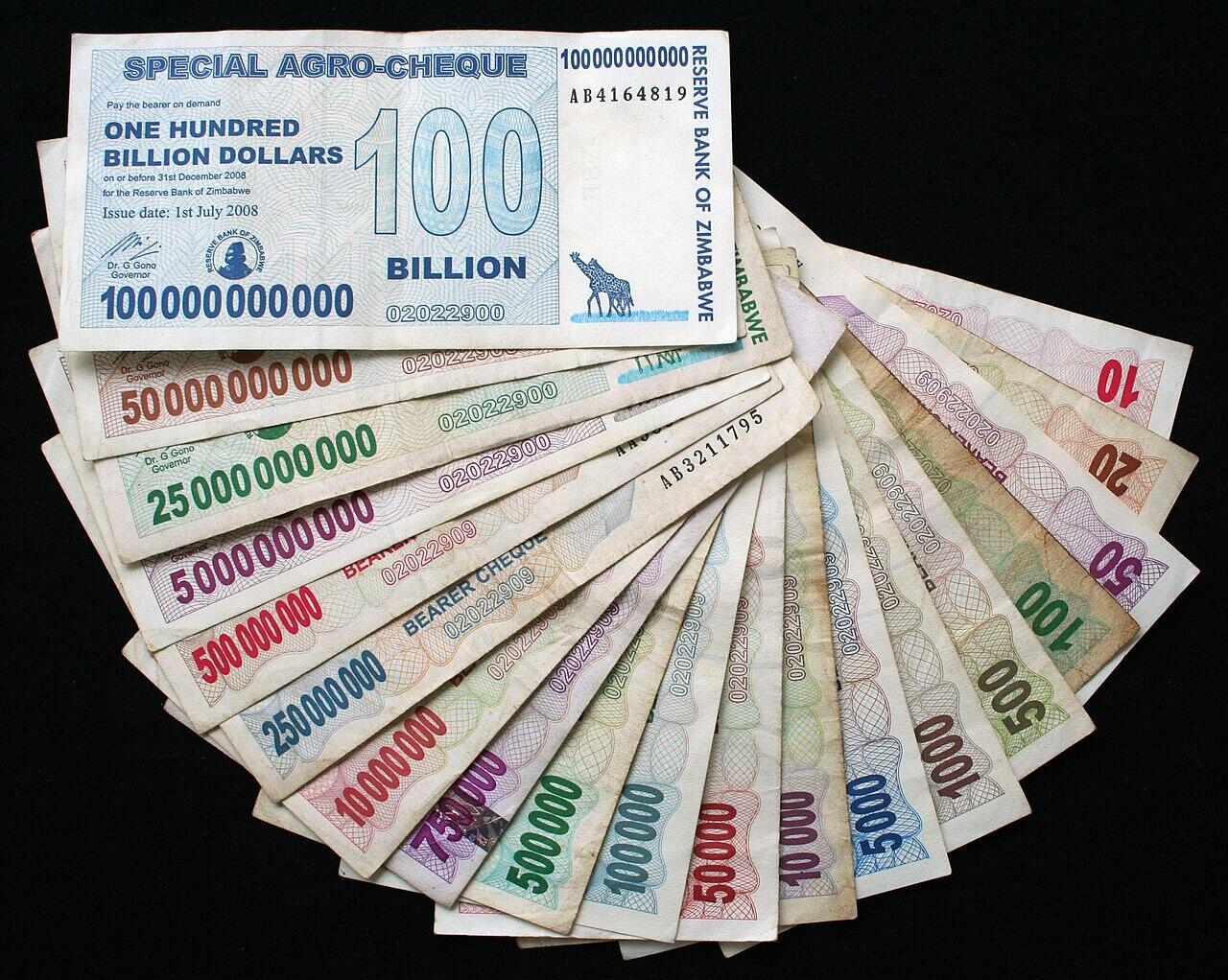
Zimbabwe’s GDP fell by more than 40 per cent between 1999 and 2008. Inflation spiraled out of control so thoroughly that the local currency mostly disappeared from use within the country.
Falling agricultural output combined with policy instability, reduced investments and weak confidence led to multiple problems. The government tried putting out more money, leading to inflation. Weak government leadership and poor policies contributed to the economic decline. People became impoverished, and many still struggle today with meeting their basic needs as a result.
2008: The 2008 Financial Crisis
Considered by many to be the second worst global financial crisis behind the Great Depression, the financial crisis of 2008 wreaked havoc on global economic systems and caused a great recession worldwide for a number of years.
The crisis began in 2007 when subprime mortgages (loans given to borrowers with weak credit) within the United States created a housing bubble that then crashed. Although many economists pointed out the signs before the bust, no action was taken to mitigate the issues.
Things rapidly escalated, with the crash causing downturns in financial markets and the banking system, both in the United States and abroad.
Notable casualties of the downturn were the Lehman Brothers, an investment bank that went bankrupt in 2008, whilst elsewhere governments were forced to bail out their banks to prevent them from collapsing.
Ultimately, the crisis revealed vulnerabilities in financial regulations and the interconnected nature of global finance...
EBSCO
A quick crash then led to a surprisingly slow return to growth and overall global wealth. It took many years for the world economy, and millions of the world's population, to recover from the impacts that the crisis and subsequent recession brought.
In many ways, the financial crisis was also a precursor to many of the economic issues and austerity measures that followed economies within the Eurozone during the early 2010s.
2010: Venezuela's Economic Collapse
Venezuela relied heavily on oil exports, and when the trading price of oil weakened, the government began receiving less foreign currency. They couldn’t adequately support imports and public spending, leading to a prolonged reduction in living standards.
Political conflict, weak institutions, shortages, price controls, and inflation added to the issues. Many people couldn't access or afford basic goods, including food and medicine. As a result, many people left the country.
The collapse highlighted the dangers of relying too heavily on a single export, especially where there aren’t adequate safety nets and policies in place to help with disruptions.
Financial Crisis Examples and What They Teach Us
Apart from full-blown collapses, crises can arise from speculative bubbles. They can cause major losses, but don’t end up leading to wider economic devastation. The broader economy may be able to recover when the normal institutions stay more stable.
| Example | Date | Cause | Impact | Lesson learned |
|---|---|---|---|---|
| Tulip Mania | 1630s | Speculation in tulip-bulb contracts | Prices fell sharply after a buying frenzy | Popular excitement can push prices far beyond underlying value |
| Mississippi Bubble | 1720 | Speculation linked to public debt and colonial ventures | Investor losses and loss of confidence in France’s financial system | Financial innovation can hide risk rather than remove it |
| South Sea Bubble | 1720 | Overvalued shares and political connections | Market crash and damaged public trust in Britain | Hype and weak oversight can fuel bubbles |
| Dot-com bubble | Late 1990s–2000 | Technology-stock valuations detached from earnings | Major stock-market losses after the crash | A promising sector can still be overpriced |
The Dot-Com Bubble
A crisis largely related to the United States, the dot-com crash is a great example of a speculative bubble and market volatility. Towards the end of the 1990s, the internet sector saw a period of exceptional growth, with a great number of internet companies completing IPOs, and seeing their stocks rise in value. However, many businesses had little revenue to back up their stocks.
After a peak in value in 2000, the value of internet companies within the Nasdaq Composite declined, and the bubble then burst, with stock prices falling dramatically. Many companies simply shut down following the crash, although there were some survivors, such as eBay, which managed to recover.
This crisis shows what can happen when an innovation gets over-valued before its niche is clear. Economists today look out for similar patterns.
Tulip Mania
Tulip Mania was a phenomenon in the 17th century that saw tulip bulbs become intensely popular as status symbols. Since tulips are seasonal, the Netherlands began using a futures market which allowed customers to reserve the right to buy a tulip bulb at a later date.
This led to a speculation market, which drove up the price of the tulips to unbelievable levels. People sold their valuables to buy tulip bulbs, although they had little intrinsic value. As a result, people ended up losing a lot of their property and money in their desperation to show off their status.
The Mississippi Bubble and the South Sea Bubble
These bubbles involved companies linked to overseas trade and government debt. They promised investors future wealth.
The Mississippi Bubble affected France, as it involved developing French territories in Mississippi, North America and The West Indies. At the time, tobacco and slave trading were very lucrative, and France held a monopoly in both in these areas. Due to the vast profit-making potential, the development company’s valuation inflated beyond rational measure, leading to a crash.
A similar series of events happened with Britain the The South Sea Company. These examples show how financial crises can be caused by too much trust and speculation, especially when followed by broken trust.

Can Economic Collapse Be Prevented?
Economic threats and upsets are part of a country’s life. No country can completely mitigate every economic risk. However, risks can be reduced, especially when governments and financial institutions take a realistic look at the country’s weak points and create sensible plans for the situation.
It’s imperative to keep the banks running through emergency liquidity. Day-to-day, deposit insurance and transparent supervision are designed to protect consumers.
Countries that rely on imports should have access to stable foreign currency during periods of market stress.
Create multiple channels of imports and exports, as well as a focus on creating domestic value.
Employment insurance, medical care programs, food assistance, and other social support programs should be easy to access during temporary hardship to prevent a wider social crisis.
Governments and companies should borrow realistically. Households need to be evaluated to realistic income and repayment capacities.
The cycle of economic downturn can be disrupted if the government acts quickly and responsibly. A credible fiscal and monetary policy backed by regulators can help stop the cycle from compounding.
Corrupt or incompetent governments generally fail to act in their country’s best interests, causing mistrust and economic problems to increase.
Economic collapse is not inevitable, but prevention requires careful evaluation from knowledgeable economists and a willing, competent government. History teaches us that prudent borrowing and honest economic policies make it less likely, though not impossible, for a severe crisis to occur.
References
- Chen, James. “What Is Economic Collapse? Definition and How It Can Occur.” Investopedia, edited by Vikki Velasquez and Robert C. Kelly, 4 May 2026, www.investopedia.com/terms/e/economic-collapse.asp. Accessed 30 Sept. 2026.
- Hanke, Steve H. “Venezuela Enters the Record Book, Officially Hyperinflates.” Cato Institute, 12 Dec. 2016, www.cato.org/blog/venezuela-enters-record-book-officially-hyperinflates. Accessed 30 Sept. 2026.
- HISTORY.com Editors. “Weimar Republic: Definition, Inflation and Collapse.” HISTORY, 28 May 2025, www.history.com/articles/weimar-republic. Accessed 30 Sept. 2026.
- International Monetary Fund. “Zimbabwe.” IMF eLibrary, May 2009, https://doi.org/10.5089/9781451841527.002.A001. Accessed 30 Sept. 2026.
- Kose, M. Ayhan, et al. “Global Recessions.” World Bank Group, Policy Research Working Paper 9172, World Bank, Mar. 2020, documents1.worldbank.org/curated/en/185391583249079464/pdf/Global-Recessions.pdf. Accessed 30 Sept. 2026.
- Ray, Michael. “Why Did the Soviet Union Collapse?” Encyclopedia Britannica, 13 June 2025, www.britannica.com/story/why-did-the-soviet-union-collapse. Accessed 30 Sept. 2026.
- Trescott, Paul B. “Financial Crisis of 2008.” EBSCO, 2021, www.ebsco.com/research-starters/history/financial-crisis-2008. Accessed 30 Sept. 2026.
Summarize with AI:
Did you like this article? Leave a rating!


 Loading...

thank you for your support we uninteresting