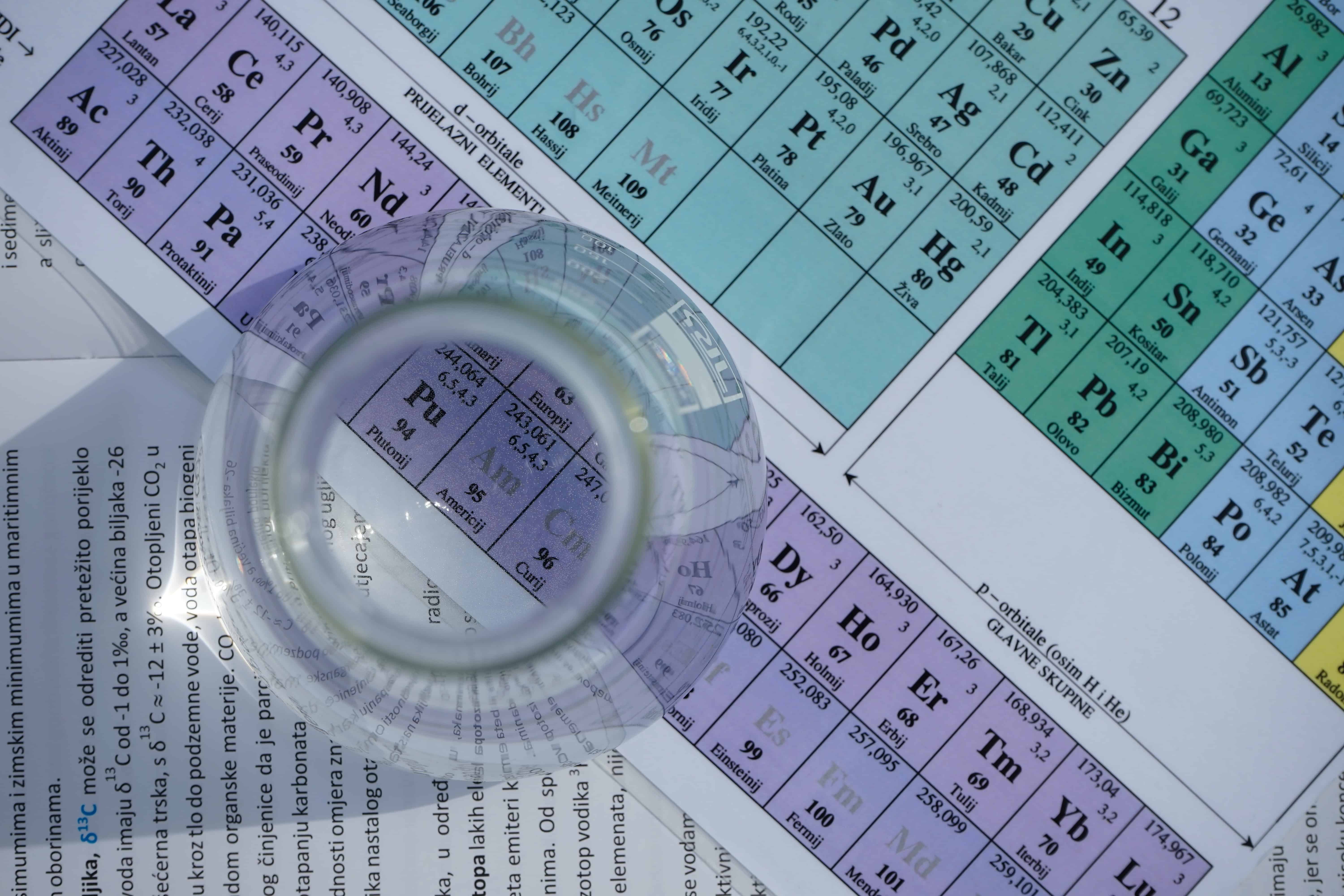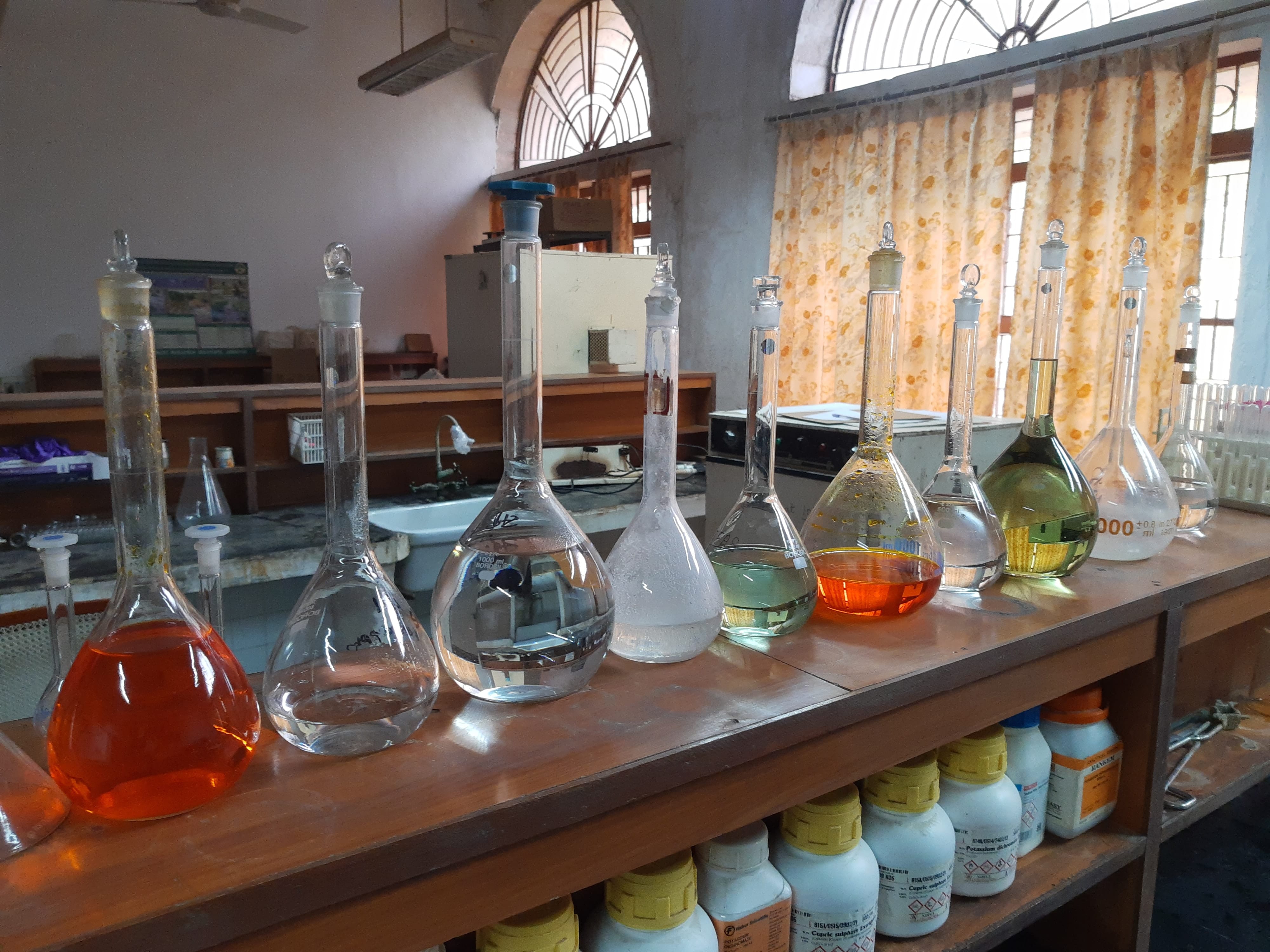

Chemistry is a branch of science that attracts the most inquisitive and gifted minds. Chemistry - the science that deals with the composition, structure, and properties of elements and compounds and the transformations they undergo - is endlessly fascinating and challenging for many students. While young children explore their inner chemist by mixing water with sand and dirt at the playground or even playing with their food, older kids take joy in trying new experiments. By the time budding chemists reach the senior years of high school, they start to contemplate how they might embark on an academic journey and career in the subject.
While chemistry can be simple and fun in the early years, it becomes intriguing and complex in university - which is why the study of chemistry attracts some of the brightest mind. Chemists work to develop explanations of the behaviour of materials: why do they look they way they do, and how they interact with other substances to make new substances. Chemists are the driving force behind the creation of substances like glass, crystals, semiconductors, vinyl, Teflon, and a whole slew of drugs and medications that form the fabric of our daily lives. Chemists also work with food, developing new products, and in industries across so many fields where the development and innovation of new products are involved.
While many chemistry students may imagine themselves working in a lab throughout their career, the reality is that they have many options to choose from. Chemists may work as:
- Analytical scientist
- Analytical chemist
- Medical Writer
- Medical Technologist
- Managers
- Food scientist
- Brewmaster
- Medical Researcher
- Sustainability Specialist
- Nanotechnologist
- pharmacist
- plant manager
- Food and Beverage Processing
- Quality Control
Becoming a Chemistry Educator
While there are so many options you can pursue as a chemist, one of the most popular and important career options is that of an educator. Chemistry graduates may choose to become educators at any point in their careers - some may choose to become a teacher right after their undergraduate degree, while others may work in the field before determining they are ready for a career change. Prospective chemistry teachers are drawn to teaching because they can continue to share their knowledge and explore their passion for science while also enjoying the perks of the role, such as school holidays, benefits, and an above average salary.
If you are considering working in the field of chemistry education, you are reading the right article. We will explore all the different types of roles you can have as a chemistry educator, and the benefits and downsides of each. Let's start by exploring the different career options in chemistry education.
While it is often assumed that chemistry and science majors go on to work in laboratories or as scientists, the reality is that many of these students also choose to pursue teaching. Find out more about becoming a chemistry educator.



What Kinds of Jobs Are Available for Chemistry Educators?
Chemistry education spans a range of roles, both ideal for part time or full time workers. Here are a few!
Chemistry Teacher
Chemistry teacher is a popular role for those looking for a career in education. Those that want to focus specifically on the area of chemistry will want to teach in a high school or secondary school, where chemistry is learned as a separate subject. If you are interested in teaching younger grades, you will teach chemistry as part of the broader science curriculum. Chemistry teachers work in schools, teaching the science curriculum that is established by the province. You will plan elementary chemistry lessons, collaborate with other teachers, and implement the curriculum through teaching and assessing classes of students. Being a chemistry teacher is an important job because they will directly influence the careers and pathways of future chemistry grads and scientists.
Science Center or Museum Educator
While these jobs are not as common, working in a science center or museum can be an exciting option for people with a chemistry background. As a museum educator, you will be teaching the sciences in a fun-filled, exploratory context. You will work with other staff to develop exhibits, and facilitate the exploration of those exhibits with visitors. You may lead demonstrations, teach field trip groups, and plan other special events for the facility you work in.
Chemistry or Science Professor
Becoming a professor is perhaps the most illustrious way to pursue an educator career. As a professor, you will not only be teaching classes, but pursuing your own research on behalf of the institution you work for. To become a professor, you will need to complete additional years of postsecondary education, including masters and doctorate degrees. You will need to research and write a dissertation, which encapsulates a research project you undertake while completing doctorate courses. Being a professor is exciting work: your students are adults, and have advanced knowledge and communication skills. You will be working with some of the finest minds as a professor!
Private School Educator
Private schools and organizations can take a number of different forms. Some private schools operate as day schools where teachers are hired in a similar way to the public system. They may have more resources than public school, because families are typically more affluent and are paying for a different educational experience for their child. Some private education organizations teach special classes after school, on weekends, or as special events in schools or private events. You can find private organizations that focus specifically on Science, Technology, Engineering, Arts, and Mathematics (STEAM) and work as an educator for their business. Working in a private context has many advantages: you may find lots of part time options, teach with innovative options developed in line with the vision of the owner, and not have the stress that may come with public school settings.
Being an educator is an excellent role for those who do not want to work a typical 9-5 job. So what kinds of careers are available for science educators? Learn more about what experiences you need to prepare for a role as a chemistry teacher.
What is a Chemistry Tutor Job Like?
Chemistry tutoring is a fantastic option for anyone that wants the freedom of a freelance worker with all the fun that comes with educating students. As a chemistry or science tutor, you will work with students of different ages to understand new concepts in the subject, prepare for tests and exams at schools, or provide valuable feedback on their work and writing. You can work for as much or as little as you want to, gaining work experience that can enhance your resume.

What is the Job of a Chemistry Teacher Like?
Working as a chemistry teacher is no walk in the park. Like any other career, it has its challenges but also lots of rewards. Let's look at what the job of a chemistry teacher is like.
Planning Lessons
Chemistry teachers must spend a lot of time planning lessons and learning units. This is often done during the summer months when students are not in school! While it may seem odd to spend your time off working and planning, investing the time in lesson planning can mean that your September to June school year runs much more smoothly.
Lesson and unit planning typically starts with reviewing the curriculum of your province and the resources provided to you by your school or institution. Identify what learning expectations you will focus on, the content and activities you will use to ensure that students have the opportunity to meet those expectations. Planning with diversity in mind is essential: you may have a wide range of learners in your classroom, including English language learners and students with special education needs.
Collaborating with Teachers
Another part of your work involves teacher collaboration. By collaborating regularly with your fellow science teachers, you can divide and conquer the work of planning, gain new insights and resources, and create unique learning experiences for students. This is critical if you want to take students on a field trip, or do more hands on work. Collaboration is particularly useful for teachers in chemistry because so many tools and materials are involved. You will want to collaborate with teachers to share and allocate laboratory tools and order new materials needed for experiments.
Managing the Classroom
Classroom management is an element that you will have to contend with as a teacher. It is inevitable, especially if you teach in a school with kids, that you will have to deal with students that will have difficulty sitting still, or are compelled to touch all the lab equipment in the room. This is where a lot of proactive planning will help: take the time to teach students about appropriate and safe lab behaviour. Be clear about what the consequences are of not following instructions or breaking equipment. Finally, plan engaging, well paced lessons that will keep your students busy: this will enable you to keep an orderly and busy classroom!
Assessing Students
Assessment is another essential part of the teaching job. Assessment is all about looking at student work and determining the extent to which they have met the expectations for learning. Typically, teachers assess students on their content knowledge, communication, application, and thinking or inquiry skills. Be flexible and creative as to where you draw assessment data from, and make sure that students have multiple opportunities to show their learning in a variety of ways.
As challenging as chemistry teaching may be, it is one of the most fun and rewarding professions. Learn how you can start your career pathway as a chemistry teacher.

How Do You Plan Lessons in Chemistry?
Planning chemistry lessons can be fun, especially if you are eager to incorporate interactive elements. Typically, chemistry classes will involve student learning the content and knowledge associated with a theme or a unit, and then applying that knowledge in laboratory or other observation activities. Thanks to the proliferation of online learning and video content, you may find it rather easy to find engaging media content for students. You will also want to offer texts, so students have an opportunity to take notes and practice their literacy skills.
The lessons where labs are involved will likely follow a very different structure. You will want students to be ready to do the laboratory work, take observations using the appropriate scientific method and charts, and then also have time to set up and clean. Keep an eye on the clock, to ensure you do not have a lab full of dirty test tubes or petri dishes at the end of a lesson!
Looking for a method to structure your lesson? There are literally hundreds of methods that teachers use everyday, such as the three part lesson. Explore the internet to find ideas and pick something that is suits your needs and teaching style.
Chemistry teachers are a very unique group. Their knowledge is essential for fields that include engineering, medicine, manufacturing, and government. Learn more about becoming a chemistry educator or tutor!
Why Would Students Need a Tutor for Chemistry?
If you are intrigued by the idea of becoming a tutor, you mayt be wondering why a student needs a tutor in the first place. There are actually multiple reasons a student and their family might want to hire one!
The Student is Struggling in their Work
The most obvious reason families look for a tutor for their child is because they are struggling in school. Secondary or high school students can often fall behind: there are simply so many distractions at that age! Students may get into new relationships, spend too much time online or on social media, spend too much time gaming, or are too invested in sports or a social life. In other cases, the student may have a hard time keeping up with the pace or content of a course due to having gaps in learning from previous years. In any event, families will also look to a tutor to support a student to ensure that they are successful in the course.
The Student Wants to Maximize their Learning
Some students may find that their classes are not challenging enough, and families want a tutor to enrich their science learning. The student may be particularly strong, and the family wants their child to have a tutor to help take their child's writing and learning to the next level, or ensure that they have the best grades possible for university applications. In these cases, you will likely find that the student is eager to study and practice: these can be some of the most rewarding students to work with, because they are eager to take advantage of your expertise.
The Student May have Unique Needs as a Learner
Some families may hire a tutor because their child has unique needs. They may have special education needs, are learning English, or simply have a preference for styles of learning that they are not receiving in school. As a tutor, you will work with the family to identify the student's unique needs and tailor a program that is suited for the learner.

What are the Top Reasons to Become a Chemistry Tutor?
Does tutoring work sound more challenging than you anticipated? You might be more inclined to take the role on when you consider the benefits of being a chemistry tutor.
1. Make Extra Income
Tutoring pays well as a part time job, and you can certainly expect to make at least $15-$30 CAD, or more depending on your experience and level of expertise. In today's economy, having streams of income in addition to a full time job can be incredibly useful. As a tutor, you can work as much or as little as you want to, unlike other part time jobs where you may have to sign up for specific shifts.
2. Gain Teaching Experience
Looking to become a teacher? When you apply for a faculty of education or a school board for work, you will want to show that you have experience instructing students to make your application stronger. With teaching experience under your belt, you will find that it is also much easier to speak to questions you might encounter in a job interview since you will have education related experience.
3. Work With Students
Working with young people is fun, stimulating, and highly rewarding. You will enjoy the thrill of teaching when you see your students progress in their learning, and have the results to show from their efforts. You will discover their unique strengths, and enjoy the connections you make with them and their families.
4. Use Your Science Skillset
Sometimes university graduates have a hard time finding work that directly connects with what they have learned in school. As a tutor, you will be using your learning in a direct way! You likely also have other strengths and skills from years in school, such as mathematics and English. As a tutor, you can add more than one subject to the services you offer and take range of clients that need help in different subject areas.

What are the Benefits of Becoming a Chemistry Tutor Online?
Online tutoring has become an increasingly popular way to offer tutoring services, especially as work from home culture has changed so much. As a virtual tutor, you can do the work of a tutor without leaving the comfort of your own home: no commuting neccessary! Another advantage of online tutoring is that you can take clients from across Canada, rather than just focusing on local students. Of course, you will want to make sure you are adept at using online tools and are aware of the best resources and methods for teaching in a virtual environment. Check out apps like Kahoot to make learning fun and interesting, or use videos to demonstrate different lab activities without having to be in a lab!
There are lots of career options in the sciences, such as being a doctor, pharmacist, nurse, scientist, or researcher, but getting these jobs can be tough for a variety of reasons. Is chemistry teaching the right option for you?

How do Chemistry Tutors Promote their Work?
Promoting your work as a chemistry tutor is easy thanks to Superprof Canada. Superprof is a site that connects tutors with students, and is a one stop marketplace for anyone looking for a tutor for themselves or their child. On the site, tutors can easily create a profile for their services. On your profile, you will want to describe your academic background, the age and levels of students you feel qualified to work with, your rate of pay, and the type of tutoring services you offer. A professional photo will also make your profile stand out.
Prospective clients can easily browse different tutor profiles, and contact those who they think will be the right fit for them. As a tutor, you can correspond with clients directly through the site without sharing any personal contact information. From there, you can determine if you can serve the client during their times of availability and according to their budget. You choose the clients that you want to work with, and work with them to create an arrangement that works for everyone.
Why wait on starting your career as a chemistry educator? Create a tutor profile on Superprof today!
Summarize with AI:
Did you like this article? Leave a rating!

 Loading...