
Becoming a doctor in Canada is a long but rewarding journey. It’s a respected career that requires strong academic skills, commitment, and a passion for helping others.
To succeed, it’s important to understand each step - from meeting medical school requirements to getting licensed. This guide explains the full process of becoming a doctor in Canada, so you can plan ahead and stay on track.
Complete an Undergraduate Degree
Earn a bachelor’s degree with required science courses.
3 - 4 years
Take the MCAT
Write the Medical College Admission Test for med school admission.
3 - 6 months
Apply to Canadian Medical Schools
Submit applications, attend interviews, and await acceptance.
1 application cycle
Complete Medical School
Study medicine through classroom learning and clinical rotations.
4 years
Pass the MCCQE
Take the national exam to assess your medical knowledge and readiness for residency.
During final year of medical school
Complete Residency Training
Gain supervised, specialized training through CaRMS-matched programs.
3 - 5 years
Obtain Licensure
Apply to your provincial medical regulatory authority and receive your license.
Several month long process post residency


Step 1: Obtain An Undergraduate Degree
Before applying to medical school in Canada, you’ll need to complete an undergraduate degree - typically a 3- to 4-year program. This is a key part of the journey for anyone exploring how to be a doctor in Canada, as it helps you build the academic foundation required for medical studies.
While there’s no mandatory major, most students choose subjects like biology, health sciences, biochemistry, or psychology to meet medical school requirements. Canadian medical schools often require specific prerequisite courses, including:
- General and Organic Chemistry
- Biology
- Physics
- Biochemistry
- English or other humanities courses
It’s also a good idea to gain relevant experience outside the classroom. Volunteering in hospitals, shadowing physicians, or participating in research projects can strengthen your application and give you a clearer view of what a medical career involves.
Although this step doesn’t involve residency yet, completing a strong undergraduate program is essential to eventually reaching that stage.
Step 2: Take The Medical College Admission Test (MCAT)
The MCAT (Medical College Admission Test) is a standardized exam required by most Canadian medical schools. It plays a major role in admissions, helping schools assess whether you’re ready for the academic demands of medical training. If you’re exploring how to be a doctor in Canada, doing well on the MCAT is an essential milestone.
he exam tests knowledge in key areas such as:
Most students take the MCAT in their third year of undergrad, after completing the relevant prerequisite courses.
Strong MCAT preparation can take several months. Many students use a combination of:
- Online prep platforms (e.g., Khan Academy, UWorld)
- Practice exams
- Study guides and flashcards
- MCAT prep courses (in-person or virtual)
This step is a crucial part of the bigger picture. If you’re wondering how long it takes to become a doctor in Canada, the full journey - from undergrad to residency - often takes 10 to 14 years. That includes 3–4 years of undergrad, 4 years of medical school, and 2–6 years of residency, depending on your specialty.
The MCAT is scored between 472 and 528, but if you’re aiming high, a score of 510 or above is usually considered competitive at most Canadian medical schools!
Step 3: Apply To Canadian Medical Schools
Once you’ve completed your undergraduate degree and taken the MCAT, it’s time to apply to medical school - a key step in how long it takes to become a doctor in Canada. There are 17 medical schools across the country, including well-known institutions like the University of Toronto, McGill University, UBC, McMaster University, and University of Alberta.
Most applications go through the Ontario Medical School Application Service (OMSAS) for schools in Ontario. Other schools accept direct applications through their own systems.

Many Canadian schools also use the Multiple Mini Interview (MMI) format, which involves rotating through timed scenarios or questions. It’s designed to assess your communication skills, ethics, empathy, and decision-making.
If you’re studying medicine as an international student, be aware that many Canadian medical schools prioritize Canadian citizens or permanent residents. A few schools accept international applicants, but competition is extremely high and tuition fees are often much higher.
Application timelines typically begin in summer or fall of the year before your intended start date, so be sure to check each school’s deadlines well in advance!
Step 4: Complete Medical School
Medical school is a central part of the journey to becoming a doctor in Canada. But how long is medical school actually? While the standard is four years, some programs offer slightly shorter or longer paths depending on the institution and structure.
The first half of medical school focuses on classroom-based learning, where students dive into subjects like anatomy, pharmacology, pathology, and other foundational sciences.
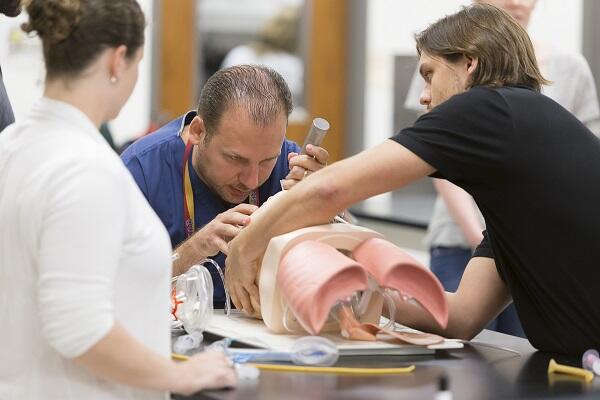
In the final two years, the focus shifts to clinical education. These clinical rotations allow students to gain real-world experience by working in hospitals and clinics under the supervision of licensed physicians. This hands-on training covers major medical fields such as internal medicine, surgery, pediatrics, emergency medicine, and psychiatry, giving students exposure to a wide range of specialties before they commit to one in residency.

Graduation from medical school requires successful completion of all academic and clinical components, along with passing internal exams and, in most cases, the MCCQE Part I during the final year. This step leads directly to residency and medical practice.
It’s also important to consider the financial side. Medical school expenses in Canada vary depending on the university and your residency status. On average, domestic students can expect to pay between CAD $10,000 and $30,000 per year in tuition, while international students often face higher fees. Additional costs for textbooks, exam registrations, and living expenses should also be factored in.
Step 5: Pass The Medical Council Of Canada Qualifying Examination (MCCQE)
The MCCQE Part I is a national exam taken in the final year of medical school, and it plays a key role in your journey to becoming a licensed physician. It evaluates both medical knowledge and clinical decision-making and is a required step for all students wondering how long it takes to become a doctor in Canada.
The computer-based exam includes multiple-choice questions and clinical decision-making cases that test your medical knowledge and ethical judgment in real-world scenarios.
MCCQE exam preparation typically starts months in advance. Most students use resources such as MCC practice tests, CanadaQBank, UWorld, and structured prep schedules to cover both core content and case-based reasoning. Consistent review and mock exams are key to success.
The exam is scored on a scale from 100 to 400, and the minimum passing score is 226. Results are usually released within eight weeks of the test date.
MCCQE Part II has been discontinued, but passing Part I is still required for licensure and remains a key step toward residency and medical practice.
Step 6: Complete Residency Training
After graduating from medical school and passing the MCCQE, the next step is to complete a residency program, a period of supervised, hands-on training in your chosen medical field. This stage is where you start applying your medical knowledge in real clinical settings and begin developing the skills needed for independent practice.
In Canada, residency placements are managed through CaRMS, which matches applicants to programs based on academics, interviews, references, and personal rankings, typically during the final year of medical school. Learn more about how CaRMS connects with exams and licensure via the Medical Council of Canada.
One of the most common questions students have during this stage is: how long is residency in Canada?
The answer depends on your chosen specialty. Family medicine programs typically take 2 years, while more specialized fields like surgery, internal medicine, or dermatology can take 5 to 6 years. Your specialty choice will influence not only the length of your training, but also your future lifestyle, earning potential, and work-life balance.
Here’s a quick overview of common specializations and their typical duration:
There are many medical specializations in Canada, ranging from general practice to highly focused areas like cardiology, psychiatry, and emergency medicine. Choosing the right path means considering both your interests and long-term career goals, and sometimes exploring different specialties during your clinical rotations can help you decide.
Completing residency is a major milestone in the process of becoming a fully licensed doctor in Canada and the final stretch before independent practice.
Step 7: Obtain Licensure And Certification
After completing your residency training, the final step toward becoming a fully independent physician in Canada is to obtain official licensure and certification. This is the point where you can finally register as a practicing doctor, a major milestone in the journey that often takes 10 to 14 years in total from start to finish. So if you’ve been wondering how many years it takes to become a doctor in Canada, this is where the finish line comes into view.
Medical licensure is governed by provincial and territorial regulatory authorities, such as the College of Physicians and Surgeons of Ontario (CPSO) or the College of Physicians and Surgeons of British Columbia. You must apply to the authority in the province where you plan to practice.
For official certification:
- Family physicians must earn certification through the College of Family Physicians of Canada (CFPC). Learn about the certification requirements on the CFPC website.
- Medical specialists require certification from the Royal College of Physicians and Surgeons of Canada (RCPSC). You can find information about eligibility and examinations on the Royal College site.
Most physicians also obtain the Licentiate of the Medical Council of Canada (LMCC), awarded after passing MCCQE and completing at least one year of postgraduate training. The LMCC is required by most provincial licensing bodies.

Continuing Medical Education And Professional Development
Becoming a doctor in Canada doesn’t end with licensure, ongoing learning is an important and necessary part of maintaining your skills and staying up to date with the latest medical knowledge. All licensed physicians are required to participate in Continuing Medical Education (CME) to maintain their certification and licensure.
Both the CFPC and RCPSC have structured programs where doctors track CME credits regularly. Beyond required learning, many pursue advanced training or fellowships to specialize further or grow in areas like research or leadership.
Many doctors also choose to keep learning through fellowships, extra training, or advanced courses in areas like research, teaching, or leadership. This ongoing learning helps them provide safe, effective, and up-to-date care throughout their careers.
Summarize with AI:
Did you like this article? Leave a rating!

 Loading...