

Canada is home to some of the top universities in the world, and its medical schools are no exception.
Known for high academic standards, modern healthcare training, and global recognition, Canada’s medical education system attracts thousands of international students each year. For many, the dream to study medicine in Canada offers a chance to gain a world-class education and eventually become a doctor in Canada.
But while the opportunities are real, the application process is incredibly competitive, especially for international medical students.
Between the U.S. and Canada, only 82 medical schools accept international students - 64 allopathic and 18 osteopathic.


Eligibility Criteria For International Students
Getting into a Canadian medical school as an international student isn’t easy, but it’s not impossible either. Each university sets its own standards, and understanding the core eligibility criteria is your first step.
Academic Prerequisites
To study medicine in Canada as an international student, you must have completed at least three years of undergraduate studie most commonly in life sciences, health, or a related field.
A full bachelor’s degree is often required, with strong academic performance. Top universities like the University of Toronto expect a minimum GPA of 3.6, and a competitive MCAT score, typically a 125 in each section, with some flexibility for one slightly lower score.
Be aware that Canadian medical schools don’t accept students directly from high school. Most international applicants apply in or after their third year of university. Some even complete a graduate degree to strengthen their profile. Admissions weigh both academics and extras like essays, references, and interviews.
This is a short overview of the common course requirements for Canadian medical schools:
Language Proficiency
To study medicine in Canada as an international student, you’ll need to prove your English or French proficiency, depending on the language of instruction at the university.
Most Canadian medical schools require one of the following English language tests:
- IELTS Academic: Minimum overall score of 6.5–7.0, with no band lower than 6.0
- TOEFL iBT: Typically a minimum of 90–100, with strong speaking and writing scores

If you’re applying to a French-language program, expect to take TEF, TCF, or another approved French language test.
Language scores can be a major admission barrier, especially if you fall just below the cutoffs.
Always double-check the requirements of your chosen university, schools like the University of Toronto or McGill have strict standards.
Visa And Immigration Requirements
Before you can study medicine in Canada, you’ll need to secure the right legal documents to enter and remain in the country throughout your education.
1.Apply for a Study Permit
You’ll need a Letter of Acceptance from a Canadian medical school, proof of financial support, and a clean background check. Apply through the IRCC.
2. TRV or eTA
Depending on your home country, you’ll need a Temporary Resident Visa (TRV) or an Electronic Travel Authorization (eTA) to enter Canada.
3. Arrange Health Insurance
International students in most provinces are not covered by public health care. You’ll need to purchase private health insurance or join a university plan.
➡️ Be sure to check specific rules for the province where your school is located. Immigration processes and health coverage can vary across Canada.
Application Process
Getting into a Canadian medical school as an international student involves more than just meeting academic requirements. Each school has its own application process, deadlines, and selection criteria, so it’s crucial to stay organized and strategic. This also means planning ahead for MCCQE exam preparation, as it’s often a required step on the path to medical licensure in Canada.
Selecting The Right Medical Schools
Only a few schools open spots to international applicants, and even then, the competition is fierce, and requirements may vary.
Top universities like the University of Toronto, McGill University, and University of Sherbrooke accept international applicants, but often under strict quotas or through government contracts with specific countries.
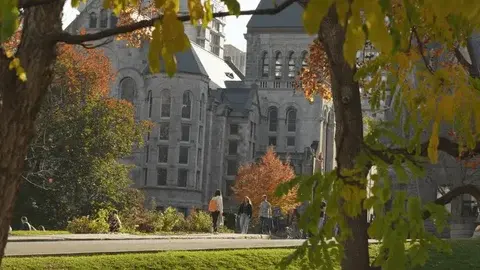
In many cases, students must fund their own studies fully, and the costs can be substantial.
As not all Canadian medical universities allow international students, and recent policy changes (like Ontario’s 2026 legislation reserving 95% of seats for residents) have further tightened access.
Here's some of the schools that currently enroll international students:
- McGill University (QC, English/French)
- Université de Montréal (QC, French)
- Université Laval (QC, French)
- Université de Sherbrooke (QC, French)
- Memorial University of Newfoundland (NL, contract-specific)
- Dalhousie University (NS, contract-specific)
Many of these schools enroll contract-based students only, typically through government or formal agreements with home countries.
If you want to learn more about specific resources, faculties, etc., then check out the Association of Faculties of Medicine of Canada (AFMC) and what they can offer their students.
Ontario medical schools (including University of Toronto, McMaster, Western, Queen’s, Ottawa, NOSM) and provinces like Alberta, BC, Manitoba, and Saskatchewan no longer admit international students at the undergraduate MD level due to new residency priority regulations.
Credential Evaluation
Most international students need an Educational Credential Assessment (ECA) to show that their degree is equivalent to a Canadian bachelor’s degree. This is a key step in the application process, especially if your previous education was outside North America.
You can get your ECA through one of several recognized services, depending on the requirements of the medical school you’re applying to.
| ECA Organization | Accepted By | Specific Use or Preference | Notes |
|---|---|---|---|
| WES (World Education Services) | Most Canadian medical schools | Standard for general academic equivalency | Best for U.S. or internationally educated applicants |
| CES (Comparative Education Service – University of Toronto) | University of Toronto | Often preferred by University of Toronto | Evaluates academic credentials in a Canadian context |
| ICAS (International Credential Assessment Service of Canada) | Ontario medical schools (e.g. McMaster) | Acceptable for OMSAS application | Can take longer than WES |
| IQAS (International Qualifications Assessment Service) | Provinces like Alberta, BC | Used mainly for licensing, not academic admission | Not always accepted for med school admissions |
| ICES (International Credential Evaluation Service – BCIT) | British Columbia | May be accepted for UBC-related programs | Check with school directly before applying |
Application Components
Applying to medical school in Canada as an international student involves more than just transcripts and test scores. Admissions committees are looking for well-rounded applicants who demonstrate professionalism, communication, and a commitment to patient-centered care - all core CanMEDS roles.
What you’ll need in your application:
Tell your story: Why medicine? Why Canada? Highlight personal experiences, challenges, and motivations.
Usually, 2–3 letters from professors, clinicians, or employers who know your academic and professional potential.
Required for OMSAS applications. A structured list of your extracurriculars, employment, research, and volunteer work.
Provide contact info for individuals who can confirm the activities listed in your application.
If selected, you may be invited to participate in interviews (often MMI format) to assess communication and ethical reasoning skills.
Financial Considerations
Studying medicine in Canada as an international student comes with significantly higher costs than for domestic students. Medical school expenses in Canada for international students typically range from CAD 30,000 to over 80,000 per year, depending on the institution and province.
Tuition Fees
Tuition costs for international students vary greatly depending on the university. At top schools like the University of Toronto or McGill, annual tuition can exceed CAD 90,000, while smaller or contract-based programs like Memorial University may cost around CAD 30,000 per year.
In addition to tuition, expect extra expenses for things like lab supplies, health insurance, and licensing exams. International students typically aren’t eligible for provincial tuition support, so it’s important to plan for the full cost upfront.
| Medical School | International Tuition (Yearly/CAD) | Admission Type | Estimated Additional Costs (Yearly/CAD) |
|---|---|---|---|
| University of Toronto (ON) | ≈ 97,400 | Open International | ≈ 21,000 |
| McGill University (QC) | ≈ 73,000 | Open International | ≈ 3,000 (admin, IT, athletics, insurance, etc.) |
| Université de Montréal (QC) | ≈ 46,800 (excluding international student health & dental insurance) | Contract-based | 2,000–4,000+ (insurance not included) |
| Université Laval (QC) | ≈ 8,000 – 13,700 | Contract-based | Varies by program & credits (admin, tech, transit) |
| Université de Sherbrooke (QC) | ≈ 31,800 – 41,500 | Contract-based | 1,300–1,400/year (admin, stage, thesis fees) |
| Memorial University (NL) | ≈ 21,600 | Contract-based | ≈ 523 |
| Dalhousie University (NS) | ≈ 22,400 (Pharmacy only) | Contract-based | ≈ 2,500–5,000 |
Living Expenses
While tuition is a major cost, living expenses can add up quickly, especially in large urban centres. Living costs in Canada can range from CAD 15,000 to 25,000 per year, depending on the city, housing type, and lifestyle. For international students already managing high tuition, budgeting wisely is essential.
💡 Tips on how to lower your living costs:
- Opt for shared housing or university residence! Sharing an apartment can cut your rent in half. Many universities also offer on-campus housing, often bundled with utilities and Wi-Fi.
- Use public transportation! Student transit passes are available in most cities (e.g., OPUS in Montreal or PRESTO in Toronto), cutting monthly transport costs significantly.
- Cook instead of eating out! Groceries are much cheaper than regular takeout. Cooking in batches or sharing meals with roommates can help you save even more.
- Work part-time (within limits)! International students can work up to 20 hours per week during the semester and full-time during breaks. This can help offset living costs, especially in smaller cities with lower rent.
- Explore student discounts! Many shops, gyms, and entertainment venues offer student rates. Always ask! Even if it’s not advertised.
Scholarships And Financial Aid
Although international students in Canada generally face limited funding options compared to domestic students, financial aid is not entirely out of reach. Many medical schools offer merit-based entrance scholarships, and external organizations also provide funding tailored to international or region-specific applicants. If you’re pursuing one of the many medical specializations in Canada, it’s worth exploring whether your field qualifies for targeted financial support.

Start by visiting the official financial aid page of your chosen school. Look for sections like “Funding for International Students” or “Entrance Awards.” Scholarship details are often listed alongside admission requirements, and reaching out to the financial aid office directly can provide further clarity, especially if you’re applying through a government agreement or partnership.
Some countries also have scholarship deals with specific Canadian institutions, so it’s worth exploring those options as well. Since scholarship deadlines can fall earlier than general application dates, it’s a good idea to begin your research as early as possible.
Challenges And Considerations
Pursuing medical education in Canada as an international student comes with hurdles beyond academics. From limited seats to cultural differences and post-graduation roadblocks, it’s important to understand what you’re up against and how to prepare.
Limited Seats For International Students
Canadian medical schools offer very few seats to international students, and competition is intense. If you’ve ever wondered 'how hard is it to get into medical school in Canada as a non-resident?' The answer is: very. Even eligible schools may only admit a handful of non-residents each year, often through specific government agreements.
The competition is fierce, and admission requires more than strong grades, which means that it demands a standout application across academics, experience, and personal qualities.
Cultural Adaptation
Adjusting to life in Canada as an international medical student is both exciting and challenging.
On one hand, you’ll be immersed in a new academic culture that promotes independent thinking, clinical reasoning, and patient-centered care. On the other hand, you may find yourself navigating unfamiliar teaching styles, communication norms, and daily routines that differ significantly from what you’re used to.
Generally, Canadian universities are diverse, welcoming, and well-prepared to support international students. You’ll likely find peers from around the world, enriching your cultural perspective and helping you feel less alone. Orientation, student centers, and peer mentors are there to help you adjust both socially and academically.
Still, cultural differences can lead to misunderstandings or stress. Whether it’s adapting to group-based learning or managing time differently, the experience can be overwhelming at first.

You might also face language barriers, homesickness, or the pressure to perform well in a competitive academic environment.
💡 Here's a few tips for managing the transition:
- Take advantage of orientation and onboarding sessions, they’re designed to give you a head start.
- Join student clubs or communities to build friendships and expand your support system.
- Use mental health and counseling services if you feel stressed, anxious or isolated, they’re confidential and free for students.
- Be patient with yourself. Adaptation takes time, and struggling at the beginning is completely normal.
- Stay open-minded and approach cultural differences with curiosity, not judgment.
Over time, these initial challenges can become some of the most rewarding aspects of studying abroad. Cultural adaptation not only builds resilience but also shapes you into a more empathetic and globally-minded medical professional.
Post-Graduation Pathways
Getting into medical school is only part of the journey. Securing a residency position in Canada after graduation is especially challenging for international graduates, with limited spots and provincial preferences for Canadian citizens or permanent residents.
Some students return to their home country to complete residency and practice. Others apply for permanent residency in Canada through programs like the Canadian Experience Class (CEC) or Provincial Nominee Programs (PNPs), which may improve their chances of matching into a residency later.
Another route involves passing the MCCQE Part I exam and completing the NAC OSCE, which are key steps for licensing in Canada. Some graduates also explore medical specializations in Canada through alternative or less competitive entry points, such as research-focused fellowships or additional clinical training.
In some provinces, international graduates who secure a residency may be required to work in underserved or rural areas for a number of years after graduation.
Alternative Medical-Related Programs
Not everyone who dreams of a healthcare career will enter medical school, especially given how hard it is to get into medical school in Canada as an international student. But that doesn’t mean your aspirations in the medical field have to end. Canada offers many alternative medical-related programs that still lead to rewarding and impactful careers in healthcare, science, and community wellbeing.
Health Sciences Degrees
If your goal is to work directly with patients or in healthcare settings, a degree in Nursing, Physiotherapy, Occupational Therapy, or Public Health could be an ideal alternative to medical school. These programs are often more accessible to international students and still lead to impactful, patient-focused careers.
Some of Canada’s top institutions for health sciences include the University of Toronto, Simon Fraser University, University of Waterloo, and University of Ottawa, all of which offer a wide range of undergraduate and graduate options. Popular programs include:
- MSc in Medical Science (thesis-based)
- MSc in Applied Health Sciences
- MA in Leadership – Health Care
- MSc in Health Sciences
Graduates of health science programs can pursue careers in medical centres, community care clinics, health promotion services, and even biomedical companies. Public health, in particular, opens doors to international policy work, research roles, and preventative care initiatives that influence systems on a broader scale.
Biomedical Research Opportunities
If you’re passionate about the science behind medicine, biomedical research may be the right path. These programs focus on understanding diseases, developing new treatments, and advancing healthcare technologies, often in partnership with hospitals, pharmaceutical companies, or public health organizations.
Canadian universities like the University of Toronto, McGill University, and University of British Columbia are internationally recognized for their research excellence. Many offer MSc and PhD programs in fields such as Medical Sciences, Molecular Biology, Immunology, or Neuroscience.
For international students, research-based programs can sometimes provide funding opportunities through scholarships, teaching assistantships, or lab-based stipends, making them a more affordable alternative to clinical degrees.
Allied Health Professions
Not every healthcare hero wears a stethoscope. Allied health roles, such as Medical Laboratory Technologists, Radiologic Technologists, Respiratory Therapists, and Sonographers, are vital to modern patient care and diagnostics.
These programs typically take 2–4 years and are offered at universities, colleges, and polytechnic institutions across Canada. They are often more accessible in terms of admission requirements and tuition compared to MD programs, and many are open to international students.
Allied health careers offer strong employment prospects, hands-on clinical training, and the chance to work in hospitals, diagnostic labs, research centers, or private clinics. These programs are a great option for those who want to enter the healthcare workforce sooner while still making a meaningful impact.
Exploring medicine in Canada doesn’t have to follow a single route. With different kinds of programs and professions, you can shape a career that truly fits who you are and where you want to go.
Summarize with AI:
Did you like this article? Leave a rating!

 Loading...