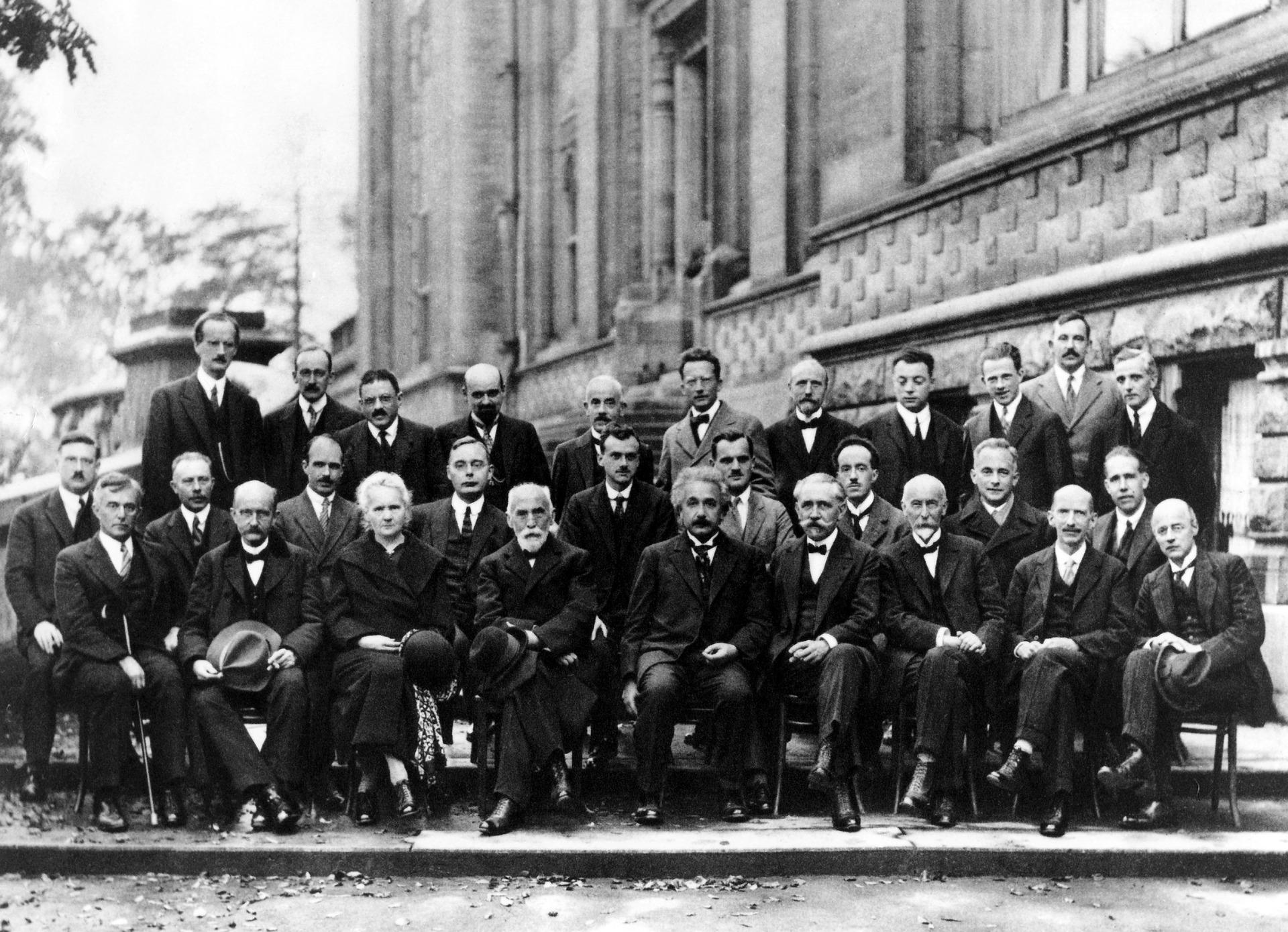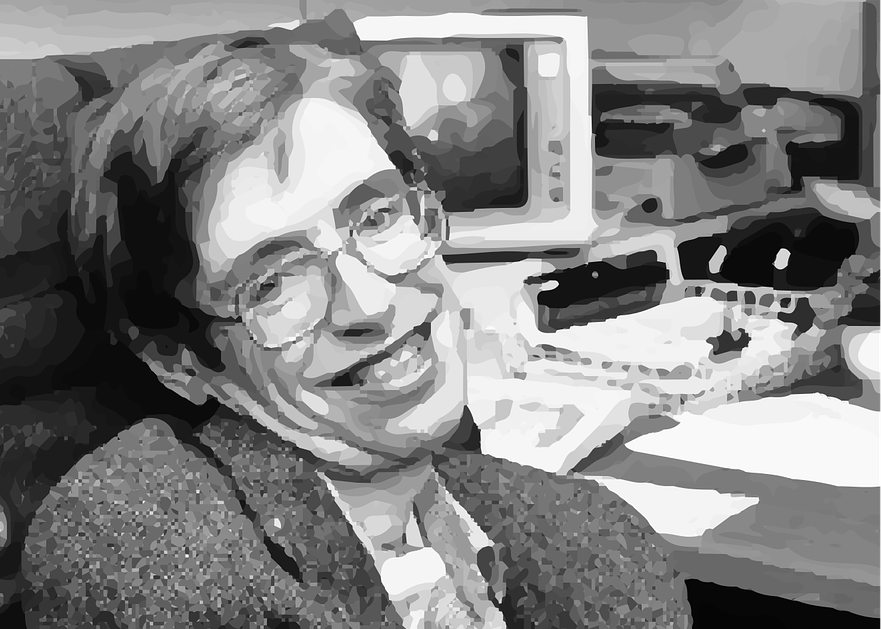
From explaining why objects fall to Earth to discovering strange particles and invisible forces, physicists have transformed our understanding of the universe. Their discoveries have also shaped everyday life, contributing to electricity, computers, medical imaging, satellites, telecommunications, and countless other technologies.

Famous physicists have shaped the way we understand the universe, from gravity and relativity to quantum mechanics and particle physics. This guide introduces 20 of the most famous physicists, what they discovered, and why their work still matters today.

The best Physics tutors available
Alireza
5
5 (30 reviews)
Alireza
$49
/h
Gift icon
1st lesson is free!
Hamid
4.9
4.9 (288 reviews)
Hamid
$78
/h
Gift icon
1st lesson is free!
Ali
5
5 (72 reviews)
Ali
$50
/h
Gift icon
1st lesson is free!
Nihit
4.9
4.9 (67 reviews)
Nihit
$30
/h
Gift icon
1st lesson is free!
Dhirenkumar
5
5 (59 reviews)
Dhirenkumar
$40
/h
Gift icon
1st lesson is free!
Jose
4.8
4.8 (45 reviews)
Jose
$50
/h
Gift icon
1st lesson is free!
Parham
5
5 (24 reviews)
Parham
$50
/h
Gift icon
1st lesson is free!
Divya
5
5 (78 reviews)
Divya
$45
/h
Gift icon
1st lesson is free!
Alireza
5
5 (30 reviews)
Alireza
$49
/h
Gift icon
1st lesson is free!
Hamid
4.9
4.9 (288 reviews)
Hamid
$78
/h
Gift icon
1st lesson is free!
Ali
5
5 (72 reviews)
Ali
$50
/h
Gift icon
1st lesson is free!
Nihit
4.9
4.9 (67 reviews)
Nihit
$30
/h
Gift icon
1st lesson is free!
Dhirenkumar
5
5 (59 reviews)
Dhirenkumar
$40
/h
Gift icon
1st lesson is free!
Jose
4.8
4.8 (45 reviews)
Jose
$50
/h
Gift icon
1st lesson is free!
Parham
5
5 (24 reviews)
Parham
$50
/h
Gift icon
1st lesson is free!
Divya
5
5 (78 reviews)
Divya
$45
/h
Gift icon
1st lesson is free!
Let's go

Why These Physicists Are Considered Famous

How This List Was Chosen

Being famous is not necessarily the same as being important. Thousands of physicists have made major contributions to science, and no list of 20—or 21—can represent everyone.

The scientists here were selected using four broad criteria: scientific impact, international recognition, historical influence, and continued relevance. Their ideas either changed physics directly or produced evidence that changed how scientists understand nature.

Selection Criteria

Scientific impact: Did the work significantly change physics?
Recognition: Is the scientist widely recognized within science or beyond it?
Historical influence: Did later discoveries build upon the work?

Historical and Modern Figures Together

Physics did not develop during a single scientific revolution.

Galileo and Newton helped establish foundations for understanding motion. Maxwell transformed nineteenth-century physics by connecting electricity, magnetism and light. Einstein challenged classical ideas about space, time and gravity.

PhysicistEraFieldMain ContributionWhy They are Famous
Isaac Newton17th–18th centuryClassical physicsLaws of motion and universal gravitationEstablished foundations of classical mechanics
Albert Einstein20th centuryTheoretical physicsRelativityRevolutionized ideas about space, time and gravity
Marie Curie19th–20th centuryNuclear physicsRadioactivityPioneering research and two Nobel Prizes
Galileo Galilei16th–17th centuryMechanics & astronomyMotion and telescopic astronomyMajor figure in the Scientific Revolution
Max Planck19th–20th centuryQuantum physicsEnergy quantaHelped launch quantum theory
Niels Bohr20th centuryAtomic physicsAtomic modelAdvanced understanding of atomic structure
Werner Heisenberg20th centuryQuantum physicsUncertainty principleMajor architect of quantum mechanics
Erwin Schrödinger20th centuryQuantum physicsSchrödinger equationDeveloped wave mechanics
James Clerk Maxwell19th centuryElectromagnetismMaxwell's equationsUnified electricity, magnetism and light
Richard Feynman20th centuryParticle physicsQuantum electrodynamicsInfluential researcher, teacher and communicator
Stephen Hawking20th–21st centuryCosmologyHawking radiationTransformed understanding of black holes
Rosalind Franklin20th centuryBiophysicsX-ray diffractionProduced crucial molecular-structure evidence
Chien-Shiung Wu20th centuryExperimental PhysicsParity violation experimentLandmark experimental test in particle physics
Enrico Fermi20th centuryNuclear physicsNuclear reactionsLed the first controlled nuclear chain reaction
Paul Dirac20th centuryQuantum physicsDirac equationPredicted antimatter
Emmy Noether19th–20th centuryMathematical physicsNoether's theoremConnected symmetry with conservation laws
Lise Meitner19th–20th centuryNuclear physicsNuclear fissionHelped explain fission theoretically
Subrahmanyan Chandrasekhar20th centuryAstrophysicsChandrasekhar limitExplained important stages of stellar evolution
Abdus Salam20th centuryParticle physicsElectroweak theoryHelped unify fundamental interactions
Vera Rubin20th–21st centuryAstrophysicsGalaxy RotationProvided major evidence supporting dark matter

Then quantum physicists discovered that extremely small particles required an entirely different framework. Looking across several centuries makes it easier to see how one discovery led to another.

Theorists, Experimentalists, and Communicators

Not every great physicist works in the same way.

Theoretical physicists develop mathematical models and explanations. Experimental physicists design experiments that test ideas and uncover new phenomena. Some physicists also become exceptional science communicators, helping millions of people understand complicated scientific ideas.

Physics needs all three.

Isaac Newton

Few scientists have influenced physics as profoundly as Isaac Newton.

Newton developed his famous three laws of motion, describing relationships among forces, mass and acceleration. These principles became the foundation of classical mechanics.

Isaac Newton
Lifespan

Isaac Newton was born on 4 January 1643 in Woolsthorpe, Lincolnshire, England, and died on 31 March 1727 in London, England.

Major Contributions

Newton established much of the foundation of classical mechanics. His three laws of motion explain how forces affect the movement of objects, while his law of universal gravitation describes the gravitational attraction between masses. Together, these ideas showed that the same physical laws could explain falling objects on Earth and the movement of planets.

Additional Facts

Newton made major contributions to optics, demonstrating with prism experiments that white light contains a spectrum of colours. He also developed a reflecting telescope and, independently of Gottfried Wilhelm Leibniz, developed calculus—mathematics that became essential for physics.

He also formulated the law of universal gravitation, proposing that the same fundamental attraction responsible for an apple falling toward Earth also governs the motion of astronomical bodies. This was revolutionary. The heavens and Earth no longer needed completely separate physical explanations.

Newton also made major contributions to mathematics and optics. Classical Newtonian mechanics remains extremely useful today for understanding everything from moving vehicles to engineering structures and planetary motion when relativistic and quantum effects are negligible.

Albert Einstein

Albert Einstein (1879–1955) changed some of our most basic assumptions about the universe.

Albert Einstein
Lifespan

Born on 14 March 1879 in Ulm, Württemberg, German Empire, and died on 18 April 1955

Major Contributions

Einstein revolutionized physics with his theories of special and general relativity.

Additional Facts

Einstein also explained the photoelectric effect by proposing that light energy is exchanged in discrete packets, helping advance quantum theory. This work was specifically recognized by his Nobel Prize in Physics. His theories are important today in astrophysics, cosmology and technologies such as GPS, which requires relativistic corrections for accurate positioning.

His special theory of relativity, published in 1905, transformed scientific understanding of space and time. It also produced the famous relationship:

E = mc²

The equation demonstrates a fundamental relationship between mass and energy. Einstein's general theory of relativity went further, providing a new description of gravity in terms of the geometry of spacetime.

His contributions were not limited to relativity. His explanation of the photoelectric effect played an important role in the development of quantum physics and was the work specifically recognized in his 1921 Nobel Prize in Physics. Einstein remains one of history's most recognizable scientists because his ideas fundamentally changed modern physics.

Marie Curie

Marie Curie pioneered research into radioactivity, a term she helped establish. Her achievements also broke extraordinary barriers.

Marie Curie
Lifespan

Marie Curie was born on 7 November 1867 in Warsaw, Congress Poland, Russian Empire, and died on 4 July 1934.

Major Contributions

Working with Pierre Curie, she discovered the radioactive elements polonium and radium and developed techniques for investigating radioactive substances.

Additional Facts

Her research contributed to later developments in nuclear physics and radiation medicine. The SI unit curie (Ci), an older unit of radioactivity still encountered in some contexts, was named in honour of Marie and Pierre Curie.

Curie became the first woman to receive a Nobel Prize. She later became the first person to win Nobel Prizes in two different scientific categories: Physics and Chemistry. Her research helped advance nuclear physics and contributed to later medical applications involving radiation.

Galileo Galilei

Galileo Galilei was a central figure in the Scientific Revolution. His investigations of falling objects and motion helped challenge older assumptions about mechanics. Galileo emphasized observation, measurement and mathematical reasoning: methods that became increasingly important to modern experimental science.

Galileo Galilei
Lifespan

Galileo Galilei was born on 15 February 1564 in Pisa, Duchy of Florence, and died on 8 January 1642.

Major Contributions

Galileo transformed the study of motion and astronomy. His experiments and mathematical reasoning challenged traditional ideas about falling objects and helped lay the groundwork for classical mechanics.

Additional Facts

Galileo improved telescope designs and observed mountains on the Moon, sunspots, the phases of Venus and four large moons orbiting Jupiter. These observations provided important evidence against the idea that everything in the heavens orbited Earth. His emphasis on observation, experimentation and mathematics helped shape the development of modern physics.

He also improved telescopes and used them to observe the night sky.

His observations included moons orbiting Jupiter and phases of Venus, evidence that challenged a strictly Earth-centred model of the cosmos and supported the broader acceptance of heliocentrism. Galileo helped establish an important principle of science: ideas about nature should be tested against observations.

Max Planck

Physics faced a serious problem near the end of the nineteenth century: classical theories could not successfully explain some observations involving radiation. Max Planck proposed a radical solution.

Max Planck
Lifespan

Max Planck was born on 23 April 1858 in Kiel, Duchy of Holstein, and died on 4 October 1947.

Major Contributions

Planck helped launch quantum physics when he proposed that energy could be emitted or absorbed in discrete amounts called quanta. His idea successfully addressed problems involving blackbody radiation that classical physics could not explain.

Additional Facts

The Planck constant, h, became one of the fundamental constants of quantum mechanics. It connects a photon's energy with its frequency. Planck's work opened the door for Einstein, Bohr, Heisenberg, Schrödinger and other physicists to develop quantum theory.

Energy, he suggested, could be exchanged in discrete amounts rather than only as an unrestricted continuous flow. These packets became known as quanta. Planck's idea helped begin the quantum revolution, eventually producing one of the most successful and strangest theories in science.

Niels Bohr

Niels Bohr helped scientists develop a new understanding of atoms.

Niels Bohr
Lifespan

Niels Bohr was born on 7 October 1885 in Copenhagen, Denmark, and died on 18 November 1962.

Major Contributions

Niels Bohr developed an influential model of the atom in which electrons occupy particular energy states. Electrons can move between these states by absorbing or emitting specific amounts of energy.

Additional Facts

Although modern quantum mechanics replaced the literal picture of electrons travelling in fixed circular orbits, the Bohr model remains a useful introductory model for understanding quantized energy levels. Bohr later became one of the major thinkers involved in interpreting quantum mechanics and received the 1922 Nobel Prize in Physics.

His influential atomic model proposed that electrons could occupy specific allowed energy states around an atomic nucleus and transition between them by absorbing or releasing particular amounts of energy.

Later quantum mechanics replaced important parts of this early model, but Bohr's work represented a crucial stage in connecting quantum ideas with atomic structure. His broader contributions to interpreting quantum mechanics also made him one of the defining physicists of the twentieth century.

Werner Heisenberg

Werner Heisenberg was one of the architects of modern quantum mechanics. He developed matrix mechanics, an early mathematical formulation of quantum theory.

Werner Heisenberg
Lifespan

Werner Heisenberg was born on 5 December 1901 in Würzburg, German Empire, and died on 1 February 1976.

Major Contributions

Heisenberg helped create quantum mechanics through matrix mechanics and formulated the famous uncertainty principle.

Additional Facts

Heisenberg's work showed how radically quantum physics differs from classical physics. The uncertainty principle is not simply saying that scientists need better microscopes, it arises from the mathematical structure of quantum mechanics itself. Heisenberg received the 1932 Nobel Prize in Physics.

He is even more widely associated with the uncertainty principle.

In simplified terms, the principle establishes a fundamental limit on how precisely certain pairs of physical quantities, most famously position and momentum, can simultaneously be specified. This isn't simply a problem with imperfect measuring equipment. It is built into the mathematical structure of quantum mechanics.

Erwin Schrödinger

Erwin Schrödinger developed another major approach to quantum mechanics known as wave mechanics. At its centre is the Schrödinger equation, which describes how the quantum state of a system changes. The equation remains one of the fundamental tools of quantum physics.

Erwin Schrödinger
Lifespan

Erwin Schrödinger was born on 12 August 1887 in Vienna, Austria-Hungary, and died on 4 January 1961.

Major Contributions

Schrödinger developed wave mechanics and formulated the Schrödinger equation, one of the central equations of quantum physics.

Additional Facts

Schrödinger is widely known outside physics for his Schrödinger's cat thought experiment. He introduced it to illustrate conceptual difficulties surrounding quantum superposition and measurement when quantum ideas are extended to everyday objects. Schrödinger shared the 1933 Nobel Prize in Physics with Paul Dirac.

Students may also recognize Schrödinger from his famous Schrödinger's cat thought experiment. The imaginary scenario was devised to highlight conceptual problems involved in applying quantum ideas to everyday objects—not because Schrödinger was actually proposing unusual experiments with cats.

James Clerk Maxwell

If Newton unified the physics of motion on Earth and in the heavens, James Clerk Maxwell achieved another remarkable unification. Maxwell showed mathematically that electricity and magnetism are connected.

James Clerk Maxwell
Lifespan

James Clerk Maxwell was born on 13 June 1831 in Edinburgh, Scotland, and died on 5 November 1879.

Major Contributions

Maxwell developed a mathematical theory that unified electricity and magnetism. Maxwell's equations showed that changing electric and magnetic fields are connected and predicted electromagnetic waves.

Additional Facts

Maxwell realized that these electromagnetic waves travelled at a speed matching the measured speed of light. This led to the extraordinary conclusion that light is an electromagnetic wave. His work became fundamental to radio, television, wireless communication, radar, optics and electrical engineering.

His equations also predicted electromagnetic waves travelling at the speed of light, leading to the remarkable conclusion that light itself is an electromagnetic wave. Maxwell's theory became a foundation of modern electromagnetism.

Radio, telecommunications, electrical engineering and many technologies involving electromagnetic waves ultimately depend on principles described by Maxwell's work.

Richard Feynman

Richard Feynman made major contributions to quantum electrodynamics (QED), the quantum theory describing interactions involving light and electrically charged particles. He developed what became known as Feynman diagrams, visual tools that help physicists organize calculations involving particle interactions.

Richard Feynman
Lifespan

Richard Feynman was born on 11 May 1918 in New York City, New York, United States, and died on 15 February 1988.

Major Contributions

Feynman made major contributions to quantum electrodynamics (QED), which describes interactions between electrically charged particles and electromagnetic radiation. He introduced Feynman diagrams, which provide a useful way of representing terms in calculations involving particle interactions.

Additional Facts

Feynman shared the 1965 Nobel Prize in Physics with Julian Schwinger and Shin'ichirō Tomonaga. He also contributed to superfluidity, particle physics and quantum computing ideas.

Feynman was also an influential teacher His lectures and explanations became famous for approaching difficult physics with curiosity, visualization and unconventional ways of thinking.

That combination of research and communication helped make him one of the best-known physicists of the twentieth century.

Stephen Hawking

Stephen Hawking studied some of the universe's most extreme objects: black holes. His most famous theoretical result showed that quantum effects allow black holes to emit what is now called Hawking radiation.

Stephen Hawking
Lifespan

Stephen Hawking was born on 8 January 1942 in Oxford, England, and died on 14 March 2018.

Major Contributions

Stephen Hawking made important contributions to cosmology and black-hole physics. His most famous result predicted that quantum effects cause black holes to emit thermal radiation, now called Hawking radiation.

Additional Facts

Hawking's work created important connections among quantum mechanics, gravity and thermodynamics. He also worked with Roger Penrose on mathematical results concerning gravitational singularities. His research contributed to the continuing black-hole information problem, one of theoretical physics' major unresolved questions.

The discovery brought together ideas from quantum theory, gravity and thermodynamics and raised deep questions about what ultimately happens to information that enters a black hole.

Hawking also became an internationally known science communicator, particularly through A Brief History of Time.

Do you aspire to be such a scientist? Check out this basic physics course here.

Rosalind Franklin

Rosalind Franklin was a chemist and X-ray crystallographer whose work crossed deeply into biophysics. She used X-ray diffraction to investigate molecular structures. Her exceptionally important work on DNA produced evidence that contributed to determining its double-helical structure. Franklin also conducted important research involving viruses, coal and graphite.

Rosalind Franklin
Lifespan

Rosalind Franklin was born on 25 July 1920 in London, England, and died on 16 April 1958.

Major Contributions

Rosalind Franklin was an expert in X-ray crystallography, using X-ray diffraction patterns to investigate the structures of matter. Her research produced crucial evidence about the structure of DNA.

Additional Facts

Her work demonstrates how physics techniques can contribute to biology and chemistry. X-ray diffraction works because the wavelengths of X-rays are comparable to atomic-scale distances, allowing diffraction patterns to reveal information about molecular structure. Franklin also conducted significant research on coal, graphite and viruses.

Her story has become an important example of how experimental evidence, and proper recognition of the scientists producing it, matters in scientific discovery.

Chien-Shiung Wu

Chien-Shiung Wu was one of the twentieth century's great experimental physicists.

She is particularly famous for the Wu experiment, which tested whether a property known as parity was always conserved in weak nuclear interactions. The experiment demonstrated that parity conservation could be violated in weak interactions.

Chien-Shiung Wu
Lifespan

Chien-Shiung Wu was born on 31 May 1912 in Liuhe, Jiangsu, China, and died on 16 February 1997.

Major Contributions

Wu was an outstanding experimental nuclear and particle physicist. She is most famous for conducting the experiment that demonstrated parity violation in weak interactions, confirming a theoretical proposal by Tsung-Dao Lee and Chen-Ning Yang.

Additional Facts

The discovery showed that nature does not always behave identically when spatial coordinates are reflected as though in a mirror. This overturned a major assumption in particle physics. Wu also contributed to beta-decay research and experimental nuclear physics.

It was a remarkable discovery because physicists had previously assumed that nature would behave symmetrically in this respect. Wu's work dramatically changed particle physics.

The best Physics tutors available
Alireza
5
5 (30 reviews)
Alireza
$49
/h
Gift icon
1st lesson is free!
Hamid
4.9
4.9 (288 reviews)
Hamid
$78
/h
Gift icon
1st lesson is free!
Ali
5
5 (72 reviews)
Ali
$50
/h
Gift icon
1st lesson is free!
Nihit
4.9
4.9 (67 reviews)
Nihit
$30
/h
Gift icon
1st lesson is free!
Dhirenkumar
5
5 (59 reviews)
Dhirenkumar
$40
/h
Gift icon
1st lesson is free!
Jose
4.8
4.8 (45 reviews)
Jose
$50
/h
Gift icon
1st lesson is free!
Parham
5
5 (24 reviews)
Parham
$50
/h
Gift icon
1st lesson is free!
Divya
5
5 (78 reviews)
Divya
$45
/h
Gift icon
1st lesson is free!
Alireza
5
5 (30 reviews)
Alireza
$49
/h
Gift icon
1st lesson is free!
Hamid
4.9
4.9 (288 reviews)
Hamid
$78
/h
Gift icon
1st lesson is free!
Ali
5
5 (72 reviews)
Ali
$50
/h
Gift icon
1st lesson is free!
Nihit
4.9
4.9 (67 reviews)
Nihit
$30
/h
Gift icon
1st lesson is free!
Dhirenkumar
5
5 (59 reviews)
Dhirenkumar
$40
/h
Gift icon
1st lesson is free!
Jose
4.8
4.8 (45 reviews)
Jose
$50
/h
Gift icon
1st lesson is free!
Parham
5
5 (24 reviews)
Parham
$50
/h
Gift icon
1st lesson is free!
Divya
5
5 (78 reviews)
Divya
$45
/h
Gift icon
1st lesson is free!
Let's go

Enrico Fermi

Enrico Fermi made important contributions to both theoretical and experimental physics. His research ranged from quantum statistics and particle physics to nuclear reactions.

Enrico Fermi
Lifespan

Enrico Fermi was born on 29 September 1901 in Rome, Kingdom of Italy, and died on 28 November 1954.

Major Contributions

Fermi contributed to both theoretical and experimental nuclear physics. He developed important work on beta decay and quantum statistics and led the team that produced the first controlled, self-sustaining nuclear chain reaction in Chicago Pile-1 in 1942.

Additional Facts

Particles such as electrons, protons and neutrons belong to a category called fermions, named after Fermi. The statistical rules governing them are called Fermi–Dirac statistics. The chemical element fermium was also named in his honour.

In 1942, a team led by Fermi achieved the first controlled, self-sustaining nuclear chain reaction with Chicago Pile-1. That milestone demonstrated that controlled nuclear reactions were possible and became a turning point in nuclear science.

Learn what all of this science verbiage means in our physics glossary!
Paul Dirac

Paul Dirac helped connect two revolutionary theories: quantum mechanics and special relativity. His relativistic equation describing the electron produced an unexpected implication: nature should contain a particle corresponding to the electron but with opposite electric charge.

Paul Dirac
Lifespan

Paul Dirac was born on 8 August 1902 in Bristol, England, and died on 20 October 1984.

Major Contributions

Dirac developed a relativistic quantum equation describing electrons. The Dirac equation successfully brought important elements of special relativity and quantum mechanics together.

Additional Facts

One of its most remarkable consequences of Dirac's work was the prediction of antimatter. The positron, the electron's antiparticle, was subsequently discovered by Carl Anderson.

In other words, the mathematics predicted antimatter. The positron was subsequently discovered experimentally. Dirac's work became an important foundation for modern quantum field theory and particle physics.

Emmy Noether

Emmy Noether (1882–1935) demonstrated one of the deepest connections in theoretical physics. Noether's theorem connects symmetries in physical systems with conservation laws.

Emmy Noether
Lifespan

Emmy Noether was born on 23 March 1882 in Erlangen, Bavaria, German Empire, and died on 14 April 1935.

Major Contributions

Emmy Noether developed Noether's theorem, establishing a deep relationship between continuous symmetries of physical systems and conservation laws.

Additional Facts

Noether's theorem remains fundamental to classical mechanics, quantum mechanics, relativity and particle physics.

For example, under appropriate conditions, the fact that the laws of physics do not change over time is related to conservation of energy. Her work provided a powerful mathematical foundation that continues to underpin modern theoretical physics.

Although she faced substantial discrimination during her academic career, Noether is now recognized as one of the most important mathematical thinkers in modern physics.

Search for physics lessons online now.

Lise Meitner

Lise Meitner played a crucial role in explaining nuclear fission. After experimental results showed that bombarding uranium could produce much lighter elements, Meitner and her nephew Otto Frisch provided the theoretical interpretation of what had happened.

Lise Meitner
Lifespan

Lise Meitner was born on 7 November 1878 in Vienna, Austria-Hungary, and died on 27 October 1968.

Major Contributions

Meitner made major contributions to nuclear physics and, with Otto Frisch, provided the theoretical explanation for nuclear fission after experimental work by Otto Hahn and Fritz Strassmann.

Additional Facts

eitner and Frisch explained that a heavy atomic nucleus could split into smaller nuclei while releasing a large amount of energy. The element meitnerium (Mt) was later named in her honour.

The atomic nucleus had split, releasing enormous amounts of energy. The discovery transformed nuclear physics and eventually influenced both nuclear power and nuclear weapons. Meitner's scientific contribution is also frequently discussed in relation to recognition in science because she was not included in the Nobel Prize in Chemistry awarded to Otto Hahn for the discovery of nuclear fission.

Subrahmanyan Chandrasekhar

Subrahmanyan Chandrasekhar helped explain what happens to stars after they exhaust their nuclear fuel. He calculated that there is a maximum mass for a stable white dwarf star.

Subrahmanyan Chandrasekhar
Lifespan

Subrahmanyan Chandrasekhar was born on 19 October 1910 in Lahore, Punjab, British India (now Pakistan), and died on 21 August 1995.

Major Contributions

Subrahmanyan Chandrasekhar transformed astrophysics through his research into stellar structure and evolution. He calculated the maximum mass at which a white dwarf can remain supported against gravitational collapse, the Chandrasekhar limit, approximately 1.4 times the mass of the Sun.

Additional Facts

His research eventually became important to theories of neutron stars and black holes. Chandrasekhar shared the 1983 Nobel Prize in Physics.

This boundary became known as the Chandrasekhar limit. Above that limit, a stellar remnant cannot remain supported as an ordinary white dwarf and may undergo further collapse, depending on its mass and circumstances.

Chandrasekhar's research became fundamental to modern understanding of stellar evolution, compact objects and black holes.

Get information about physics tuition here.

Abdus Salam

Abdus Salam was a major figure in twentieth-century particle physics. He helped develop the electroweak theory, which describes the electromagnetic and weak nuclear interactions within a unified theoretical framework.

Abdus Salam
Lifespan

Abdus Salam was born on 29 January 1926 in Jhang, Punjab, British India (now Pakistan), and died on 21 November 1996.

Major Contributions

Abdus Salam helped develop the electroweak theory, which unifies the electromagnetic interaction and weak nuclear interaction within a common theoretical framework.

Additional Facts

Salam shared the 1979 Nobel Prize in Physics with Sheldon Glashow and Steven Weinberg.

Electroweak unification became a central part of the Standard Model of particle physics, our best-tested framework for describing many fundamental particles and interactions.

Math is but one key concept in Physics.

Vera Rubin

Vera Rubin studied the way galaxies rotate. Scientists can estimate how quickly stars should orbit based on the visible matter in a galaxy. Rubin and collaborators found compelling evidence that stars far from galactic centres were moving faster than expected if visible matter were all that existed.

Vera Rubin
Lifespan

Vera Rubin was born on 23 July 1928 in Philadelphia, Pennsylvania, United States, and died on 25 December 2016.

Major Contributions

Vera Rubin conducted influential studies of galaxy rotation. Her observations, particularly work with Kent Ford, showed that stars far from galactic centres were orbiting at unexpectedly high speeds based on visible matter alone.

Additional Facts

These galaxy rotation curves provided powerful observational evidence for large amounts of unseen mass and helped establish dark matter as a major subject in modern astrophysics. Scientists still do not know the fundamental nature of dark matter, making Rubin's work directly relevant to one of physics' biggest unanswered questions.

One influential explanation was that galaxies contain enormous amounts of invisible dark matter. Rubin's observations helped make dark matter one of the central problems in modern astrophysics and cosmology.

Jocelyn Bell Burnell

As a graduate student in 1967, Jocelyn Bell Burnell noticed unusual repeating signals in data from a radio telescope. The signals were eventually identified as coming from pulsars: rapidly rotating neutron stars that can produce extremely regular pulses of electromagnetic radiation.

Jocelyn Bell Burnell
Lifespan

Born on 15 July 1943 in Lurgan, Northern Ireland, and is still living as of 2026.

Major Contributions

Jocelyn Bell Burnell discovered the unusual repeating radio signals that led to the identification of pulsars.

Additional Facts

Pulsars have become powerful tools for astrophysics. Scientists use them to investigate neutron stars, extreme gravity, interstellar space and fundamental physics. Networks of precisely timed pulsars can even help scientists search for very-low-frequency gravitational waves.

Their discovery provided scientists with a remarkable new way of studying some of the universe's most extreme objects.

The 1974 Nobel Prize connected to the discovery went to Antony Hewish and Martin Ryle, but Bell Burnell was not included. Her role has since received extensive recognition, and she has become an influential advocate for greater inclusion in science.

The list of women in physics is exceedingly short for more reasons than one. Still, there are those pioneers who blazed trails in all disciplines, including Marie Curie, who stopped at nothing in her quest for knowledge.

Famous Physicists by Era

Looking at physicists chronologically reveals something important: scientific knowledge is cumulative. Today's scientists work with ideas, mathematical tools and experimental techniques developed by generations before them.

Early Foundations of Physics

The evolution of modern physics is a story of grand ideas stacking perfectly onto one another, transforming how we view the universe. It began during the Scientific Revolution when Galileo Galilei abandoned abstract philosophy in favour of rigorous experimental approaches to motion and astronomy.

Generations later, Isaac Newton stood on those shoulders to transform Galileo’s observations into a singular, mathematical system of mechanics and universal gravitation. The picture expanded dramatically in the 19th century when James Clerk Maxwell unified electricity and magnetism, proving that light itself is a sweeping electromagnetic wave.

Together, this brilliant lineage of thinkers forged the unbreakable classical foundation upon which the entire skyscraper of modern physics was built.

The Quantum Revolution

While classical physics works beautifully for navigating our everyday world, its clockwork laws completely broke down when scientists tried to peer inside the atom. This crisis triggered a spectacular scientific revolution, beginning when Max Planck introduced the radical concept of the "quantum": the idea that energy is exchanged in discrete packets rather than smooth waves.

Niels Bohr quickly weaponised this early concept to map out a completely new, stable structure for the atom, paving the way for a deeper microscopic frontier. Soon, a mathematical blitz took over: Werner Heisenberg developed matrix mechanics and his mind-bending uncertainty principle, while Erwin Schrödinger counterbalanced it by engineering wave mechanics and his iconic wave equation.

The framework reached a stunning crescendo when Paul Dirac harmonised quantum mechanics with special relativity, crafting a theory that boldly and correctly predicted the existence of antimatter. Within mere decades, this fierce lineage of thinkers overthrew centuries of absolute certainty, building an entirely new framework to decode the subatomic realm.

This sudden shift illustrates exactly why physics is defined by distinct eras. Classical mechanics wasn't simply thrown away when relativity and quantum mechanics emerged. Instead, these newer frameworks expanded the map of what science could explain, leaving classical physics as an incredibly reliable tool for the macroscopic world it was always meant to describe.

Modern Physics and Cosmology

As physics evolved, scientists shifted their gaze from the familiar mechanics of everyday objects to the majestic, invisible architecture of the cosmos. This monumental transition ignited when Albert Einstein shattered centuries of absolute certainty, permanently transforming how we understand the fluid relationship between space, time, and gravity.

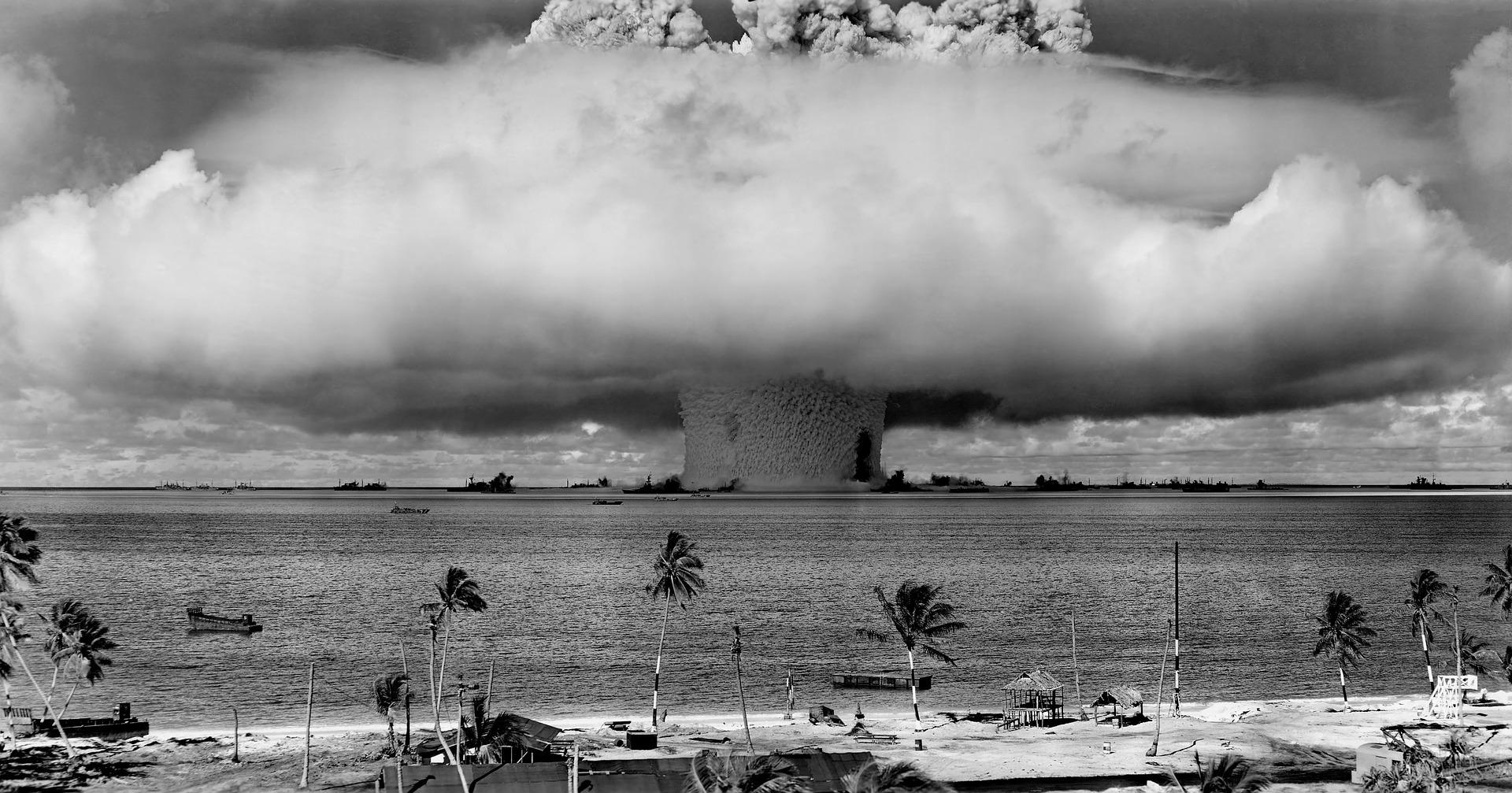
The Manhattan Project developed the first nuclear weapons
Many physicists worked on the Manhattan Project, aiding in the production of the first nuclear weapons Source: Pixabay Credit: Wikimedia

Looking deeper into this cosmic theater, Subrahmanyan Chandrasekhar mathematically unmasked the heavens, revealing the harsh, definitive mass limits that govern the dramatic lives and violent deaths of stars. The tapestry grew even more unified when Abdus Salam broke down the barriers between seemingly unrelated natural phenomena, proving that vastly different forces can actually be harmonised within a singular, elegant framework.

Finally, Stephen Hawking pushed the boundary to its absolute edge, daring to explore the extraordinary, turbulent intersection where quantum physics, thermodynamics, and gravity collide. Together, this bold lineage of visionary thinkers fundamentally rewrote the rules of science, steering humanity away from mundane observations and launching us into a grand investigation of the fundamental structure and deep history of our universe.

Influential Women in Physics

Women made major contributions throughout the development of modern physics despite frequently encountering barriers to education, employment and recognition.

  • Marie Curie pioneered radioactivity research and became the first woman to win a Nobel Prize.
  • Emmy Noether revealed a profound connection between symmetry and conservation laws.
  • Lise Meitner helped provide the theoretical explanation of nuclear fission.
  • Chien-Shiung Wu conducted the experiment that demonstrated parity violation in weak interactions.
  • Rosalind Franklin produced crucial X-ray diffraction research into molecular structures, particularly DNA.
  • Vera Rubin provided influential observational evidence supporting the existence of dark matter.
  • Jocelyn Bell Burnell discovered the signals that led to the identification of pulsars.

Their stories also demonstrate an important lesson about the history of science: scientific importance and historical recognition have not always been distributed equally.

Learn all about the amazing discoveries made elsewhere, by scientists and cosmologists in other lands?

Why These Famous Physicists Still Matter

The discoveries made by these scientists aren't simply facts from old textbooks.

Newtonian mechanics remains essential to engineering. Maxwell's electromagnetism underlies modern electrical and communication technologies. Quantum mechanics is fundamental to electronics, lasers and modern computing. Einstein's relativity matters for understanding gravity, cosmology and technologies such as satellite navigation. Research into nuclear and particle physics transformed medicine, energy and our understanding of matter.

Meanwhile, astrophysicists continue investigating the questions raised by Chandrasekhar, Hawking, Rubin and Bell Burnell about stars, black holes, neutron stars and dark matter.

Physics therefore isn't a finished story.

References

  1. American Institute of Physics. “Search Physics History Network.” AIP Center for History of Physics. https://history.aip.org/acapsearch/. Accessed 1 Sept. 2026.
  2. “All Nobel Prizes in Physics.” NobelPrize.org, Nobel Prize Outreach, 2026. https://www.nobelprize.org/prizes/physics/all-nobel-prizes-in-physics/. Accessed 1 Sept. 2026.
  3. American Physical Society. “Man of the Century.” APS News, 1 Feb. 2000. https://www.aps.org/apsnews/2000/02/man-of-the-century. Accessed 1 Sept. 2026.

Summarize with AI:

Did you like this article? Leave a rating!

4.00 (3 note(s))
Loading...

Colleen

I am a Toronto-based educator, mom and freelance writer who believes in lifelong learning and strong coffee.