

Determining how long it takes to learn the piano is not a one-size-fits-all answer. Some people want to learn how to play a simple song or two for fun, while others want to play concert-level performances and even write their own music. Both players have learned how to play the piano, but to very different mastery levels. Find out more about how long it takes to reach different stages of piano playing ability and how you can expedite your progress.
| Mastery Level | Avg. Timeframe |
|---|---|
| Beginner | 6-12 Months |
| Intermediate | 1-4 Years |
| Advanced | 5+ Years |
| Master | 10+ Years |


Factors Influencing Piano Learning Duration
Everyone learns the piano at their own pace. While there are averages you can count on to give yourself a rough idea of how much time you can expect to devote to learning, ultimately, your musical aptitude and dedication determine your stride.
When creating a piano learning plan, keep these factors in mind.
Individual Goals and Expectations
Your personal goals as a pianist influence a lot about how you should approach piano lessons.
You must decide what your initial goal is, how much time you can spend per week practicing, and what resources you can use to learn.
- The Casual Player: If you want to pick up a few songs for fun, you can use a more casual approach to meet your goal in about 6-12 months. This figure changes based on the difficulty of the songs you want to learn and how often you practice, as well as the quality of your practice sessions.
- The Intermediate Player: Achieving an intermediate level of piano playing is a worthy goal that many people are generally satisfied to meet. You’ll be able to play new pieces of music more easily, and might even be able to start playing by ear. This level can take around 5 years of consistent, high-quality practice to achieve.
- The Pro: Want to join a band, play concerts, record music, or just generally master the piano? This advanced level takes about 10 or more years to achieve. Of course, dedicated students may be able to reach this goal faster.
Of course, pro players will pass through the beginner, intermediate, and advanced stages before breaking through. It’s up to you to decide at what level you feel satisfied. Remember, you can always keep practicing, even if you don’t have a solid end goal in mind!
Learn more about the levels of difficulty in piano playing.
Practice Consistency and Quality
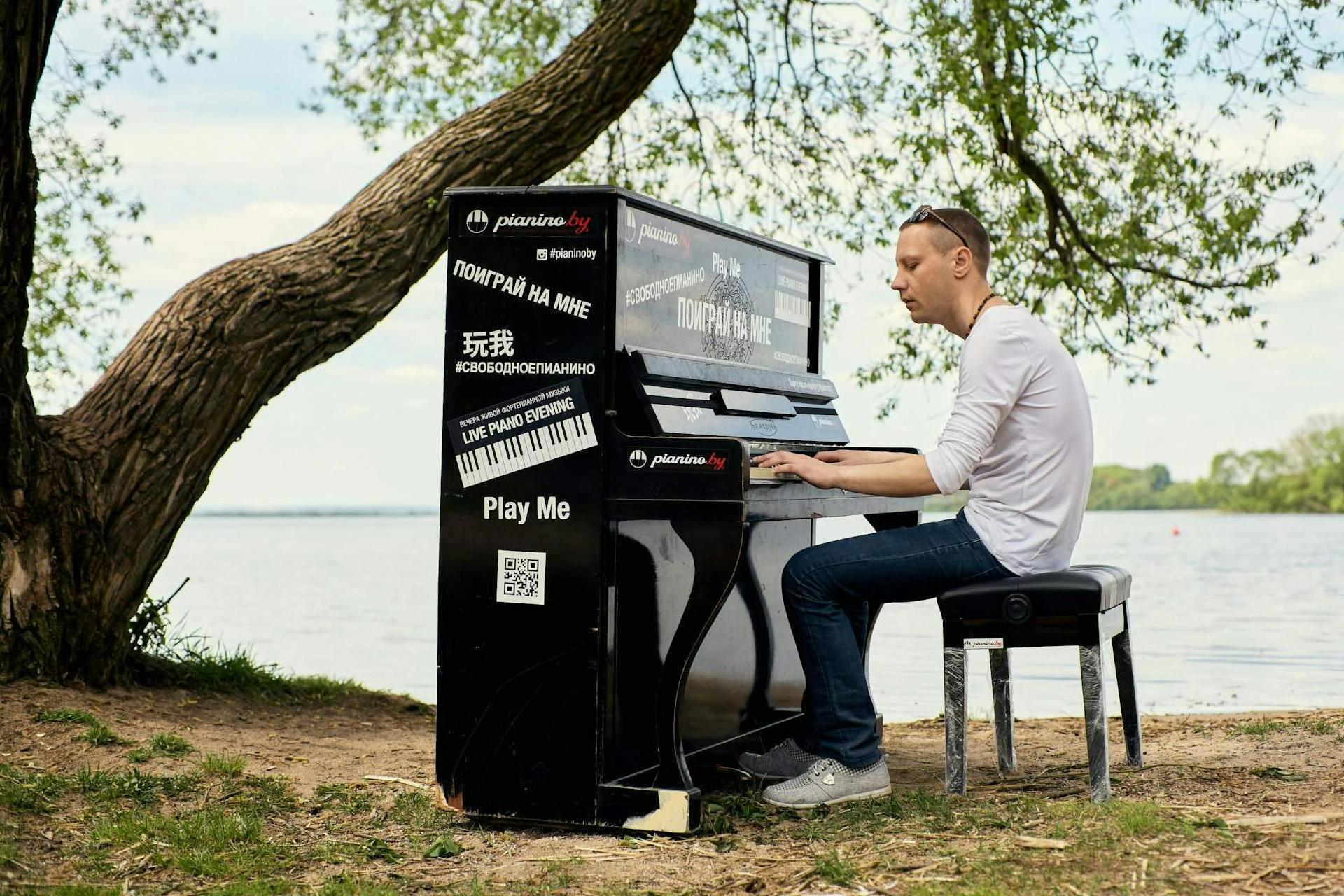
Shorter practices multiple times per week are more effective than one or two long lessons at infrequent intervals. How many lessons you take, how long the lessons are, and the quality of your practice time all directly influence how long it wil take you to reach your goal.
- Casual Learner: If you’re not pressed for time or just want to play for fun, aim for at least 2-3 lessons at 15-30 minutes each per week.
- Average Learner: The average piano learner is looking to make measurable progress each week. Typically, they will practice for at least 15 minutes each day, or at least 5 days per week. They’ll also generally have 1 or 2 longer lessons mixed in, such as a 1-hour tutoring session and/or half-hour self-teaching session, per week.
- Intense Learner: Passionate piano students may spend about 30 minutes per day, or at least 5 days per week, practicing. Like average learners, they usually also have 1 or 2 more serious sessions through the week as well.
When learning the piano, it’s important not to overdo practice, especially as a beginner. Too much piano playing, particularly for unconditioned hands, wrists, and spines, can cause injuries like carpal tunnel or general stress injuries. Be sure to learn proper posture and conditioning techniques to keep your body piano-ready.
To be effective, your lessons must also have a certain level of quality.
Whether you’re learning on your own with a book, app, videos, or another resource, or you’re learning with an instructor, your sessions must have impact.
Your casual daily practices should focus on improving new skills and maintaining ones you already know, like sight-reading, fingering techniques, chords, and scales. As you begin to learn songs, these shorter lessons are also used for practicing sections of the piece, building up each day.
The intense lessons are meant for introducing new skills and techniques, as well as new pieces of music. In these sessions, you and/or your instructor should make note of your progress since the last intensive lesson.
Find convenient piano lessons Calgary on Superprof.
Learning Methods and Resources
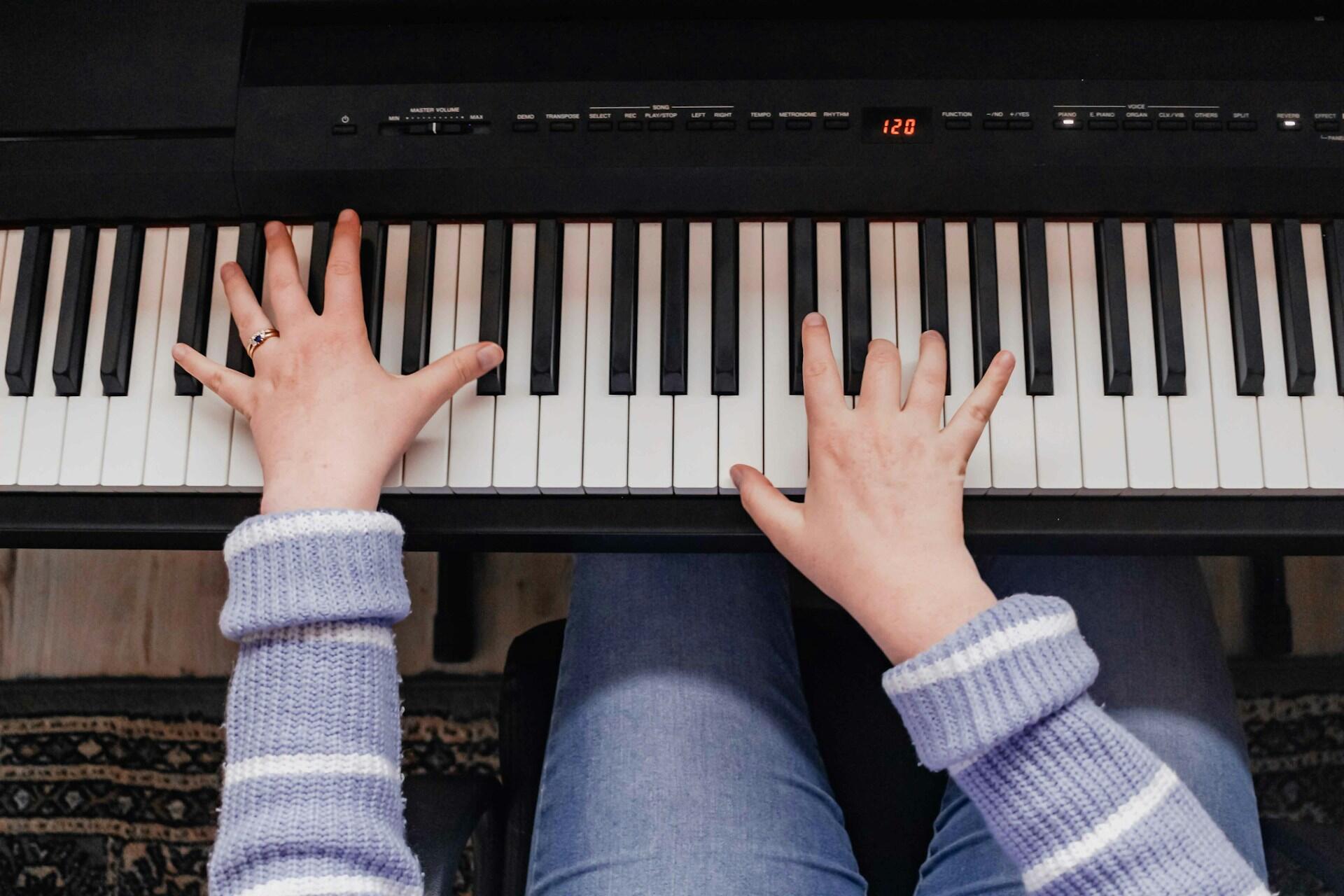
There are a few common ways people generally choose to learn the piano:
- Self-teaching: Using books such as Alfred Adult Piano Course and Faber Piano Adventures for Adults, self-taught students follow an outlined course to progress. This is usually the most affordable method for learning, but it doesn’t offer any live feedback or help.
- Online courses: Pre-recorded online courses work for some students, since they naturally have audio and visual elements that are very helpful for learning an instrument. They also lay out lessons in an easy-to-follow way to keep you on track. This mid-tier costing option provides more interactive education, but still doesn’t usually provide feedback.
- Apps: Apps usually provide piecemeal musical education, but can help develop a habit of practicing. While this method is also generally affordable, the quality and effectiveness of apps vary widely. A good app can be just as effective as a course, but a lacking app might only teach the most basic skills.
- Traditional lessons: Whether with a group class in a music school or private lessons with a tutor, traditional piano lessons tend to be the most effective way of learning. The most expensive option is worth the investment! If you want to learn quickly and efficiently, having help from a real person who can give you advice based on your learning style and goals is paramount.
Using resources for learning the piano is a surefire way to improve at a steady pace.
Typical Learning Timelines
What piano skills do learners typically gain at each level, and how long does it take? You can generally gauge your proficiency level by which skills you know and how easily you can practice each one.
Beginner Level
It usually takes about 6-12 months for all new learners to get a solid grasp of the basics. That includes identifying notes both by sound and as written on sheet music, learning hand positions, and playing short songs with both hands at a slow pace. They’ll also start understanding the foundations of music theory.
At the 6 to 12 month-mark, beginners can usually play songs like “Ode to Joy” by Beethoven, “Let It Be” by The Beatles (simplified), and “Minuet in G” by Bach (simplified).
Intermediate Level
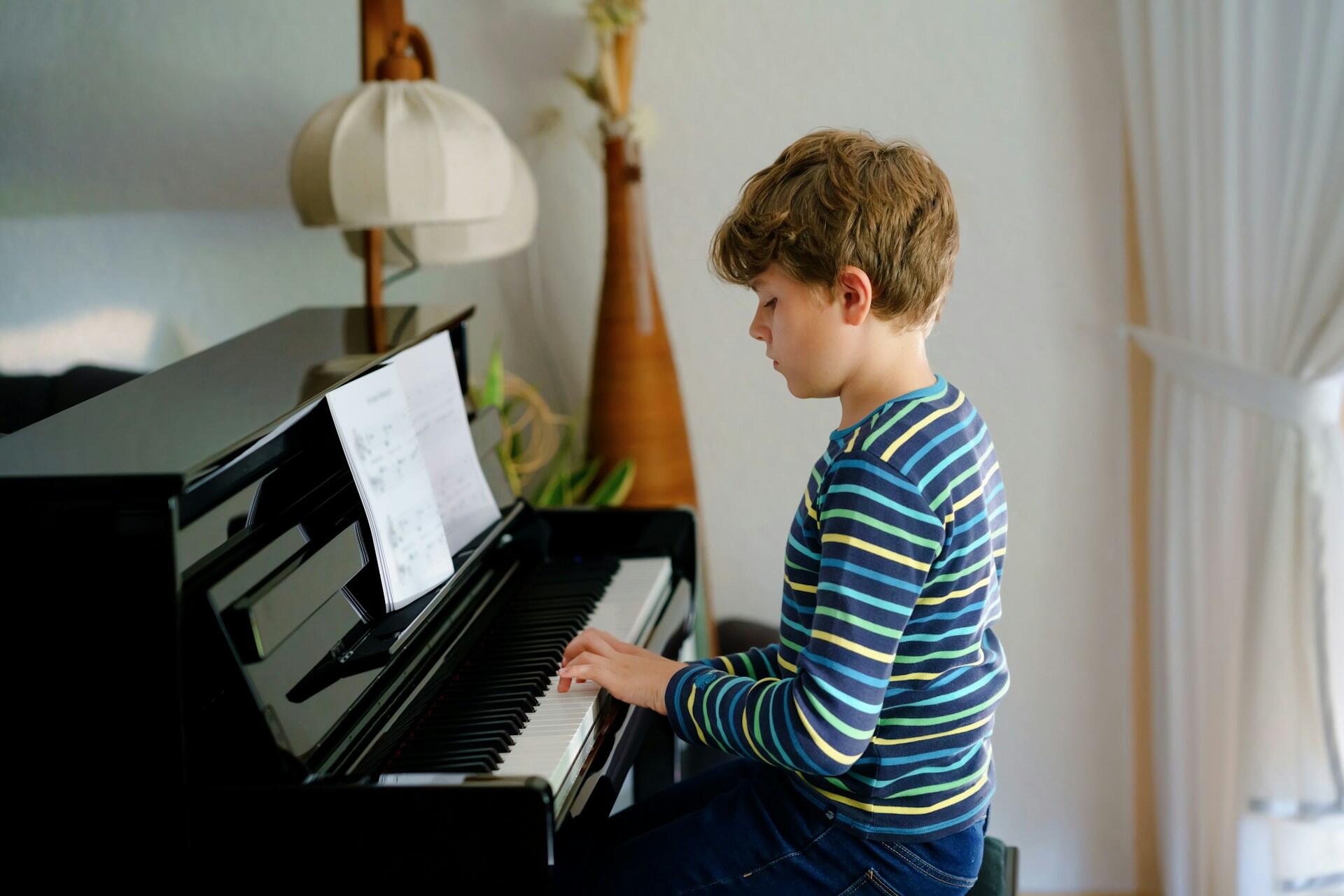
At this stage, which usually takes about 5 years to reach, the learner is better able to string notes together more smoothly and at a faster pace. Intermediate players can recognize patterns and start to anticipate them in music. Two-handed playing is much easier, and the pianist can play pieces with much more control and expression. They can sight-read simple songs and remember how to play the songs they practice without looking at the music.
Intermediate level songs are those like “Prelude No. 7 in A Major” by Chopin, “Sonata No. 16” by Mozart, and “Claire De Lune” by Debussy.
The piano is the easiest instrument to play in the beginning, and the hardest to master in the end.
Vladimir Horowitz
Advanced Level
By the 10-year mark, players can usually call themselves advanced, provided they’ve been putting in serious effort! At this point, the pianist can approach difficult compositions, learning how to break them down and learn them on their own. They can handle faster passages, play different rhythms and phrasings confidently, and infuse their own style into their playing.
At this point, the focus is less on knowing the notes (which are second nature by this time), and more on refinind speed, control, memory, and expression. Advanced players can usually whip something passable up on the spot, making improvisation possible.
Advanced players can usually play songs like “Polonaise in C# Minor” by Chopin, “Prelude No. 6” by Rachmaninoff, and “November from The Seasons” by Tchaikovsky quite well with only a little preparation.
Ready to learn? Discover piano lessons Vancouver on Superprof.
Strategies to Accelerate Learning
How can you learn the piano faster? Remember the factors mentioned previously: practice duration, intensity, study materials, and individual passion are the most important variables in piano education. Here’s how you can boost your lessons’ effectiveness.
Effective Practice Techniques
Above all, your sessions need to be worthwhile. If you’re plunking away halfheartedly with no real goal in mind for the session, your progress will be painfully slow. To make sure each minute counts, approach each practice session and lesson with a plan.
Choose a skill or section of a song to work on each day and diligently work on it after you’ve done your warmups. Once per week, evaluate yourself: what went well? Do you notice your improvement compared to last week, or last month? What can you do better this upcoming week?
Use tools like a metronome to help you learn timing and rhythm, especially for new pieces.
Learning piano boosts the brain through creativity, thinking in new ways, practicing extended periods of concentration, and exercising hand-eye coordination, among other things.
Utilizing Technology and Tools
Technology like apps and online tutorials can make practice much easier, in certain aspects. Apps like Flowkey, Skoove, and Yousician have tools like metronomes, quizzes, and short lessons you can use to hone your skills, even on the go.
Digital pianos, like those found as tablet apps or easy-to-transport rollup ones, are perfect for practicing away from home or while travelling.
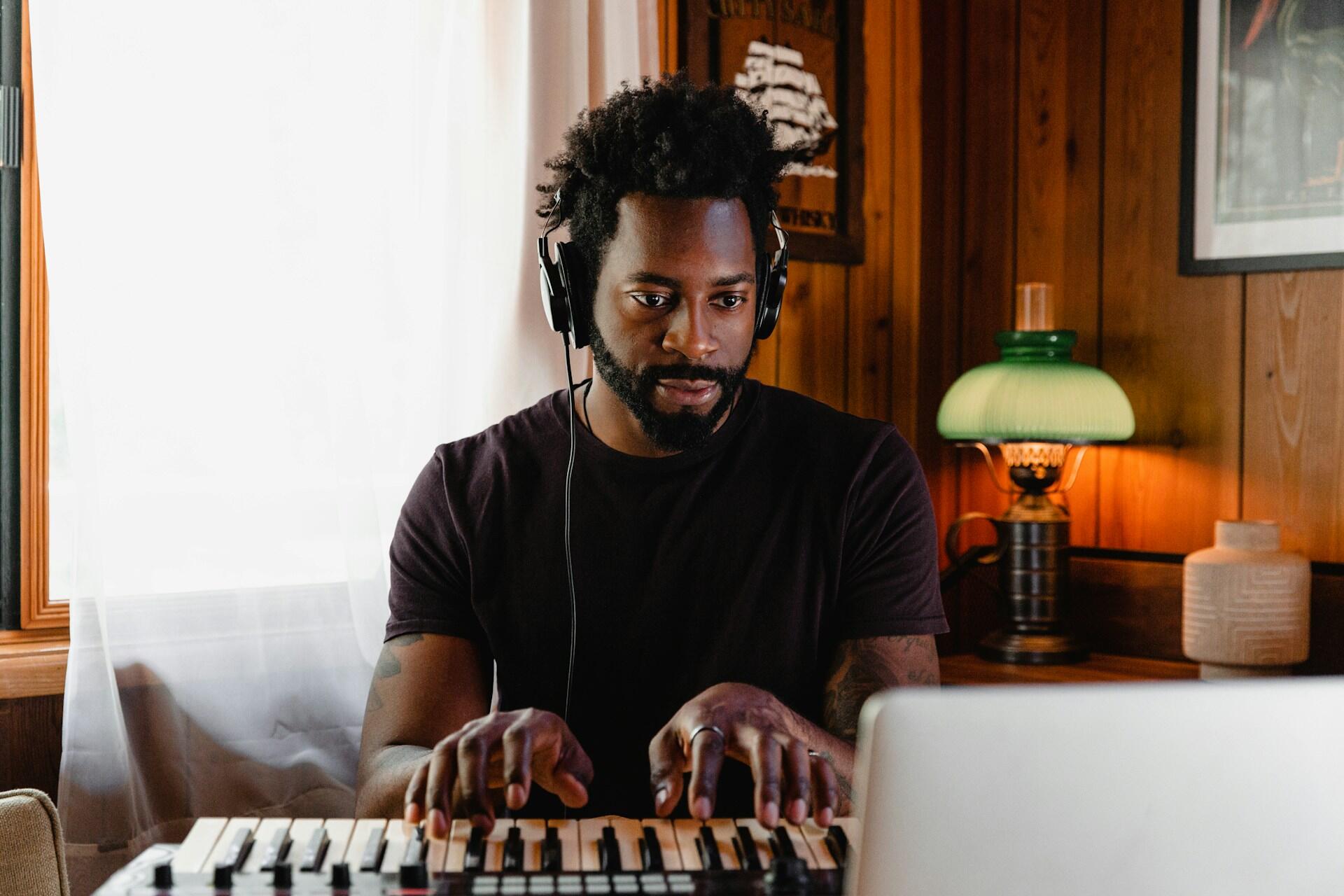
Keyboards also often include helpful features, like built-in metronomes and beats to help you keep time. They often have a headphone port, so you can play without disturbing your household or neighbours.
Find out which apps are helpful for learning piano.
Importance of a Structured Learning Plan
Aligned with having effective practice techniques, your learning plan can be like your north star. Using a course or music book is very helpful, since it gives you a goal to work towards (usually playing a certain song).
Especially important for beginners, lesson plans help ensure you learn the proper techniques to be able to approach a new song with the skills required to break it down and learn it. Many beginners make the mistake of simply trying to play a song without the foundational knowledge, which leaves them unprepared to learn a new piece later on.
An example learning plan for beginners might look like:
- Month 1: Learn the proper hand placement and be able to play scales
- Month 2: Begin to move both hands at the same time to execute chords
- Month 4: Recognize the basic notes on sheet music
- Month 6: Be able to play the majority of your focus song without pausing
Each week, you can check if you’re meeting the goals you have set. If you’re not, determine what needs to change: Do you need more short practice sessions per week? Do you need a longer intensive session per week? Do you need more guidance in your lessons?
When you know what’s holding you back, you can address the issue.
Following along with a piano book is a good way to stay on track.
Common Challenges and How to Overcome Them
Mastering any instrument will have its difficult moments. Piano can be extremely satisfying to unlock, but also very frustrating when you hit a wall or plateau, or when you’re feeling overwhelmed. Don’t let these roadblocks stop you from pursuing your dreams!
Maintaining Motivation
The initial excitement and motivation can fade in the valley between complete beginner and beginner-intermediate. That is normal. Stay engaged by setting short-term goals that you can celebrate often, such as learning an easy song in two weeks or mastering a scale at a steady tempo.
The piano exists apart from genres; it’s an instrument limited only by the player’s imagination.
Dr. John
Recognize each bit of progress: keeping a rhythm, executing an arpeggio, and hitting a chord (especially with both hands!) are great markers of progress for beginners.
For more advanced students, noticing how much easier sight-reading and playing-by-ear is getting, being able to anticipate a rhythm or pattern, and coordinating both hands for longer stretches can be good benchmarks to note.
Managing Time Constraints
As an adult, it can be difficult to find the time to practice. Remember that short windows of 15-30 minutes can be effective and create real progress in a matter of a few weeks. Using a tool like a keyboard with headphones can make it possible to practice in the early mornings or late nights, when you might be the most likely to have some time to yourself.

Dealing with Plateaus
Hitting plateaus in any skill is to be expected. Beginners usually start to feel stuck after a couple of months, when the easiest skills are understood but not perfected, and the harder skills seem out of reach. Early progress is fast and exponential, but later gains take more work and time.
When that happens, it can be helpful to change up your routine or the piece you’re studying. Try approaching a musical phrase with a different tempo or rhythm, play around without a goal in mind to spark your creativity, or seek out feedback from a piano teacher.
Self-taught students can be especially susceptible to plateaus without the regular feedback and advice of an instructor. You can find a tutor on Superprof to provide a one-off lesson or a handful of sessions to help you get over the hump.
The bottom line for how long it takes to learn the piano is that it depends on many factors, but most people enjoy the progress they make at around the 5-year mark. Dive into piano learning with passion and enthusiasm, and you’ll see notable results before you know it!
References
- ArtistWorks, & ArtistWorks. (2025, December 22). Easy piano songs for adult beginners - ArtistWorks blog. ArtistWorks Blog - Learn From Masters. https://blog.artistworks.com/easy-piano-songs-for-adult-beginners/
- Dave Long Music. (n.d.). The Adult’s Guide To Self-Teaching Piano | Piano Lessons Wappingers Falls NY | Piano Lessons Beacon NY | Dave Long Music. Dave Long Music - Piano Lessons in the Hudson Valley. https://davelongmusic.com/blog/self-teaching-piano/
- How long does it take to learn piano? Try our calculator. (2025, December 4). Hoffman Academy. https://www.hoffmanacademy.com/blog/how-long-will-it-take-to-learn-the-piano
- Steinway & Sons. (n.d.). The benefits of playing piano | Steinway & Sons. https://www.steinway.com/news/features/the-benefits-of-playing-piano
- ZachEvans. (2019, November 5). How Long Does it ACTUALLY Take to Learn Piano?? [ANSWERED]. Best Piano Tips. https://www.bestpianotips.com/how-long-to-learn-piano/
Summarize with AI:
Did you like this article? Leave a rating!


 Loading...