
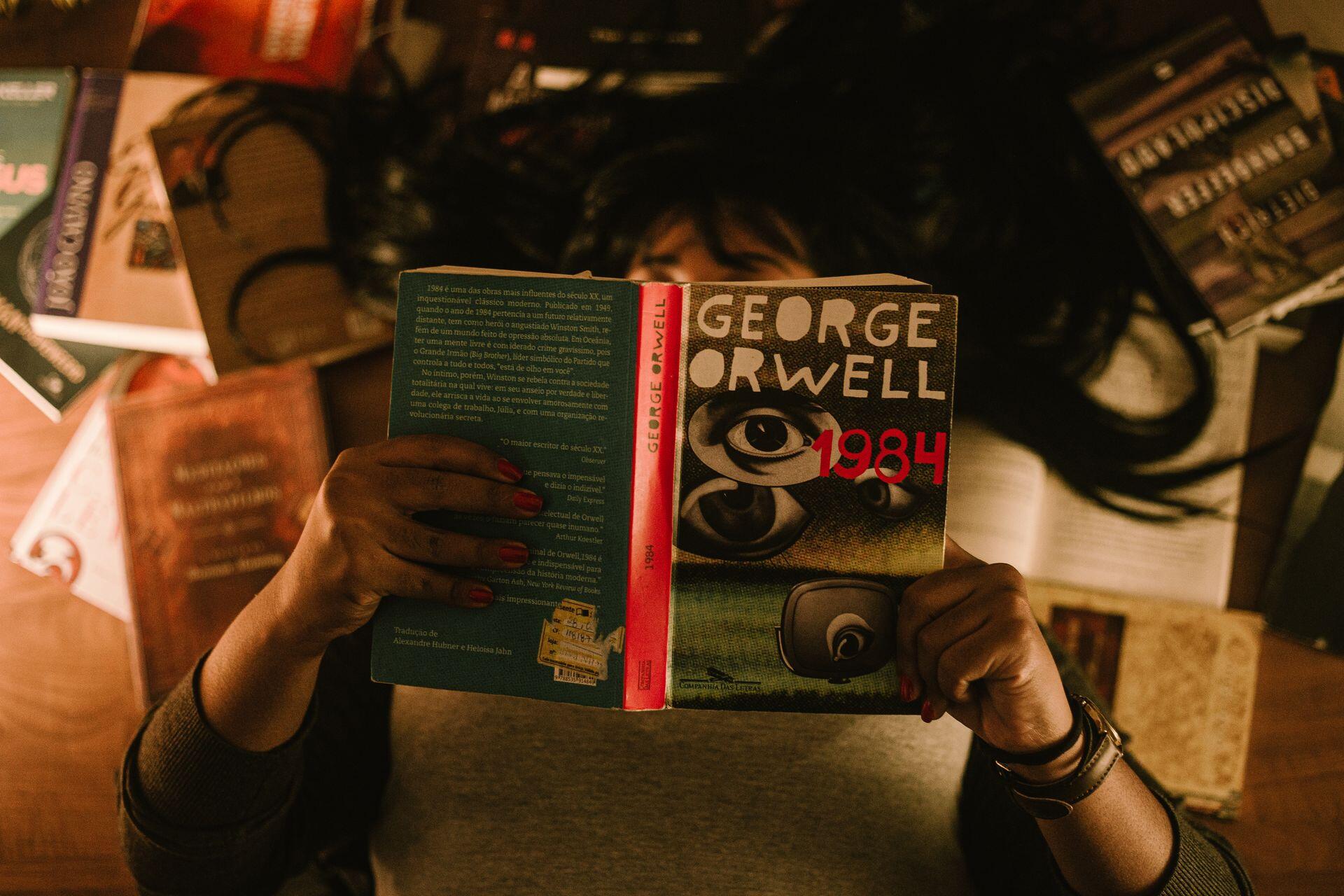

Did you know that George Orwell was not his real name? Born Eric Arthur Blair, he began using the name “George Orwell” in 1933. He took “George” from England’s patron saint and “Orwell” from the River Orwell in Suffolk.¹
Orwell went on to become one of the most influential political writers of the 20th century. He is best known for Animal Farm and Nineteen Eighty-Four, two novels that explore propaganda, censorship, surveillance, and the ways political power can shape our understanding of truth. Many of the ideas in these books still feel strikingly familiar today, which is part of what has kept Orwell’s work in the public conversation for so long.
"If liberty means anything at all, it means the right to tell people what they do not want to hear." 2
This quote talks about the significance of freedom of speech and is from George Orwell’s proposed preface to Animal Farm, usually published under the title “The Freedom of the Press."


Most Famous George Orwell Quotes at a Glance
Here are some of George Orwell’s most popular quotations, covering themes from truth and freedom to power, political control, and even writing.
| Quote | Source | Theme |
|---|---|---|
| “Big Brother is watching you.” | Nineteen Eighty-Four | Surveillance |
| “All animals are equal, but some animals are more equal than others.” | Animal Farm | Power and inequality |
| “War is peace. Freedom is slavery. Ignorance is strength.” | Nineteen Eighty-Four | Propaganda and control |
| “Who controls the past controls the future: who controls the present controls the past.” | Nineteen Eighty-Four | Truth and history |
| “The great enemy of clear language is insincerity.” | “Politics and the English Language” | Language and truth |
| “Good prose is like a windowpane.” | “Why I Write” | Writing and clarity |
| “All art is propaganda.” | “Inside the Whale” | Politics and art |
| “The object of power is power.” | Nineteen Eighty-Four | Power |
If you prefer to read about society, relationships, and families, you can explore these quotes from Jane Austen.
George Orwell Quotes from Animal Farm and Nineteen Eighty-Four
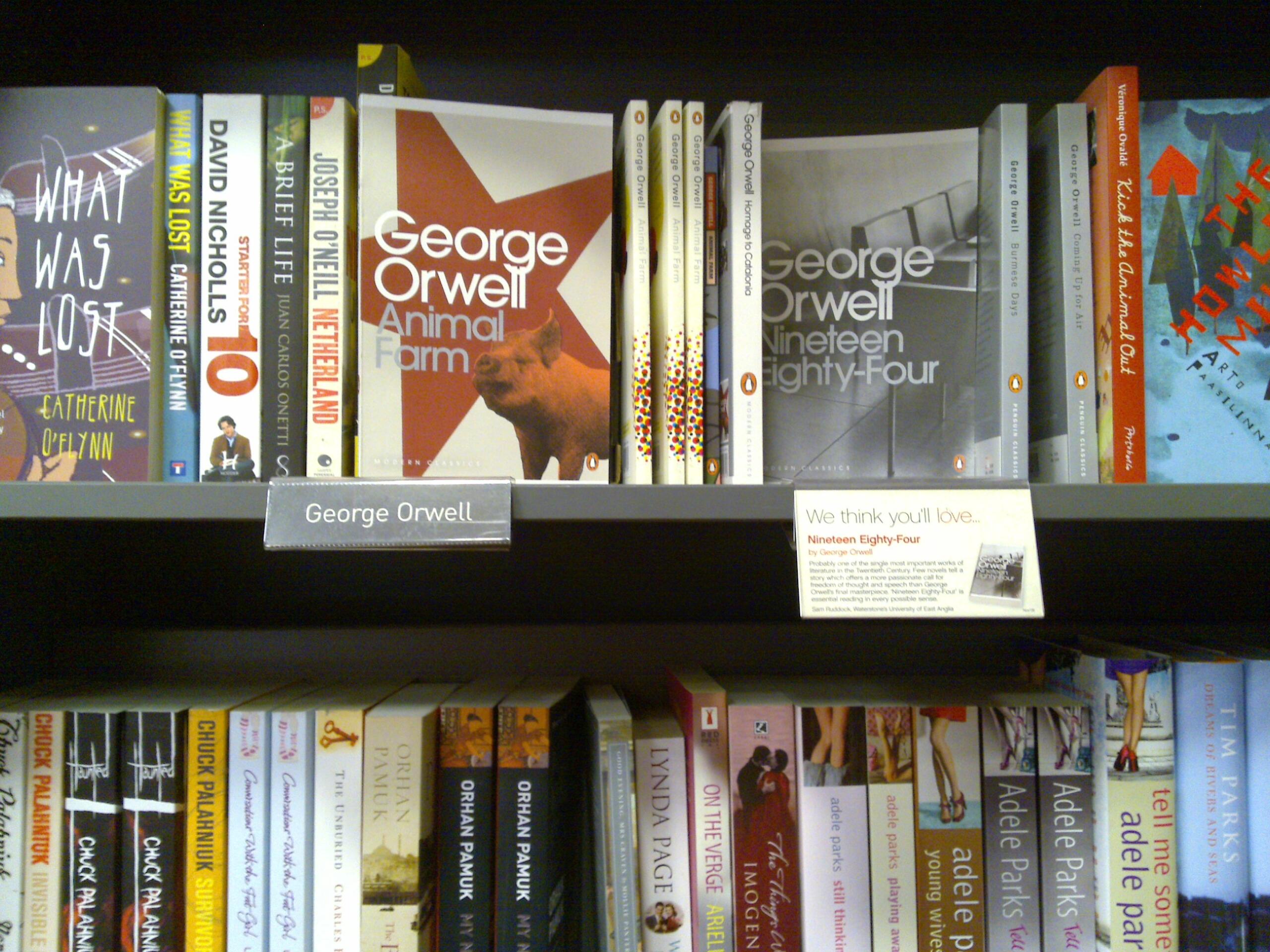
Orwell’s two most famous works contain many thought-provoking quotations whose themes continue to resonate with readers in the 21st century.
Control and Freedom
Nothing was your own except the few cubic centimetres in your skull.
George Orwell, Nineteen Eighty-Four, 1949
Private thought is the last and only remaining thing that belongs to you.
Winston Smith's reflection on the Party's power to control the people.
Raises discussions about privacy, surveillance, and the freedom to think independently.
Truth and Reality
There was truth and there was untruth, and if you clung to the truth even against the whole world, you were not mad.
George Orwell, Nineteen Eighty-Four, 1949
Truth doesn't become false simply because the majority (or someone in power) denies it.
Winston's reflection on the Party's manipulation of history, which attempts to make people distrust their own memories.
In alignment with Orwell's reflection on disinformation, historical revision, and the right to defend truth despite the difficulty (due to powerful authorities).
Language and Thought
The whole aim of Newspeak is to narrow the range of thought.
George Orwell, Nineteen Eighty-Four, 1949
Newspeak is introduced as a controlled language so that people would have less freedom of expression.
During a conversation between Winston and Syme, a linguist who is working on Newspeak to shrink the range of human thought.
Highlights the relationship between language and thoughts.
Power and Exploitation
Man serves the interests of no creature except himself.
George Orwell, Animal Farm, 1945
Humans benefit from the animals' labour without producing anything for them in return.
Old Major (a pig) gave a speech to the farm animals so that they'll start a rebellion against Mr Jones, the farm owner.
Exploitation and inequality are still very much prevalent in today's economy, where one group benefits from the work of another.
Discover quotes of similar themes by Charles Dickens, another famous English writer who's still beloved today.
Revolution and Political Hypocrisy
No one ever seizes power with the intention of relinquishing it.
George Orwell, Nineteen Eighty-Four, 1949
Individuals who gain political power always intend to preserve it for as long as they can.
Indicated in the political text attributed to Emmanuel Goldstein, which Winston reads to understand how the Party maintains its rule.
It serves as a warning about how political leaders intend their power to be permanent.
Propaganda and Manipulation
Several of them would have protested if they could have found the right arguments.
George Orwell, Animal Farm, 1945
The animals sensed that something was wrong, but they didn't have the right language to challenge it.
When Napoleon (the head of the pigs) ends the animals’ Sunday debates and gives himself sole control over farm policy.
Propaganda, fear, and poor education can weaken people's ability to question authority.
Corruption of Ideals
The creatures outside looked from pig to man, and from man to pig, and from pig to man again; but it was already impossible to say which was which.
George Orwell, Animal Farm, 1945
The pigs eventually become indistinguishable from the humans that they rebelled against.
The final scene of the novel where the pigs practised the habits of humans (their oppressors).
Revolutions can cause leaders to be replaced, but they cannot replace the abuse of absolute power.
George Orwell Quotes from His Essays
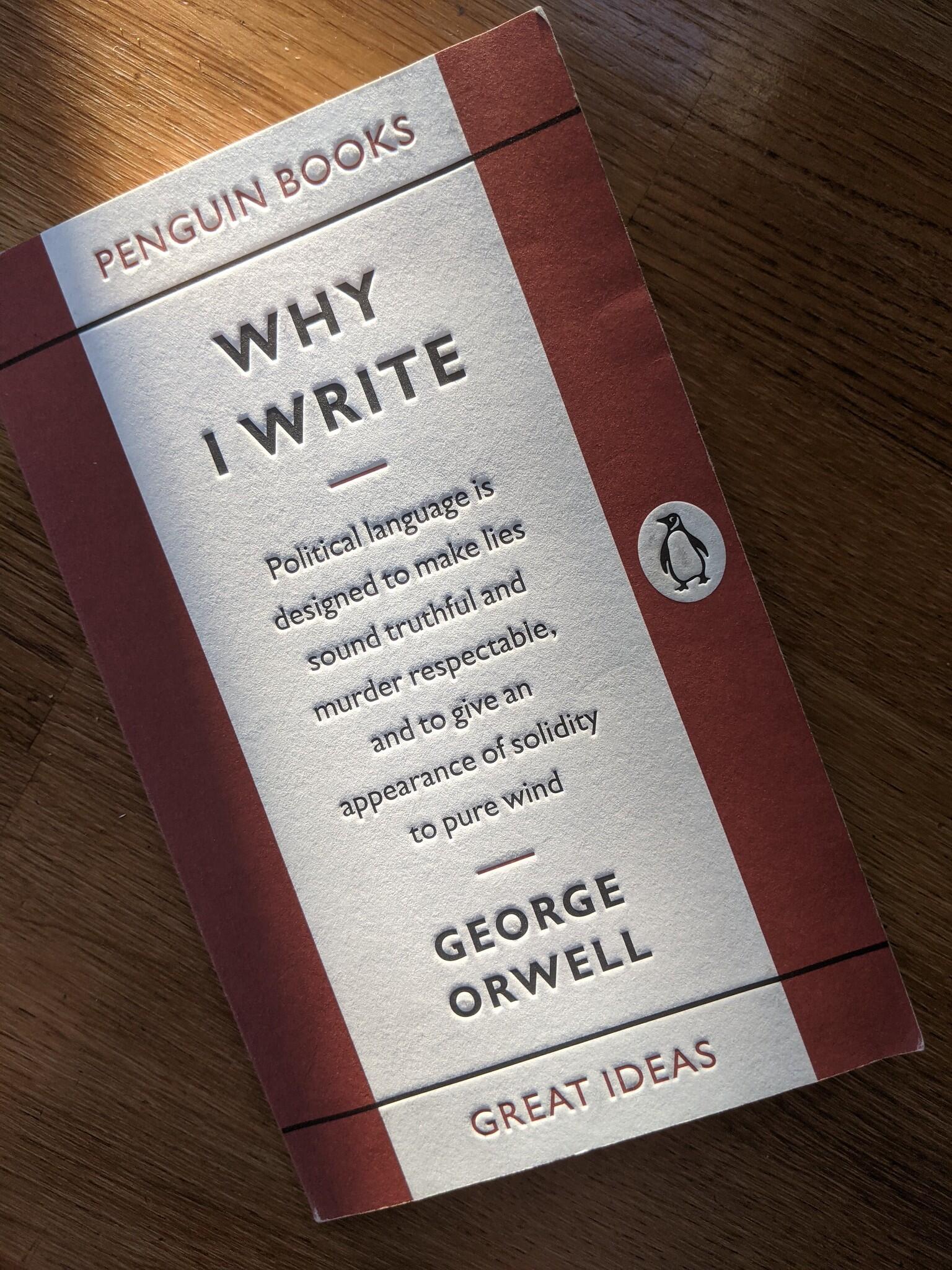
Orwell was also an established essayist, writing expressively on culture and the political scene.
The essays that we have selected from his collection are:
- Politics and the English Language (1946) 3
- Why I Write (1946) 4
- Shooting an Elephant (1936) 5
- The Prevention of Literature (1946) 6
- In Front of Your Nose (1946)7
Political language is designed to make lies sound truthful, and murder respectable, and to give an appearance of solidity to pure wind.
George Orwell, Politics and the English Language, 1946
What I have most wanted to do throughout the past ten years is to make political writing into an art.
George Orwell, Why I Write, 1946
When the white man turns tyrant it is his own freedom that he destroys.
George Orwell, Shooting an Elephant , 1936
The imagination, like certain wild animals, will not breed in captivity.
George Orwell, The Prevention of Literature, 1946
To see what is in front of one’s nose needs a constant struggle.
George Orwell, In Front of Your Nose, 1946
Meanwhile, discover these beautiful quotes by Maya Angelou.
Short George Orwell Quotes for Essays, Captions & Speeches
Good quotes are a great source of inspiration, especially when they highlight specific ideas or topics of interest. 8
Having said that, many short quotes by authors like George Orwell and Oscar Wilde, for instance, are still well-loved today due to their literary vision and artistic rhetoric.
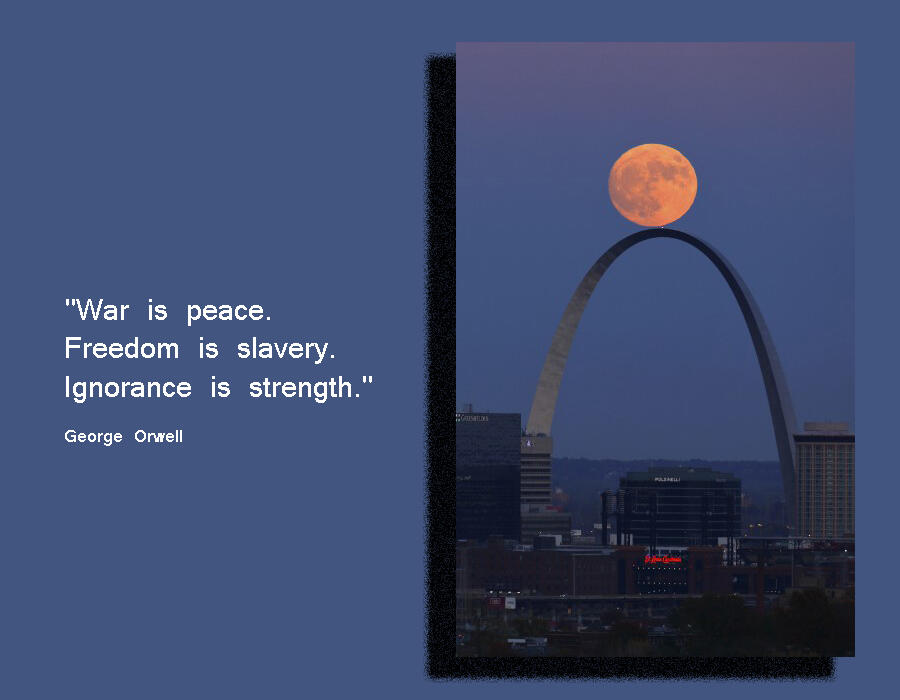
Here are some examples of short quotes by Orwell and how we can use them in different settings.
| Short Quote | Source | Context & Use |
|---|---|---|
| “War is peace. Freedom is slavery. Ignorance is strength.” | Nineteen Eighty-Four | Academic essays: Use it to discuss propaganda, contradictory political messages and authoritarian control. |
| “Who controls the past controls the future.” | Nineteen Eighty-Four | Academic essays: Use it when writing about censorship, historical revision and the political control of memory. |
| “Four legs good, two legs bad.” | Animal Farm | Instagram captions and social media: Use it when discussing political slogans, groupthink or the danger of accepting simple messages without question. |
| “Man is the only creature that consumes without producing.” | Animal Farm | Academic essays: Use it in discussions of exploitation, inequality, labour and economic power. |
| “If you want to keep a secret, you must also hide it from yourself.” | Nineteen Eighty-Four | Daily reflection: Use it to reflect on denial, hidden truths and the emotional cost of suppressing what you know. |
| “Freedom is the freedom to say that two plus two make four.” | Nineteen Eighty-Four | Graduation speeches: Use it to encourage independent thought, intellectual courage and the defence of truth. |
Learn more about the quotes from Virginia Woolf, a renowned writer in the 20th century.
Commonly Misattributed George Orwell Quotes
Over the years, Orwell has been frequently misquoted in both print and digital formats. We tend to perceive some quotes as “Orwellian” because of his strong themes of propaganda, manipulated history, and political language, but not every quote revolving around these themes is actually from him.
Always check the source before using an Orwell quote. Make sure the quotations can be traced to one of his books, essays, letters, or other reliable primary sources, rather than taking them from a quotation website, as many of them shared online are shortened, paraphrased, or incorrectly attributed. Also be aware that some of his works remain under copyright.
Here are some examples of widely circulated but misattributed George Orwell quotes.
| Quote | Attribution status | Notes |
|---|---|---|
| “In a time of deceit, telling the truth is a revolutionary act.” | Misattributed | No reliable primary source connects this quotation with Orwell. It is widely shared online because its theme resembles Orwell’s concern with truth and political deception. |
| “The further a society drifts from the truth, the more it will hate those who speak it.” | Misattributed | This quotation has not been found in Orwell’s writings. Reuters reported that it appeared in modern circulation long after Orwell’s death. reuters |
| “People sleep peaceably in their beds at night only because rough men stand ready to do violence on their behalf.” | Misattributed | It is often attributed to Orwell and sometimes to Winston Churchill, but no reliable evidence shows that either man said it. |
| “If people cannot write well, they cannot think well, and if they cannot think well, others will do their thinking for them.” | Misattributed | The quotation resembles Orwell’s ideas about language and thought, but it does not appear in his published works. According to The Orwell Society, it is not Orwell's quote. |
| “The people will believe what the media tells them they believe.” | Misattributed | No evidence shows that Orwell wrote or said this. The wording, “the media” was also not commonly used during Orwell’s lifetime. |
Learn more about Shakespeare, another famous writer whose words are also often misattributed.
About George Orwell
25 June 1903
Motihari, Bengal Presidency, India
Novelist, journalist, essayist
Animal Farm, Nineteen Eighty-Four
Orwell decided to become a writer at an early age, around the age of five or six. 9 Growing up as the middle child of three, with a five-year gap between his two other siblings, Orwell identified as a lonely child and started making up stories and wrote his first poem at the age of five.
1903
Born Eric Arthur Blair in Motihari, Bengal, British India
1922
Joined the Indian Imperial Police in Burma
1927
Resigned from the police and returned to England
1933
Published his first major book, Down and Out in Paris and London, under his pen name, George Orwell
1936-1937
Commissioned to investigate poverty in northern England and fought in the Spanish Civil War
1938
Published Homage to Catalonia, his memoir of the Spanish Civil War
1941
Began working for the BBC as a talks assistant and broadcaster
1945
Published Animal Farm
1946
Published the essay “Politics and the English Language"
1949
Published Nineteen Eighty-Four
You can tell that Orwell's personal experiences have a strong influence on his writing career and have eventually shaped his cultural and literary legacy that we get to enjoy today — especially in political writing. For example, his experience as a police officer in Burma helped him realise that imperial power controls both rulers and the people they govern.
Here are some of his major works:
| Novel | Publication year | Gutenberg link |
|---|---|---|
| Burmese Days | 1934 | Burmese Days |
| A Clergyman’s Daughter | 1935 | A Clergyman’s Daughter |
| Keep the Aspidistra Flying | 1936 | Keep the Aspidistra Flying |
| Coming Up for Air | 1939 | Coming Up for Air |
| Animal Farm | 1945 | Animal Farm |
| Nineteen Eighty-Four | 1949 | Nineteen Eighty-Four |
We hope you've enjoyed exploring the world of Orwell through his memorable quotes, which are some of the best in literature. Orwell will always be remembered and appreciated for his flair for connecting political ideas with memorable stories and clear language, as seen in his popular books, Animal Farm and Nineteen Eighty-Four.
References
- Nesterak, E. (2025, August 9). 19 Facts Worth Knowing About George Orwell. Behavioral Scientist’s Book Club; Behavioral Scientist’s Book Club. https://bookclub.behavioralscientist.org/19-facts-worth-knowing-about-george-orwell/
- 12 essential George Orwell quotes about freedom. (2018, November 2). Penguin.Co.Uk. https://www.penguin.co.uk/discover/articles/12-essential-george-owell-quotes-about-freedom-liberty
- Orwell, G. (1946, April). Politics and the English Language. The Orwell Foundation; Horizon. https://www.orwellfoundation.com/the-orwell-foundation/orwell/essays-and-other-works/politics-and-the-english-language/
- Orwell, G. (1946). Why I Write. The Orwell Foundation; Gangrel. https://www.orwellfoundation.com/the-orwell-foundation/orwell/essays-and-other-works/why-i-write/
- Blair, E. (2021, February 25). Rudyard Kipling & George Orwell: Stories of Empire | The Orwell Foundation. The Orwell Foundation. https://www.orwellfoundation.com/the-orwell-youth-prize/for-teachers/orwell-in-the-classroom/rudyard-kipling-george-orwell-stories-of-empire/
- Orwell, G. (1946). The Prevention of Literature | The Orwell Foundation. Www.Orwellfoundation.Com. https://www.orwellfoundation.com/the-orwell-foundation/orwell/essays-and-other-works/the-prevention-of-literature/
- In Front of Your Nose | The Orwell Foundation. (2010, December 9). Www.Orwellfoundation.Com. https://www.orwellfoundation.com/the-orwell-foundation/orwell/essays-and-other-works/in-front-of-your-nose/
- Moran, G. (2015, September 25). The Science Behind Why Inspirational Quotes Motivate Us. Fast Company. https://www.fastcompany.com/3051432/why-inspirational-quotes-motivate-us
- George Orwell the essayist: Why I Write. (2012, July 8). The Orwell Society. https://orwellsociety.com/orwell-the-essayist-why-i-write/
Summarize with AI:
Did you like this article? Leave a rating!

 Loading...
