
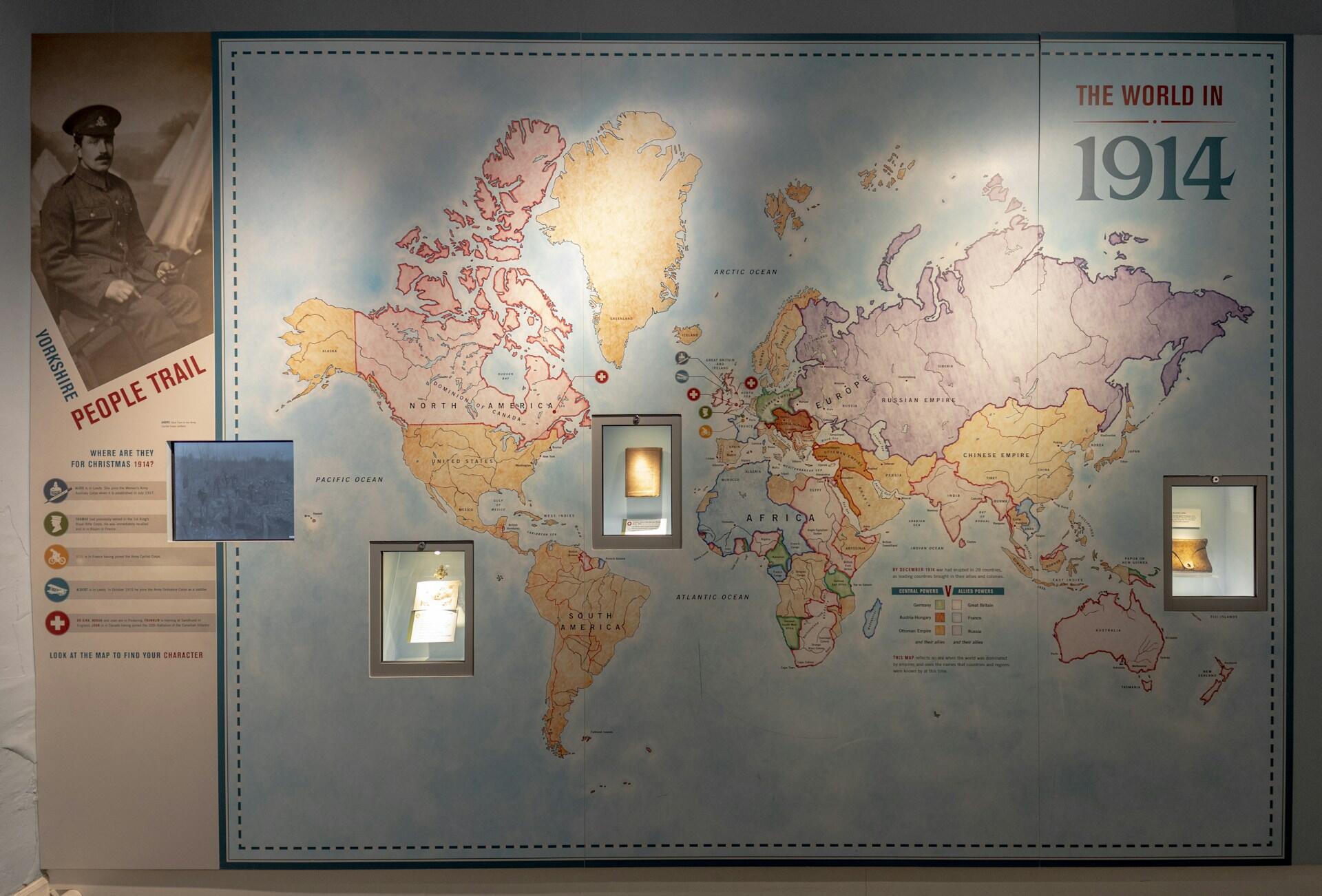

The world as it exists today was not inevitable. It was shaped by a handful of pivotal moments - events that dismantled old orders, created new ones, and set in motion consequences that billions of people still live with.
These are the 15 most important of them:
| Event | Date | Context |
|---|---|---|
| The Black Death | 1347–1351 | Killed 30–60% of Europe's population and dismantled feudal labour systems, accelerating the decline of the Church's authority |
| The Signing of the Magna Carta | 1215 | Established legal limits on monarchic power and laid the groundwork for modern democracy |
| The Invention of the Printing Press | c. 1440 | Democratised knowledge and created the conditions for the Reformation, the Scientific Revolution, and the Enlightenment |
| The Discovery of the Americas | 1492 | Connected Europe to the New World, triggering an era of global exploration and colonisation |
| The American Revolution | 1775–1783 | Produced the first modern democratic republic, inspiring constitutions worldwide |
| The French Revolution | 1789–1799 | Dismantled absolute monarchy and advanced the ideals of liberty, equality, and citizens' rights |
| The Industrial Revolution | 1760–1840 | Transformed production, urbanisation, and global trade while giving rise to the modern labour movement |
| The Abolition of the Transatlantic Slave Trade | 18th–19th century | Ended one of history's largest forced migrations and laid the foundations for modern civil and human rights movements |
| The First World War | 1914–1918 | Reshaped the global political order and dissolved four major empires |
| The Russian Revolution | 1917 | Gave rise to the Soviet Union and spread communist ideology across the 20th century |
| The Great Depression | 1929 | Triggered a global financial collapse that reshaped economic policy and fuelled the rise of fascism |
| Nazi Germany | 1933–1945 | Produced the Holocaust and drew the world into its most destructive conflict |
| The Second World War | 1939–1945 | Redrew the world map, ended European colonial dominance, and launched the Cold War |
| The Moon Landing | 1969 | Marked humanity's greatest technological achievement and produced innovations still used in everyday life worldwide |
| The Creation of the Internet | 1960s–1990s | Transformed global communication, commerce, and access to knowledge |


The Signing of the Magna Carta (1215)
The Magna Carta, which translates to The Great Charter in Latin, was the first significant historical document to use legal authority to limit the power of the monarchy and protect the rights of the Barons (nobility), as well as, eventually, all citizens.
It took place during the reign of King John, who was known to be a tyrant king who imposed high taxation and experienced many military failures. This led to the barons ' increased frustration and rebellion against him. The Barons eventually captured London in May 1215 and forced King John to sign the Magna Carta at Runnymede on June 15, 1215.
Do you know there are only 4 surviving original copies of The Magna Carta today?
Two copies are held at the British Library, and the remaining two copies are held at Salisbury Cathedral and Lincoln Cathedral, respectively.
🌍 How did this historical event change the world? The Magna Carta became a symbol of freedom and equality, later inspiring foundational documents such as the English Bill of Rights (1689), the United States Constitution (1787), and the Universal Declaration of Human Rights (1948).
The Black Death (1347–1351)
The Black Death was the deadliest pandemic in recorded human history. Caused by the bacterium Yersinia pestis, it spread rapidly across Europe, Asia, and North Africa, transmitted primarily through fleas carried by rats that travelled along major trade routes. Within just four years, the disease had reached nearly every corner of the known world.
At its peak, the plague was killing thousands of people per day in major cities. Entire villages were wiped out, and the bodies of the dead piled up faster than the living could bury them. Estimates vary, but historians believe the Black Death killed between 75 and 200 million people — roughly 30 to 60% of Europe's entire population.
Source: Centers for Disease Control and Prevention (CDC)
Estimated upper range — some regions lost even more
The term “Black Death” was not used at the time of the pandemic. Contemporary writers called it the Great Mortality or the Pestilence. The name “Black Death” only emerged in later historical writing, likely referring to the dark discolouration of skin caused by subcutaneous bleeding.
The plague did not discriminate. It killed peasants and kings alike — King Alfonso XI of Castile died of the plague in 1350, as did countless members of the clergy and nobility across Europe. With so many workers dead, the surviving peasantry gained unprecedented bargaining power, demanding higher wages and better conditions from landowners who could not afford to lose more labour.
🌍 How did this historical event change the world? The Black Death triggered a profound social, economic, and cultural transformation. The collapse of feudal labour systems accelerated the decline of serfdom in Western Europe. The Church's inability to explain or stop the plague shook religious authority, contributing to the questioning of institutions that would later fuel the Renaissance and the Reformation. In Canada and across the Western world, the pandemic's legacy is still studied in health policy, epidemiology, and social history curricula.
The Invention of the Printing Press (c. 1440)
Before Johannes Gutenberg introduced his movable-type printing press around 1440, books were copied entirely by hand — a painstaking process that could take a single monk months or even years to complete. As a result, books were extraordinarily expensive and almost exclusively owned by the Church, nobility, and the very wealthy. Knowledge was, in practical terms, a privilege.
Gutenberg's press could produce hundreds of identical copies in the time it previously took to copy a single page by hand. One of his first major projects was the Gutenberg Bible (c. 1455), of which he printed approximately 180 copies — more Bibles than had ever existed in one city at one time.
The consequences were immediate and far-reaching. Ideas that would previously have taken decades to spread now crossed Europe in months. In 1517, Martin Luther nailed his 95 Theses to a church door in Wittenberg — and within weeks, printed copies had spread to every corner of the continent, directly triggering the Protestant Reformation. Without the printing press, that document might never have left Germany.
By 1500 — just 50 years after Gutenberg’s press was introduced — over 20 million books had already been printed across Europe. By 1600, that number had grown to between 150 and 200 million.
🌍 How did this historical event change the world? The printing press is widely regarded as one of the most transformative inventions in human history. It democratised knowledge, dismantled the Church's monopoly on learning, and created the conditions for the Scientific Revolution, the Reformation, and the Enlightenment. It is, in many ways, the direct ancestor of the Internet — the first technology to allow ideas to travel faster than a person could walk.
The Discovery of the Americas (1492)
Christopher Columbus remains a prominent figure in history for his voyages to the Americas. An ambitious Italian explorer, he sought financial support from the Spanish monarchy (King Ferdinand and Queen Isabella) to discover a westward route to Asia in search of greater trading profits, as the Silk Road had become less accessible due to the rise of the Ottoman Empire.
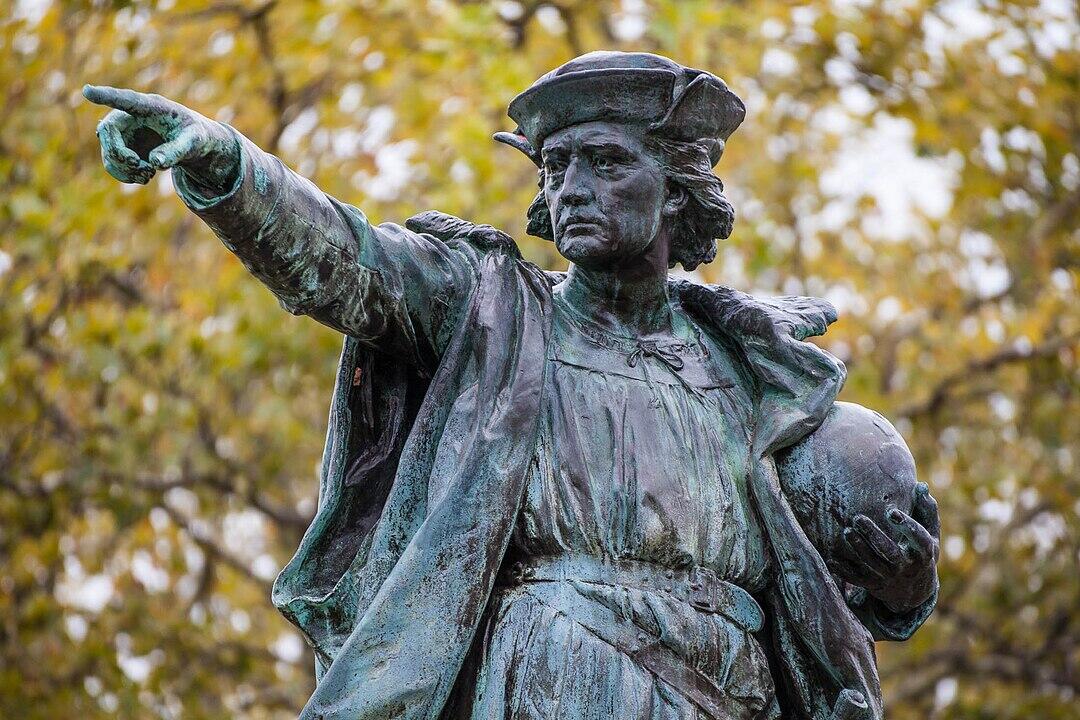
In total, Columbus set out for four voyages across the Atlantic Ocean to the West, but he was never close to reaching Asia. Instead, he discovered a whole new continent (the Americas), which included places like the Bahamas (San Salvador), Cuba (which he thought was Japan), the Hispaniola (now Haiti and the Dominican Republic, and others. Believing he had reached India, he referred to the native peoples as "Indians".
1492–93:
First Voyage
Places explored include the Bahamas, Cuba, and the Hispaniola
1493–96:
Second Voyage
Founded La Isabella, the first attempted European colony in the Americas
1498–1500:
Third Voyage
Reached places like Trinidad and Jamaica in South America
1502–04:
Fourth Vorage
Suffered from shipwreck but still managed to reach Honduras, Nicaragua, and Panama.
🌍 How did this historical event change the world? Columbus's journey drastically reshaped world history by connecting Europe to the Americas, marking the beginning of European colonization in the New World and beginning the era of conquest and exploitation of native peoples.
The American Revolution (1775–1783)
The American Revolution was a political and military conflict that took place between 1775 and 1783 in North America. Growing tensions between the British Thirteen Colonies and the British administration, primarily due to taxation without parliamentary representation, sparked the conflict, marking the beginning of the American Revolutionary War.
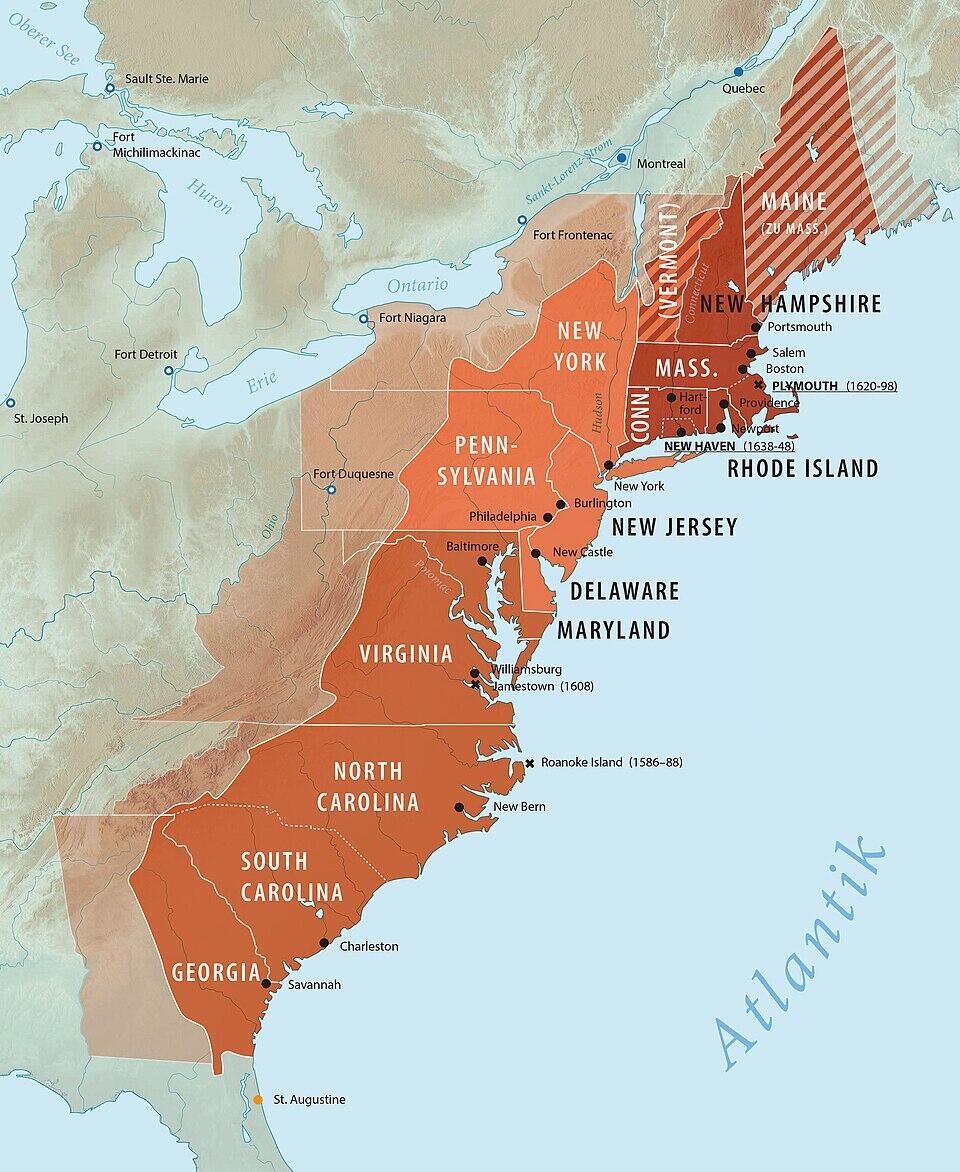
The colonies initially began the conflict at Lexington and Concord in pursuit of better treatment from the British administration. However, as the war dragged on, their cause shifted toward a fight for full independence.
This culminated in the adoption of the Declaration of Independence on July 4, 1776, signed by 56 colonial leaders representing the Thirteen Colonies. However, the British administration did not recognize the declaration or the colonies' independence until the signing of the Treaty of Paris on September 3, 1783.
This treaty recognized the independence of the United States by establishing its borders and revoking certain privileges previously granted to Americans by the British. George Washington became the first President of the United States.
Signed on September 3, 1783, by representatives of the United States (John Adams, Benjamin Franklin, and John Jay) and Great Britain (David Hartley).
🌍 How did this historical event change the world? It was this episode that shaped the legacy regarding democratic principles and individual rights in the USA, influencing the formation of other modern democracies worldwide.
The French Revolution (1789–1799)
The French Revolution was a significant historical event in many ways. It occurred during the reign of Louis XVI, an ineffective monarch who contributed to the country's financial crisis. In an attempt to raise more funds by heavily taxing the aristocracy, Louis XVI faced rejection from the nobles, which triggered another political crisis.
With Louis XVI's decline in popularity, the Third Estate (comprised of peasants, workers, and the middle class) decided to declare themselves rulers of France after separating from the Estates-General (France's old parliamentary system).
One of the pivotal moments during this historical event was the storming of the Bastille on 14th July 1789. This eventually led to the establishment of the Declaration of the Rights of Man and of the Citizen the same year, which paved the way to end absolute monarchy in France.
In 1793, Louis XVI and his wife, Marie Antoinette, were executed by guillotine and publicly beheaded after being charged with treason.
🌍 How did this historical event change the world? This event challenged the concept of absolute monarchy and advanced the idea of democracy. It inspired many subsequent revolutions around the world, encouraging ordinary citizens to fight for justice, equality, and the protection of human rights.
The Industrial Revolution (1760–1840)
The Industrial Revolution was a period of rapid technological and economic transformation that began in Britain in the 1760s before spreading across Europe, North America, and eventually the world. For most of human history, goods were produced by hand in homes and small workshops. Within a single century, that changed entirely.
Powered by innovations such as the steam engine, the spinning jenny, and the locomotive, production moved from cottages and fields into factories and cities. Agricultural communities transformed almost overnight into industrial urban centres, and the pace of change was unlike anything humanity had experienced before.
Here are four key inventions that defined the Industrial Revolution:
| Hindi | English |
|---|---|
| Namaste | Hello |
| Alvida | Bye |
| Suprabhaat | Good morning |
| Shubh sundhyaa | Good evening |
| Main theek hoon | I am fine |
| Kyaa chal rahaa hai? | What's new? |
| Ye kitane ka hai | How much is this? |
| Ksama karem | Excuse me, sorry |
| Kripaya | Please |
| Taiksi | Taxi |
The human cost, however, was significant. Factory workers — including children as young as five — laboured for 12 to 16 hours a day in dangerous, poorly ventilated conditions. This exploitation gave rise to the labour movement, the birth of trade unions, and eventually landmark reforms in workers' rights that still underpin Canadian labour law today.
Although Britain led the Industrial Revolution, its effects transformed British North America (present-day Canada) throughout the 19th century. The growth of railways — particularly the Canadian Pacific Railway, completed in 1885 — connected the country from coast to coast and was directly made possible by industrial manufacturing techniques pioneered during this era.
🌍 How did this historical event change the world? The Industrial Revolution created the foundations of the modern economy: mass production, urbanisation, global trade, and wage labour. It also deepened colonial exploitation, as industrialised nations extracted raw materials from colonised territories at an unprecedented scale. The environmental consequences — beginning with coal-powered air pollution — planted the earliest seeds of the climate challenges the world faces today.
The Abolition of the Transatlantic Slave Trade (18th–19th Century)
The transatlantic slave trade was one of the largest forced migrations in human history. Between the 16th and 19th centuries, an estimated 12.5 million Africans were forcibly taken from their homelands and transported across the Atlantic Ocean to work as enslaved labourers on plantations in the Americas and the Caribbean. It was a system that generated enormous wealth for colonial powers — and immeasurable suffering for those it enslaved.
The abolitionist movement — which fought to end slavery — grew slowly at first, driven by the testimonies of formerly enslaved people, Quaker religious activism, and Enlightenment arguments about natural human rights. Key milestones in the long road to abolition include:
1772
Somerset v Stewart
Ruling in England effectively ended slavery on English soil
1793
Act Against Slavery — Upper Canada
One of the first laws in the British Empire to restrict slavery, passed in present-day Ontario
1807
Slave Trade Act — Britain
Britain abolished the transatlantic slave trade across its empire
1833
Slavery Abolition Act
Ended slavery across most of the British Empire, directly affecting British North America (present-day Canada)
1865
13th Amendment — United States
Formally abolished slavery in the United States following the Civil War
Canada served as the northern terminus of the Underground Railroad, the network of safe houses and routes that helped an estimated 30,000 enslaved people escape from the United States to freedom in Canada before and during the American Civil War. Figures such as Harriet Tubman made multiple dangerous journeys guiding people to freedom in present-day Ontario.
🌍 How did this historical event change the world? The abolition of the transatlantic slave trade was a pivotal moment in the global recognition of human rights. It challenged the economic logic that had justified centuries of exploitation, laid the foundations for modern civil rights movements, and began a long — still unfinished — reckoning with the legacies of colonialism and racial inequality. For Canadians, understanding this history is essential to understanding the country's own identity and its relationship with its Black and Indigenous communities.
The First World War (1914–1918)
World War I was the first global conflict caused by the competition between European imperial powers, marked by escalating political, military, and territorial tensions. The alignment of coincidences allowed a young political extremist belonging to the Serbian ultra-nationalist Black Hand organization, Gavrilo Princip, to assassinate the Archduke of Austria and his wife in Sarajevo in Bosnia-Herzegovina.
Within a month of the assassination, the Austro-Hungarian Emperor declared war on the Kingdom of Serbia, protected by the Russian Empire, drawing the Russo-French alliance into the conflict and involving the British. At the same time, Germany allied itself with the Austro-Hungarian Empire. World War I was such a violent war that it is estimated that at least 1% of the population died during its four-year duration.
Source: O'Neill, 2024 (Statista)
Source: O'Neill, 2024 (Statista)
🌍How did this historical event change the world? The end of the war resulted in the collapse of four great imperial dynasties: the German Empire collapsed, giving way to the Weimar Republic; the Austro-Hungarian Empire of the Habsburgs dissolved into two distinct nations (Austria and Hungary); Turkish nationalists dissolved the Ottoman Sultanate; and the Tsarist Empire of Russia fell, giving way to the rise of Communist Russia.
Want to know more interesting facts about the First World War and the Splendid Isolation? We invite you to read a more exacting account of WW1 events!
The Russian Revolution (1917)
The significant historical happening was a political and social process that took place in 1917 and marked the end of the autocratic rule of the Tsars. It was a period in history that saw the rise of a socialist regime under the leadership of the Bolsheviks, led by Vladimir Lenin.
Tsar Nicholas II, the last ruler of the Russian Empire, was destined to go down in history as an incompetent political figure completely out of touch with the needs of his people.
Approaching the Winter Palace in Petrograd, hundreds of impoverished peasants led a peaceful protest to deliver a petition to the Tsar, demanding change and better conditions. However, this demonstration was brutally put down by Russian soldiers, killing 200 people by rifle fire.
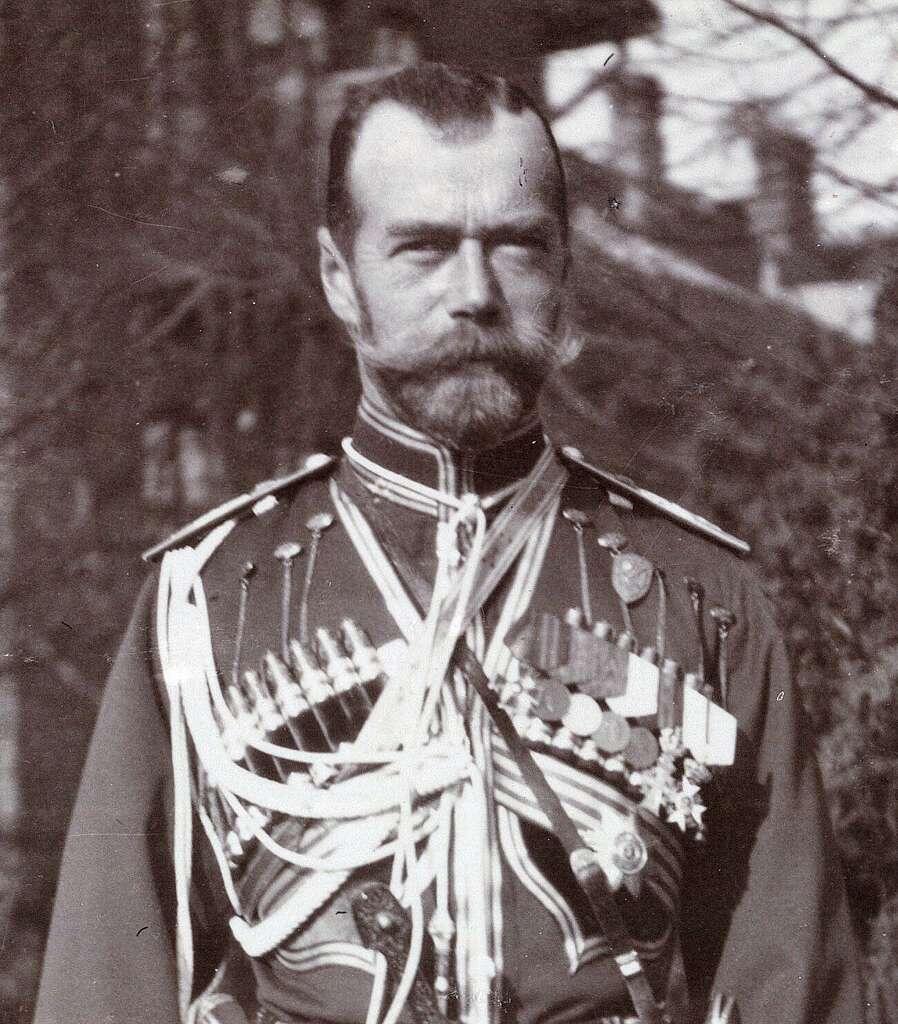
This event became known as Bloody Sunday and is considered one of the triggers of this historical indicident. The February Revolution took place, which led to the abdication of Tsar Nicholas II. The Bolsheviks subsequently took control in the October Revolution, establishing an administration based on soviets and proclaiming the creation of a socialist state.
February Revolution
(March 1917)
- Main goal: Overthrow the Imperial government under Tsarist autocracy
- Food shortages, costly wars, and economic downturns triggered angry workers to start protesting against the monarchy
- The abdication of Tsar Nicholas II marked the last ruling dynasty of Russia (the Romanov dynasty)
October Revolution
(November 1917)
- Main goal: Establish a socialist and communist state by the Bolshevik Party
- Took place due to discontentment towards the Provisional Government, the ongoing World War I, and the rise of Vladimir Lenin
- The overthrow of the Provisional Government marked the formation of the Soviet Union under the Bolshevik Party
🌍 How did this historical event change the world? It led to the formation of the Soviet Union, which further spread the communist ideology worldwide, setting the stage for the Cold War throughout the 20th century.
The Great Depression (1929)
To understand the background of the Great Depression, we first need to discover the Roaring Twenties. The 1920s marked a decade of economic prosperity and cultural and social advances in American history. Fantastic innovations in industry and infrastructure allowed many to enjoy relative comfort and a select few to live in absolute luxury. However, everything would go bankrupt soon.
Causes of The Great Depression
- The beginning of a mild recession due to a decline in production, high unemployment
- The stock market crashed due to over-speculation and massive buying of stocks on borrowed money, famously known as Black Tuesday
- Collapse of the bank systems due to the loss of confidence by investors
- Trade wars (high tariffs being imposed) through the Smoot-Hawley Tariff.
The stock market crashed on October 29, 1929, marking the official beginning of the Great Depression. Companies went bankrupt, banks closed, and millions of people lost their jobs, leading to a drastic decline in production and international trade.
Around the world, people suffered for years of hardship and hunger as the Great Depression went on. Under the administration of President Franklin D. Roosevelt (FDR), a series of programs known as the New Deal was introduced to navigate this challenging period. However, it was not until the start of World War II that the economy truly recovered through war spending. Here are some examples of the New Deal programs:
| Major Program | Year Enacted | Main Purpose |
|---|---|---|
| Federal Deposit Insurance Corporation (FDIC) | 1933 | Safeguards depositors’ funds from loss if there's bank failure and regulate bank practices |
| Civilian Conservation Corps (CCC) | 1933 | Offers employment opportunities to young, unmarried men through national conversation worls |
| Securities and Exchange Commission (SEC) | 1934 | Prevents market manipulation through regulation of stock market |
| Social Security Act | 1935 | Introduces a national pension system through employer and employee contribution, helping retirees, their dependents and also those disabled |
🌍 How did this historical event change the world? The Great Depression triggered an international financial meltdown, leading to a rise in political instability worldwide and the emergence of fascist regimes, ultimately leading to World War II. However, the period also prompted increased government intervention in economic regulation policies.
Willing to learn more? Find history classes here on Superprof.
Nazi Germany (1933–1945)
Despite the staggering debt from World War I and the Weimar Republic's inability to control inflation, things started to improve for Germany after it introduced its new currency, Rentenmark. The economic recovery was further supported by a reprieve on war reparations from the United States. However, this period of stability was short-lived.
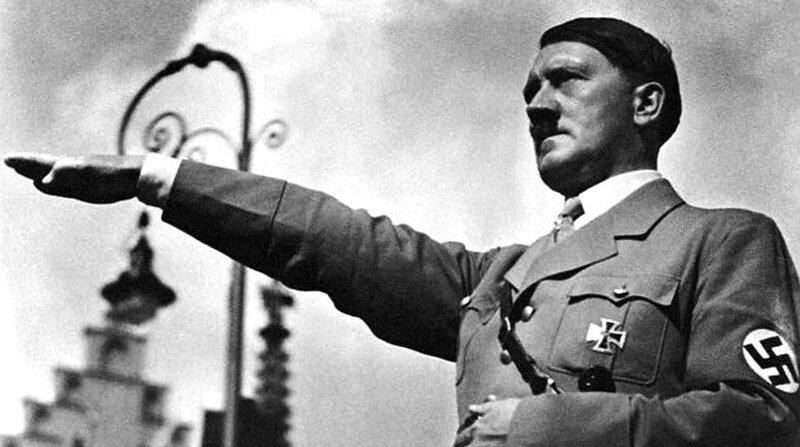
One man comes to mind when we talk about this period and the event that would change history forever: Adolf Hitler, who became the leader of Nazi party, and eventually became an infamous dictator.
He and the Nazi Party gained support by exploiting the financial hardships, nationalist sentiments, and anti-Semitic prejudices prevalent in German society — fueled by the financial difficulties of the early 1920s and widespread political instability. Two minor governmental adjustments later, on January 30, 1933, Adolf Hitler was singlehandedly running Nazi Germany as a totalitarian state.
A master of rhetoric, he galvanized public opinion to such an extent that, by 1932, the Nazi party held a majority of government seats in the Reichstag.
The roars of approval from the German people during his charismatic speeches validated his ideals.
🌍 How did this historical event change the world? Expansionist policies and the promotion of racial superiority led Nazi Germany down a path that eventually triggered World War II.
The Second World War (1939–1945)
Even though Article 231 of the Treaty of Versailles 1919 (marking the end of World War I) stated that Germany should never re-arm, Hitler felt that such a concession would leave Germany defenseless worldwide, preventing it from ever becoming a world power.
Once Hitler gained control of the country, he began rebuilding its economy through arms manufacturing. Nevertheless, now fully capable of military action, he led his troops in the invasion of Poland on September 1st, 1939, beginning one of humankind's darkest chapters featuring the bloody fight between the Allies and the Axis.
Allies
Axis
This provoked a response from Britain and France. In 1941, the entry of the Soviet Union and Japan into the war further expanded this global conflict. The Japanese attack on Pearl Harbor in December 1941 prompted the United States to join the Allies. In 1945, following the surrender of Germany and the dropping of atomic bombs on Hiroshima and Nagasaki by the United States, Japan capitulated, ending the war in the Pacific.
🌍 How did this historical happening change the world?World War II was devastating in terms of human capital and economics, and it shaped world politics for decades to come and laid the groundwork for the Cold War.
The Moon Landing (1969)
On July 20, 1969, astronaut Neil Armstrong became the first human being to set foot on the surface of the Moon. The mission, Apollo 11, was the culmination of over a decade of intense scientific competition, political ambition, and extraordinary human ingenuity born directly from the Cold War.
To understand why the Moon landing happened when it did, you have to understand the Space Race — the Cold War competition between the United States and the Soviet Union to achieve superiority in space exploration. The Soviets had taken an early lead: they launched Sputnik, the world's first artificial satellite, in 1957, and sent the first human into space — Yuri Gagarin — in 1961. In response, President John F. Kennedy made a bold public commitment in May 1961: the United States would put a man on the Moon before the end of the decade.
Engineers, scientists, and technicians across the United States
Equivalent to approximately $180 billion in today's money
The computer that guided Apollo 11 to the Moon — the Apollo Guidance Computer — had roughly 4 kilobytes of RAM and ran at 0.043 MHz. Your smartphone is approximately 100,000 times more powerful.
Armstrong was joined on the lunar surface by Buzz Aldrin, while Michael Collins orbited above in the command module. The crew splashed down safely in the Pacific Ocean on July 24, 1969 — eight days after launch, completing one of the greatest achievements in human history.
🌍 How did this historical event change the world? The Moon landing was the defining technological achievement of the 20th century. Technologies developed for the Apollo programme — including miniaturised electronics, satellite communications, and water purification systems — found applications in everyday life worldwide. The landing also marked a symbolic peak of the Cold War, demonstrating that the competition between superpowers could be fought not only with weapons, but with science and imagination.
The Creation of the Internet (1960s–1990s)
Did you know that the birth of the Internet was a result of another historical event — the Cold War? Determined to create a reliable communication system, the U.S. Department of Defense's Advanced Research Projects Agency (ARPA) developed ARPANET, the first network to use packet switching — a method of breaking data into blocks for more efficient transmission. ARPANET officially went live in 1969!
Here are three major breakthroughs that occurred during the development of the Internet:
🌍 How did this historical happening change the world? The Internet has become one of the most widely used tools in history, connecting global users instantly daily while transforming various industries and our everyday lives.
Explore Interesting Historical Events With Superprof
We hope you are enlightened by these historical events shared in this article. Granted, there are many other interesting historical events that you can discover with the help of an experienced history tutor at Superprof.
Those that fail to learn from history are doomed to repeat it.
Winston Churchill
Whether you are preparing for a history exam or learning history in Guelph as a hobby, you can have a personalised and dynamic learning experience through private tutoring at Superprof. Head to the Superprof Canada homepage to start browsing a wide selection of history tutors near you. You'll never regret it!
Summarize with AI:
Did you like this article? Leave a rating!


 Loading...



Pretty good little site
Thank you so much for your wonderful and insightful share! Every word is packed with valuable thoughts and practical tips that truly broaden my horizons. I’ve gained so much inspiration and will definitely put your advice into practice soon.
A lot thought went into this article. Thanks for that