


Vimy Ridge is a First World War battlefield in northern France where the Canadian Corps captured a strategically important German position between 9 and 12 April 1917. The battle became one of Canada's most enduring national symbols, but its significance extends beyond the familiar story of military achievement. The terrain, the planning behind the assault, the heavy casualties and the memorial built afterwards all reveal different aspects of the conflict.
| Aspect | Key facts | Why it matters today |
|---|---|---|
| The battle | The Canadian Corps captured Vimy Ridge from 9 to 12 April 1917. | Shows how preparation, coordination and infantry tactics contributed to the victory. |
| The human cost | Canadian forces suffered 10,602 casualties, including 3,598 killed. | Reminds visitors that the military achievement came at a significant human cost. |
| The memorial | The Canadian National Vimy Memorial commemorates Canadians who served in the First World War, particularly those missing and presumed dead in France with no known grave. | Gives physical form to remembrance and individual loss. |
| The preserved battlefield | Parts of the former battlefield, including trenches and tunnels, remain accessible to visitors. | Helps visitors understand the conditions in which the battle was fought. |
| The national legacy | Vimy Ridge became an enduring symbol in Canadian accounts of national identity. | Raises questions about how military events become national stories and whose experiences are remembered. |
Today, the Canadian National Vimy Memorial stands above the former battlefield near Arras. Preserved trenches, underground tunnels and the surrounding landscape help visitors understand the conditions in which soldiers fought. Exploring Vimy Ridge means examining both what happened in April 1917 and how later generations transformed the battle into a story about Canadian identity, remembrance and loss.


🗺️ Why Vimy Ridge Mattered Before the Canadian Assault
Vimy Ridge rises above the Douai Plain, making it valuable to whichever army controlled its heights. German forces had fortified the ridge as part of their defensive system, using trenches, machine-gun positions and underground shelters to protect their lines. From the high ground, defenders could observe movement across the surrounding landscape and direct fire against approaching troops.
9 to 12 April 1917
Pas-de-Calais, northern France
Canadian Corps, fighting as part of the British First Army's Arras offensive.
A preserved battlefield and memorial commemorating Canada's First World War dead.
The position had resisted earlier Allied attacks, including costly French offensives in 1915. By 1917, capturing it offered the Allies an opportunity to improve their position on the Western Front. Its importance came from this practical military advantage, not from any inevitable connection to Canadian nationhood.
The Strategic Problem Facing the Allies
The assault on Vimy Ridge formed part of the larger Battle of Arras, launched by British forces in April 1917 to support a French offensive further south. Allied commanders hoped to break through German defences, divert enemy reserves and gain strategically useful ground. The Canadian Corps was assigned the ridge within this wider operation, under British First Army command.
Arras offensive:
The wider British attack aimed to disrupt German positions.
Vimy Ridge:
Canadian forces were tasked with capturing the fortified heights.
French offensive:
A separate major attack further south placed additional pressure on German forces.
The Canadian operation was therefore neither an isolated national adventure nor a battle fought solely for symbolic reasons. It was a demanding component of a coordinated Allied offensive, and its immediate purpose was military. Explore other Canadian battles that changed history and their lasting impact.
Why Earlier Attacks Had Failed
The ridge's defences were supported by years of trench warfare, barbed wire, machine guns and artillery. Earlier French assaults had suffered heavy casualties without securing the position. The terrain and German defensive network made an unsupported infantry advance exceptionally dangerous.
Defensive fire:
Machine guns and artillery made exposed infantry advances extremely dangerous.
Barbed wire:
Wire obstacles slowed attacking troops and left them vulnerable to defensive fire.
Difficult terrain:
The ridge's elevated position gave defenders an important tactical advantage.
These failures provided important warnings. Capturing the ridge required detailed intelligence, accurate artillery preparation and coordination between infantry and supporting units. The Canadians benefited from preparation informed by earlier experience, although planning could not eliminate uncertainty or prevent severe losses. The Battle of Queenston Heights shows how terrain shaped an earlier Canadian battlefield.
⚔️ Battle of Vimy Ridge: What Happened From 9 to 12 April 1917
The battle began at 5:30 a.m. on Easter Monday, 9 April 1917, in bitter weather. Canadian troops advanced through snow and sleet behind an intense artillery bombardment. The initial attack made rapid progress across much of the ridge, but German resistance remained fierce in several sectors. The operation continued for four days rather than ending with the first advance.
9 April
The Canadian assault begins and most initial objectives are captured.
10 April
Canadian troops secure Hill 145, the ridge's highest important point.
12 April
Canadian forces capture the Pimple, completing the principal objectives of the battle.
The timeline highlights why the battle's success depended on successive operations. Capturing the first defensive lines did not automatically secure every commanding position, and fighting continued while units dealt with resistance, casualties and difficult terrain (Canadian War Museum, n.d.).
The Canadian Corps Plan
The Canadian Corps prepared extensively through rehearsals, maps, intelligence gathering and coordinated artillery fire. One important tactic was the creeping barrage, in which artillery fire moved forward according to a planned timetable. Infantry advanced close behind it, aiming to reach German positions before defenders could emerge and reorganise.
| Planning element | Purpose |
|---|---|
| Detailed maps | Helped troops identify objectives and navigate damaged terrain |
| Artillery coordination | Suppressed German positions ahead of the infantry |
| Rehearsals | Familiarised soldiers with routes and assigned objectives |
| Small-unit initiative | Helped troops respond when conditions disrupted the plan |
No single technique explains the outcome. The assault depended on the interaction of preparation, firepower, leadership and soldiers adapting when the battlefield did not unfold exactly as expected.
The Fight for Hill 145 and the Pimple
Hill 145 was the highest important point on the ridge and the location where the memorial now stands. Canadian troops failed to secure it on the first day, and fierce fighting continued before the position was captured on 10 April. The remaining objective, known as the Pimple, was a fortified height at the northern end of the ridge.
- Hill 145:
Captured on 10 April 1917, Hill 145 was the ridge's highest significant point and the location of the present-day Canadian National Vimy Memorial. - The Pimple:
Captured on 12 April, this fortified position at the northern end of the ridge marked the completion of the Canadian assault.
Canadian forces captured the Pimple on 12 April, forcing German troops to withdraw from the ridge. These final stages matter because they reveal the uneven progress of the battle. The achievement was not a single sweeping advance but a series of difficult attacks against defensive positions that continued to inflict casualties. The Plains of Abraham was another pivotal battle fought on strategically important high ground.
What the Soldiers Faced on the Ground
The battlefield was a landscape of shell holes, damaged trenches, barbed wire and churned mud.
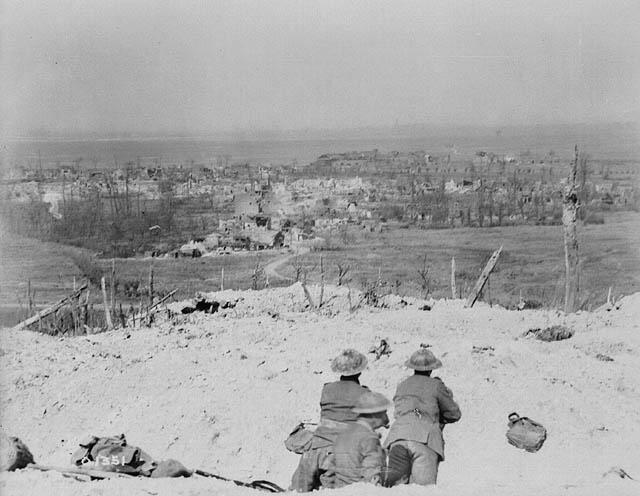
Snow and sleet reduced visibility, while artillery explosions and machine-gun fire made communication and movement dangerous. Soldiers had to navigate unfamiliar ground amid smoke, debris and the confusion created by rapidly changing front lines.
These conditions also explain why preparation had limits. Maps and rehearsals could guide troops towards their objectives, but they could not remove the risks of advancing under fire or guarantee that every unit would maintain its planned timetable.
🕯️ The Cost of Victory and the Tactical Lessons
The Canadian Corps captured the ridge, but the victory came at a devastating human cost. More than 10,600 Canadians became casualties during the battle, including 3,598 killed.
Canadian casualties during the Battle of Vimy Ridge
The figures include men who were wounded, missing or killed, reflecting the scale of the fighting across all four days. The numbers should not become detached from the people behind them. Families received news of deaths or waited for information about missing relatives, while wounded soldiers faced recovery and possible lifelong disability.
| Battlefield innovation | Popular misconception |
|---|---|
| Creeping barrage | Artillery alone won the battle |
| Detailed preparation | The plan guaranteed success |
| Infantry coordination | Every unit advanced without setbacks |
| Small-unit initiative | National courage was the only decisive factor |
The capture of the ridge was a military achievement, but it did not make the suffering involved any less real.
Casualties Were Not an Afterthought
The casualty figures are central to understanding Vimy Ridge, rather than a detail to mention after celebrating the victory. Soldiers faced concentrated defensive fire, and some units suffered particularly severe losses while trying to capture difficult objectives. Success at the operational level could coexist with devastating outcomes for individual battalions and families.
Military cost
Canadian forces suffered 10,602 casualties during the four-day battle, including 3,598 killed and 7,004 wounded.
Beyond the numbers
The figures represent individual lives, families facing bereavement and soldiers who survived with physical or psychological injuries.
Remembering the dead requires acknowledging the cost without assuming that every sacrifice was inevitable or that military success automatically justified it. The battle's legacy includes achievement, grief and the long-term consequences of industrial warfare. Passchendaele reveals another devastating cost of Canada's First World War campaigns.
Artillery, Maps and Small-Unit Initiative
Vimy Ridge demonstrated the value of combining accurate artillery preparation, intelligence, rehearsals and coordinated infantry movement. The creeping barrage helped troops advance, while detailed planning gave units clearer objectives than they might otherwise have had in a chaotic battlefield.
What was a creeping barrage?
Artillery fire advanced ahead of the infantry to suppress German defenders and help attacking troops move forward.
Why were detailed maps important?
Maps and reconnaissance helped units understand their objectives and navigate a heavily damaged battlefield.
Did these methods guarantee success?
No. Coordination improved the attack, but resistance, communication problems and battlefield uncertainty still caused casualties.
However, these methods were not unique to Canada, nor did they eliminate mistakes. The battle's effectiveness came from a system of interdependent techniques and the ability of soldiers to respond to unexpected resistance. Its lessons are best understood through this combination rather than a single supposedly revolutionary tactic.
🇨🇦 Why Vimy Ridge Became a Canadian Nation-Building Story
Vimy Ridge acquired significance beyond its immediate military objectives because all four Canadian divisions fought together during the assault. Soldiers from different parts of Canada participated in the same major operation, giving the victory a powerful symbolic appeal. In later decades, the battle became associated with the development of a more distinct Canadian identity.
“In those few minutes I witnessed the birth of a nation.”
Alexander Ross, Brigadier-General
Attributed to Brigadier-General A.E. Ross, this frequently cited reflection captures the symbolic importance later attached to Vimy. It should be presented as an interpretation of the battle's meaning, not proof that Canada literally became a nation in April 1917.
A Military Achievement With Political Meaning
Canada was already a self-governing dominion within the British Empire before the battle. Its political autonomy developed over decades, and Vimy alone did not create independence. Nevertheless, the victory strengthened the reputation of Canadian forces and became part of a wider narrative about Canada's growing international standing.
National identity is shaped by how events are remembered as well as by what happened during them.
Vimy offered a compelling story of shared effort, but its later meaning was shaped by commemorations, education and public debate.
Whose Experience the National Story Leaves Out
A national story centred entirely on unity can overlook differences in how Canadians experienced the war. Indigenous soldiers served despite facing discrimination and unequal treatment at home. French Canadians held varied views about participation in an imperial war, while families across the country experienced bereavement, anxiety and economic hardship.
Indigenous soldiers:
Indigenous Canadians served despite discrimination and unequal treatment within Canada.
French Canadians:
French Canadian perspectives on participation in the war varied, reflecting different political and cultural experiences.
French offensive:
Bereavement, anxiety and economic hardship shaped the experiences of families far from the battlefield.
Recognising these experiences does not diminish the achievement at Vimy. It creates a fuller account of the people who served and the society to which they returned. Juno Beach later became another defining chapter in Canada's military history.
🏛️ The Vimy Memorial and the Preserved Battlefield
The Canadian National Vimy Memorial stands on Hill 145, overlooking the former battlefield. Designed by Canadian sculptor Walter Allward, it was unveiled in 1936 after years of planning and construction. France granted the land to Canada in recognition of the country's wartime contribution, creating a permanent place of remembrance far from home.
Reading the Memorial's Names and Symbols
The memorial's sculpted figures express mourning, sacrifice and remembrance.
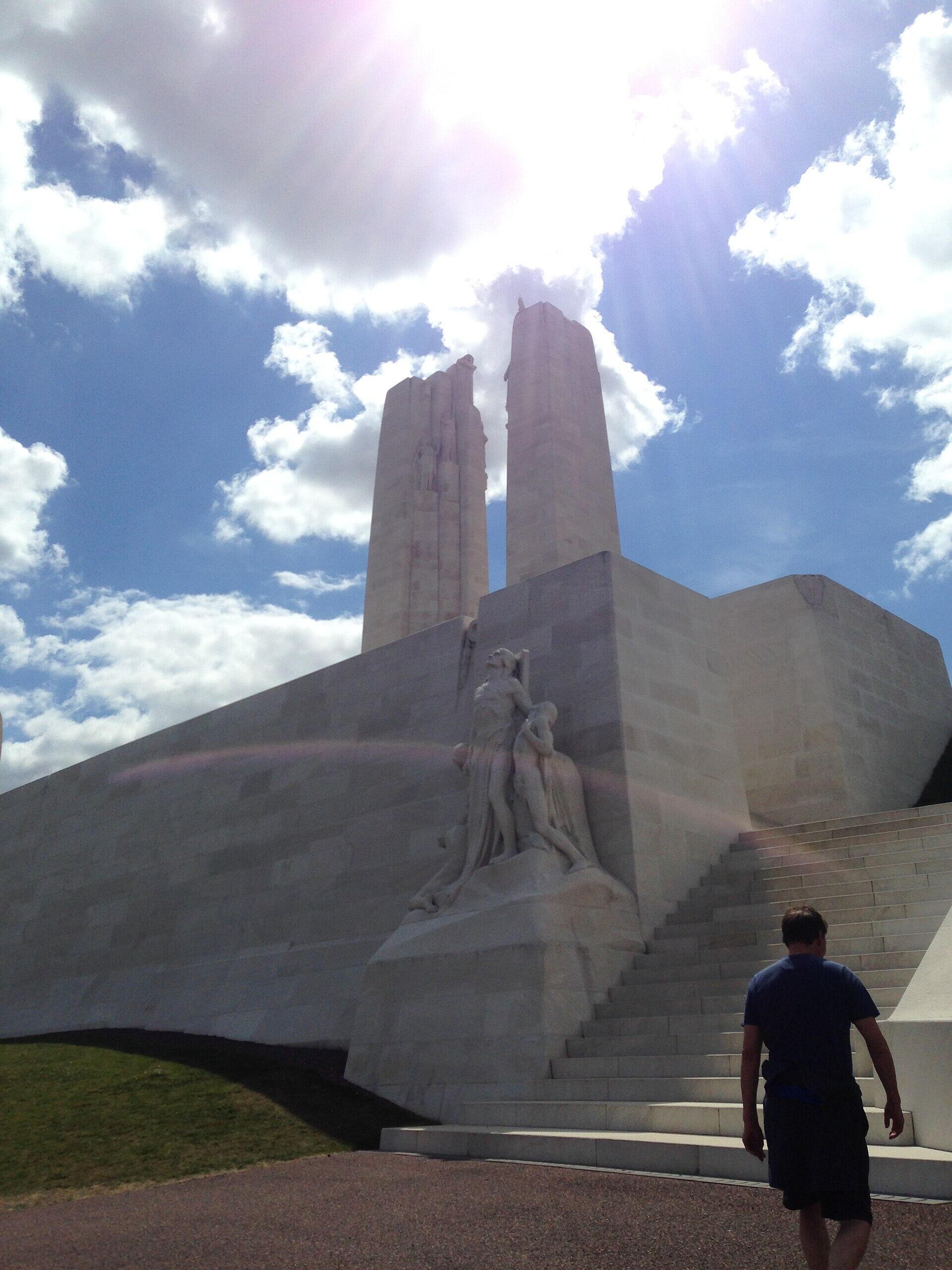
Its most striking feature is the figure representing Canada mourning her dead, while the names of 11,285 Canadian soldiers missing and presumed dead in France are engraved on the monument.
These names give the memorial a deeply personal purpose, commemorating individuals whose final resting places remain unknown.
Why Parts of the Ridge Remain Closed
The preserved battlefield contains areas that are unsafe for unrestricted access. Unexploded wartime ammunition and fragile ground make it essential to remain on designated paths and follow staff instructions. Visitors should never touch suspicious metal objects or attempt to enter restricted areas.
🚗 Visiting Vimy Ridge From France or Belgium
A visit to Vimy Ridge offers more than an opportunity to see a monument. Walking through the grounds and viewing the surviving battlefield features helps visitors understand the scale of the landscape and the difficulties faced by soldiers.
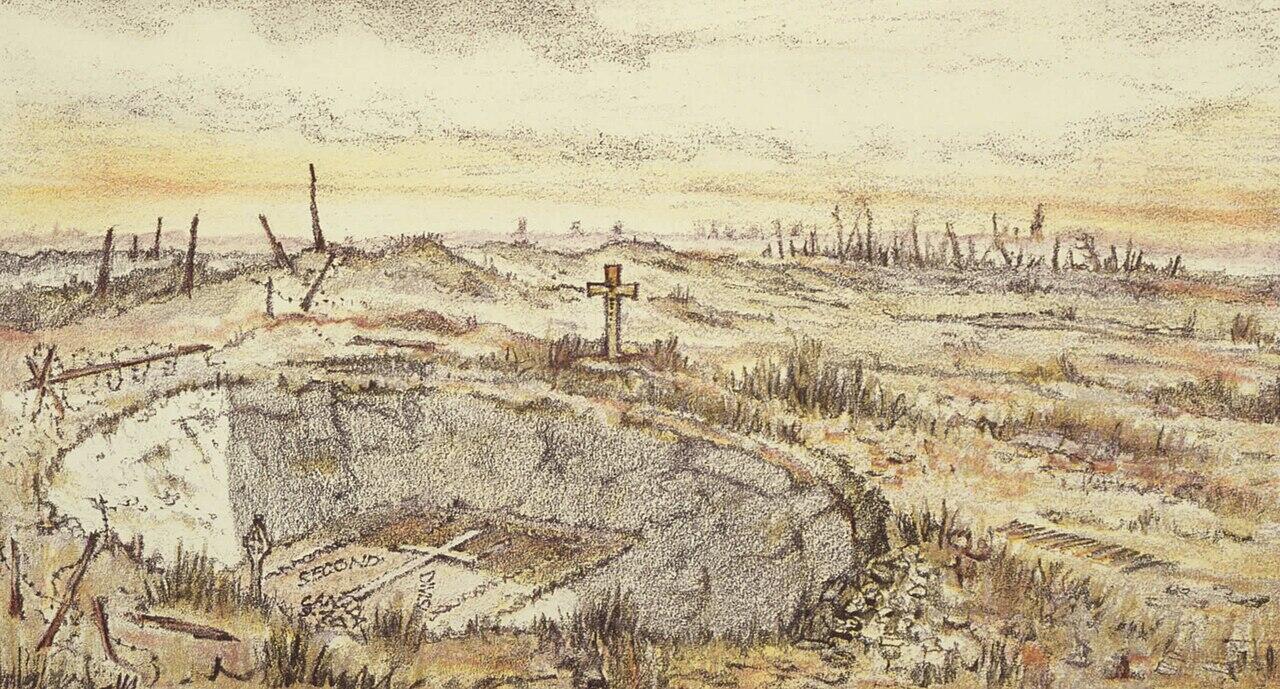
Driving offers flexibility, while public transport generally requires additional planning from nearby towns.
Guided tours of the preserved trenches and tunnels are available through the visitor centre, subject to availability.
Stay on marked paths, respect commemorative spaces and follow site safety instructions.
Allow time to explore rather than treating the site as a brief photographic stop.
Getting There and Booking a Tour
The memorial is near Givenchy-en-Gohelle in northern France, within reach of Arras and Lens. Travellers relying on public transport should plan their connections in advance, as reaching the site may require a taxi or organised tour for the final part of the journey.
How do I reach the memorial?
The site is in northern France near Arras and Lens. Check onward transport options before travelling, as the final leg may require a taxi or organised tour.
Can I visit the tunnels?
Guided tunnel tours may be available, but access and availability can vary. Check the official visitor information before your visit.
Should I check opening hours?
Yes. Confirm current opening hours, tour arrangements and any temporary closures before setting out.
Check the official visitor information before travelling, particularly if you want to join a tunnel tour. Guided visits can be subject to availability, and opening hours vary seasonally.
What to See Beyond the Monument
The memorial is the main attraction, but the preserved trenches and tunnels provide important context. They show how troops lived and moved through defensive positions, while the surrounding landscape reveals why the ridge's elevation mattered militarily.
- Preserved trenches
See how defensive positions were laid out and consider the difficult conditions soldiers faced. - Underground tunnels
Learn how underground passages supported movement and military operations beneath the battlefield. - War cemeteries
Reflect on the individual losses behind the battle and the continuing importance of remembrance.
Places of burial connect the wider story of the battle to individual lives and remind visitors that the landscape is both a historical resource and a place of mourning.
🕊️ How Vimy Ridge Is Remembered Today
Vimy Ridge remains central to Canadian remembrance, particularly during annual commemorations on 9 April. Ceremonies, school resources and public memorials continue to connect new generations with the battle. Yet remembrance is most meaningful when it allows historical evidence and difficult questions to sit alongside pride in those who served.
Commemoration honours service and loss, while historical study investigates causes, evidence and competing interpretations. Both are valuable, but they serve different purposes.
A respectful account can recognise the courage of Canadian soldiers without presenting the battle as a simple or inevitable step towards independence.
What Vimy Still Asks of Visitors
Vimy Ridge invites visitors to consider what military victory cost, how national identity is constructed and why remembrance matters across generations.
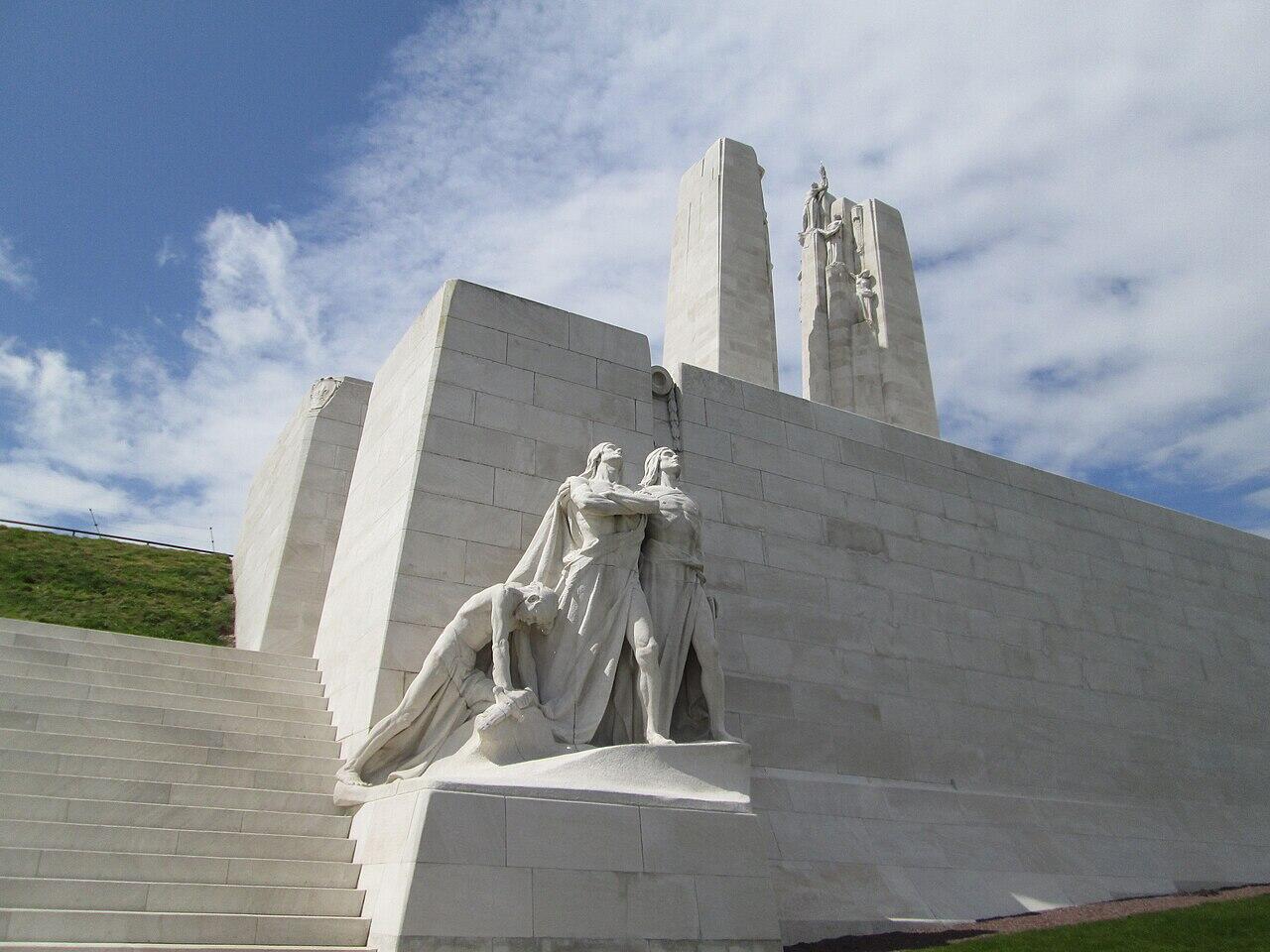
The memorial and preserved battlefield keep these questions grounded in a real place where people endured extraordinary danger. Its enduring value lies not in offering an uncomplicated patriotic lesson, but in helping visitors confront the human consequences of war.
References
- Canadian War Museum (n.d.) The Battle of Vimy Ridge, April 9 to 12, 1917. Available at: https://www.warmuseum.ca/articles/the-battle-of-vimy-ridge-april-9-to-12-1917 (Accessed: 21 October 2026).
- Veterans Affairs Canada (2019) Minister of Veterans Affairs and Minister of National Defence mark Vimy Ridge Day. Available at: https://www.canada.ca/en/veterans-affairs-canada/news/2019/04/minister-of-veterans-affairs-and-minister-of-national-defence-mark-vimy-ridge-day.html (Accessed: 21 October 2026).
- Veterans Affairs Canada (n.d.) Canadian National Vimy Memorial. Available at: https://www.veterans.gc.ca/en/remembrance/memorials/overseas/canadian-national-vimy-memorial (Accessed: 21 October 2026).
- Veterans Affairs Canada (n.d.) Frequently asked questions: Visiting Canadian memorials in Europe. Available at: https://veterans.gc.ca/en/remembrance/memorials/visit-canadian-memorials-europe/frequently-asked-questions (Accessed: 21 October 2026).
Summarize with AI:
Did you like this article? Leave a rating!

 Loading...
