


For many Canadian students, choosing a Grade 12 physics course is one of the most important academic decisions they will make in high school. Different physics courses develop different levels of scientific understanding, mathematical skills, and practical learning experiences that prepare students for university, college, trades, or workplace opportunities.
In Ontario schools, Grade 12 physics can be studied for either university or college preparation:
SPH4U
Physics, Grade 12, University Preparation
SPH4C
Physics, Grade 12, College Preparation
Although both courses explore important physics concepts, the structure, expectations, assessment methods, and depth of learning differ significantly. You may be wondering, what will I learn in Grade 12 physics?What is the difference between SPH4U and SPH4C?Which physics course should I take?
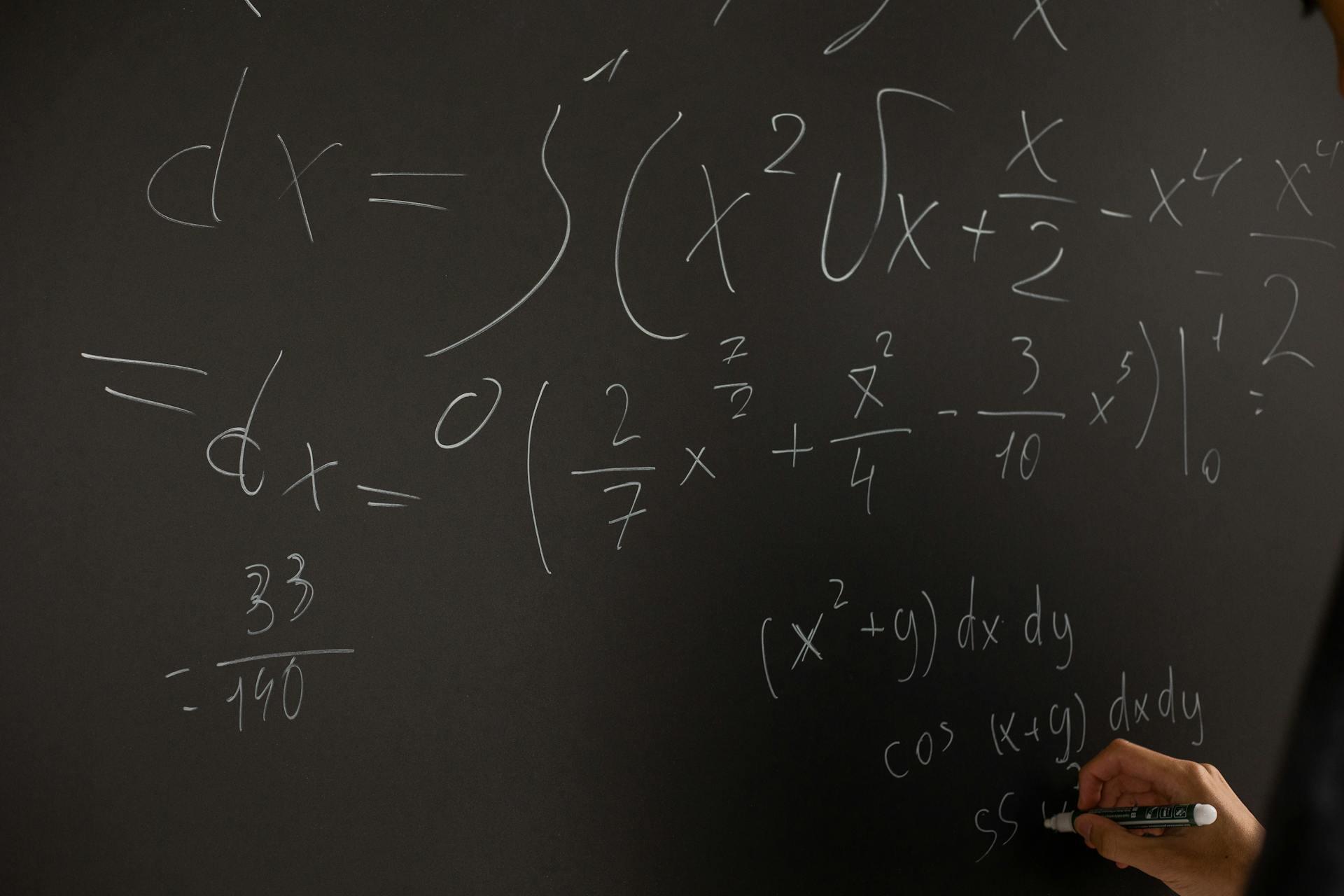
This guide explains what students learn in Grade 12 physics in Canada. Starting with Ontario, let's learn the major differences between SPH4U and SPH4C, and how these courses prepare students for future learning and careers.
| Area | SPH 4U | SPH 4C |
|---|---|---|
| Pathway | University Preparation | College Preparation |
| Focus | Theoretical understanding | Practical application |
| Mathematics | Advanced algebra | Applied calculations |
| Assessment | Abstract problem solving | Hands-on investigations |
| Learning Style | Analytical | Practical |
| Pace | Fast and rigorous | More scaffolded |
| Future Pathways | STEM university programs | Technology and trades |
If you want to learn more about the grade 12 physics curriculum and how to get physics educational guidance with a private tutor, keep reading! Head to our article for more reasons why you should pursue an academic path in physics.


Understanding Grade 12 Physics in Canadian Schools
Physics courses in Canada are designed to help students develop scientific inquiry skills, conceptual understanding, mathematical reasoning, and the ability to apply science learning to real-world systems.

Unlike science courses that focus heavily on memorization, physics emphasizes problem solving and critical thinking. Students learn how to analyze forces, energy systems, electrical interactions, and wave behaviour through both theoretical learning and practical investigations.
Grade 12 physics also builds on earlier concepts introduced in Grade 11 physics and mathematics courses. Students who enter Grade 12 physics will often encounter increasingly abstract ideas that require them to combine literacy, numeracy, and scientific reasoning skills simultaneously2.
For many students, physics becomes one of the most intellectually demanding high school courses because it requires both conceptual understanding and procedural accuracy.
What is SPH 4U? (University Preparation Physics)
SPH4U is a university preparation physics course intended for students planning to pursue post-secondary education in STEM-related fields1. This course is commonly recommended or required for students planning to take postsecondary programs in:
- engineering
- physics
- architecture
- computer science
- mathematics
- chemistry
- aviation
- health science programs
SPH4U is academically rigorous and heavily focused on mathematical modelling, theoretical analysis, scientific inquiry, and advanced problem solving.
Students must apply strong algebraic reasoning skills throughout every unit. The course moves quickly and often requires students to independently apply formulas and concepts in unfamiliar situations.
SPH4U Course Equivalents Across Canada 🇨🇦
SPH4U is generally considered equivalent to senior academic physics courses across Canadian provinces and territories. Universities and colleges use these equivalencies to compare admission requirements for students applying from different education systems.
| Province / Territory | Equivalent to Ontario SPH4U | Course Level / Notes |
|---|---|---|
| British Columbia | Physics 12 | Senior academic physics course designed for students pursuing post-secondary science and engineering pathways. Strong emphasis on mechanics, circular motion, electric fields, momentum, and wave behaviour. Often taken alongside Pre-Calculus 12 or Calculus 12. |
| Alberta | Physics 30 | Highly rigorous Grade 12 academic physics course with province-wide diploma examinations. Students explore momentum, fields, wave-particle duality, nuclear physics, and electromagnetism. Strong mathematical expectations and analytical problem solving throughout the course. |
| Saskatchewan | Physics 30 | Advanced secondary physics course emphasizing mechanics, energy systems, electricity, wave interactions, and modern physics concepts. Designed to prepare students for university STEM programs and technical science pathways. |
| Manitoba | Physics 40S | Grade 12 (“Senior 4”) academic physics course focused on forces, motion, electricity, waves, and field theory. Students complete laboratory investigations and advanced mathematical applications connected to scientific systems. |
| Quebec (CEGEP) | Physics 203 series / Physics NYA + NYB/NYC | Pre-university college-level physics sequence completed during CEGEP studies. Courses are often more specialized and mathematically rigorous than traditional Grade 12 physics and are required for many engineering and science university programs. |
| Nova Scotia | Physics 12 | Academic Grade 12 physics course emphasizing scientific inquiry, laboratory investigations, mechanics, electricity, and wave behaviour. Prepares students for university science and engineering programs. |
| New Brunswick | Physics 121 or Physics 122 | Senior secondary academic physics courses offered through Anglophone and Francophone systems. Students study forces, motion, electricity, fields, and energy systems with strong emphasis on mathematical reasoning and laboratory skills. |
| Prince Edward Island | Physics 621 | Advanced high school physics course focused on mechanics, energy transformations, wave behaviour, and electricity. Designed for students pursuing post-secondary STEM pathways. |
| Newfoundland and Labrador | Physics 3204 | Level 3 senior physics course emphasizing motion, force systems, electricity, fields, waves, and modern physics concepts. Students complete both conceptual and mathematical scientific investigations. |
| Yukon | Physics 12 | Yukon’s senior physics curriculum closely follows British Columbia’s academic physics framework. Students study mechanics, energy, fields, and waves in preparation for post-secondary science programs. |
| Northwest Territories | Physics 30 | Academic physics course aligned closely with Alberta curriculum expectations. Students engage in rigorous mathematical and conceptual study of mechanics, electromagnetism, momentum, and modern physics. |
| Nunavut | Physics 30 | Senior secondary physics course based largely on Alberta curriculum structures. Designed to prepare students for university science, engineering, and technical education pathways. |
Many students describe university prep physics as one of the most challenging secondary school courses because it combines conceptual reasoning, literacy demands, symbolic mathematics, and abstract thinking. At the same time, students who enjoy analytical thinking and scientific exploration often find the course highly rewarding.
Explore top homework resources to excel your physics classes, wait no longer and get to work!
What Is SPH4C? (College Preparation Physics)
SPH4C is a college preparation physics course focused on applied learning and technological systems. Although students still learn important physics concepts and complete calculations, the mathematics is generally less abstract than in SPH4U. The course focuses more heavily on helping students understand how physics operates in everyday technologies and industrial systems.
The course supports pathways connected to:
- engineering technology
- industrial systems
- skilled trades
- manufacturing
- construction technology
- technician programs
- and applied science college programs
SPH4C emphasizes practical applications, workplace technologies, hands-on investigations, and real-world problem solving.

Many students appreciate the practical nature of SPH4C because the learning often connects directly to: transportation systems, electrical technologies, renewable energy, communication systems, and workplace equipment.
SPH4C Course Equivalents Across Canada 🇨🇦
Non-Ontario students should note that many Canadian provinces and territories do not separate Grade 12 physics into distinct university and college preparation pathways in the same way Ontario does. Instead, students often take:
- one general academic senior physics course,
- a workplace or applied science stream,
- or technology-focused electives connected to trades and industrial education.
As a result, there is not always a direct one-to-one equivalent to SPH4C across Canada. The chart below outlines SPH 4C comparable courses.
| Province/Territory | Course | Notes/Considerations |
|---|---|---|
| British Columbia | Physics 11 / Technical and Trades Pathways | Trades Pathways BC does not have a direct college-preparation equivalent to SPH4C at the Grade 12 level. Students pursuing applied pathways may take Physics 11 combined with trades, technology, or technical education courses. |
| Alberta | Science 30 / Trades and Technology Pathways | Alberta does not separate college-preparation physics in the same way as Ontario. Students pursuing applied or technical pathways may take Science 30, CTS (Career and Technology Studies), or trades-focused courses instead of Physics 30. |
| Saskatchewan | Workplace and Apprenticeship Math & Science Pathways | Saskatchewan offers technical and workplace-focused pathways, though there is no direct SPH4C equivalent. Students interested in trades and applied technologies often combine science learning with apprenticeship preparation courses. |
| Manitoba | Applied and Technical-Vocational Programs | Manitoba’s system emphasizes technical-vocational education through specialized high school programming rather than separate college-preparation physics streams. Students may combine physics-related learning with industrial arts and applied technology courses. |
| Quebec | Applied Science and Technology (AST) / Technical CEGEP Streams | Quebec students pursuing applied technical pathways may enter technical CEGEP programs after secondary school. Physics learning is often integrated into technical training rather than separated into a distinct Grade 12 college-preparation physics course. |
| Nova Scotia | Physics 11 / Skilled Trades Pathways | Nova Scotia does not offer a direct SPH4C equivalent. Students pursuing applied pathways may complete Physics 11 or integrated science courses alongside skilled trades and technology education programming. |
| New Brunswick | Applied Science and Technology Pathways | Students pursuing college and workplace pathways often combine science learning with trades and technology education courses. There is no separate Grade 12 college-preparation physics stream equivalent to SPH4C. |
| Prince Edward Island | Applied Science and Technical Programs | PEI emphasizes integrated technical and applied learning pathways. Students pursuing industrial or trades-related fields may combine science learning with vocational education courses. |
| Newfoundland and Labrador | Applied Academic and Trades Pathways | Newfoundland and Labrador offer trades and technical education pathways, though physics is generally offered as an academic senior science course rather than separated into college-preparation physics streams. |
| Yukon | Trades and Applied Skills Programming | Yukon follows curriculum structures closely aligned with British Columbia. Students interested in technical pathways may combine science learning with applied skills and trades programming. |
| Northwest Territories | Applied Learning and CTS Pathways | Students pursuing applied technical learning may engage in Career and Technology Studies-style programming aligned with Alberta curriculum structures. |
| Nunavut | Applied Skills and Technical Education Pathways | Nunavut’s curriculum structures are influenced by Alberta programming. Applied technology and workplace pathways often integrate practical science learning into broader technical education programs. |
In some provinces, SPH4C aligns most closely with applied science courses, technical education programs, workplace mathematics and science pathways, or lower-level academic physics options.
What does the SPH 4U Curriculum Cover?
SPH4U is divided into several major units that explore increasingly advanced physics concepts. The course is organized into the following 5 main strands, or areas of curriculum.
Let's explore each strand of the course in more detail.
Do you want to find more in-depth tips on studying physics to prepare for university or college? Check out more tips and tricks for grade 12 physics here!
Dynamics Unit 🚗
The dynamics unit focuses on forces and motion. Students learn: Newton’s Laws, vector analysis, circular motion, gravitational interactions, and force systems.
This strand develops students’ understanding of how objects move and interact in physical systems. Students analyze motion mathematically while also learning how to visualize forces using diagrams and models.
Students will solve problems involving:
- acceleration,
- friction,
- equilibrium,
- and net force.
The dynamics unit supports future study in engineering, aviation, architecture, and mechanics because students begin learning how mathematical models explain motion in the real world. Many initially struggle with this unit because it requires multi-step algebraic calculations, strong visualization skills, and careful diagram analysis.
Energy and Momentum Unit ⚡
The energy and momentum strand explores how energy behaves in physical systems. Students learn about: conservation of energy, kinetic energy, momentum, impulse, collisions, and projectile motion.
The kinetic energy equation becomes foundational throughout the unit. This unit often connects physics learning to real-world situations such as:
- roller coasters,
- vehicle collisions,
- sports science,
- and transportation safety.
Students frequently complete laboratory investigations and assessments involving graph interpretation, experimental analysis, and multi-step problem solving.

The energy unit also helps students understand broader scientific concepts related to efficiency, energy transfer, and environmental systems.
Gravitational, Electric, and Magnetic Fields 🌎
This unit introduces students to invisible fields that influence interactions throughout the universe. Students study electric fields, magnetic fields, Coulomb’s Law, electromagnetic induction, and planetary gravitation.

Coulomb’s Law becomes a major relationship in the course. Students explore how these concepts apply to:
- motors,
- generators,
- satellites,
- telecommunications,
- and electrical systems.
For many learners, this unit represents a major shift in complexity because students must combine conceptual understanding, vector reasoning, mathematical calculations, and abstract visualization.
This is often the point where students recognize how advanced Grade 12 university preparation physics can become.
Wave Nature of Light Unit 🌈
Students investigate how waves and light behave in different environments. Topics include: diffraction, interference, refraction, electromagnetic radiation, and wave properties.
Students also examine how wave behaviour connects to technologies such as: fibre optics, medical imaging, wireless communication, and astronomy.
Wave relationships are central to this unit. Laboratory investigations often involve:
- mirrors,
- lenses,
- optical systems,
- and wave simulations.
This unit requires students to carefully connect conceptual science learning with precise mathematical analysis3.
Modern Physics Unit 🧪
Modern physics introduces students to scientific theories beyond classical Newtonian models. Students learn about: quantum theory, relativity, nuclear physics, radioactive decay, and atomic models.
This unit helps students understand how scientific understanding has evolved over time and how advanced research influences modern technologies.
Students may investigate:
- Einstein’s theories,
- nuclear energy,
- particle interactions,
- and quantum behaviour.
Many students find this unit fascinating because it challenges everyday assumptions about time, matter, energy, and reality itself.
What Students Learn in SPH4C 🔧
SPH4C, or Physics, Grade 12, College Preparation, is an applied physics course in Ontario designed for students pursuing college, apprenticeship, technical, or workplace-related pathways. The course emphasizes practical applications of physics concepts and helps students understand how physics connects to everyday technologies, industrial systems, and skilled trades.
Rather than focusing heavily on abstract theory and advanced mathematical derivations, SPH4C prioritizes hands-on learning, problem solving, and real-world scientific applications.

Throughout the course, students develop an understanding of how physical principles influence modern life, including transportation systems, electrical technologies, communication systems, and energy production. Mathematics remains an important part of the course, but the calculations are generally more applied and contextualized than those found in university preparation physics courses such as SPH4U.
Here is a quick overview of the strands in the SPH 4C curriculum.
Motion and its Applications (Kinematics) 🚗
This strand focuses on objects in motion and introduces students to concepts such as distance, displacement, speed, velocity, and acceleration. Students learn how to analyze motion using position-time and velocity-time graphs while developing an understanding of how motion can be represented mathematically and visually. Real-world applications often connect to transportation, workplace safety, sports, and industrial systems.

Mechanical Systems 🔧
The Mechanical Systems strand explores forces and how they affect the motion of objects. Students study Newton’s Laws of Motion, friction, inertia, and net force while examining how simple machines such as levers, gears, wheels, and pulleys improve efficiency in mechanical systems. The strand emphasizes practical applications connected to construction, manufacturing, transportation, and skilled trades.
Energy Transformations ⚡
This strand examines how energy moves through systems and changes from one form to another. Students learn about work, kinetic and potential energy, power, and efficiency while exploring how energy transformations occur in technologies such as engines, household appliances, and renewable energy systems. A strong focus is placed on energy conservation and practical problem solving.
Hydraulics and Pneumatics 💨💧
The Hydraulics and Pneumatics strand focuses on fluid systems and the principles of pressure and flow. Students investigate how hydraulic and pneumatic systems operate in tools and industrial equipment such as lifts, brakes, and heavy machinery. The strand highlights practical workplace applications and helps students understand how fluid systems improve mechanical efficiency and safety.
Electricity and Magnetism 💡
This strand introduces students to electrical circuits, current, voltage, resistance, and electrical power. Students build and analyze circuits while learning how electricity and magnetism interact in technologies such as motors, generators, and communication systems. The learning is highly practical and connected to household wiring, industrial systems, renewable energy, and skilled trades.

As you may expect, mastering physics will require a strong background in mathematics. Students should expect to complete calculus and differential equations coursework, for instance. They may also be able to take a placement test to determine where to start in their program. But worry not! Keep reading to find the ideal tutor in Grade 12 and excel with the best academic support.
Find the Best Physics Tutor Online
One of the main reasons you could develop a phobia for physics is a lack of understanding. This highly conceptual subject requires a deep understanding of the general topics to advance to more complex problems. While you can get away with memorization and surface-level comprehension for exam preparation in other subjects, this is not the case in fascinating physics.
When students do not understand the core concepts in physics, they cannot attempt to pass any test successfully, which leads to frustration and dislike. If this describes your approach to and frustration with physics, worry not: Superprof is here to help you find the best private lessons online or face-to-face.
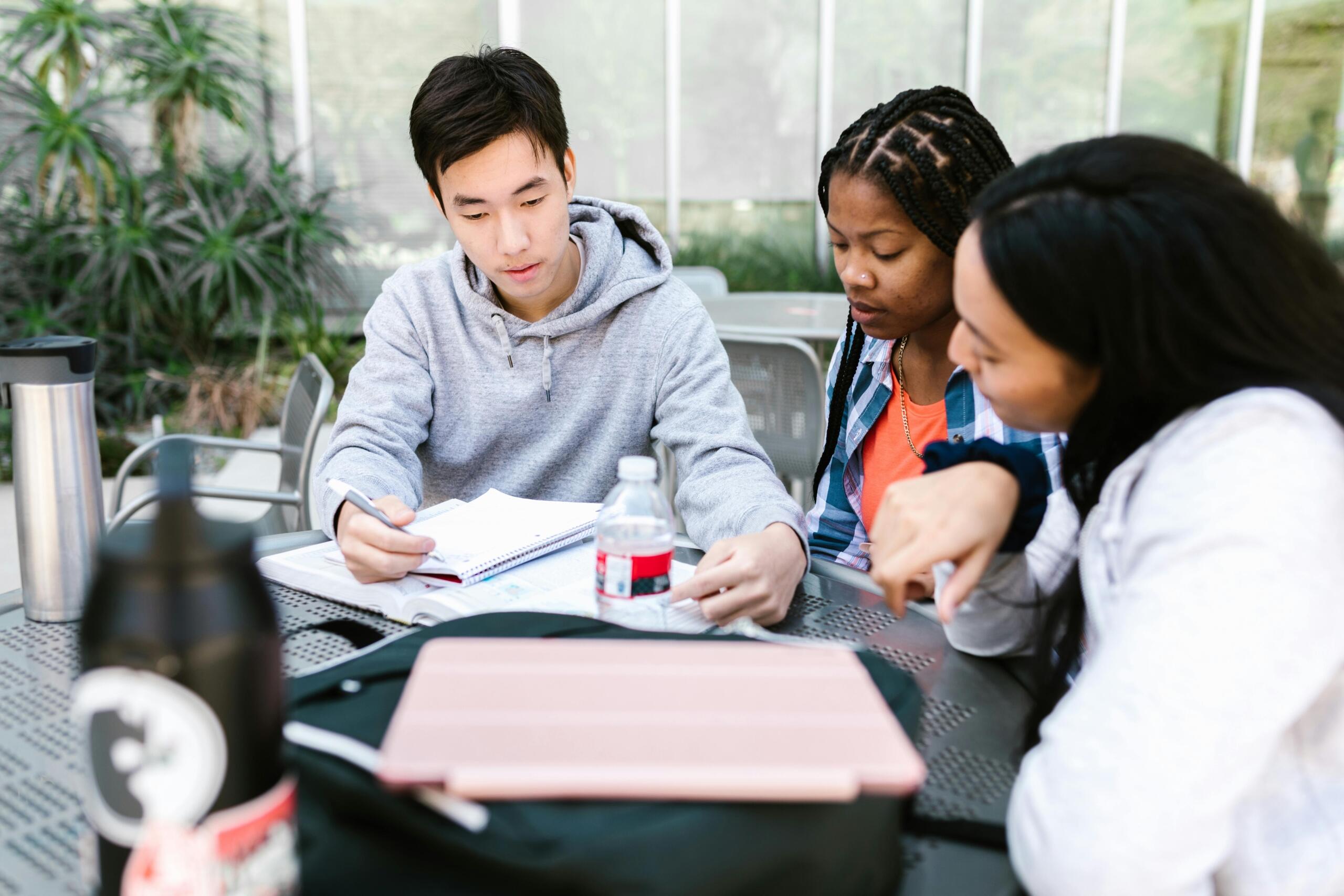
What is Superprof? Superprof is the platform where all types of learners and professional private tutors in Canada connect to work on specific subjects and achieve academic and professional goals. Seek educational guidance or test preparation through online private tutors on the platform. You will indeed discover plenty of excellent private tutors who can help you reach your academic objectives.
Advantages of Superprof Tutoring Services
🤝 Your Tutor Choice
You can choose your teacher and tutoring price. Plus, enjoy the first lesson for free.
🧑🏫 Flexible Learning Options
You can study everything in face-to-face classes or virtual lessons.
✨ Personalized Tutor Selection
You can select instructors with extensive experience in the field.
Don't wait any longer. Creating your account as a student is free. Excel Physics 12 with the guidance of Superprof! Get the full support you need and start taking private lessons with a Superprof tutor in Ontario, Vancouver, and anywhere in Canada. Practice makes perfect.
References
- Ontario Ministry of Education. The Ontario Curriculum, Grades 11 and 12: Science. https://www.edu.gov.on.ca/eng/curriculum/secondary/2009science11_12.pdf Queen's Printer for Ontario, 2024, Accessed 31 May 2026.
- British Columbia Ministry of Education and Child Care. Physics 12. B.C. Curriculum, 2018, https://curriculum.gov.bc.ca/curriculum/science/12/physics. Accessed 31 May 2026.
Summarize with AI:
Did you like this article? Leave a rating!


 Loading...
