
Grade 12 physics is one of the most intimidating science courses Canadian students can take in high school. Whether students are enrolled in Ontario’s SPH4U or SPH4C, Alberta’s Physics 30, British Columbia’s Physics 12, or equivalent courses across Canada, physics often becomes a gateway to university, college, technology, engineering, healthcare, aviation, and many other future pathways.
At the same time, many students beginning Grade 12 physics have a lot of questions. They want to know what they will actually learn in the course, how SPH4U differs from SPH4C, and whether physics is as difficult as its reputation suggests. Others are looking for practical information about how to study effectively, where to find reliable homework help and free learning resources, and whether taking physics is worthwhile if they do not plan to pursue a career in science.
These are all important questions, and understanding the answers can help students make informed decisions about their course selections and future pathways.
This guide is designed to help students, families, and educators navigate the major topics connected to Grade 12 physics in Canada. Consider this article as a roadmap that connects you to curriculum information, study strategies, homework resources, and the long-term benefits of taking physics!


What Is Grade 12 Physics in Canada? ⚛️
Grade 12 physics courses across Canada are designed to help students develop scientific understanding, mathematical reasoning, and problem-solving skills connected to physical systems and real-world science concepts. Most Grade 12 physics courses explore topics such as:
- motion
- forces
- energy
- electricity
- waves
- magnetic fields
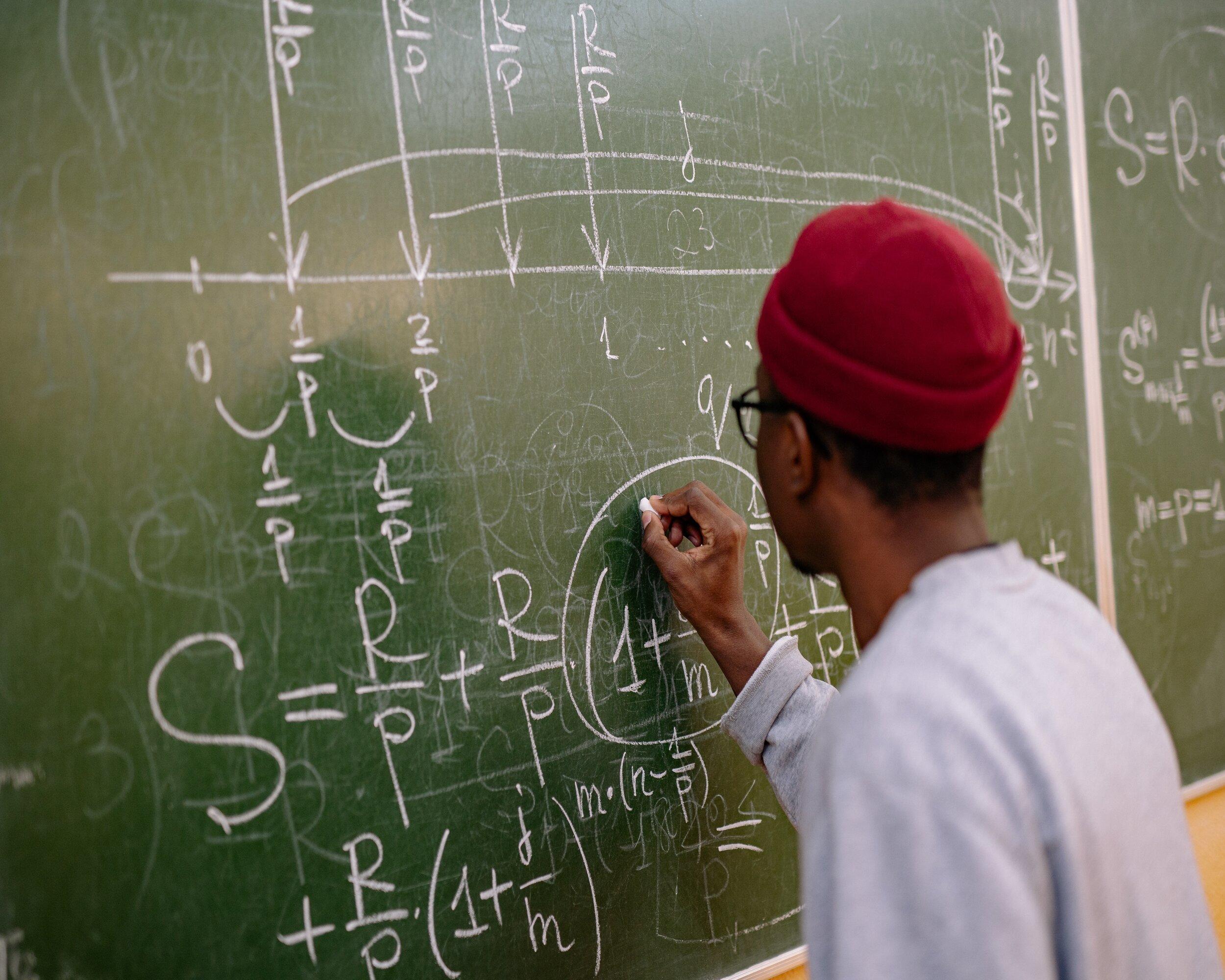
Physics is very different from many other high school science courses because it combines conceptual understanding with mathematics and multi-step problem solving. Students are not only expected to memorize formulas, they must also apply concepts in unfamiliar situations, interpret graphs, and explain their scientific reasoning clearly.
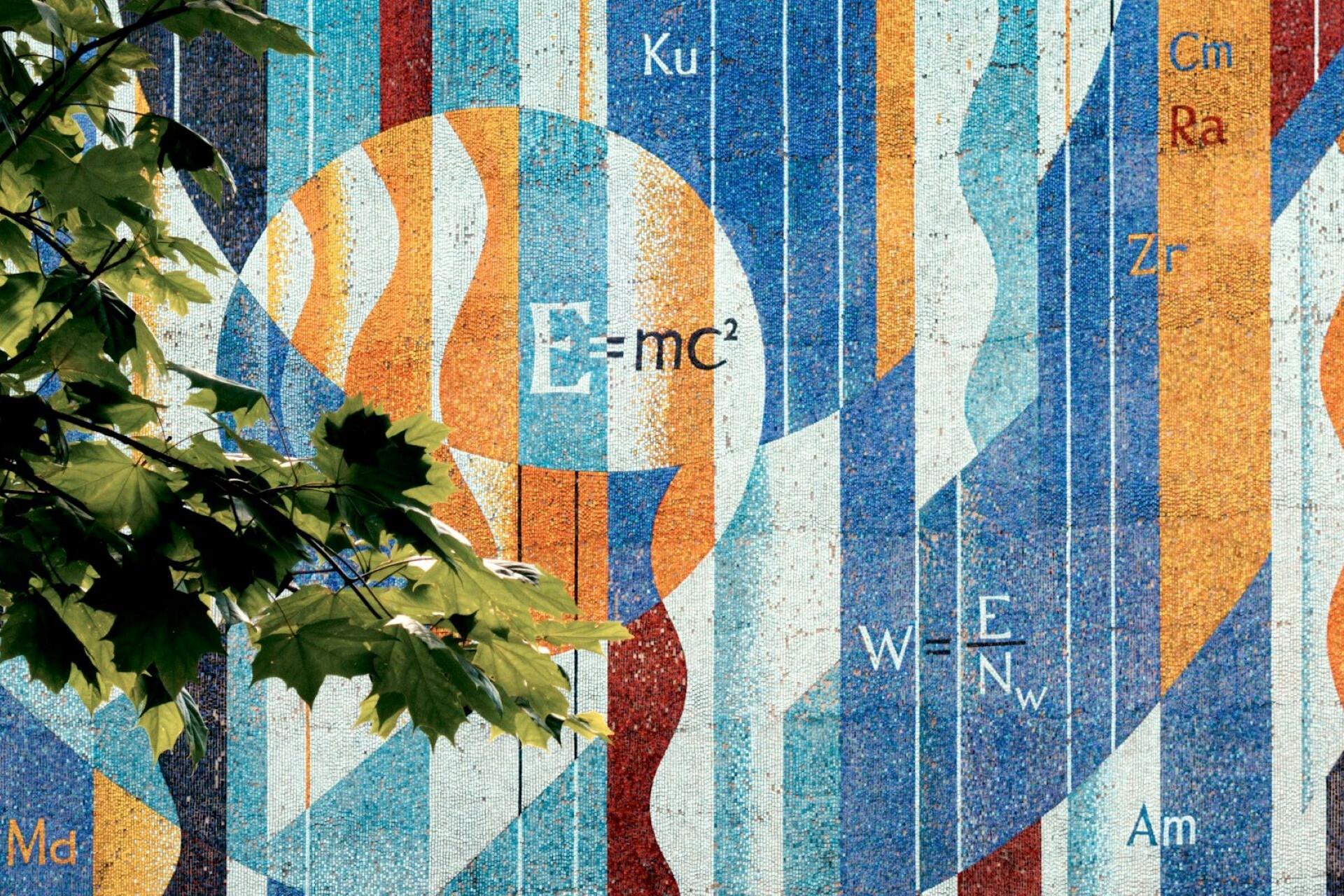
Marie Curie was one of the most influential scientists in history and a pioneer in the study of radioactivity. She helped discover the elements Polonium and Radium, fundamentally changing our understanding of atomic physics. Her groundbreaking research revealed that atoms were not indivisible as once believed and opened the door to modern nuclear physics.
If you want to learn more about the grade 12 physics curriculum in Canada and what college physics looks like, check out our article on grade 12 physics here.
In Ontario, students most commonly choose between SPH4U and SPH4C. SPH4U is a university preparation course that focuses more heavily on advanced concepts, mathematical modeling, and theoretical physics. SPH4C, meanwhile, is designed for college preparation and emphasizes practical applications, technological systems, and workplace-connected learning.
undergraduate students are enrolled in physics programs in Canada (Source: Statistics Canada).
Both pathways help students strengthen scientific literacy and problem-solving skills, but the depth of mathematics, pace of learning, and focus of instruction differ between the two courses.
Understanding SPH4U vs SPH4C 📚
One of the biggest questions students ask is about the difference between SPH4U and SPH4C. These are the course codes for grade 12 Physics in Ontario schools.

SPH4U is a university preparation physics course designed for students planning to pursue university programs connected to science, engineering, mathematics, technology, or health sciences. The course emphasizes:
- analytical reasoning
- advanced problem solving
- mathematical modeling
- theoretical concepts
The course also helps develop the scientific inquiry, quantitative reasoning, and independent learning skills needed for success in first-year university STEM programs.
SPH4C, meanwhile, is a college preparation physics course that focuses more heavily on practical applications of physics concepts connected to technology, trades, industry, and workplace systems. Students still learn important scientific concepts, but the course places greater emphasis on applied learning and real-world systems1.
| Course | Pathway | Main Focus |
|---|---|---|
| SPH4U | University Preparation | Theoretical physics, advanced mathematics, analytical problem solving |
| SPH4C | College Preparation | Applied physics, practical systems, workplace and technology applications |
Both courses help students strengthen problem solving, scientific literacy, and analytical thinking. However, the pace, mathematical expectations, and depth of conceptual learning differ between the two pathways.
Why Students Often Find Physics Challenging 🧠
Physics has a reputation for being one of the most difficult Grade 12 science courses because it combines mathematics, scientific reasoning, graph interpretation, and problem solving all at once. Students are frequently asked to analyze systems, solve multi-step problems, interpret diagrams, and apply formulas in unfamiliar contexts.
Some tips to make learning physics more enjoyable are:
- Try to assimilate the basic concepts and theories first to help you understand the underlying physics principles and the connection between each concept.
- Try to know the simple equations and how they are applied.
- Review or study Mathematics alongside your Physics and this will help you to improve your management of the formulas and concepts.
- Always account for small details.
- Take a conceptual approach to learning physics so you can break down your problem into a series of basic steps.
- Try learning from graphs or pictures that can help you to memorize more.
- Study derivations.
- Devote a little time to studying physics each day.
- Try to simplify the situation as much as possible.
- Always double-check your answers.
- Make use of the correct units.
- Use flashcards to study.
- Don't search through your book for "the right equation"; try to tackle each problem by itself.
- Find a tutor to help you study!
Topics such as electricity, energy systems, waves, and magnetic fields can initially feel abstract, especially for students who are still building confidence in algebra or scientific reasoning. Unlike courses that rely mainly on memorization, physics requires students to actively apply concepts and think critically about relationships between variables.
| Study Area | Why it Matters |
|---|---|
| Problem Solving | Physics requires analytical and multi-step reasoning |
| Formula Review | Helps students connect concepts logically |
| Graph Interpretation | Important for motion and wave analysis |
| Unit Test Reviews | Reinforces understanding and reduces mistakes |
| Vocabulary Development | Scientific language supports comprehension |
| Mathematical Practice | Algebra appears throughout the course |
However, many students eventually discover that success in physics is less about “natural intelligence” and more about consistency, review, and strong study habits. Physics rewards persistence and practice more than last-minute memorization.
Homework Help and Physics Learning Resources 🌎
One of the most common searches students make is for Grade 12 physics homework help. Many learners use online tools and digital resources to review lessons, strengthen conceptual understanding, and prepare for assignments or tests.
Popular learning resources include YouTube tutorials, Khan Academy Physics, PhET Interactive Simulations, TVO Learn, Desmos graphing tools, and textbook review packages. Some resources focus on curriculum explanations while others emphasize visual learning, simulations, worked examples, or problem solving practice.
Students often combine multiple resources because different explanations can help difficult concepts “click” more effectively. A student struggling with motion graphs may benefit from an animation or simulation, while another student may prefer worked-out textbook examples.
If you want to learn more about these resources and how they can help you with your physics class, head to our article here.
Why Grade 12 Physics Is Worth Taking 🚀
Another major topic students frequently explore is whether physics is worth taking at all. Many students initially choose physics because it is required for university admission, but later discover the course provides benefits far beyond science prerequisites.
"The most incomprehensible thing about the world is that it is comprehensible."
Albert Einstein
Physics strengthens critical thinking, resilience, mathematical reasoning, analytical problem solving, and independent learning skills. The course also helps keep many postsecondary pathways open. Programs connected to engineering, aviation, architecture, healthcare, environmental science, computer science, and technology often require or strongly recommend Grade 12 physics2.
Even students who never pursue science careers often benefit because physics teaches them how to:
- solve problems strategically,
- interpret information carefully,
- and think analytically under pressure.
The habits developed through physics learning remain useful in many different careers and academic programs.

Do you want to find more in-depth tips to study physics? Check out more tips for grade 12 physics students here!
Physics and Future Career Trends 🌐
Canada’s future workforce increasingly depends on skills connected to science, technology, engineering, renewable energy, and innovation. Physics helps students build foundational abilities connected to systems thinking, analytical reasoning, and technical understanding.
Many emerging industries value employees who can:
- solve problems
- think critically
- interpret data
- and adapt to technological change
Even students who eventually pursue non-science careers often discover that physics strengthened their confidence, resilience, and ability to approach challenges strategically.
Head to our article to learn more reasons why you should pursue an academic path in physics.
Physics provides a strong foundation for careers in engineering, aerospace, architecture, and technology. Students interested in designing bridges, developing renewable energy systems, creating computer hardware, building aircraft, or working in robotics will find that physics concepts are central to these professions.
Careers Supported by Physics
STEM & Technology
Engineer
Aerospace Engineer
software developer
data scientist
environmental scientist
Health & Science
Physician
Pharmacist
Physiotherapist
dentist
Occupational Therapist
Business & Applied Fields
Financial Analyst
Actuary
Project Manager
Business Analyst
Economist
The course also supports pathways into emerging fields such as artificial intelligence, cybersecurity, data science, environmental technology, and advanced manufacturing. As Canada's economy continues to evolve, many of the fastest-growing sectors rely on employees who can think critically, adapt to new challenges, and understand complex systems3.
Is it Worth It to Hire a Physics Tutor? 👩🏫
Are you looking for a maths and physics tutor who can help you better understand physics, how it works and how you can solve problems? Superprof has got your back!
Superprof is a platform designed to help students and tutors all over Canada connect. This also ensures students get the support they need to meet their academic goals. When it comes to learning physics, there are many available tutors that can work with you via private tuition.

But first, you need to have clear goals and objectives in mind. Knowing your goals and what you want to get out of your tuition is key, and communicating this to your tutor will end up saving you money and time. Consider whether you only want a few weeks of tuition at the start of each semester to get you started again or if you only want to work with a tutor in the lead-up to exams. Alternatively, you may require a tutor for the entire academic year or a full semester.
Once you find a tutor that fits your needs on the Superprof platform, you can ask for a first lesson. This first lesson is an excellent way to assess whether you click with the tutor and what you can expect from the lessons. The rest is up to you.
Get ready to learn physics with a Superprof tutor! Find ways to learn physics here on Superprof.
Study Physics Today ⚛️
Grade 12 physics in Canada connects to far more than formulas and calculations. Students exploring SPH4U, SPH4C, or equivalent physics courses across the country often search for information related to curriculum expectations, study strategies, homework resources, and future career benefits.
Understanding these different areas helps students navigate the course more confidently and make informed decisions about their learning pathways. Whether students are trying to understand the difference between SPH4U and SPH4C, improve their problem-solving skills, find free homework resources, or explore the benefits of physics for future careers, there are many supports available to help them succeed.
References
- Canadian Association of Physicists. Canadian Association of Physicists. CAP, n.d., www.cap.ca. Accessed 31 May 2026.
- Ontario Ministry of Education. The Ontario Curriculum, Grades 11 and 12: Science. Queen's Printer for Ontario, 2024, https://www.dcp.edu.gov.on.ca/en/curriculum/secondary-science/courses/sph4c-pdf. Accessed 31 May 2026.
- Institute of Physics. “Where Physics Could Take You: Career Paths.” Institute of Physics, n.d., https://www.iop.org/careers-physics/your-future-with-physics/career-paths. Accessed 31 May 2026.
Summarize with AI:
Did you like this article? Leave a rating!


 Loading...