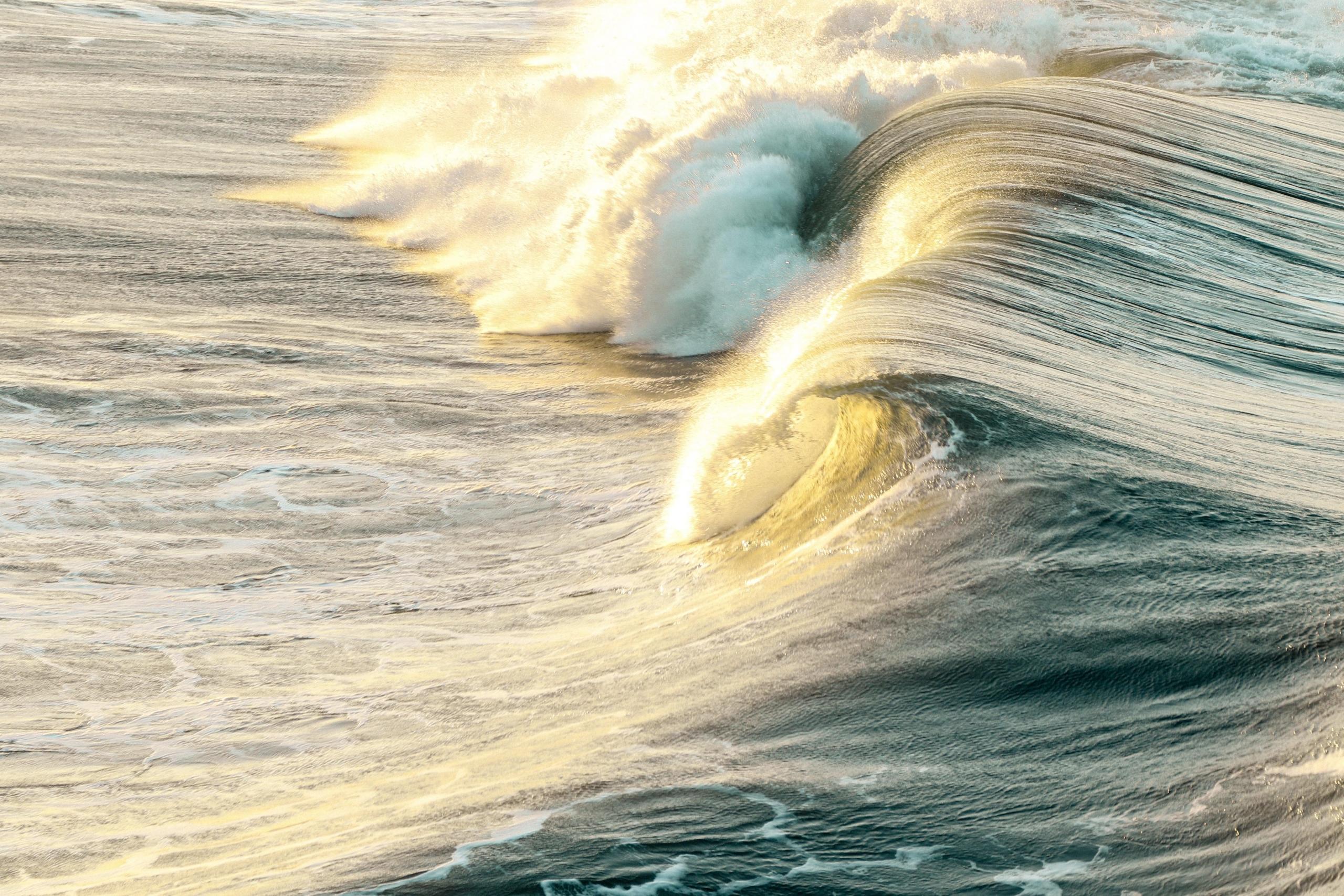
Waves explain a multitude of familiar events, such as hearing, seeing light, ripples in water, and feeling the ground shake during an earthquake. They are also essential in modern technology, including mobile communication, radio broadcasting, and medical imaging. Discover more about this unique phenomenon and how the physics of waves shape our world.

beenhere
What is a wave?

A wave is a disturbance that transfers energy without permanently moving matter.

The best Physics tutors available
Alireza
5
5 (30 reviews)
Alireza
$49
/h
Gift icon
1st lesson is free!
Hamid
4.9
4.9 (288 reviews)
Hamid
$78
/h
Gift icon
1st lesson is free!
Ali
5
5 (72 reviews)
Ali
$50
/h
Gift icon
1st lesson is free!
Nihit
4.9
4.9 (67 reviews)
Nihit
$30
/h
Gift icon
1st lesson is free!
Dhirenkumar
5
5 (59 reviews)
Dhirenkumar
$40
/h
Gift icon
1st lesson is free!
Jose
4.8
4.8 (45 reviews)
Jose
$50
/h
Gift icon
1st lesson is free!
Parham
5
5 (24 reviews)
Parham
$50
/h
Gift icon
1st lesson is free!
Divya
5
5 (78 reviews)
Divya
$45
/h
Gift icon
1st lesson is free!
Alireza
5
5 (30 reviews)
Alireza
$49
/h
Gift icon
1st lesson is free!
Hamid
4.9
4.9 (288 reviews)
Hamid
$78
/h
Gift icon
1st lesson is free!
Ali
5
5 (72 reviews)
Ali
$50
/h
Gift icon
1st lesson is free!
Nihit
4.9
4.9 (67 reviews)
Nihit
$30
/h
Gift icon
1st lesson is free!
Dhirenkumar
5
5 (59 reviews)
Dhirenkumar
$40
/h
Gift icon
1st lesson is free!
Jose
4.8
4.8 (45 reviews)
Jose
$50
/h
Gift icon
1st lesson is free!
Parham
5
5 (24 reviews)
Parham
$50
/h
Gift icon
1st lesson is free!
Divya
5
5 (78 reviews)
Divya
$45
/h
Gift icon
1st lesson is free!
Let's go

What Is A Wave In Physics?

When we think of waves, we probably think of something specific. Ocean waves and radio waves are common examples. The good news is, these things are, indeed, waves as defined by physics! The complicated news is, there’s a lot more to them than what they appear, and explaining the mechanics is complex.

The Textbook Definition

When we define wave in physics, we mean it is a traveling disturbance that moves away from its source and transfers energy outward. Waves can travel through material substances, called a medium, or through empty space (in the case of electromagnetic waves). A medium may be solid, liquid, gas or plasma.

Energy Transfer Vs. Matter Transfer

A key point in the science of waves is that waves transfer energy, not matter. That’s why electromagnetic waves, like light, can travel through the vacuum of space.

Imagine flicking one end of an extended slinky. The disturbance travels down the slinky’s coils, but each coil moves back and forth near its original position, i.e. they oscillate around an equilibrium position. We can see the wave, the disturbance, move forward even though the particles in the slinky remain in striving for equilibrium. The energy moves, not the actual plastic molecules.

A novelty large diamond-shaped glass prism with a white light shining on it and small streaks of rainbow on the surface in font of it
Prisms split white light into its different wavelengths so we can see the individual colours. | Image by Andrea Aliverti

How Waves Work

Waves are reactions to a disturbance. They don’t spontaneously appear, although it can seem that way sometimes.

Energy, Motion, And Disturbance

Drop a stone into water, pluck a guitar string, speak something into the air, turn on a light, broadcast a radio signal. Each of these actions causes a disturbance (a force does work to introduce kinetic energy) in the surrounding matter or energetic particles.

In a mechanical wave, one particle pushes or pulls on nearby particles. This effect spreads through the medium. The particles do not travel with the wave as a group. Instead, they vibrate, oscillate, or move briefly around their normal positions.

For example, when a sound wave travels through the air, the air particles move back and forth; the air particles from the source of the sound, or that are located between you and the source, do not travel to you. Their motion is parallel to the direction of the sound wave. The wave carries the energy to your ear, not the actual particles. This is propagation.

In electromagnetic waves, the vibrating particles create a self-sustaining, self-perpetuating environment (electromagnetic field). They push their energy outward through particles, rather than matter, but the idea is the same as in mechanical waves. That’s how light and radiation can travel millions of miles through space and still be perceptible here on Earth.

The size of a particle motion can affect the wave’s energy. In many simple wave models, energy increases in proportion to the square of amplitude. A wave with twice the amplitude (of a given factor) can carry four times the amount of energy than the original amplitude. That’s why ocean and seismic waves can become very strong and destructive even hundreds of miles away from their origin.

Waves fade through dissipation, as they are met with friction that converts their kinetic energy into heat and/or the particles spread thinly and their energy is dispersed.

Main Properties Of Waves

Scientists describe waves with standard definitions and properties. Knowing these properties is imperative for students to understand how to compare sound, light, water and other types of waves.

Amplitude

Amplitude is the maximum displacement of a particle or point in a medium from its position of equilibrium. This is evidenced by the highest peaks and lowest valleys on a wave graph. In real life, it can be seen as the crest and trough of an ocean wave compared to its calm water level, for example.

Intensity is connected to amplitude. A louder sound or brighter light are the result of increased intensity. The energy carried by a wave per unit of time through a unit of area describes the intensity (it’s measured in watts per square metre, W/m²).

The overall energy of a wave is directly proportional to the square of the amplitude.

Learn more about water waves and how their particles move.

Wavelength

Wavelength is the distance between two matching points on consecutive waves It is represented by the Greek symbol, lambda: λ.

  • Longitudinal waves are measured, for example, from crest to crest or trough to trough
  • Latitudinal waves are measured between compressions

Wavelengths can be used to identify and classify waves. Radio waves have long wavelengths, while X-rays have much shorter ones. In visible light, different wavelengths create different colours.

The period of the wave is equal to the time for one oscillation, but it is also equal to the time for one Start search resultwavelengthEnd of search result to pass through a point along the wave’s path.

OpenStax, University Physics Vol. 1

Frequency

Frequency is the number of complete vibrations or wave cycles that pass a point per second. Its measured in hertz, Hz. One hertz means one cycle per second. This measurement gives a clear idea of how fast waves can be. For example, the note A4 is 440 Hz. Hz in equations is represented with f for ‘frequency’.

Frequency has different effects depending on the wave type:

  • Sound waves get higher-pitched with increased frequencies.
  • Visible light waves change colour as the frequency changes (red has the lowest frequency, violet has the highest).
  • Electromagnetic radiation waves behave differently at different frequencies. The low frequency end of the spectrum contains radio waves and microwaves, the middle of the spectrum contains visible light, and the high frequency end contains X-rays and gamma rays.
Sound editor looking at a software program displaying the different wave forms of sounds
A common way to observe sound frequency is through audio editing. | Image by Getty Images

Period

The period is the time needed for one complete wave cycle. A period is measured in seconds and represented by T.

Note the difference between frequency and period. Frequency always measures 1 second, while period measures the time for 1 wavelength. A wave with a high frequency has a short period; a wave with a low frequency has a longer period. This means they have an inverse relationship

beenhere
Period and frequency relationship

Period: T = time/cycles

Frequency: f = cycles/time

Example: a 100 Hz sound has an f of 100, and a T of 0.01 seconds

Wave Speed

Wave speed refers to how fast the disturbance moves through a medium or through space. It’s represented by v and is measured in metres per second, m/s. To find the speed, you can multiply frequency * wavelength.

Wave speed is affected by the type of wave and the material involved. For example, sound waves travel at about 343 m/s in the air at 20°C, but can travel faster through many types of solids (since the particles are closer together).

PropertySymbolUnitDefinitionWhat It Determines
Amplitudea- Mechanical: metres, centimetres, etc.
- Sound: decibels or Pascals
- Electromagnetic: Volts/metre
- Magnetic: amperes/meter or teslas
Maximum displacement from equilibriumIntensity or energy
Wavelengthλ (lambda)MetresDistance between matching points on adjacent wavesWave spacing and classification
FrequencyfHertzNumber of cycles per secondPitch, colour, and wave type
PeriodTSecondsTime for one complete wave cycleHow long each vibration takes
Wave speedvMetres/secondSpeed at which the disturbance travelsHow quickly energy moves

Ready to learn more? Find a physics course on Superprof.

Types Of Waves In Physics

There are a few distinctions between wave types that are important for understanding how they work and what they do. They interact with matter and/or particles in different ways.

Mechanical Waves: Medium Waves

Mechanical waves require a medium to move through. They cannot travel through a vacuum. Their energy causes particles in a material to interact (bump into one another) and pass the disturbance along.

Electromagnetic Waves: Medium and Non-Medium Waves

Electromagnetic waves can travel through a vacuum, and they can also travel through matter. This is why sunlight can reach Earth through space, and it can also be seen through matter, such as water. In a vacuum, all of these different types of waves travel at the speed of light.

Speed of light in a vacuum
~299,792,458 m/s 

Mechanical Waves

Physically move matter.

  • Sound waves moving through the air
  • Ocean waves moving through the water
  • Seismic waves moving through the Earth
  • Wiggling waves traveling along a rope

Electromagnetic Waves

Transfer energy with or without matter.

  • Radio waves
  • Microwaves
  • Infrared radiation
  • Visible light
  • Ultraviolet radiation
  • X-rays
  • Gamma rays

Transverse Waves

In transverse waves, particles move perpendicular to the direction of the wave’s travel. For example, if you were to shake the end of a rope up and down, the wave energy would travel outward from you, through the rope. However, the mechanical wave itself moves up and down, which is why the rope moves up and down. This up and down movement is perpendicular to the forward movement of the energy.

Longitudinal Waves

Longitudinal waves move particles parallel to the direction in which the wave travels, called parallel oscillation. Sound through air is the standard example. Air particles bunch together and spread apart in compressions and rarefactions, respectively. This creates a pattern of high and low pressure which travels outward from the sound source.

Wave TypeNeeds A Medium?Oscillation DirectionTypical SpeedEveryday Example
Mechanical waveYesCan be transverse, longitudinal, or more complexDepends on the mediumSeismic waves
Electromagnetic waveNoTransverse electric and magnetic fieldsabout 3.0 x 10^8 m/s in a vacuumVisible light
Transverse waveSometimes; electromagnetic waves are also transversePerpendicular to travel directionDepends on the wave type and mediumWave on a rope
Longitudinal waveUsually yesParallel to travel directionDepends on the mediumSound wave
Learn more about how waves transfer energy.
The best Physics tutors available
Alireza
5
5 (30 reviews)
Alireza
$49
/h
Gift icon
1st lesson is free!
Hamid
4.9
4.9 (288 reviews)
Hamid
$78
/h
Gift icon
1st lesson is free!
Ali
5
5 (72 reviews)
Ali
$50
/h
Gift icon
1st lesson is free!
Nihit
4.9
4.9 (67 reviews)
Nihit
$30
/h
Gift icon
1st lesson is free!
Dhirenkumar
5
5 (59 reviews)
Dhirenkumar
$40
/h
Gift icon
1st lesson is free!
Jose
4.8
4.8 (45 reviews)
Jose
$50
/h
Gift icon
1st lesson is free!
Parham
5
5 (24 reviews)
Parham
$50
/h
Gift icon
1st lesson is free!
Divya
5
5 (78 reviews)
Divya
$45
/h
Gift icon
1st lesson is free!
Alireza
5
5 (30 reviews)
Alireza
$49
/h
Gift icon
1st lesson is free!
Hamid
4.9
4.9 (288 reviews)
Hamid
$78
/h
Gift icon
1st lesson is free!
Ali
5
5 (72 reviews)
Ali
$50
/h
Gift icon
1st lesson is free!
Nihit
4.9
4.9 (67 reviews)
Nihit
$30
/h
Gift icon
1st lesson is free!
Dhirenkumar
5
5 (59 reviews)
Dhirenkumar
$40
/h
Gift icon
1st lesson is free!
Jose
4.8
4.8 (45 reviews)
Jose
$50
/h
Gift icon
1st lesson is free!
Parham
5
5 (24 reviews)
Parham
$50
/h
Gift icon
1st lesson is free!
Divya
5
5 (78 reviews)
Divya
$45
/h
Gift icon
1st lesson is free!
Let's go

Examples Of Waves In Everyday Life

Waves are all around us and can be understood even if you don’t know the physics behind them. They are critical for much of our interactive experience with the world around us.

Sound Waves 🔊
Type

Mechanical, longitudinal. Creates alternating compressions and rarefactions in a medium.

Measurements:

Frequency (Hz, pitch), amplitude (decibels (dB), volume)

Examples:

A vibrating object, such as loudspeaker cone, plucked guitar string, vocal cords

About:

Sound is longitudinal because it creates patterns of low and high pressure as the energy travels outward, which gives us the sensation of volume and pitch.

Light Waves 💡
Type:

Electromagnetic, transverse. Refracts through mediums, allowing us to see it; but also exists without a medium to reveal its presence. Can cross a vacuum because they are self-propelling with electromagnetic force.

Measurements:

Lumens (brightness emitted), lux (brightness received on a surface), wavelength and frequency (affects colour), photons, nanometres (nm)

Example:

Sunlight travels 150 million kilometres through vacuum of space to reach Earth, plus several miles of atmosphere (medium)

Varieties:

Visible light is a small part of the spectrum. Radio waves are also light, but with longer wavelengths, while X-rays and gamma rays have much shorter wavelengths

Water Waves 🌊
Type:

Mechanical, transverse and longitudinal.

More complex than they appear:

Water near the surface often moves in circular paths, carrying energy along, while water below the surface generally moves around local position of equilibrium. The wave as a whole usually has a forward motion, while the particles within the wave are relatively oscillatory. Forward force can mechanically transfer energy to damage/reshape shorelines and structures.

Measurements:

Frequency (affects strength, such as tsunamis), amplitude (size)

Example:

Ripples from object disturbing water surface, tsunami waves from seismic disturbance. Object in the middle of a wave rocks back and forth; object on top of a wave is slowly pushed in the direction of the wave

Seismic Waves ⛰️
Type:

Mechanical, longitudinal (P-waves) and transverse (S-waves). Caused by sudden release of energy from inside the Earth.

Waves behaviours:

P-waves mean the rock moves in the same direction as the wave/energy (back-and-forth movement). Can move through solids and liquids. S-waves cause shearing force as rock moves perpendicular to the wave (up-and-down movement). Can not travel through liquid because liquid cannot sustain shearing force. Shearing is what causes the ground to crack.

Measurements:

Amplitude, Richter (amplitude and energy released)

Reflection, Refraction, And Other Wave Behaviours

Waves are affected by influences in the world around them. This causes the waves’ behavior to change.

Reflection

When a wave hits a surface or boundary and changes direction, it reflects. An echo is a reflection of sound, a mirror shows the reflection of light, water can reflect when a wave hits a rock or side of a pool.

To put it simply, the wave bounces back. It doesn’t always bounce sharply, like a ball bouncing against a wall, but the basic idea is the same.

Refraction 

When a wave changes direction because its speed changes, it refracts. This can happen when the wave enters a different medium or a different part of the same medium that has higher or lower density. When a wave refracts, its speed and wavelength change, but the frequency remains the same at the boundary.

A straw in a glass of water can appear bent or broken because light travels at different speeds in air and water, which allows us to perceive the different speeds as the straw being in two different places.

a person holding a glass of water with a straw, which appears broken due to refraction
Refraction is responsible for the "broken" appearance of the straw. | Image by Armin Rimoldi

Diffraction

Waves exhibit a curious behaviour where they bend and spread around an obstacle or through an opening, called diffraction. All types of waves can exhibit this behavior.

You can hear someone speaking through a doorway even if you’re not directly in front of it because the sound waves can diffract around the opening. Light can appear larger than a hole it’s shined through because it can diffract around the edges.

Diffraction is more possible and noticeable when an opening is about the same size as, or slightly smaller than, the wavelength in question.

Interference

When two or more waves meet, they experience interference. Their displacements combine according to the principle of superposition.

  • Constructive interference: When waves line up (are ‘in phase’) and create a larger amplitude. Ex: Acoustics and stereo speakers.
  • Destructive interference: When waves misalign (are ‘out of phase’) and the troughs and crests cancel each other out partially or completely. Ex: Noise-cancelling headphones.
Understand the different types of wave behaviour.

Sound Waves And Ultrasound

Sound is a particularly special type of wave. It transfers energy in the form of pressure, and we have the ability to perceive that pressure in ways that we can interpret as noises. If no humans had ever had the ability to hear, we wouldn’t know sound exists the way we do currently.

What Are Sound Waves?

Sound waves are pressure waves that travel through a physical medium, usually fluids (gas/air or liquids/water), but can also travel through solids (like walls and floors). In air, factors like temperature and humidity can affect the speed of a sound. Sound actually travels faster through solids, since the particles are closer together and can interact with one another more quickly.

Sound frequency affects pitch; the higher the frequency (measured in Hz), the higher the pitch. Amplitude is measured in decibels and affects loudness.

Speed of sound
343 m/s

through 20°C air

Human hearing range
20 Hz-20 kHz

Audible sound

What Is Ultrasound?

Ultrasound is a sound wave with a frequency above 20 kHz. For comparison, the opening G5 note in the famous song “Welcome to the Black Parade” has a frequency of 783.99 Hz. The frequency is far too high for humans to hear, but doesn’t cause hearing damage unless the dBs are also too high (which is imperceptible to human hearing, posing a risk).

Medical ultrasound systems usually use even higher frequencies in the megahertz range. These ultrasonic waves can be used to harmlessly create images of structures inside the body. The ultrasound machine emits the mHz waves and receives them back, like echolocation. It translates the returned frequencies into visuals. Ultrasounds can also be used in material testing and cleaning. 

Sound Waves Vs. Ultrasound Vs. Infrasound

Sound waves in our hearing range are known as audible sound. Below that is infrasonic sound, and above that is ultrasonic sound.

Below human hearing
<20 Hz

Infrasonic frequency

Above human hearing
>20,000 Hz

Ultrasonic frequency

Audible sound has unlimited application, predictably. We use it for making music, communicating, listening to our surroundings, and everything those categories entail.

Infrasound monitoring can detect seismic and volcanic activity and forecast weather. Scanning geologic areas is possible by projecting infrasound into the Earth (similar to ultrasounds in humans).

Ultrasound is used mainly for medical imaging, industrial testing, and precision cleaning.

Wave TypeFrequency RangeMediumMain Application
InfrasoundBelow 20 HzUsually air, water, and solid groundGeological surveying, weather prediction
Audible soundAbout 20 Hz to 20 kHzAir, water, solids, and other matterSpeech, music, alarms
UltrasoundAbove 20 kHzUsually liquids, solids, or body tissueMedical imaging and industrial testing

Enrol in physics courses online to learn more with a Superprof tutor.

Wave Equation And Simple Physics Formula

How can you use what we’ve learned applied to physics? Here’s a quick breakdown of the basics you need to know about what is a wave in science.

Relationship Between Speed, Frequency, And Wavelength

The basic formulas used for identifying sound waves are:

f=v×λf = v \times \lambda
v=f×λv = f \times \lambda
λ=vf\lambda = \frac{v}{f}

The variables are:

  • v: wave speed in metres per second
  • f: frequency in hertz
  • λ: wavelength in metres

These three equations allow you to calculate each variable according to the other two variables you know.

Why The Formula Matters

The wave equation(s) helps students and scientists solve practical physics problems, identify more of a wave’s properties, and compare different waves. Let’s take a look at some practical examples:

live_help
Sound wave problem

A trumpet plays a note with a frequency of 185 Hz. The sound wave travels at 343 m/s. What is the wavelength?

We know v = 343 m/s and f = 185 hZ. So:

λ=vfbecomesλ=185 Hz343 m/sbecomesλ=0.539 m\lambda = \frac{v}{f} \qquad becomes \qquad \lambda = \frac{185 \ Hz}{343 \ m/s} \qquad becomes \qquad \lambda = 0.539 \ m

The wavelength is 0.539 metres.

These formulae demonstrate the relationships between different characteristics. If the wave speed stays constant, increasing the frequency makes the wavelength shorter. This is why higher-frequency sounds have shorter wavelengths, and why X-rays have higher frequencies than radio waves.

Understanding waves from a physics perspective can be difficult at first. Once you can identify the disturbance, energy transfer, medium and key properties, waves become easier to describe and comprehend.

References

  1. “Electromagnetic Spectrum - Introduction.” NASA, Mar. 2013, imagine.gsfc.nasa.gov/science/toolbox/emspectrum1.html. Accessed 4 Sept. 2026.
  2. “Frequency, Wavelength, Amplitude and Wave Speed.” BBC Bitesize, 3 Nov. 2025, www.bbc.co.uk/bitesize/guides/z8rxsbk/revision/3. Accessed 4 Sept. 2026.
  3. Moebs, William, et al. “University Physics Volume 1 - Ch. 16 Summary.” OpenStax, 19 Sept. 2016, openstax.org/books/university-physics-volume-1/pages/16-summary. Accessed 4 Sept. 2026.
  4. Note Frequency Chart (Pitch to Note) | muted.io. muted.io/note-frequencies. Accessed 4 Sept. 2026.
  5. Physics Tutorial - Vibrations and Waves - Properties of a Wave - Energy Transport and the Amplitude of a Wave. www.physicsclassroom.com/tutorial/vibrations-and-waves/properties-of-a-wave/energy-transport-and-the-amplitude-of-a-wave. Accessed 4 Sept. 2026.

Summarize with AI:

Did you like this article? Leave a rating!

5.00 (1 note(s))
Loading...

Bryanna Forest

Hey! I'm Bryanna - I love to learn new things, travel the world, practice yoga, spend time with animals, read fantasy novels and watch great shows.