
Chemistry involves a wide range of scientific terms and concepts essential to understanding how matter behaves. Learning key chemistry terms will help you build a solid foundation for studying topics such as atoms, elements, and chemical reactions, supporting your academic success and enabling you to explore the connections between chemistry and other scientific fields.


Fundamental Chemistry Concepts
A chemistry glossary is a list of terms and definitions used in the study of chemistry. It helps explain scientific concepts, chemical laws, laboratory equipment, symbols, and reactions related to basic and advanced chemistry.
Matter and Its States
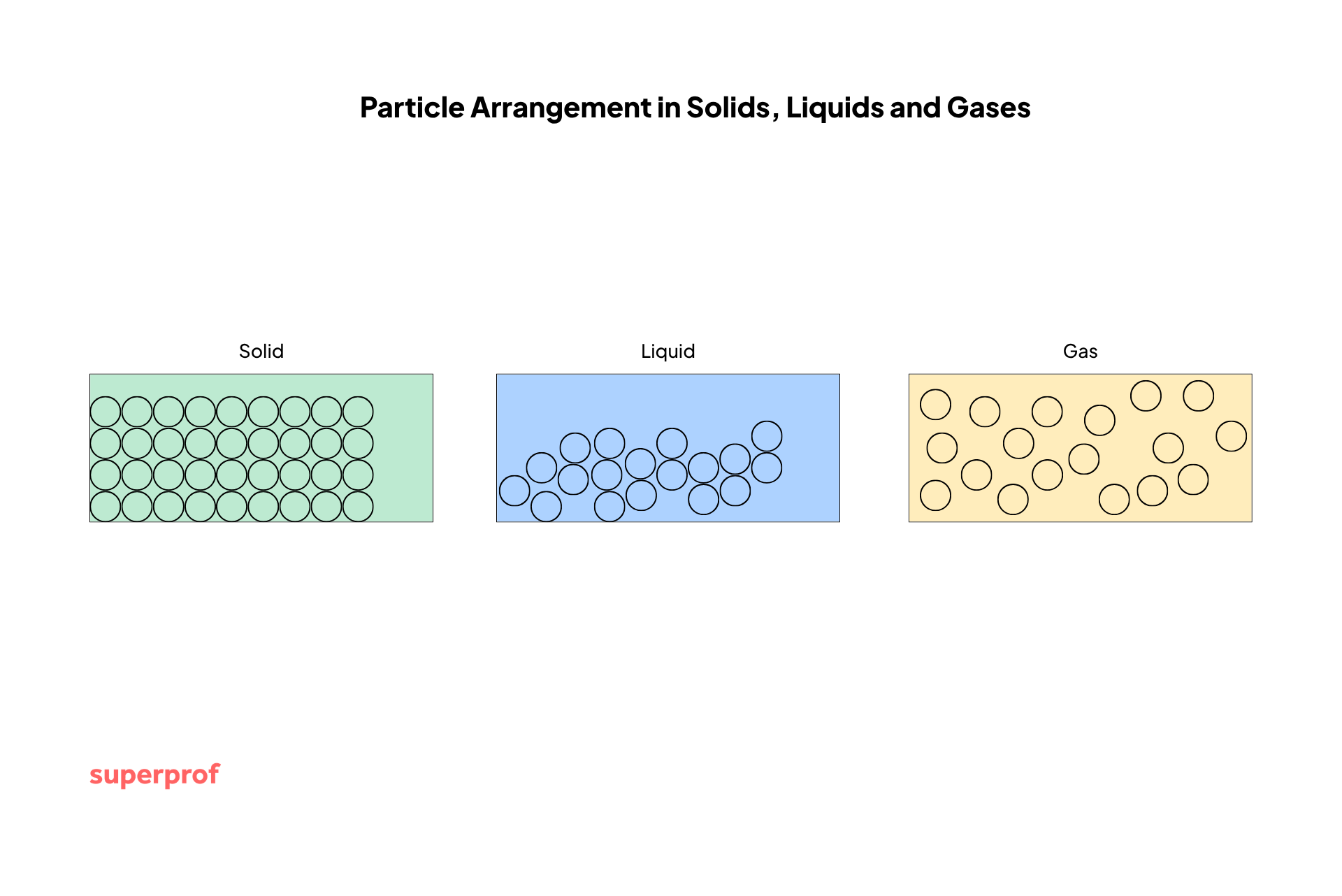
Chemistry is essentially the study of matter and its constituents. Matter is anything that has mass, takes up space, and is the primary force behind all chemistry. It exists in different physical forms called “states of matter,” depending on how its particles move and interact.
Solids
A solid is a state of matter characterized by having a defined shape and volume. Its particles are close together and ordered; therefore, solids are rigid and not easily compressed. Examples: ice, wood, metal, rocks
Liquids
A liquid is another state of matter whose volume remains constant under given temperature and pressure conditions. Liquids take the shape of their container, and their particles can move more freely. Examples: water, milk, oil, juice
Gases
Gases are substances with no fixed shape or volume. When contained in a closed vessel, their particles expand freely to fill it. Examples: oxygen, carbon dioxide, helium
Plasma
Plasma is a state of matter composed of charged particles. It is produced when gases are heated to very high temperatures or exposed to electrical energy. Plasma is similar to a gas because it has neither a fixed shape nor a fixed volume. Examples: the Sun, lightning, neon signs, fluorescent lamps
Atomic Structure
An atom refers to the simplest and most basic unit of matter. But to understand how these atoms bond, we need to go even smaller. Atoms are made of subatomic particles called protons, neutrons and electrons.
Protons
- Positive electric charge (+)
- Found in the nucleus
- Determine the identity of an element
Neutrons
- No electric charge
- Found in the nucleus
- Contribute to the mass of the atom
Electrons
- Negative electric charge (–)
- They move around the nucleus
- Smaller than protons and neutrons
Atomic number
This refers to the number of protons in an atom's nucleus. The elements are listed on the periodic table in the direct order of their atomic numbers.
Mass number
This is a value used in chemistry to indicate the total number of protons and neutrons in the nucleus.
Chemical Bonds
Chemical bonds hold atoms together to form compounds and substances. There are different types of bonds depending on how atoms interact and how they share or transfer electrons.
Ionic bonds
One atom donates an electron to another atom. When this happens, the atom that loses electrons becomes positively charged, while the atom that gains electrons becomes negatively charged. Examples: In table salt (sodium chloride or NaCl), sodium transfers an electron to chlorine.
Covalent bonds
Covalent bonds are formed when two atoms share electrons, and typically occur between nonmetal atoms. Example: In water (H₂O), oxygen shares electrons with two hydrogen atoms.
Metallic bonds
Metallic bonds occur between metal atoms, where electrons can move freely. Example: Copper (Cu), aluminum (Al) and iron (Fe) are metals, and are held together by metallic bonds.
Learn more about the basics of chemistry for beginners through personalized lessons and chemistry tutors in Halifax.
The Periodic Table and Element Classification
The periodic table organizes all known chemical elements into an informative, structured table. It arranges elements from left to right and from top to bottom in order of increasing atomic number. This arrangement also corresponds to an increase in atomic mass.
Organization of the Periodic Table
The periodic table organizes chemical elements according to their atomic number and similar properties. The specific structure of the periodic table makes it easy for chemists to solve chemistry questions.
Periods
Periods refer to the horizontal rows of the periodic table. Elements in the same period have the same number of electron shells or energy levels. Today, there are seven periods in the periodic table.
Groups
Groups refer to the vertical columns. Elements in the same group have the same number of valence electrons (the electrons in the outermost shell), resulting in similar chemical properties.
Categories of Elements
Elements are commonly classified into three categories:
- Metals: Elements that are good conductors of heat and electricity; they are usually shiny and malleable.
- Nonmetals: Elements that are poor conductors; they are usually gases or brittle solids.
- Metalloids: Elements with properties intermediate between metals and nonmetals.
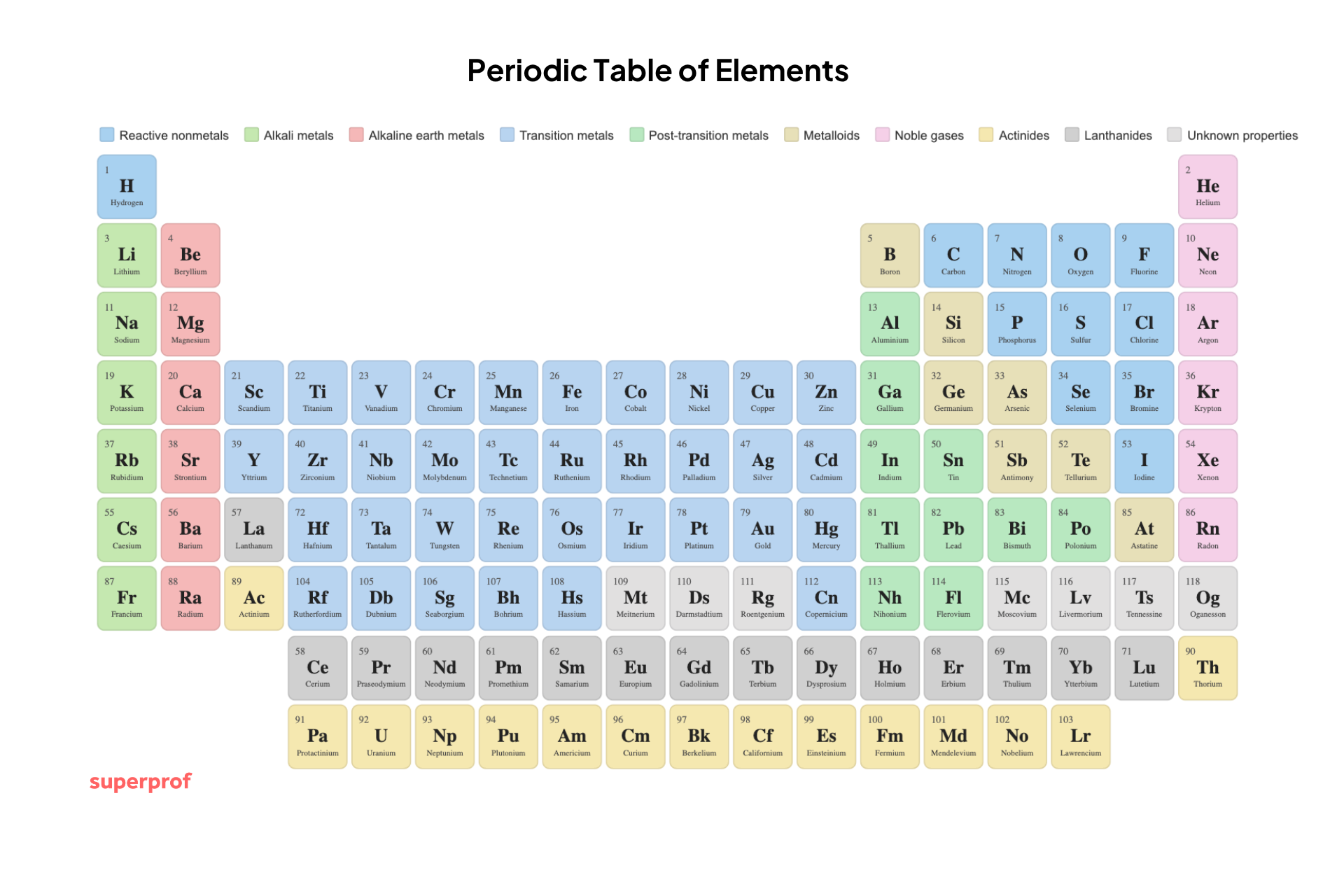
Other important families include alkali metals, alkaline earth metals, transition metals, halogens, and noble gases.
Periodic Trends
Periodic trends are specific patterns in the periodic table that illustrate different aspects of an element, such as its size and electronic properties.
Atomic radius
Atomic radius refers to the size of an atom, which is equivalent to the distance from the nucleus to the outermost electrons. Atomic radius decreases from left to right across a period, and it increases from top to bottom within a group.
Electronegativity
Electronegativity is a measure of an atom’s ability to pull the electrons it shares toward itself. It increases from left to right across a period, and decreases from top to bottom within a group.
Ionization Energy
Ionization energy indicates the amount of energy required to remove an electron from an atom in its gaseous state and convert it into a positive ion. Ionization energy increases across a period and decreases down a group.
Chemical Reactions and Equations
Chemical reactions are thermodynamic processes that transform matter. In this process, two or more chemical substances, also called reactants, change their molecular structures and chemical bonds, consuming or releasing energy.
Types of Chemical Reactions
There are several common types of chemical reactions, including synthesis, decomposition, single-replacement, double-replacement, and combustion.
Synthesis Reactions
Two or more substances combine to form a single product.
A + B → AB
Example:
2H₂ + O₂ → 2H₂O
Hydrogen and oxygen combine to form water.
Decomposition
A single compound breaks down into simpler substances.
AB → A + B
Example:
2H₂O₂ → 2H₂O + O₂
Hydrogen peroxide decomposes into water and oxygen.
Single-replacement
One element replaces another element in a compound.
A + BC → AC + B
Example:
Zn + 2HCl → ZnCl₂ + H₂
Zinc replaces hydrogen in hydrochloric acid.
Double-replacement
Two compounds exchange ions to form new ones.
AB + CD → AD + CB
Example:
AgNO₃ + NaCl → AgCl + NaNO₃
Silver nitrate reacts with sodium chloride to form silver chloride and sodium nitrate.
Combustion
A substance reacts rapidly with oxygen, releasing energy as heat and light.
Example:
CH₄ + 2O₂ → CO₂ + 2H₂O
Methane burns in the presence of oxygen to produce carbon dioxide and water.
Get ready for your school test with a chemistry tutor in Vancouver, and learn the main types of chemical reactions.
Balancing Chemical Equations
Balancing a chemical equation means that there are the same number of atoms of each element on both sides of the equation.
Step by step
Original unbalanced equation: H₂ + O₂ → H₂O
1. Make a list of all the elements present in the equation: Hydrogen (H) and oxygen (O)
2. Count atoms on both sides:
- Left side: H = 2, O = 2
- Right side: H = 2, O = 1
3. Balance oxygen by placing a coefficient of 2 before H₂O:
H₂ + O₂ → 2H₂O
4. Balance hydrogen by placing a coefficient of 2 before H₂:
2H₂ + O₂ → 2H₂O
5. The equation is now balanced.
Unlock everything you need to know about chemistry, scientific research, and more to understand the world around us.
Stoichiometry and Chemical Calculations
Stoichiometry studies the quantitative relationships or proportions between reactants and products in a chemical reaction. It is based on the Law of Conservation of Mass, which states that matter is neither created nor destroyed, but only transformed during a chemical reaction.
By using concepts such as the mole and molar mass, it is possible to calculate the amount of a substance that is needed, produced or consumed during a reaction.
Mole Concept
A mole is the unit used to represent the amount of a substance. A mole of any substance contains the same number of atoms as a mole of another substance.
Molar Mass and Mole Calculations
Chemists often convert between mass (grams) and moles when performing chemical calculations. Since substances are generally measured in grams and chemical reactions in moles, it is important to know how to convert between these units.
Not sure how to solve chemical equations? Discover chemistry tutors in Quebec and extra school support.
Acids, Bases and pH
In chemistry, acids and bases are two types of substances that are opposites. While an acid is a chemical substance that donates protons to another chemical substance, a base is capable of accepting protons from another chemical substance. The pH scale is used to determine the acidity or alkalinity of a solution.
Properties of Acids and Bases
Acids and bases have distinctive physical and chemical properties that enable their identification and use in various applications.
Acids
- Compounds that release hydrogen ions (H⁺) when dissolved in water
- Their pH level is below 7
- They conduct electricity
- Characterized by a sour or acidic taste
- They are soluble in water
- Found in liquid or gaseous form
- Generally used as food preservatives and flavorings and in batteries.
- Examples: Hydrochloric acid (HCl), sulfuric acid (H2SO4) and nitric acid (HNO3)
Bases
- Release hydroxide ions (OH⁻) in water or accept hydrogen ions (H⁺) from other substances
- The pH of a base ranges from 7 to 14
- In aqueous solutions, they can conduct electricity
- Characterized by a bitter taste
- They are corrosive to various metals.
- Generally used as cleaning products and antacids
- Examples: Caustic soda (NaOH), sodium bicarbonate (NaHCO3) and ammonia (NH3)
A neutralization reaction occurs when an acid and a base react to form water and a salt, and involves the combination of H⁺ ions and OH⁻ ions to produce water. 1
If you're interested in learning more about chemistry and its fun facts, we've also published a piece on wicked chemistry facts for you to check out.
pH Scale and Calculations
The pH scale is a convenient way to represent the acidity or basicity of a solution. In other words, it allows us to calculate the concentration of hydrogen ions (H⁺) in a solution and determines whether a substance is acidic, neutral or basic. It ranges from 0 to 14, where lower values indicate greater acidity and higher values indicate greater basicity.
- pH from 0 to 6: acidic substances. The closer a substance is to 0, the more acidic it is. Examples: battery acid, lemon juice and vinegar.
- pH of 7: neutral substances. The most common example is pure water.
- pH from 8 to 14: basic or alkaline substances. The closer to 14, the more basic the substance. Examples: baking soda, ammonia and bleach.
- The pH scale uses colors to represent different pH levels. Red and pink shades typically indicate very acidic substances, green represents substances close to neutrality, and blue and violet indicate increasingly basic substances.
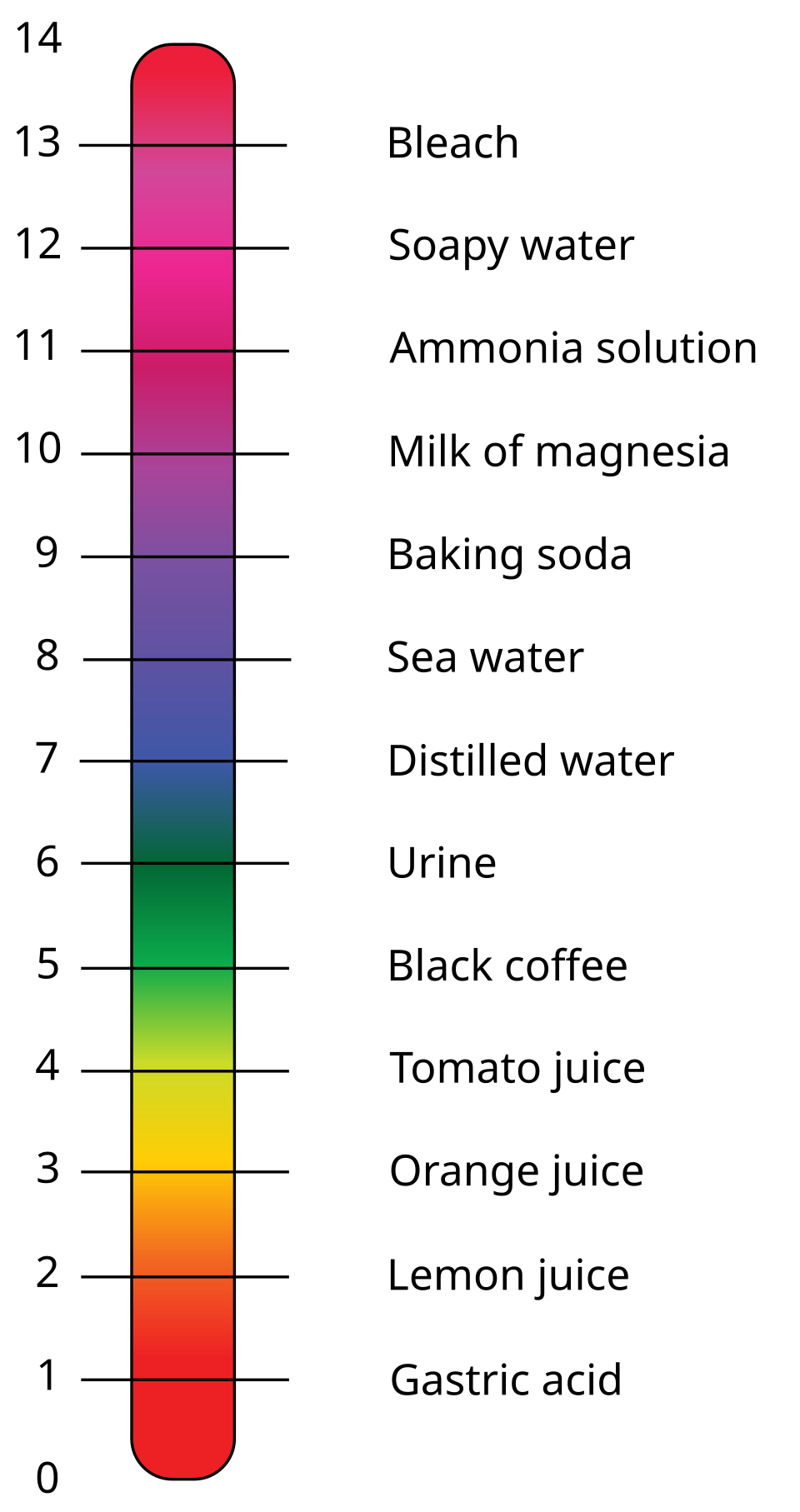
Each pH unit represents a tenfold change in the concentration of hydrogen ions. For example, a solution with a pH of 3 (orange juice) is ten times more acidic than one with a pH of 4 (tomato juice) and a hundred times more acidic than one with a pH of 5 (black coffee).
How to calculate pH?
The pH of a solution is calculated based on the concentration of hydrogen ions. The pH is calculated using the expression:
pH = - log [H3O+].
- pH: A measure of acidity or basicity.
- Negative sign (-): Used so that pH values are positive in common solutions.
- log: Logarithm to the base 10.
- [ ]: Indicates the concentration of a substance in solution.
- H₃O⁺: Hydronium ion, formed when a proton (H⁺) binds to a water molecule.
- [H₃O⁺]: Concentration of hydronium ions, expressed in moles per liter (mol/L).
Example:
- If the concentration of hydrogen ions is: [H⁺] = 1 × 10⁻³ mol/L
- Then the formula is: pH = -log(1 × 10⁻³) = 3
- Therefore, the solution has a pH of 3 (acidic).
Need extra help understanding acids, bases and pH? Find an online chemistry tutor here.
Thermochemistry and Energy Changes
Thermochemistry focuses on understanding how heat is involved in chemical reactions, since energy is usually released or absorbed as heat. One of the most important applications of thermochemistry is energy production.
Exothermic and Endothermic Reactions
Chemical reactions can be classified as either exothermic or endothermic based on whether they release or absorb energy.
Exothermic Reactions
- Exothermic reactions release energy, causing the temperature of the reaction mixture to rise.
- Examples include the combustion of fuels, the burning of wood, and cellular respiration.
Example equation:
CH₄ + 2O₂ → CO₂ + 2H₂O + Heat
This represents the combustion of methane, which releases energy as heat when it reacts with oxygen to produce carbon dioxide (CO2) and water (H₂O).
Endothermic Reactions
- In endothermic reactions, energy is absorbed, causing a decrease in temperature.
- Examples include photosynthesis, the melting of ice, and the evaporation of water.
Example equation:
6CO₂ + 6H₂O + Energy → C₆H₁₂O₆ + 6O₂
Through photosynthesis, plants absorb energy from sunlight and use it to convert carbon dioxide (CO₂) and water (H₂O) into glucose (C₆H₁₂O₆) and oxygen (O₂).
Enthalpy and Calorimetry
Enthalpy measures the ability to release or absorb heat during a process, particularly at constant pressure.
ΔH = H (products) − H (reactants)
Where:
- ΔH = change in enthalpy
- H (products) = enthalpy of the products
- H (reactants) = enthalpy of the reactants
Interpretation:
- ΔH < 0 → Exothermic reaction
- ΔH > 0 → Endothermic reaction
Calorimetry is used to measure the amount of thermal energy transferred in a chemical or physical process. It is widely used in chemistry to determine reaction energies, study fuels, analyze the energy content of foods and investigate thermodynamic processes. Learn more by reading some fun chemistry facts here!
Chemical Kinetics and Equilibrium
Chemical kinetics studies the rate of chemical reactions and the steps or mechanisms by which they occur.
Reaction Rates
The reaction rate describes how quickly reactants are consumed and products are formed during a chemical reaction. Various factors, such as temperature, concentration, and pressure, affect this reaction rate.
| Factor | Effect on Reaction Rate | Example |
|---|---|---|
| Temperature | Increasing the temperature usually increases the reaction rate because particles move faster and collide more frequently and with greater energy. | Food spoils faster at room temperature than in a refrigerator. |
| Concentration | A higher concentration of reactants increases the number of collisions between particles, which usually increases the reaction rate. | Concentrated hydrochloric acid reacts faster with magnesium than a dilute solution. |
| Surface Area | Increasing the surface area of a solid reactant exposes more particles to collisions, speeding up the reaction. | Powdered sugar dissolves more quickly than a sugar cube. |
| Catalysts | Catalysts increase the reaction rate by lowering the activation energy required. They are not consumed during the reaction. | Enzymes act as catalysts in biological reactions. |
| Pressure | For reactions involving gases, increasing the pressure brings particles closer together, increasing the frequency of collisions. | Industrial chemical processes often use high pressures to increase reaction rates. |
Chemical Equilibrium
Some chemical reactions are reversible, meaning that the products can react to form the original reactants. When the forward and reverse reactions occur at the same rate, the system reaches chemical equilibrium. Chemical equilibrium is dynamic. This means that even though concentrations remain constant, reactions continue to occur in both directions.
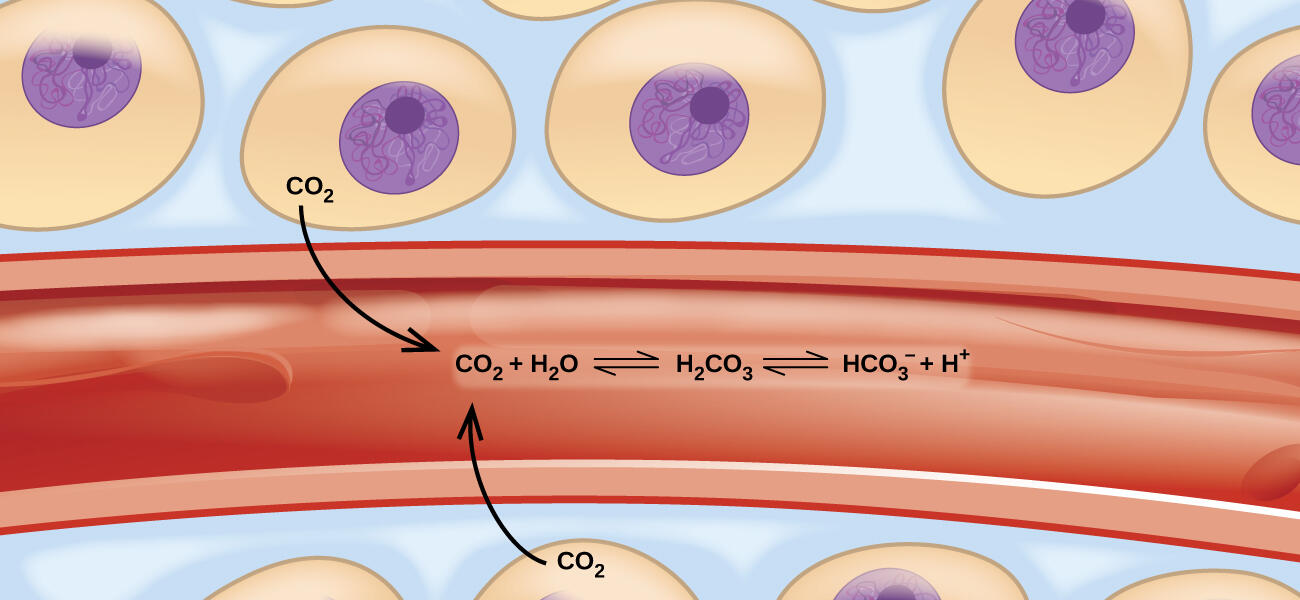
A real-world example of dynamic equilibrium can be observed in the human body. The transport of carbon dioxide (CO₂) in the blood involves several reversible reactions that continuously shift between forward and reverse directions, maintaining equilibrium. These reactions help regulate blood pH and support normal respiration.
If a system at equilibrium experiences a change in pressure, temperature or concentration, the equilibrium shifts in a direction that helps reduce the effect of the dis disturbance and restore balance. 2
Learn more about chemical reactions through online organic chemistry classes anywhere in Canada or book a chemistry tutor in Thunder Bay.
Laboratory Techniques and Safety
Chemistry isn't just about theory and analyzing equations; it's also a practical science. No glossary of chemistry terms would be complete without mentioning the most important equipment that any scientist must use in a laboratory to stay safe, since any accident can endanger both the person and those around them.
Common Laboratory Equipment
Just as a mechanic or a surgeon needs tools to repair car parts or operate on a patient, chemists need essential tools to conduct experiments. Having the right laboratory equipment is essential for taking accurate measurements, reducing the margin of error, and minimizing the risk of accidents.
In most chemistry labs, you’ll find some of the equipment needed to better master chemistry, such as:
| Equipment | Primary Use |
|---|---|
| Beakers | Holding mixing and heating liquids |
| Conical (Erlenmeyer) Flasks | Mixing solutions and conducting reactions |
| Boiling Flasks | Heating liquids evenly |
| Test Tubes | Holding and observing small-scale reactions |
| Funnels | Transferring liquids and filtration |
| Graduated Cylinders | Measuring liquid volumes accurately |
| Volumetric Flasks | Preparing solutions of precise concentrations |
| Droppers and Pipettes | Transferring small amounts of liquid |
| Burettes | Delivering measured volumes during titrations |
| Crucibles | Heating substances at very high temperatures |
| Thermometers | Measuring temperature changes |
| Bunsen Burners | Providing a controlled heat source |
| Balances | Measuring mass accurately |
| Ring Stands and Clamps | Supporting laboratory apparatus during experiments |
Now we’ve covered the basic chemistry terms, let’s take a look at some chemistry words that you’ll hear flying around your chemistry department.
Safety Protocols
Safety is one of the most important aspects of laboratory work. No matter how simple an experiment may be, the use of chemicals and heat can pose a risk if not handled properly.
Some basic laboratory safety rules are:
Laboratories must have easily accessible emergency equipment, including eye wash stations, safety showers, fire extinguishers, and a basic chemistry kit.
References
- Libretexts. (2023, January 30). Neutralization. Chemistry LibreTexts. https://chem.libretexts.org/Bookshelves/Physical_and_Theoretical_Chemistry_Textbook_Maps/Supplemental_Modules_(Physical_and_Theoretical_Chemistry)/Acids_and_Bases/Acid_Base_Reactions/Neutralization
- Libretexts. (2023a, January 30). Le Chatelier’s Principle Fundamentals. Chemistry LibreTexts. https://chem.libretexts.org/Bookshelves/Physical_and_Theoretical_Chemistry_Textbook_Maps/Supplemental_Modules_(Physical_and_Theoretical_Chemistry)/Equilibria/Le_Chateliers_Principle/Le_Chatelier's_Principle_Fundamentals
Summarize with AI:
Did you like this article? Leave a rating!


 Loading...