


Look around you right now. The smartphone sitting on your wireless charger, the humming refrigerator in your kitchen, and the invisible power grid keeping your entire city alive all share a hidden bond: they run on the invisible dance between electricity and magnetism.
This hidden superpower is called electromagnetic induction. At its core, it is the birth of electricity from motion; whenever a magnetic field shifts around a conductor, it forces an electrical voltage into existence. If that conductor forms a complete loop, an electric current begins to flow. You can witness this trick yourself simply by waving a basic bar magnet toward a coil of wire. By merely altering the magnetic space around the coil, you trigger a burst of voltage: a revolutionary principle cracked open by self-taught experimenter Michael Faraday back in 1831.
Definition: The production of an electromotive force (EMF), or voltage, when the magnetic flux through a conductor or circuit changes.
In one sentence: A changing magnetic field can produce an electrical voltage.
Core principle: It is the change in magnetic flux that matters, not simply the presence of a magnet.
What you'll learn in this article: How electromagnetic induction works, Faraday's and Lenz's laws, magnetic flux, generators, transformers, AC and DC, and the factors that affect induced voltage.
This discovery transformed physics and engineering. It showed that electricity could be generated through magnetism and motion, eventually providing the scientific foundation for electrical generators and much of the infrastructure used to produce and distribute electricity today.
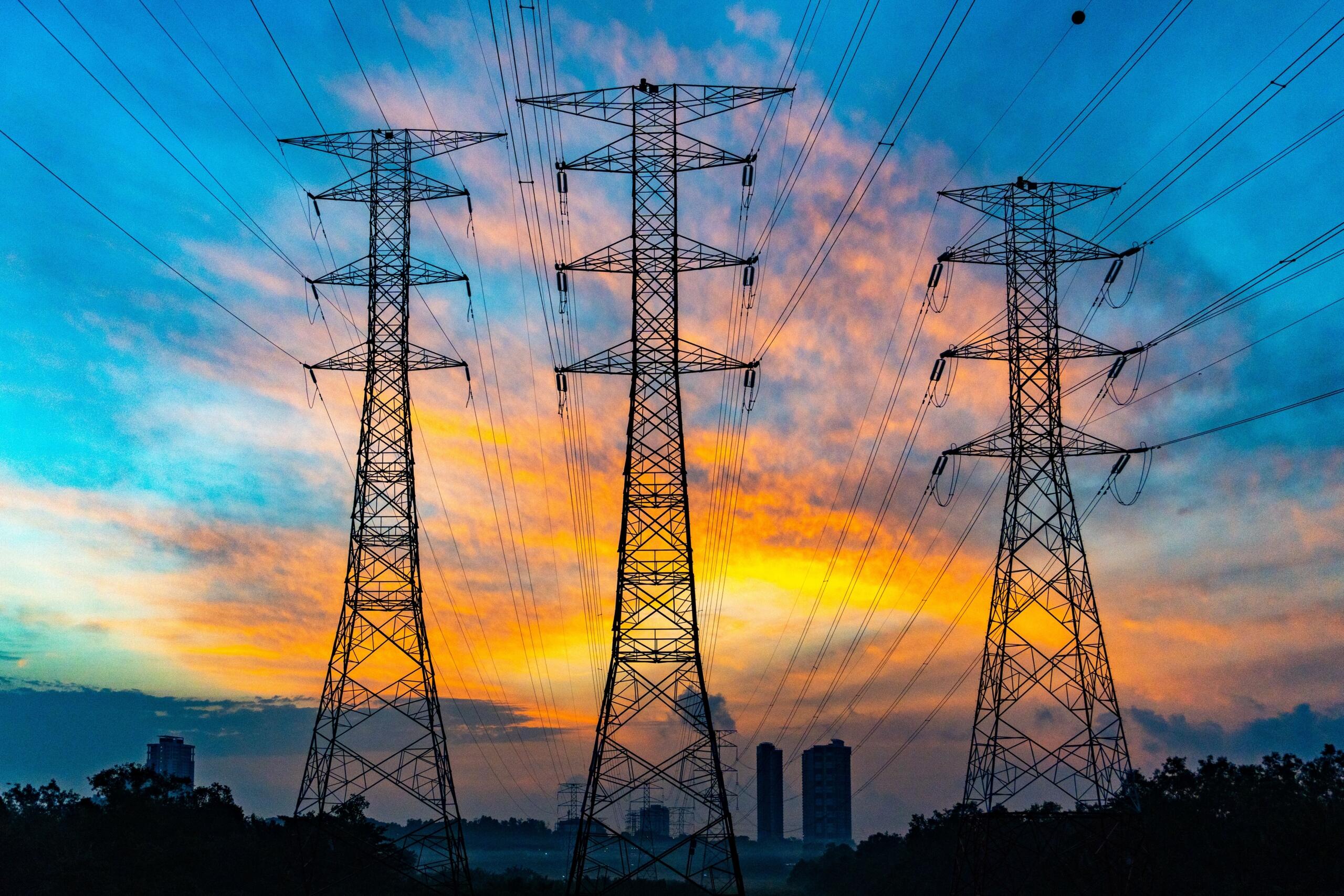
The science of electromagnetism is one of the most important fields we know of. For practical applications in industry and for our knowledge of the physical structure of the universe, electromagnetism is central.


What is Electromagnetic Induction?
Electromagnetic induction describes a connection between magnetism and electricity. When the magnetic flux through a conducting circuit changes, an electromotive force (EMF) is induced. Despite its name, electromotive force is not actually a mechanical force. It is better understood as an induced voltage that can drive charge around a closed circuit.
Reviewing for a science or physics course? Learn all the basics about magnetism.
Electromagnetic Induction Meaning
In simple terms, imagine holding a bar magnet beside a coil of copper wire. If both remain completely still and the magnetic field through the coil stays constant, there is no sustained induced voltage from that unchanging situation.
Now push the magnet toward the coil. The magnetic flux through the coil changes, producing an induced voltage. Pull the magnet away and the flux changes again. The induced voltage reverses direction because the nature of the magnetic-flux change has reversed.
If the coil is connected in a complete circuit, this voltage can produce an electric current.
What's the key takeaway here? Relative motion is one common way of producing induction, but it is not the only way. A changing magnetic field can produce induction even when the conductor itself does not physically move. Transformers are an important example of this principle.
The Core Idea in One Sentence
A change in magnetic flux through a circuit induces an electrical voltage.
That sentence captures the central principle behind electromagnetic induction. Students sometimes simplify the idea to "magnets make electricity," but that description misses an essential detail. A stationary magnet producing an unchanging magnetic flux through a stationary coil does not continuously induce a voltage. The magnetic conditions must change.
Why This Matters
Electromagnetic induction is the unsung hero of our modern world. It is the core mechanism that allows us to harvest, generate, and seamlessly distribute massive amounts of electrical energy across thousands of miles.
Inside every major power station, generators act as cosmic converters, transforming raw mechanical kinetic energy directly into clean electricity. Whether it is driven by roaring waterfalls, high-pressure steam, or spinning wind turbines, the mechanism is the same: massive coils of wire and intense magnetic fields spin past one another. This constant, high-speed movement causes a chaotic, rapid shift in magnetic flux, forcing an electrical voltage to surge into the grid.
But generating power is only half the battle; we also have to move it. That is where transformers step in, using this exact same principle with an ingenious twist. Instead of physical movement, an alternating current streams through a primary coil, instantly creating a dynamic, pulsing magnetic field.
This shifting field spreads outward, piercing through a secondary coil next to it and inducing a completely new voltage. Because of this invisible energy transfer, we can effortlessly step voltages up or down, allowing power to travel safely across the country with almost zero waste.
No change in magnetic field, no induction.
How Does Electromagnetic Induction Work?
To understand how induction works, four concepts are especially useful:
- Magnetic field
- Magnetic flux
- Induced Electromotive force (EMF)
- Induced current
A magnetic field describes the region in which magnetic effects can act. Magnetic flux describes, in simplified terms, how much magnetic field passes through a particular surface, such as the area enclosed by a loop of wire. When that flux changes, an EMF is induced.
If there is a complete conducting circuit, the induced EMF can drive a current. The faster the relevant magnetic flux changes, the greater the magnitude of the induced EMF.
The Role of Magnetic Flux
Magnetic flux is a measure of how much magnetic field passes through a loop of wire. Think of the wire loop as a butterfly net, and the magnetic field as the wind blowing through it.
You can change the amount of "wind" caught in the net in three ways:
- Make the wind stronger (increase the magnetic field).
- Make the net bigger (increase the loop's area).
- Tilt the net (change the angle).
Scientists write this relationship as: Φ = B × A × cos(θ)
- Φ (Flux) is the total amount of magnetic field caught inside the loop.
- B is the strength of the magnetic field.
- A is the area of the wire loop.
- cos(θ) is the angle of the loop relative to the field.
This formula proves that creating electricity isn't just about using a strong magnet. It is about changing the geometry by moving, turning, or resizing the loop over time.
Check out our guide to magnetism and electromagnetism!
Faraday's Law vs. Lenz's Law
In the history of physics, Faraday's Law and Lenz's Law are the missing links that joined electricity and magnetism into one unified force: electromagnetism. Together, they proved something revolutionary: that you can convert physical motion directly into electricity.
Faraday's Law ⚡
Explains the relationship between changing magnetic flux and induced EMF.
Faster flux change produces a larger induced EMF.
Helps determine magnitude.
Fundamental to generators and transformers.
Lenz's Law 🧲
Determines the direction of the induced effect.
The induced magnetic effect opposes the change that caused it.
Helps determine direction.
Explains why induced current resists the original magnetic-flux change.
Faraday's Law of Induction
Michael Faraday's experiments established the fundamental relationship between changing magnetic flux and induced voltage.
How a changing magnetic field produces an induced voltage.
A change in magnetic flux through a conductor induces an EMF (voltage). Faster changes in magnetic flux = greater induced voltage. More turns of wire in a coil can increase the induced EMF. Forms the basis of generators, transformers, and wireless charging.
👉 Faraday’s Law tells you how much voltage is induced.
Faraday's law of induction tells us that the magnitude of the induced EMF depends on how rapidly the magnetic flux changes. For a coil containing multiple turns of wire, the number of turns also affects the induced voltage.
In simplified form:
|EMF| ∝ number of turns × rate of change of magnetic flux
This explains why moving a magnet rapidly through a coil generally produces a larger induced voltage than moving it slowly. It also explains why coils containing more turns can produce greater induced EMF under otherwise similar conditions.
1831 — Year associated with Faraday's discovery of electromagnetic induction
2 — Key laws to remember: Faraday's law and Lenz's law
3 — Especially useful variables when thinking about flux through a simple loop: magnetic-field strength, loop area, and orientation
The principle is central to electrical generators. Instead of manually moving a small magnet through a wire coil, a generator continually changes magnetic flux on a much larger and more controlled scale.
Lenz's Law
Faraday's law helps tell us how much EMF is induced, while Lenz's law helps determine its direction. Lenz's law states that the induced current is directed so that the magnetic field it produces opposes the change in magnetic flux that caused it.
The direction of the induced current.
The induced current creates a magnetic field that opposes the change in magnetic flux that caused it. Moving a magnet toward and away from a coil produces currents in opposite directions. Lenz’s Law reflects the conservation of energy. It helps predict current direction in generators and induction experiments.
👉 Lenz’s Law tells you which direction the induced effect acts.
Suppose the north pole of a magnet approaches a coil. The increasing magnetic flux causes an induced current whose own magnetic effect opposes that increase. If the magnet is pulled away, the direction of the induced current reverses so that its magnetic effect opposes the decrease in flux.
This opposition does not mean induction somehow stops the original movement completely. Instead, it reflects conservation of energy: generating electrical energy requires an energy input.
What Changes Can Cause Induction?
There are several ways to change the magnetic flux through a circuit. A magnet can move toward or away from a coil, or the conductor itself can move through a magnetic field. The magnetic-field strength can also change even if the wire remains stationary.

Rotating a coil provides another important example. As the coil turns, its orientation relative to the magnetic field changes, causing the magnetic flux to vary. This principle is particularly important in generator operation.
Similarly, changing the effective area of a conducting loop exposed to a magnetic field can change the flux and produce an induced EMF.
These examples lead back to one simple rule: electromagnetic induction requires change. A strong but completely unchanging magnetic flux will not continuously induce an EMF. A changing magnetic flux, however, can turn motion or a changing electrical input into a useful electrical output.
Electromagnetic Induction Explained With A Simple Example
The easiest way to understand electromagnetic induction is to see what happens when a magnet interacts with a coil of conducting wire. This classic experiment demonstrates the same basic principle used on a much larger scale in electrical generators, transformers, motors, and other modern technologies.
The Magnet and Coil Example
Imagine a coil of copper wire connected to a sensitive meter that can detect current. A bar magnet is positioned close to the opening of the coil.
When both the magnet and coil remain stationary, the meter does not show a sustained induced current because the magnetic flux through the coil is not changing.
Now move the magnet toward the coil. As it gets closer, the magnetic flux through the coil changes. According to Faraday's law, this changing flux induces an EMF in the wire. Because the wire forms a closed circuit, the induced voltage causes current to flow, and the meter responds.
Stop the magnet while it is inside or beside the coil and the current returns to zero once the magnetic flux becomes constant again. Pull the magnet away and the flux changes once more, producing another induced current—but this time in the opposite direction.
The experiment demonstrates four important points:
- A stationary magnet does not necessarily produce induction.
- Changing magnetic flux produces an induced EMF.
- Faster changes in flux generally produce a greater induced voltage.
- Reversing the change reverses the direction of the induced effect.
Induction is strongest when magnetic flux changes most rapidly.
What Happens to Voltage and Current?
It is useful to distinguish between induced voltage and induced current. A change in magnetic flux induces an EMF, or voltage. Current flows when that induced EMF acts on charges in a suitable closed conducting circuit.
Imagine moving the magnet more quickly toward the coil. The magnetic flux now changes in less time, so the magnitude of the induced voltage increases. Moving the magnet slowly produces a smaller induced voltage.
The direction also matters. Push the magnet toward the coil and the induced current flows in one direction. Pull it away and the current reverses. This behaviour follows Lenz's law, because the induced current produces a magnetic effect that opposes the change in flux that created it.
Adding more turns of wire to the coil can also increase the total induced EMF because the changing magnetic flux is linked with more turns.
A Daily-Life Analogy
Think of electromagnetic induction a little like pedalling a bicycle connected to a generator light. When you stop pedalling, you are no longer providing the changing motion required by the generator, and the electrical output falls. Pedal faster and the generator can produce a greater electrical output within its operating limits.
The comparison is not a perfect model of magnetic flux, but it highlights an important principle: generating electricity requires an energy input and a changing electromagnetic condition.
This is why power stations need an energy source to turn their generators. Hydroelectric stations use moving water, wind turbines use moving air, and many thermal power stations use steam to rotate turbines. Different sources provide the mechanical energy, but electromagnetic induction allows that mechanical energy to be converted into electrical energy.
Induction is strongest when the magnetic flux changes fastest.
History of Electromagnetic Induction
The discovery of electromagnetic induction was a turning point in the history of physics. Scientists already knew that an electric current could produce magnetic effects, but the possibility of using magnetism to produce electricity opened an entirely new direction of research.
Michael Faraday and the Discovery
British scientist Michael Faraday is most closely associated with the discovery of electromagnetic induction in 1831.
Faraday conducted experiments involving coils, magnets, and electrical circuits. He discovered that a changing magnetic environment could induce an electrical effect in a nearby conductor.
One of the most important aspects of Faraday's work was recognizing that a constant magnetic situation was not enough. It was the change in magnetic flux that produced the induced EMF.
This discovery laid the foundation for technologies that eventually made large-scale electrical generation possible. Rather than relying only on batteries and chemical reactions to produce electricity, engineers could use mechanical motion and magnetic fields to generate electrical energy continuously.
Joseph Henry and Related Contributions
American physicist Joseph Henry independently investigated electromagnetic induction around the same period. His experiments with electromagnets and electrical circuits made important contributions to understanding induction and self-induction.
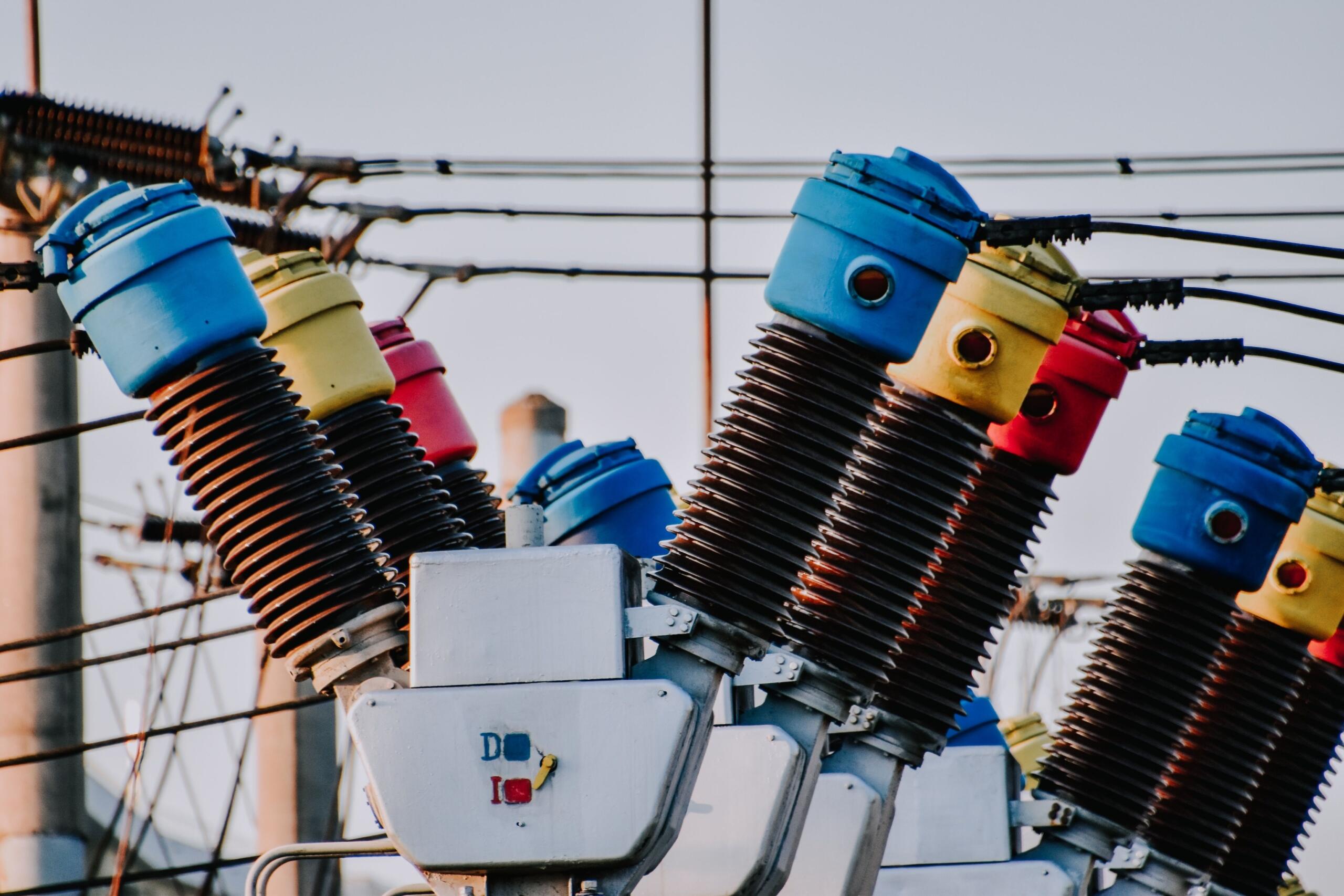
Faraday generally receives priority for publishing the discovery of electromagnetic induction, while Henry is recognized for significant independent and related experimental work.
Together, developments from scientists such as Faraday and Henry helped demonstrate that electricity and magnetism were deeply interconnected rather than completely separate phenomena.
Faraday's Law and Maxwell's Equations
Faraday's discoveries were primarily experimental. Later in the nineteenth century, physicist James Clerk Maxwell developed a mathematical framework that unified major ideas about electricity and magnetism.
1831
Faraday demonstrates electromagnetic induction
Establishes that changing magnetic flux can induce an EMF
1830s
Joseph Henry conducts related induction experiments
Expands scientific understanding of induction and electromagnets
1860s
Maxwell develops his electromagnetic theory
Unifies electricity and magnetism mathematically
Late 1800s
Generators and transformers develop rapidly
Makes practical electrical generation and distribution possible
20th century
Induction motors become widespread
Supports industrial machinery and electrical infrastructure
21st century
Wireless charging and advanced induction technologies expand
Brings induction into everyday consumer electronics
This mathematical unification had consequences extending far beyond generators. Maxwell's work also predicted electromagnetic waves, helping establish the theoretical foundations for technologies such as radio and wireless communication.
Maxwell's equations showed that changing magnetic fields and electric fields are fundamentally connected. Faraday's law of induction became one of the central relationships within this broader theory of classical electromagnetism.
Applications of Electromagnetic Induction
Electromagnetic induction is not confined to physics laboratories. It is used whenever engineers need to generate electricity, transfer electrical energy through changing magnetic fields, detect electromagnetic changes, or create controlled induced currents.
Electrical Generators
The electrical generator is one of the most important applications of electromagnetic induction.
A generator converts mechanical energy into electrical energy. Its design creates changing magnetic flux through conductors, often by rotating coils or magnetic fields relative to one another.
| Application | How Induction is Used | Key Component | Everyday Example |
|---|---|---|---|
| Generator | Changing flux transfers energy between coils | Magnet/field system and coils | Power station generator |
| Transformer | Changing flux transfers energy between coils | Primary and secondary coils | Power adapter/grid transformer |
| Induction Cooktop | Induced currents heat compatible cookware | Electromagnetic Coil | Kitchen induction stove |
| Wireless Charger | Changing field transfers energy between coils | Transmitter and receiver coils | Smartphone charging pad |
| RFID | Electromagnetic coupling can transfer energy/signals | Reader and tag | Contactless identification system |
| Induction Motor | Induced rotor currents interact with magnetic fields to produce torque | Stator and rotor | Industrial motor |
| Induction Sensor | Electromagnetic changes help detect nearby conductive materials | Sensor coil | Industrial proximity sensor |
As the generator rotates, the magnetic flux linked with its windings changes continuously. Faraday's law tells us that this changing flux induces an EMF.
The mechanical energy required for rotation can originate from many sources, including:
- 💧 Flowing water in hydroelectric facilities
- 💨 Wind turning turbine blades
- ♨️ Steam driving turbines in thermal or nuclear power stations
- ⚙️ Engines driving smaller generators
The energy source changes, but the electromagnetic principle remains essentially the same.
Transformers
A transformer uses electromagnetic induction to transfer electrical energy between coils without requiring them to be directly electrically connected.

An alternating current flows through the primary coil, creating a continuously changing magnetic field. A magnetic core helps link this changing magnetic flux to a secondary coil. The changing flux then induces an EMF in the secondary coil.
By changing the ratio between the number of turns in the primary and secondary coils, transformers can increase or decrease voltage.
This is particularly important for electrical power grids. Electricity can be transmitted efficiently at high voltages and then transformed to more suitable voltage levels before reaching homes and businesses.
Discover various physics courses on Superprof.
Induction Cooktops
An induction cooktop provides a particularly visible everyday example.
A coil beneath the cooking surface carries alternating current, producing a rapidly changing magnetic field. When compatible cookware is placed above the coil, this changing field induces electric currents—often called eddy currents, within the cookware.
Electrical resistance in the cookware converts electrical energy into heat, so the pan itself becomes an important part of the heating process.
This differs from a traditional electric stove, where a heating element becomes hot and transfers thermal energy to the cookware.
Wireless Charging and RFID
Wireless charging also relies on electromagnetic induction or closely related inductive coupling.

A charging pad contains a transmitter coil carrying alternating current. This creates a changing magnetic field. A receiver coil inside a compatible device experiences changing magnetic flux, producing an induced voltage that can be used by the device's charging electronics.
The same general idea of coupling through electromagnetic fields appears in RFID systems, although RFID technologies can operate in different ways depending on their frequency and design. In some passive systems, electromagnetic energy from a reader helps power the tag and enables information exchange.
These applications show how a discovery made with simple coils and magnets in the nineteenth century now supports contactless technologies used every day.
Induction Motors and Sensors
Electromagnetic induction also plays a major role in industry.
In an induction motor, alternating currents create a rotating magnetic field. This changing magnetic environment induces currents in the motor's rotor. Interactions between these currents and the magnetic field produce torque, causing the rotor to turn.
Induction motors are valued for their relatively simple, durable design and are widely used in equipment such as pumps, fans, compressors, conveyors, and industrial machinery.
Inductive sensors use related electromagnetic principles to detect metallic objects, movement, or position. These sensors are common in factories because they can operate without requiring direct mechanical contact with the object being detected.
But, given their high voltage, you need transformers for this current to be usable. And you can learn all about transformers in our article here.
Why Is AC Often Used in Electromagnetic Induction?
Alternating current, or AC, is closely connected with electromagnetic induction because it naturally produces a continuously changing magnetic field. Unlike direct current, which normally flows in one direction, alternating current repeatedly changes direction and magnitude.
| Current Type | Magnetic Field Behaviour | Induction Effect | Typical Devices |
|---|---|---|---|
| AC | Continuously changes in magnitude and direction | Can produce continuous induction | Transformers, AC motors, generators |
| Steady DC | Becomes constant after switching | No sustained induction in a stationary nearby coil | Batteries and DC circuits |
| Changing/switched DC | Field changes as current is switched or varied | Can produce induction | Switching power supplies and electronic converters |
This constant variation makes AC particularly useful in devices such as transformers, where electrical energy needs to move from one circuit to another through electromagnetic induction without mechanical movement between the coils.
Why Alternating Current Is Effective
When AC flows through a coil of wire, the current continually changes. As the current changes, so does the magnetic field produced by the coil.
Place a second coil nearby, or wind both coils around a suitable magnetic core, and the changing magnetic flux through that second coil induces a voltage.
This process occurs continuously while the AC supply is changing, allowing electrical energy to be transferred from the first coil to the second. Transformers rely on this principle to increase or decrease voltage levels throughout electrical power systems.
The ability to transform AC voltage efficiently was one of the major reasons alternating-current systems became so important in large-scale electricity transmission and distribution.
Difference Between AC and DC in Induction
Direct current (DC) behaves differently. Once a steady DC current has been established in a coil, it produces an essentially constant magnetic field. If the magnetic flux through a nearby stationary coil remains constant, there is no sustained induced EMF in that second coil.
However, DC can still produce temporary induction when it changes. When a DC circuit is switched on or off, for example, the current changes rapidly, causing the magnetic field to change. This changing magnetic flux can briefly induce a voltage in another conductor.
Find an online physics course here on Superprof.
Modern electronics can also electronically switch or convert DC into a varying waveform. Once the current is changing, induction can again occur continuously.
The important distinction, therefore, is not simply "AC works and DC does not." The more accurate rule is:
⚡ Electromagnetic induction requires changing magnetic flux. AC naturally provides continuous change, while steady DC does not.
Practical Importance
The relationship between AC and electromagnetic induction is fundamental to electrical infrastructure. Electrical generators commonly produce alternating voltage, while transformers use changing magnetic fields to adjust voltage levels for transmission and distribution.
🔌 AC
AC continually varies, naturally creating the changing magnetic field required for transformer action. This makes it especially useful for electrical power distribution.
🔋 DC
A steady DC supply creates a steady magnetic field once conditions stabilize. However, switching or electronically varying DC creates changing magnetic flux and can therefore be used in induction-based systems.
Modern electronic systems sometimes begin with DC but use switching circuits to create rapidly changing currents. Wireless chargers and switching power supplies are examples where electronic control can create the changing electromagnetic conditions necessary for induction.
Factors That Affect Electromagnetic Induction
Not every change in magnetic flux produces the same induced voltage. Several factors determine the magnitude of the induced EMF, including how quickly the flux changes, magnetic-field strength, the number of turns in a coil, and the coil's geometry.
Circuit resistance is also important, although it needs to be distinguished from the factors determining induced EMF. Resistance primarily affects how much current flows once a voltage has been induced, rather than directly increasing the induced EMF itself.
| Factor | Effect on Induced Voltage | Why It Happens | Practical Application |
|---|---|---|---|
| Faster flux change | ⬆️ Increases | Flux changes more rapidly | High-speed generators |
| Stronger magnetic field | ⬆️ Can increase | Greater potential change in magnetic flux | Generators and motors |
| More coil turns | ⬆️ Increases total EMF | EMF is induced across multiple turns | Transformers |
| Larger coil area | ⬆️ Can increase | More magnetic flux can pass through the loop | Generator coils |
| Changing coil angle | ⬆️/⬇️ Changes | Orientation affects magnetic flux | Rotating generators |
| Higher resistance | ➡️ Does not directly increase EMF | Mainly reduces resulting current for a given EMF | Circuit and load design |
Understanding these variables explains why generators and transformers use carefully designed coils, magnetic materials, and operating speeds.
Speed of Motion
When induction is produced by relative motion between a magnet and conductor, faster movement generally produces a larger induced voltage because the magnetic flux changes more rapidly.
Imagine pushing a bar magnet slowly into a coil. The meter connected to the coil may show a relatively small response. Push the same magnet through the same coil much faster and the meter shows a larger response. The magnet has not necessarily become stronger, the rate of flux change has increased.
This relationship is particularly important in generators. Increasing rotational speed can increase the rate at which magnetic flux changes, affecting the generated voltage and frequency depending on the machine's design.
Strength of the Magnetic Field
A stronger magnetic field can produce a greater change in magnetic flux under otherwise comparable conditions.
For example, moving a strong magnet through a coil at the same speed as a weaker magnet will generally create a larger change in flux and therefore a larger induced EMF. This is one reason electrical machines are designed with magnetic systems that provide appropriate field strengths.
However, simply placing a stronger stationary magnet beside a stationary coil does not create continuous induction. The flux must still change.
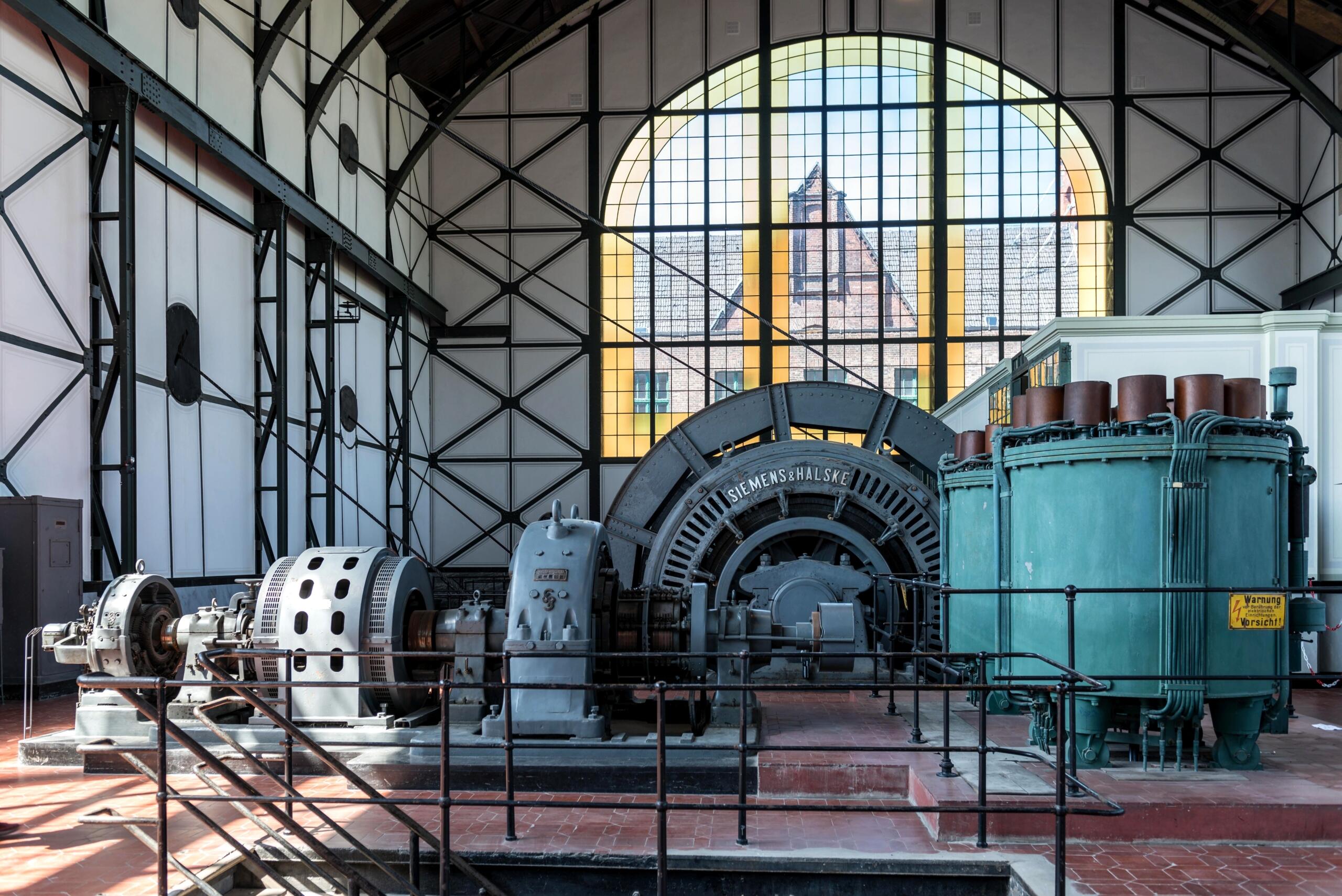
Number of Wire Turns
Increasing the number of turns in a coil can increase the total induced EMF. Each turn experiences the changing magnetic flux, so a coil containing many turns effectively adds together the induced EMFs associated with those turns.
This principle is essential to transformer design. The ratio between the numbers of turns on the primary and secondary coils helps determine how the transformer changes voltage.
Coil Area and Angle
The area and orientation of a coil also influence magnetic flux. A larger coil can intercept more magnetic field, potentially increasing magnetic flux.
If the coil rotates, its orientation relative to the magnetic field changes, causing the flux through it to change.
This is one reason rotating coils or rotating magnetic fields work so well in generators. Rotation creates a repeated change in magnetic flux and therefore a continuously varying induced voltage. The angle matters because maximum flux occurs when the coil's area is oriented appropriately relative to the magnetic field.

As the coil rotates away from that position, the flux changes.
Resistance of the Circuit
Resistance requires a slightly different explanation.
Increasing resistance does not directly increase the induced EMF produced by a given change in magnetic flux. Instead, resistance affects the amount of current that can flow once that EMF has been produced. For the same induced voltage, a circuit with greater resistance will generally carry less current.
This distinction is important because voltage and current are related but not identical. Faraday's law determines the induced EMF, while the electrical properties of the circuit help determine the resulting current.
Electromagnetic Induction vs. Electromagnetism
The terms electromagnetic induction and electromagnetism are closely related, but they do not mean exactly the same thing.
Understanding the distinction makes it easier to organize many of the ideas encountered in electricity and magnetism.
An electromagnet provides a useful comparison. When current flows through a coil, it creates a magnetic field. This demonstrates the magnetic effect of electric current. Electromagnetic induction approaches the relationship from another direction: a changing magnetic flux can produce an electrical effect.
Together, these ideas demonstrate the close connection between electricity and magnetism.
Why the Distinction Matters
Students sometimes use "electromagnetism" and "electromagnetic induction" interchangeably. Doing so can make explanations confusing. For example, saying that a generator "uses electromagnetism" is broadly correct, but saying that it operates through electromagnetic induction is more precise.
Similarly, an electromagnet does not necessarily demonstrate electromagnetic induction. A steady current through an electromagnet can maintain a magnetic field without continuously inducing a voltage in another stationary circuit. A useful way to remember the difference is to ask whether the situation specifically involves changing magnetic flux producing an induced voltage. If it does, electromagnetic induction is involved.
References
- Ling, Samuel J., William Moebs, and Jeff Sanny. “Faraday’s Law.” University Physics Volume 2, OpenStax, 6 Oct. 2016, https://openstax.org/books/university-physics-volume-2/pages/13-1-faradays-law?. Accessed 24 Aug. 2026.
- Urone, Paul Peter, and Roger Hinrichs. “Electromagnetic Induction.” Physics, OpenStax, 26 Mar. 2020, https://openstax.org/books/physics/pages/20-3-electromagnetic-induction?. Accessed 24 Aug. 2026.
- “Faraday’s Law.” The Physics Classroom, The Physics Classroom, https://www.physicsclassroom.com/class/Electromagnetic-Induction/Lesson-1-Flux-and-Faradays-Law/Faradays-Law. Accessed 24 Aug. 2026.l.com
Summarize with AI:
Did you like this article? Leave a rating!

 Loading...
