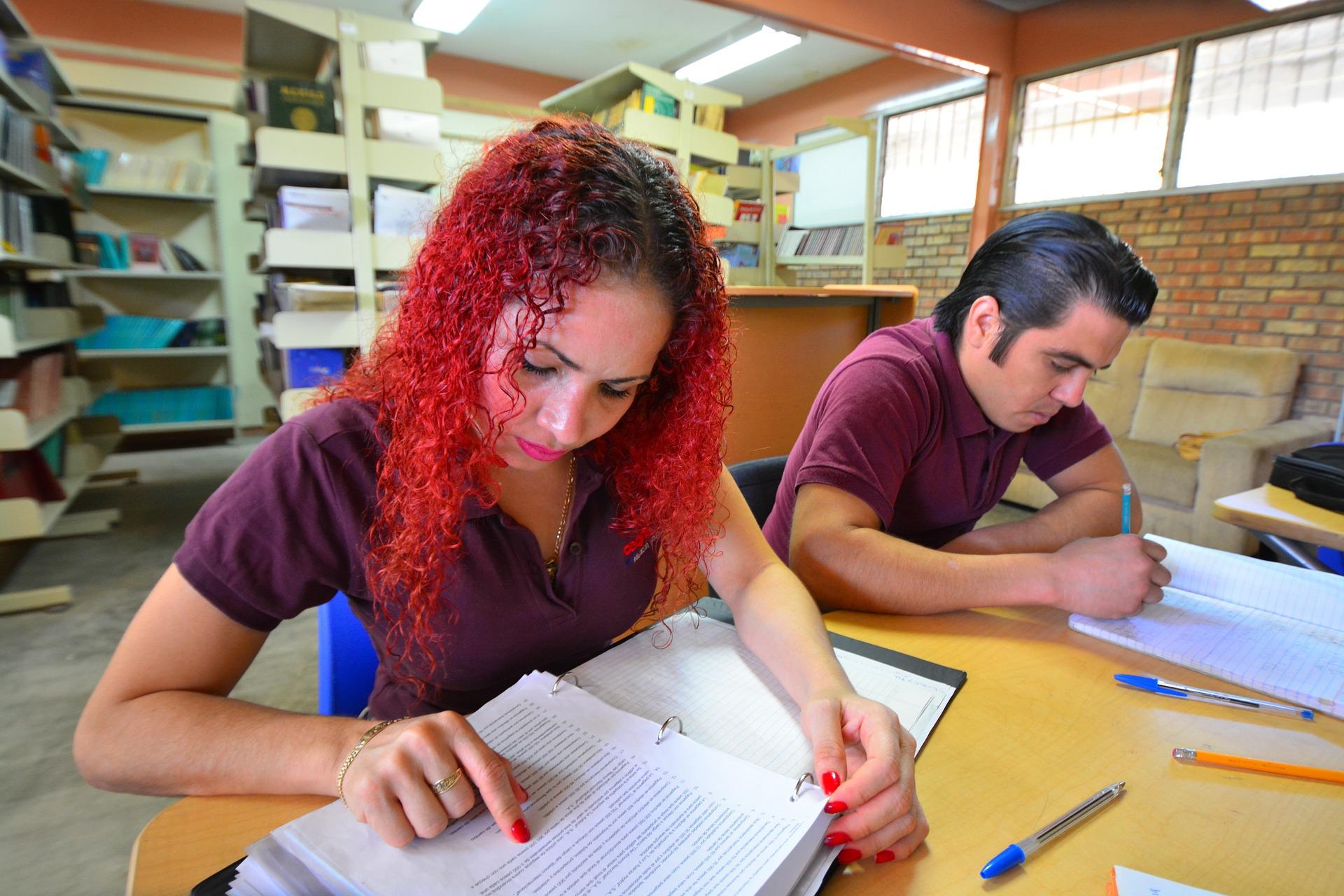
The DELF is an internationally recognized system of assessment and certification for non-native French speakers. Find out how you can study best for this exam.
Learning French is one of the most popular yet challenging learning pursuits for Canadian students. It’s well known how useful French proficiency is when living in Canada - the country is bilingual, with French and English as the two official languages. While you are more likely to encounter English-speaking people in Ontario, Saskatchewan, Manitoba, Alberta and British Columbia, in areas like Quebec, New Brunswick and some Maritime provinces, French is commonly heard in social and business settings. Learn French, and you will have access to many economic and social opportunities you simply cannot have as a monolingual speaker of English.Canada is a bilingual country that highly values French speakers. Source: UnsplashFor this reason, many parents encourage their kids to take Frenchall the way through grade 12. While many students eventually opt to out of French courses, there are thousands of students every year that continue their work and become highly proficient, if not fluent. They may choose to attend English speaking universities and take French majors, or go to French speaking universities in Canada or abroad.Reasons families want their kids to learn French go far beyond simply getting a job or going to school, though it can help. Many parents believe that French is an important part of a Canadian identity, and simply want their kids to develop an intercultural understanding. Others appreciate the cognitive benefits of learning French - research indicates that learning another language makes you less likely to develop diseases like Alzheimer’s, as your brain makes new connections. Furthermore, learning French can enrich our lives in so many ways - we may make more social connections though classes, camps and meet up groups, and we join a wider community of Francophones.Whatever reason you choose to learn French, once you have taken a broad range of courses in the subject you will want to know that your learning is certified. Have you taken French all the way through grade 12 or taken French immersion? Make sure your work has been recognized by challenging the DELF after high school.
Should you be a student interested in pursuing learning or career pathways in French, and you are a non-native French speaker, you may be wondering - how do you show these institutions you have the linguistic skills it takes? Do you just tell people you are a French speaker? Do you show them a secondary school or university transcript? The answer is simple - challenge the DELF.It’s important to have a document to prove your French proficiency. Without a standard for French competency, institutions would have no way of knowing students or employment candidates speak as much French as they claim. A certificate like the DELF will help your applications stand out in the crowd, and is even recognized by French universities checking to see that non-native speakers have the proficiency.Study and prepare for the DELF Exam. Source: Unsplash.
What is the DELF?
DELF stands for Diplome d’etudes en langue Francaise. It is the official, most widely recognized certification for French language competency for anyone who did not grow up in a French speaking society, a non-native speaker, in other words. Countries all over the world recognize the DELF, as it was developed by the Ministry of Education in France.Four different certificates comprise the DELF, with each certificate reflecting different levels of ability from beginner to a more advanced intermediate level. It’s important to know that there does exist higher certification beyond the DELF called the DALF - this level of certification is for more fluent and advanced French speakers. The DELF test includes adapted versions for children, teens, and adults. Below we have summarized the different DELF tests and how they correlate to the Common European Framework of Reference for Language (CEFR).DELF Levels DELF A1: for language users with a basic ability for simple interactions (CEFR A1) DELF A2: for language users with an ability for social communication (CEFR A2) DELF B1: for language users that can manage with some independence for travel situations (CEFR B1) DELF B2: for language users who can communicate in most situations, and develop/defend an opinion (CEFR B2)
How Do I Qualify for the DELF?
There is no formal qualification required to take the DELF - you choose the test that is right for you, and pay a fee for the assessment. Before you spend time and money on the test, however, you will want to make sure your proficiency is aligned with the certification you have signed up for. If you take a test before you are ready, then you will simply be wasting your resources.Luckily, Canadians have a significant advantage when it comes to learning French, as by law products and certain services must have options in both French and English. In many ways, we start preparing for French learning at an early age, where we see everything from road signs to product ingredients listed in French and English. Canada’s public education systems are also built to support students in French acquisition. Kids start learning French in elementary school, and are often mandated to receive a set amount of French instruction every year. French is part of the report card, attesting to the commitment of every province to support French culture. Public school systems also offer programs like French Immersion, Extended French, and French schools. In addition to public school, there are dozens of privately run camps, classes, and after school programs dedicated to French.So how will you know which DELF certification to take? Start by self-assessing your own French abilities, and compare it to the DELF certifications available. If you have been taking French most of your education, you may be a great candidate for level B1 or B2. You can try some free self assessments online, or contact your grade 12 French teacher to see if they can give you some insight.Mastering French listening and speaking for the DELF test is a challenge - make sure you are prepared so you can get the best score.
What Are the Best Ways to Practice for the DELF?
If you have made the decision to challenge the DELF, you are probably ready to start reviewing and training to ensure a pass. There are plenty of ways to prepare for the test that are low cost or free, and will mainly require you to invest a lot of personal time and effort.Which DELF level is right for you? Source: Unsplash.
Find Other French Learners
Start by joining a French conversation group, or find a group of people who are also planning to take the test. If you are in school, you can probably find a group that has already formed; if you are out of school, try finding a community page for French learners on social media or find a meetup group. When you have like-minded people on your side doing the same work, it can be much more motivating to study.
Consume French Media
If you have given yourself some months to prepare, you can get warmed up by regularly consuming French media in your spare time. Plenty of streaming services will offer French movies, or you can simply tune in to the CBC French channel in your area for constant news, TV shows, cartoons and other programs in French. The more you watch and listen, the more you will pick up. You can also look into the dozens of games and apps dedicated to French online. Many digital programs will go well beyond the beginner levels and help your practice more complex verb conjugations. Don’t forget to read French news from France or Quebec, which is available on many sites on the internet. Take it a step further and use apps like Google or Microsoft to read the pages aloud for you, for a full sensory experience.
Find a Tutor to Help
Finally, make sure you do your research and look at sample DELF tests from years prior. Old tests can be an incredibly fantastic tool for preparing for the DELF, as you will see exactly how questions are phrased. If you can, get a tutor to comment on your practice tests and give you feedback.A great place to find someone to help you with your DELF practice is Superprof.ca. Superprof is a site containing listings of French and DELF tutors near you. French tutors can meet you in your neighbourhood at a cafe or library, and can work with you to fine tune your skills for the test. If your schedule is busy, or have trouble accessing transportation, consider finding french tutors online who can help you over Zoom or Google Meet. There are so many benefits to hiring a tutor for the DELF. Source: UnsplashSuperprof tutors can focus on the specific areas you need help on, whether it is reading, writing, or oral communication in French. DELF tutors understand the test, and many have even taken it themselves. They will tell you what it takes to be successful on the test, and work with you to build the skills and acquire the proficiency to pass. Through regular feedback, they can work with you to ensure you become skilled at generating strong answers in every area of the test. They can tailor a program for your specific needs, and curate resources to help you study. As your DELF date draws near, you can increase sessions as you see fit. Have you brushed up on your reading and writing skills for your upcoming DELF exam? Find out how to prepare for these sections efficiently and effectively.
If you’ve done your DELF research, you may have discovered that the test is divided into different components: listening comprehension, reading comprehension, written expression and oral expression. Of course, you will need to ensure your skills are up to par in each category.The DELF typically takes 2.5 hours to complete for adults and is made up of 30 minutes of listening, 1 hour of reading, 1 hour of writing, and a Speaking section that takes 20 minutes and may happen at a different time. Each component will be scored out of 25 points, adding up to 100. However, you must get at least 5 out of 25 points in each section.
How Can I Improve my Reading in French for the DELF Exam?
To be successful on the reading section, or compréhension écrite, especially of levels B1 and B2, you will need to do more than decode the basic meaning of words. You will need to make inferences, construct meaning, and form opinions, all while paraphrasing evidence from the text. Reading is a complex activity, and we read for different reasons. Fortunately, if you have strong literacy skills in one language, like English, those skills will transfer over to French - so remember that you already have a deep well of skills to draw from.The reading section will assess your ability to understand two different texts - an exposition, and an opinion. After reading, you will respond to different types of short answer and multiple choice questions. To be successful in the reading section, you will obviously want to be reading French texts regularly. Be strategic in what you read and try to choose content that reflects what you will see on the test. Editorial pieces, argumentative essays or articles, information style texts, and non-fiction should be the types of texts you make an effort to read more often. Practice paraphrasing ideas from the texts you read with a study partner or Superprof tutor, so you can get the feedback you need to improve your work every time.Practicing for the DELF exam can be a lot of work. Learn how you can get all the practice you need while still having fun.
How do I Succeed in the Writing Section?
The writing task production écrite, will ask you to formulate an answer to a prompt in writing. The writing prompt can be anything from a letter, debate, or review. You will have to respond in about 250 words: while that may seem short, it’s important to remember you will be marked on criteria related to linguistics and discourse. This may include the range of your vocabulary, your choice of words, spelling and grammatical complexity, relevance to test questions, clarity, persuasiveness, and coherence. Practice French writing as much as possible. Source: UnsplashTo be successful on the writing section of the test, you will want to practice writing frequently. This will enable you to grasp the more complex aspects of grammar, and build your capacity to write in French spontaneously. As with reading, many of your writing skills in English can be transferred over. Take the time to brainstorm ideas, plan your answers, make word lists, so when you do write your paragraph you have done considerable thought work beforehand, even in a test situation where time is limited.
How do I Prepare for the Listening and Speaking Components?
The listening component of the DELF is 30 minutes, while the speaking test will take about 20 minutes. The listening part, or Compréhension de l’oral, is made up of different questions that will check how well you comprehended 2 or three audio texts. Listen carefully to the recordings, and make sure you are alert and well rested from the night before. During the listening test, you will hear different French accents from different countries or regions of France.The speaking part of the test, or Production orale, requires you to speak spontaneously to examiners, who will ask you questions in French about what you have just said. On the DELF B2, for example, you will state and defend an opinion based on a writing prompt intended to get your reaction. Whatever test you take, you will want to have had plenty of practice speaking so your answer will come out naturally. Remember you will also have to respond to the examiners’ questions, so make sure you have some anchor phrases you can turn to to formulate responses.Find other French speakers to practice with. Source: Unsplash.To prepare for the listening and speaking components on your own, you may want to talk to others who have taken the test so they can share their experiences about it. Take all the opportunities you can to practice listening and speaking - find a conversation partner, listen to podcasts, listen to French news radio so you can practice saying your opinions. If you can, take a trip out to Quebec or France, so you can fully immerse yourself in speaking and listening to others in French.
Should I Get a Tutor to Help Me with the DELF?
Absolutely. Considering that the DELF is a high-stakes assessment that will open a lot of opportunities, not to mention the fact that it will require you to invest a significant amount of time and resources, it’s probably a good idea to find a tutor that will give you targeted feedback on the Reading, Writing, Listening and Speaking Elements.Again, we highly recommend you find the best tutor for your DELF preparation needs on Superprof.ca. Superprof has some amazing options for tutors, all organized on an easy to use site. Quickly compare rates and profiles of DELF tutors until you find the best fit.Beyond helping you with your French, a DELF tutor can work with you at convenient times to coach you on how to take the test efficiently. They can curate practice exercises that address the level of certification you are taking, and schedule your preparation period so you aren’t cramming at the last minute.Are you thinking about taking the DELF exam? Qualifying for the DELF is much easier than you think.
What are the Benefits of Taking the DELF after Secondary School?
If you have already graduated high school, you may be contemplating whether or not the DELF is actually worth it, especially if you have already made postsecondary plans or are in the workforce. The simple answer is yes - it is totally worth it!As we have mentioned, taking French to grade 12 graduation is not an easy feat, and you deserve to be recognized for it. There are also huge benefits to having DELF certification as an adult. If you are considering switching universities or colleges at any point in your academic career, having the DELF B2 means that you can be accepted without taking any other additional language classes or assessments. You’ll have an enviable feature on your resume that states you can work with French clients or in French workplaces. It cannot be understated how much Canadian employers value multilingualism, especially in both of the country’s official languages. With a DELF, you can easily transition to jobs that demand you speak French, especially highly coveted roles in Government and Education.So what are you waiting for? Register for your DELF test and finally get your French knowledge and skills certified.
Summarize with AI:
Did you like this article?Leave a rating!
4.00 (3 note(s))
Loading...
Colleen
I am a Toronto-based educator, mom and freelance writer who believes in lifelong learning and strong coffee.
A Summary of the French Revolution The French Revolution of 1789 is perhaps the most pivotal event in French history. Not only that, but many of the Revolution's outcomes changed political and social systems around the world. It began out of profound discontent, born of economic and political powerlessness. In this article, we cover how has the French […]
A Simple Guide to French Language Proficiency Tests French is widely spoken worldwide and is one of Canada's official languages. Canada has millions of French speakers and thriving Francophone communities. Indeed, French instruction is mandatory in all English-speaking schools, ensuring that the next generation acquires the language as part of their Canadian identity. Because French is […]
How to Plan The Perfect Holiday in France In France we have a saying, ‘Joie de vivre,’ which actually doesn’t exist in the English language. Mireille Guiliano Some people consider France a romantic destination. Others consider it a destination because that's where everyone goes, at least once in their lives. For some travelers, France is […]
Everything You Need to Know About Becoming a French Translator or Teacher in Canada It should come as no surprise that being multilingual in French, English, and any other language is a major asset in Canada. Canada is one of the most linguistically diverse countries in the world, with millions of French speaking citizens. French […]
All About French Grade 12 Learning in Canada French is an exciting language to most people. But while it isn’t compulsory to learn the language, you may be motivated to learn because an estimated 9.2 million Canadians speak French fluently. The language diversity isn’t foreign to the school systems either, with parents having the option […]
What is French Immersion? The French language is fast becoming a crucial skill in today's world. With about 300 million French speakers in five continents, it's expected to expand across many other regions. French Immersion is the new normal in Canada. Its primary purpose is to promote bilingualism, but it comes with way more benefits. […]
Everything You Should Know About Grade 9 French Learning grade 9 French like the any other language implies commitment. This is because as we age, our level of knowledge retention doesn’t remain the same. So how can you learn grade 9 French effectively? This article will expose you to vital information that will help you […]
Learn French: Most Common Mistakes to Avoid No matter what level of French you are, there are common French mistakes that everyone from beginners to the more advanced students make. But have no fear! Learning a language is one of the most challenging endeavors, but it is also one of the most rewarding. Many people […]
How and Where To Teach French in Canada The study of French is fast becoming popular among many students and across different institutions outside of Canada. If you are a native French speaker from the province of Quebec or studied the French language at the university, you may consider a career in teaching. How can […]













 Loading...