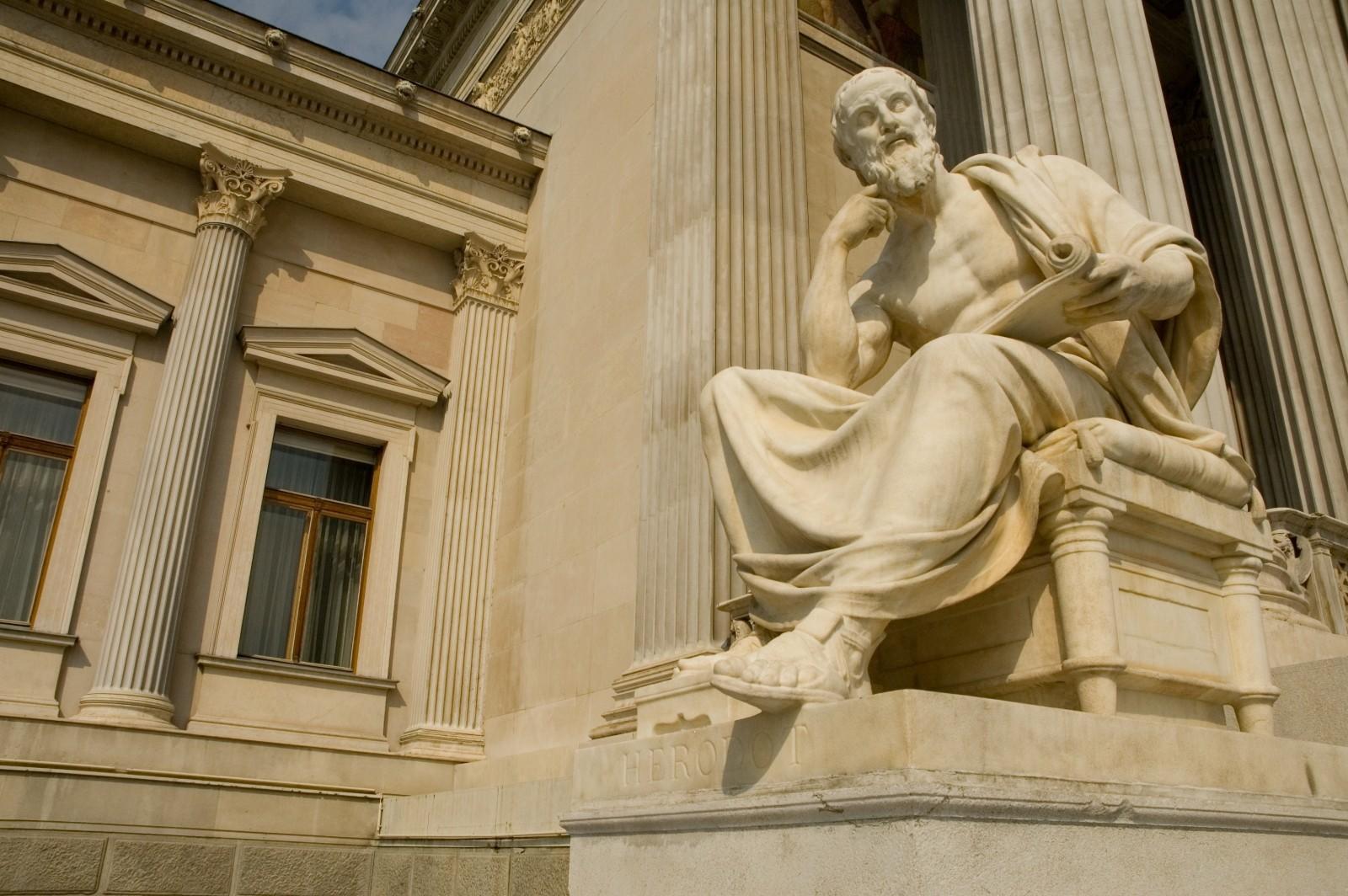

Anyone interested in the history of philosophy knows that France was one of the main centres of intellectual thought during the Enlightenment. During this period, some of the most famous French philosophers emerged, shaping arguments about reason, liberty, and science that continue to influence societies. Even if philosophers might not be high on your list of famous French people, join us on a journey through the most influential thinkers.
| Name | Birth–Death | Most Famous Work |
|---|---|---|
| Peter Abelard | 1079–1142 | Sic et Non |
| Michel de Montaigne | 1533–1592 | Essais |
| Pierre Bayle | 1647–1706 | Historical and Critical Dictionary |
| René Descartes | 1596–1650 | Meditations on First Philosophy |
| Henri Poincaré | 1854–1912 | Science and Hypothesis |
| Louis Lavelle | 1883–1951 | La Dialectique de l’éternel présent |
| Jean Hyppolite | 1907–1968 | Genesis and Structure of Hegel’s Phenomenology of Spirit |
| Michel Onfray | 1959–Present | Traité d’athéologie |
| Luc Foisneau | 1963–Present | Hobbes et la toute-puissance de Dieu |
| Jacques Rancière | 1940–Present | The Ignant Schoolmaster |





Medieval French Philosophy
Peter Abelard
Petrus Abelaerdus was an 11th-century theologian. He was born in 1079 in Le Pallet in Brittany as the eldest son of a nobleman. His father encouraged his love of learning, and Peter first became a lecturer in dialectic, a branch of philosophy based on Aristotle's logic.
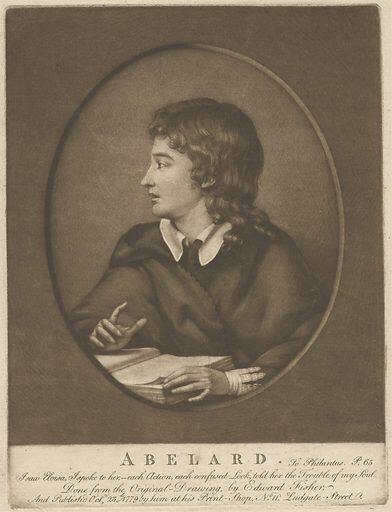
Abelard was one of the most influential figures in the development of scholasticism, the medieval intellectual tradition that brought together philosophy and theology to better understand God and religion.
Abelard addressed problematic questions such as “Are revelation and reason compatible or contradictory?” and “Can reason prove what theology claims about God?” His Sic et Non exemplifies this.
In it, Abelard developed a dialectical approach of presenting arguments for and against a given position, encouraging students to resolve contradictions through critical reasoning rather than passive acceptance. Although it offered no definitive answers and brought him into conflict with the traditional Church, it influenced scholastic debate and laid the foundations for later medieval philosophy.
His greatest ethical creation is the Ethica or Know Thyself. In it, he made the distinction between intention and action and argued that moral responsibility lies mainly in intent rather than in the act itself. Like most scholars of his time, he wrote in Latin, as French language writers were still rare at that time.
By doubting we come to inquiry, and by inquiry we perceive the truth.
Peter Abelard
Thinking about improving your French? Take online French courses easily.
Renaissance Thinkers
Michel de Montaigne
Michel Eyquem de Montaigne was born to a wealthy family in the region of Aquitaine in 1533. He was highly influential at the French court and known for his mediation skills. At the age of 38, he retired to a tower room in the Château de Montaigne, where his library was located, isolating himself from friends and family. Ten years later, after reflection and writing, he finished his Essais.
This publication is not a book but a collection of short and long pieces on religion, horses, friendship, sleep, law, or suicide.
Since his essays were purely exploratory and personal, it was very appropriate to describe them using the French verb essayer, meaning “to try” or “to attempt to examine opinions freely, without claiming absolute truth.
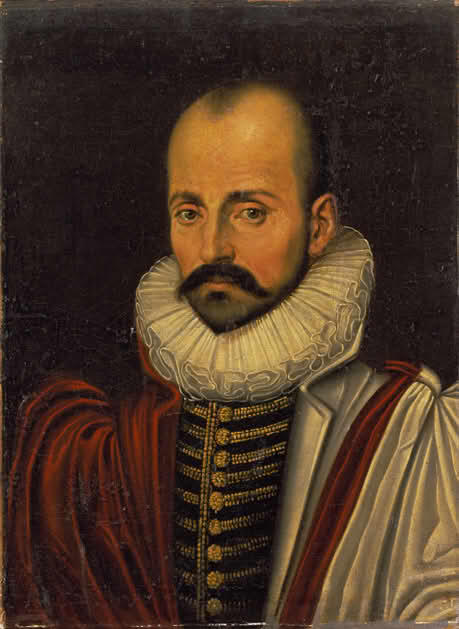
Montaigne was influenced by Pyrrhonian skepticism, a school of sceptical thought based largely on epistemology and the limits of knowledge. One of his most well-known lines, “What do I know?”, reflects his belief in the uncertainty of nature. The essays cover subjects ranging from child psychology (centuries before Freud) and education to religion, justice, and politics.
His Essais had a fundamental influence on later thinkers, from Francis Bacon to Blaise Pascal to Ralph Waldo Emerson.
Enlightenment Era Philosophers
Pierre Bayle
Pierre Bayle was a thinker, historian, and critic known for opposing religious intolerance and for his skepticism. Born into a Protestant family, Bayle faced the religious conflicts between Catholics and Protestants of 17th-century Europe. This led him to reject all forms of persecution justified by religious belief.
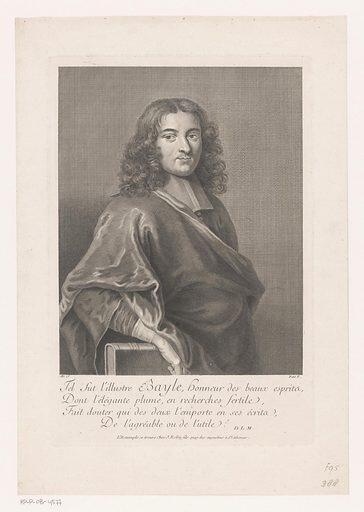
From a deeply skeptical standpoint, Bayle formulated the idea that moral concerns do not depend on religious belief and must be examined through natural reason. He argued that a moral society does not need religion for its foundation.
His radical beliefs anticipated the fundamental principles of Enlightenment thinkers, separating morality and theology.
His most important contribution is the Historical and Critical Dictionary (1697), in which he exposed his own theological, ethical, political, and historical beliefs. This became an instrument for philosophical criticism and analysis of historical and doctrinal contradictions, thereby consolidating the ideals of freedom of thought and religious tolerance.
Find out about various French courses in Montreal here.
The first edition of the Historical and Critical Dictionary gained immediate recognition after its publication. It was censored by the Catholic authorities and placed on the Index of Forbidden Books, but hundreds of illegal copies reached readers across Europe.1
René Descartes
Born in La Haye in 1596, Descartes spent many years in the Dutch Republic. His writings would later greatly influence thinkers such as young Baruch Spinoza.
A true polymath, Descartes is considered a founding father of Western philosophy and mathematics. The most well-known phrase from his writings is “Cogito ergo sum” (I think therefore I am), asserting the certainty of one's existence through the act of thought.
In fact, from this principle emerged the Cartesian dualism, which holds that the mind and body are separate and independent of each other. His moral sees ethics as a branch of science.
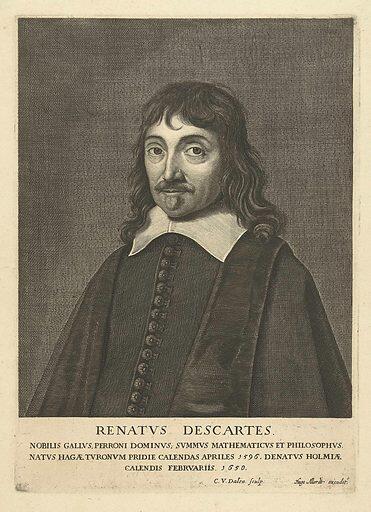
Descartes also ushered in an area of independent thought in philosophy by refusing to rely solely on inherited authority or classical texts. He advocated independent reasoning and critical thinking, rather than accepting tradition.
He had a significant influence on the history of philosophy, shaping the development of rationalism and inspiring other prominent philosophers, including Spinoza, Leibniz, and David Hume.
Feeling curious? Learn everything about France!
I think, therefore I am.
Descartes
19th-Century Philosophers
Henri Poincaré
Born in 1854 in Nancy, Henri Poincaré is one of the most influential scientists and thinkers of the late 19th and early 20th centuries. He worked as a civil mining engineer and taught mechanics, mathematical physics, and probability at the Sorbonne.
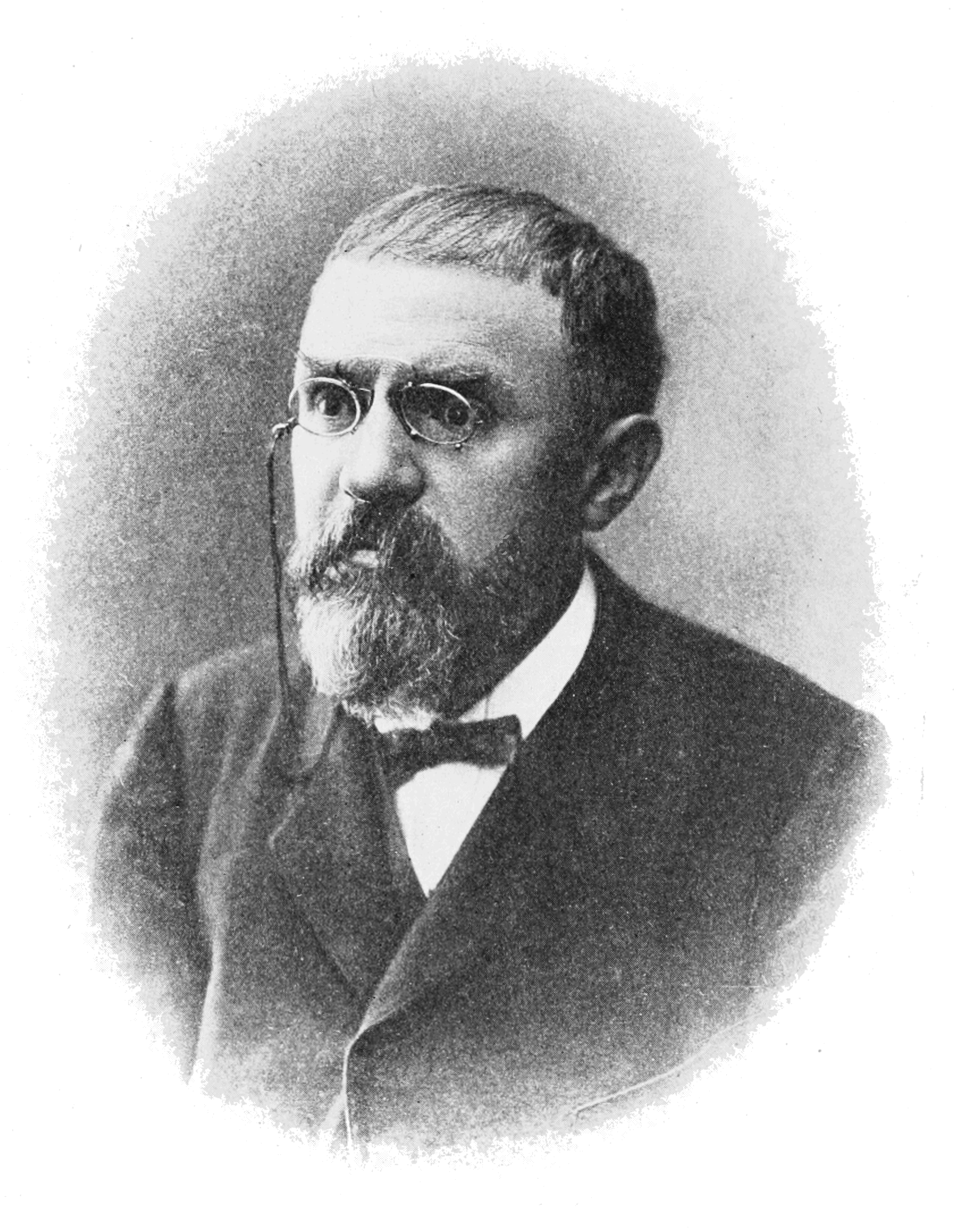
He is best known for his mathematical discoveries; however, his contributions spanned fields such as geometry, chaos theory, mathematical physics, and epistemology, allowing him to reflect on the deeper meaning of things and reality.
Poincaré appreciated the value of logic in the process of knowledge, but he believed that logical procedures structure ideas rather than create them. He argued that logic limited ideas.
One of his most influential ideas was scientific conventionalism, a philosophical and scientific movement that holds that the laws of science do not describe the structure of the world, but are conventions useful for predicting observable facts.
Did you know that Henri Poincaré did not win the Nobel Prize in Physics? Even though he was nominated several times and was indeed a master of astronomy, physics, thermodynamics, mechanics, navigation, and mathematics, he did not receive a Nobel Prize.2
20th-Century Philosophers
Louis Lavelle
Louis Lavelle is one of the greatest representatives of French philosophical spiritualism. His thinking focused on the inner experience of being. For Lavelle, philosophy should be grounded in the direct experience of existence and in how people become aware of their own reality.
One of the fundamental concepts is “participation in the Absolute.” According to Lavelle, being is not something that the individual possesses in isolation, but a reality in which they actively participate.
Individuals realize themselves through acts of freedom, consciousness, and presence.
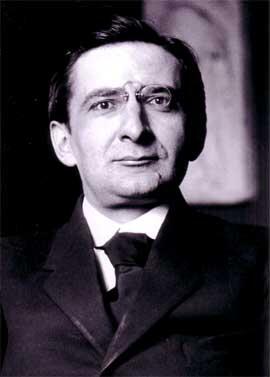
All these notions were captured in his La Dialectique de l'éternel présent, in which Lavelle explores the relationship between time, consciousness, and eternity, influencing contemporary French metaphysics.
Jean Hyppolite
Jean Hyppolite was a French existentialist philosopher known for his interpretations of Georg Wilhelm Friedrich Hegel's work. Through his contributions, Hyppolite asserted that Hegelian philosophy was as important to the era as Aristotle was to the Middle Ages.
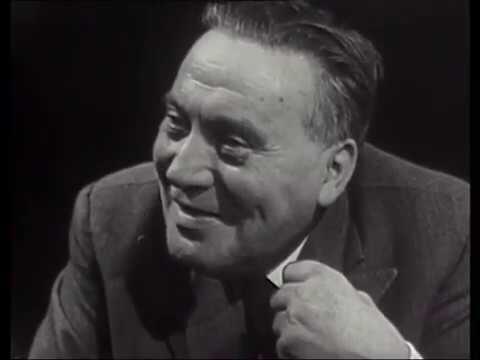
Genesis and Structure of Hegel's Phenomenology of Spirit helped establish a rigorous understanding of Hegel, influencing the development of existentialism, structuralism, and poststructuralism.
Hyppolite was also a mentor and teacher at the Collège de France and the École Normale Supérieure to other thinkers, including Gilles Deleuze and Michel Foucault, influencing their philosophical formation.
With all these renowned names, you will be well on your way to becoming a French citizen in your mind as well as in your heart! Ready to get started?
Michel Onfray
Michel Onfray has 100 published works in which he formulates a materialistic, hedonistic, ethical, and atheistic project.
For Onfray, there is no philosophy without psychology, sociology, and science, as he believes that a philosopher thinks in terms of the tools at his disposal. Otherwise, he thinks outside of reality.
Onfray attacks the three major monotheistic religions, accusing them of promoting hatred towards life and the body. In Traité d’athéologie, he argues that religion has historically functioned as an instrument of political domination and moral control.
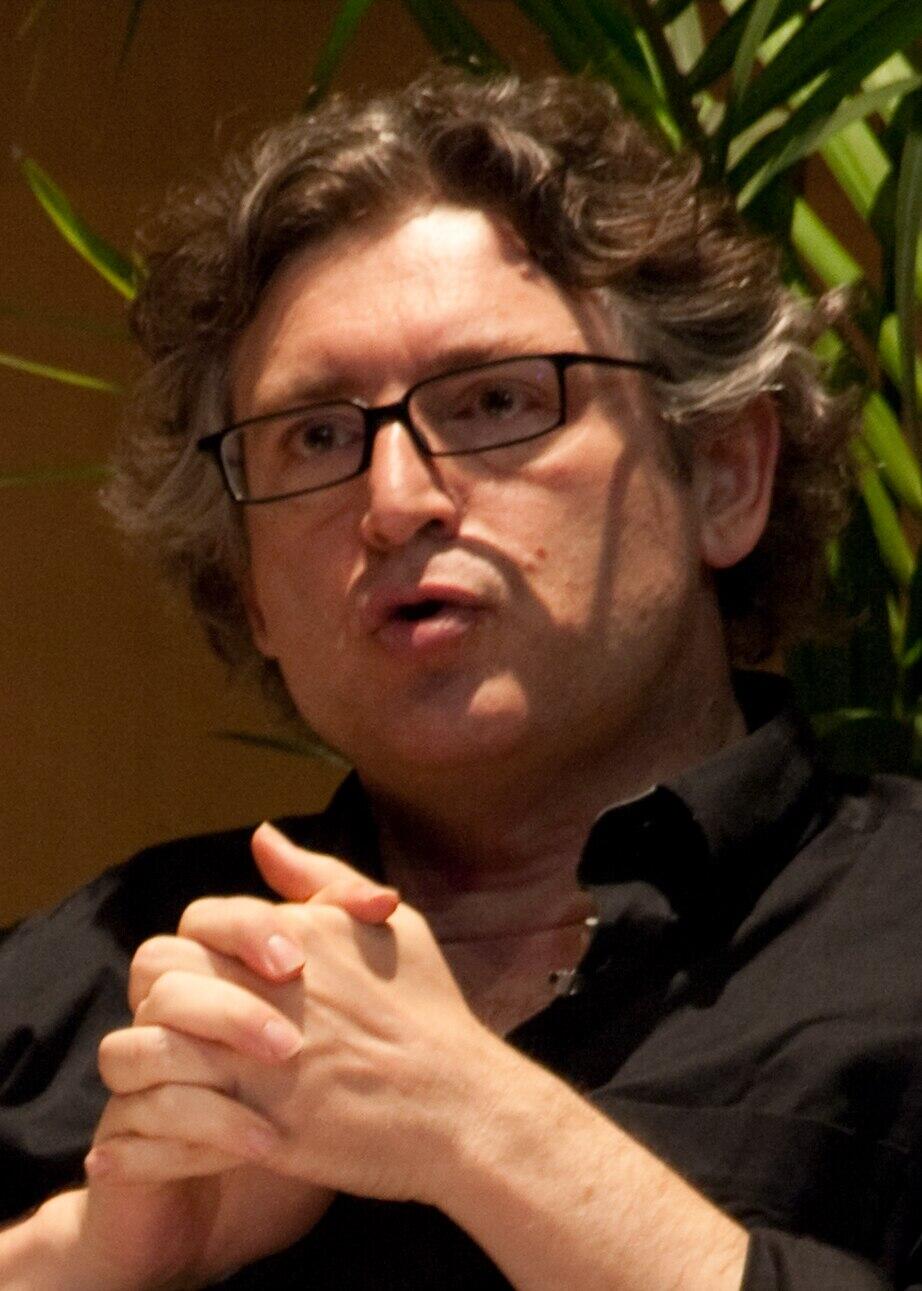
In defense of secularism, Onfray promotes a secular ethic based on freedom, personal responsibility, and well-being.
Did you know that Onfray quit his job as a high school teacher to open a free university? The Université populaire de Caen is a free university created in October 2002 by Michel Onfray in the north-western French city of Caen. 3
Would you like to study abroad? Learn all about the rich history of the French language.
Luc Foisneau
Luc Foisneau specialises in contemporary political thought, with a particular focus on authors such as Thomas Hobbes, John Locke, and René Descartes. His work addresses legitimacy, justice, and state authority.
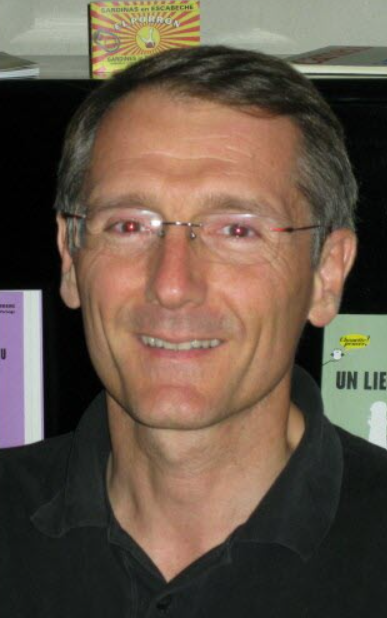
As director of research at the Centre National de la Recherche Scientifique (CNRS), Foisneau has studied political philosophy from a historical and conceptual perspective.
In addition, Foisneau has contributed to the dialogue between the history of ideas and current political theory at the Raymond Aron Center, an institution for the study of political and social thought.
Jacques Rancière
Jacques Rancière is a philosopher and professor emeritus at Paris VIII University. His work has focused on transformations in the perception of art and the relationship between aesthetics and politics. His thinking also centers on the emancipation of the dominated and the development of a philosophy of radical democracy.
Rancière develops a profound critique of traditional political structures. For him, true democracy arises when those excluded from the political order demand equality, thereby challenging established hierarchies.
One of his central concepts is the “distribution of the sensible,” which describes how a society decides what can be seen, said, and heard. It is about how perception is organized, and where the concept of aesthetics meets politics: some voices are amplified, others muted; some bodies occupy the center, others are pushed to the edge.
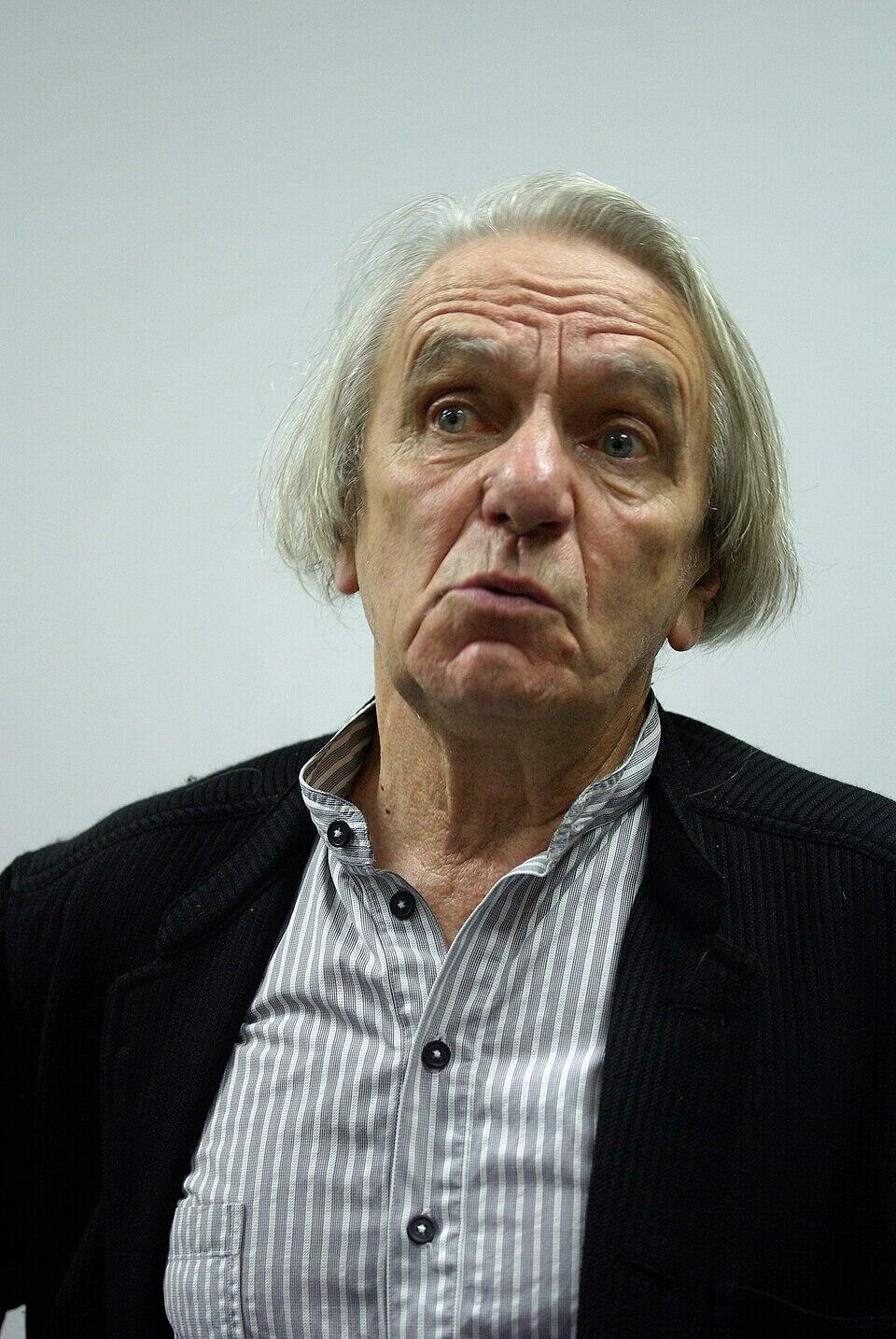
Equality is not a goal to be attained, but a presupposition to be verified.
Jacques Rancière
Learn more about the French political system, French social norms, and social etiquette.
Timeline of French Philosophy
1079–1142
Peter Abelard 🏰
Period: Middle Ages Major contributions: Sic et Non; Ethica (Know Thyself) Key contribution: Development of scholasticism; use of dialectical reasoning to reconcile faith and reason.
1533–1592
Michel de Montaigne 🌿
Period: Renaissance Major contributions: Essais (1580–1588) Key contributions: Creation of the modern essay, philosophical skepticism, and exploration of human nature.
1596–1650
René Descartes 💡
Period: Early Enlightenment / Scientific Revolution Major contributions: Discourse on the Method (1637); Meditations on First Philosophy (1641) Key contributions: Rationalism; Cartesian dualism; foundation of modern philosophy.
1647–1706
Pierre Bayle 💡
Period: Enlightenment and 18th century french philosophers Major contributions: Historical and Critical Dictionary (1697; expanded 1702) Key contribution: Defense of religious tolerance; skepticism; separation of morality and theology.
1854–1912
Henri Poincaré 🔬
Period: Late 19th–early 20th century Major contributions: Science and Hypothesis (1902); The Value of Science (1905) Key contribution: Philosophy of science; conventionalism; foundations of chaos theory.
1883–1951
Louis Lavelle 🧠
Period: French philosophers & the 20th century Major contributions: La Dialectique de l’éternel présent (1928–1931) Key contribution: Metaphysics of being; spiritualism; participation in the Absolute.
1907–1968
Jean Hyppolite 🧠
Period: Mid-20th century Major contributions: Genesis and Structure of Hegel’s Phenomenology of Spirit (1946) Key contribution: Renewal of Hegelian studies; influence on existentialism and poststructuralism.
1940–
Jacques Rancière 🌍
Period: Contemporary philosophy Major contributions: Disagreement (1995); The Politics of Aesthetics (2000) Key contribution: Radical democracy; equality; concept of the “distribution of the sensible.”
1959–
Michel Onfray 🌍
Period: Contemporary philosophy Major contributions: Traité d’athéologie (2005); Counter-History of Philosophy series Key contribution: Hedonistic materialism; atheism; defense of secular ethics.
1964–
Luc Foisneau 🌍
Period: Contemporary philosophy Major contributions: Studies on Hobbes, Locke, and Descartes Key contribution: Political philosophy; legitimacy, authority, and state theory; CNRS researcher.
Find the best French classes in Toronto here on Superprof.
References
- An Historical and Critical Dictionary by Pierre Bayle | Literature and Writing | Research Starters | EBSCO Research. (n.d.). EBSCO. https://www.ebsco.com/research-starters/literature-and-writing/historical-and-critical-dictionary-pierre-bayle
- Henri Poincaré - Linda Hall Library. (2025, July 16). The Linda Hall Library. https://www.lindahall.org/about/news/scientist-of-the-day/henri-poincare/
- Lebrun, J. (2020, October 3). Michel Onfray, au temps de l’Université Populaire de Caen. France Inter. https://www.radiofrance.fr/franceinter/podcasts/intelligence-service/michel-onfray-au-temps-de-l-universite-populaire-de-caen-2157012
Summarize with AI:
Did you like this article? Leave a rating!


 Loading...