


Are you trying to play the violin quickly? Choosing a violin book is not simply about finding the most popular title. Violin books for beginners are designed for very different learners, including children working with teachers, adults studying independently and students following formal examination systems. The best choice depends on how you plan to learn and whether you need a complete method, supporting material or a graded pathway.
| Violin book | Best use | Main focus | Beginner suitability | Extra support |
|---|---|---|---|---|
| Suzuki Violin School, Book 1 | Following the Suzuki approach | Repertoire, listening and foundational playing | Excellent for beginners following Suzuki | Recordings and teacher-led instruction |
| Sassmannshaus Violin Book 1 | Young beginners | Progressive technique and early playing | Excellent, particularly for children | Structured method with accompanying resources |
| Violin For Dummies | General self-study | Instrument basics, reading music and playing technique | Excellent for complete beginners | Online video, audio and recordings |
| The Complete Violin Technique Book | Developing technical foundations | Scales, arpeggios and double stops | Better as a supplementary book | Useful alongside a structured method |
| RCM Violin Series | Exam-track students | Repertoire, technique, etudes and musicianship | Best once following an RCM pathway | Online performance and accompaniment recordings |
Suzuki Violin School Book 1, Sassmannshaus Violin Book 1, Violin For Dummies and RCM violin books are all useful, but they are not interchangeable. Understanding what each one is designed to do will help you buy a book that actually fits your situation.


🔎 Quick Answer: What Are the Best Violin Books for Beginners?
The best beginner book depends on your learning setup. Suzuki is particularly suited to students working within the Suzuki method, Sassmannshaus is specifically designed for young children, Violin For Dummies is useful for broader self-study and RCM material suits learners following its graded programme. The Complete Violin Technique Book is better treated as supplementary technical material.

- Best structured method: Suzuki Violin School Book 1
- Best for young beginners: Sassmannshaus Violin Book 1
- Best for self-study: Violin For Dummies
- Best for an exam pathway: RCM Violin Series
The shortlist is based on progression, intended learner, supporting resources and suitability for independent study. Those factors matter more than the size of a book or how frequently it appears in online recommendations.
Think of these recommendations as different routes rather than a ranking from first to last.
A good beginner book should match the amount of guidance available outside its pages.
Note that buying a highly regarded book does not guarantee that it will suit your learning situation. A book can be excellent for one type of student and frustrating for another if it assumes a teacher, targets a particular age group or focuses on skills you are not yet ready to develop.
📚 Best Violin Books for Beginners Compared
The major options differ considerably in purpose. Suzuki and Sassmannshaus are structured teaching methods, Violin For Dummies is a broad explanatory guide and RCM is part of a formal graded system. The Complete Violin Technique Book has a different role again, functioning as a technical resource rather than a complete first method.
Comparison Table of Beginner Violin Books
A side-by-side comparison makes those differences easier to judge before you buy. Look particularly at the intended learner and how much instruction you will receive outside the book.
| Book | Best for | Style | Self-study |
|---|---|---|---|
| Suzuki Book 1 | Suzuki students | Repertoire and listening | Moderate |
| Sassmannshaus Book 1 | Young beginners | Sequenced method | Limited to moderate |
| Violin For Dummies | Adult self-learners | Explanatory guide | Strong |
| RCM Violin Series | Exam-track students | Graded curriculum | Moderate |
| Complete Violin Technique Book | Technical development | Scales and technique | Supplementary |
These books should therefore be compared by function rather than popularity. The strongest choice is the one that fits your intended learning pathway.
🎯 Which Violin Book Is Best for Your Learning Goal?
Your circumstances should determine the book you buy. A method that works extremely well for a child with a teacher may be a poor choice for an adult who has to work everything out independently.
Best Violin Books for Self-Learners
Self-learners need explanations as well as exercises because there is no teacher immediately available to demonstrate or clarify an instruction. Violin For Dummies is particularly useful here because its current edition combines written instruction with online video and audio resources designed to support the concepts and techniques covered in the book.
Self-learner:
Prioritise detailed explanations and demonstrations.
Occasional lessons:
Use a method plus targeted professional feedback.
Complete beginner:
Avoid books that assume previous violin knowledge.
A self-learner should still treat occasional professional feedback as useful, particularly for posture, bowing and intonation.
Best Violin Books for Children, Teachers and Exam Candidates
Young learners generally benefit from carefully sequenced material that can be supported by a teacher or parent. Sassmannshaus is explicitly designed as a violin method for children aged four and older, with simple melodies, illustrations and progressive introduction of notation, fingering and bowing.
- Young beginner:
Sassmannshaus or Suzuki with appropriate teaching - RCM student:
RCM Violin Series - Exam preparation:
Follow the relevant graded syllabus
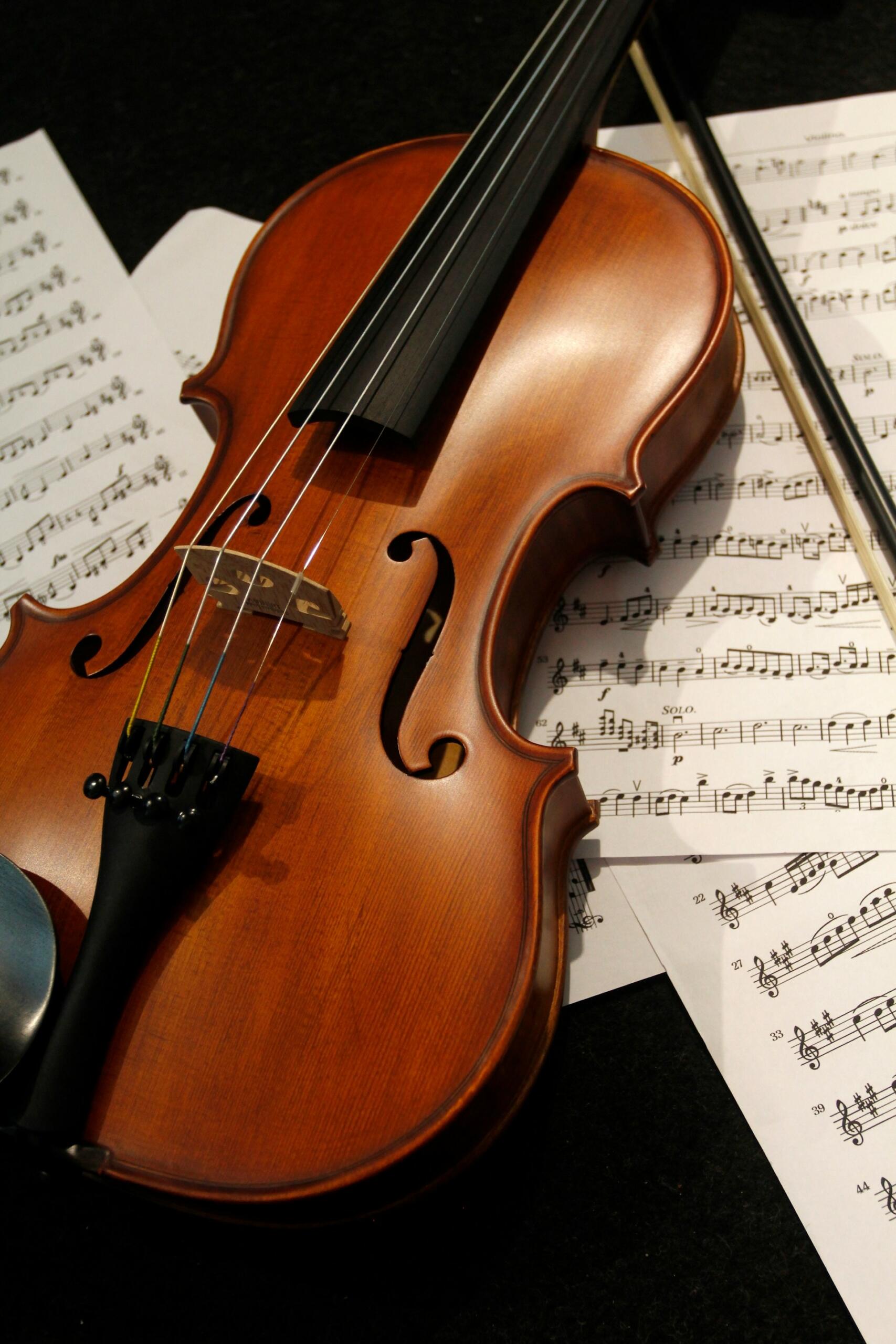
Suzuki Book 1 is also strongly associated with teacher-guided learning because the wider Suzuki approach includes specific instruction in Book 1 repertoire, technique and teaching methods. These become more complex as you level up through other books.
RCM, meanwhile, is the better fit for students following its formal graded pathway. The RCM Violin Series is an official resource for the RCM Certificate Program and organises material into repertoire, orchestral excerpts, technique, etudes and musicianship. Its repertoire books also provide access to performance and accompaniment recordings.
🎻 The Most Recommended Beginner Violin Books
Each major title has a different role, so the most useful comparison is based on what the book assumes about its learner. This is particularly important with methods that are intended to be used alongside teaching and necessary skills such as tuning your violin.
Suzuki Violin School, Book 1
Suzuki violin books are built around listening, imitation and a carefully established repertoire sequence. Suzuki teacher training specifically covers Book 1 repertoire, technique, posture and tone, showing why the book works best as part of the wider Suzuki approach rather than as a standalone manual.
| What it is: | Best suited to: | Strength: | Limitation: |
|---|---|---|---|
| The first volume of Suzuki violin repertoire | Students learning with Suzuki teaching | Clear repertoire progression | Not designed as a fully independent instruction manual |
For a Suzuki student, Book 1 can be an excellent core resource. For someone learning entirely alone, it should not be expected to provide every explanation needed.
Sassmannshaus Violin Book 1
Sassmannshaus Violin Book 1 is part of Early Start on the Violin, a method specifically designed for children aged four and older. It introduces open strings, simple note values, basic intervals, fingering, notation and basic bowing in a progressive format with illustrations intended to appeal to young learners.
| What it is: | Best suited to: | Strength: | Limitation: |
|---|---|---|---|
| A structured early-start violin method | Young children beginning violin | Progressive introduction of technique and notation | Less suitable as a general adult self-study guide |
It is therefore a strong option for a young beginner working with a teacher or parent rather than the obvious first choice for an adult who wants a book to explain everything independently.
Violin For Dummies
Violin For Dummies takes a broader instructional approach and is designed to help beginners of different ages learn fundamental skills. It covers topics such as holding the instrument, using the bow, fingering, reading music and playing in tune, while the accompanying online resources provide video and audio material.
| What it is: | Best suited to: | Strength: | Limitation: |
|---|---|---|---|
| Broad beginner instruction | Adults and independent learners | Written explanations plus multimedia support | Less specialised than a dedicated teaching method |
For someone learning without regular lessons, this combination makes it one of the more practical choices because demonstrations and sound examples can supplement the written instructions.
The Complete Violin Technique Book
The Complete Violin Technique Book has a different purpose from the other beginner titles. RCM describes it as a comprehensive scale collection for developing secure technique and lists its level range as Preparatory to ARCT, so it is better treated as a supplementary technical resource than as the only book for someone starting violin from scratch.
| Book | Main purpose | Strongest use |
|---|---|---|
| Sassmannshaus Book 1 | Beginner method | Young teacher-led learner |
| Violin For Dummies | Broad instruction | Adult self-study |
| Complete Violin Technique Book | Technical development | Supplement to a method |
The important distinction is that these books should not all be expected to perform the same job. Choosing the right role prevents you from buying a technical reference when you actually need a complete beginner pathway.
🛒 How to Choose the Right Violin Book for Beginners
Before buying, decide how much teaching the book itself needs to provide. A student with regular lessons can use a concise method supported by demonstrations, while a self-learner needs clearer explanations and additional resources.
Consider Your Age, Learning Stage and Teacher Access
Age affects presentation and pacing, but current playing ability matters too. A young beginner may need short, carefully sequenced activities, while an adult may prefer more written explanation and a book that can also function as a reference.
| Learning situation | Prioritise |
|---|---|
| Young child | Clear sequence and teacher support |
| Adult beginner | Detailed explanations |
| Regular lessons | Compatibility with the teacher's method |
| Independent study | Self-contained guidance |
If you already have a teacher, their preferred method should usually be your first filter. Lessons and home study are easier to coordinate when they follow the same sequence.
Consider Whether You Have a Teacher
A teacher changes what you need from a book because demonstrations, corrections and explanations can happen during lessons. In that situation, the book can function as a structured guide for practice rather than having to provide every piece of instruction itself. A teacher can, however, make real-time adjustments.
For independent learners, this is crucial. The more responsibility you place on the book, the more important it becomes to choose a resource with clear explanations and supporting audio or video.
Consider Whether You Want Audio, Accompaniment or Video Support
Audio can be particularly useful because beginners cannot always judge pitch and musical phrasing from notation alone. Violin For Dummies includes online video and audio resources, while RCM repertoire books provide performance and accompaniment recordings through the RCM Online Community.
| Support | Main benefit |
|---|---|
| Audio | Sound and pitch reference |
| Video | Visual technique demonstration |
| Accompaniment | Practice with musical support |
| Printed only | Works best with teacher guidance |
The type of support matters just as much as whether support exists. A beginner who needs to see bow technique will benefit more from video, while someone working on pitch or musical phrasing may gain more from repeated listening.
Consider Whether You Are Following Suzuki or RCM
Decide whether you are following Suzuki, RCM or another established pathway before collecting several books from different systems. RCM material can complement Suzuki teaching in some circumstances, but the RCM series itself is designed as a progressively levelled programme with separate repertoire, technique and musicianship components.
Choosing one primary pathway makes progression easier to understand. Additional books can then be added for a specific purpose rather than replacing the main method halfway through learning.
📖 Are Books Enough to Learn Violin on Their Own?
Books can take a beginner a long way when they provide clear exercises, useful repertoire and a sensible progression. Their main limitation is that they cannot assess your individual playing, so independent learning works best when the book is combined with other forms of feedback.
What Books Can Teach Well
Books are excellent for explaining notation, terminology, exercises, repertoire and the order in which material can be introduced. They also provide a permanent reference that you can return to instead of relying on memory.
Notation, written explanations, exercises and repertoire.
The printed format is especially valuable when you want to revisit an explanation or understand the purpose of an exercise away from the instrument.
What Books Cannot Replace
You can still use music manuals and books to help you learn outside of your violin lessons London. However, a book cannot hear whether a note is consistently sharp or flat or see whether your bow is travelling efficiently. Those limitations matter because beginners can repeat an incorrect movement without realising that the problem is technique rather than the difficulty of the music.
Occasional feedback can therefore be worthwhile even when most of what you will know about violins happens independently.
Best Way to Combine Books With Other Learning Tools
Use the book as the main written pathway, then add recordings, video or teacher feedback from a quality violin tuition, as they provide something books cannot. This creates a more complete learning system without requiring you to replace the book with another resource.

- Book: Provides structure
- Audio: Develops listening
- Video: Demonstrates movement
- Teacher: Checks individual technique
The goal is not to collect resources but to give each resource a clear job.
🏪 Where to Buy Violin Books for Beginners
Specialist music shops and reputable online sellers are both useful, but the priority is buying the correct title and edition. Being able to inspect a physical book can be particularly helpful when you are unsure whether its layout suits your learning style.
Local Music Stores
A music shop lets you flick through several pages before committing to a purchase. This can reveal whether the instructions, notation and illustrations are easy for you to follow, particularly if you are choosing between very different types of method.
| Source | Main advantage |
|---|---|
| Music shop | Inspect the actual book |
| Publisher | Clear edition information |
| Online retailer | Wide selection |
The ability to check the exact edition is especially useful when a method has been published in multiple formats or when accompanying recordings are an important part of your choice.
Online Marketplaces and Publisher Websites
Online retailers usually provide a much wider selection than a local shop, while publisher websites can make it easier to confirm the edition and included materials. For online purchases, check the ISBN, level and supporting resources rather than judging a book entirely from its cover.
Different editions can have different accompanying materials, so this small check can prevent you from buying a book that does not provide the audio, video or other resources you expected.
⚠️ Common Mistakes Beginners Make When Choosing a Violin Book
The biggest purchasing mistake is usually choosing a book that does not match the way you intend to learn. A highly regarded method can still be unsuitable if it assumes teacher guidance, targets a different age group or begins above your current ability.
Choosing a Book That Is Too Advanced
A technical book can make ordinary beginner skills seem impossibly difficult if you start using it before you have a suitable foundation. The Complete Violin Technique Book is a good example because its technical material is useful across a broad level range but does not replace a complete beginner method.
Check the level:
Make sure the material starts where you are.
Check the purpose:
Decide whether it is a method or supplement.
Check the support:
Make sure you have the guidance the book assumes.
A beginner should not reject violin because a technical reference feels too difficult. The problem may simply be that the book was never intended to be the first step. There are also many online violin resources to explore and online violin lessons for convenience
Buying a Method Book Without Audio Support
Written notation cannot demonstrate sound by itself, which can make it difficult for a beginner to judge pitch, phrasing and musical style. A book with recordings or video can therefore provide useful additional information, particularly for independent learners.
Check whether the book includes audio, video or another way to hear the material before buying.
Support is particularly valuable when you have nobody available to demonstrate a passage or confirm what it should sound like.
Picking a Book That Does Not Match the Learning Path
Switching between unrelated methods can leave gaps because each series may introduce skills in a different order. Pick one main method and add another book only when you have a specific reason for doing so. Depending on your age when learning the violin, you might prefer different types of books.
One primary method + carefully chosen supplements is usually more useful than several competing beginner methods.
A technical reference, repertoire collection or graded book can then fill a particular need without forcing you to restart your entire learning sequence.
Expecting a Book Alone to Replace Feedback
A book can explain correct technique, but it cannot assess your individual performance. If you are learning independently, occasional feedback can help identify problems before they become established habits.
"One cannot open a book without learning something."
Confucius
That distinction is particularly important for posture, bow control and intonation.
🗓️ Recommended Learning Path for Absolute Beginners
A beginner book becomes much more useful when you turn its contents into a manageable progression. The first month should focus on establishing basic control rather than rushing through pages simply to reach advanced material.
Week 1
Setup and Basics
Spend the first week learning the instrument's basic setup, playing position, tuning and open-string work. These foundations should feel familiar before you expect yourself to produce polished melodies.
Week 2
Reading Music and Bow Control
Begin connecting simple notation with controlled bowing. Keeping these skills together helps you understand what the printed music requires while developing the physical control needed to play it.
Week 3
First Simple Pieces
Introduce the first pieces provided by your chosen method and use them to apply earlier skills. Listening to recordings where available can help you develop an understanding of pitch, rhythm and musical phrasing alongside the written notation.
Week 4
Building Practice Habits
Shift attention towards making practice repeatable, reviewing difficult passages and using the book as a roadmap rather than simply trying to finish pages. A useful beginner routine should leave time to revisit earlier skills as new material becomes more difficult.
Move slowly enough to establish comfortable movements before adding more complicated material. Then work to build a reliable connection between what you see and what you play. In week 3, the aim is to make the first pieces reinforce your technique rather than simply treating them as songs to get through. Finally, aim to establish a sustainable relationship with the book so that each new section builds on what you have already learned.
⭐ Final Recommendation: Which Violin Book Should You Start With?
The right choice comes down to your learning situation. Choose Suzuki Violin School Book 1 if you are following Suzuki teaching, Sassmannshaus Violin Book 1 for a young beginner working within that method, Violin For Dummies for broad self-study support and the RCM Violin Series for a learner following the RCM pathway. The Complete Violin Technique Book is better added as technical reinforcement once you have a suitable beginner method rather than used as your only first book.
- Structured Suzuki learner: Suzuki Violin School Book 1
- Young beginner: Sassmannshaus Violin Book 1
- Adult self-learner: Violin For Dummies
- RCM student: RCM Violin Series
- Technical supplement: The Complete Violin Technique Book
Your best purchase is therefore the book that matches your teacher, learning goal and current level rather than necessarily the title with the biggest reputation. A well-matched beginner method can give you a clear route through the early stages, while supplementary technique books, recordings and occasional feedback can fill the gaps that a single book cannot.
References
- Alfred Music (n.d.)Suzuki Violin School, Volume 1: Violin Book. Available at: https://www.alfred.com/products/suzuki-violin-school-volume-1-00-0144s (Accessed: 4 October 2026).
- Bärenreiter (n.d.)Early Start on the Violin Volume 1. Available at: https://www.barenreiter.co.uk/early-start-on-the-violin-volume-1.html (Accessed: 4 October 2026).
- Rapoport, K. (2020)Violin For Dummies. 3rd edn. Hoboken, NJ: Wiley. Available at: https://www.dummies.com/book/violin-for-dummies-book-online-video-and-audio-instruction-3rd-edition-282658 (Accessed: 4 October 2026).
- Royal Conservatory of Music (2021)Violin Series, 2021 Edition. Toronto: Royal Conservatory of Music. Available at: https://teacherportal.rcmusic.com/Resources/Introducing-the-Violin-Series%2C-2021-Edition (Accessed: 4 October 2026).
Summarize with AI:
Did you like this article? Leave a rating!

 Loading...

