


The best age to start violin lessons is usually between 4 and 7, but readiness matters more than reaching a particular birthday. Have a look below at a general guide that may be useful to follow.
| Age group | Readiness | Lesson style | Support needed |
|---|---|---|---|
| 3 to 4 | Short attention span | Highly adapted | Very high |
| 4 to 6 | Short structured activities | Playful and structured | High |
| 7 to 9 | Better concentration | Structured lessons | Moderate to high |
| 10 to 12 | Increasing independence | Conventional lessons | Moderate |
| Teenagers | Greater self-direction | Individual or group | Encouragement |
| Adults | Usually self-directed | Individual or group | Mostly independent |
Is the fiddle really for everyone? A child needs enough physical coordination, attention and willingness to participate for formal lessons to be useful. Teenagers and adults can also begin successfully, so there is no age at which learning violin becomes automatically too late.


What Age to Start Violin Lessons?
For many children, ages 4 to 7 provide a useful starting window. However, the right age depends on the individual child, the teacher's experience and the support available at home. Some children are ready earlier, while others benefit from waiting until they are more comfortable with structured activities.
Age 4
Can suit a child who follows simple instructions and engages with short activities. An experienced early-childhood teacher is particularly important.
Ages 5-7
A practical starting range for many children as attention, coordination and communication become more developed.
Ages 8-12
Increasing independence can make structured lessons easier to manage.
Teenagers & Adults
Can begin whenever they are ready to commit consistent time to learning.
Very young children can begin formal instruction in an appropriate environment. Some children can start at three or four, although teachers working with very young children need appropriate experience.
There Is No Single Perfect Age
Age alone cannot determine whether someone is ready for violin. Two children of exactly the same age may have very different abilities to concentrate, follow instructions and tolerate repetition.
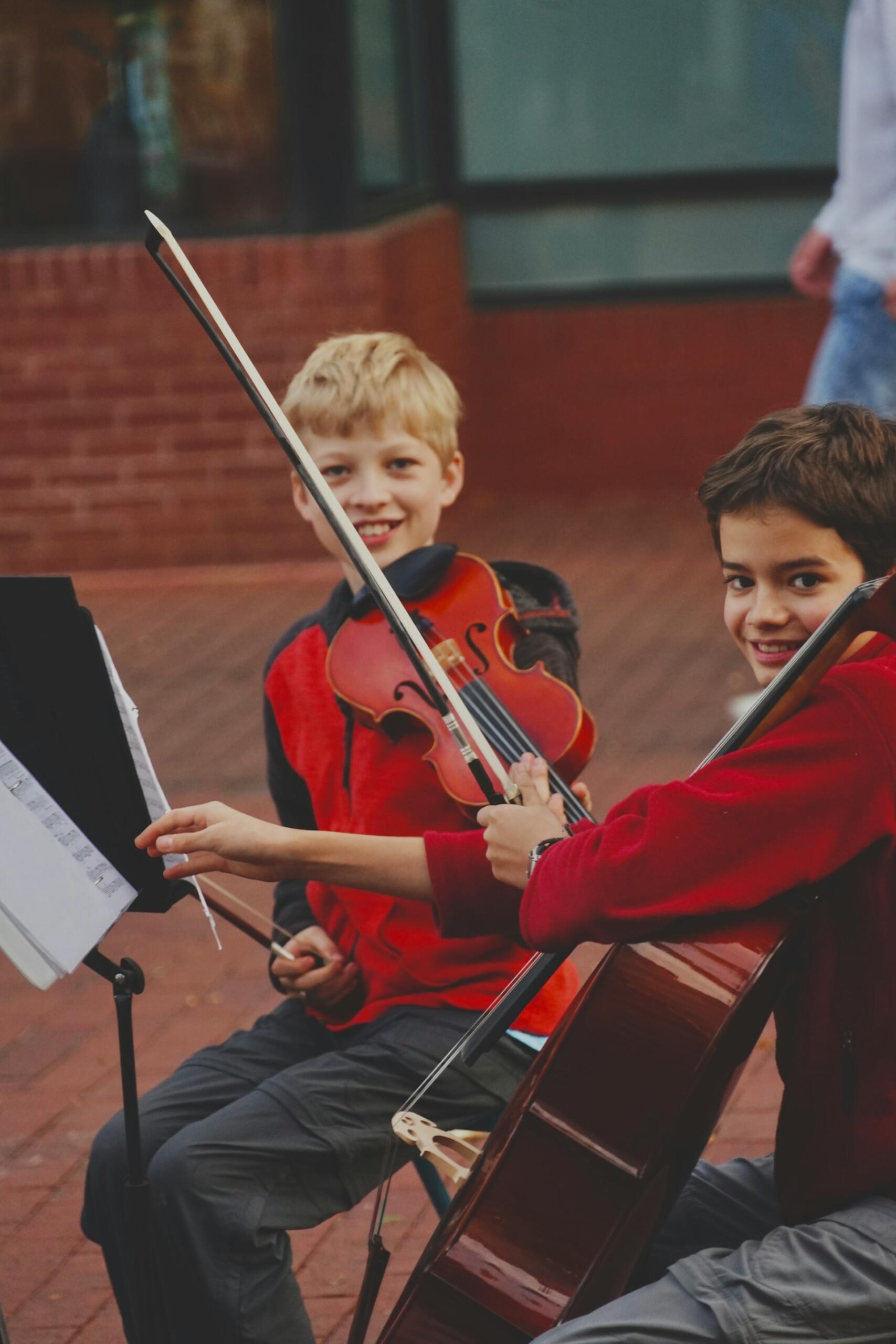
For example, a four-year-old who is ready to participate and has an appropriately experienced teacher may be able to begin. Seven is still within a very practical starting period for violin and children can begin very successfully at ten, twelve or later without needing to have started in preschool.
The important point is that age should be considered alongside developmental readiness rather than used as a deadline.
The Practical Recommendation by Age Band
Ages 4 to 6 can suit an early beginner, ages 7 to 9 are often practical for structured learning and ages 10 to 12 can work particularly well for a child becoming more independent. Teenagers and adults can begin whenever their circumstances allow regular learning.
| Age | Main consideration |
|---|---|
| 4 to 6 | Readiness and parent involvement |
| 7 to 9 | Concentration and developing independence |
| 10 to 12 | Independent learning and consistent practice |
| Teenagers | Motivation and schedule |
| Adults | Available time and suitable instruction |
This makes the decision more useful than simply choosing the earliest possible starting age. The rate at which you learn the violin will vary depending on many factors beyond age, including whether you’re being taught by a private violin tutor or teaching yourself.
Why Readiness Matters More Than Age
Readiness includes physical, cognitive and emotional factors. A child does not need exceptional musical ability, but they should be able to listen, attempt unfamiliar movements and accept some repetition.
Physical
The child can attempt basic positions and coordinated movements with an appropriately sized instrument.
Cognitive
The child can listen to instructions, copy demonstrations and focus briefly.
Emotional
The child can tolerate correction and participate without becoming consistently distressed or resistant.
A supportive teacher can adapt many aspects of the lesson, but readiness still determines how much the child can reasonably take from formal instruction.
Quick Answer: When Is the Best Time to Start Violin?
There is no single best age for every learner. The most useful distinction is between early childhood readiness, school-age independence, teenage commitment and adult self-direction. Consider the individual child before deciding whether to start lessons.
| If the child... | Consider | What to prioritise |
|---|---|---|
| Is interested and can follow simple instructions | Starting lessons | A teacher experienced with young beginners |
| Is interested but struggles to stay engaged | Waiting a little or trying a music class first | Building attention and familiarity with music |
| Is keen but needs an adult beside them | Starting with parent involvement | Short, positive practice sessions |
| Can practise with increasing independence | Starting or progressing with structured lessons | Consistent practice and clear goals |
| Is reluctant or feels pressured | Waiting rather than forcing lessons | Maintaining a positive relationship with music |
This is a guide rather than a rigid progression. A child who is not ready at five may be better served by waiting, while a particularly ready four-year-old may benefit from starting earlier.
This gives parents a quick way to interpret the broader age recommendations. Use the age bands as a starting point rather than a deadline. If a child is nearly six but cannot participate in a short structured activity, waiting may be more productive than rushing into lessons.
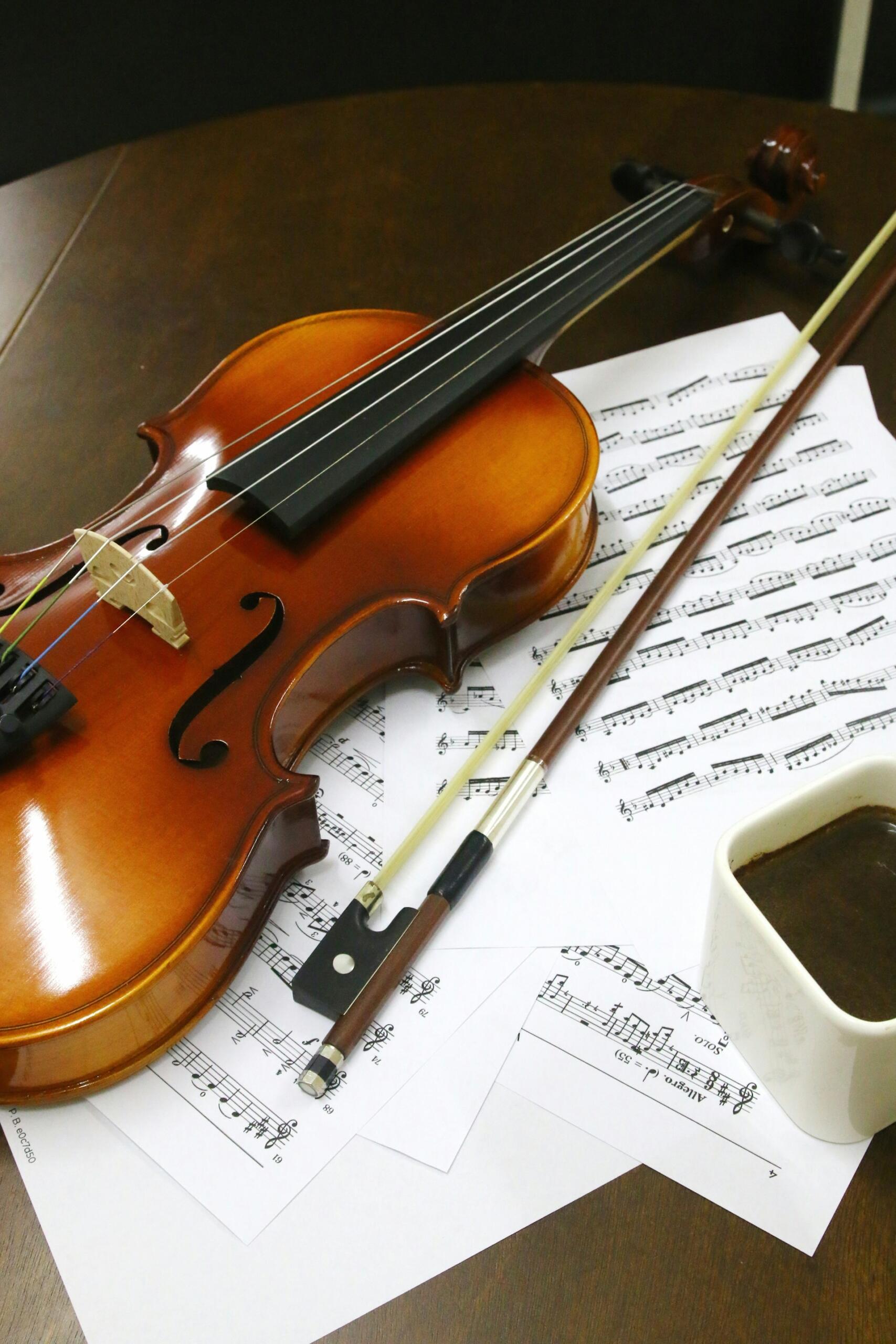
The goal is to find an appropriate starting point, not simply the earliest possible one.
Signs a Child Is Ready for Violin Lessons
A child does not need previous musical knowledge before starting. What matters is whether they can participate in the learning process and whether an adult can provide appropriate support between lessons.
- Following instructions
The child can listen to a short instruction and attempt what the teacher demonstrates. - Brief concentration
The child can stay engaged with one activity for a short period. - Interest
The child shows curiosity about the violin or willingness to try it. - Home support
An adult can attend lessons and help remember what needs to happen between sessions.
These signs are particularly useful for parents deciding whether to book a first lesson now or wait.
Physical Readiness
Physical readiness does not mean having large hands or unusual strength. Young players use appropriately sized instruments, and teachers can adapt activities to their physical development.
- Posture
The child can attempt a stable position with guidance. - Coordination
The child can attempt simple movements using both sides of the body. - Comfort
The instrument can be appropriately sized and positioned for the learner.
Physical readiness is therefore more about participating safely and comfortably than meeting a particular physical milestone.
Cognitive and Emotional Readiness
A child should be able to listen to correction and attempt something more than once. They do not need to enjoy every practice session, but persistent resistance may indicate that waiting would make learning easier.
- Can they accept correction?
They should be able to hear an instruction and try again without becoming consistently upset. - Can they repeat an activity?
Some repetition is unavoidable, so a basic tolerance for repeating movements is useful. - Can they separate lesson time from play?
They do not need adult-level discipline, but should understand that a lesson involves listening as well as playing.
This helps distinguish normal beginner frustration from a child who is not yet ready for formal instruction.
Is Learning Violin Difficult?
Violin can feel demanding initially because several new physical skills have to work together. However, the nature of the challenge changes with age. Younger children often need more repetition and adult assistance, while older learners may understand explanations faster.
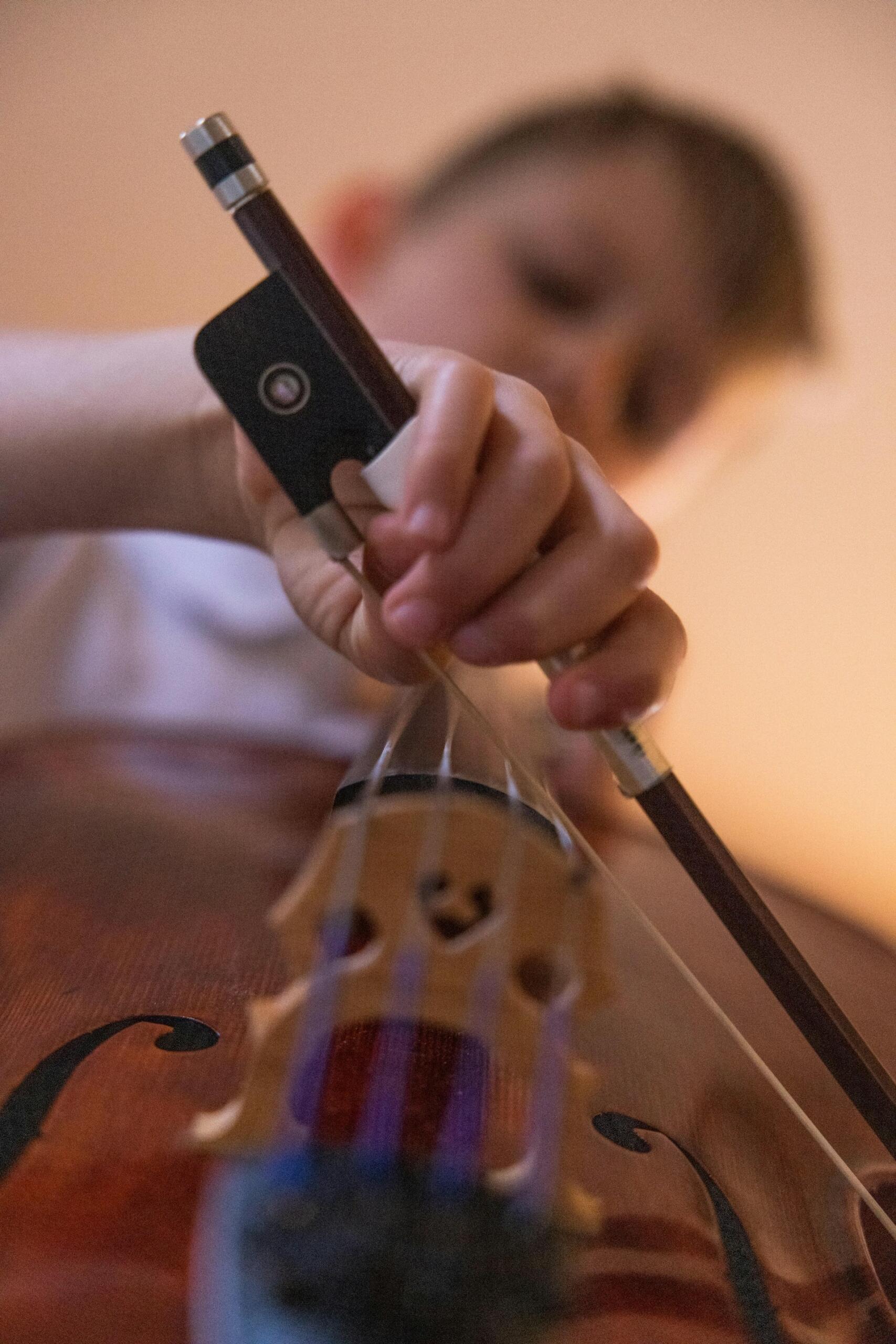
What makes it challenging
Finger placement, bow control, posture and coordination have to develop together.
What makes it manageable
Age-appropriate teaching, an appropriately sized instrument and clear feedback allow these skills to be introduced gradually.
Difficulty should therefore be considered in relation to the learner rather than treated as a fixed characteristic of violin lessons.
Why Violin Feels Challenging at First
Beginners have to develop accurate finger placement while also controlling the bow. Neither skill feels automatic at first, so combining them can be demanding.
| Early challenge | What the learner is developing |
|---|---|
| Finger placement | Consistent positioning |
| Bow movement | Controlled movement |
| Posture | Stable playing position |
| Coordination | Combining movements |
Breaking these demands into smaller steps allows the teacher to make the learning process appropriate to the student's age.
Why Difficulty Changes by Age
Young children often learn through imitation and repetition. They need more repetition, shorter activities and greater adult support.
Older learners can usually understand more detailed verbal explanations and analyse what they are doing. They require more explanation, independent practice and direct problem-solving.

The violin itself has not become easier or harder. The learner's ability to understand and manage the demands has changed.
Best Age to Start Violin Lessons for Children
For most children, ages 4 to 9 provide a useful starting window, but there is no single best age.
Routine: Practise at a predictable time.
Support: Have an adult nearby to help.
Environment: Keep the instrument ready and the practice area uncluttered.
The important question is whether the child can participate comfortably, follow simple instructions and engage with short periods of practice.
Ages 4-6
Best for children who are ready for short, playful lessons with strong parent support
Ages 7-9
Often easier to establish regular practice and follow technical instructions
Ages 10-12
Greater independence can make structured learning and goal-setting easier
The right starting point therefore depends more on readiness and the teaching approach than on reaching a particular birthday.
Ages 4 to 6
Young children can begin violin lessons, particularly when lessons are adapted to their attention span and developmental stage. Some programmes introduce children as young as 3 or 4, while others recommend waiting until the child is more physically and emotionally ready.
Ready to learn
Can follow simple instructions and stay engaged for short activities.
Ready to practise
Can participate in brief, regular practice with an adult's help.
Ready for support
Has a parent or caregiver who can attend lessons and help at home.
For this age group, the teacher's experience with young beginners matters considerably. A child who is not ready for formal lessons may benefit more from an early childhood music class first.
Ages 7 to 9
By 7 to 9, many children can manage more structured instruction and begin taking greater responsibility for practising. This can make it easier to build consistent habits without making lessons unnecessarily demanding.
Following multi-step instructions, remembering techniques between lessons, concentrating for longer periods and beginning to practise with less direct supervision.
The child's interest still matters. A motivated seven-year-old may progress more comfortably than an older child who feels pressured into playing.
Ages 10 to 12
Children aged 10 to 12 can often approach violin learning with greater independence. They may also be better able to understand specific goals, respond to detailed feedback and recognise how regular practice affects their progress.
Practice
Can increasingly manage practice without constant parental direction.
Technique
Can understand more detailed explanations of posture, bowing and fingering.
Goals
Can identify music they want to learn and work towards personal targets.
This makes 10 to 12 a perfectly reasonable starting point rather than an age at which a child has somehow missed the opportunity to learn.
Can You Learn Violin as a Teenager?
Absolutely. Teenagers do not need to have started as young children to develop useful violin skills. Their lessons can simply be structured around their existing interests, school commitments and capacity for independent practice.
Independence: Let the teenager organise practice
Consistency: Set realistic expectations
Motivation: Discuss goals with the teacher
The main consideration is finding a teacher who treats the teenager as an individual learner rather than teaching them exactly like a much younger child.
What Teens May Need
Teenagers often have competing demands from school, sport, work and social activities, so a realistic practice routine is more useful than an ambitious schedule that is difficult to maintain.
- Helpful approach:
Set a manageable practice routine, choose achievable repertoire, track progress and adjust expectations during busy periods.
With appropriate support, starting during the teenage years can provide a clear path into violin without requiring years of previous musical training.
Learning Violin as an Adult: Is It Too Late?
No. Adults can start violin at any age. Adult beginners bring different strengths and limitations to learning, so the approach needs to reflect their goals, available time and previous experience.
"Choosing to learn an instrument as an adult is an act of courage."
Megan Healy (Violin Pedagogue)
The biggest difference is usually not whether an adult can learn, but how lessons and practice fit realistically around the rest of their life.
Why Adults Are Successful Beginners
Adults can often bring strong motivation, clear goals and the ability to understand why a particular exercise matters. They can also make deliberate decisions about what they want from lessons, whether that is playing for enjoyment, learning particular pieces or developing a longer-term skill.
These strengths can make adult learning rewarding, even when progress feels slower than expected. Stay on top of learning with in-person lessons, online violin tutorials, or by reading books about violins.
Convenience: Keep the instrument easy to access.
Consistency: Use regular practice times where possible.
Feedback: Bring questions and problems to the teacher.
A practical setup is often more valuable than trying to create a perfect practice schedule that does not fit real life.
Common Adult Challenges
The main difficulties are often practical rather than age-related. Adults may have limited practice time, inconsistent schedules or unrealistic expectations about how quickly unfamiliar movements should become automatic.
Time
Short, regular practice may be more realistic than occasional long sessions.
Expectations
Technical skills take repetition, so early progress may feel gradual.
Consistency
A sustainable routine matters more than trying to practise perfectly.
Recognising these limitations early can make lessons more manageable and prevent missed practice from becoming a source of frustration.
How Adults Can Learn Faster
Adults can make their practice more effective by focusing on a small number of specific skills rather than simply playing through pieces repeatedly. A teacher can also help identify inefficient habits before they become established.
- Set one focus
Work deliberately on one technical or musical problem at a time. - Practise little and often
Use manageable sessions that fit naturally into the week. - Use feedback
Apply corrections immediately rather than repeatedly practising the same mistake. - Choose suitable music
Work with pieces that are challenging enough to develop skills without becoming overwhelming.
For adults, the most useful question is therefore not whether they are too old to begin, but how their goals, available time and preferred learning style can be built into a realistic lesson and practice routine.
How to Choose the Right Violin Lesson Format for Each Age
Age can influence which lesson format works best, but it should not be the only consideration. A young child may need substantial parent involvement, while a teenager or adult may prefer direct individual feedback.
| Format | Feedback | Best fit |
|---|---|---|
| Private | Frequent | Any age |
| Group | Less individual | Children and social learners |
| Parent-assisted | Teacher plus home support | Younger children |
Ask prospective teachers about their expectations, experience and approach before choosing one, particularly when selecting a teacher for a young beginner.
Private Lessons
Private lessons allow the teacher to adjust instruction directly to the learner. This can be particularly useful when a beginner needs detailed technical feedback.
Pacing
The teacher can adjust the lesson to the individual.
Feedback
Mistakes can be addressed immediately.
Flexibility
Content can reflect the learner's age and goals.
Private lessons can therefore suit learners across a wide range of ages.
Group Lessons
Group lessons provide a shared learning environment and can suit children who enjoy participating alongside other learners.
Shared environment
Less individual attention
Learning alongside peers
Group dynamics vary
Learning alongside peers
Group dynamics vary
Whether this works well depends on the learner's personality and the size and structure of the class.
Parent-Assisted Lessons
For younger children, parents may attend lessons and help with practice at home. The parent does not need to become a violin teacher.
Attend
The adult learns what the teacher is asking the child to practise.
Remember
The adult helps retain instructions between lessons.
Support
The adult provides encouragement and helps establish a routine.
This role can gradually reduce as the child becomes more independent.
Choosing an Age-Appropriate Teacher
Ask prospective teachers how they work with beginners in the learner's particular age group, what they expect between lessons and how they adapt teaching. Here are some key aspects to consider:
Find out whether the teacher regularly works with the learner's age group.
Understand what will be expected between lessons.
Find out how the teacher adapts lessons for young children, teenagers or adults.
Clarify how much parent involvement will be expected for a younger learner.
The most useful decision is therefore not simply asking for the "perfect age", but considering whether the learner is ready and whether the learning environment is appropriate.
Consider concentration, independence, available practice time and the amount of support a parent or caregiver can provide.
Put some thought into the readiness of a child and their available family support.
Whether the learner is four, fourteen or forty, the best time to start violin lessons is when their readiness, goals and available support align. Age provides a useful guide, but the right teacher, lesson format and realistic practice routine are what make that starting point workable.
References
- Suzuki Association of the Americas (n.d.) Ask An Expert - 6. Available at: https://suzukiassociation.org/journalarticle/ask-an-expert-6/ (Accessed: 2 October 2026).
- Suzuki Association of the Americas (n.d.) How to Choose a Teacher. Available at: https://suzukiassociation.org/parents/find-a-suzuki-teacher/how-to-choose-a-teacher/ (Accessed: 2 October 2026).
- Shao, J. (2025) 'Enhancing learning outcomes in violin music education: a systematic review', Frontiers in Education. Available at: https://www.frontiersin.org/journals/education/articles/10.3389/feduc.2025.1683580/ (Accessed: 2 October 2026).
- Ye, X., Yang, J. and Song, Q. (2026) 'A study on the relationship between teacher feedback types, self-efficacy, and intrinsic motivation among violin learners', Frontiers in Psychology. Available at: https://www.frontiersin.org/journals/psychology/articles/10.3389/fpsyg.2026.1985014/ (Accessed: 2 October 2026).
Summarize with AI:
Did you like this article? Leave a rating!

 Loading...
