
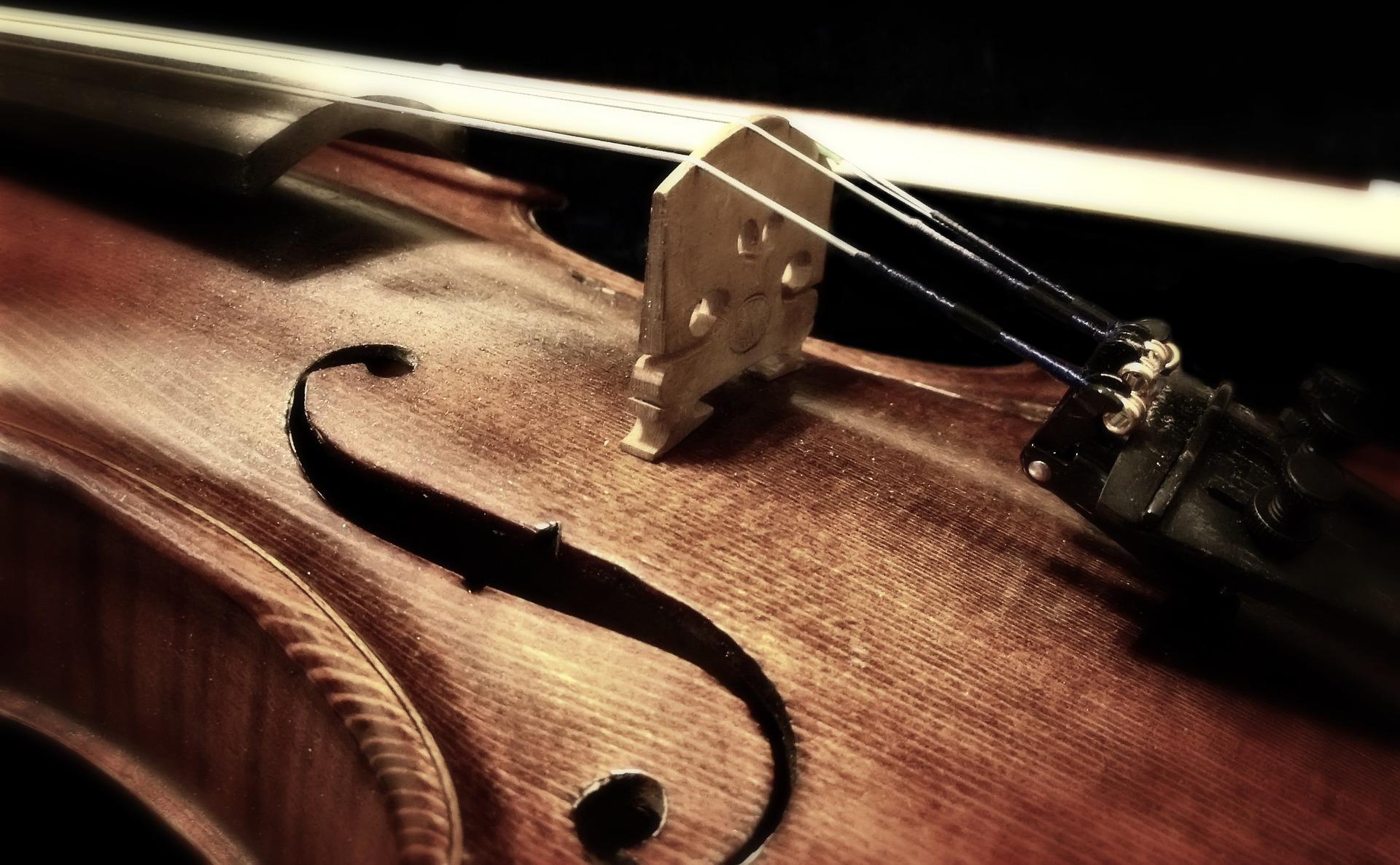

Learning the violin online is possible, but success depends on having a clear sequence rather than simply watching videos and copying what you see. Online resources can provide demonstrations, explanations and repeatable lessons whenever you need them, making them particularly useful for flexible learning.
| Online learning feature | What it means for your violin learning |
|---|---|
| Video demonstrations | Watch technique being performed clearly, then pause, replay or slow the lesson when needed. |
| Learn at your own pace | Spend longer on difficult skills without holding up a class or move ahead when something feels secure. |
| Recorded lessons | Return to previous explanations whenever you need to refresh a technique or piece. |
| Remote feedback | Send recordings or meet with an online tutor to identify problems you may not notice yourself. |
| Digital practice tools | Use metronomes, tuners, recording apps and playback to make independent practice more informed. |
| Flexible access | Practise and study without travelling to a lesson, making violin learning easier to fit around your schedule. |
The key is to combine good instruction with deliberate practice, regular self-checking and enough feedback to catch technical problems before they become habits.


🎻 Can I Learn Violin Online?
Online violin learning can work particularly well for beginners who like to learn independently, need flexible lesson times or want to replay demonstrations several times.
Who Online Violin Lessons Are Best For
Online lessons suits learners who are comfortable following instructions without having someone physically present to make every correction. Video lessons can be especially useful because you can pause, slow down and revisit a movement until it makes sense.
Yes, provided you use a structured course or programme, practise consistently and find ways to check your technique.
Online learning does have limits, particularly when you cannot tell whether your posture or movements are correct. A teacher, occasional lesson or recorded feedback can therefore complement online study without requiring traditional weekly lessons.
When Online Learning May Need Extra Help
Some problems are difficult to diagnose from your own perspective because you are concentrating on producing the note rather than observing your technique. Persistent tension, an unstable bow, inconsistent intonation or difficulty understanding a movement are signs that another person may need to assess what you are doing. Getting help early is usually more useful than spending months practising an inefficient technique.
Self-directed: Learn at your own pace and repeat difficult material.
Online tutor: Receive individual corrections without travelling to lessons.
Blended learning: Combine independent study with occasional professional feedback.
A blended approach can therefore give you the flexibility of online learning while reducing the risk of reinforcing mistakes.
🗺️ How to Start Learning Violin Online
Decide what you actually want to achieve before choosing lessons. Learning to play simple melodies requires a different programme from working towards graded exams, playing in an ensemble or eventually performing advanced repertoire.
Set Clear Goals Before You Begin
Start with a clear idea of what you want to achieve by playing the violin. A specific goal also makes it easier to decide which skills to focus on first.
| Goal | Useful online focus |
|---|---|
| Play simple songs | Basic technique and easy repertoire |
| Read music | Notation and rhythm alongside playing |
| Perform | Technique, musicality and recording |
| Prepare for exams | Structured syllabus and assessment |
Once your goal is clear, choose a programme that gives you a logical progression rather than collecting unrelated tutorials. The best starting point is usually one coherent course supported by additional resources only when they solve a specific problem.
Put Together a Simple Learning Programme
Your programme should tell you what to learn, what to practise and when to move forward. Rather than measuring progress by the number of videos completed, use practical milestones such as maintaining a steady rhythm, producing a controlled bow stroke or playing a short piece accurately. This keeps online learning focused on ability rather than content consumption.
Weeks 1-2
Setup, posture and basic bowing
Weeks 3-4
Finger placement and simple rhythms
Weeks 5-6
Short pieces and controlled technique
Afterwards
Gradually increase repertoire and technical demands
Choose a lesson format that matches your concentration and schedule. Short lessons can work well for frequent practice, while longer guided sessions may suit learners who prefer to work through a complete topic before practising independently.
🎻 What You Need Before You Begin
You need a playable violin that is correctly set up, because poor equipment can make basic skills unnecessarily difficult.
Violin Basics and Setup
Your instrument should be appropriately sized, properly tuned and comfortable to hold, while the bow should be in good working condition. A stable music stand and a device positioned where you can clearly see demonstrations are also useful.

Violin: Correct size, functioning strings and suitable setup.
Bow: Good condition with enough grip for controlled playing.
Stand: Keeps music and lesson material at a comfortable height.
Device: Positioned so technique can be viewed clearly.
Your practice space matters too. Good lighting and enough room to move the bow freely make it easier to observe your playing and avoid awkward compensations.
Essential Tools for Online Learning
A tuner and metronome are particularly valuable because they provide information you cannot reliably obtain from visual demonstrations alone. A phone or camera can also become a useful learning tool when you record yourself from the front or side and review your technique afterwards. These tools should support your learning rather than distract you with constant checking.
| Tool | Main purpose |
|---|---|
| Tuner | Check pitch |
| Metronome | Develop rhythmic consistency |
| Camera | Review posture and movement |
| Music stand | Maintain a practical playing position |
Avoid buying large amounts of equipment before you know what you need. A basic setup is enough to begin, and additional resources can be added when a specific learning problem arises.
📚 Choose the Right Online Violin Lessons and Resources
There are many ways to find information on the violin. You could find books on violin playing in a library or even go on websites specialising in learning how to play the violin. Music schools also tend to explain the structure of their courses. You need to find the right order for all the violin topics you’re going to teach yourself.
Do You Want an Online Violin Tutor?
A tutor can provide something recorded lessons cannot: personalised information about what you are doing right now. Live or recorded feedback can reveal problems with posture, bowing, finger placement or musical timing that may not be obvious to you. This is particularly valuable during the early stages when inefficient movements can become automatic.
"Online learning is not the next big thing; it is the now big thing."
Donna J. Abernathy
If you use a tutor, look for someone who can explain technique clearly and whose teaching approach matches your goals. You do not necessarily need weekly lessons, especially if your main programme is online, but occasional assessment can provide useful external guidance.
Choose the Right Resources for Your Learning Style
Some learners respond best to a carefully sequenced course, while others prefer shorter demonstrations that answer specific questions. The important distinction is whether the resource forms part of a coherent learning pathway. Watching increasingly advanced videos without mastering the skills underneath them can create gaps that become obvious later.
Best when you want someone else to determine the sequence.
Useful when you already know what skill needs work.
Best for individual correction and accountability.
Useful for studying sound, musical phrasing and technique.
Use one main learning pathway and treat other material as supplementary. This prevents the common problem of receiving five different explanations for the same skill and becoming unsure which one to follow.
📝 Build Good Practice Habits
Learning the violin can take a lot of time. Regular playing gives you more opportunities to reinforce physical movements and notice gradual changes in control.
Practise the Violin Regularly
Consistency is generally more useful than occasional marathon sessions because violin technique depends on coordination that develops through repeated practice. Even when you have limited time, a focused session can move your playing forward.
Short sessions: Make practice easier to fit into busy days.
Focused repetition: Give attention to one technical problem at a time.
Frequent playing: Reinforce movements through repeated use.
Deliberate listening: Notice whether your sound matches your intention.

Playing more is useful when the playing is purposeful. Simply repeating a passage incorrectly can strengthen the very problem you are trying to remove, so stop when you notice that your attention has disappeared.
Use a Structured Practice Routine
A simple routine prevents you from spending the entire session playing familiar pieces. Begin with preparation, work on a specific technical skill, then apply it to music that is challenging but manageable. Finish by reviewing what improved and what needs attention next time.
| Practice stage | Focus |
|---|---|
| Prepare | Tune and settle your posture |
| Technique | Work on one specific skill |
| Repertoire | Apply the skill to music |
| Review | Identify the next priority |
The routine does not need to be identical every day. Adjust the balance according to your current weaknesses, but keep enough structure that each session has a clear purpose.
🎼 Learn the Core Skills in the Right Order
Good violin playing starts with a stable physical foundation. This can ensure you stay motivated and continue to see progress throughout your musical learning journey.
Posture, Bowing and Left-Hand Technique
Instrument position, posture and bow hold affect almost everything that follows, while left-hand placement determines whether your fingers can move accurately and efficiently. These skills should be developed together rather than treating them as unrelated exercises.
Online demonstrations are useful here because you can repeatedly observe the same movement from different angles. However, this is also one of the areas where occasional feedback is particularly valuable because small positioning errors can be difficult to identify yourself.
Reading Music and Rhythm
Reading notation and understanding rhythm should develop alongside physical technique rather than being left until later. You need to recognise notes, rests and rhythmic values while also maintaining a steady pulse. This allows you to learn unfamiliar music more independently instead of relying entirely on demonstrations.
Pitch, rhythm, notation and coordination
Practise reading simple material away from difficult technical passages so that you can concentrate on the musical information. As your playing develops, gradually combine reading with bowing, fingering and rhythm.
👂 Listen, Watch, and Model Good Violin Playing
Listening gives you a reference for what you are trying to produce rather than leaving technique disconnected from musical sound.
Listen to Violin Pieces and Watch Good Players Closely
Pay attention to tone, phrasing, rhythm, dynamics and the way the player shapes individual notes. Watching skilled performers can also help you understand how relaxed and economical movements look in practice.
Do not simply watch performances passively. Choose a specific feature to observe, then return to your own playing and see whether you can reproduce that musical quality within your current technical ability.
Use Reference Performances as Learning Tools
A reference performance can help you understand how a piece should sound when it is played fluently. It can also reveal details that sheet music alone does not communicate, such as phrasing and dynamic shape. However, copying a performer exactly is not the objective because your technique and interpretation will develop over time.
Compare performances selectively rather than searching endlessly for alternatives. One or two strong references are usually more useful than constantly changing your idea of how a piece should sound.
💪 Stay Motivated and Keep Improving
Progress on the violin can feel slow because improvements in coordination are often gradual. It is crucial you find ways to stay on top of your practice.
Be Motivated and Track Progress Visibly
Recording milestones, keeping a practice log or saving occasional performance videos gives you evidence of changes that may be difficult to notice from day to day. This can make continued practice feel more purposeful.
| Track | Example |
|---|---|
| Technique | Smoother bow changes |
| Accuracy | Fewer pitch errors |
| Rhythm | More consistent pulse |
| Repertoire | More difficult pieces |
Motivation is easier to maintain when your goals are specific and achievable. Instead of waiting until you feel confident, use measurable improvements to show yourself that your playing is developing. Studying regularly is key to retaining information you've taught yourself or learnt from a violin teacher.
Stay Accountable
Independent learning gives you freedom, but that freedom can also make it easy to postpone practice or move on before a skill is secure. Accountability can come from a tutor, practice partner, regular recordings or simply setting a weekly target. Choose a method that makes you responsible for following through.
Weekly target: Decide what you want to demonstrate by the end of the week.
Recording: Save one short performance for comparison later.
Feedback: Ask for help with one clearly defined problem.
Accountability should make practice more consistent rather than turning it into a source of pressure. The aim is to create a reliable learning routine that continues even when motivation fluctuates.
⚡ Online Violin Learning Tips for Better Results
Explore different options to ensure you continue to improve. Combining self-recording with occasional outside feedback gives you both immediate information and a second perspective.
Record Yourself and Use Feedback
Recording yourself is one of the most useful ways to compensate for the absence of a teacher in the room. You can hear mistakes that were difficult to notice while playing and observe posture, bow movement and unnecessary tension afterwards.

Record: Capture short sections rather than every practice session.
Review: Watch and listen after you finish playing.
Identify: Choose one or two problems to address.
Repeat: Record again after focused practice.
Do not try to correct everything at once. Selecting one priority makes it easier to determine whether your next attempt has actually improved.
Keep Lessons and Practice Separate
A lesson introduces or explains material, while practice is where you develop control through repetition. If every practice session becomes another search for new information, you can spend more time consuming lessons than actually playing. Finish each lesson knowing exactly what you are expected to practise before moving to another topic.
| Lesson time | Practice time |
|---|---|
| Understand a skill | Repeat the skill |
| Observe examples | Apply the movement |
| Ask questions | Solve difficulties |
| Set priorities | Build consistency |
Do not rush through content simply because a lesson is labelled beginner, intermediate or advanced. Move forward when you can demonstrate the underlying skill reliably, not merely when you have watched the next video.
🛠️ Common Challenges When Learning Violin Online
Some problems can also be hard to diagnose because beginners may hear that a note sounds wrong without knowing whether the finger, instrument or bowing caused the problem.
Poor Posture, Tension and Intonation
Without someone watching continuously, tension can develop unnoticed, particularly when you are concentrating on difficult passages. Short recordings and targeted feedback can make these issues easier to isolate.
- Posture: Check your position from the side and front.
- Tension: Notice unnecessary gripping or raised shoulders.
- Intonation: Use a tuner as a reference rather than relying on it for every note.
- Technique: Correct the movement causing the problem, not just the resulting sound.

Address recurring problems early because repeated incorrect movement becomes increasingly familiar. If you cannot work out why the same problem keeps returning, professional feedback is often more efficient than repeatedly experimenting alone.
Too Many Resources and Slow Progress Without Feedback
The sheer amount of violin material online can become a problem in itself. Jumping between teachers, courses and tutorials can produce contradictory advice and leave important skills underdeveloped. A clear primary programme, supported by a small number of trusted resources, gives you a much more stable route forward.
Practise: Work on the skills in one learning pathway.
Check: Record yourself and review progress.
Get help: Seek feedback when a problem persists.
Take online violin lessons to improve your skills. Online violin learning works best when technology supports a deliberate learning process rather than replacing one. With a coherent programme, regular practice, useful reference material and occasional feedback, you can build technique progressively while retaining the flexibility that makes online learning attractive.
References
- Shao, J. (2026) ‘Enhancing learning outcomes in violin music education: a systematic review’, Frontiers in Education, 10, 1683580. Available at: https://www.frontiersin.org/journals/education/articles/10.3389/feduc.2025.1683580/full (Accessed: 4 October 2026).
- Suzuki Association of the Americas (n.d.) ‘How to Choose a Teacher’. Available at: https://suzukiassociation.org/parents/find-a-suzuki-teacher/how-to-choose-a-teacher/ (Accessed: 4 October 2026).
- Yamaha (n.d.) ‘Eight Great Tips for Learning Violin’. Available at: https://hub.yamaha.com/strings/s-how-to/eight-great-tips-for-learning-violin/ (Accessed: 4 October 2026).
Summarize with AI:
Did you like this article? Leave a rating!

 Loading...

