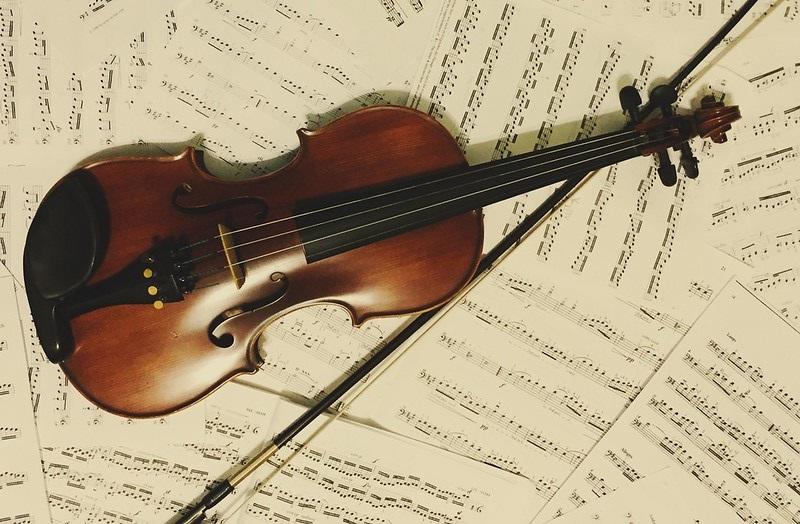
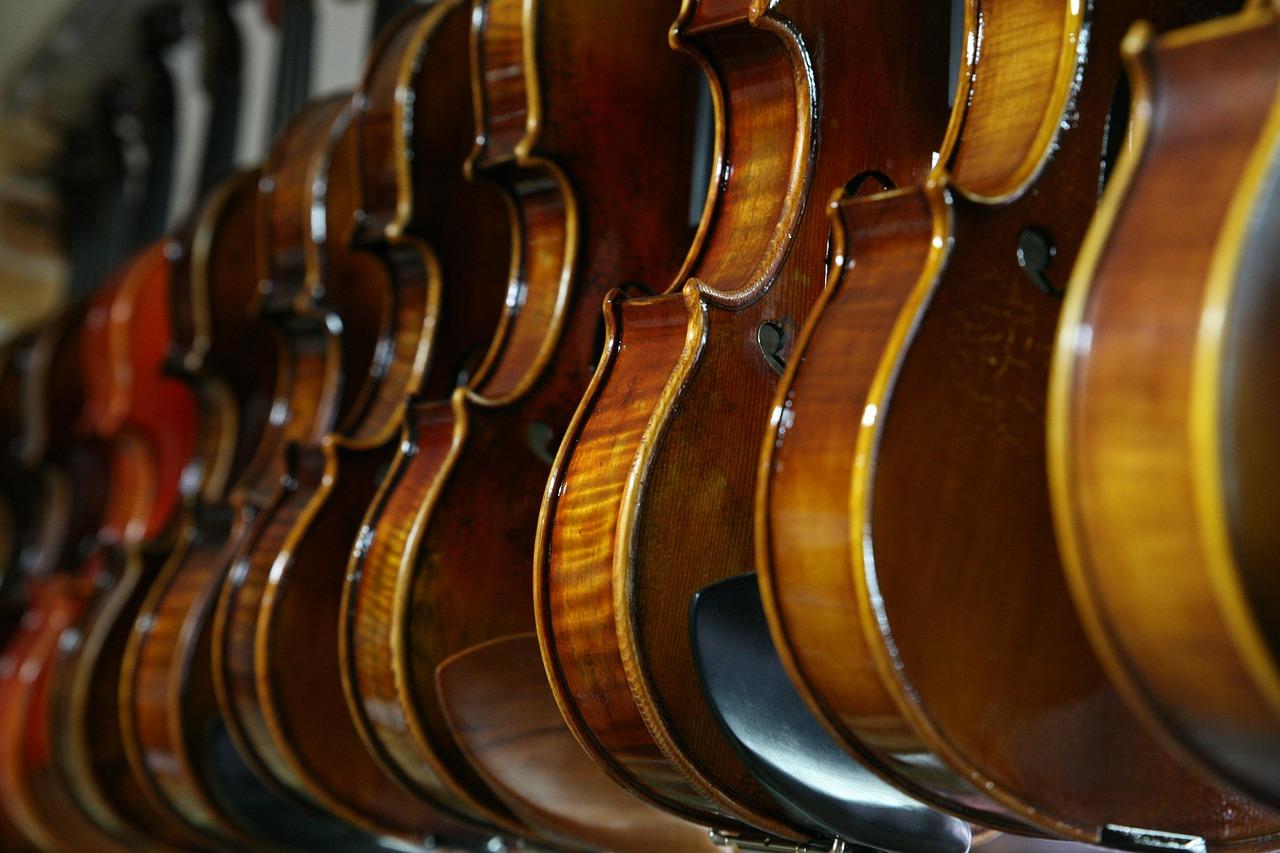
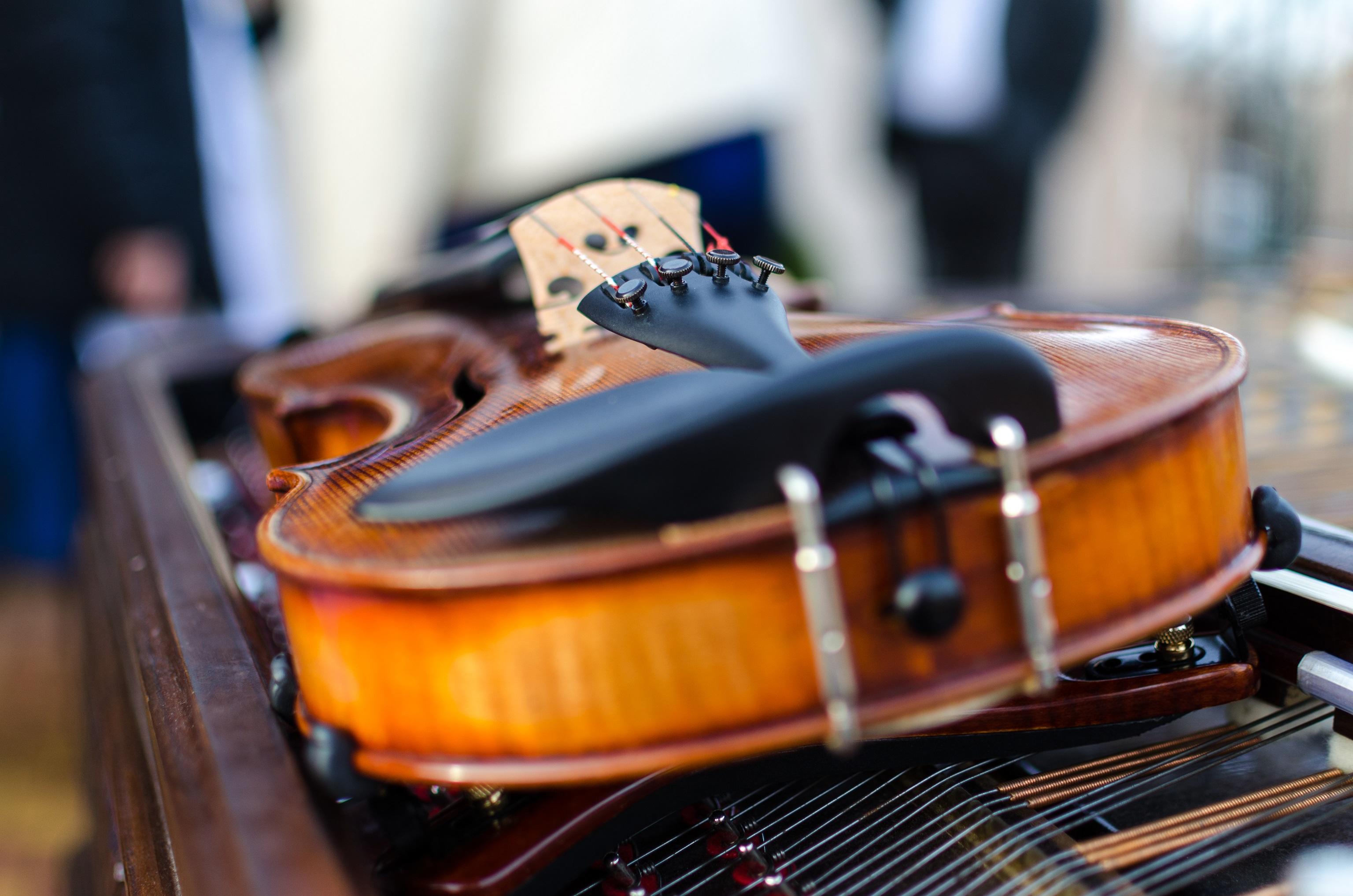
Learning violin is easier when you know what to work on first. Rather than jumping between songs, tutorials and exercises, beginners can build a reliable foundation by checking the instrument, learning a balanced hold, developing bow control and then adding fingering and simple repertoire.
| Stage of taking lessons | What a beginner can expect |
|---|---|
| First lesson | An introduction to the instrument, your starting point and what you want to achieve |
| Early lessons | Simple exercises are introduced before you are expected to play complete pieces |
| Between lessons | Your teacher gives you specific things to work on before the next session |
| Progress reviews | Your teacher can adjust exercises as your technique develops |
| Repertoire | Pieces are introduced when they are appropriate for your current skills |
| Ongoing lessons | The focus gradually shifts from learning individual movements to combining them musically |
Taking violin lessonsis not simply a matter of arriving each week and learning another song. A good lesson gives you a specific focus, while the practice between lessons gives you the opportunity to turn that instruction into a usable skill.
A useful beginner pathway has several stages before you start to build your repertoire: setup, physical control and basic musical skills. Each stage prepares the next, so you spend less time wondering what to practise and more time working on skills you can actually assess.
Set up:
Choose the correct instrument and learn basic care and tuning.
Control:
Develop a balanced violin hold and controlled bow movement.
Build skills:
Add fingering, rhythm, intonation and simple exercises.
This is not a race through a fixed timetable. Move forward when the previous skill is becoming reliable rather than simply because a certain number of weeks has passed.


🎯 Is the violin hard to learn for a complete beginner?
Yes, the violin can be demanding at first because the player has to control several variables at once. Unlike an instrument with fixed keys, the violin requires you to create the sound with the bow while finding finger positions accurately on an unfretted fingerboard.
Unlike many beginner instruments, the violin requires your hands to perform different but closely coordinated jobs. Your bow creates the sound while your other hand controls pitch, so developing coordination between the two is a central part of early learning..
The first goal should therefore be control rather than impressive repertoire. Being able to hold the instrument comfortably, draw a controlled bow and recognise when a note sounds out of tune gives you a much stronger foundation for later pieces.
| Beginner task | What makes it challenging |
|---|---|
| Holding the violin | Requires balance without excessive tension |
| Bowing | Requires coordinated arm movement and consistent contact |
| Fingering | Notes are not marked by fixed keys or frets |
| Intonation | Your ear must judge whether notes are in tune |
| Combining skills | Several new movements must happen simultaneously |
Difficulty is also specific to the skill being learned. You may play a recognisable tune relatively early while still needing considerable work to produce consistent intonation and tone. Treat these as separate milestones rather than assuming that playing a melody means the underlying technique is already secure.
How long does it take to learn the violin?
There is no useful single number of weeks or months because "learning the violin" can mean very different things. Playing a simple melody is a much smaller goal than maintaining accurate intonation, changing strings smoothly, controlling bow speed and pressure or performing a complete piece confidently.
A better measure of progress is what you can now do that you could not do previously. You might move from an inconsistent open-string sound to a steadier bow, then to accurate simple finger placement and finally to combining those skills in a short piece.
Avoid unrealistic promises about becoming proficient within a particular timeframe. Structured practice can help you progress efficiently, but reliable technique develops through repetition and correction.
To speed up the learning process, you could use tablature to learn songs without needing to be able to read sheet music or call a private tutor to find violin lessons near you.
Does age make learning more difficult?
You can start your music education and learn to play violin at any age. Age does not provide a useful timetable for violin progress. More relevant factors include available practice time, physical comfort, previous musical experience and the type of instruction available. Adults may need to fit practice around work and other responsibilities, while younger learners may require more structured supervision.
Time
Choose a practice routine that can realistically be maintained.
Physical comfort
Do not ignore persistent tension while trying to develop technique.
Experience
Previous musical knowledge may make some concepts easier to understand.
The practical question is therefore not simply how old you are, but whether your learning approach gives you enough consistent practice and useful feedback.
🎻 What violin and accessories do you actually need?
A beginner does not need a large collection of equipment. The essentials are a correctly sized violin, suitable bow, rosin and safe storage. A shoulder rest may also be appropriate depending on the player's body and the teacher's approach.
Correct size and setup matter more than choosing a prestigious brand. Yamaha notes that violin size affects playability and that a properly set-up instrument can make learning easier.
| Item | Why it matters at the beginning |
|---|---|
| Violin | Must be an appropriate size and comfortable to play |
| Bow | Needs to function properly for controlled bowing |
| Rosin | Helps the bow hair grip the strings |
| Tuner | Helps you establish correct string pitches |
| Case | Protects the instrument between practice sessions |
| Shoulder rest | May improve comfort depending on the player |
Before practising, check that the instrument feels comfortable, the strings can be tuned correctly and the bow functions properly. If something feels unusually difficult, do not automatically assume the problem is your technique. Poor setup can create obstacles that practice alone will not fix.
Should you rent or buy your first violin?
Renting can make sense when you are unsure about continuing or when a growing player may need a different size. It also gives you an opportunity to become familiar with violin setup before committing to an instrument.
Rent first
Useful when size, commitment or instrument choice is still uncertain.
Buy later
More practical once you know what size and setup suit you.
Whichever option you choose, have the instrument checked by someone who understands violin setup. Paying more does not automatically guarantee better playability, while a very cheap instrument can make learning unnecessarily difficult if it is poorly adjusted.
🧑🏫 Can you learn the violin by yourself?
Yes, you can learn many violin skills independently with structured resources and consistent practice. The problem is not self-study itself. It is trying to learn without any reliable way of checking whether your posture, bow movement or intonation is developing correctly. Violinspiration similarly recommends combining independent practice with feedback when learning without regular lessons.
| Learning approach | Useful for | Main limitation |
|---|---|---|
| Random online videos | Finding individual demonstrations | Little overall progression |
| Structured course | Following a planned sequence | May not identify your individual errors |
| Self-study + feedback | Flexible learning with correction | Requires access to suitable feedback |
| Regular teacher | Personalised instruction | Requires a consistent lesson commitment |
A useful middle ground is structured self-study with occasional professional feedback. This keeps the flexibility of learning at home while giving you opportunities to identify problems that are difficult to notice while playing.
Self-study with periodic feedback
Record yourself regularly and watch the footage when you are no longer playing. This can help you inspect your violin hold, bow path and general movement from an outside perspective. You can then bring specific questions to a teacher or experienced player rather than waiting until a problem has become deeply established.
Stages of self practice:
- Record: Film a short section of your normal practice.
- Review: Look specifically at one technical feature rather than everything at once.
- Identify: Note anything that looks or sounds inconsistent.
- Correct: Use qualified feedback when you cannot work out how to change it.
Periodic feedback does not mean abandoning self-study. It can be an occasional lesson, check-in or appropriate video review. The important point is that someone with sufficient technical knowledge gets the opportunity to see what you are doing.
When a violin teacher becomes non-negotiable
Professional guidance with violin lessons becomes particularly important when you repeatedly cannot identify why the sound is unstable, when your posture creates persistent tension or pain or when you keep making the same technical mistake despite trying to correct it. More repetition is not always the answer to a technique problem.
"A good teacher isn't someone who gives the answers out to their kids but is understanding of needs and challenges and gives tools to help other people succeed."
Justin Trudeau
A teacher can also adjust exercises to your current ability rather than making you work through material that is too easy or too difficult. When choosing a teacher, training and experience are worth considering alongside teaching style and compatibility.
🧘 Master posture and bow control before playing songs
It is tempting to begin with a favourite song because it feels more rewarding than practising an open string. However, songs combine several skills at once. If the basic hold and bow movement are unstable, repeatedly playing the song can reinforce those problems rather than solving them.
Use demonstrations to observe the physical movement, then practise the movement slowly yourself. There are numerous smartphone apps and online tutorials you can follow. These can be really useful for beginners but become less helpful the more you know about the violin. Books on violin techniques, however, can remain useful as long as you pick one suited to your current level.
A balanced violin hold
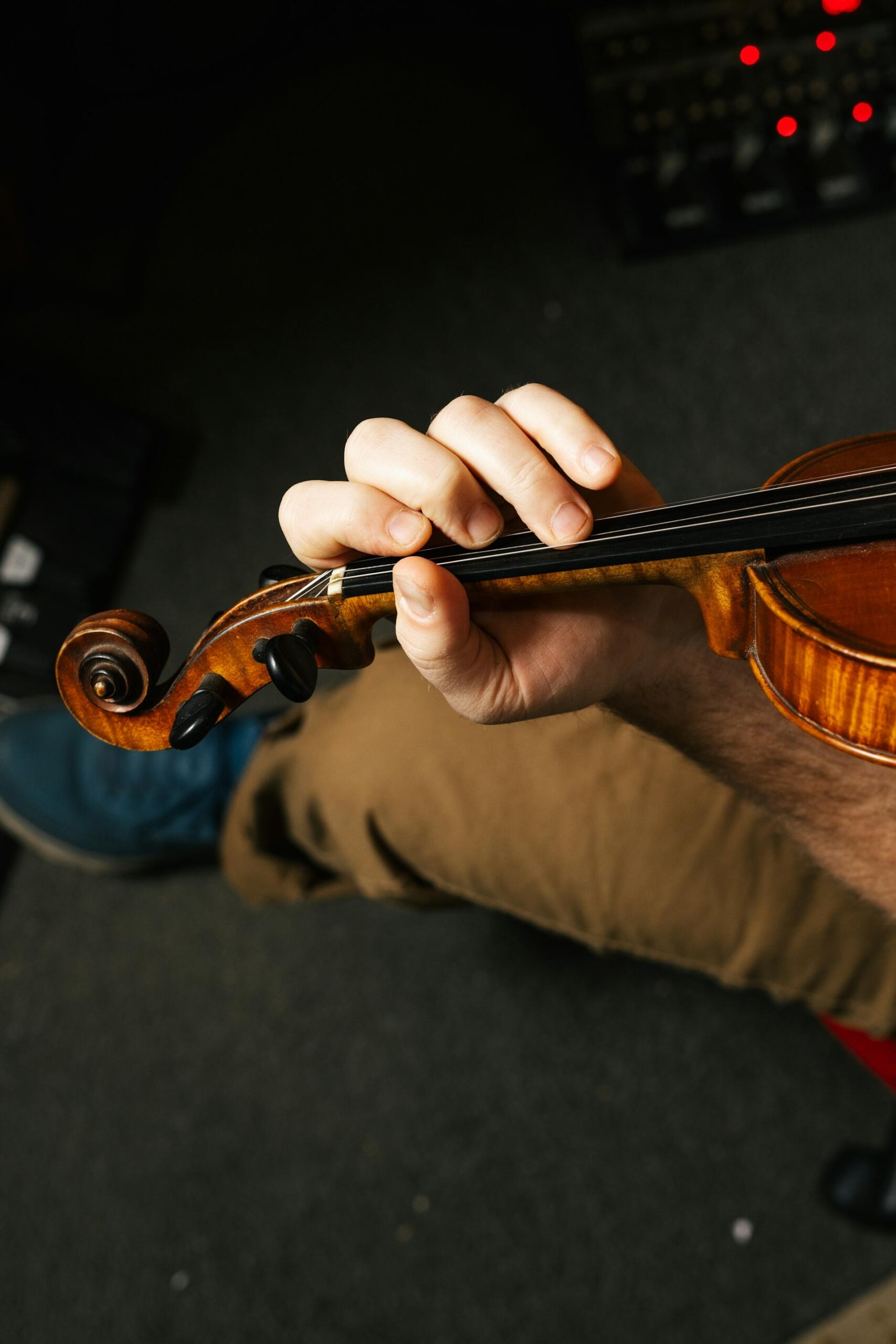
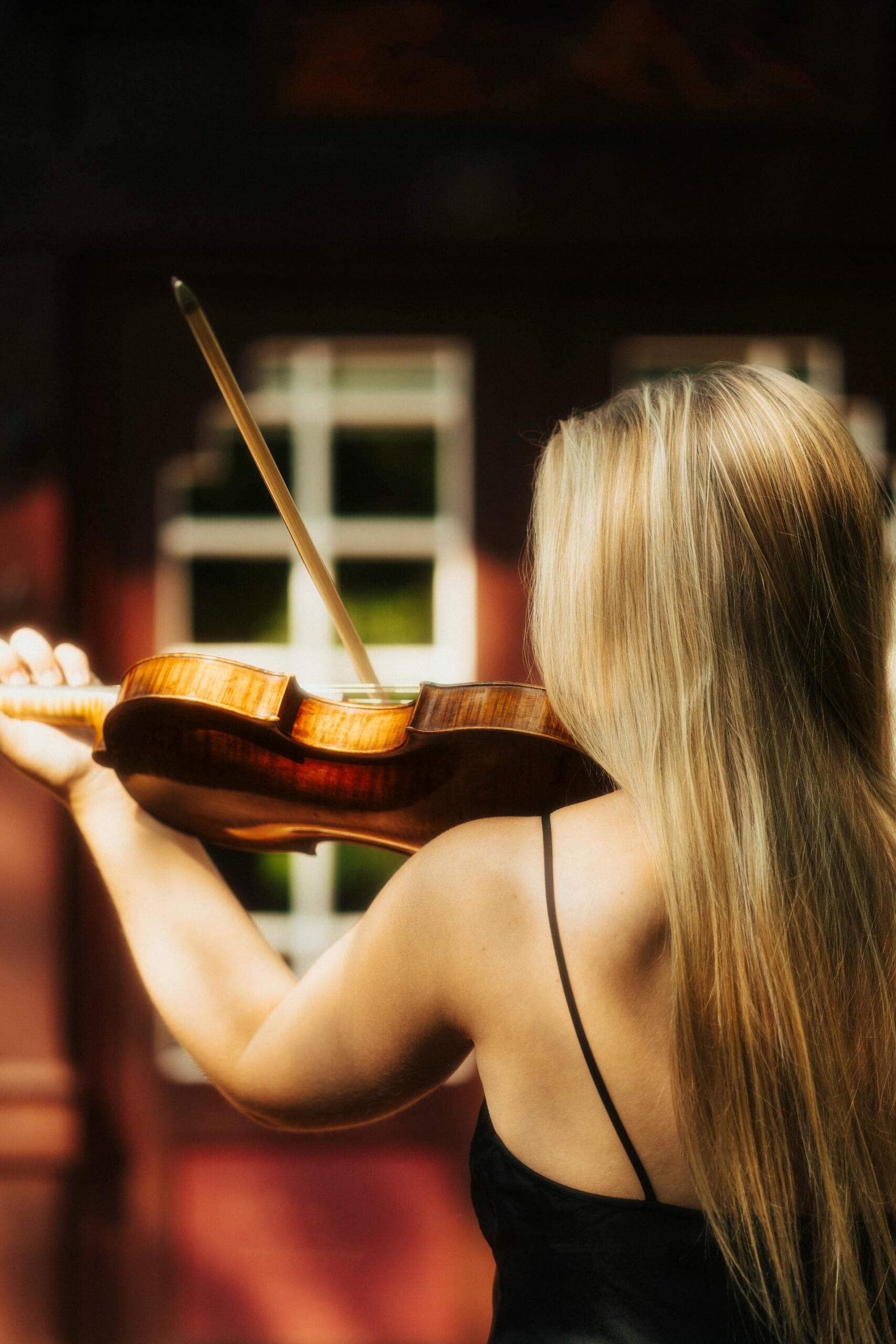
The violin should feel supported rather than clamped between the head, shoulder and hands. Your position should allow the left hand to move around the neck while the bow arm remains free enough to move smoothly.
Head and shoulders:
Avoid creating unnecessary tension while supporting the instrument.
Left hand:
Keep enough freedom for the fingers to move around the neck.
Bow arm:
Allow the arm to move naturally rather than forcing the bow through the strings.
Spend time checking your position before playing rather than waiting until you feel uncomfortable. A mirror or short recording can help you notice obvious changes in alignment.
Your first clear sound on open strings
Open strings are useful because they remove left-hand fingering from the exercise. This lets you concentrate on bow direction, contact point, speed and pressure while listening carefully to the resulting tone.
Start slowly to prioritise a controlled bow rather than speed and then taking the following steps:
Listen: Notice changes in volume, scratchiness and steadiness.
Change one thing: Alter bow speed or pressure rather than several variables simultaneously.
Repeat: Aim for a consistent sound across several strokes.
A steady open-string tone is a more useful foundation than rushing into a melody with an uncontrolled bow. Once bow control becomes more reliable, adding simple fingering becomes considerably easier to assess.
🗓️ Follow a 12-week beginner roadmap
A 12-week roadmap should be treated as a sequence of skill gates rather than a promise that every beginner will reach the same level on the same date. The aim is to introduce skills in an order that prevents repertoire from becoming the main focus before basic control is established. Use online violin lessons to practice more.
| Weeks | Main focus | Progress check |
|---|---|---|
| 1 to 3 | Setup, tuning, hold and basic bow movement | Can hold and bow with increasing control |
| 4 to 6 | Open-string tone, rhythm and basic fingering | Can produce steadier sounds and place simple fingers |
| 7 to 9 | Combining bowing and fingering | Can play short exercises with fewer interruptions |
| 10 to 12 | Intonation, bow control and simple repertoire | Can work through a short piece with greater consistency |
Use the roadmap flexibly. If bow control is still inconsistent in week six, spending more time on that skill is more productive than moving ahead because the calendar says you should. By the end of twelve weeks, meaningful progress means having a clearer understanding of what you can control, what still needs work and what your next practice goal should be. That is a much more useful foundation for how to learn violin than simply collecting more songs or tutorials.
References
- Suzuki Association of the Americas (n.d.)How to Choose a Teacher. Available at: https://suzukiassociation.org/parents/find-a-suzuki-teacher/how-to-choose-a-teacher/ (Accessed: 3 October 2026).
- Violinspiration (n.d.)Learn the Violin By Yourself: The Ultimate Guide. Available at: https://violinspiration.com/the-ultimate-guide-to-learn-the-violin-by-yourself/ (Accessed: 3 October 2026).
- Violinspiration (n.d.)Best Ways To Learn How To Play Violin as an Adult. Available at: https://violinspiration.com/best-ways-to-learn-how-to-play-violin-as-an-adult/ (Accessed: 3 October 2026).
- Yamaha (2022)Eight Great Tips for Learning Violin. Available at: https://hub.yamaha.com/strings/s-how-to/eight-great-tips-for-learning-violin/ (Accessed: 3 October 2026).
Summarize with AI:
Did you like this article? Leave a rating!

 Loading...